South Asia
Gujarati
Also: Gujarat cuisine
India's preeminent vegetarian cuisine — a sweet-sour-salty thaali tradition shaped by Jain ethics, a mercantile pantry, and an unrivaled snack culture.
Gujarati cuisine is the cooking of the western Indian state of Gujarat, and it is among the world's most sophisticated and fully realized vegetarian food traditions. The cuisine is defined by a signature sweet-sour-salty flavor grammar (no single taste dominates), a deep Jain dietary influence that has, over centuries, transformed constraint into invention, and a nationally famous snack culture (farsaan) that outsizes its formal meal tradition. The foundational dish structure is the thali: a round stainless steel platter with small bowls of dal, vegetable dishes, rice, roti, and a sweet, all consumed together rather than in courses — embodying the cuisine's philosophy of simultaneous flavor balancing. Jain adherents omit root vegetables (onion, garlic, potatoes, carrots, beets) entirely, producing a parallel sub-tradition of great ingenuity.
The flavour base
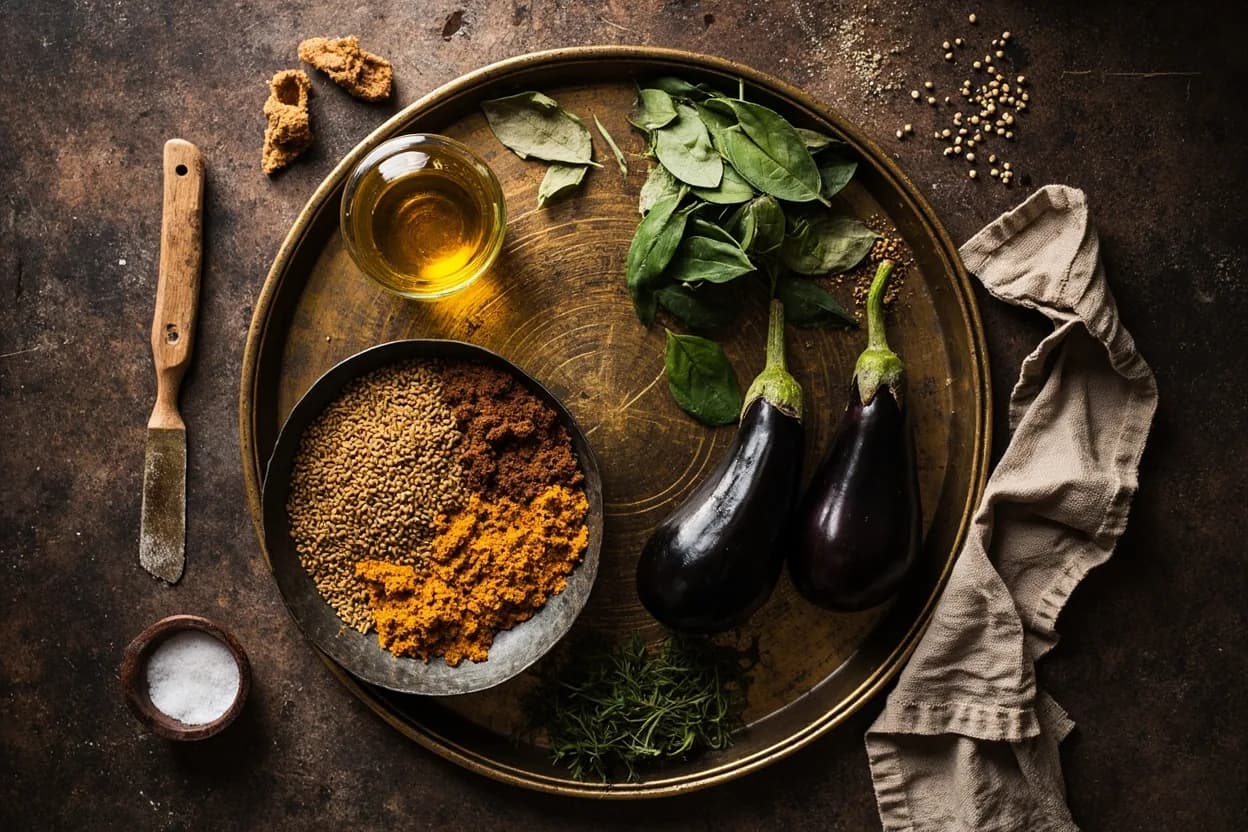
Tempering (tadka/vagharnu) in groundnut oil or ghee with mustard seeds, cumin, curry leaves, dried red chilli, and asafoetida; sugar or jaggery added to almost every savory dish to achieve the signature sweet balance; lime or tamarind for sourness.
Pantry staples
Key ingredients
Signature techniques
Signature dishes
Gujarati on the table
At the table
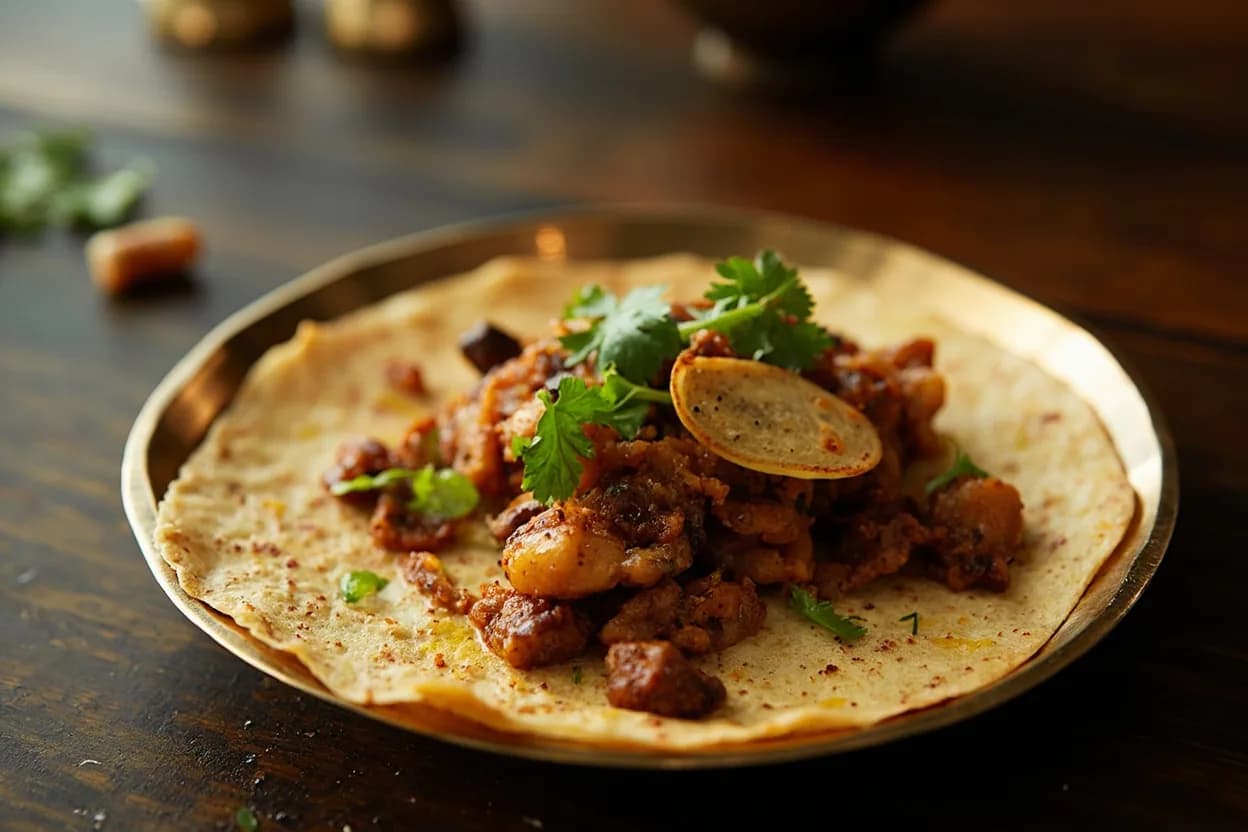
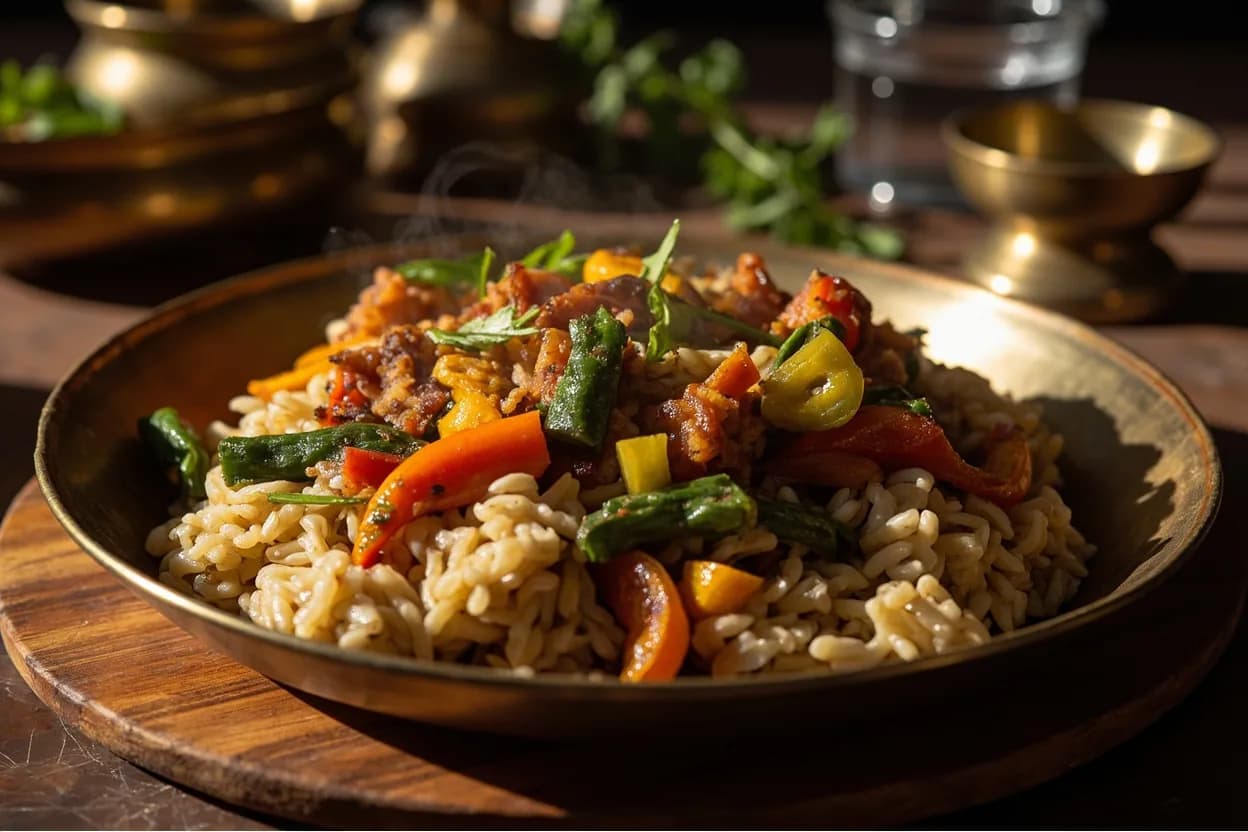
The Gujarati thali is the canonical structure: served simultaneously, the platter includes dal (often sweet-sour toor dal), two or three sabzis (vegetable preparations), rice, roti or bhakhri, a sweet (often shiro or a mithai), pickle, papad, and sometimes chaas (spiced buttermilk). The intent is to taste all six rasas (flavors) within the meal. Farsaan (snacks like gathiya, chakli, sev) are eaten at tea time, not as part of the main meal. Festivals bring seasonal specialties: patra (colocasia leaves rolled with besan paste) at Uttarayan; undhiyu in winter.
History & context
Gujarat's position as the subcontinent's western maritime gateway — a trading hub connecting Arabia, East Africa, and Southeast Asia from the 1st millennium CE — gave its merchants access to unusual pantry ingredients and made dietary portability a necessity (thepla, the long-lasting flatbread, was travel food for Gujarati traders crossing the Arabian Sea). The Jain religious community, historically dominant in Gujarat's merchant castes, formalized ahimsa (non-violence)-based cooking into an elaborate system of ingredient restrictions that forced the development of substitute techniques — fermenting for depth, spice-forward tempering for complexity, sweet-sour balance for satisfaction without meat. The Vaishnav Pushti Marg tradition added another layer of sattvic cooking (no onion/garlic) centered on dairy, fresh produce, and elaborate temple sweets. Together, these streams produced a vegetarian cuisine with extraordinary range.
Regional variations
- Kathiawadi (Saurashtra Peninsula)
More pungent and spiced than mainstream Gujarati; uses more garlic and green chilli; includes more robust meat dishes (Kathiawadi is less predominantly vegetarian). Rotla and math (moth bean) dishes are central.
- Surti (Surat region)
Famous for its lochi (a fried bread unique to the region), locha (steamed chickpea dish), and a heavier use of fresh coconut and jaggery. Surti undhiyu is considered definitive.
- Jain vegetarian
No root vegetables (onion, garlic, potato, carrot, beetroot, radish) at any time; no eating after sunset; particular reliance on dried legumes, cow-milk dairy, and surface-grown vegetables.
Related cuisines
Marwari Jain sub-tradition within Rajasthani cooking is essentially a branch of the same northern Jain vegetarian lineage.
- Maharashtrian
Neighboring state with overlapping snack culture and coconut use, though Maharashtrian cooking tends to be spicier and less sweet.
- East African Indian
Large Gujarati diaspora communities in Kenya, Uganda, and Tanzania transplanted the cuisine wholesale; East African Indian cooking is substantially Gujarati in origin.
References
- 1.Tarla Dalal — The Complete Gujarati Cook Book (2001)
- 2.Colleen Taylor Sen — Feasts and Fasts: A History of Food in India (2015)
- 3.K.T. Achaya — A Historical Dictionary of Indian Food (1998)
Confidence: high
Notes
Dhokla vs. Khaman
These two foundational Gujarati snacks are frequently confused. True dhokla is made from a batter of fermented rice and chana dal (sometimes with rice flour), producing a slightly sour, spongy cake. Khaman is made entirely from chickpea flour (besan) without fermentation (often using citric acid or Eno fruit salt for leavening), producing a softer, more uniform cake with a milder flavor. Both are garnished identically with a tadka of mustard seeds, curry leaves, and green chilli poured over the hot cake.
The Gujarati sweet compulsion
Sugar or jaggery in every savory dish is not an accident or a concession — it is a deliberate flavor philosophy derived from Ayurvedic teaching that all six tastes (sweet, sour, salty, pungent, bitter, astringent) should be present in each meal. The sweetness is calibrated: just enough to round acidity and amplify spice, not enough to make dishes taste like dessert. Visitors who insist on savory-only Gujarati food are missing the cuisine's fundamental design.