Southeast China / Global Diaspora
Hakka Chinese
Also: Kejia Cuisine, 客家菜, Hakka food
The nomadic Han people's earthy, preservation-driven cuisine — where salt-baking, braising, and fermenting transform humble ingredients into iconic dishes.
Hakka cuisine is the food of the Hakka (客家) people, a Han Chinese subgroup who migrated repeatedly across millennia from northern China through Fujian, Jiangxi, and Guangdong, and later scattered across Southeast Asia, the Caribbean, and beyond. Their nomadic history produced a cuisine defined by portability and preservation: heavy salting, prolonged braising, fermented vegetables, and minimal waste. Unlike the refined Cantonese cooking that surrounds it geographically, Hakka food is unapologetically rustic and bold, built to sustain people on the move and through lean seasons. Stuffed dishes (yong) — tofu, eggplant, and chili filled with pork — are a defining technique, said to be a substitution for dumplings when wheat was scarce in the south.
The flavour base
Preserved and fermented aromatics anchor Hakka cooking: mei cai (preserved mustard greens), fermented tofu (fu ru), and salted fish. Ginger, garlic, and rice wine provide warmth; braising liquids built from soy sauce, dark sugar, and five-spice deepen over long cooking times.
Pantry staples
Key ingredients
Signature techniques
Signature dishes
Hakka Chinese on the table
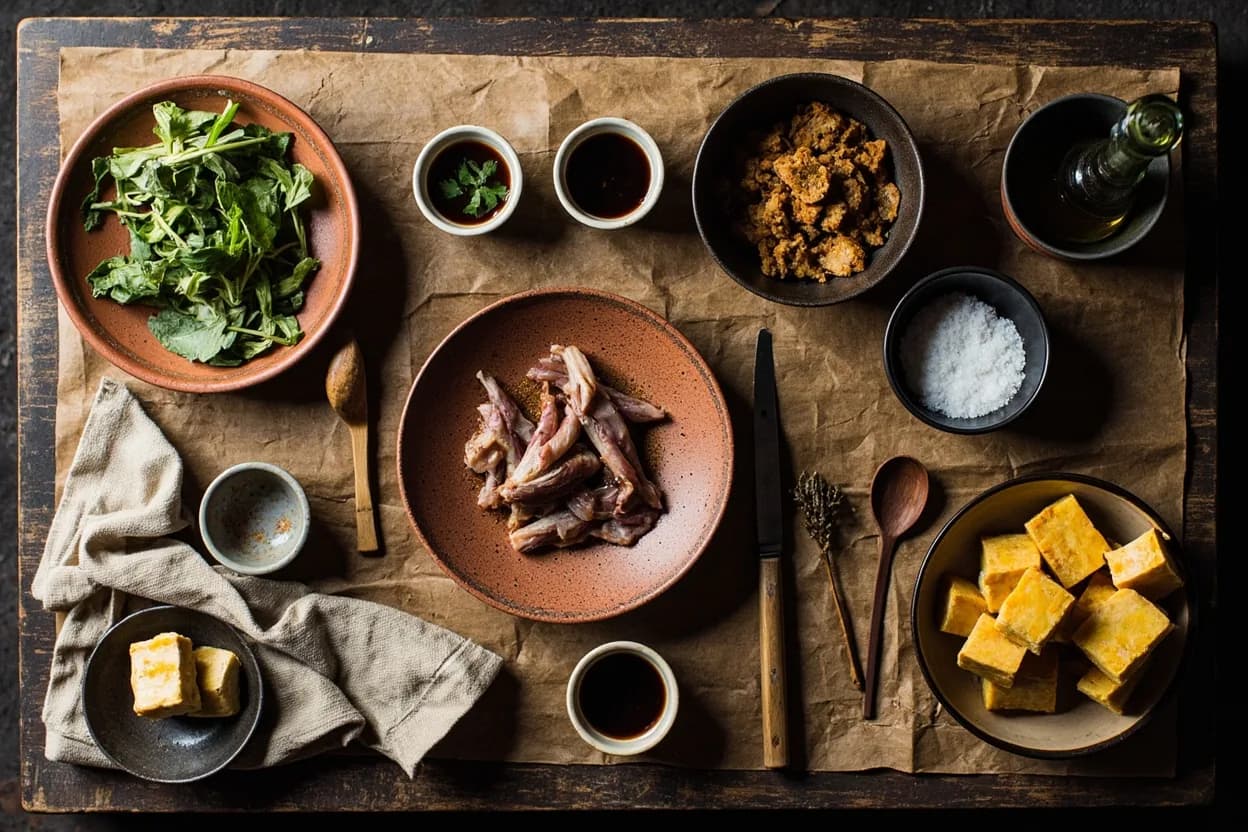
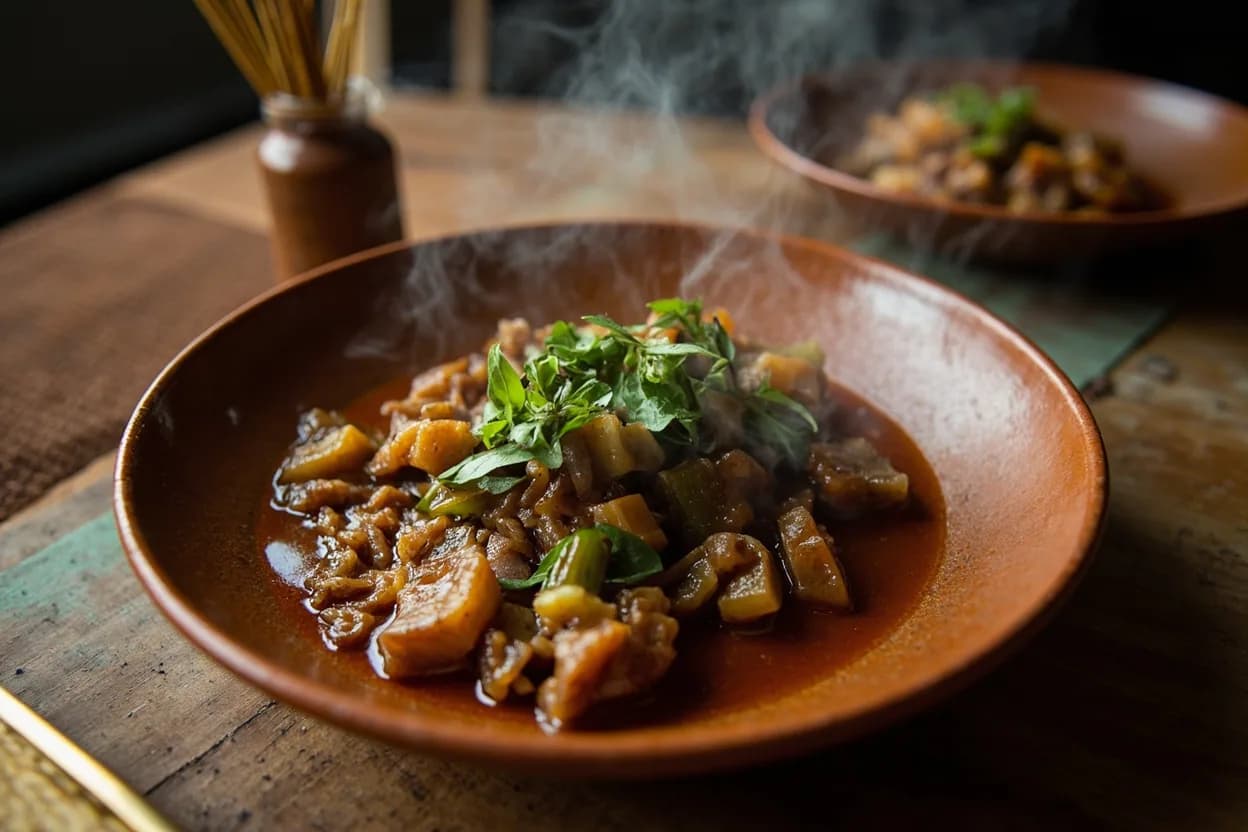

At the table
Hakka meals are communal and generous, centered on one or two substantial braised or steamed centerpieces surrounded by stir-fried greens, a soup, and rice. Preserved and pickled condiments appear at every meal. Banquet-style occasions feature layered braised dishes served in sequence. Rice — steamed plain — is the anchor starch, with congee common for breakfast.
History & context
The Hakka are often called 'the Jews of China' for their repeated displacement. Originating in the Central Plains of northern China, successive waves of migration — driven by war, famine, and political upheaval — pushed Hakka communities south from the Han Dynasty onward, with major migrations during the Jin Dynasty, Song Dynasty fall, and the chaos of the late Ming. They settled in the hilly, less fertile regions of Fujian, Guangdong, Jiangxi, and Sichuan, where agricultural scarcity shaped a thrifty, preservation-focused cooking tradition. From the 19th century onward, Hakka emigrants built communities across Southeast Asia, the Caribbean, South Africa, and the Americas, carrying their cuisine globally. Hakka restaurants became some of the earliest Chinese eateries in India, Jamaica, and Mauritius.
Regional variations
- Meizhou (Guangdong)
The most canonical Hakka heartland; salt-baked chicken and mei cai kou rou are at their most refined here.
- Taiwan Hakka
Distinctive use of sesame oil, glutinous rice dishes, and ban tiao flat rice noodles; strong Minnan cross-influence.
- Malaysian/Singaporean Hakka
Yong tau foo (stuffed tofu soup) evolved into a beloved hawker dish; pork dishes adapted to local Southeast Asian ingredients.
- Indian Hakka (Kolkata)
A unique fusion developed by Hakka immigrants in Kolkata's Tiretti Bazaar; incorporated Indian spices into Chinese techniques, producing dishes like chilli chicken that now define 'Indian Chinese' cooking.
Related cuisines
Geographically adjacent and often contrasted — Cantonese is delicate and seafood-forward; Hakka is earthier and preservation-heavy.
- Teochew
Another diaspora Han cuisine from coastal Guangdong; shares some preserved-food sensibility but is more seafood-centered.
- Fujianese
Hakka migrants moved through Fujian; shared use of red wine lees, rice wine, and fermented pastes.
Canonical recipes
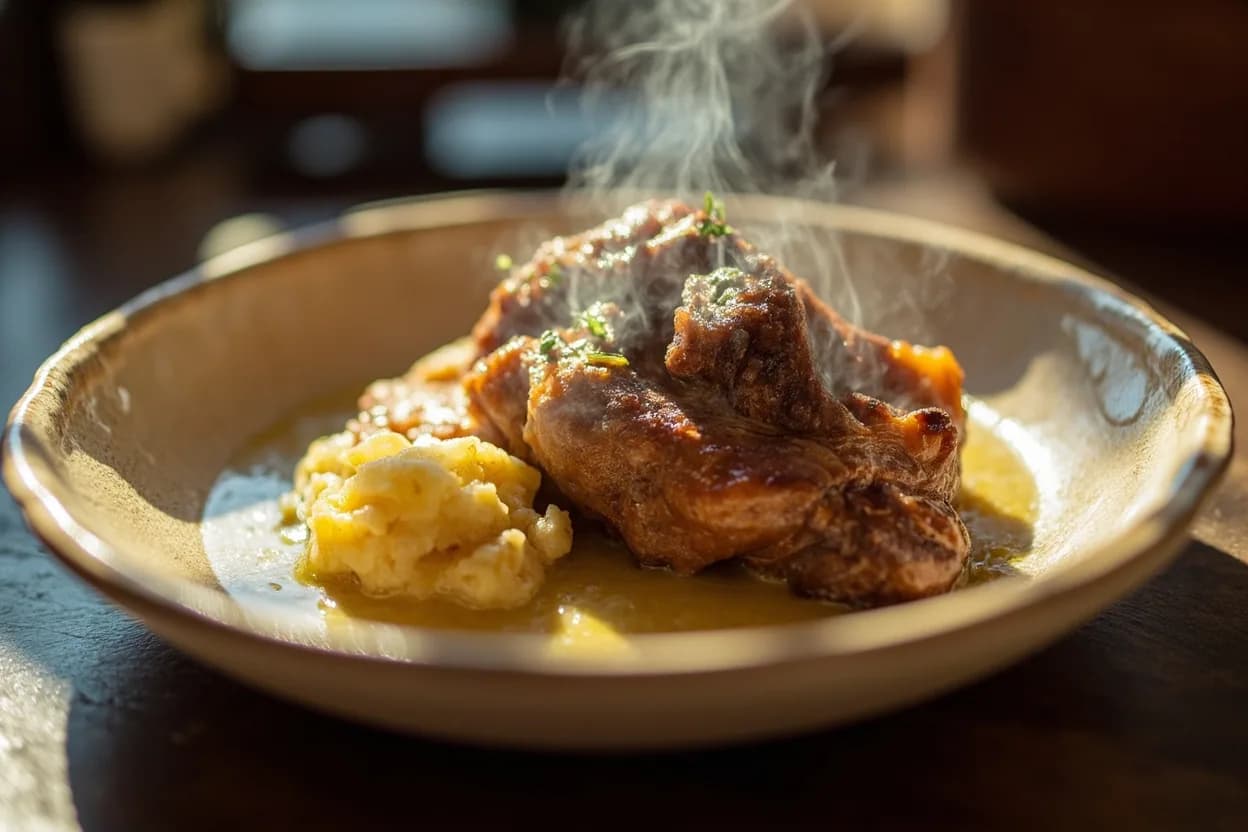
The dishes that define Hakka Chinese, documented in the Canon.
References
- 1.The Hakka Cookbook — Linda Lau Anusasananan (2012, University of California Press)
- 2.Land of Fish and Rice — Fuchsia Dunlop (2016, Norton)
- 3.Food of China — Deh-Ta Hsiung & Nina Simonds (2003, Murdoch Books)
Confidence: high
Notes
The Yong Technique
Stuffing tofu, bitter melon, eggplant, and chili with pork paste (yong) is considered a Hakka signature born of necessity: when Hakka migrants settled in rice-growing southern China without access to wheat, they reportedly invented this technique as a substitute for the wheat-skin dumplings of their northern homeland.
Salt-Baking
Yan ju ji — salt-baked chicken — is among the most technically distinctive preparations in all of Chinese cooking. The bird is wrapped in parchment and buried in a wok of heated coarse salt, which conducts dry heat evenly and draws out moisture to produce skin of extraordinary fragrance without any added fat.