Alcohols & Vinegars
Shaoxing Wine
Also: Shaoxing rice wine, shao hsing, huangjiu, Chinese rice wine
China's amber-hued fermented rice wine — earthy, nutty, and indispensable to the flavor architecture of Cantonese braises, stir-fries, and drunken marinades.
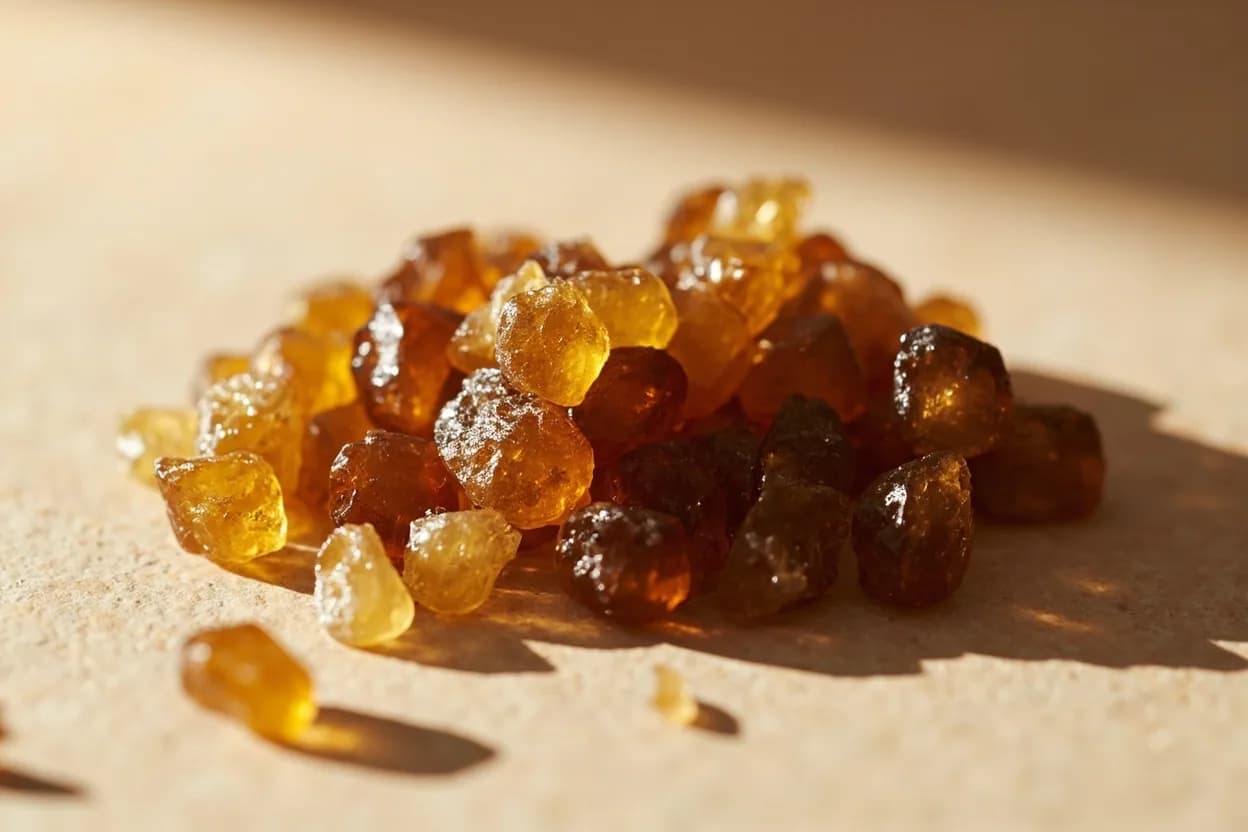
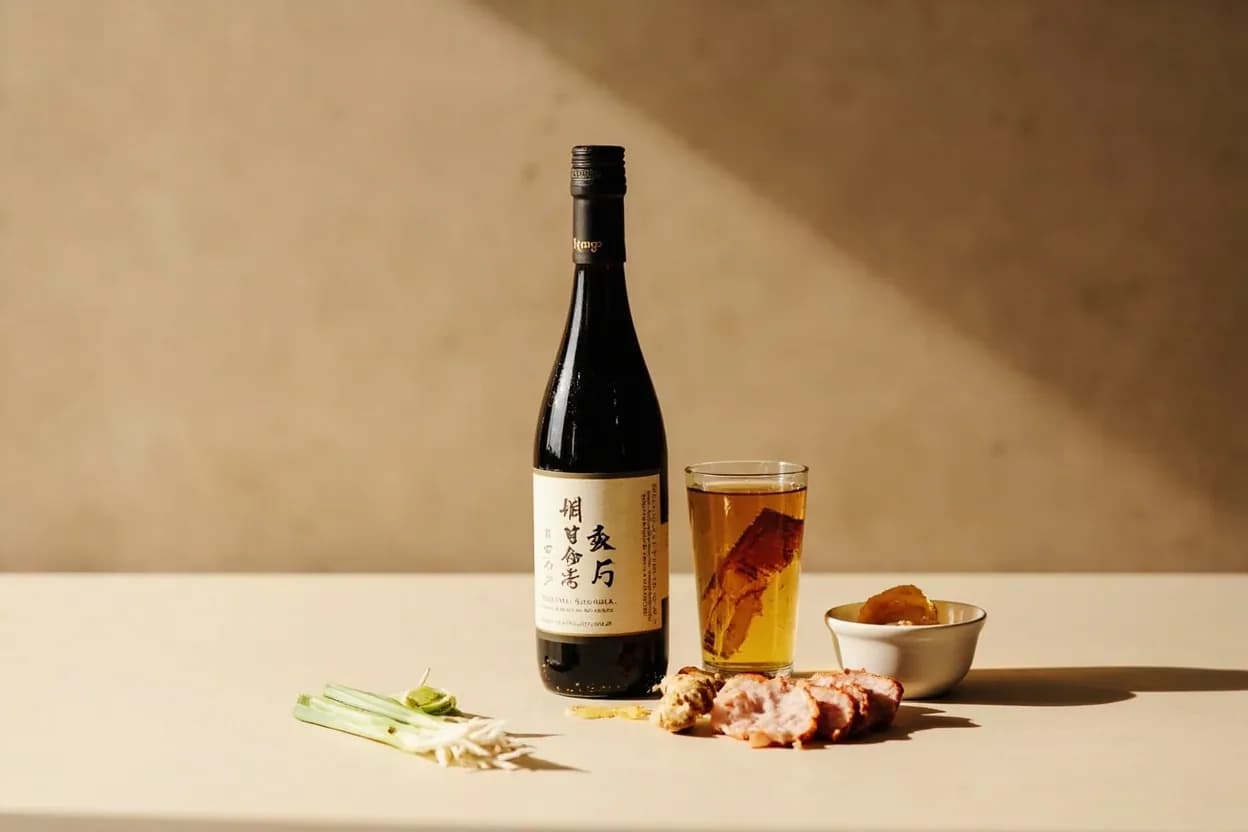
Shaoxing wine (绍兴酒) is a fermented rice wine produced in Shaoxing, Zhejiang province, China. Made from glutinous rice, water, wheat-based qu starter culture (analogous to koji), and aged in clay urns for months to years, it develops a deep amber color and a complex flavor profile: earthy, nutty, with caramel undertones and a dry, slightly tart finish. At 14–20% ABV, it is much stronger and more assertive than sake or mirin — a wine built for cooking rather than drinking at the table. It is the defining liquid seasoning of the red-braised and clay-pot traditions of eastern China.
In photos
Flavour profile
Classic pairings
- Soy sauceChinese
The foundational pairing for red braises (hong shao), stir-fry sauces, and marinades — Shaoxing provides depth and sweetness while soy adds salt and color.
- Pork bellyChinese
The cornerstone of Chairman Mao's red-braised pork (hong shao rou): Shaoxing is added generously to the braise, its sugars caramelizing into the lacquered sauce that clings to slow-cooked pork.
- Ginger and scallionChinese
Together these three form the aromatic trinity of Cantonese and Shanghainese marinades — Shaoxing carries and fixes the volatile aromatics of ginger and scallion into protein fibers.
- Crab and shellfishChinese
Drunken crab (zuijie) and drunken shrimp are cured raw in Shaoxing with salt and spices — the wine's alcohol firms texture and imparts fermented fruit notes that amplify crustacean sweetness.
- Star anise and cassia barkChinese
In red-braised preparations and lu wei (master stock), Shaoxing provides the liquid vehicle for warm spices — the alcohol extracts fat-soluble flavor compounds from hard aromatics.
- Chicken (whole or jointed)Chinese
Beggar's chicken, drunken chicken, and clay-pot chicken all rely on Shaoxing as the primary braising or steaming liquid — it permeates the meat and turns the cooking juices into an instant sauce.
- Tofu (firm and smoked)Chinese
Added to mapo tofu and clay-pot tofu, Shaoxing deglazes the doubanjiang and creates a silky sauce that clings to the curd.
Adventurous pairings
- Dry-aged beef
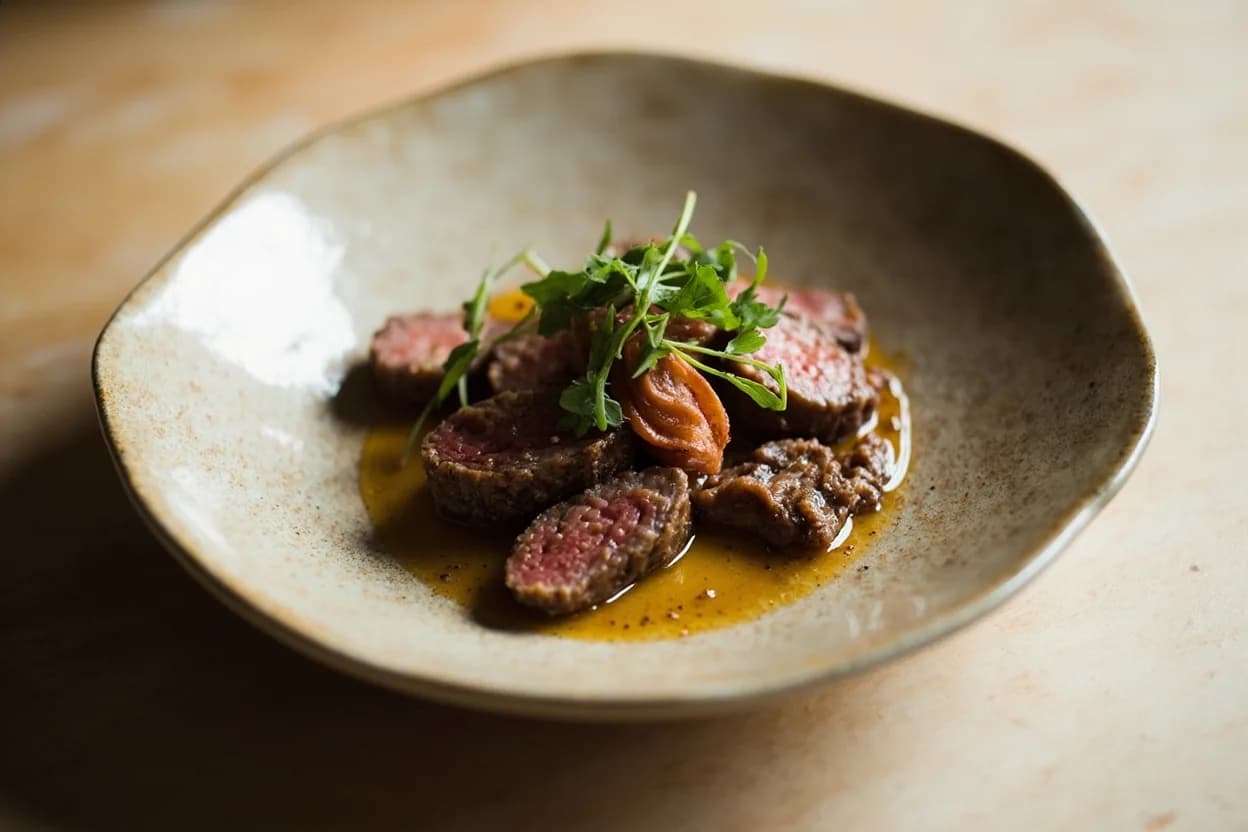
Shaoxing's oxidized, nutty character mirrors the enzymically complex notes of dry-aged beef; used as a marinade or deglaze it reinforces rather than masks the beef's depth.
- Jamón ibérico or prosciutto
A light splash of Shaoxing in a pan sauce finishing over thinly sliced cured ham creates a riff on Chinese-style double-cooked pork that bridges Iberian and Shanghainese flavor logic.
- Dark chocolate and five-spice
Shaoxing's dried-fruit and earthy notes pair naturally with high-cacao chocolate; combined with five-spice in a ganache or sauce, it creates a genuinely Chinese-French hybrid.
- Bone marrow
Deglazing roasted marrow bones with Shaoxing and a splash of soy produces a sauce of extraordinary richness — the wine's acidity cuts the fat while its umami depth doubles the marrow's intensity.
- Black truffle
Both Shaoxing and truffle share earthy, fermented-earth aroma compounds (dimethyl sulfide); a small splash of aged Shaoxing in a truffle butter sauce amplifies the truffle without competing.
Tread carefully
- Delicate white fish (sole, halibut)avoid
Shaoxing's assertive, earthy character overwhelms the subtle sweetness of delicate white fish; sake is the appropriate substitution for light fish preparations.
- Desserts calling for neutral alcoholavoid
Unlike sake or mirin, Shaoxing has a pronounced flavor that reads as savory-fermented in sweet contexts — it clashes in cakes, creams, or fruit-forward preparations.
- Raw applications (vinaigrettes, ceviches)avoid
Uncooked Shaoxing's sharpness and grain-fermented tang is abrasive without heat to mellow it — it needs the pan or braise to integrate.
How to use it
- Velveting: toss chicken, beef, or shrimp in Shaoxing, egg white, and cornstarch before stir-frying — the wine denatures surface proteins for silky, tender texture
- Red braising (hong shao): add generously in the first stage of a braise; reduce the cooking liquid until syrupy and it becomes self-saucing
- Deglazing: pour into a screaming-hot wok after stir-frying protein; the alcohol flashes off immediately, leaving behind caramelized grain flavor
- Drunken marinating: submerge raw shellfish in cold Shaoxing brine with aromatics (ginger, star anise, chili) overnight — no cooking required
- Clay-pot steaming: pour over whole chicken or fish in a sealed clay pot; the steam is wine-infused and the finished liquid is the sauce
Appears in
Related flavours
Japan's analogous rice wine — lighter and cleaner; a viable substitute when Shaoxing's earthiness is too assertive
Always used together in Chinese cooking — Shaoxing provides depth and sweetness, soy provides salt and umami color
Fermented chili bean paste that pairs with Shaoxing in red-braised and Sichuan preparations
Warm spice most commonly extracted by Shaoxing in master stocks and red braises
References
- 1.Every Grain of Rice: Simple Chinese Home Cooking — Fuchsia Dunlop
- 2.Land of Fish and Rice: Recipes from the Culinary Heart of China — Fuchsia Dunlop
- 3.The Food of China — E.N. Anderson
- 4.On Food and Cooking: The Science and Lore of the Kitchen — Harold McGee
Confidence: high
Notes
Dry sherry as a substitute
Dry sherry (fino or amontillado) is the most reliable Western substitute for Shaoxing — both are oxidatively aged, nutty, and dry. Avoid cooking sherry, which has added salt. Sake is cleaner but too delicate; avoid mirin, which is too sweet.
Grades and aging
Shaoxing wine is sold in grades from basic ji fan (3 years) to premium hua diao (aged 8+ years in urns). For cooking, mid-grade is ideal — the cheapest is harsh and salty (often pre-salted for retail), the most expensive is better appreciated as a beverage. Aged hua diao has an almost sherry-like complexity.