South Asia
Rajasthani
Also: Rajputana cuisine, Marwari cuisine
A desert kingdom's resourceful, ghee-drenched cuisine built on drought-hardy grains, wild berries, and fire-cooked breads — robust, bold, and deeply satisfying.
Rajasthani cuisine is the cooking of India's largest state, an arid expanse of the Thar Desert and rocky scrubland where water scarcity, harsh heat, and long trading routes shaped every culinary choice. The cuisine relies heavily on pulses, gram flour (besan), and dried lentils that keep without refrigeration; on desert plants like ker (desert capers) and sangri (dried desert beans) that grow where little else survives; and on ghee and buttermilk as fundamental cooking media. Bread traditions are extraordinary: hard-baked baati (wheat dough balls baked in coals), bajra rotla (pearl millet flatbread), and numerous fried breads. Meat is cooked on occasions by Rajput clans — historically hunters and warriors — in bold preparations like laal maas (fiery red mutton) and safed maas (white, cream-enriched mutton). The cuisine divides sharply between the meat-eating Rajput tradition and the strictly vegetarian Marwari (Jain-influenced) cooking tradition, both of which are important and distinct.
The flavour base
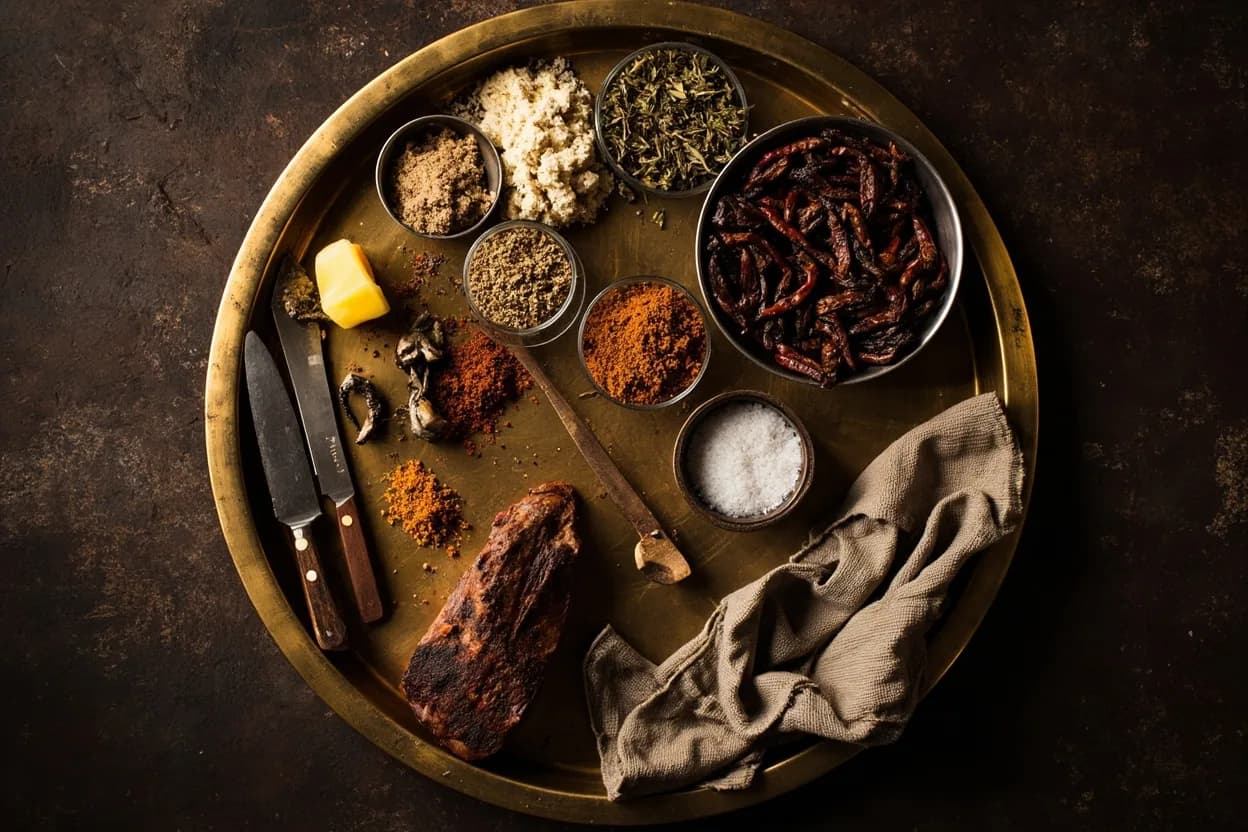
Ghee, dried red chilli (mathania chilli — a mild but deeply flavorful Rajasthani variety), and asafoetida (hing) form the primary flavor base; dried ginger and coriander are the workhorse spices; buttermilk (chaas) and curd provide acidity.
Pantry staples
Key ingredients
Signature techniques
Signature dishes
Rajasthani on the table
At the table
A traditional meal pivots around bread or the baati-dal combination. Dal baati churma is the iconic triad: a pan of thick dal (five-lentil blend), hard-baked baatis split open and flooded with ghee, and churma (coarsely ground sweetened wheat). Everyday meals pair bajra rotla with buttermilk or a simple sabzi. In formal settings, a spread of several sabzis, raita, papads, and pickles surrounds the bread; sweets like ghevar or malpua close the meal.
History & context
The Rajput clans who ruled Rajasthan from the 7th century onward were meat-eating warriors, and their hunt-and-feast tradition produced the bold meat dishes (laal maas, jungli maas — meat cooked only in fat with whole red chillies) that define Rajputana cooking. The Marwari trading communities, often Jain or Vaishnava, developed an entirely parallel tradition of inventive vegetarian cooking — using no root vegetables in stricter households — that spread across India wherever Marwari merchants settled. Water scarcity drove the cuisine's defining logic: foods that store without spoiling, cooking in fat rather than water, fermentation (kanji — fermented black carrot drink) over fresh produce. The use of dried desert plants like ker and sangri predates recorded history.
Regional variations
- Marwari (Jain-influenced)
Strictly vegetarian; in orthodox households, no onion, garlic, or root vegetables. Relies heavily on besan dishes, gatta, and innovative dairy preparations. Dal baati churma is central.
- Rajput / Shekhawati
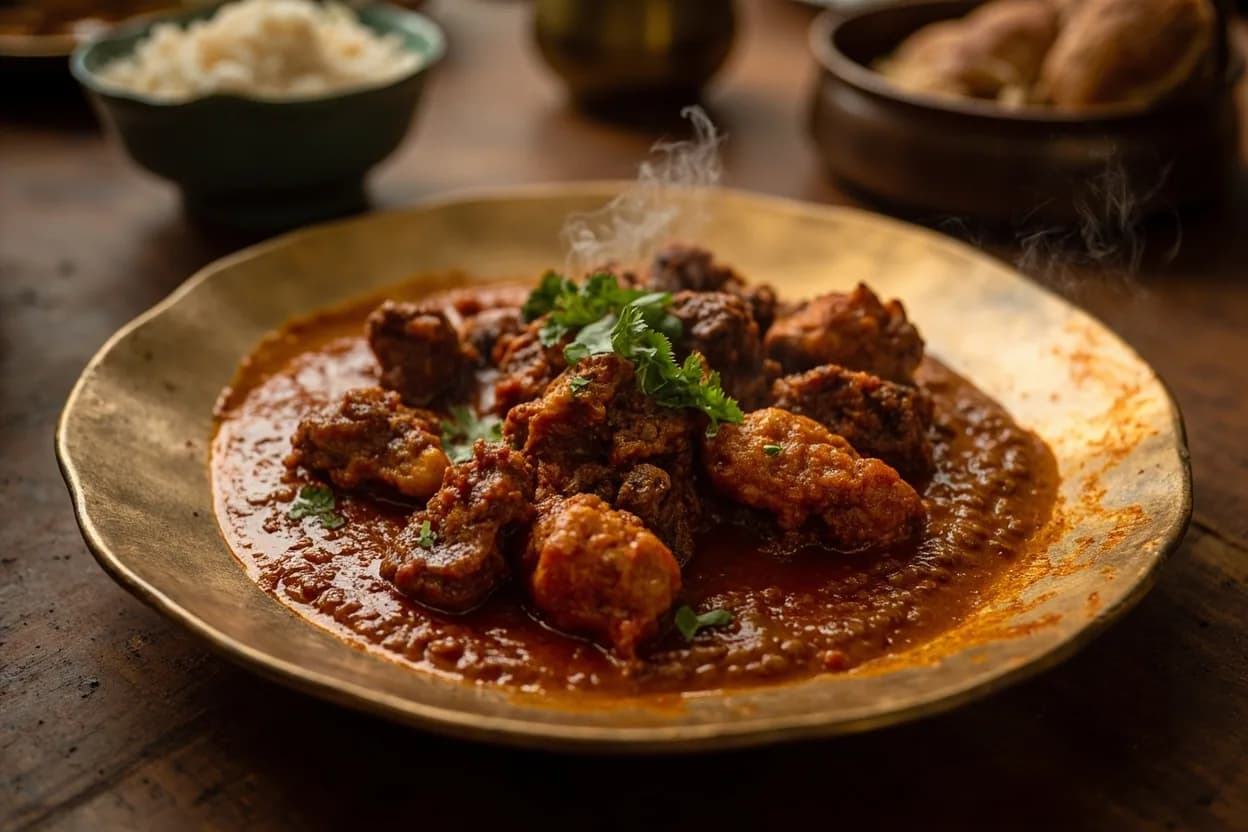
Meat-focused tradition, particularly game birds, wild boar, and goat. Laal maas (the definitive dish) uses mathania chilli paste with whole spices; jungli maas uses only salt and red chilli.
- Bikaner / Nagaur belt
Famous for its bhujia (crisp gram-flour noodles), papad, and bikaneri curd; Bikaner bhujia has a GI tag and is considered a distinct snack tradition.
Related cuisines
Neighboring state with significant overlap in Jain-influenced vegetarian cooking and snack (farsaan) traditions, though Gujarati cooking is sweeter and uses more fresh produce.
Shares the desert-preservation logic and reliance on dried lentils and grains, though Sindhi cooking is less ghee-saturated and uses more tomato.
- Mughal
Court influence visible in the safed maas tradition: cream, cashew, and almond enrichment of meat dishes reflects Mughal palatial cooking.
References
- 1.Jiggs Kalra & Priya Kapoor — Prashad: Cooking with Indian Masters (1986)
- 2.Colleen Taylor Sen — Feasts and Fasts: A History of Food in India (2015)
- 3.Sanjeev Kapoor — Rajasthan: Flavours of Royalty (2008)
Confidence: high
Notes
Mathania chilli
The mathania variety of dried red chilli, grown around the village of Mathania near Jodhpur, is the defining spice of Rajasthani meat cookery. It delivers deep brick-red color and a fruity, moderate heat distinct from the sharper Kashmiri or Guntur chillies. Authentic laal maas requires mathania chilli; substituting with generic Kashmiri chilli produces a noticeably different dish.
Churma — the completion of a triad
Churma is coarsely crushed baati (or wheat) sweetened with jaggery or sugar and enriched with ghee and sometimes cardamom or dried fruits. It functions as the sweet within the savory meal — not a separate dessert course — and the interplay of the salty dal, rich baati, and sweet churma eaten together is the intended experience.