South Asia
Sindhi
Also: Sindhi cuisine, Sindhi cooking
A displaced civilization's cooking — rich, tangy, and irreducibly distinct — preserved by Sindhi diaspora communities across India and the world after Partition.
Sindhi cuisine is the cooking tradition of the Sindhi people, originally from the Sindh region of the Indus Valley (now Pakistan's Sindh province). Following the 1947 Partition of British India, virtually the entire Hindu Sindhi population was displaced into India and later into diaspora communities worldwide, making Sindhi cuisine one of the clearest examples of culinary heritage maintained entirely outside its place of origin. The cuisine reflects Sindh's geography — the fertile Indus floodplain, proximity to the Arabian Sea — and its historical position as a crossroads of Central Asian, Persian, and South Asian trade routes. It is marked by distinctive souring agents (kokum, tamarind, dried mango), an unusually high proportion of vegetable dishes (sai bhaji, seyal preparations), complex lentil cookery, and flatbreads that reflect a wheat-rich agricultural heritage. Unlike neighboring Punjabi cooking, Sindhi cuisine uses relatively modest amounts of oil and cream; the depth comes from slow-cooked vegetables, tamarind, and spice layering.
The flavour base
Onion and tomato base with tamarind or dried mango powder (amchur) as souring agents; a tempering of cumin, mustard seeds, and dried red chilli in minimal oil or ghee; cluster beans (guar), spinach, and green chillies are the dominant fresh vegetable aromatics.
Pantry staples
Key ingredients
Signature techniques
Signature dishes
Sindhi on the table
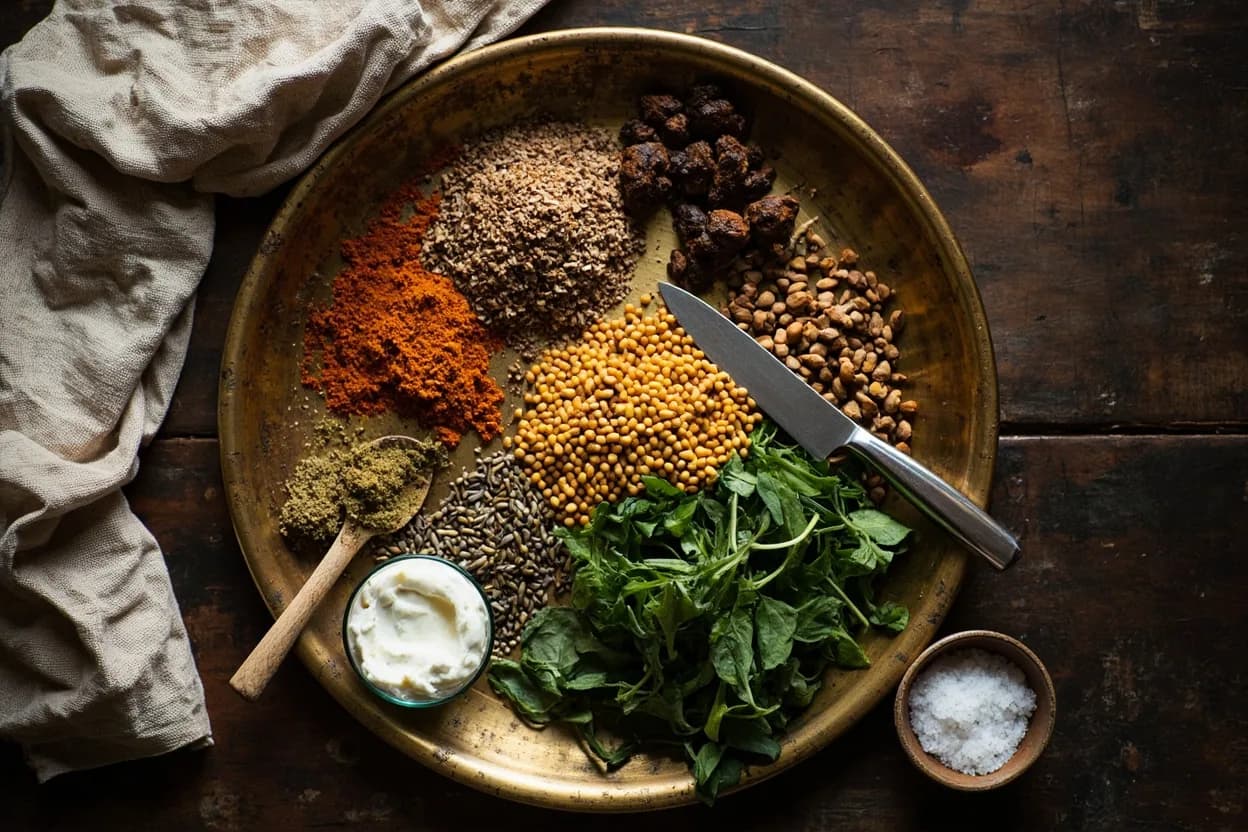
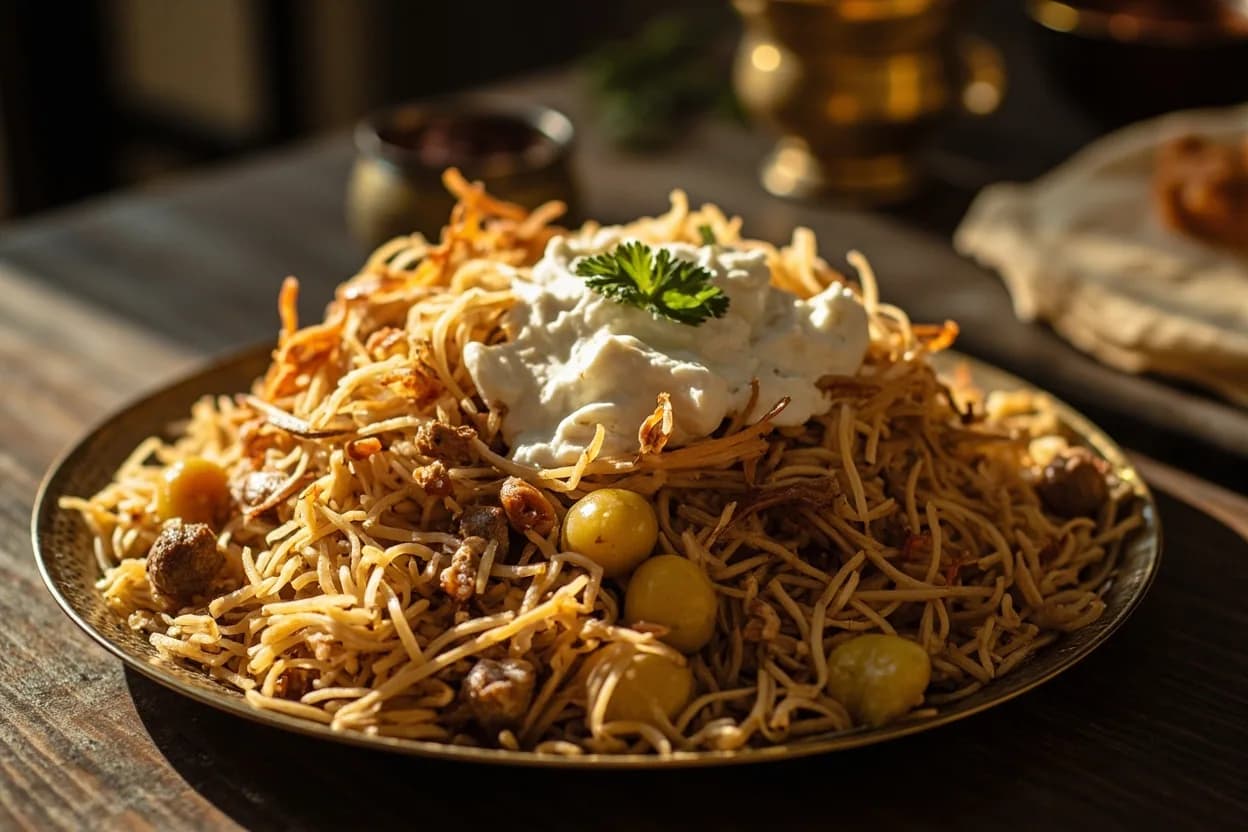
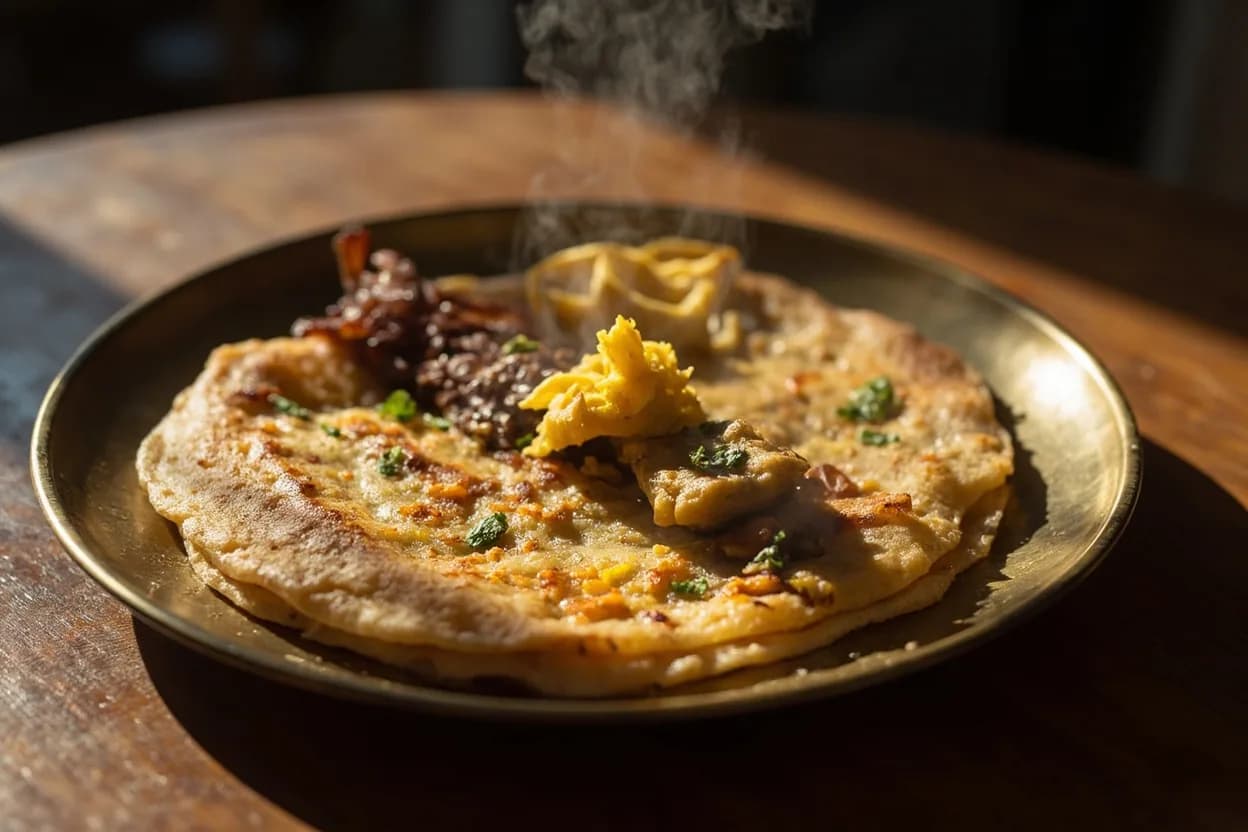
At the table
Sindhi meals center on rice or roti paired with sai bhaji and one or two additional vegetable or meat preparations. The canonical combination is sai bhaji with rice and a side of potato sabzi — simple but deeply satisfying. Koki is breakfast or a standalone meal eaten with yoghurt, pickle, or butter. Dhal pakwan is a Sunday breakfast tradition — crisp fried puris with a dressed chana dal — common in Indian Sindhi communities. Sindhi biryani (the Pakistani version) is a complete festive one-pot meal.
History & context
Sindh (the lower Indus Valley) has been a settled agricultural civilization for over 5,000 years — the Indus Valley Civilization centered on Mohenjo-daro and Harappa lies within its bounds. Arab traders brought Islam to Sindh in 711 CE; the region subsequently absorbed Persian, Mughal, and later British influences while maintaining a distinct Hindu minority culture. At Partition in August 1947, nearly one million Sindhi Hindus fled to India over a matter of weeks, taking almost nothing material but carrying their complete culinary knowledge. Unlike Punjabi refugees who could resettle in a geographically and culturally similar region, Sindhis scattered across India and the globe — Bombay, Pune, Kolkata, Ahmedabad, the UK, Hong Kong, Singapore — making their cuisine's survival a deliberate communal project. Today Sindhi restaurants are rare compared to the size of the community; the cooking is primarily preserved in home kitchens, community gatherings, and increasingly through Sindhi food writers and YouTube channels.
Regional variations
- Pakistani Sindhi (Sindh province)
The original homeland tradition: includes more lamb and beef; Sindhi biryani here is sharper, more heavily spiced, and uses whole potatoes. Fishing communities along the Indus use fresh river fish extensively.
- Indian Sindhi diaspora
Adapted to Indian ingredient availability; slightly less spiced than Pakistani versions; stronger vegetarian tradition due to settling among Hindu communities. Dhal pakwan culture is strongest here.
- Overseas Sindhi (Hong Kong, UK, UAE)
Trading communities preserved traditional cooking with imported ingredients; in Hong Kong, Sindhi families maintained the cuisine for generations while running textile businesses, creating a distinct island of South Asian culinary preservation.
Related cuisines
Neighboring origin region; shares the tandoor bread tradition and robust meat cookery but diverges sharply in souring agents, vegetable emphasis, and use of oil.
Some structural overlap in desert-adapted preservation cooking and lentil reliance, though Sindhi cuisine is less ghee-saturated and more vegetable-forward.
Long coexistence of Sindhi and Gujarati merchant communities has produced some cross-pollination in snack culture and festive sweets.
Canonical recipes
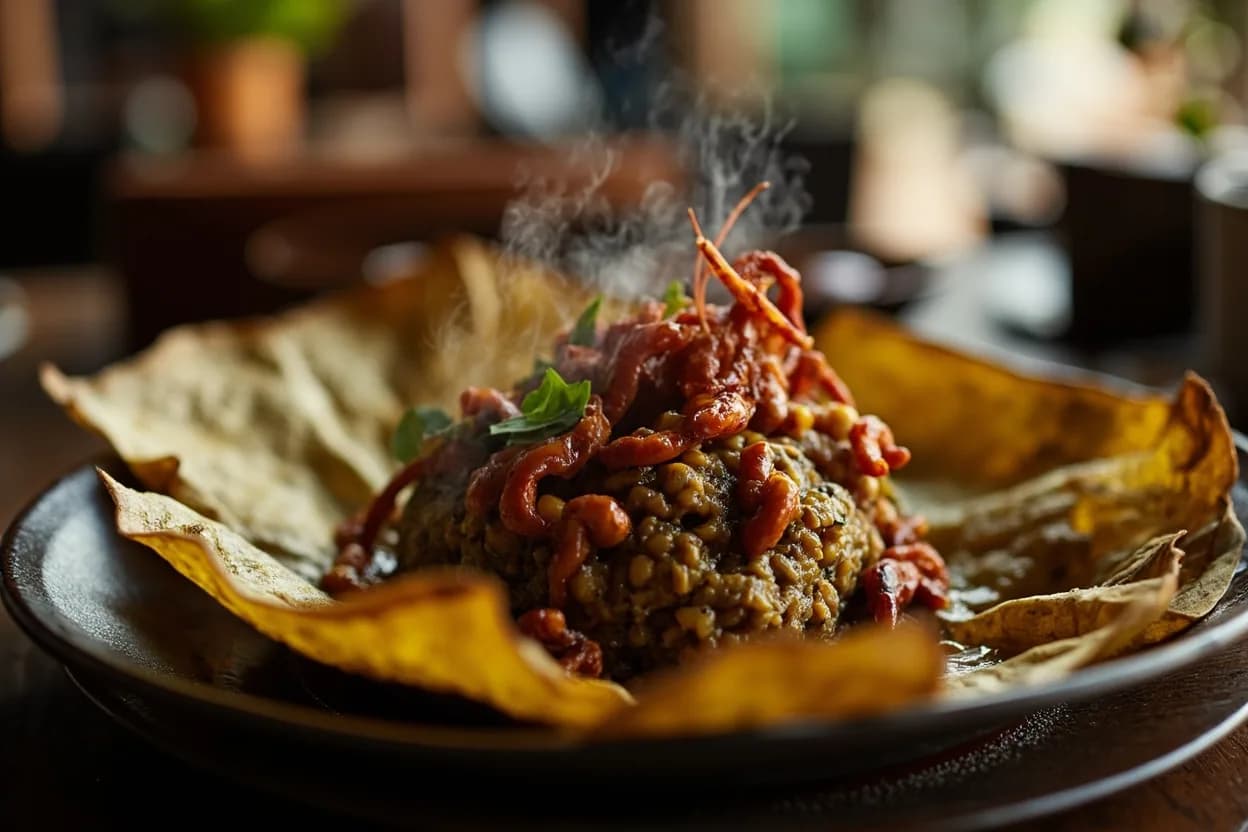
The dishes that define Sindhi, documented in the Canon.
References
- 1.Aroona Reejsinghani — Sindhi Cuisine (1988)
- 2.Colleen Taylor Sen — Feasts and Fasts: A History of Food in India (2015)
- 3.Rita Jamshed Kapadia — The Art of Sindhi Cooking (2003)
Confidence: high
Notes
Sai bhaji — the Sindhi soul dish
Sai bhaji (sai = green, bhaji = vegetable) is the dish most Sindhis cite when asked about home. It is spinach slow-cooked with chana dal, fenugreek leaves, tomato, and a handful of other seasonal vegetables until they collapse together into a dark, unified mass — earthy, slightly sour, deeply savory. It is eaten at virtually every weekday lunch in Sindhi households across the diaspora. Unlike saag, it is not creamed or blended; the long cooking does the work.
Displacement and cuisine preservation
Sindhi cuisine offers a rare case study in cuisine-as-identity. Because Sindhis dispersed without a geographic homeland to return to, food became the primary carrier of community identity — more so than language (which shifted rapidly to the local tongue in India) or religion (which Sindhis share with most Hindus). Community cookbooks, compiled and printed by Sindhi sabhas (community organizations) from the 1950s onward, were an early form of cultural archiving that predates any academic food-preservation project.