West Africa
Sierra Leonean
Also: Sierra Leone cuisine, Krio cuisine, Leonean cooking
A West African Atlantic creole tradition anchored in cassava leaf stew and groundnut soup, layered with Krio, Temne, Mende, and Fula influences along a storied coastal capital.
Sierra Leonean cuisine is a complex, multi-ethnic food tradition shaped by the indigenous Temne, Mende, Limba, and Fula peoples of the interior, and the distinctive Krio (Creole) community of Freetown — descendants of liberated Africans, Nova Scotian Black Loyalists, and Jamaican Maroons resettled from the 1790s onward. The result is a cuisine with African-Atlantic creole dimensions unmatched in West Africa: rice dominates as the staple, cassava leaf stew (plassas) is the national dish, and a robust pepper-and-palm-oil flavor architecture underlies nearly every preparation. Groundnut soup, jollof rice, and fufu are shared with the broader region; but the specific combination of cassava leaves cooked with palm oil, dried fish, and peanut paste is uniquely Sierra Leonean.
The flavour base
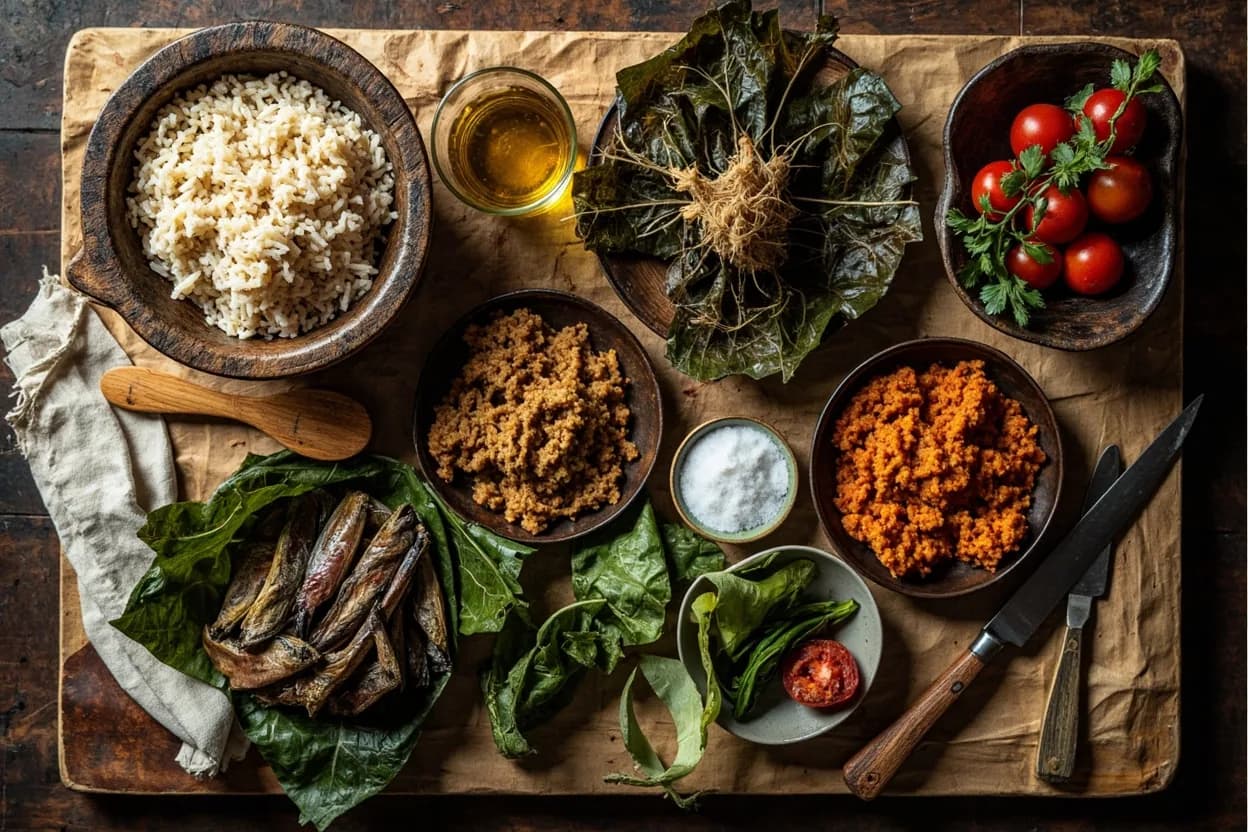
Palm oil, ground crayfish or dried fish, and fermented locust bean (ogiri) build the umami foundation; cassava leaves pounded to a smooth paste and slow-cooked with peanut butter provide both starch and fat in the national plassas.
Pantry staples
Key ingredients
Signature techniques
Signature dishes
Sierra Leonean on the table


At the table
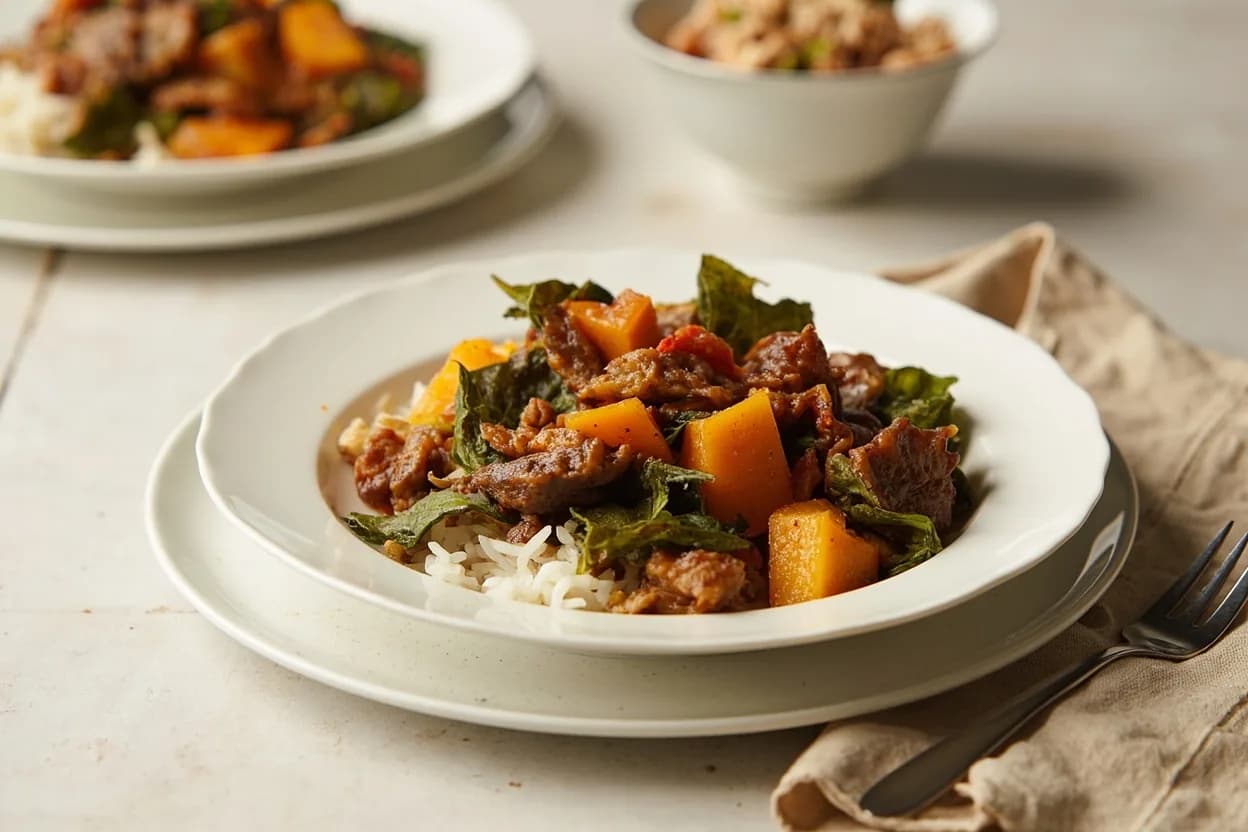
Rice is non-negotiable at the main meal — Sierra Leoneans say 'if you haven't eaten rice, you haven't eaten.' The main meal is midday or early evening, centred on a stew or soup ladled over rice. Fufu with soup is the alternative. Breakfast may be bread with margarine and tea (Krio urban tradition) or left-over rice and stew reheated. Kola nuts are offered to guests upon arrival — a social ritual predating the main meal. Street food in Freetown includes akara fritters, roasted corn, puff-puff (fried dough), and suya-adjacent grilled meat skewers.
History & context
Sierra Leone's culinary history has three interwoven strands. The indigenous traditions — Temne, Mende, Limba, Fula — were primarily rice and palm-based, adapted to forest and savanna environments. The 1787 founding of Freetown as a resettlement colony for freed Black people from London introduced Caribbean, North American, and recaptured African traditions into a single urban point. The Krio community that emerged synthesised cooking from dozens of African ethnic backgrounds with British colonial influence (bread, tea) and Caribbean traditions (akara from Yoruba-Brazilian contact, pepperpot from Jamaica). The slave-trade era meant that cassava — a high-yield, drought-resistant Brazilian introduction — became central. Post-independence (1961), and especially during the brutal civil war (1991–2002), rural foodways contracted while urban Freetown cooking maintained its hybrid character.
Regional variations
- Freetown and Western Area (Krio)
Most creolised tradition; akara, benni-seed cakes, and bread-based breakfast reflect multi-ethnic diaspora influence; okra soup made with Atlantic seafood.
- Northern Province (Temne and Limba)
Rice and cassava leaf remain central; more restrained spicing; baobab leaf and fonio appear in drought-season cooking.
- Southern and Eastern Provinces (Mende)
Richer palm-oil usage; bushmeat (including duiker and forest porcupine) more common; palm wine drinking culture more developed.
- Fula (northern highlands)
Pastoral tradition: fermented milk (nono), millet porridge, and grilled meat; less leafy-green stew, more grain-forward diet.
Related cuisines
- Liberian
Near-identical cassava leaf and palm butter traditions; both were shaped by resettlement colonial history (Americo-Liberian parallels Krio); fufu with palm butter is a direct shared dish.
- Guinean
Groundnut soup, jollof rice, and plassas cognates cross the northern border; Susu and Temne cultural exchange is continuous.
- Gambian
Jollof rice tradition and yassa preparations shared; Atlantic creole ports have parallel food histories.
- Brazilian Afro-diaspora (Bahia)
Krio food has traceable links to returned Lagos-Brazilian ('Aguda') and Nova Scotian communities; akara / acarajé is the most documented shared dish.
Canonical recipes
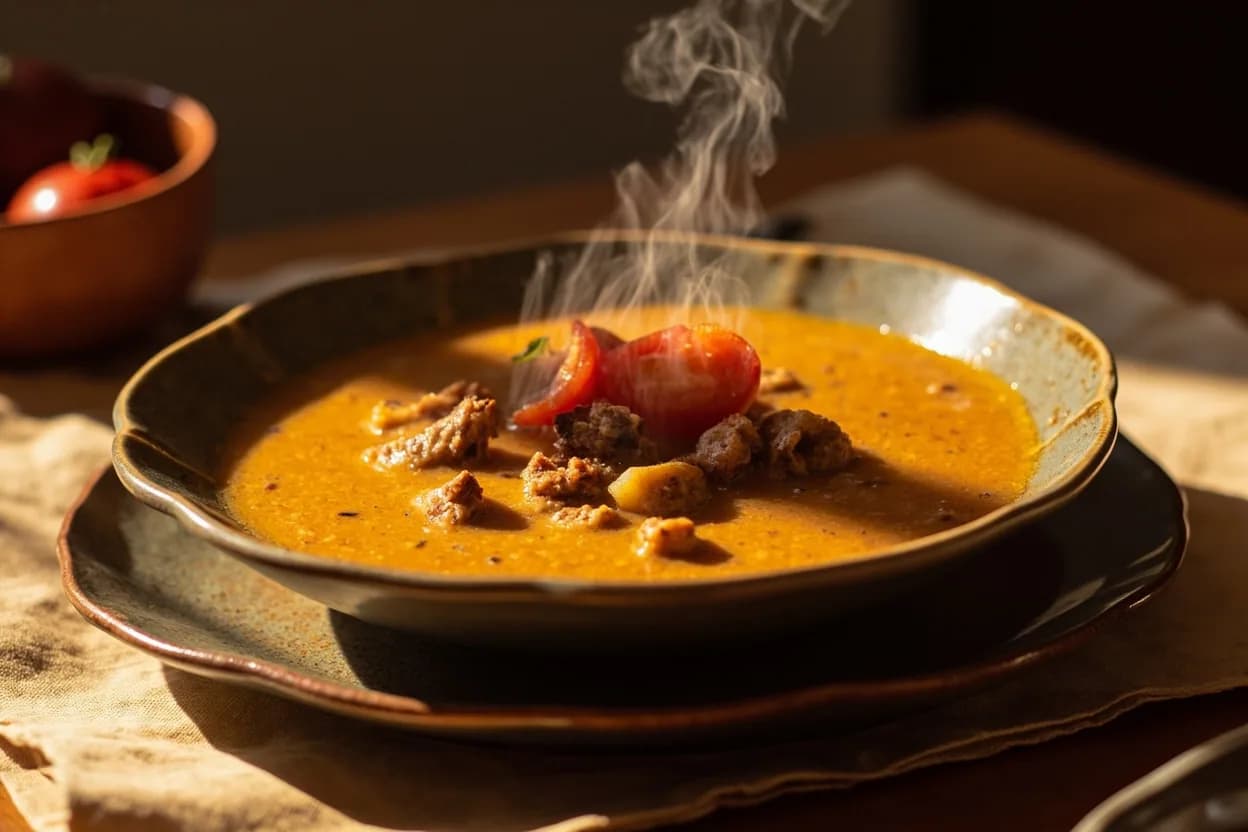
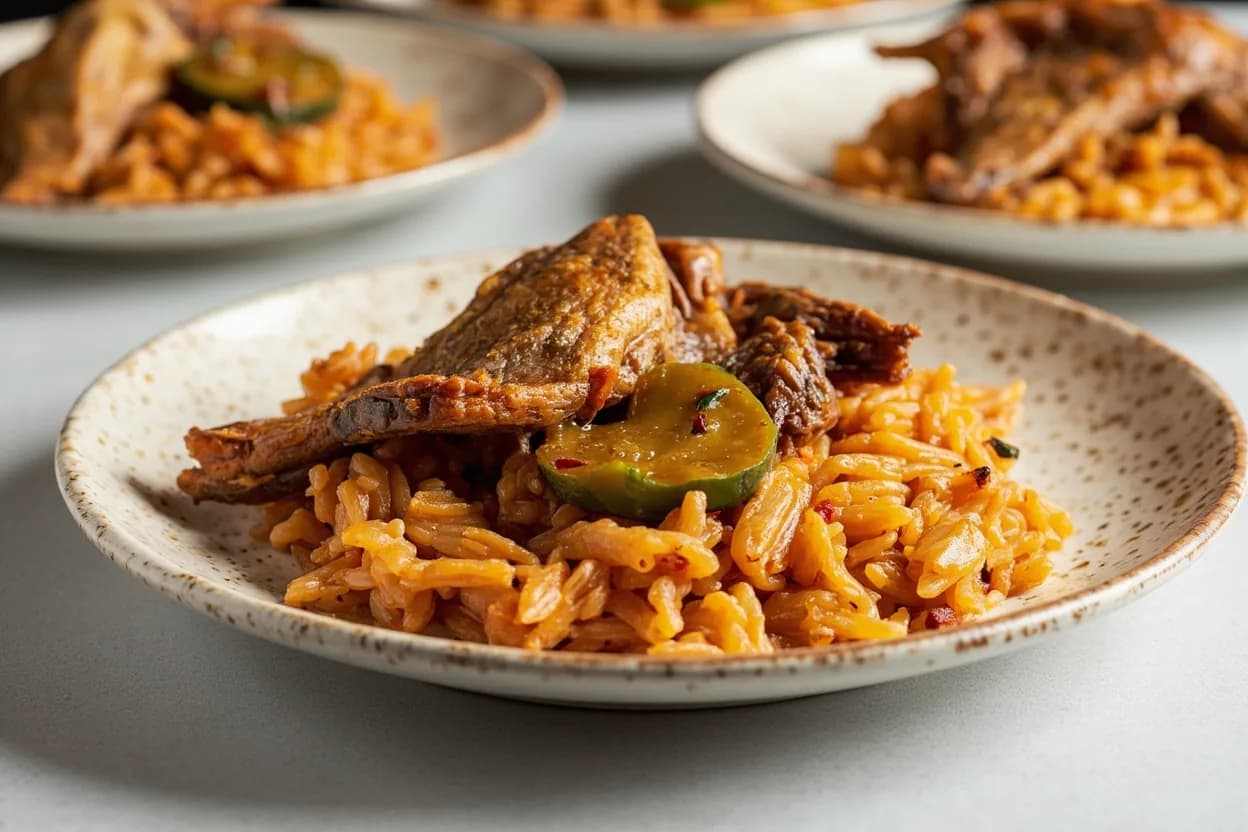
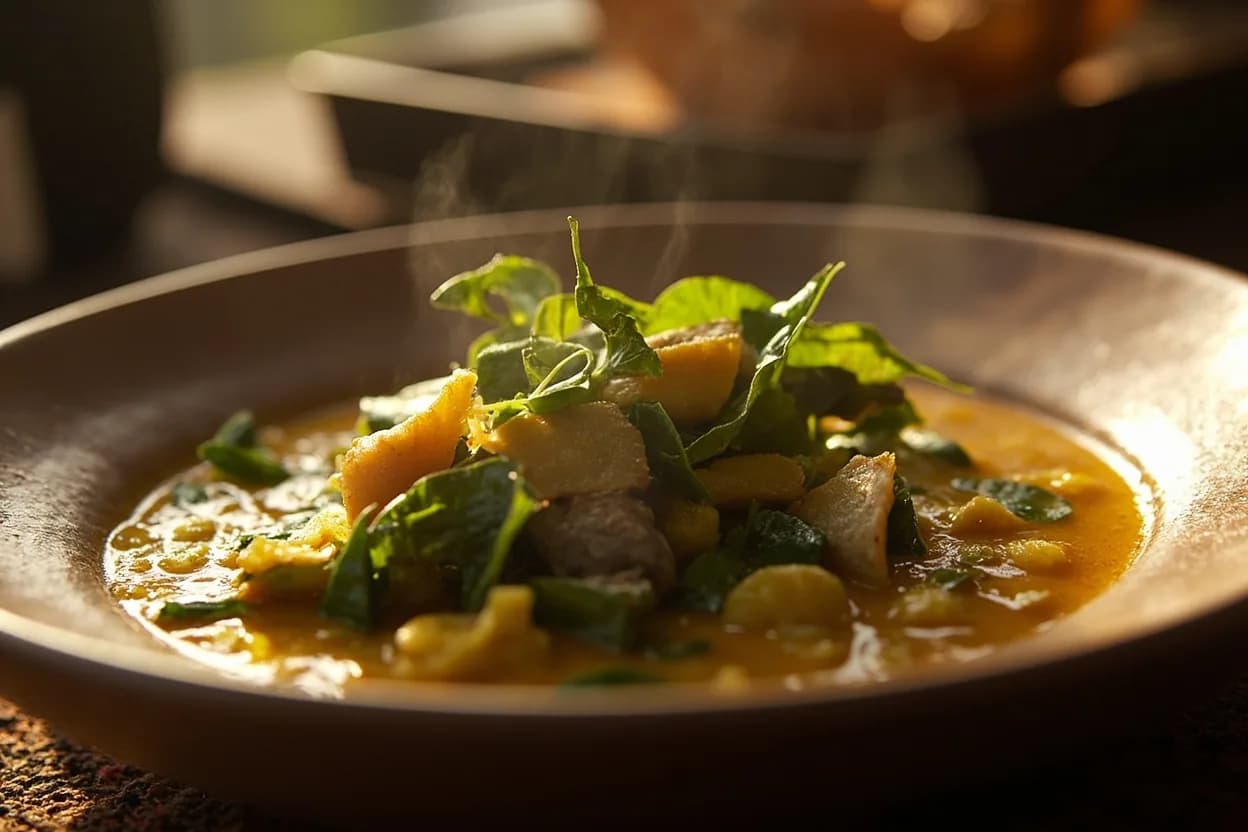
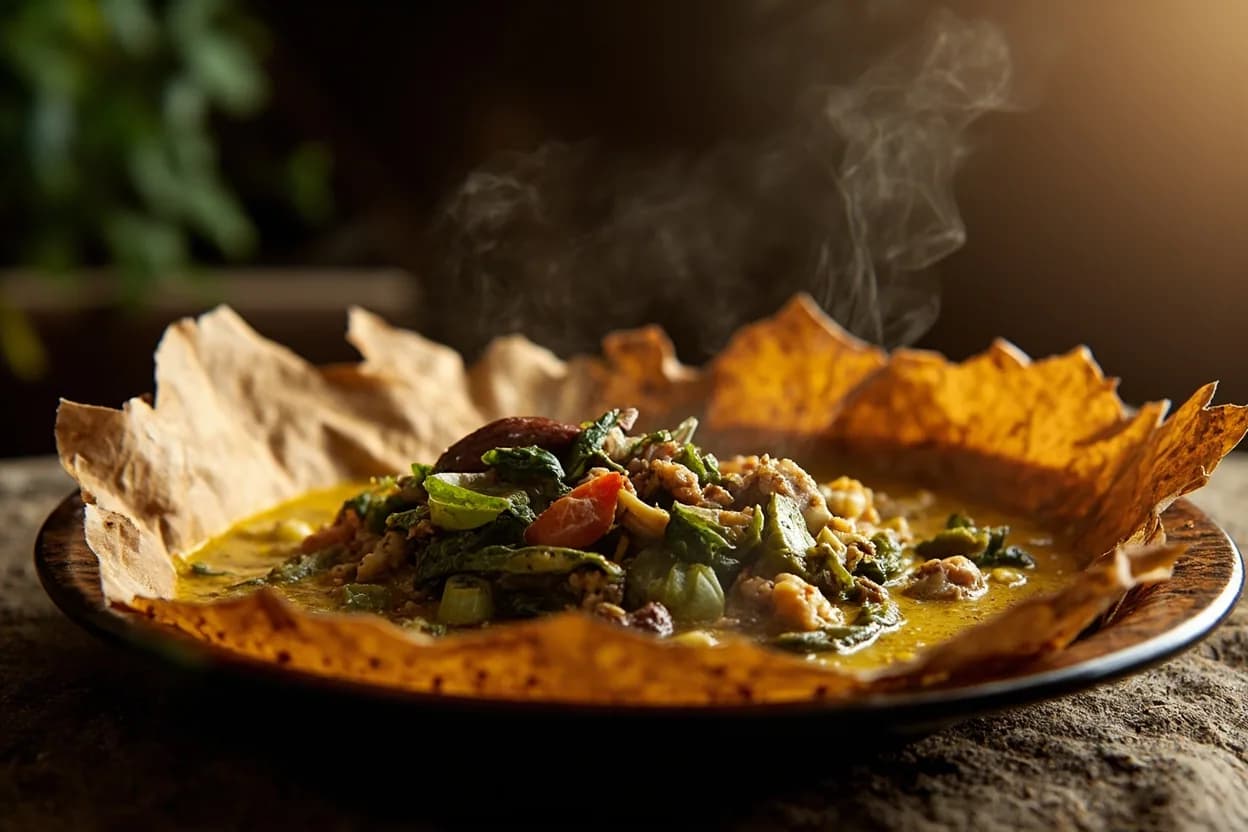
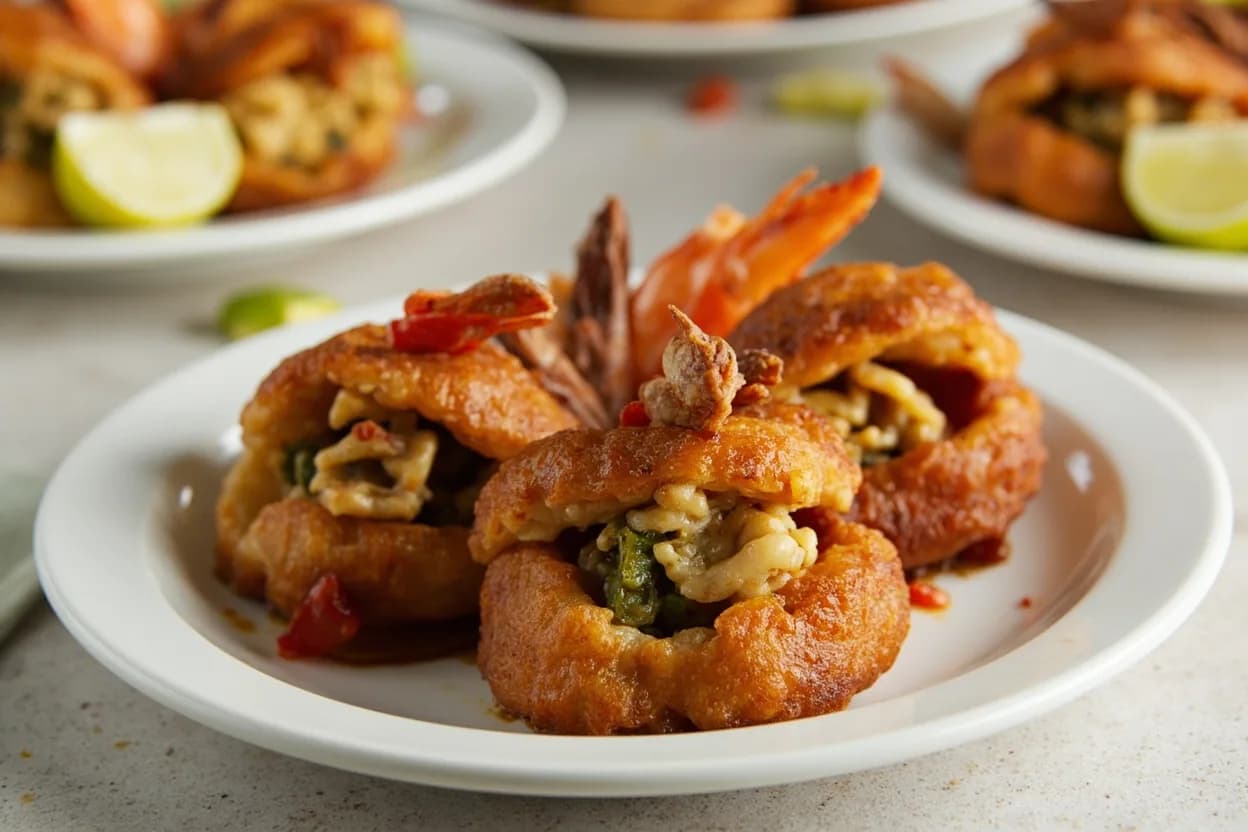
The dishes that define Sierra Leonean, documented in the Canon.
References
- 1.Vivienne Sassen & Abena Ofori-Mensah (eds.), 'West African Food and Agriculture' (FAO Regional Office, Accra, 2001)
- 2.Jessica B. Harris, 'The Africa Cookbook: Tastes of a Continent' (Simon & Schuster, 1998)
- 3.Christopher Fyfe, 'A History of Sierra Leone' (Oxford University Press, 1962)
- 4.Ismail Rashid, 'Sierra Leone: A Political History' (Hurst, 2019)
Confidence: high
Notes
Plassas — national dish and cultural marker
Plassas (from the Portuguese 'peças' — a colonial trade term repurposed) is Sierra Leone's defining dish. Pounding cassava leaves is arduous — it takes 30–45 minutes of sustained mortar work to reduce the tough leaves to a smooth paste — and this labour is a social act: it binds women in household or neighbourhood groups. The final stew, enriched with palm oil, peanut paste, dried fish, and meat, is simultaneously rustic and deeply flavored. Its smell — distinctive, earthy, fermented — is what returning Sierra Leoneans say they miss most.
Rice identity
Sierra Leone is among the world's highest per-capita rice consumers, eating an average of over 100 kg per person annually. This is not simply a preference — rice is identity. Telling a Sierra Leonean that a meal without rice 'still counts as eating' is a reliably contested claim. Historically, Sierra Leone is part of the 'Rice Coast' of West Africa (the coastline from present-day Guinea-Bissau to Liberia), where indigenous Oryza glaberrima rice cultivation predates Asian varieties by millennia.