Pacific Coast Mexico
Guerreran Coastal
Also: Guerrero cuisine, cocina guerrerense, cocina de la Costa Grande y Chica
A Pacific Coast cuisine where indigenous Nahua and Amuzgo traditions meet African-Mexican heritage, producing pozole, chilate, and ceviche of singular depth.
Guerrero's coastal cuisine spans the Costa Grande (north, toward Michoacán) and Costa Chica (south, toward Oaxaca) and is shaped by three overlapping culinary genealogies: indigenous Nahua, Amuzgo, and Mixtec communities; the Spanish colonial port economy of Acapulco; and the African-descendant communities of the Costa Chica who preserve distinct techniques and ingredients. The resultado is a cuisine of enormous contrasts—pozole rojo made with hominy and pork or shark, the cacao-based chilate drink, Acapulco-style ceviche with its lime-citrus aggression, and iguana preparations still consumed in indigenous and Afro-Mexican villages. Guerrero produces some of Mexico's finest pozole traditions, tracing directly to pre-Hispanic ritual meals in which the dish was made with human flesh before European contact transformed it with pork.
The flavour base
Dried red chiles (ancho, guajillo, chile costeño), hominy corn, lime, and achiote form the primary grammar; cacao is the signature accent in the chilate drink tradition.
Pantry staples
Key ingredients
Signature techniques
Signature dishes
Guerreran Coastal on the table
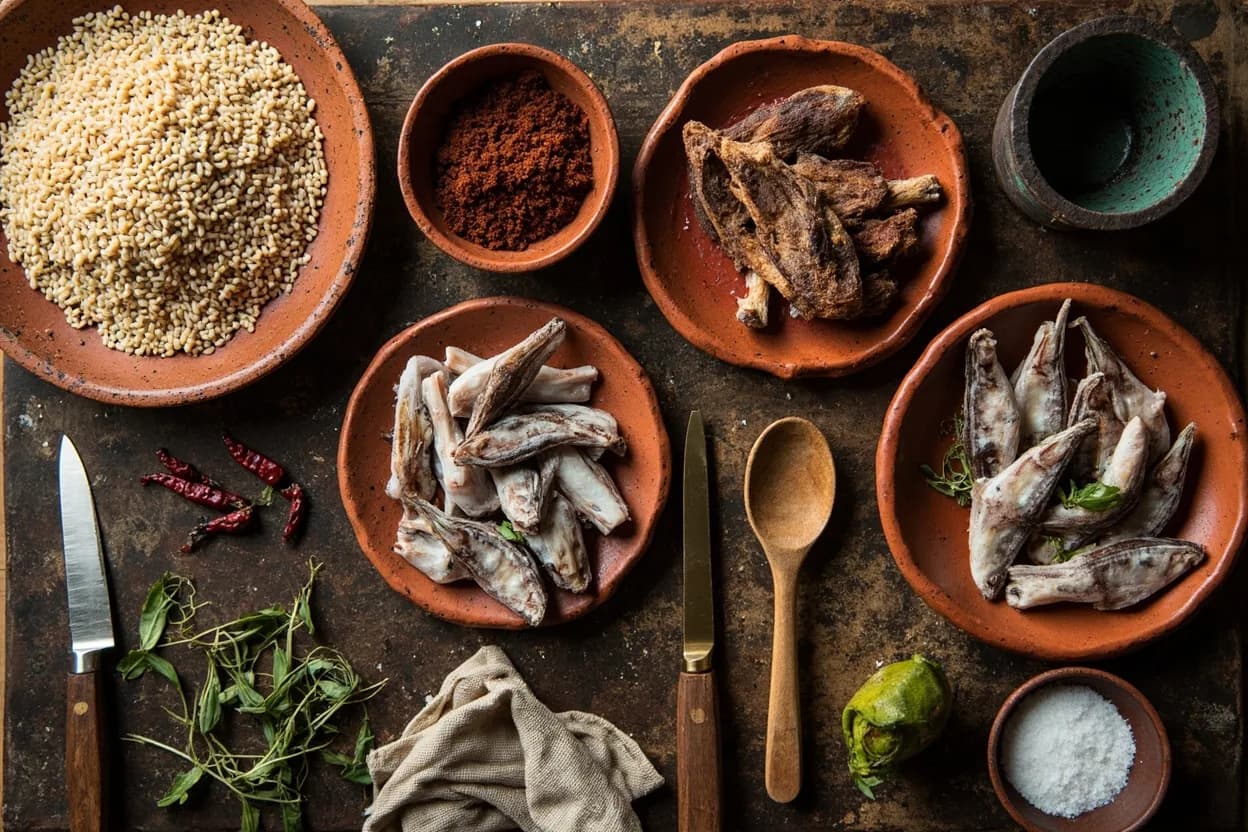
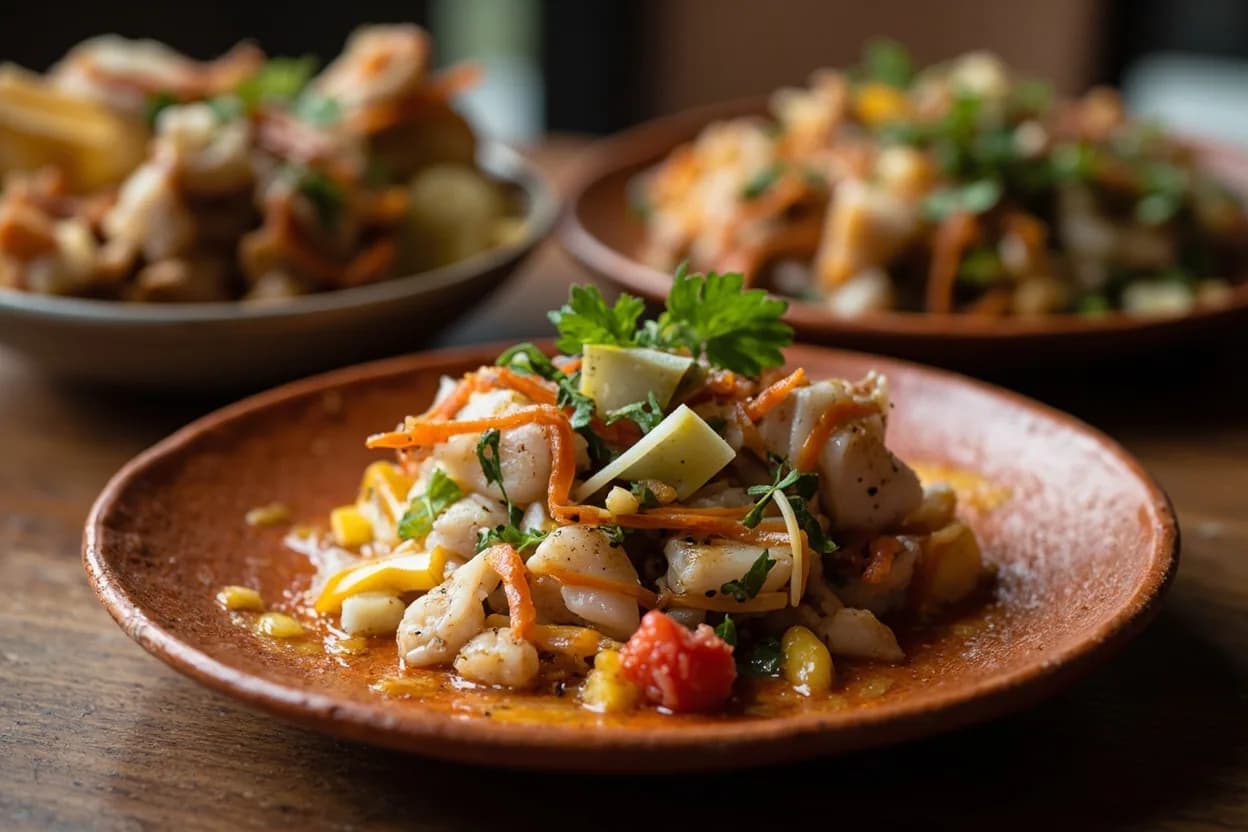
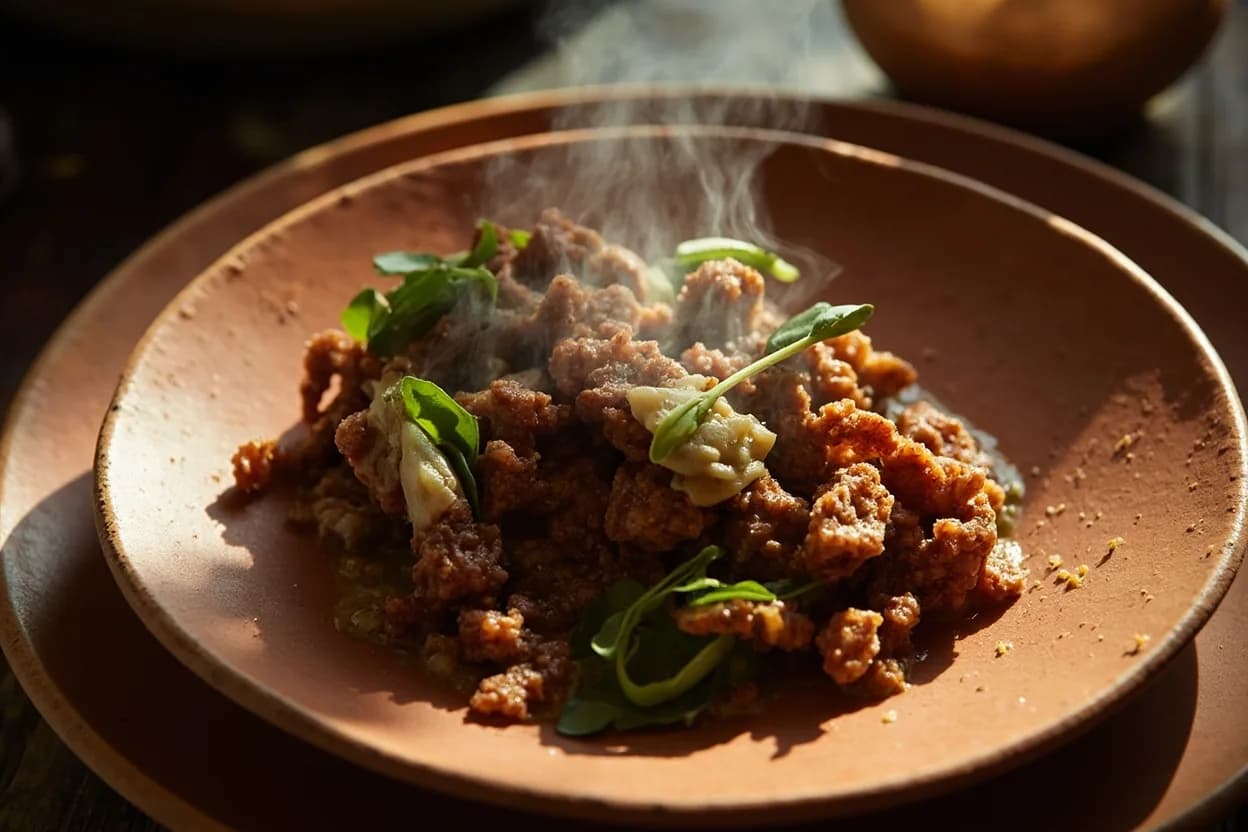
At the table
On the coast, morning brings fresh fish preparations and atole. The midday comida is substantial—pozole or fish stews served with tostadas, lime, and raw toppings (cabbage, oregano, radishes). Acapulco's tourist economy has layered a seafood-market culture on top of the local comida corrida. Chilate is consumed cold as a refreshment throughout the day in market towns of the Costa Chica.
History & context
Guerrero's pre-Hispanic cooking was dominated by Nahua cultures (including the Tlahuica and Cuitlateca), whose ritual pozole—recorded by Franciscan friars as a cannibal feast food subsequently cleansed by pork—is the most historically documented dish in the state. Acapulco became the terminus of the Manila Galleon trade (1565–1815), bringing Philippine ingredients (coconut preparations, tamarind) and establishing it as the most cosmopolitan port in New Spain. African enslaved people arrived via the Acapulco trade and settled the Costa Chica, where their descendants (Afro-Mexicans, now recognized in the 2020 Mexican census as a distinct group) maintain culinary practices including iguana preparation and specific chile-use patterns. The state was home to José María Morelos, a key figure in Mexican independence, and independence-era cooking is well-documented in local archives.
Regional variations
- Acapulco and Costa Grande
Cosmopolitan port influence; ceviche, pescado a la talla, coconut-inflected seafood; tourist economy has raised visibility but also diluted authenticity.
- Costa Chica (Cuajinicuilapa, Marquelia)
Afro-Mexican heartland; iguana, chilate, specific bean preparations; distinct chile use (chile costeño negro); strongest African culinary retention in Mexico.
- Inland Chilapa / Tixtla
Pozole rojo tradition is most intense here; markets specialize in pozole on Thursdays and Sundays; chile costeño grown in surrounding valleys.
- Nahua mountain communities (Montaña region)
More corn-and-bean-centric; pozole de guías (squash tendrils) consumed; limited meat; archaic Nahua culinary vocabulary preserved.
Related cuisines
Southern neighbor; shares chile traditions, iguana consumption, and Mixtec cultural overlap in the Costa Chica transition zone.
Northern neighbor along the Costa Grande; shared pozole tradition with different regional inflections; Michoacan's pozole is more white-style.
Direct overlap on the Guerrero coast—the Afro-Mexican tradition is a subset operating within the broader Guerreran coastal culinary space.
Canonical recipes
The dishes that define Guerreran Coastal, documented in the Canon.
References
- 1.Diana Kennedy, 'My Mexico' (1998)
- 2.Mónica Solís García, 'Pozole: Historia y Receta' in CONACULTA cookbook series
- 3.Bobby Vaughn & Ben Vinson III, 'Afroméxico' (2004)
- 4.Sophie D. Coe, 'America's First Cuisines' (1994)
Confidence: high
Notes
Pozole and pre-Hispanic ritual
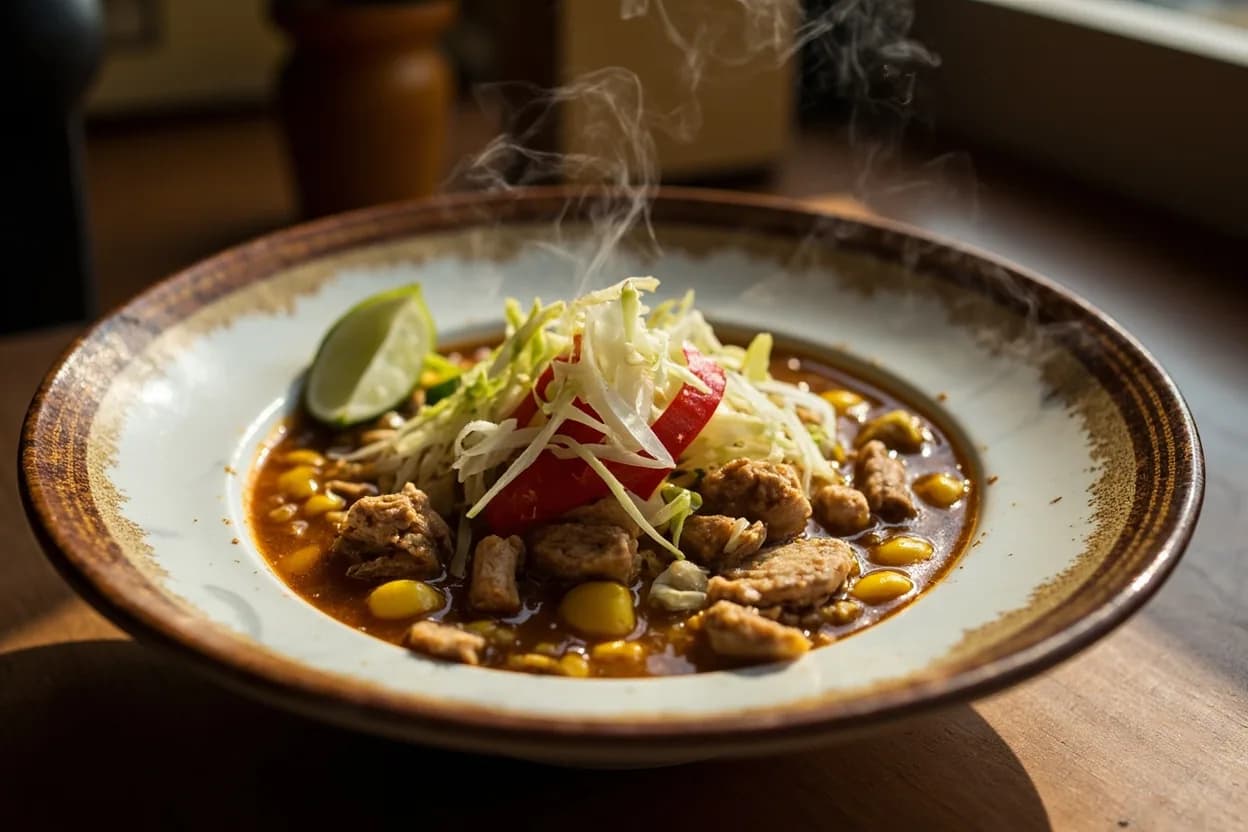
The pozole served across Guerrero today—hominy pork broth topped with cabbage, tostadas, and dried oregano—is directly descended from a pre-Hispanic ritual dish documented by Fray Bernardino de Sahagún in which human flesh was substituted with pork after the Spanish conquest banned human sacrifice. Guerrero's version remains the most ritually charged in Mexico, tied to civic holidays and Thursday market days.
Chilate
Chilate is a cold drink of cacao, rice, and canela (Ceylon cinnamon), cold-ground or blended and diluted with water without sugar. It is the signature refreshment of the Costa Chica and represents one of the oldest chocolate-drink traditions in Mexico—closer to pre-Hispanic practice than sweetened hot chocolate.