East Asia
Hunanese (Xiang Cuisine)
Also: Xiang Cai, Hunan Cuisine, Xiang Cuisine
China's fiercest cuisine — fresh chilies, fermented black beans, and wood-smoked meats producing a hot-sour-savory intensity that Sichuan's numbing spice never quite matches.
Hunanese cuisine, one of China's Eight Great Culinary Traditions, is defined by a trinity of heat, sourness, and smoke that sets it apart even from its spicy neighbor Sichuan. Where Sichuan relies on the mouth-numbing compound mala (Sichuan pepper plus dried chili), Xiang cuisine uses fresh chilies, pickled chilies, and fermented black beans to build a direct, penetrating heat with a sharper, more fermented edge. Hunan's landlocked, mountain-ringed geography and cold, damp winters drove the development of smoking and curing meats as preservation strategies, and those smoky flavors are now defining features of the cuisine even in modern cooking. Mao Zedong's patronage of his home province's food made several Hunanese dishes internationally famous.
The flavour base
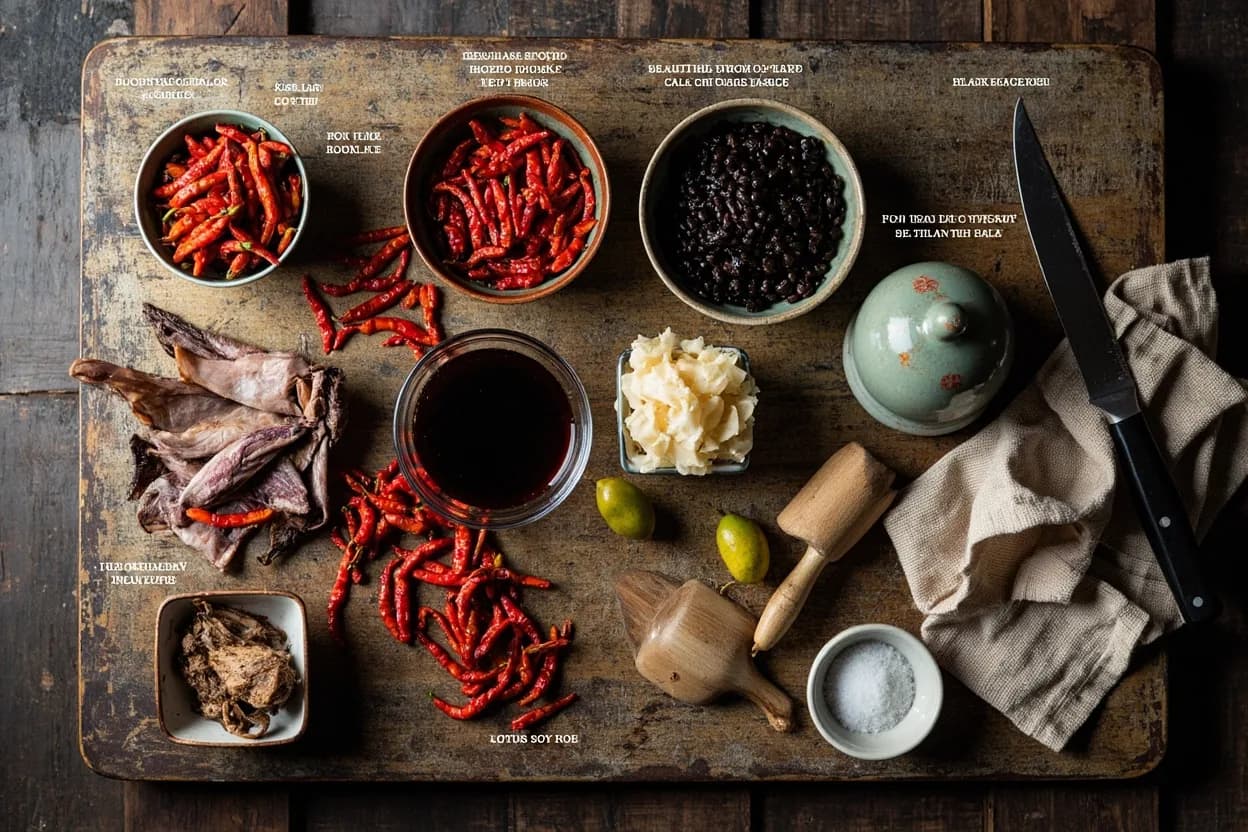
Fresh and pickled chilies (duo jiao) layered with fermented black beans (dou chi), garlic, and ginger — plus the background smoke of cured meats that permeates even dishes where the meat is a supporting element.
Pantry staples
Key ingredients
Signature techniques
Signature dishes
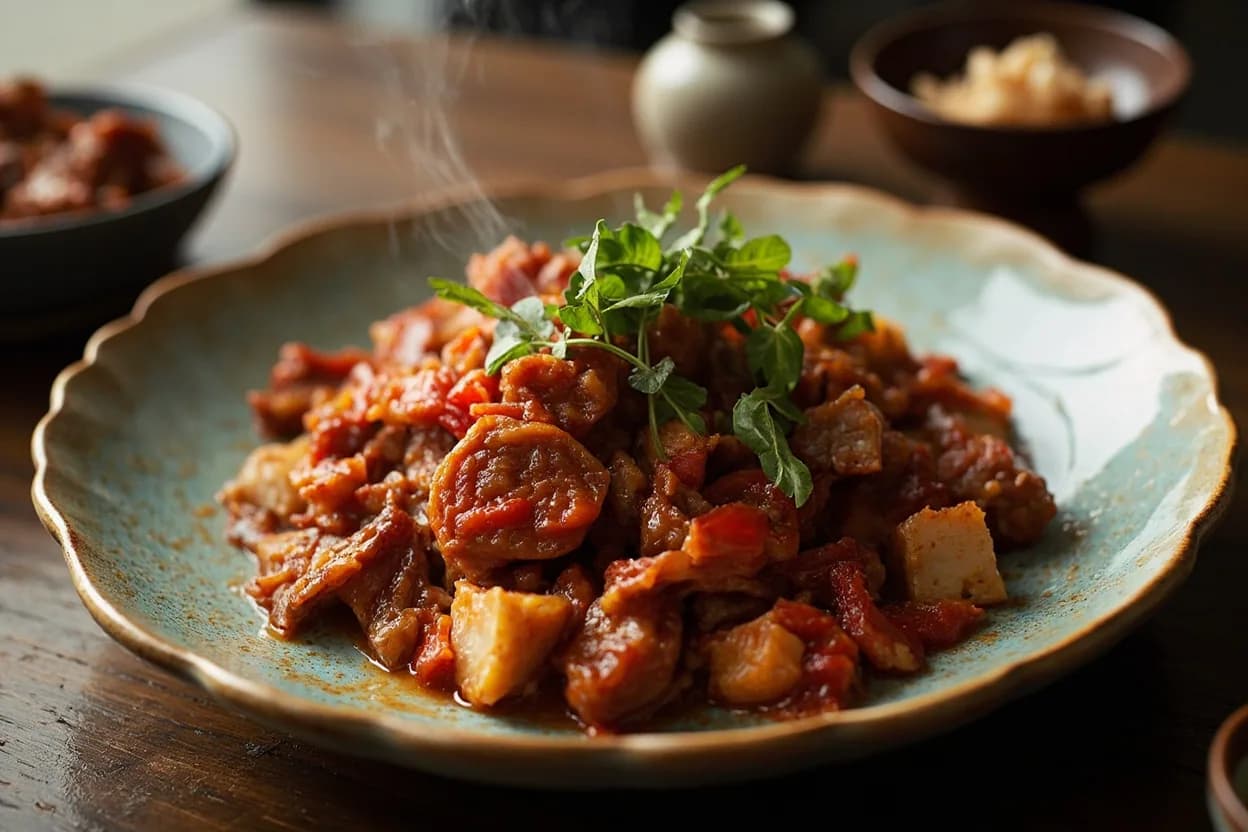
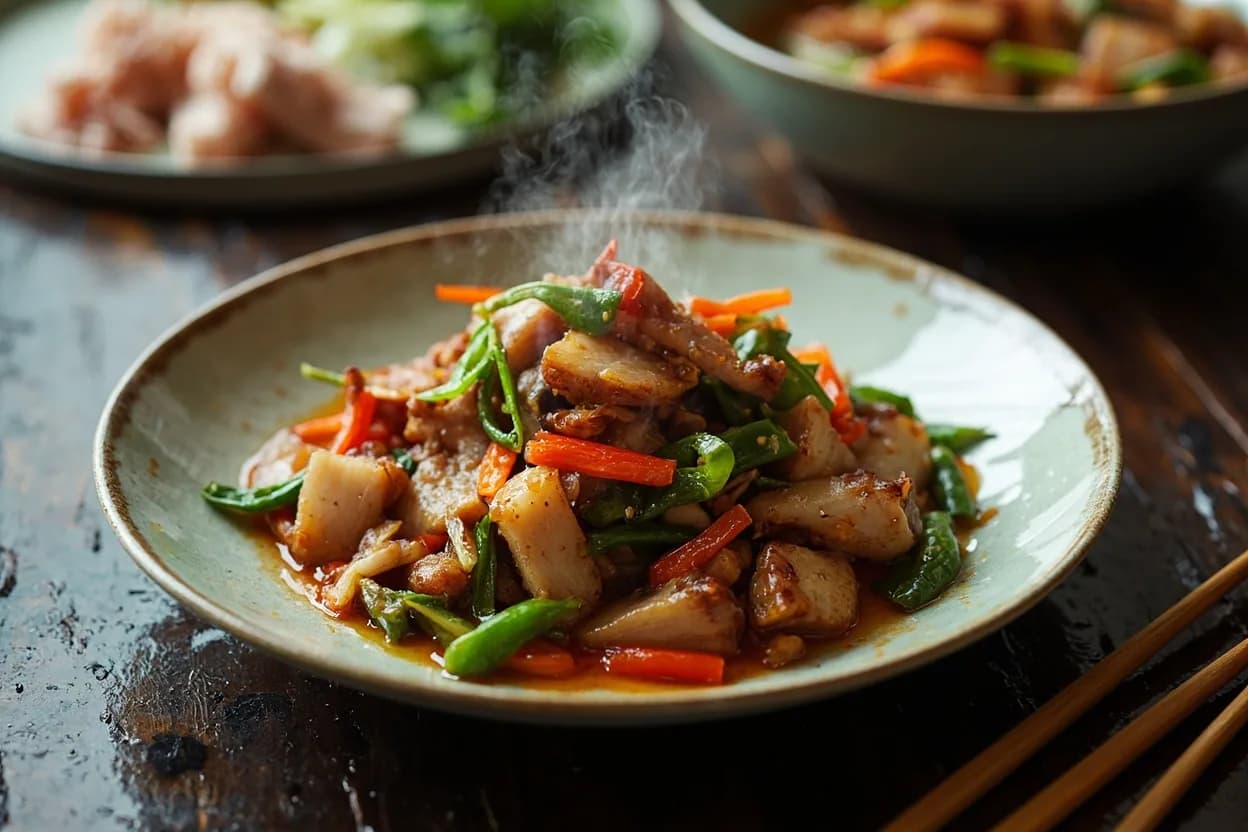
Hunanese (Xiang Cuisine) on the table
At the table
Shared-dish family-style meals dominated by boldly flavored hot dishes. Cold dishes (leng pan) typically feature cured meats and pickled vegetables to open a meal. Rice is the staple base and is treated as essential ballast against the heat of main dishes. Breakfast culture in Changsha centers on mi fen (rice noodle soups) and stinky tofu from night market stalls.
History & context
Hunan's culinary identity is rooted in the agricultural abundance of Dongting Lake and the Xiang River basin — rice, freshwater fish, and pork — combined with the preservation imperatives of its cold, humid winters. Chili peppers arrived via trade routes in the late Ming dynasty (circa 17th century) and were adopted with exceptional enthusiasm; within generations they had displaced Sichuan pepper as the primary source of heat. The cuisine rose to national prominence partly through Mao Zedong's well-documented love for his home food: Mao famously declared 'If you cannot eat chili peppers, you cannot be a revolutionary.' Hunanese chefs at Beijing restaurants serving the party elite spread regional dishes to a national audience. Today Xiang cuisine is one of China's most commercially successful culinary exports, with chains from Changsha expanding across Asia.
Regional variations
- Xiangxi (Western Hunan)
Most rustic and smoke-heavy; strong ethnic Tujia and Miao minority influences; uses more sour fermented ingredients and wild game.
- Xiangnan (Southern Hunan)
Hotter still; maximum fresh chili use; reflects proximity to Guangdong with some lighter preparations alongside fiery ones.
- Dongting Lake region (Northern Hunan)
Fish-focused; the fish head with duo jiao and field-snail dishes originate here; slightly milder spice from freshwater-cuisine traditions.
- Changsha (Provincial Capital)
Most refined and commercially developed; birthplace of the modern duo jiao fish head trend and the night-market stinky tofu tradition.
Related cuisines
- Sichuan
Both are intensely spicy Chinese regional cuisines, but Sichuan's mala (numbing + hot) contrasts with Xiang's duo jiao (hot + sour + smoky) profile.
- Guizhou
Shares the sour-spicy axis and fermentation emphasis; Guizhou's suan tang (sour broth) tradition parallels Hunan's pickled chili techniques.
- Hakka
Both traditions deeply value preserved and smoked meats; overlapping use of preserved mustard greens (mei cai / xue cai) in braised pork dishes.
Canonical recipes
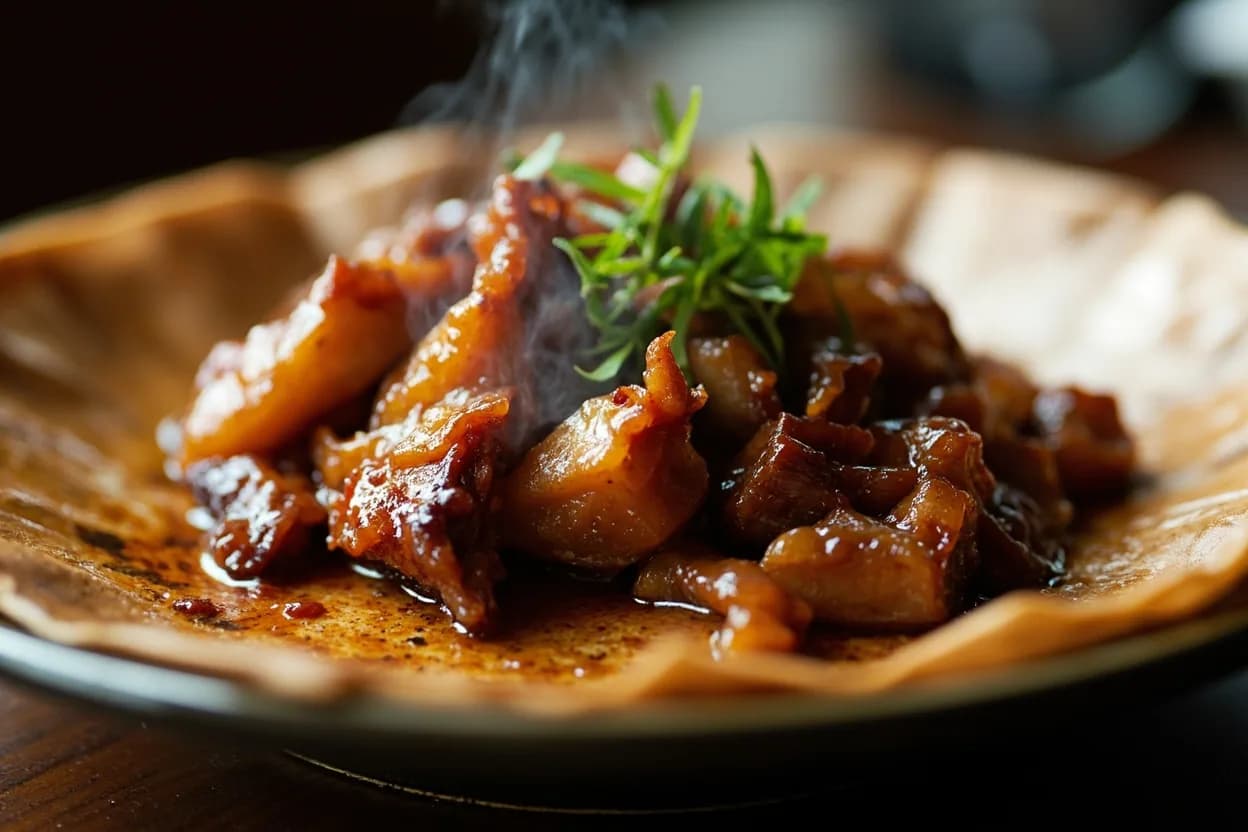
The dishes that define Hunanese (Xiang Cuisine), documented in the Canon.
References
- 1.Every Grain of Rice: Simple Chinese Home Cooking — Fuchsia Dunlop (W.W. Norton, 2012)
- 2.Revolutionary Chinese Cookbook: Recipes from Hunan Province — Fuchsia Dunlop (W.W. Norton, 2006)
- 3.The Food of China — E.N. Anderson (Yale University Press, 1988)
- 4.Zhongguo Ba Da Cai Xi (China's Eight Great Cuisine Traditions) — China Light Industry Press, 2008
Confidence: high
Notes
Xiang vs. Sichuan heat
Hunanese heat is frequently described as hotter in practice than Sichuan heat, even though both cuisines are labeled 'spicy.' The difference is mechanism: Sichuan pepper anesthetizes the mouth before the chili fires, while Hunanese cooking delivers its capsaicin directly with no numbing preamble. The pickled chili (duo jiao) also adds an acidic sharpness that amplifies perceived heat.
The smoked pork tradition
Hunanese la rou (smoked pork belly) is made in the coldest months by hanging cured pork over smoking hardwood, pine, or rice chaff for 2–4 weeks. The result is intensely flavored, shelf-stable, and used not only as a dish in itself but as a seasoning agent, the way lard or guanciale functions in other traditions. Its presence in a stir-fry fundamentally transforms the dish's character.