East Asia
Kyoto Cuisine (Kyo-ryori)
Also: Kyo-ryori, Kyoto cooking, obanzai, kyoto-ryori
The refined vegetable-centered cooking of Japan's ancient imperial capital — a cuisine built on extraordinary local produce, gossamer-light dashi, centuries of Buddhist vegetarianism, and the art of making the ordinary transcendent.
Kyo-ryori is the collective term for the several related culinary traditions that evolved in Kyoto, Japan's imperial capital for over a millennium. It encompasses kaiseki (the formal multi-course high cuisine), shojin ryori (Buddhist temple vegetarian cooking), and obanzai (the workaday home-cooking tradition of Kyoto townswomen). What unifies them is an aesthetic philosophy: light usukuchi soy sauce that preserves the natural color of ingredients; dashi drawn to be almost transparent yet intensely flavored; a near-reverential relationship with Kyoto's extraordinary heirloom vegetables (kyo-yasai); and the influence of centuries of imperial and aristocratic patronage that demanded beauty as non-negotiable. Kyo-ryori is Kyoto's answer to its own inland geography — no sea access meant developing the finest preserved, pickled, dried, and fermented foods in Japan.
The flavour base
Light-draw ichiban-dashi from premium Rishiri kombu (the best grade) and honkarebushi katsuobushi, seasoned with usukuchi (light-colored) soy sauce to preserve ingredient color; Kyoto white miso (saikyo miso) as the sweeter, milder fermented paste. For shojin cooking, kombu-and-dried-shiitake dashi with no animal products.
Pantry staples
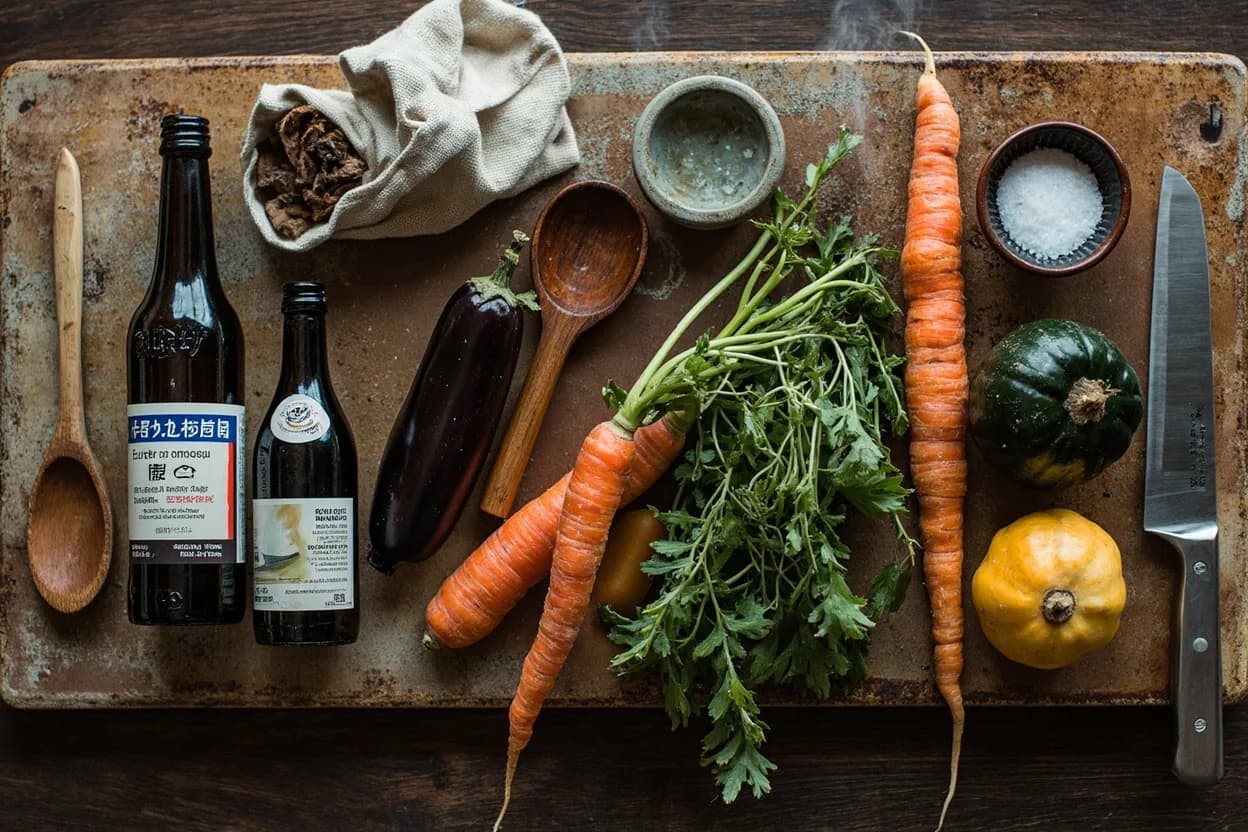
Key ingredients
Signature techniques
Signature dishes
Kyoto Cuisine (Kyo-ryori) on the table
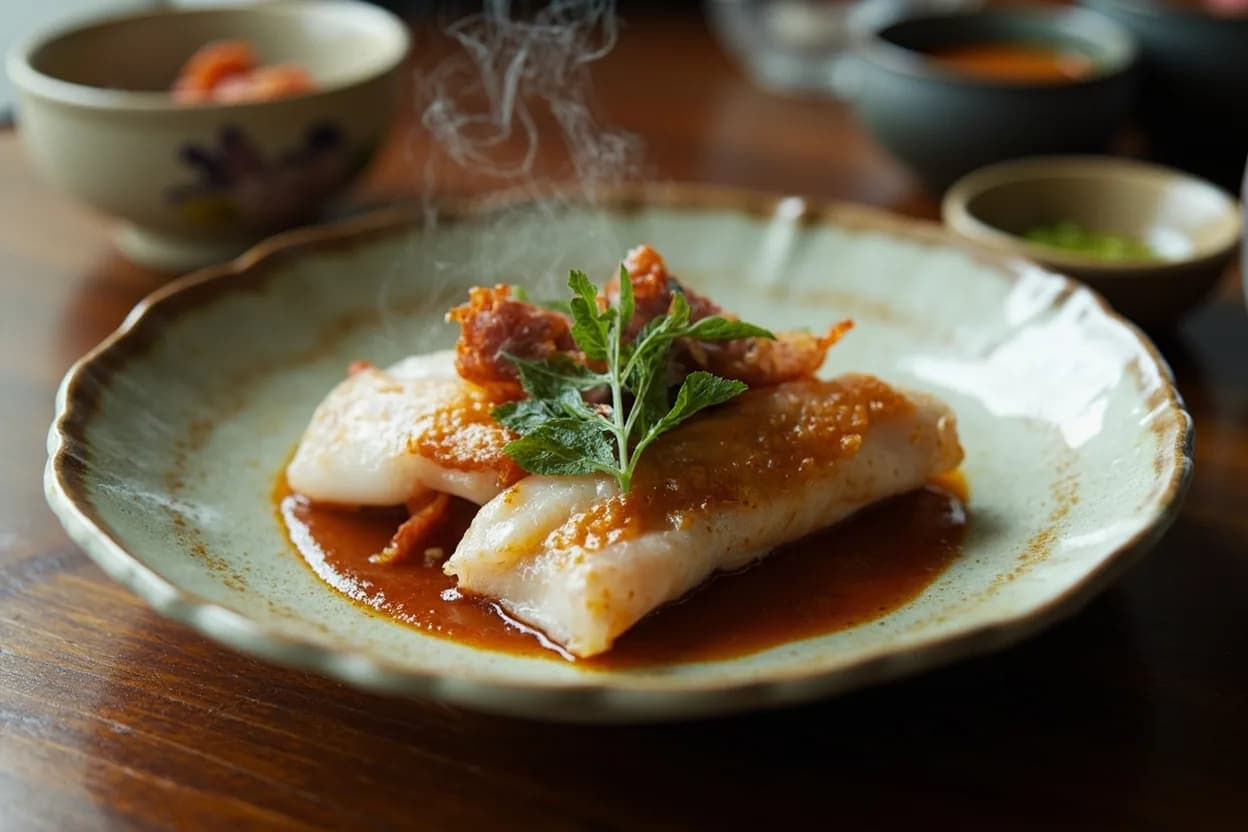
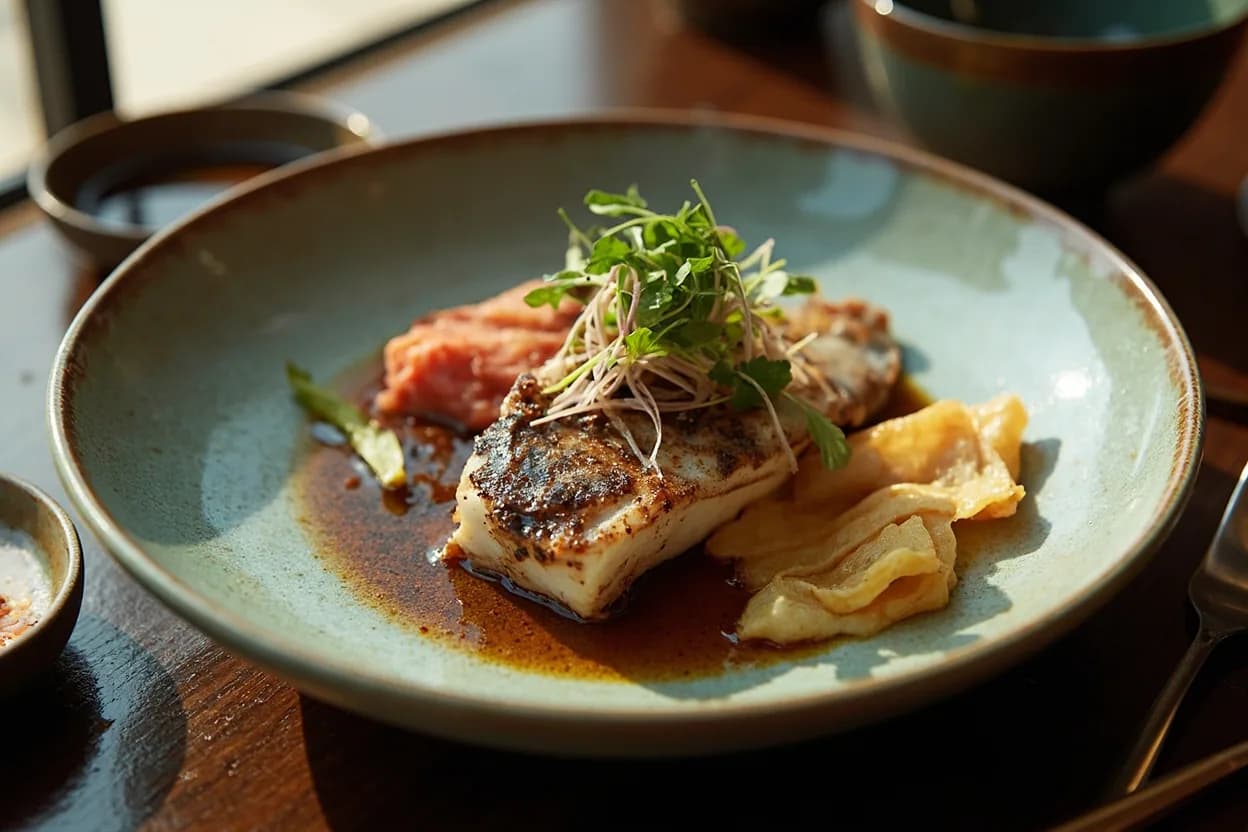
At the table
Kyo-ryori has two registers. In the formal kaiseki setting, the structure is a sequential multi-course progression (see Kaiseki entry). In the daily obanzai tradition — the living home cuisine of Kyoto — meals center on rice with miso soup, and three to five small vegetable and protein sides displayed in shallow lacquer trays or shared bowls; the cook replenishes from a larger batch prepared at the start of the day. Kyoto breakfast (朝ごはん, asa-gohan) is considered as important as dinner — pickles, rice, miso, and a small nimono.
History & context
Kyoto's culinary distinction arose from a convergence of factors spanning fifteen centuries. As imperial capital from 794 (the Heian period), the city hosted the Emperor's court and demanded refined, aestheticized food — the early precursor to kaiseki. Buddhist temples (Daitokuji, Nanzenji, Ryoanji) developed shojin ryori — vegetarian temple cooking without meat or alliums — that became a parallel culinary tradition. Kyoto's inland location and abundant spring water (from the surrounding mountains) made it the center of tofu, yuba, and sake production; its isolation drove innovation in preserved foods like shibazuke, suguki, and senmaizuke. The Muromachi shogunate's patronage of tea culture (Sen no Rikyū, 1522–1591) directly produced cha-kaiseki. Kyo-yasai — the 36 designated Kyoto heirloom vegetable varieties — were systematically catalogued and protected in the modern era, rescuing strains that nearly vanished during the 20th century's agricultural homogenization.
Regional variations
- Higashiyama district (Gion)
Ryotei-kaiseki heartland; hamo (pike conger) during Gion Festival is the defining summer meal; some of Japan's oldest and most expensive restaurants.
- Arashiyama / Sagano
Temple district; yudofu (kombu-simmered tofu) restaurant culture along the Oi River; shojin-influenced even in secular restaurants.
- Nishiki Market (Kyoto's kitchen)
The 400-year-old covered market supplies kyo-yasai, tsukemono, yuba, and seasonal prepared obanzai to both restaurants and households; obanzai tradition most visible here.
- Tamba region (north of Kyoto)
Mountain produce capital: matsutake mushrooms, black soybeans (kuromame), chestnuts, and red Tamba beans used in New Year's osechi-ryori.
Related cuisines
Kaiseki is Kyo-ryori's highest formal expression — the same dashi principles and kyo-yasai ingredients elevated to sequential multi-course theater.
Washoku is the national frame; kyo-ryori is its most philosophically articulated regional expression.
- Shojin Ryori
Buddhist temple cooking is embedded within kyo-ryori — many Kyoto restaurants on temple grounds serve pure shojin; its vegetable ethics permeate even non-temple kyo-ryori.
- Osaka (Naniwa) Cuisine
The neighboring city's cuisine is bolder, richer, and more abundant — kuidaore versus Kyoto's restrained hana yori dango (beauty over excess).
References
- 1.Kaiseki: The Exquisite Cuisine of Kyoto's Kikunoi Restaurant — Murata Yoshihiro (Kodansha, 2006)
- 2.Japanese Farm Food — Nancy Singleton Hachisu
- 3.At the Japanese Table — Lesley Downer
- 4.The Japanese Kitchen — Hiroko Shimbo
Confidence: high
Notes
Kyo-yasai — The Heirloom Vegetable Tradition
The 36 designated kyo-yasai (京野菜) — heirloom Kyoto vegetable varieties — were nearly lost to 20th-century agricultural consolidation. A prefectural preservation program begun in the 1990s revived them. Kamo-nasu eggplant, kintoki carrot, shishigatani kabocha squash, and kujo negi green onion are now protected cultivars; their flavor profiles are distinctly sweeter and more nuanced than standard commercial varieties.
Obanzai as Cultural Archive
Obanzai — Kyoto's everyday home-cooking tradition — is more culturally important than its simplicity suggests. The word combines 'o' (honorific), 'ban' (everyday food), and 'zai' (ingredients/dishes). These small rotating dishes of simmered lotus root, seasoned hijiki, or dressed spinach with sesame are the daily-life manifestation of the same seasonal and aesthetic philosophy that kaiseki expresses in formal register. Obanzai restaurants in Kyoto display the dishes in trays, allowing diners to compose their own meal by the dish.