East Asia
Kyushu Tonkotsu Tradition
Also: Kyushu cuisine, Hakata food culture, Southern Japanese cooking
Japan's southernmost main island cooking defined by cloudy pork-bone broth, fermented spice, and a proud shochu culture.
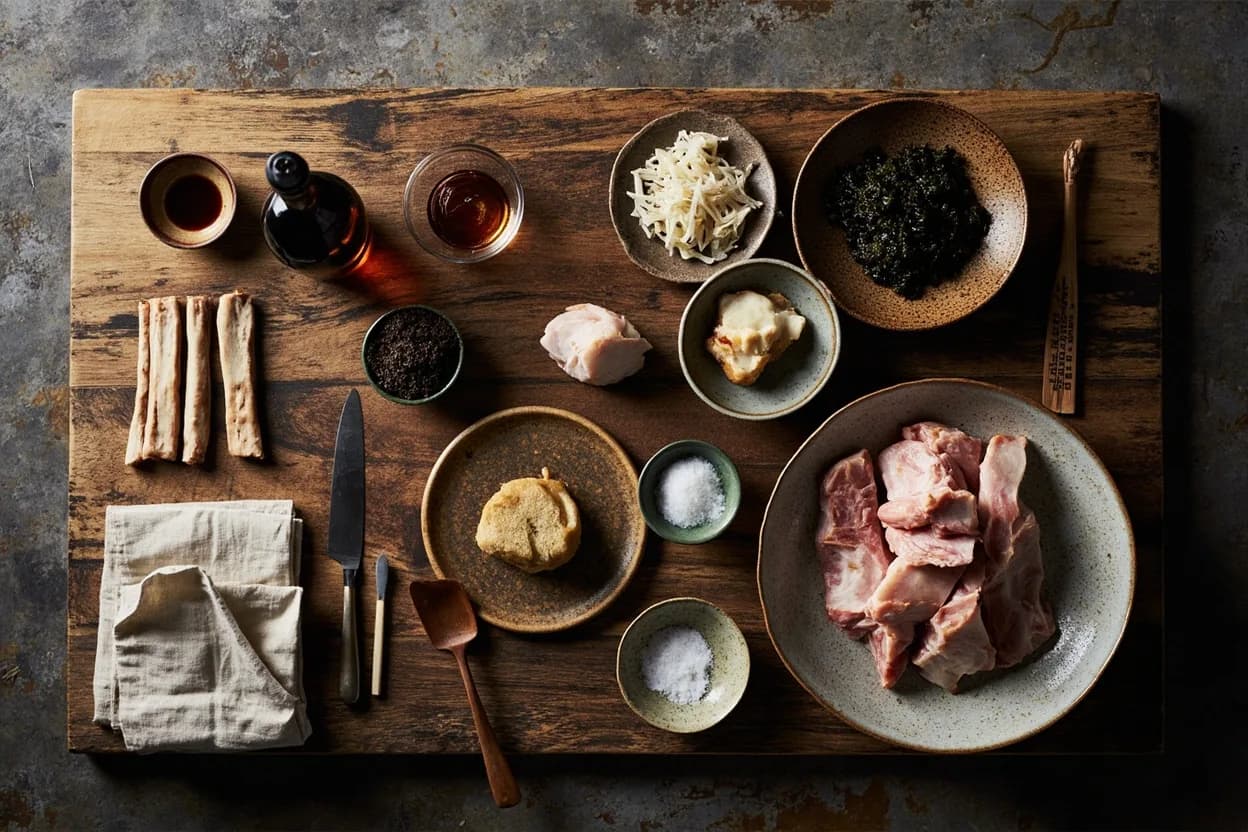
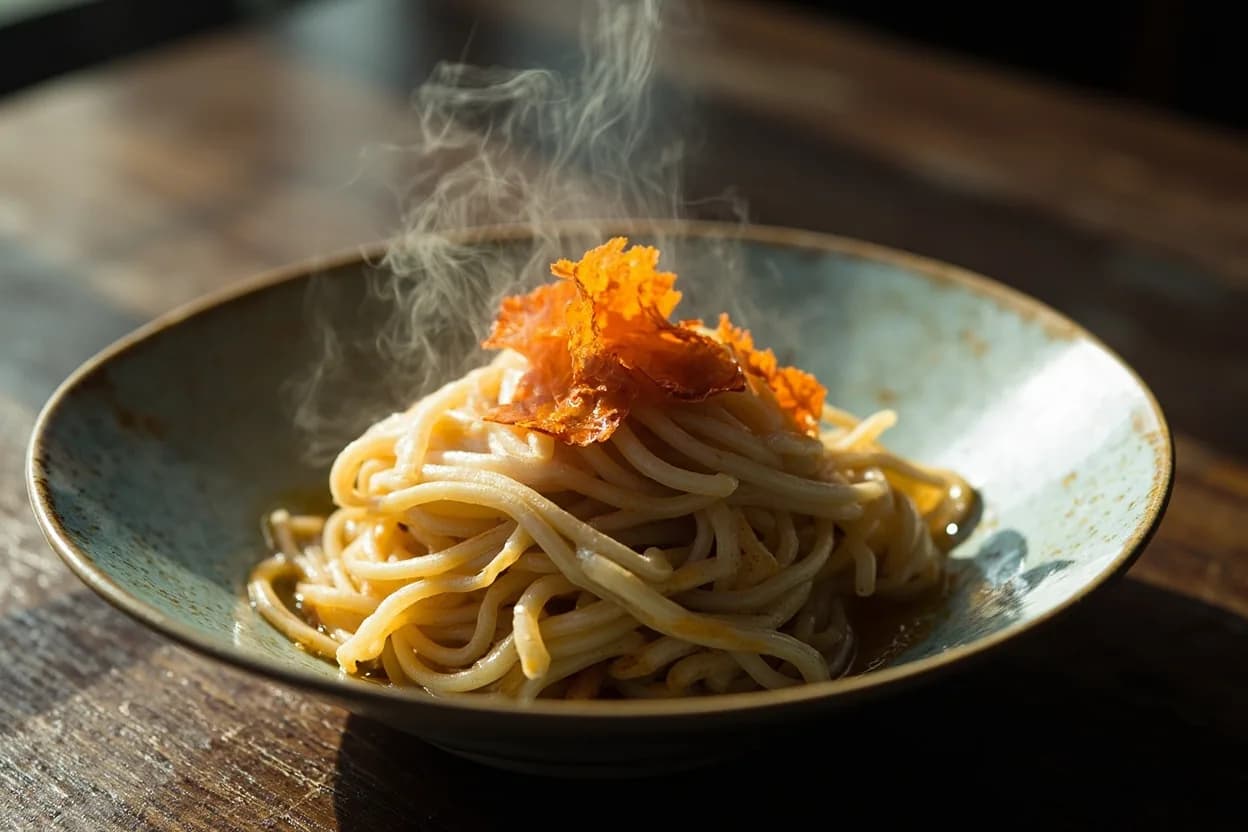
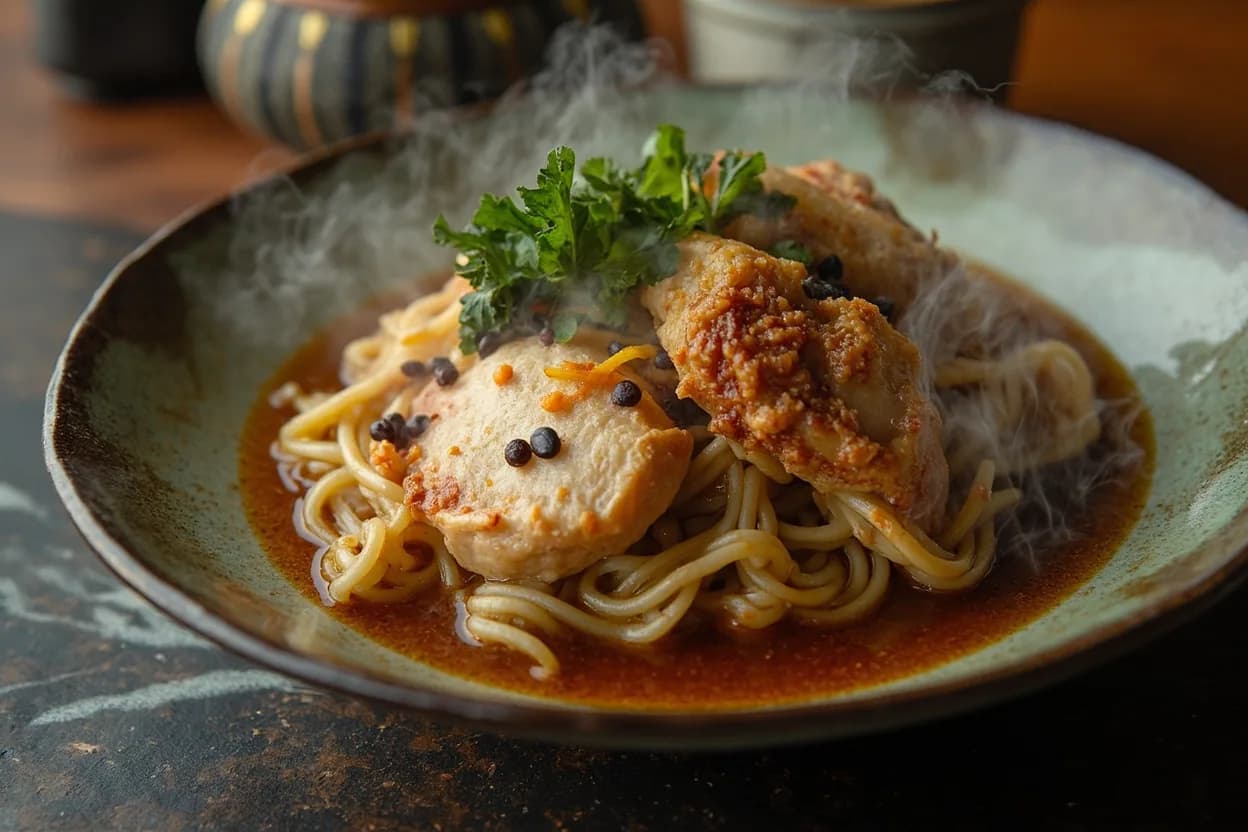
Kyushu cuisine is the culinary identity of Japan's southwestern island, most internationally recognized for tonkotsu ramen — a milky, collagen-rich broth rendered from boiled pork bones — but equally defined by karashi mentaiko (spiced pollack roe), chicken nanban (fried chicken with tartar sauce and sweet vinegar), and a deep tradition of pork and sweet-soy seasoning. The island's warm climate, active trade history with China and the West via Nagasaki, and distinctive agricultural richness produce a cuisine bolder and sweeter than most of mainland Honshu.
The flavour base
Pork bones simmered to opacity for tonkotsu; sweet soy tare (tsuyu) with mirin enrichment; fermented chili paste (karashi) layered onto rich fats
Pantry staples
Key ingredients
Signature techniques
Signature dishes
Kyushu Tonkotsu Tradition on the table
At the table
Ramen shops serve single-bowl meals at the counter, often around the clock. Izakaya dining is central to Kyushu social life, with small plates, yakitori, and motsu nabe shared communally. Shochu — especially imo-jochu (sweet-potato) and mugi-jochu (barley) — is the standard drinking spirit, served on the rocks or with hot water (oyuwari). Family meals lean on pork-based stews and sweet soy simmered vegetables (nimono).
History & context
Kyushu's position at the southwestern tip of the Japanese archipelago made it the historic gateway for foreign influence. Nagasaki hosted the only Dutch and Chinese trading posts during Japan's Edo-period isolation, introducing tempura (via Portuguese), champon noodles, and Chinese-influenced pork cookery. Hakata (now Fukuoka city) was a major Tang-dynasty trade port and has one of Japan's oldest ramen traditions. Tonkotsu ramen is said to have emerged in Kurume city in the late 1930s when a cook accidentally boiled pork bones too aggressively, creating the signature white broth. The roe-curing tradition of mentaiko arrived from Korean myeongnan-jeot, popularized in Fukuoka after World War II by ethnic Korean settlers.
Regional variations
- Fukuoka / Hakata
Ground zero for tonkotsu ramen; thin noodles with hard kaedama texture; yakitori and motsu nabe central.
- Nagasaki
Strong Chinese and Portuguese influence; champon, sara-udon, and castella cake (from Portuguese Pão de Castela) dominate.
- Kumamoto
Tonkotsu ramen with added mayu (blackened garlic oil) and thicker noodles; basashi (raw horse meat) is a local specialty.
- Kagoshima
Sweeter tonkotsu ramen, black pork (kurobuta) pork katsu, and heavy sweet-potato shochu tradition.
- Oita
Toriten (tempura chicken) and kabosu citrus; seki-saba and seki-aji (premium mackerel and horse mackerel) from Saganoseki.
Related cuisines
- Hakata Ramen
The most globally exported expression of Kyushu cooking.
- Nagasaki Cuisine
A distinct Kyushu sub-tradition shaped by Dutch and Chinese trade.
- Korean Cuisine
Mentaiko derives from Korean myeongnan-jeot; ongoing cross-influence via Busan ferry corridor.
Kyushu izakaya style — motsu nabe, yakitori, shochu — feeds directly into the national izakaya tradition.
References
- 1.Ramen: Japanese Noodles and Small Dishes — Tove Nilsson
- 2.Japanese Farm Food — Nancy Singleton Hachisu
- 3.The Japanese Grill — Tadashi Ono & Harris Salat
- 4.On Food and Cooking — Harold McGee (collagen emulsification)
Confidence: high
Notes
Tonkotsu vs. tonkatsu
A persistent confusion: tonkotsu (豚骨) is the pork-bone broth of ramen; tonkatsu (豚カツ) is breaded fried pork cutlet. They share 'ton' (pork) but are unrelated dishes.
Shochu geography
While sake dominates most of Japan, Kyushu's default spirit is shochu — especially imo-jochu from Kagoshima and mugi-jochu from Oita and Nagasaki. The volcanic sweet-potato soils of southern Kyushu drive a centuries-old distilling culture.