Southeast Asia
Laotian
Also: Lao cuisine, Lao food, Lowland Lao cooking, Luang Prabang cuisine
A landlocked cuisine of striking simplicity and depth, built around sticky rice, padaek fermented fish sauce, and a foraging culture that turns jungle herbs, river fish, and char-grilled meat into one of Southeast Asia's most distinctive tables.
Lao cuisine is defined by sticky rice (khao niao) — not jasmine rice — as the primary staple, eaten by hand throughout the day and used as a utensil to scoop up other foods. The flavor base is padaek, a chunky fermented fish paste-and-sauce that is richer and more complex than Vietnamese fish sauce and appears in nearly every dish. Laotian cooking is not heavily spiced by Southeast Asian standards but achieves depth through fermentation, charring, and the intense use of fresh herbs and raw vegetables. Meals lean toward communal and informal; eating is an inherently social act around a central spread.
The flavour base
Padaek (fermented fish with rice bran), khao khua (toasted ground rice), fresh lemongrass, galangal, and shallots — these form the aromatic and textural backbone of laap and most sauce-based dishes.
Pantry staples
Key ingredients
Signature techniques
Signature dishes
Laotian on the table
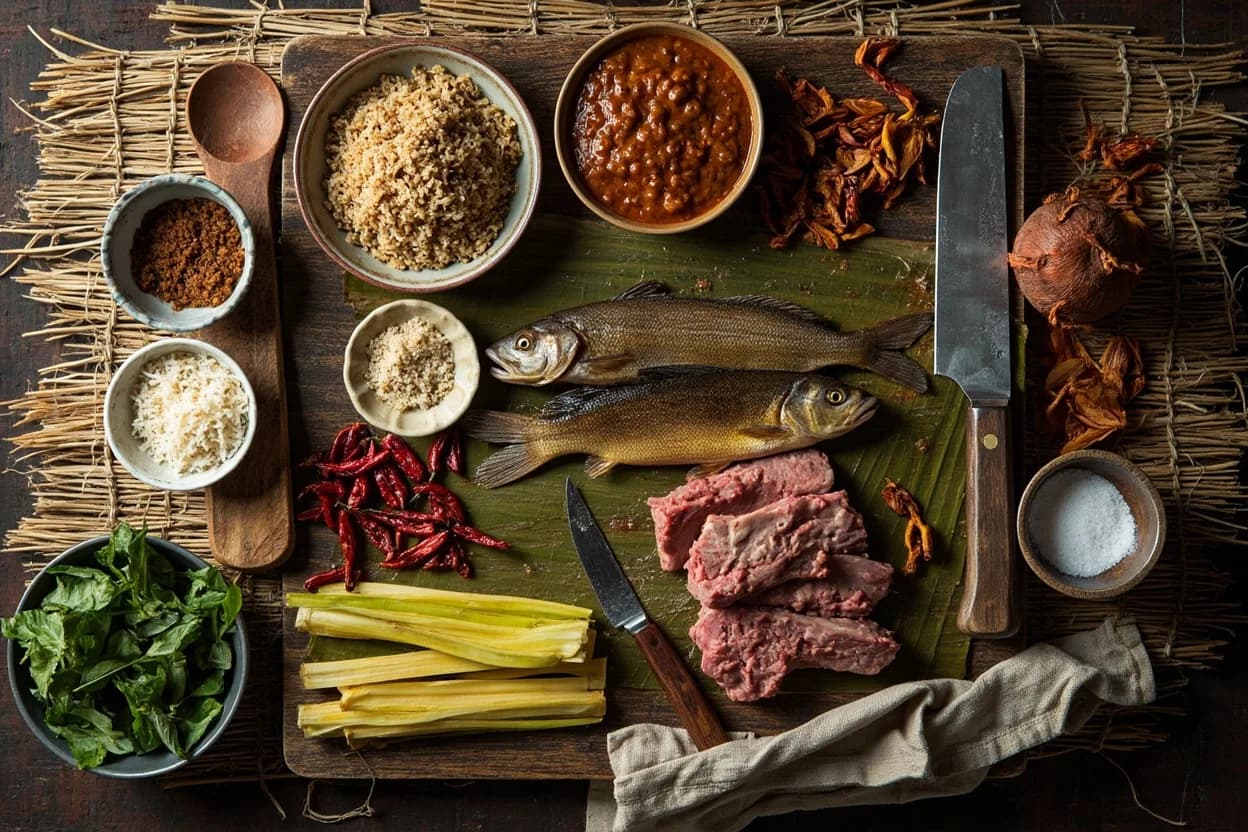
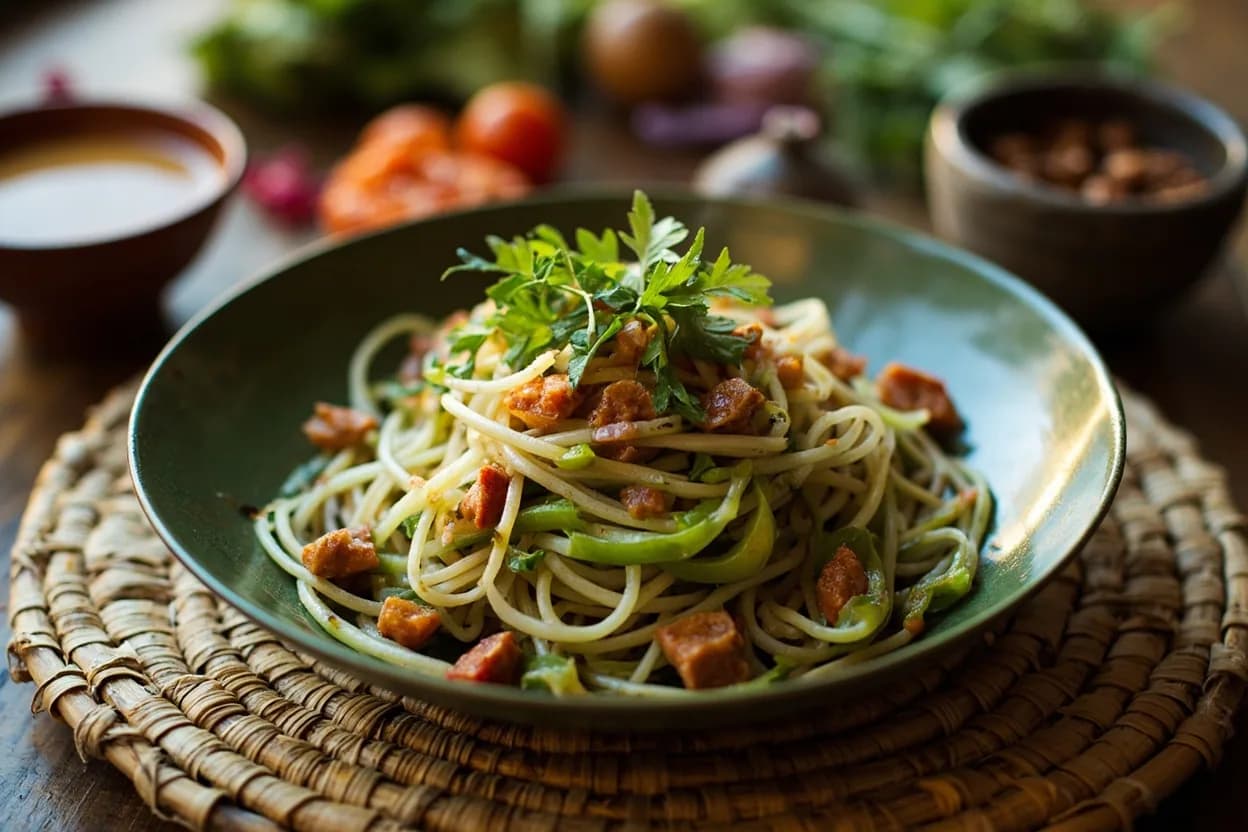

At the table
Every Lao meal centers on a basket (tip khao) of sticky rice, shared communally. Around it are placed a jaew dipping sauce, a soup or stew, a grilled or raw protein dish, and abundant fresh herbs and raw vegetables. There is no formal sequence; everything arrives together and is eaten simultaneously. Sticky rice is pinched, formed into a small ball, and used to scoop other foods. Outside of formal settings, eating is continuous — snacks, grilled street foods, and sticky rice parcels (khao tom) sustain people between meals.
History & context
Lao culinary identity is shaped by its geography: a landlocked, mountainous nation bisected by the Mekong River, rich in freshwater fish, jungle herbs, and bamboo. The Lan Xang Kingdom (14th–18th centuries) created a cultural continuity that survives in cooking practices. French colonial influence (1893–1953) left minimal culinary impact — baguettes and pâté appear in Vientiane, but the core Lao diet remained intact. The American bombing campaign during the Vietnam War era (1964–1973), which made Laos the most bombed country per capita in history, profoundly disrupted rural communities but paradoxically preserved traditional food culture by limiting industrialization. Contemporary Lao food is closely related to the food of northeast Thailand (Isan), where a large ethnic Lao population maintained the same traditions across the border.
Regional variations
- Luang Prabang
Former royal capital; or lam is the city's signature dish; more refined presentation, river moss (kai) eaten as a snack, and Buddhist temple food culture visible in monk alms rounds
- Vientiane (capital)
Most cosmopolitan; French baguette culture, Vietnamese pho, and Thai fast food coexist with Lao staples; a more urban, hybrid food scene
- Paksong / Bolaven Plateau
Coffee-growing highland; indigenous Khmu and Alak food traditions with heavier use of foraged mushrooms and forest ingredients distinct from Mekong Lowland Lao
- Isan (northeast Thailand)
Ethnic Lao majority region in Thailand; som tam, laap, and khao niao are identical to Lao originals and are often better documented due to tourism
Related cuisines
- Isan (Thai Northeast)
Ethnically Lao region; shares all core dishes and techniques; the two are gastronomically identical, politically separate
Shared padaek/prahok fermented fish culture, Mekong water-based diet, and communal rice-centered eating
- Yunnan (Southern Chinese)
Northern trade routes brought Yunnan influence; miang (fermented tea leaves eaten as food) appears in both traditions
Canonical recipes
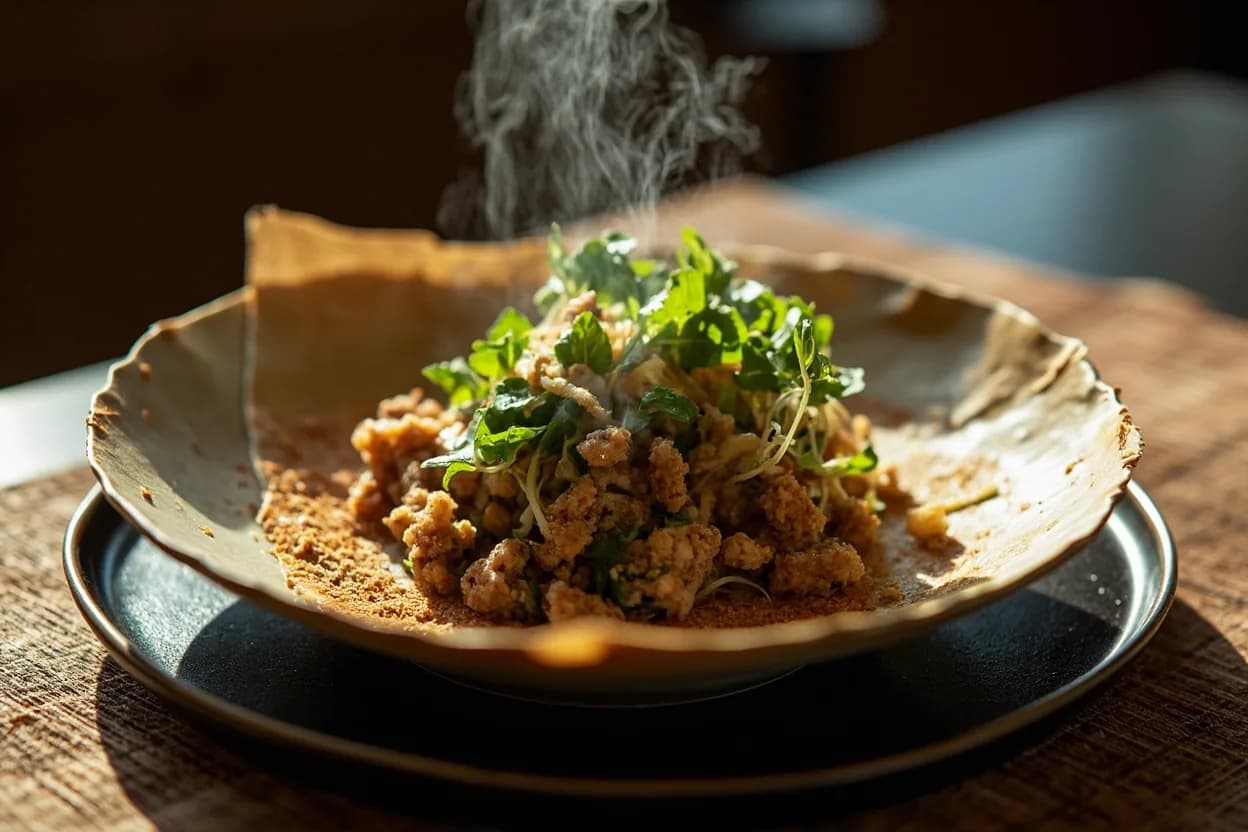
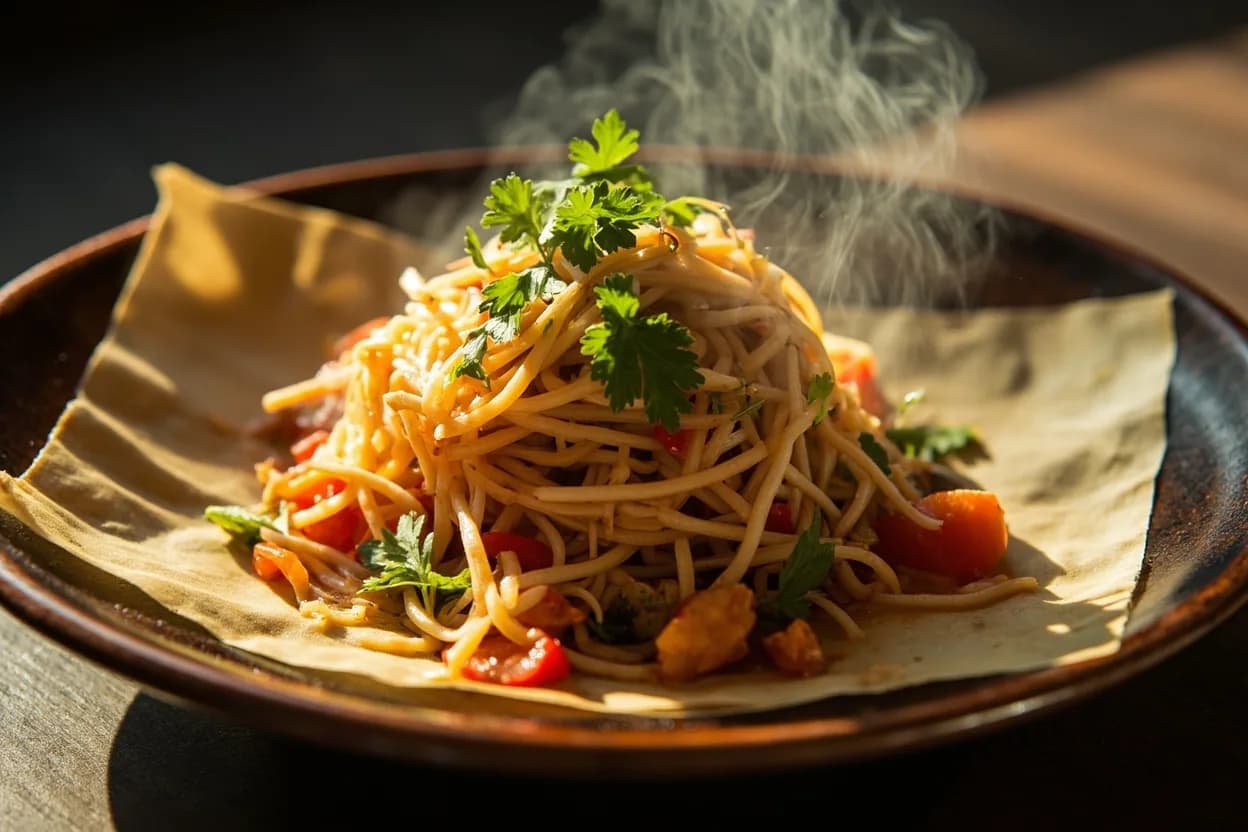
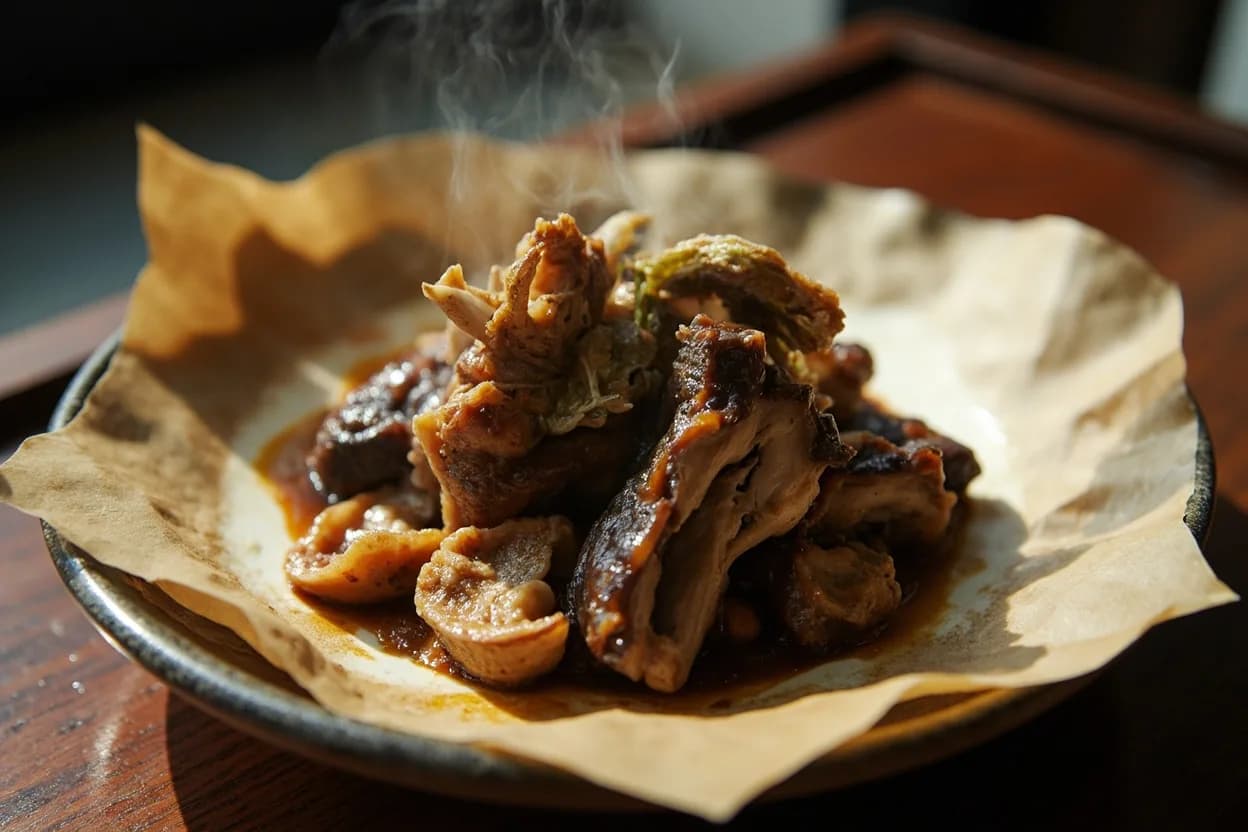
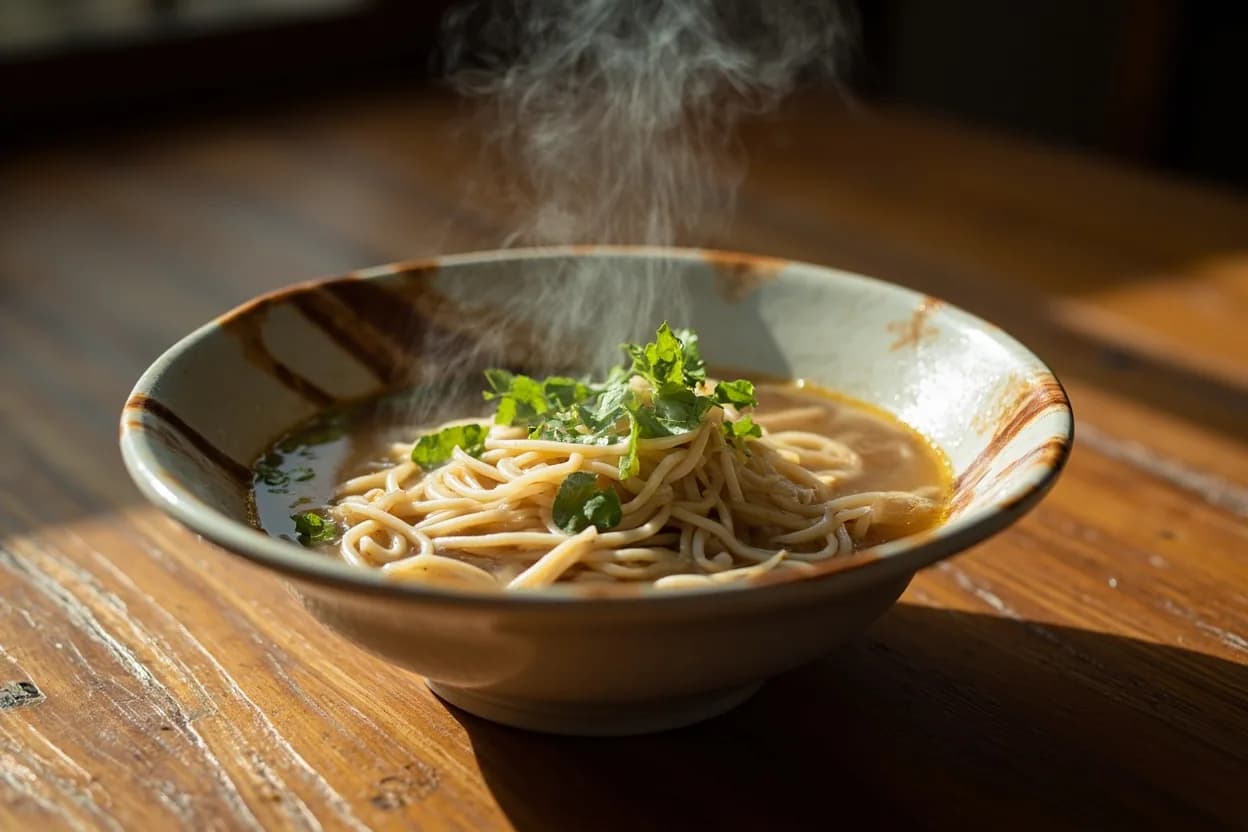
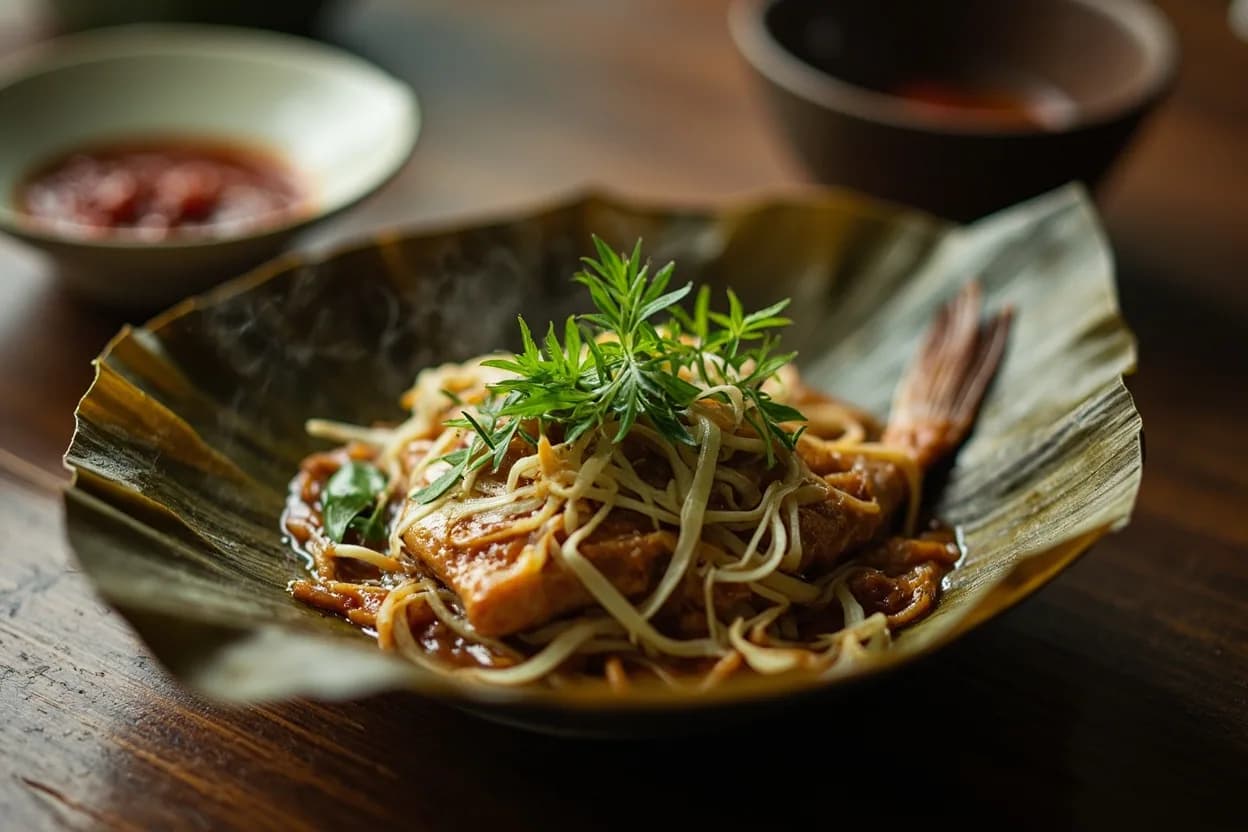
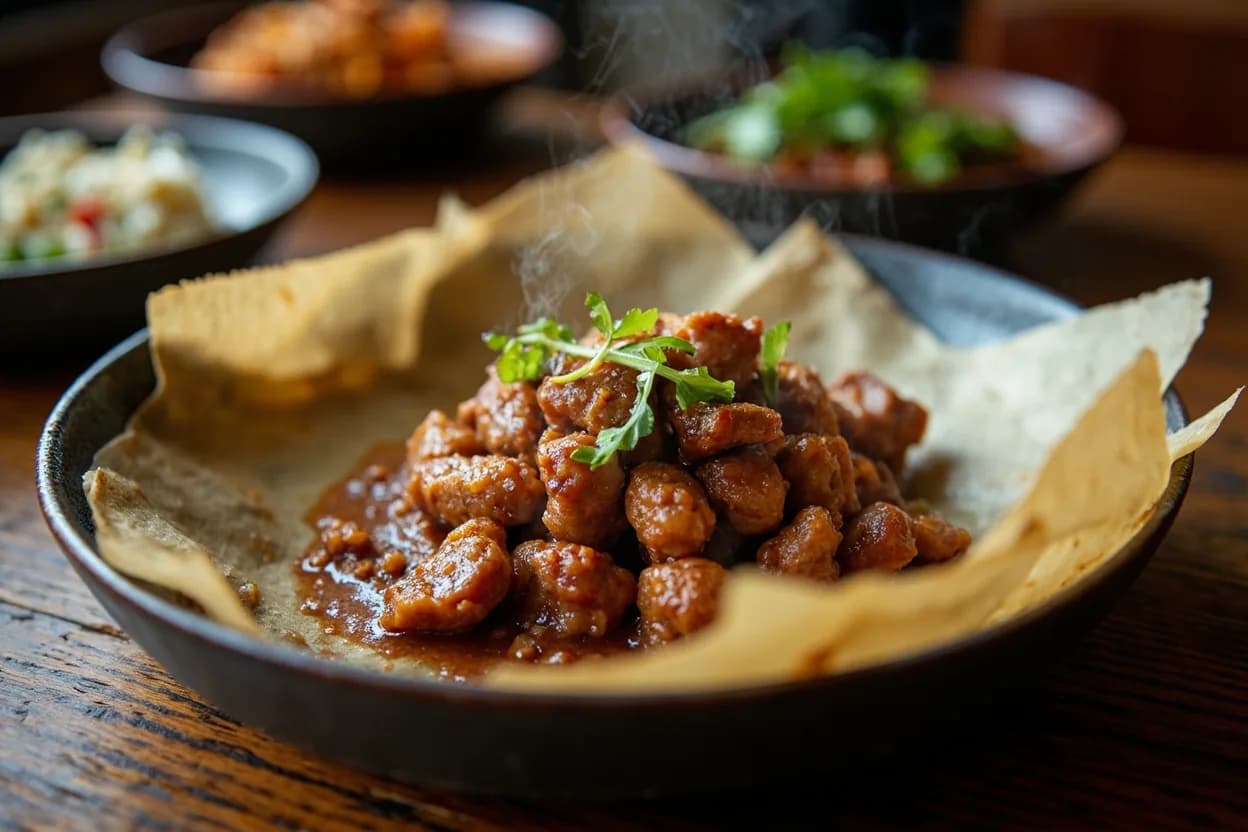
The dishes that define Laotian, documented in the Canon.
References
- 1.Simple Laotian Cooking — Ken Albala & Lois Callahan (Hippocrene, 2007)
- 2.The Food of Laos — Judy Bastyra (Tuttle, 2010)
- 3.Dancing Fish and Amok — Naomi Duguid (Artisan, 2012)
Confidence: high
Notes
Sticky rice as identity
The Lao identify themselves as 'luk khao niao' — children of sticky rice. This is not hyperbole. A Lao person who cannot access sticky rice for a day will describe the feeling as something close to incompleteness. Jasmine rice, the staple of neighboring Thailand and Vietnam, is eaten in Laos mainly in urban areas or by ethnic minorities; it is not the Lao norm.
Dill — the unexpected herb
Dill (phak si) appears in Lao cooking in ways that surprise visitors familiar with the herb only in European or Scandinavian contexts. It is used fresh in or lam, mok pa, and khao poon fish soup in generous quantities, reflecting ancient trade or independent culinary convergence — historians disagree on which.