Middle East
Lebanese
Also: Cuisine libanaise, Lebanese-Arab cuisine
Lebanon's refined, herb-brilliant cuisine — the world's most celebrated mezze table, balancing mountain freshness, sea influence, and a Phoenician pantry of olive oil, tahini, and citrus.
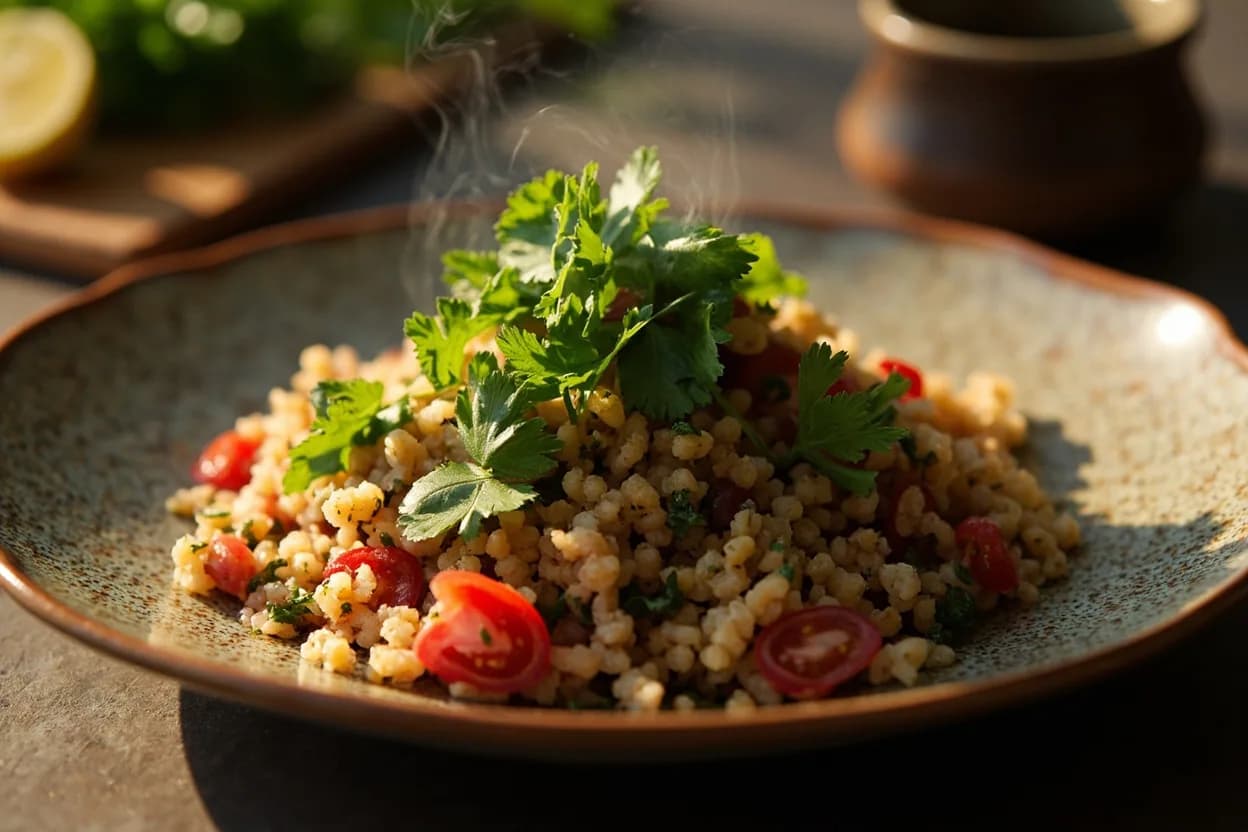
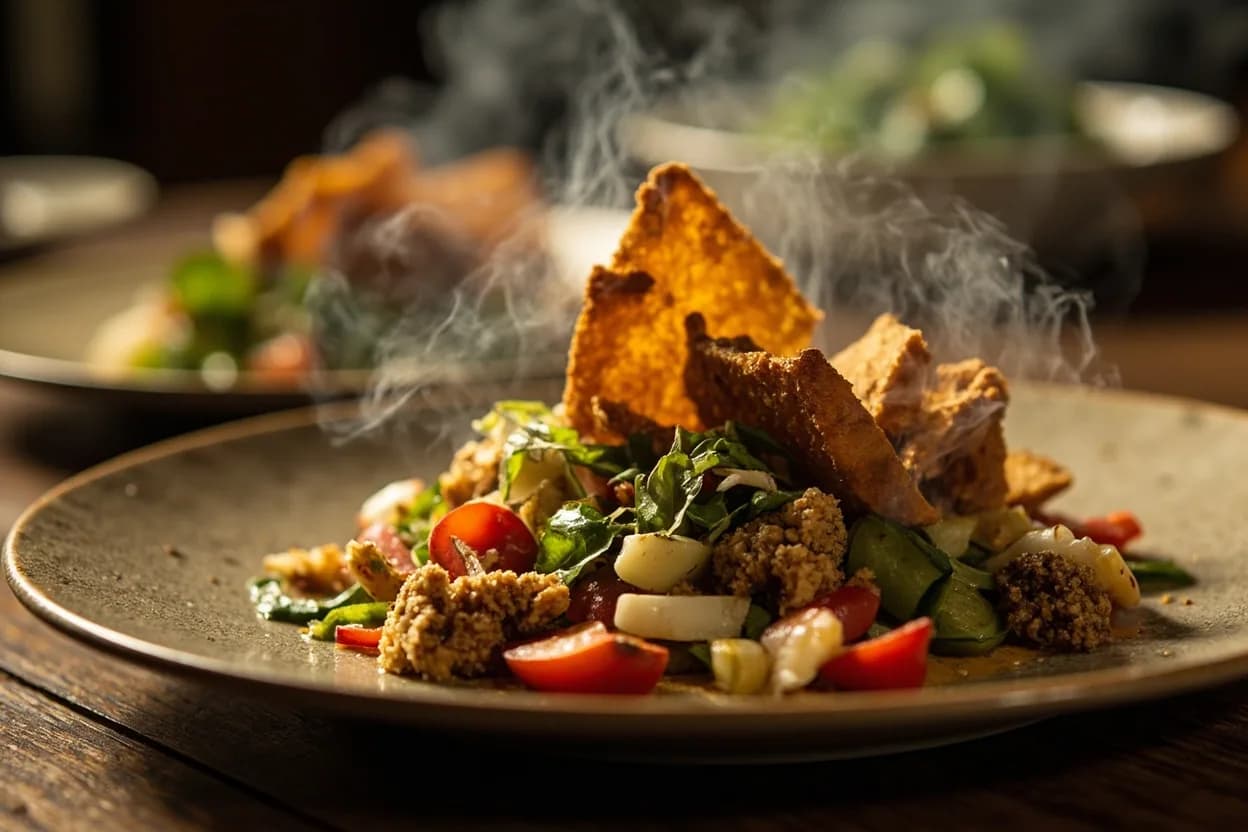
Lebanese cuisine is one of the Arab world's most internationally recognized culinary traditions, defined by extraordinary mezze variety, the freshest possible herbs, and a cooking philosophy that prizes balance over richness. The cuisine is lighter than most of its Middle Eastern neighbors: olive oil dominates over butter and animal fat, raw preparations (kibbeh nayyeh, raw liver) coexist with slow braises, and salads like tabbouleh and fattoush are genuine showpieces rather than afterthoughts. The Lebanese table integrates mountain village cooking (thyme, wild greens, yogurt), coastal seafood traditions (Sidon's fried fish, Byblos's mezze), and city refinements accumulated through Phoenician trade, Ottoman governance, and French mandate influence.
The flavour base
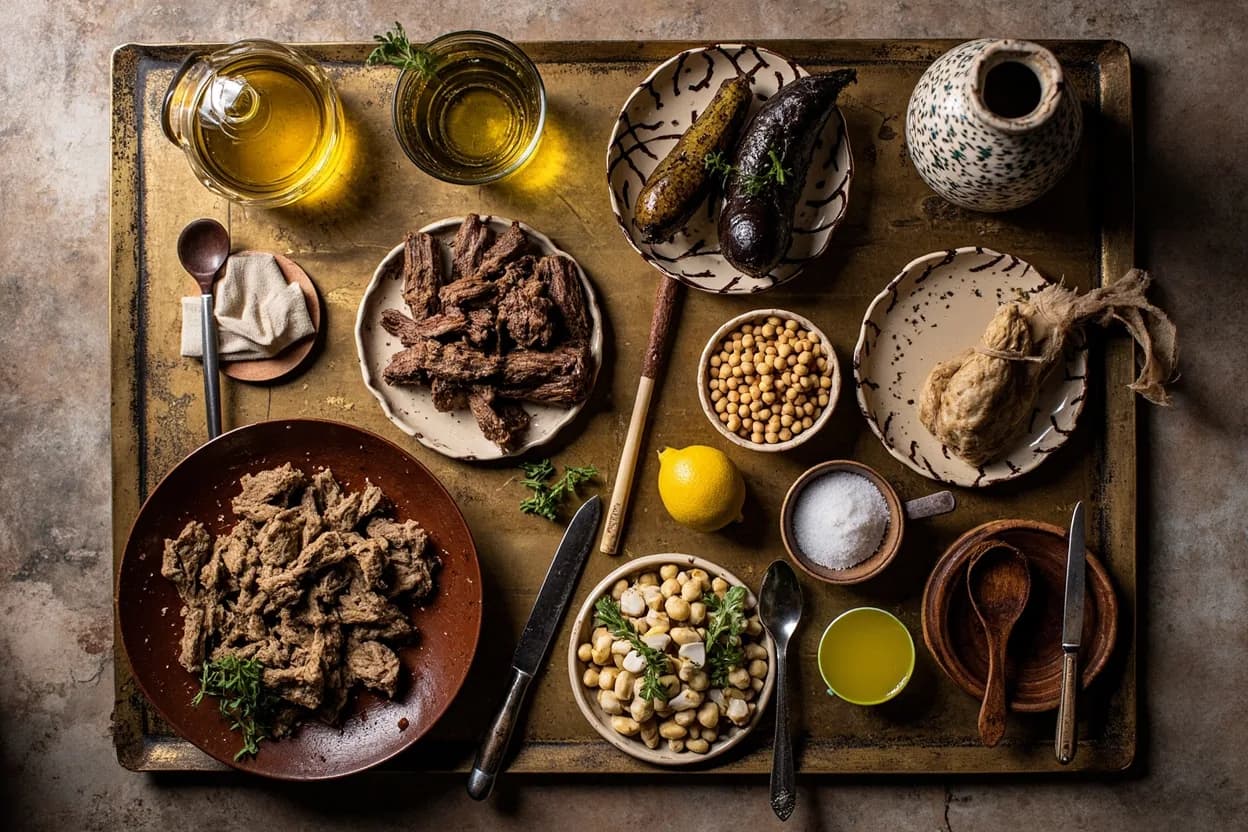
Lemon juice and olive oil are the backbone — almost every dish is finished with one or both. Garlic, used assertively, anchors sauces (toum, the whipped garlic-oil emulsion, is Lebanon's most distinctive condiment). Fresh parsley, mint, and green onion appear in salads and many cooked dishes. Seven-spice (baharat: allspice, black pepper, cinnamon, coriander, cumin, cloves, nutmeg) seasons meat preparations.
Pantry staples
Key ingredients
Signature techniques
Signature dishes
Lebanese on the table
At the table
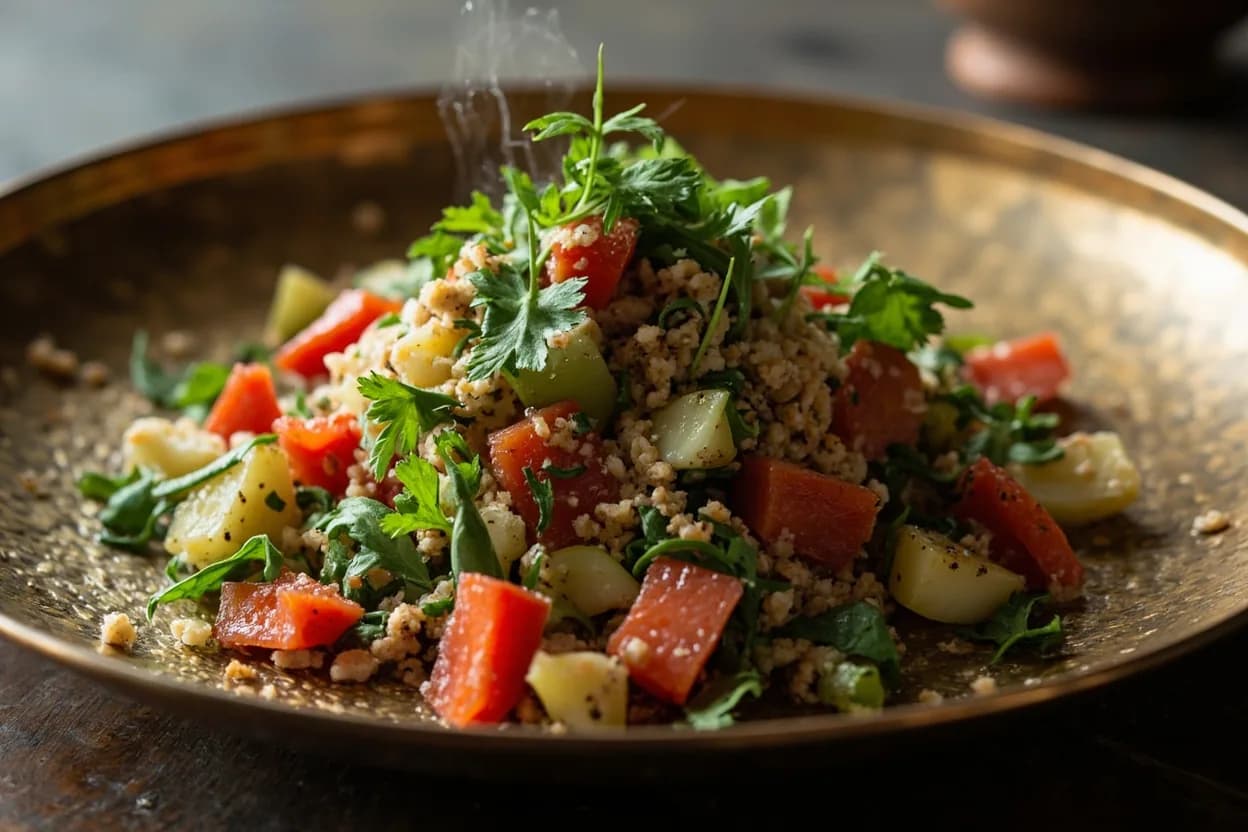
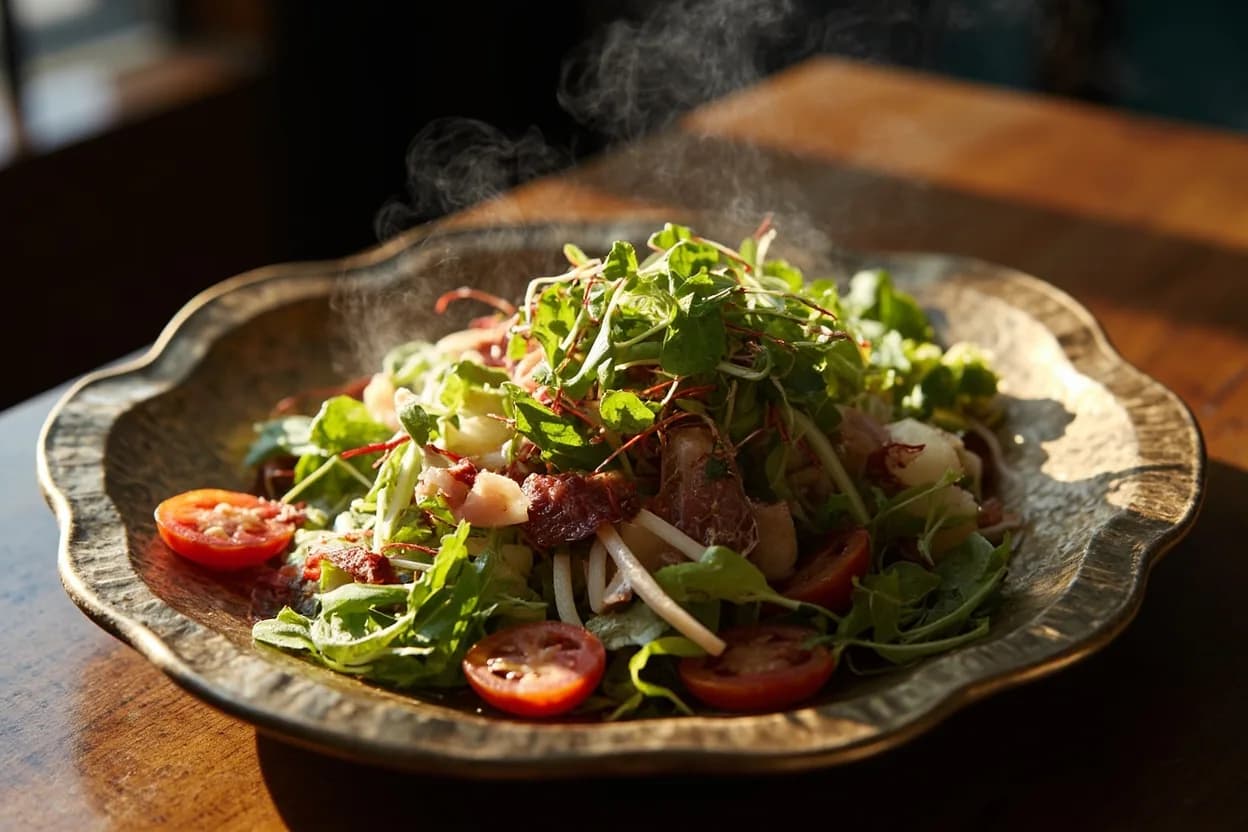
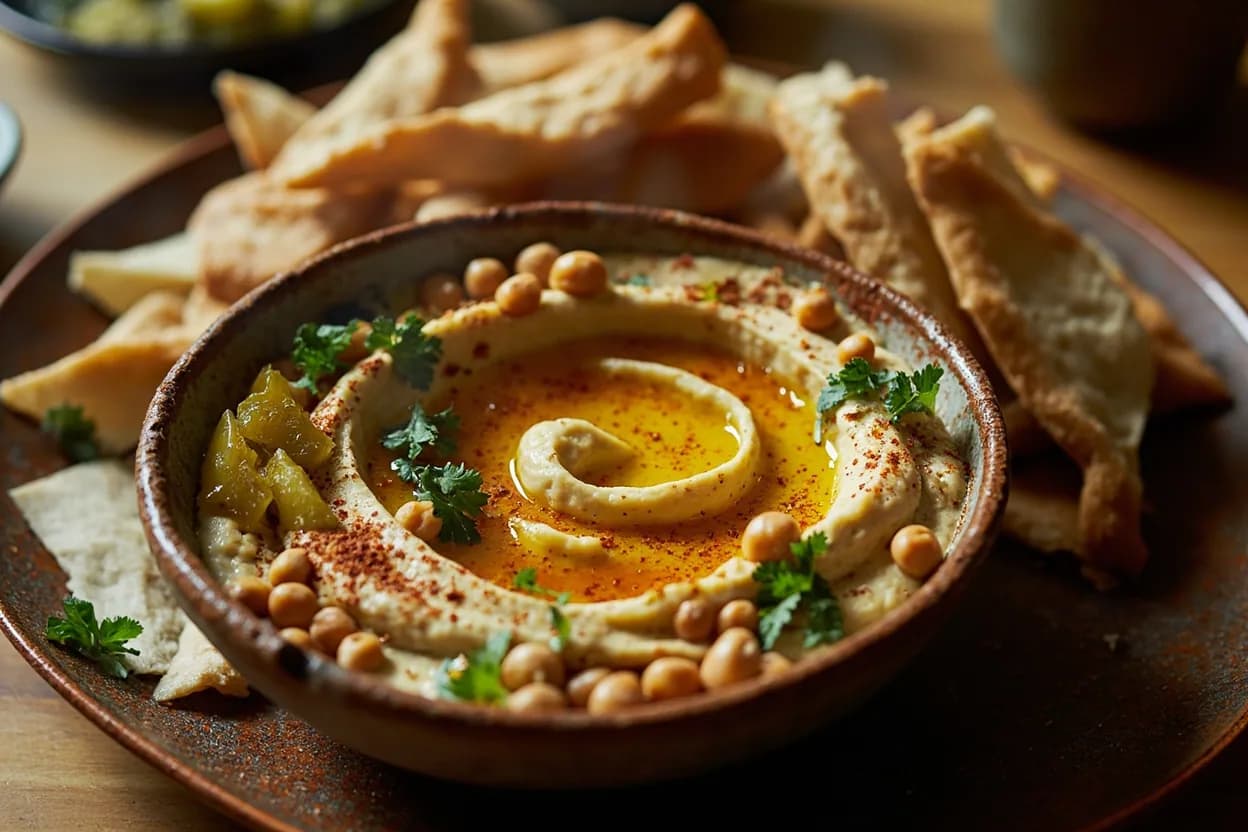
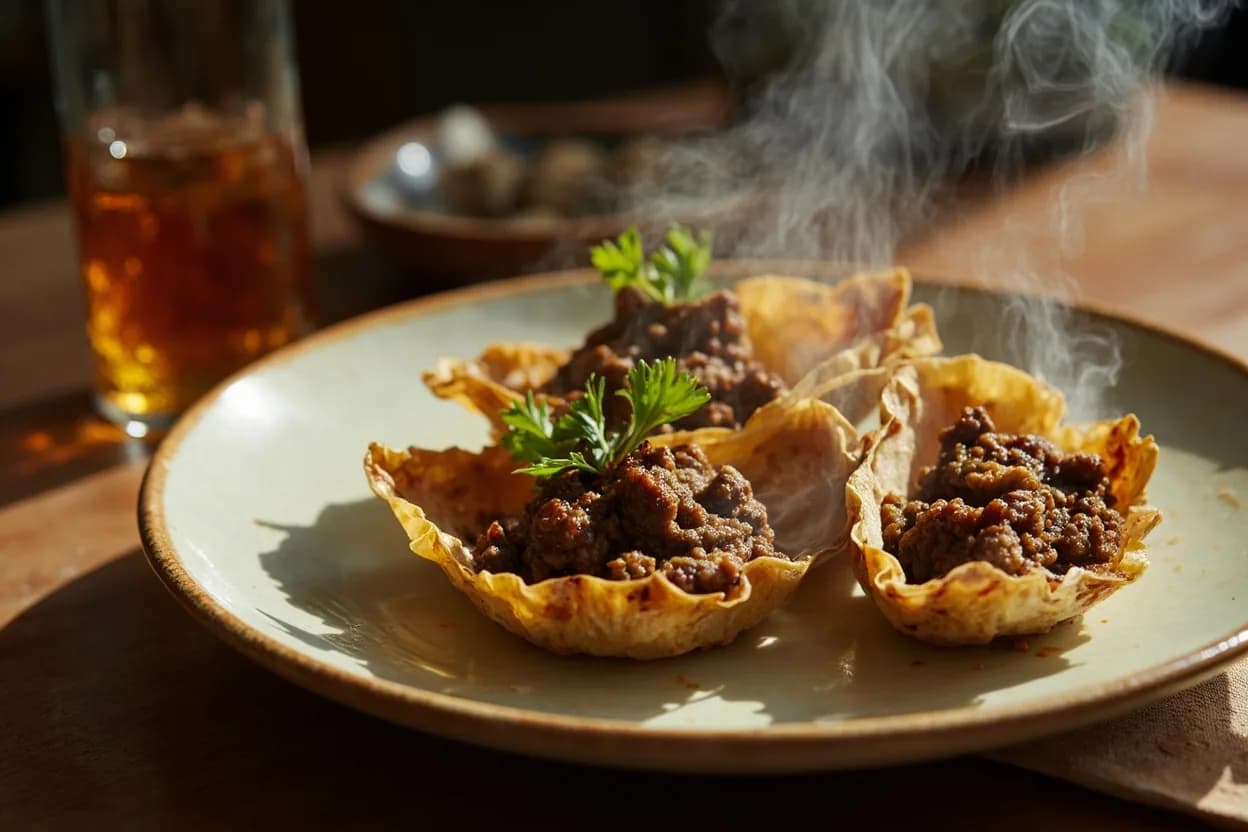
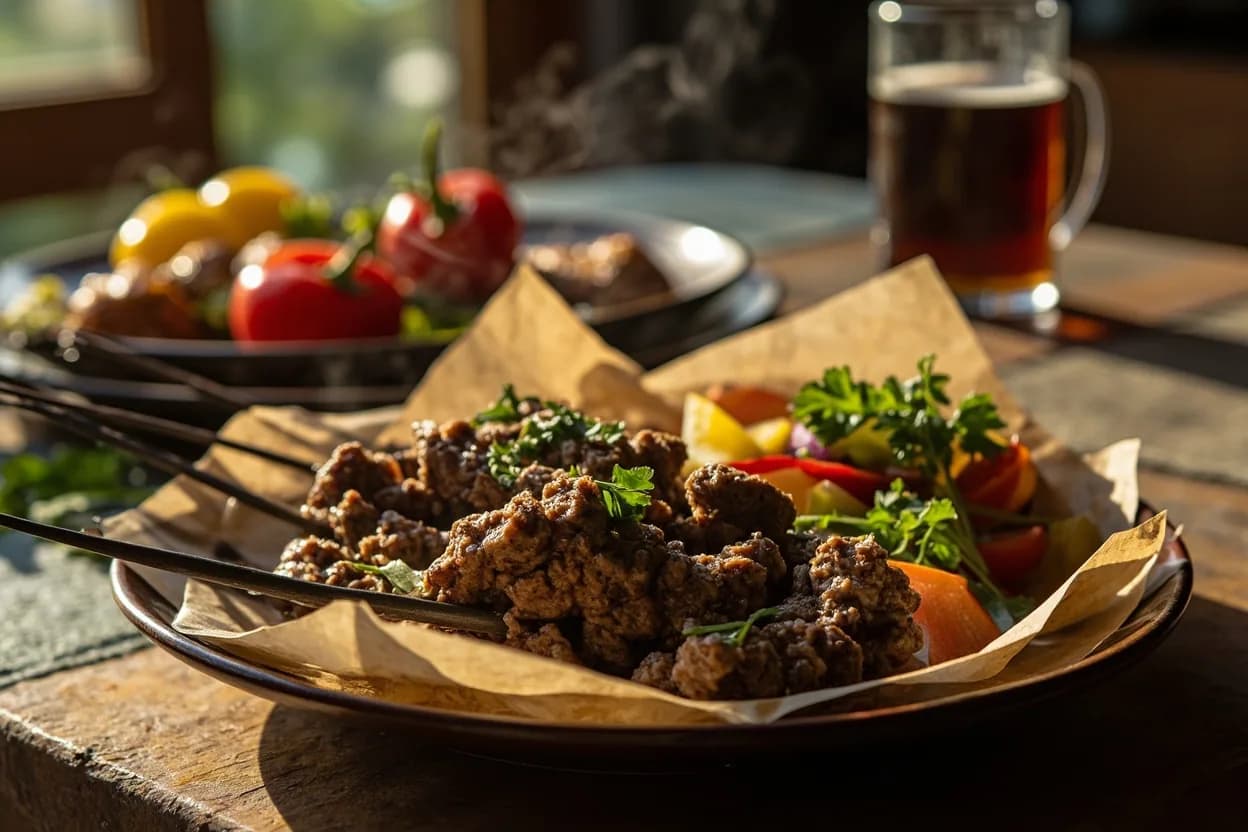
The mezze table is central to Lebanese dining culture. A full spread begins with cold mezze (hummus, baba ganoush, tabbouleh, labneh, olives, pickles, salads) followed by hot mezze (kibbeh, fried cauliflower, sambousek, sujuk). Main courses — typically grilled meats, roasted chicken, or fish — arrive next. The meal concludes with fresh seasonal fruit, pastries soaked in attar (sugar syrup flavored with rose water), and qahwa or mint tea. Arak — the anise-flavored spirit — is the traditional table drink, diluted with water and ice.
History & context
Lebanon sits at one of the world's most ancient crossroads of trade and civilization. The Phoenicians (c. 1550–300 BCE), based in Tyre, Sidon, and Byblos, spread ingredients and culinary ideas across the Mediterranean. Successive rulers — Assyrian, Persian, Hellenistic, Roman, Byzantine, Arab, Crusader, and Ottoman — each left traces in the kitchen. The Ottoman period (1516–1918) brought Istanbul's refined palace cooking to Beirut's urban elites. The French Mandate (1920–1943) introduced pastry techniques, café culture, and French service. Beirut's cosmopolitan golden era (1950s–1970s) made Lebanese cuisine famous globally, a reputation maintained through diaspora communities worldwide. The devastating 1975–1990 civil war and subsequent conflicts have paradoxically deepened the cuisine's cultural significance as an expression of identity and survival.
Regional variations
- Mount Lebanon (Chouf, Metn)
Mountain villages prize kibbeh in dozens of forms, wild thyme (za'atar), dried yogurt (kishk), and seasonal preserves. Lamb replaces chicken as the prestige protein.
- Beirut (coastal)
Urban refinement, the finest seafood mezze, French-influenced pastry, and the most elaborate restaurant culture. Samkeh harra (spiced whole fish) is a Beirut specialty.
- South Lebanon (Tyre, Sidon)
Distinct fried fish traditions; sayadiyeh (fish on spiced rice) is a signature. Strong Palestinian culinary exchange.
- Bekaa Valley
Fertile wine country; the Bekaa produces Lebanon's premier wines and arak. Heartier meat-and-grain dishes dominate; lamb herding shapes the diet.
- North Lebanon (Tripoli)
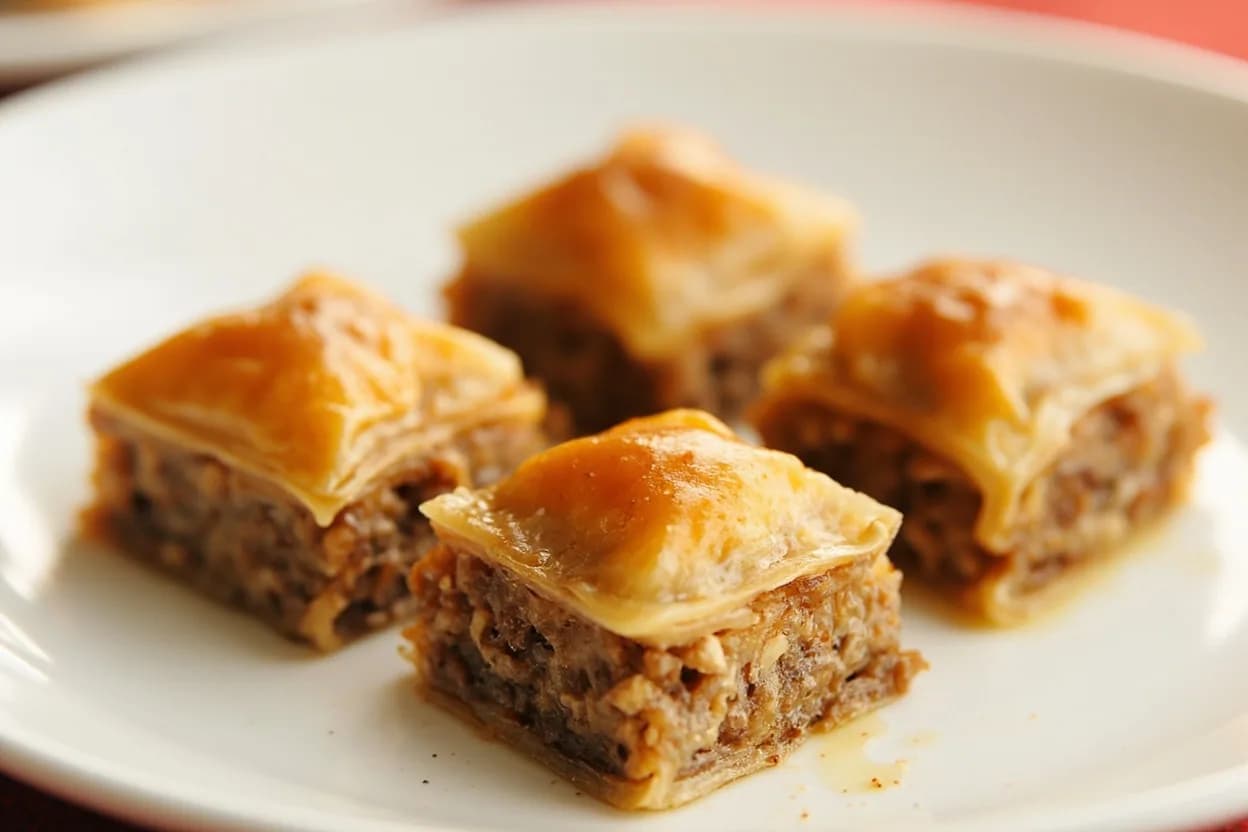
Tripoli is Lebanon's pastry capital — home to the finest baklava, halawet el jibn (cheese sweet), and znoud el sit. Strong Syrian culinary overlap.
Related cuisines
Share the same Levantine pantry; Lebanese cuisine is generally lighter and more herb-forward while Syrian cooking leans more toward spiced pastes and stuffed preparations.
Deeply intertwined — sumac, olive oil, grape leaves, and flatbread traditions overlap substantially.
- Turkish
Ottoman influence visible in pastries (baklava, börek), kebab styles, and rice pilaf technique.
- Greek
Shared Mediterranean architecture — olive oil, grape leaves, yogurt, and phyllo-based pastries — likely through ancient Phoenician–Greek trade routes.
Canonical recipes
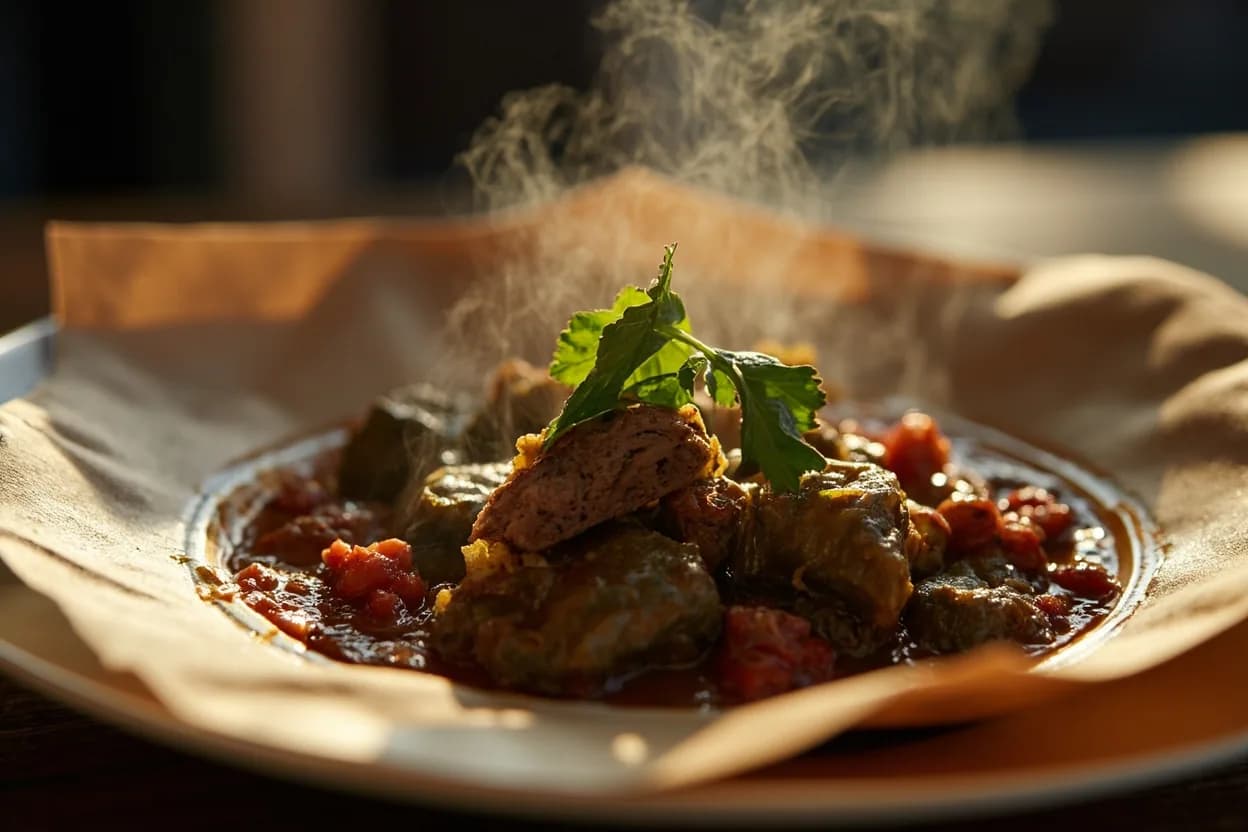
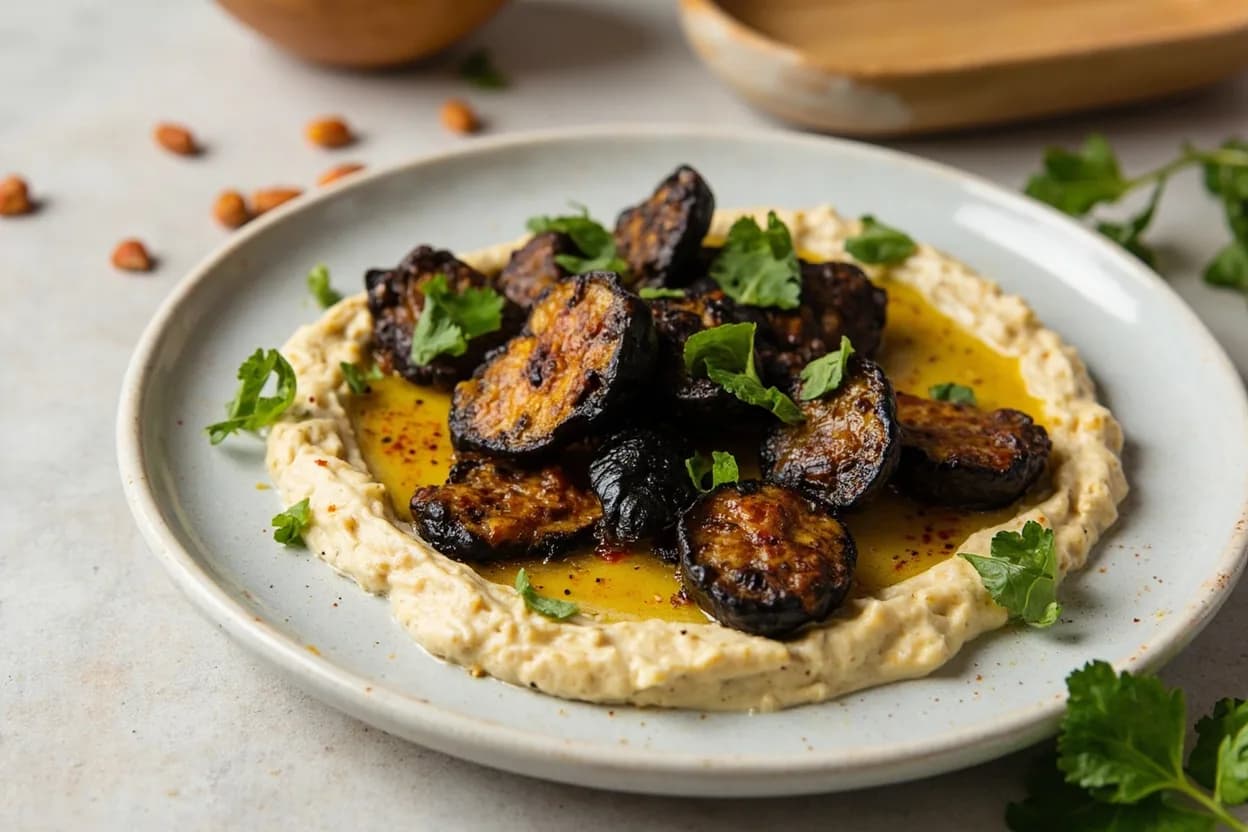
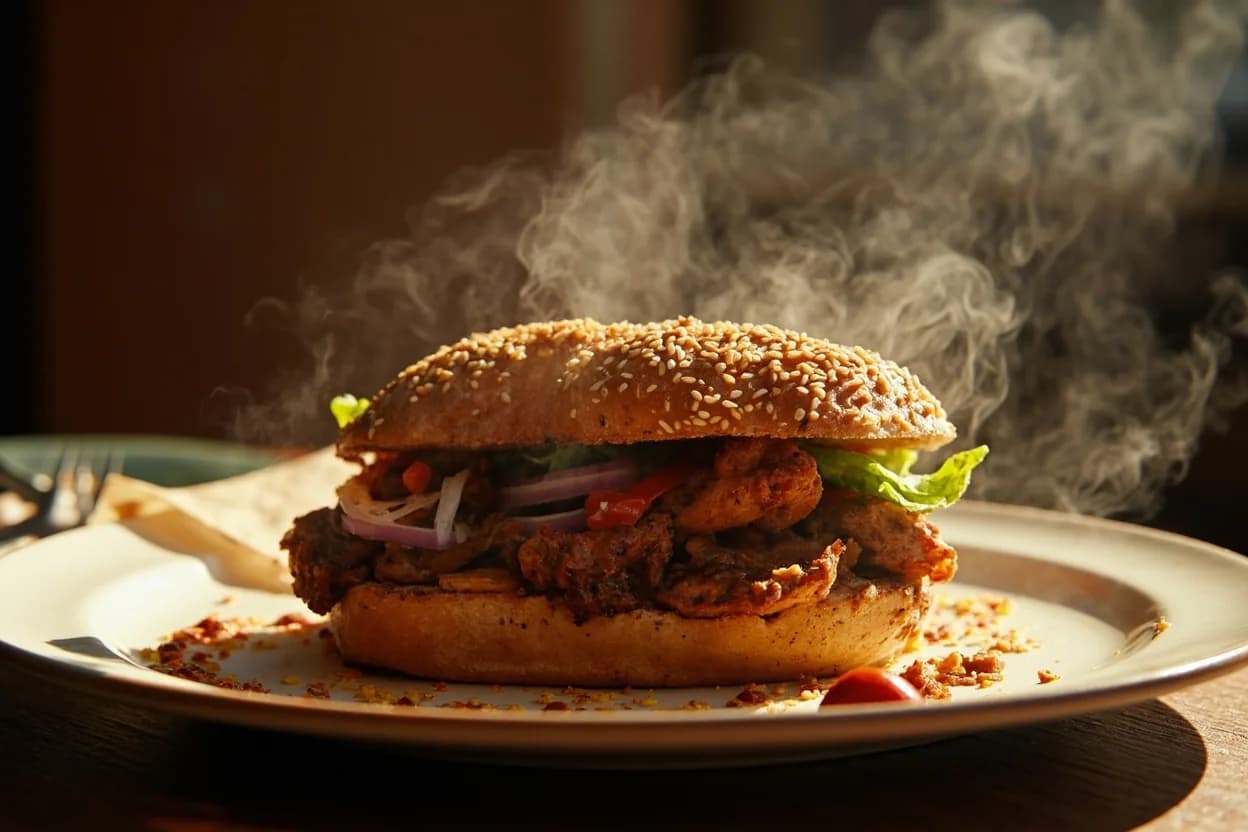
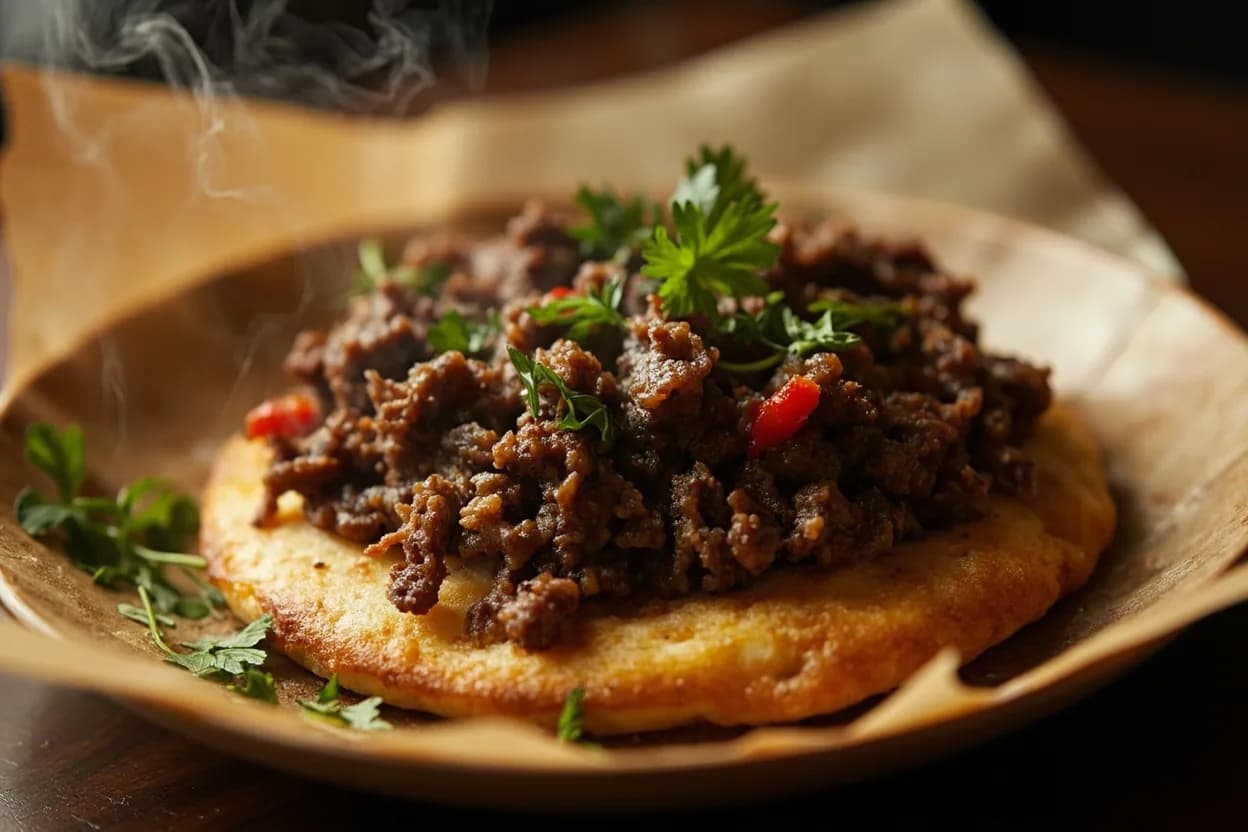
The dishes that define Lebanese, documented in the Canon.
References
- 1.Lebanese Cuisine — Anissa Helou (1994)
- 2.Zaitoun — Yasmin Khan (2018)
- 3.The Lebanese Kitchen — Salma Hage (2012)
- 4.A New Book of Middle Eastern Food — Claudia Roden (1985)
- 5.The Arabesque Table — Reem Kassis (2021)
Confidence: high
Notes
Tabbouleh: herb salad, not grain salad
Authentic Lebanese tabbouleh is predominantly fresh flat-leaf parsley and mint with a small quantity of fine bulgur — the grain is almost a seasoning. Versions that invert this ratio are a diaspora or Western adaptation. The distinction matters deeply to Lebanese cooks.
Toum: Lebanon's garlic obsession
Toum — a stable emulsion of garlic, neutral oil, and lemon juice beaten to a thick white cream — accompanies rotisserie chicken, shawarma, and grilled meats. It is Lebanon's culinary signature in a way that garlic aioli never quite captures: lighter, more pungent, and structurally distinct.