Middle East
Syrian
Also: Cuisine syrienne, Shami cuisine (Syrian register)
Syria's ancient cuisine of Aleppo pepper, pomegranate molasses, and layered kibbeh — one of the Arab world's most complex culinary traditions, rooted in 10,000 years of agriculture in the Fertile Crescent.
Syrian cuisine is one of the world's oldest continuous food cultures, drawing from Mesopotamian, Byzantine, Arab, and Ottoman heritage in a country that was at the crossroads of ancient trade routes for millennia. It is defined by depth and complexity: sour-sweet balancing via pomegranate molasses and tamarind; the distinctive fruity heat of Aleppo pepper (pul biber); an extraordinary diversity of kibbeh forms; stuffed pastries (fatayer, sambousek, sfiha); and rich slow-braised preparations. The cuisine distinguishes sharply between the city traditions of Damascus, Homs, and Aleppo — each with distinct signatures — and the rural and nomadic traditions of the steppe and coast.
The flavour base
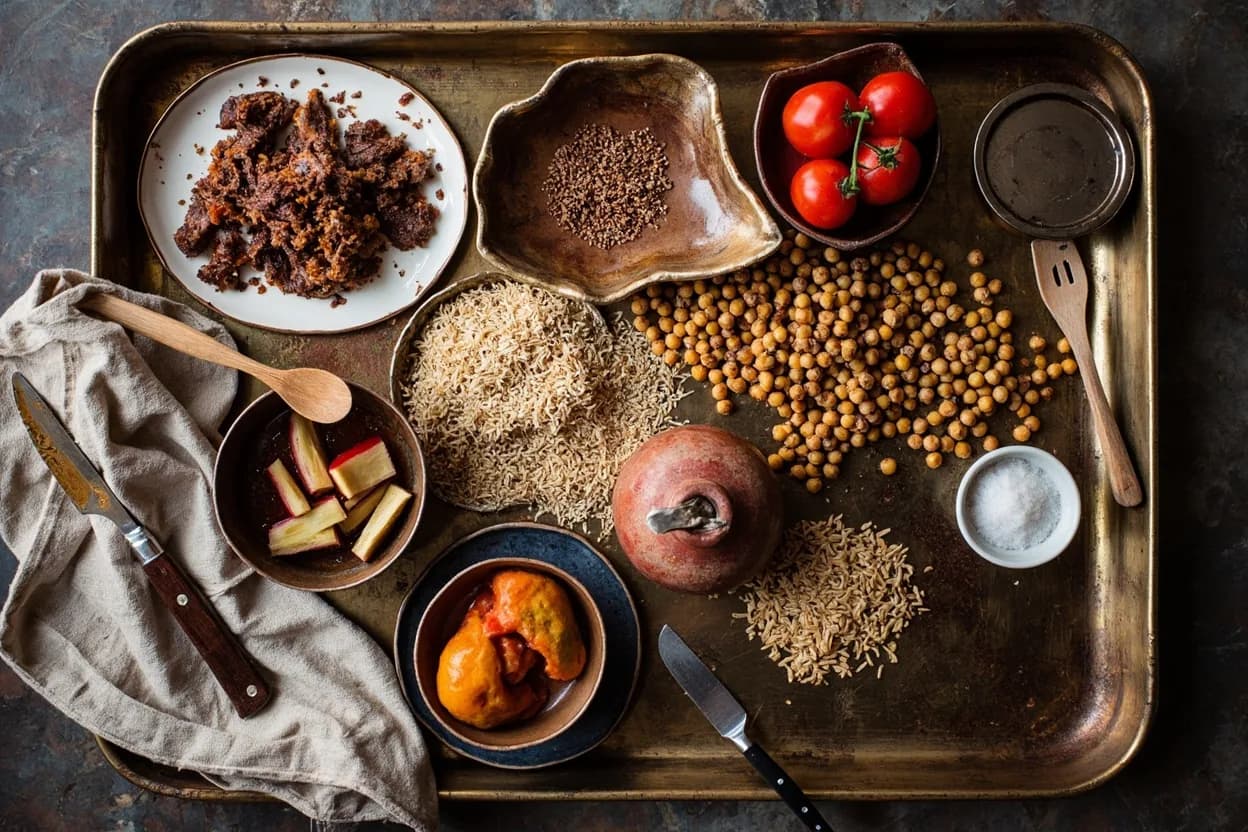
Pomegranate molasses and tamarind provide a sour-sweet undercurrent unique in the Levantine world. Aleppo pepper brings fruity, oily warmth (not searing heat). Garlic, onion, and tomato form the aromatic foundation. Seven-spice (baharat) and cinnamon season meat dishes. Clarified butter (samneh) is used more frequently than in Lebanese cooking, particularly in Damascene sweets and some pastries.
Pantry staples
Key ingredients
Signature techniques
Signature dishes
Syrian on the table
At the table
Syrian meals begin with a mezze spread, though it is typically less elaborate than Lebanese equivalents. Dishes are shared communally. A core cold mezze (hummus, baba ganoush, tabbouleh, fattoush, pickles) is joined by hot small plates. The main course centers on lamb: braised, grilled, or layered over rice. Kibbeh appears in multiple forms throughout the meal. Dessert draws from Syria's exceptional confectionery tradition, particularly in Damascus and Aleppo. Tea — strong, black, with mint — closes the meal.
History & context
Damascus is one of the oldest continuously inhabited cities in the world (c. 8000 BCE), and Syria's culinary traditions are among the most ancient. The Umayyad Caliphate (661–750 CE), headquartered in Damascus, made the city the center of the Arab world and brought together Arab, Persian, Byzantine, and Central Asian culinary ideas, creating the classical Arabo-Islamic cuisine that spread across the medieval world. Aleppo, the great trading city on the Silk Road, developed a distinct culinary school influenced by Armenian, Turkish, and Kurdish traditions alongside Arab cooking. The Ottoman Empire (1516–1918) reinforced Damascene refinement through the palace kitchen tradition and intensified trade. The 20th century drew Syria's borders while its cuisine retained historical depth. Since 2011, the Syrian civil war has displaced millions of Syrians globally, spreading the cuisine to Europe, Turkey, Lebanon, and beyond — and intensifying its role as cultural identity.
Regional variations
- Aleppo (Halab)
Distinct Aleppan school: muhamarra, cherry kibbeh, Aleppo pepper in everything, Armenian-Arab pastry crossover, and the city's beloved kebab varieties. Aleppo's culinary identity is so strong it is recognized as a separate tradition within Syrian cuisine.
- Damascus (Sham)
The capital's cuisine emphasizes sweet-sour balance (khiar bi laban, fatteh), refined Umayyad-heritage preparations, exceptional sweets (barazek, halawet el jibn), and arak culture.
- Homs
Known for fatty, rich preparations; Homsi kibbeh is particularly celebrated. Sayyadieh (fish on spiced rice) features along the Orontes River.
- Syrian Coast (Latakia, Tartus)
Mediterranean influence: fresh fish, olive oil dominance, sea urchin preparations, and Alawite food traditions including distinct spiced preparations.
- Syrian Steppe and Desert (Palmyra region)
Bedouin traditions: mansaf-adjacent lamb preparations, dry provisions, and the austere cooking of nomadic pastoralism.
Related cuisines
Share the deepest overlap — same pantry, same mezze philosophy, many identical dishes — but Syrian cooking is generally richer, spicier, and more complex in spice layering.
- Turkish
Ottoman rule for 400 years left structural similarities in kebab, pastry (baklava, börek), and pilaf techniques; Aleppo and Gaziantep share ingredients and techniques across the now-border.
- Armenian
The Armenian community of Aleppo profoundly shaped Syrian cuisine: manti, sujuk, bastirma, and many pastries are shared heritage.
Musakhan and freekeh preparations overlap; sumac as a souring agent appears in both.
Shared Mesopotamian roots: lamb over rice, dried fruit in savory dishes, and the use of tamarind as a souring agent.
Canonical recipes
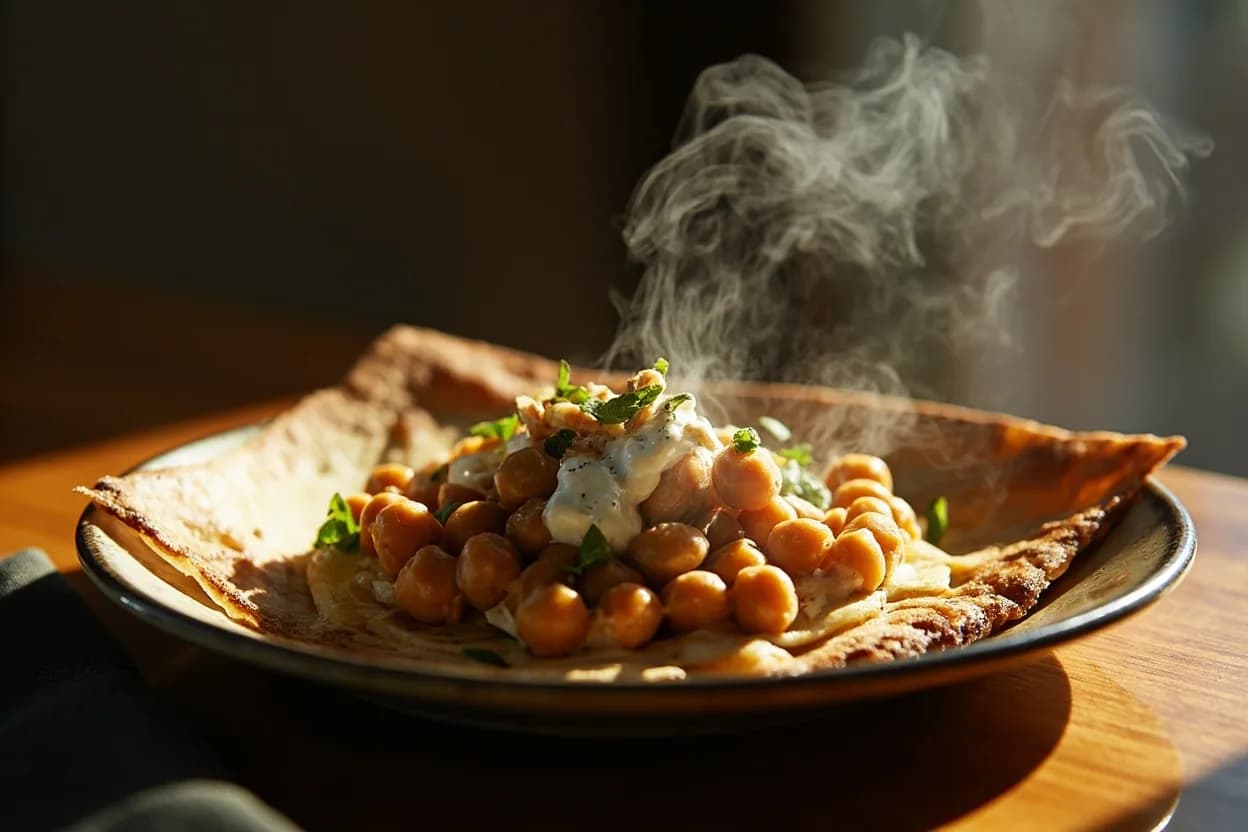
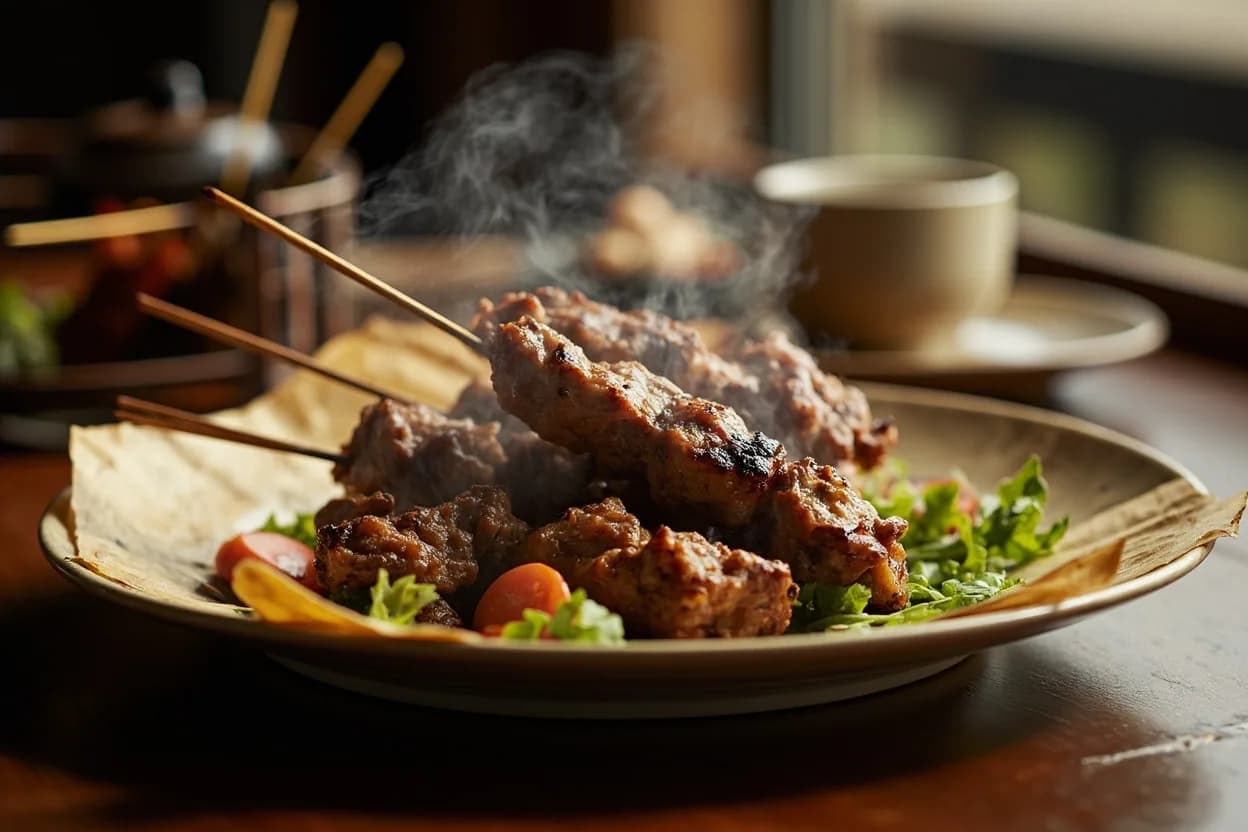
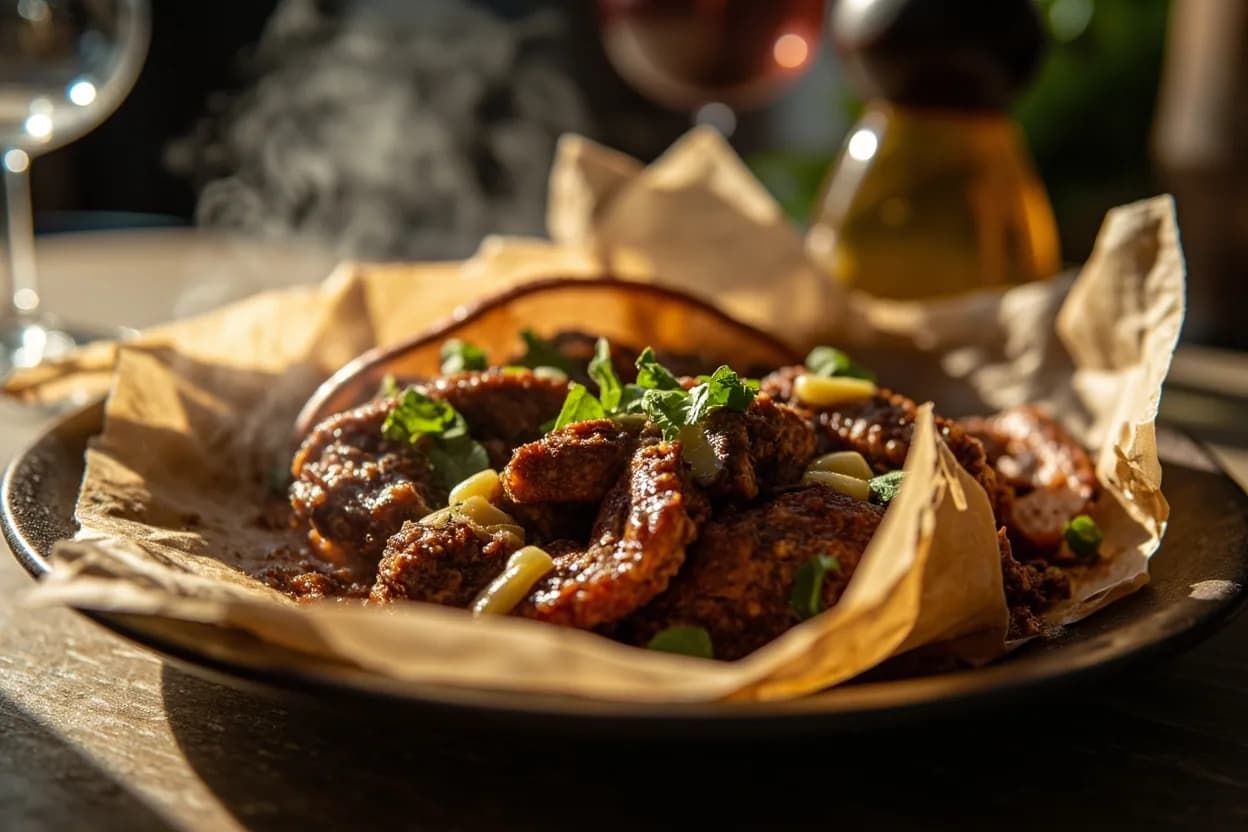
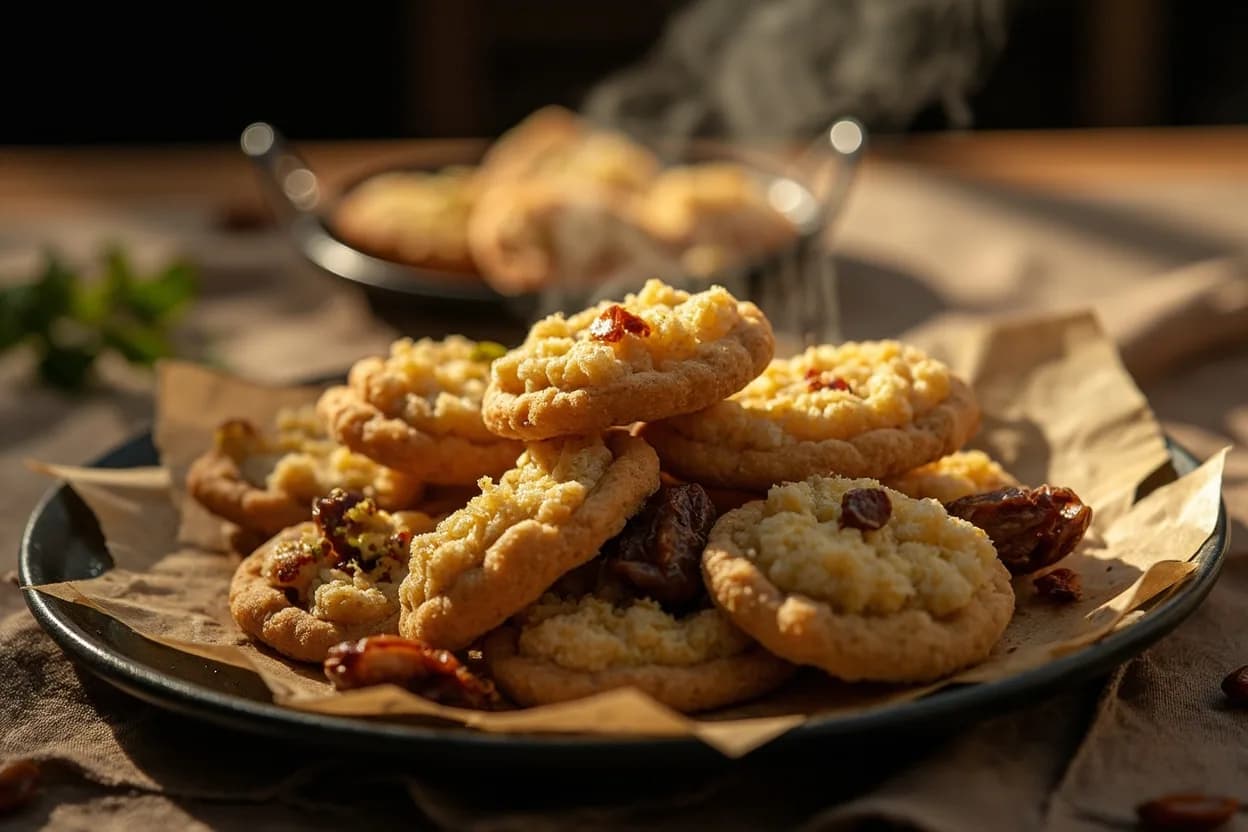
The dishes that define Syrian, documented in the Canon.
References
- 1.The Food of Syria — Anissa Helou (1994)
- 2.Zaitoun — Yasmin Khan (2018)
- 3.The Aleppo Cookbook — Marlene Matar (2016)
- 4.A New Book of Middle Eastern Food — Claudia Roden (1985)
- 5.The Arabesque Table — Reem Kassis (2021)
Confidence: high
Notes
Aleppo pepper: a world ingredient
Aleppo pepper (Capsicum annuum var., grown in the Aleppo region and southeastern Turkey) is unlike any other chile: moderately hot (around 10,000 Scoville), oily, fruity, and slightly salty from the traditional oil-curing of the dried flakes. It has become a globally sought spice — the Syrian civil war severely disrupted production, making Turkish-grown pul biber a common substitute.
Kibbeh: Syria's national dish, in dozens of forms
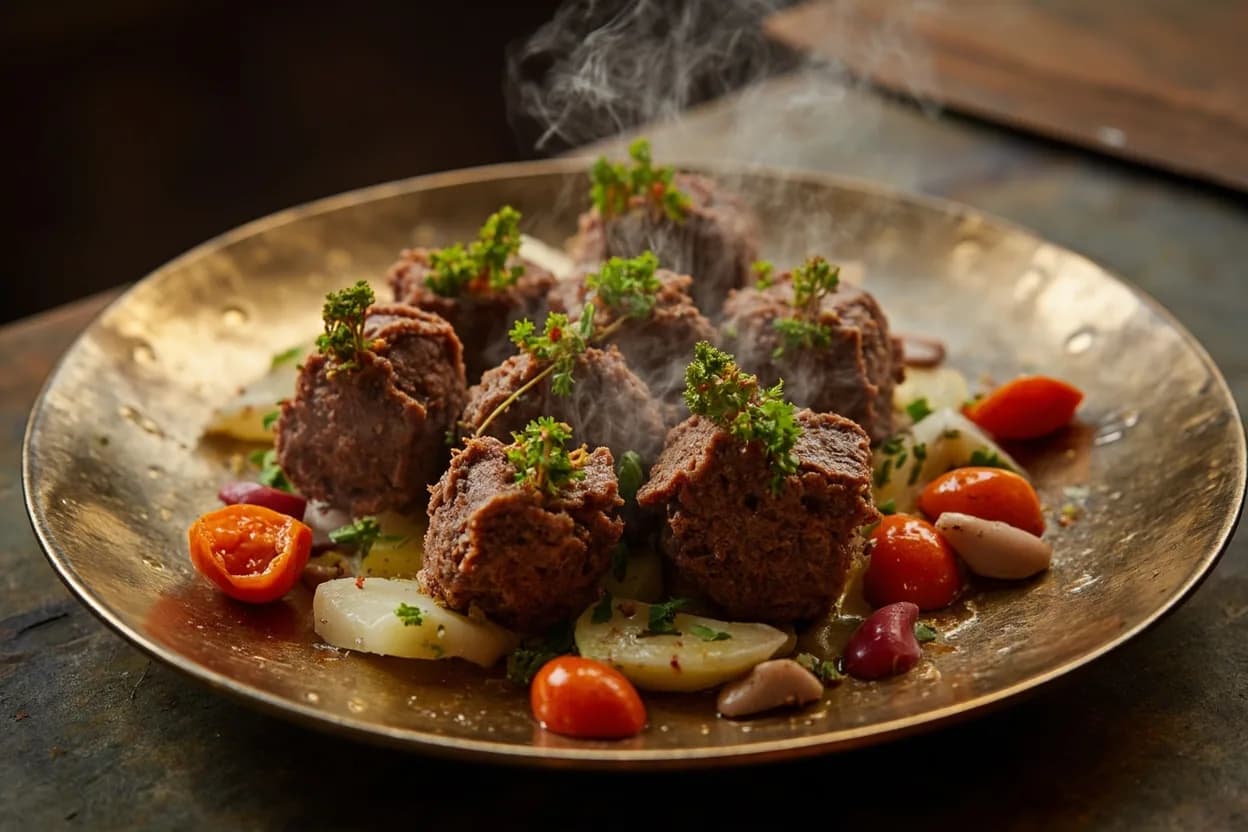
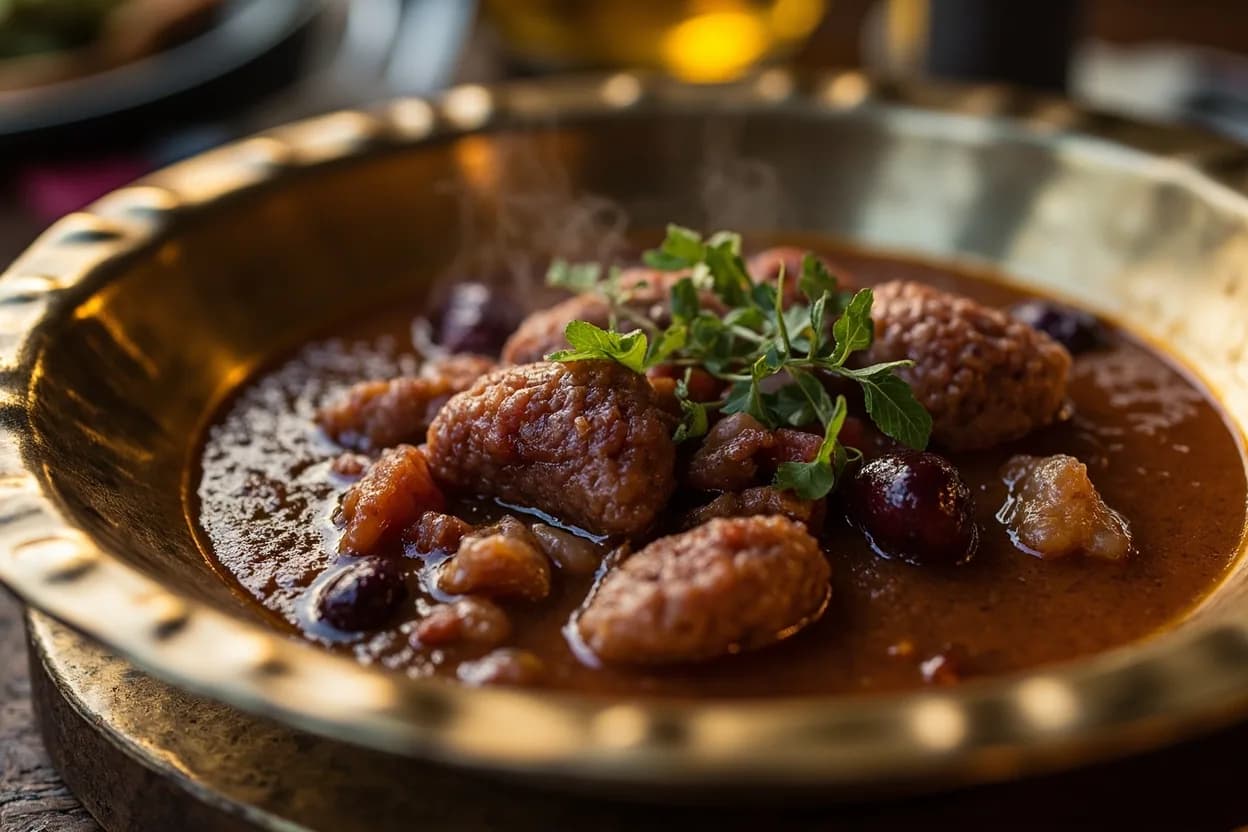
Kibbeh — the paste of lean lamb and fine bulgur pounded together — is Syria's most culturally significant preparation. Damascus has kubba hamda (poached in a sour cherry broth), while Aleppo has kibbeh tartah (flattened raw disc). Fried, baked, stuffed, in yogurt broth, poached in pomegranate sauce — Syrian cooks recognize over 30 distinct kibbeh forms.