Middle East
Palestinian
Also: Cuisine palestinienne, Falastin cuisine
Palestinian cooking as living cultural resistance — musakhan's sumac-roasted chicken, maqluba's inverted rice, ancient olive groves, and a cuisine preserved through displacement as an act of identity.
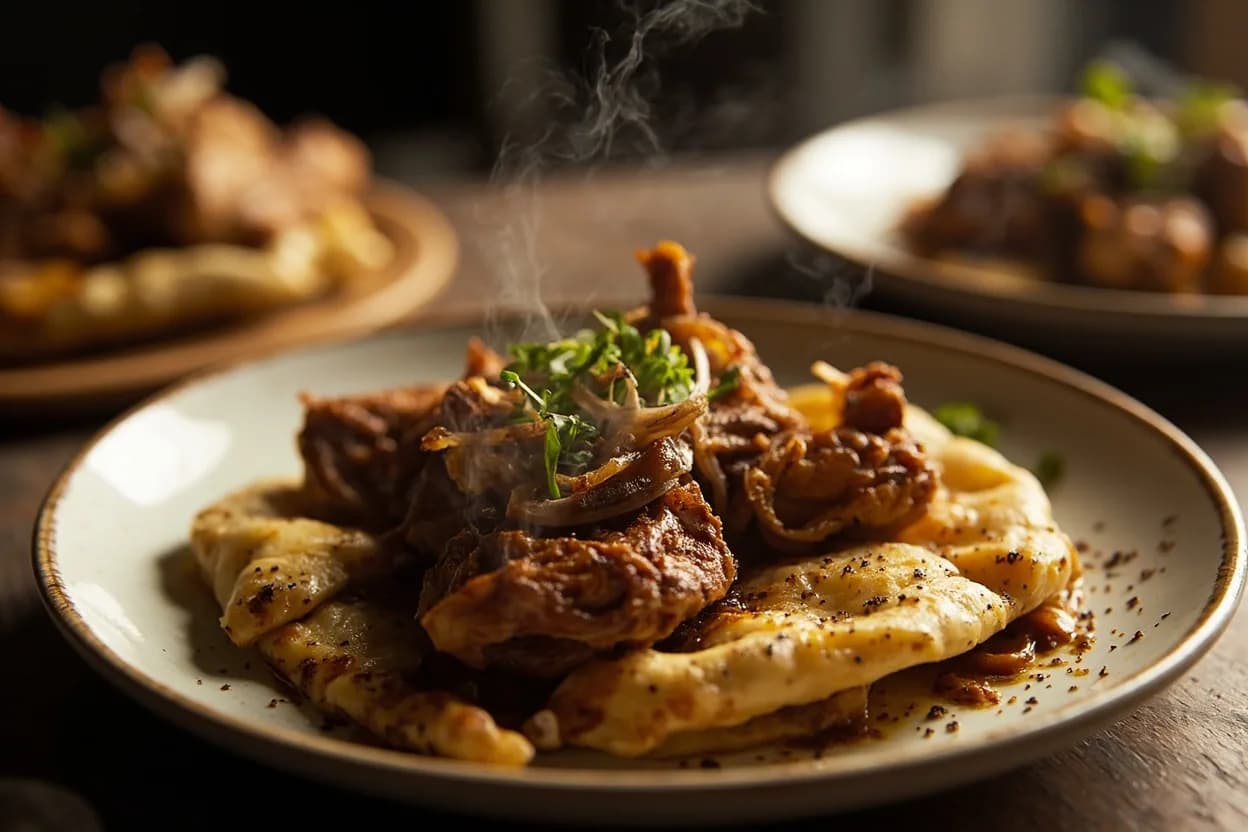
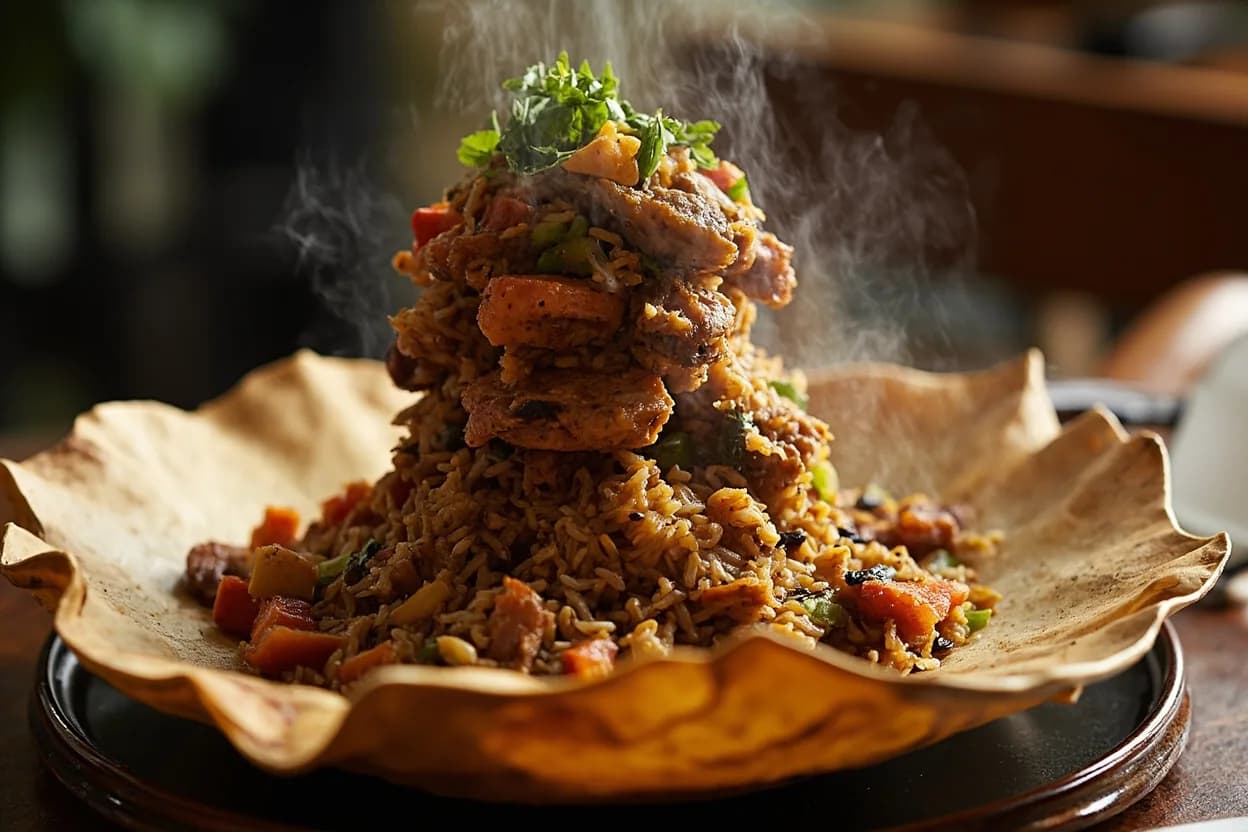
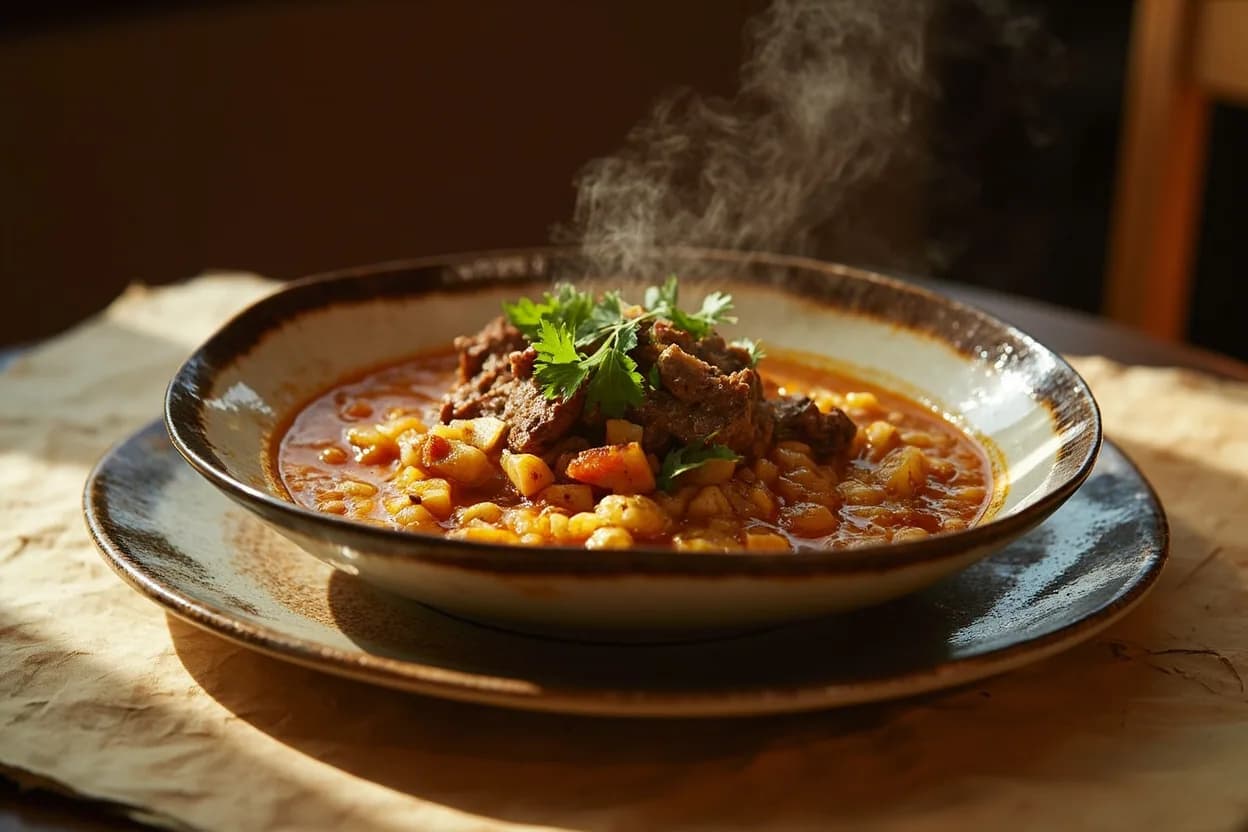
Palestinian cuisine is one of the Levant's most distinctive food traditions, defined by a profound relationship with the land — olive groves thousands of years old, wild herbs gathered from hillsides, and grain traditions reaching into antiquity. Its most celebrated dish, musakhan, is an architectural statement: flatbread (taboun bread) soaked with olive oil and caramelized onions, layered with sumac-roasted chicken, and scattered with pine nuts. Maqluba ('upside-down' — a pot of rice, vegetables, and meat inverted at the table) is a festive centerpiece across the region. Palestinian cooking integrates Canaanite, Byzantine, Crusader, Ottoman, and Arab influences, and has become deeply politicized as an expression of national identity and continuity in the face of displacement since 1948.
The flavour base
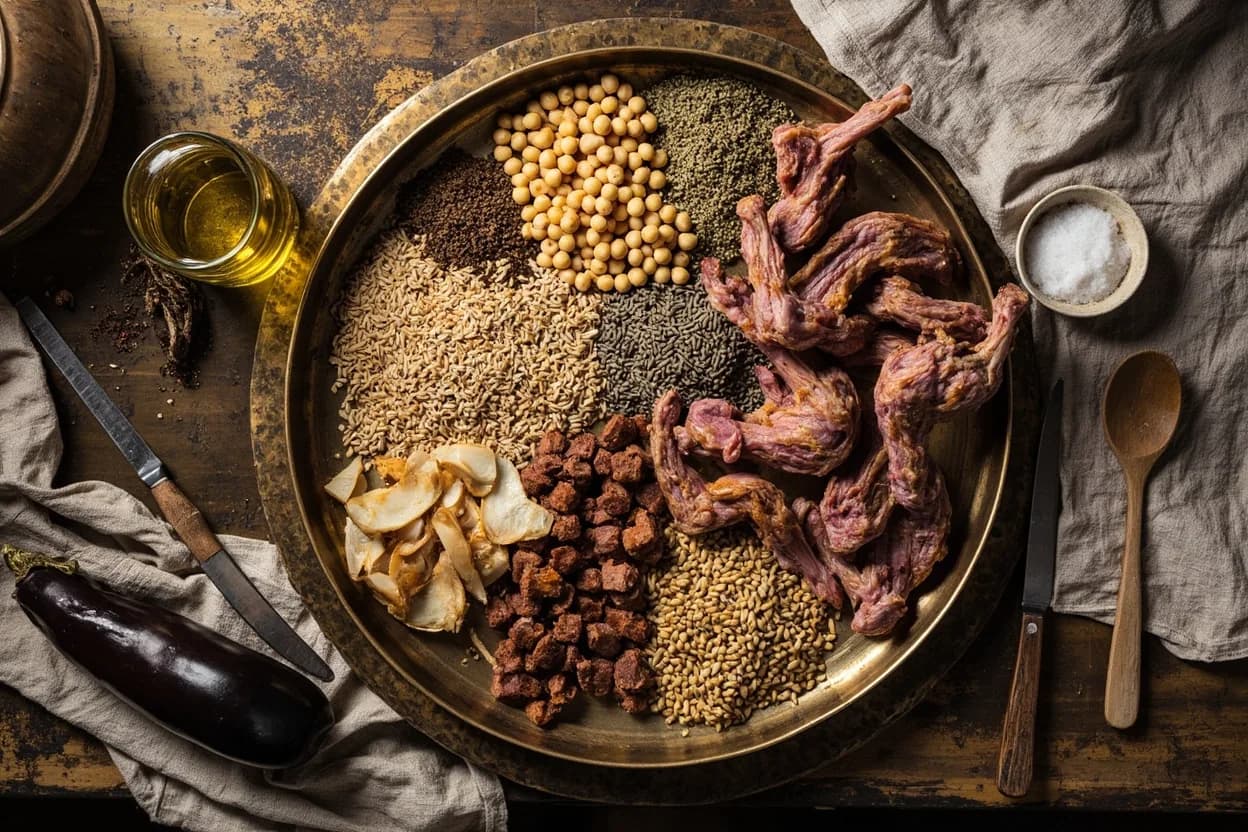
Olive oil — Palestinian olive oil, from ancient Rumi, Nabali, and Souri cultivars, is among the world's finest — is the foundation of virtually everything. Sumac provides the distinctive sour-astringent note that characterizes the cuisine above all other Levantine neighbors. Caramelized onion is the primary aromatic. Allspice, cinnamon, and bay leaf season braises and rice. Freekeh (young green wheat, fire-roasted) gives a smoky, nutty complexity.
Pantry staples
Key ingredients
Signature techniques
Signature dishes
Palestinian on the table
At the table
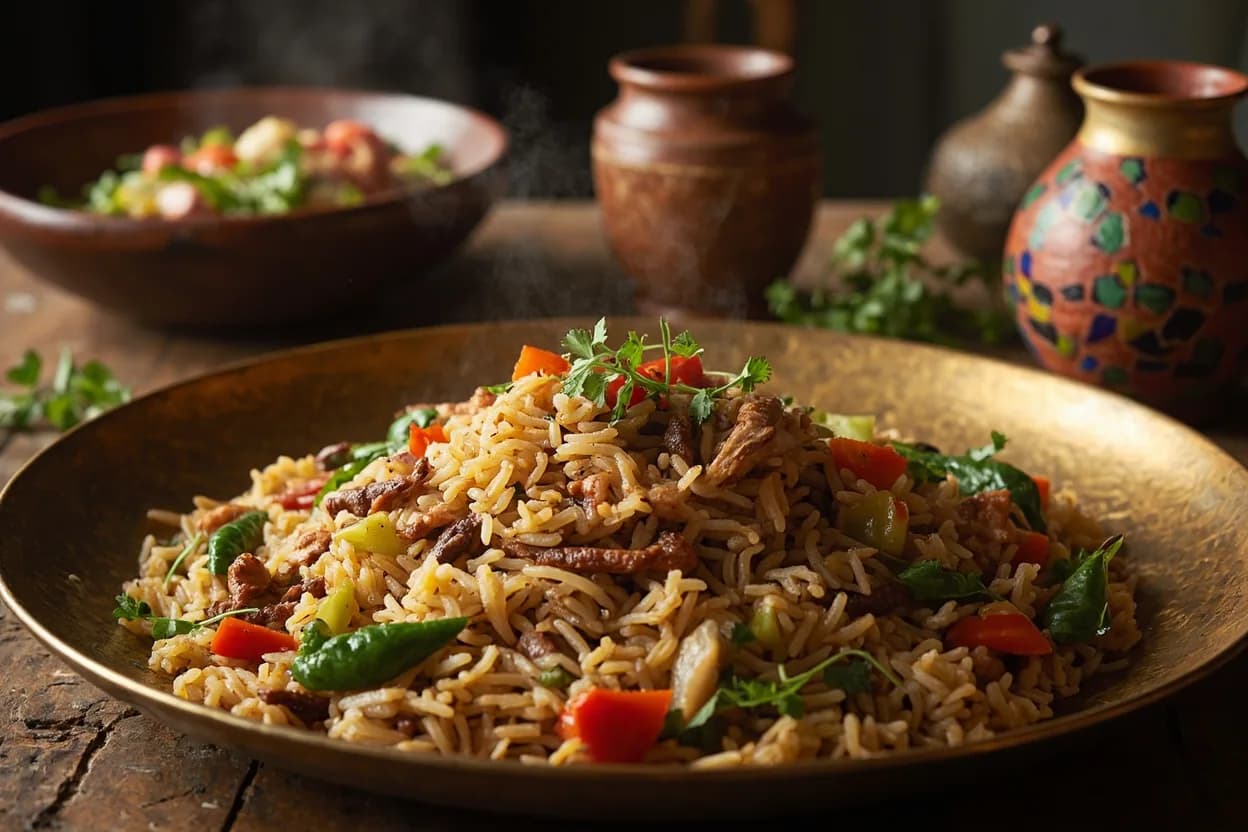
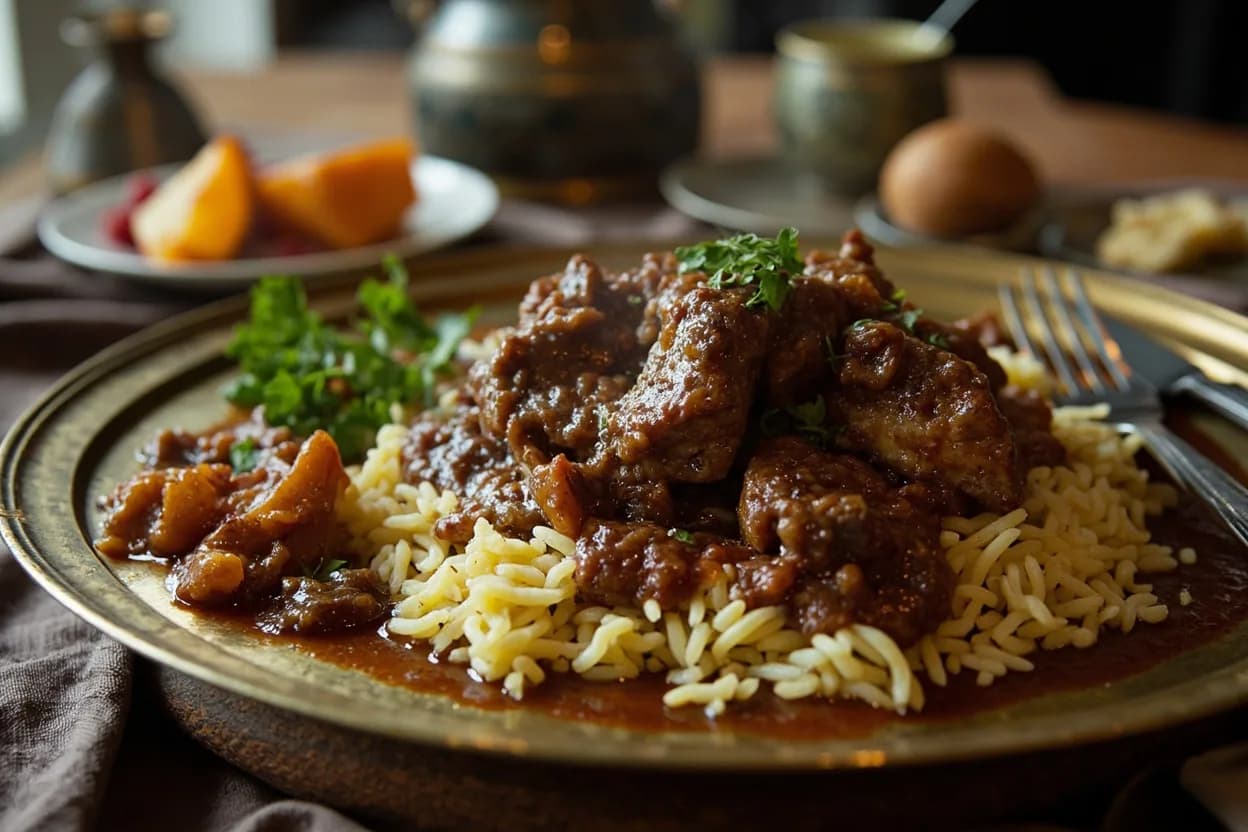
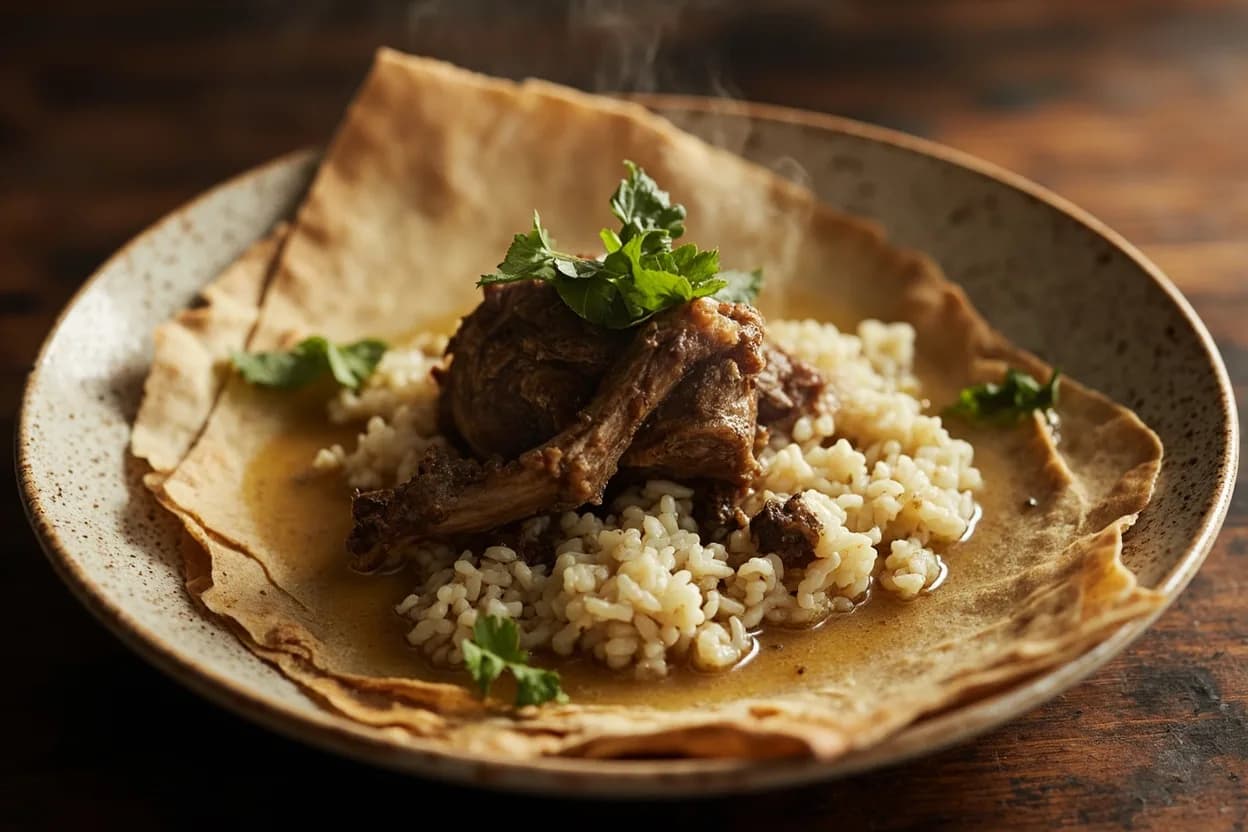
Palestinian meals are communal and generous. Extended family gatherings center on a large shared platter — maqluba or ouzi (whole lamb on rice) placed at the center for everyone to eat from. Daily meals are simpler: flatbread with olive oil, za'atar, labneh, olives, and eggs at breakfast; a stew or stuffed vegetable with rice at midday; lighter bread-and-dip meals in the evening. Hospitality requires abundance — a host's honor is measured by generosity at table.
History & context
The land of Canaan, later Palestine, has been farmed since the Neolithic period. Olive cultivation in the region dates to at least 4000 BCE, and some working olive trees in Nablus and Ramallah are estimated at 2,000–4,000 years old. The cuisine absorbed Canaanite, Philistine, Hebrew, Roman, Byzantine, and Arab influences across millennia. The Islamic conquest (636 CE) brought Arab culinary traditions that deeply reshaped the food culture. Crusader rule (1099–1291) and Ottoman governance (1516–1917) added further layers. The British Mandate (1917–1948) and the 1948 Nakba — the displacement of approximately 700,000 Palestinians — shattered communities but preserved cooking traditions as acts of memory. Palestinian food writers, chefs, and home cooks since the 1980s have written cookbooks explicitly as cultural and political acts, documenting recipes as evidence of presence and history.
Regional variations
- Jerusalem (Al-Quds)
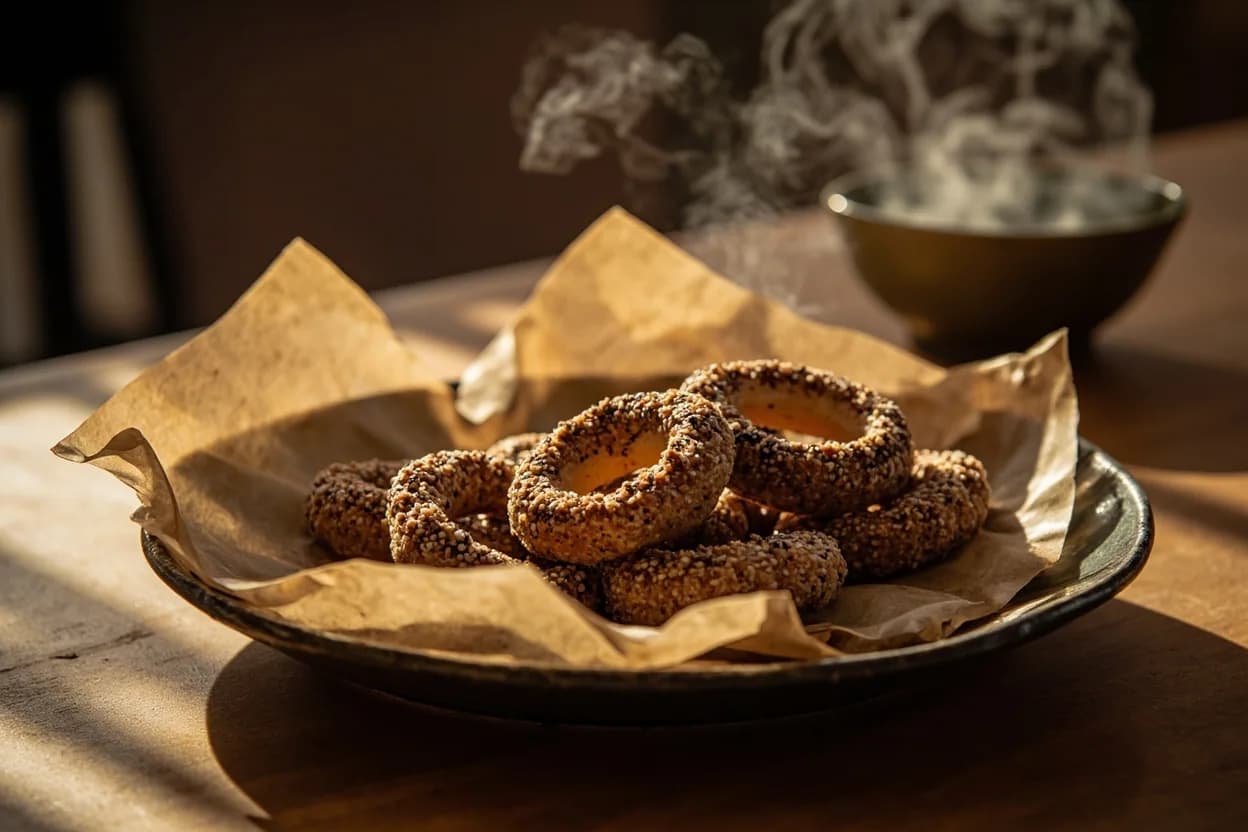
The city's mixed population has created the most complex syncretism — Palestinian Arab, Jewish (Sephardic, Mizrahi, Ashkenazi), and Armenian traditions intersect. Ka'ak al-quds (sesame-crusted bread rings) and musakhan are Jerusalem markers.
- Nablus (Nablus)
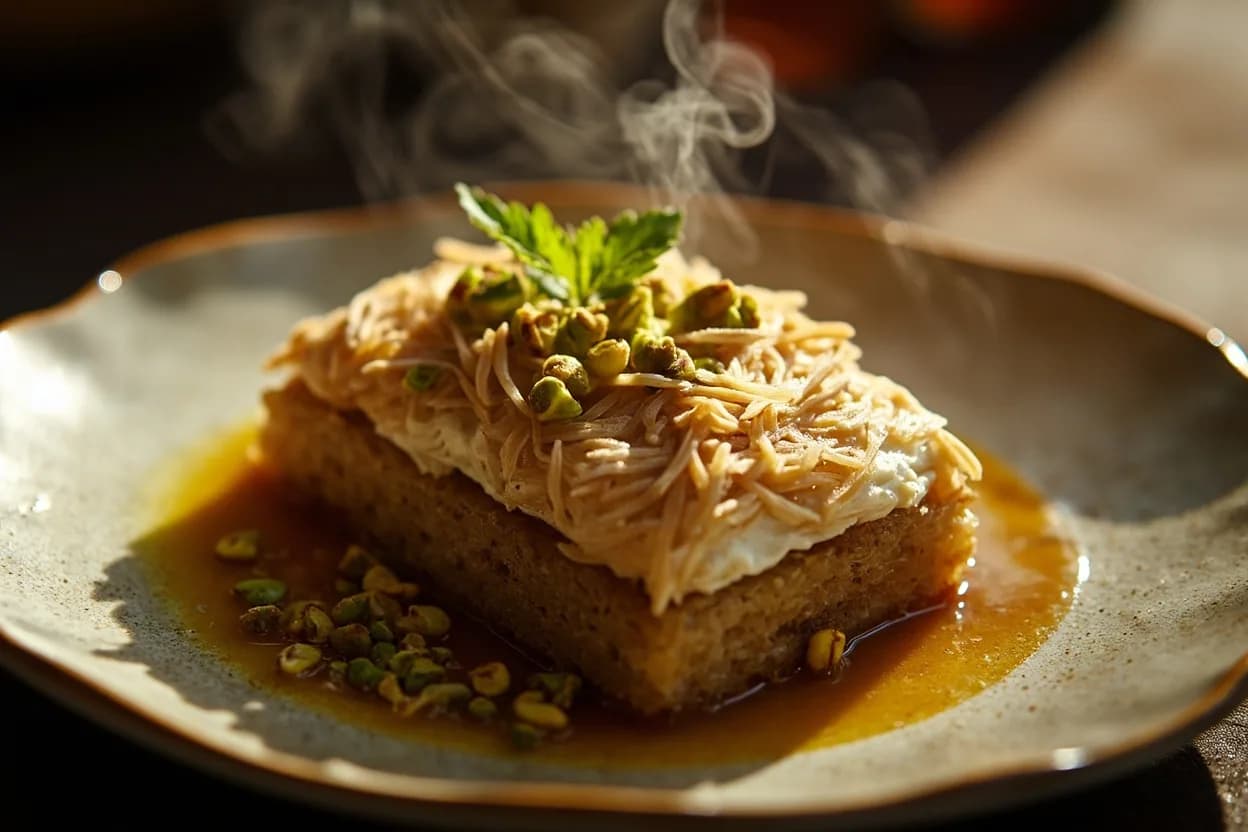
Home of knafeh nabulsieh — the original, definitive version with stretchy Nabulsi cheese and thin kataifi pastry. Also known for kanafeh and olive oil soap.
- Gaza
Gaza's cuisine is the most distinct Palestinian regional expression: dill and cumin are used more heavily, hot chiles appear, and sumagiyya (lamb with sumac and Swiss chard) is a Gazan specialty unavailable elsewhere.
- Galilee (Jalil)
Greatest overlap with Syrian and Lebanese mountain cooking; wild herbs (mallow, purslane, dandelion), olive oil dipping, and grape-based preparations characterize the north.
- Hebron (Al-Khalil)
Lamb-heavy pastoral cooking tradition; known for grape products (raisins, molasses, arak) from Hebron's ancient vineyards.
Related cuisines
Mansaf is claimed by both cuisines; the Palestinian and Jordanian cooking traditions are deeply intertwined through shared Bedouin heritage and post-1948 displacement into Jordan.
Same Levantine pantry; much overlap in mezze and bread traditions; Palestinian cooking is generally earthier, with more grain emphasis.
Shared freekeh, kibbeh, and stuffed-vegetable traditions; the northern Palestinian cooking of Galilee overlaps extensively with southern Syrian cooking.
- Israeli
Israeli cuisine has incorporated many Palestinian dishes (hummus, falafel, shakshuka, musakhan) that were present in the region before the state's founding — a contested culinary history.
Canonical recipes
The dishes that define Palestinian, documented in the Canon.
References
- 1.Falastin — Sami Tamimi & Tara Wigley (2020)
- 2.Zaitoun: Recipes from the Palestinian Kitchen — Yasmin Khan (2018)
- 3.The Palestinian Table — Reem Kassis (2017)
- 4.A New Book of Middle Eastern Food — Claudia Roden (1985)
- 5.Jerusalem — Yotam Ottolenghi & Sami Tamimi (2012)
Confidence: high
Notes
Cuisine as cultural memory
Palestinian food writing is explicitly political in a way unusual for cuisine writing. Books like 'Falastin' and 'The Palestinian Table' function simultaneously as cookbooks and as acts of documentation — recording village recipes, regional dishes, and family histories that might otherwise be lost to displacement and fragmentation. The recipe is understood as evidence of presence.
Olive oil and the ancient grove
Palestinian olive oil — from cultivars like Nabali, Rumi, and Souri — is among the world's most distinctive. The ancient groves of the West Bank (some trees provably over 2,000 years old, verified by carbon dating) are central to Palestinian agricultural identity and livelihoods, and their destruction or appropriation has been a flashpoint in the conflict.
Knafeh: Nablus's greatest export
Knafeh nabulsieh — stretchy Nabulsi white cheese under shredded kataifi pastry, soaked in sugar syrup scented with rose water and orange blossom — originated in Nablus and spread across the Levant. It is consumed for breakfast, Ramadan, and celebrations. Nablus maintains that the only authentic knafeh is made with fresh Nabulsi cheese, giving the dish its characteristic salty-sweet tension.