Middle East
Jordanian
Also: Cuisine jordanienne, Hashemite table
Jordan's Bedouin-rooted cuisine of desert hospitality — mansaf's dramatic lamb in fermented jameed, zarb pit-roasting, and a generosity ethic that makes feeding guests the highest obligation.
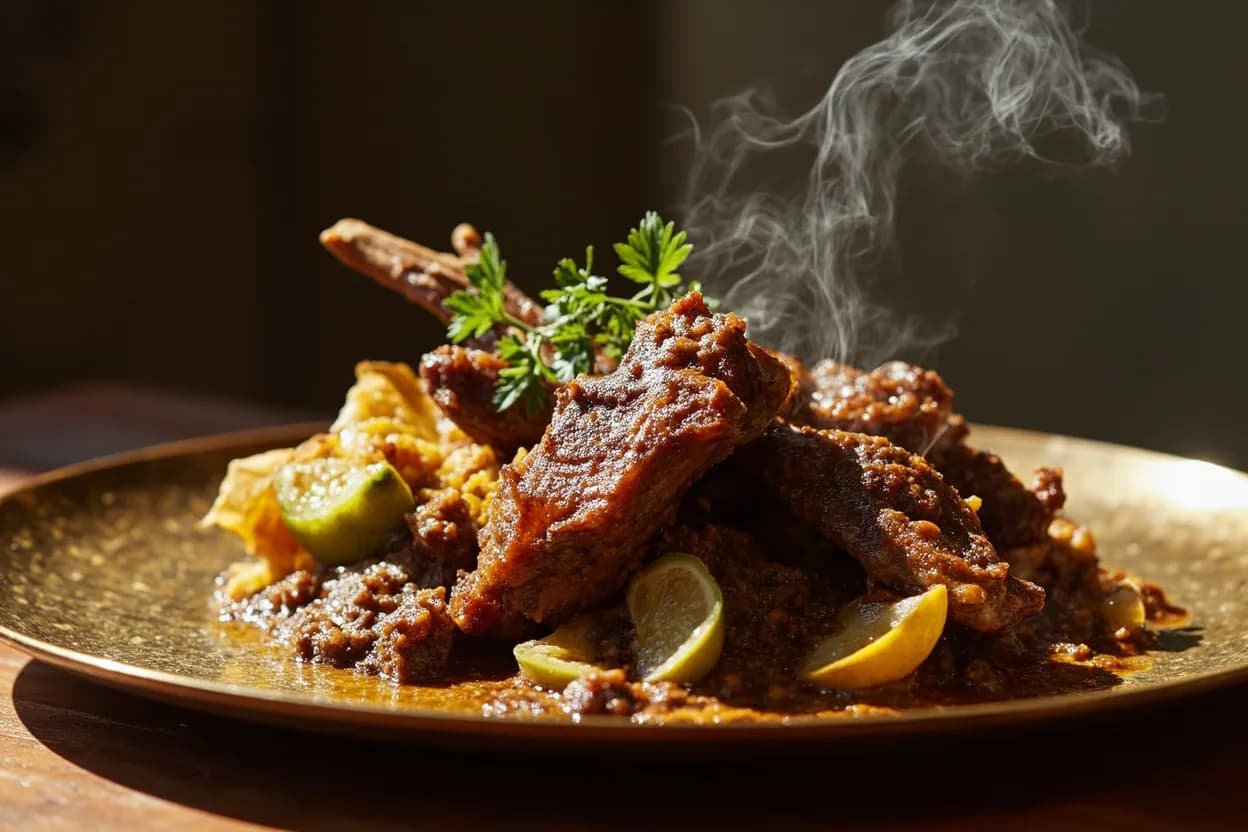
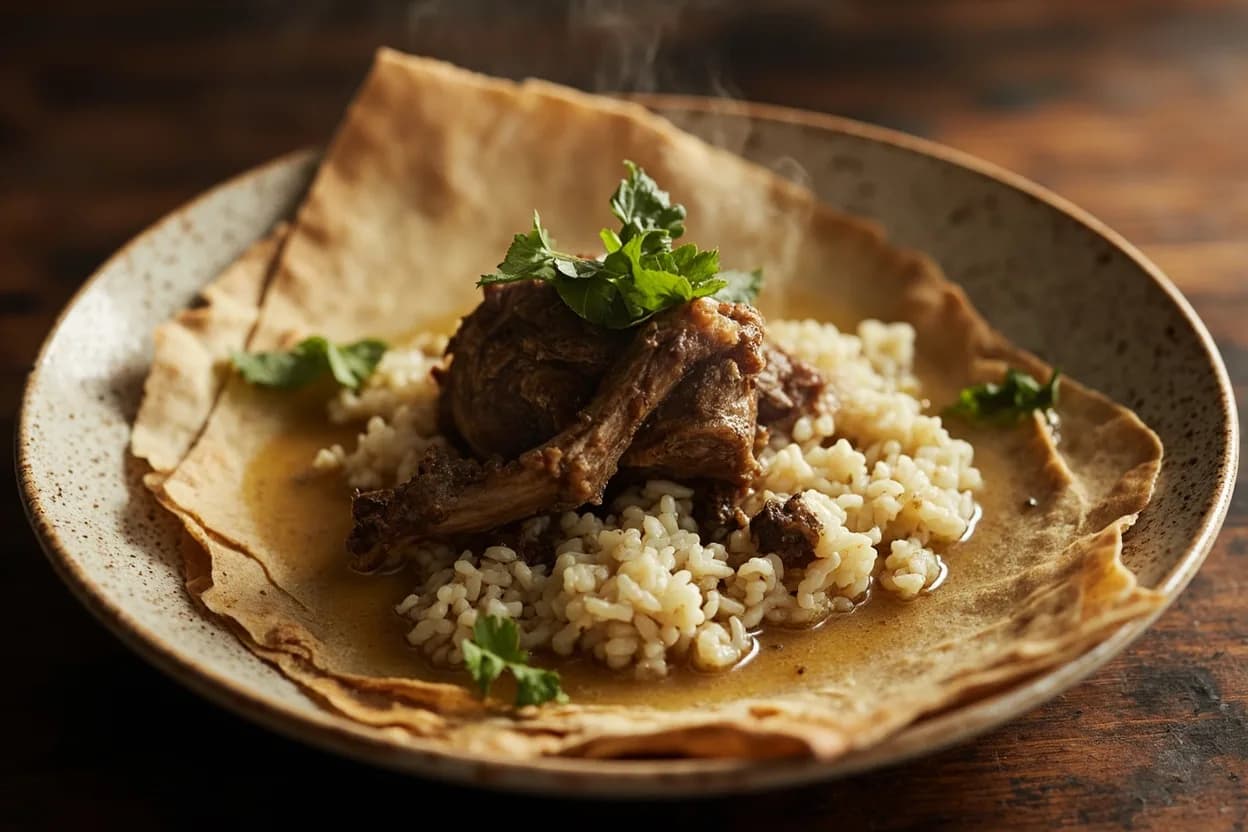
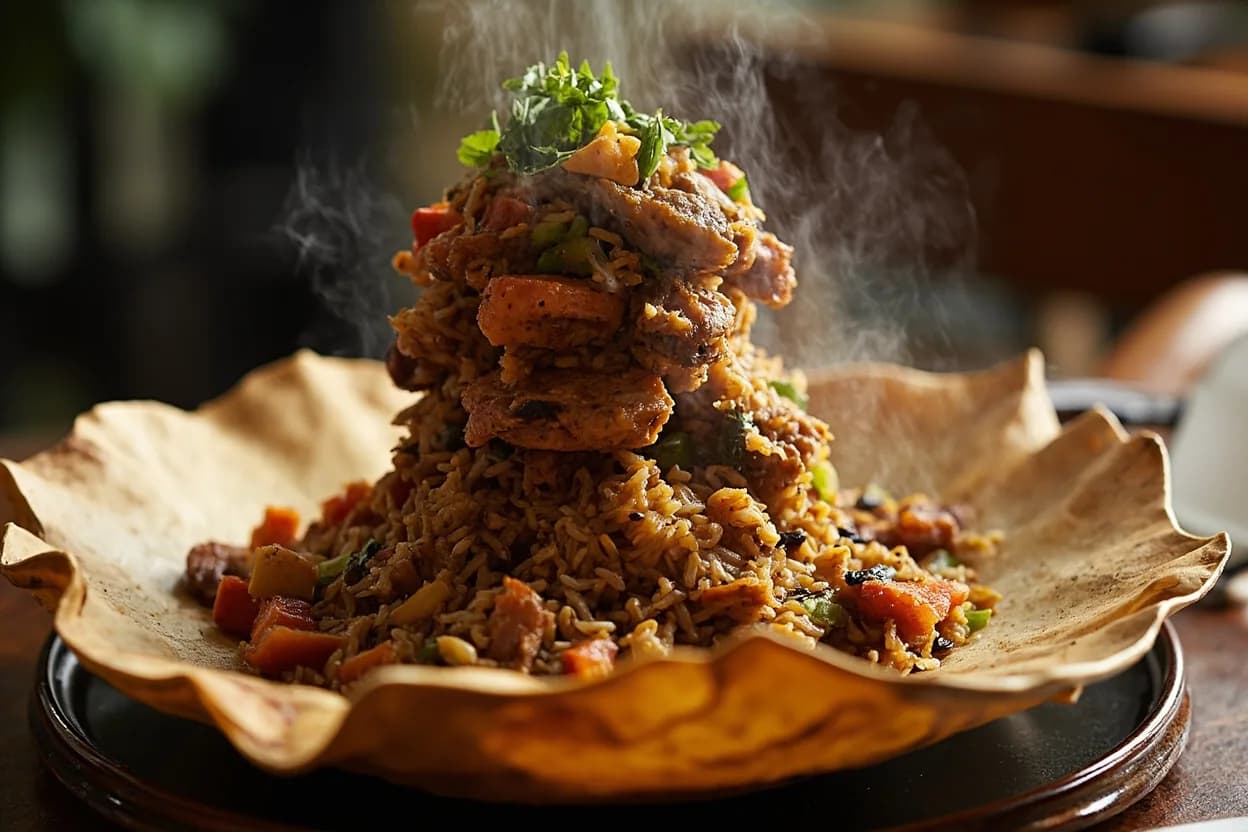
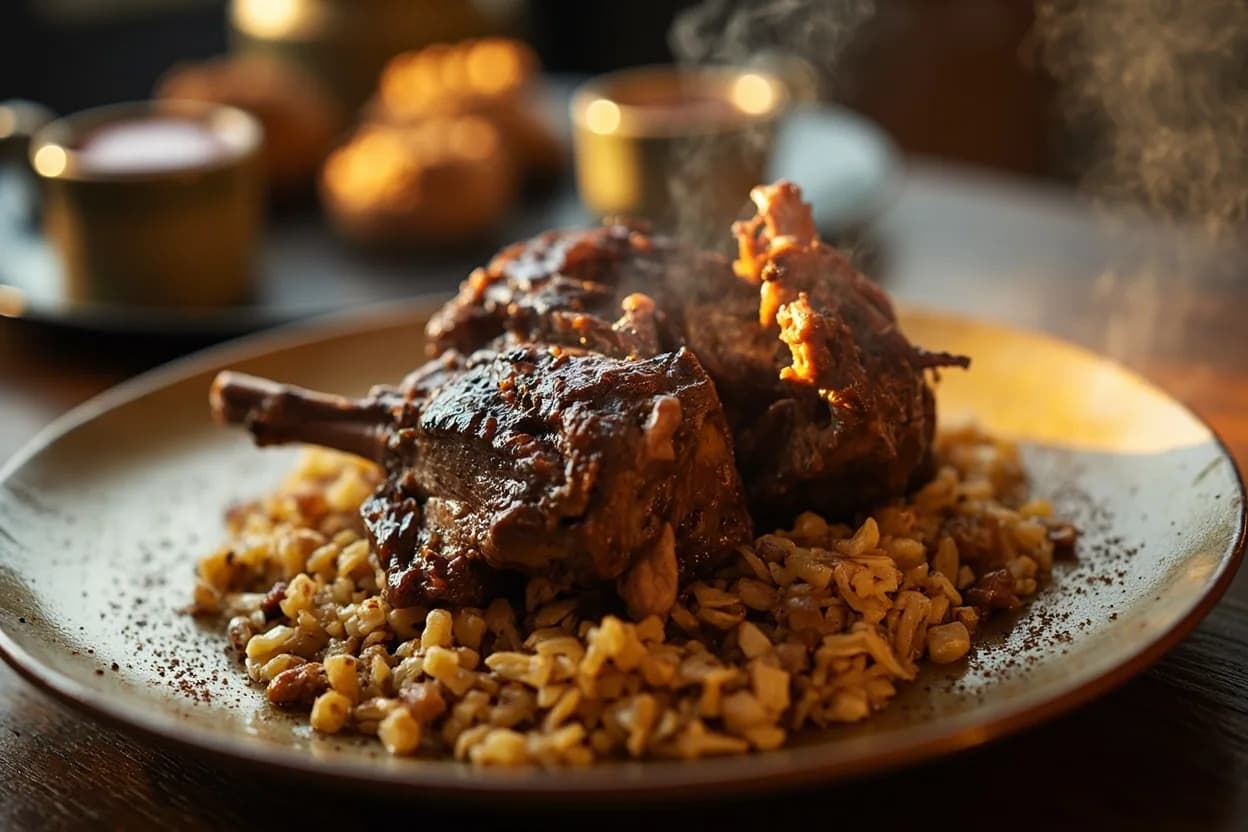
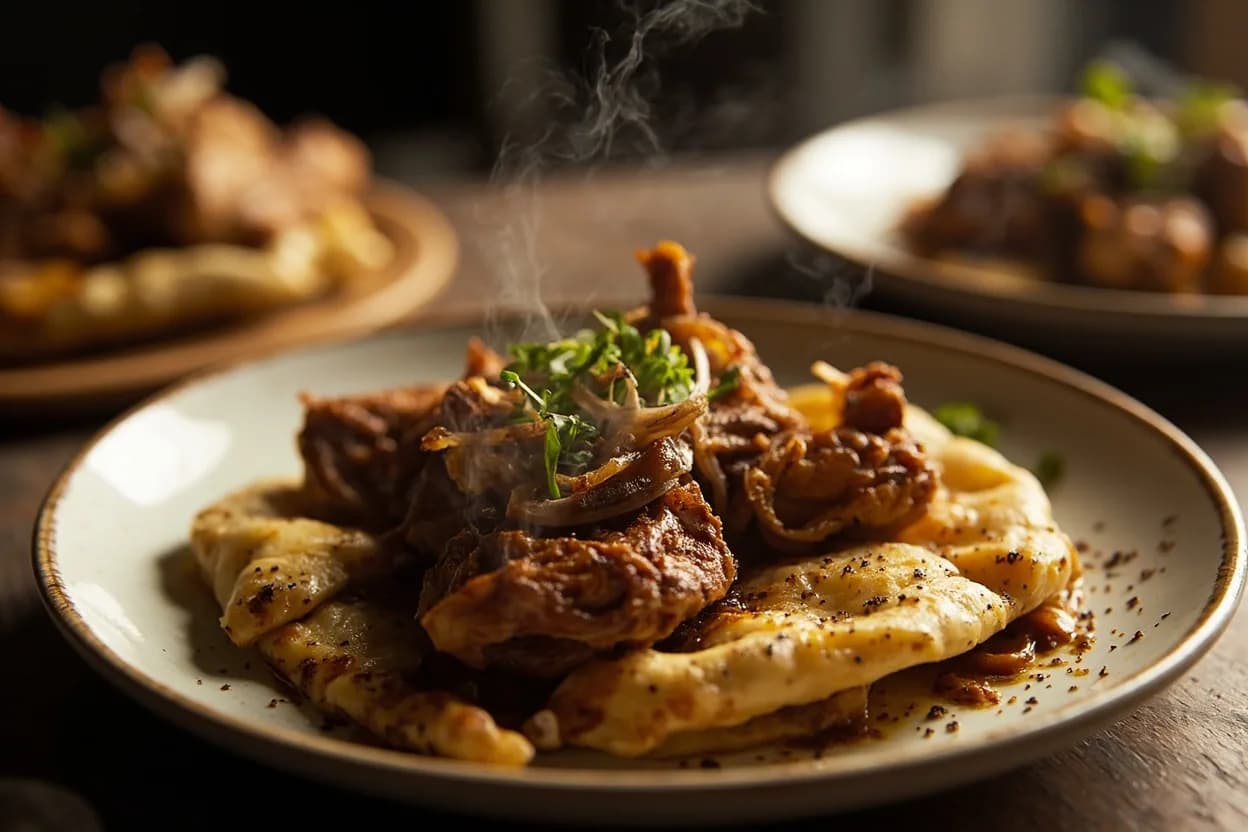
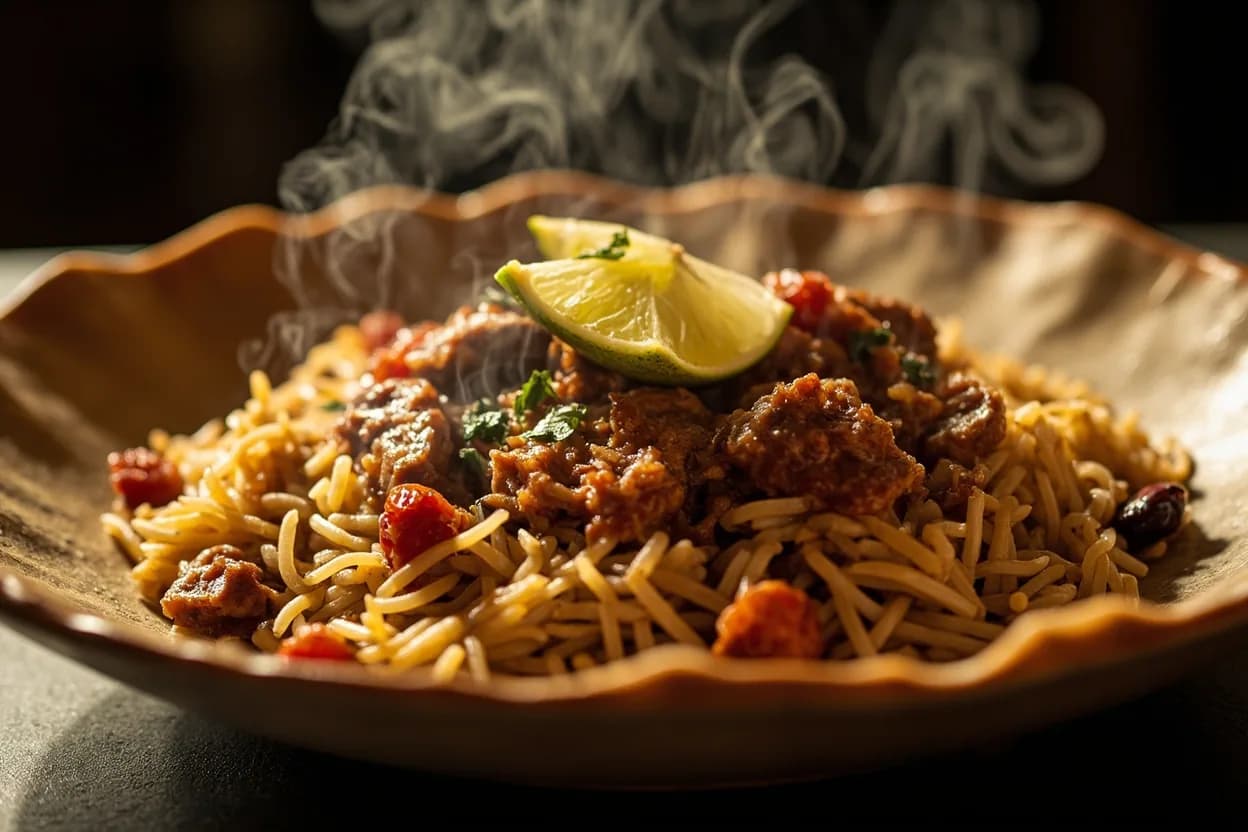
Jordanian cuisine is shaped primarily by the Bedouin traditions of the Arabian steppe and desert: lamb-centered, rice-abundant, and built around the principle that hosting a guest demands the most generous meal possible. Its defining preparation is mansaf — Jordan's national dish: large pieces of lamb braised in jameed (dried, fermented goat or sheep yogurt reconstituted into a tangy, funky broth), served over yellow rice and flatbread, garnished with pine nuts and almonds, and eaten communally with the right hand. Zarb (Bedouin-style pit-roasting of whole lamb or chicken buried in a sand oven) is the feast-day preparation of Wadi Rum and Petra's desert communities. The cuisine integrates Palestinian, Syrian, and Saudi influences alongside its indigenous Bedouin core.
The flavour base
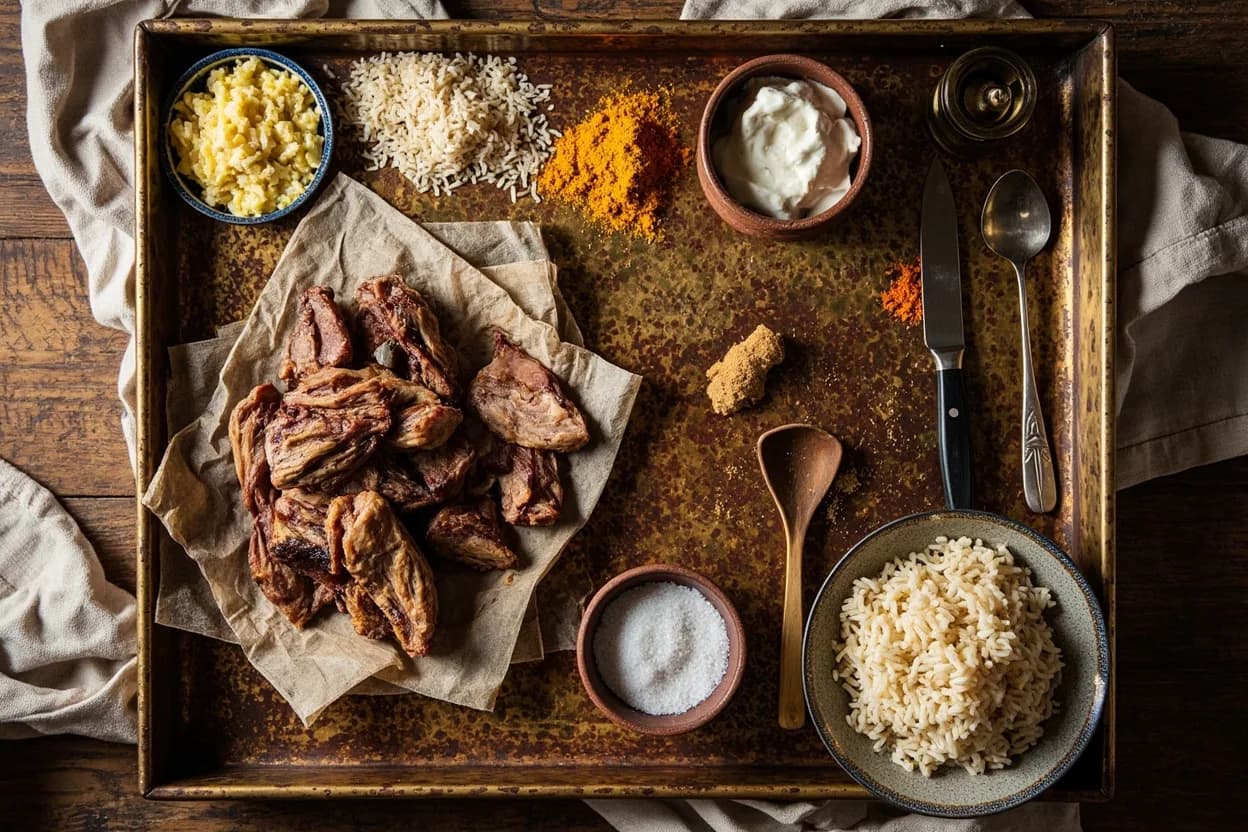
Jameed — dried, hard balls of fermented goat yogurt, dissolved in hot water to create a sharp, funky, salty broth — is Jordan's most distinctive ingredient, with no equivalent elsewhere. Lamb fat renders into rice cookery. Turmeric, bay leaf, cinnamon, and cardamom season rice. Onion and garlic form the aromatic base. Olive oil from the Jordan Valley is used for salads and dips but clarified butter (samneh) is used for festive rice cooking.
Pantry staples
Key ingredients
Signature techniques
Signature dishes
Jordanian on the table

At the table
Jordanian hospitality dictates that a guest must always be fed, and fed abundantly. The traditional Bedouin meal centers on a single enormous communal platter — mansaf or ouzi — placed on a spread cloth (sufra) on the floor, eaten standing or crouching from the edges, right hand only, rolled into a ball and popped into the mouth. Urban and city meals have adopted table service and more mezze variety, but the festive meal remains platter-centered. Coffee — Arabic qahwa with cardamom and saffron, poured from a traditional dallah pot — is the essential hospitality gesture before any food appears.
History & context
The territory of modern Jordan has been inhabited since the Paleolithic era, with Neolithic settlements at Ain Ghazal among the world's earliest known. The Nabataean civilization (c. 400 BCE – 106 CE), centered at Petra, controlled the spice and incense trade and developed sophisticated water management, agriculture, and a distinctive material culture. Nabataean cooking was likely the first to systematize the spice trade's flavors into a regional cuisine. Roman, Byzantine, Arab, Crusader, and Ottoman rule followed. The Hashemite Kingdom of Jordan, established in 1921 under British mandate, unified Bedouin tribal traditions with the more urban Palestinian and Syrian food cultures that characterized the settled west bank of the Jordan River. The 1948 and 1967 wars brought hundreds of thousands of Palestinian refugees into Jordan, substantially enriching and reshaping Amman's urban food scene. Today Jordan's culinary identity balances desert Bedouin heritage with a cosmopolitan capital.
Regional variations
- Amman (urban)
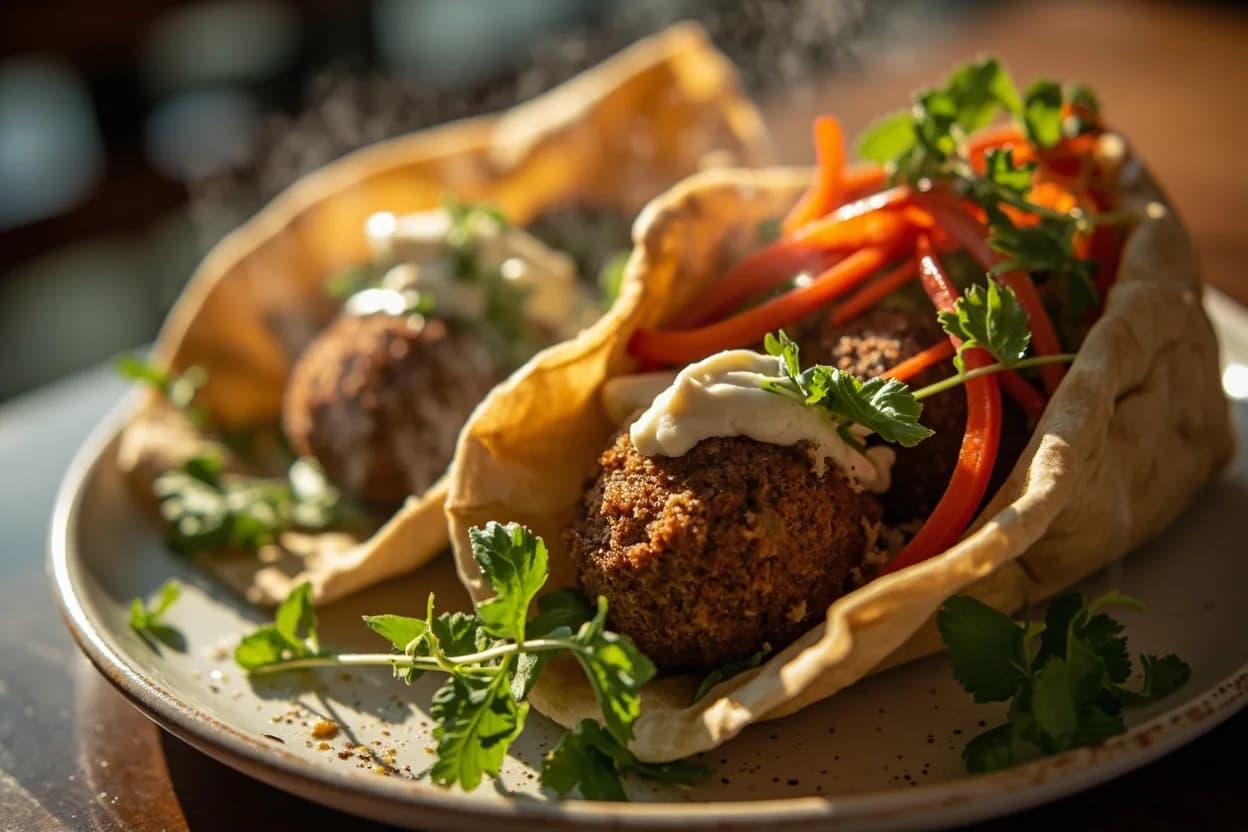
The capital's food scene integrates Lebanese mezze refinement, Palestinian staples, and international influences from its expatriate and diaspora population. The best hummus and falafel traditions in Jordan are in Amman.
- Petra and Wadi Rum (desert south)
Zarb pit-roasting is the dominant festive technique; Bedouin cooking traditions are most intact here. Lamb, rice, flatbread, and dates are the essential provisions.
- Jordan Valley
Fertile valley agriculture: tomatoes, cucumbers, citrus, and olive groves. Lighter preparations than the highland and desert cooking; fatteh and vegetable stuffings are common.
- Salt and Ajloun (northern highlands)
Closest to Palestinian and Syrian northern cooking; olive oil is abundant, freekeh appears, and the cooking is greener and more herb-forward.
- Aqaba (Red Sea coast)
Seafood tradition: grilled fish, sayadieh (fish over spiced rice), and a slightly Gulf-influenced spice profile from trade connections.
Related cuisines
Mansaf is claimed by both; the two cuisines share the deepest common ground, strengthened by the post-1948 Palestinian presence in Jordan.
- Saudi
The Bedouin core of both cuisines overlaps: lamb over rice, pit-roasting, jameed-adjacent preparations, and the hospitality ethic of feeding guests maximally.
Northern Jordanian cooking overlaps with southern Syrian traditions in flatbread, freekeh, and stuffed vegetable preparations.
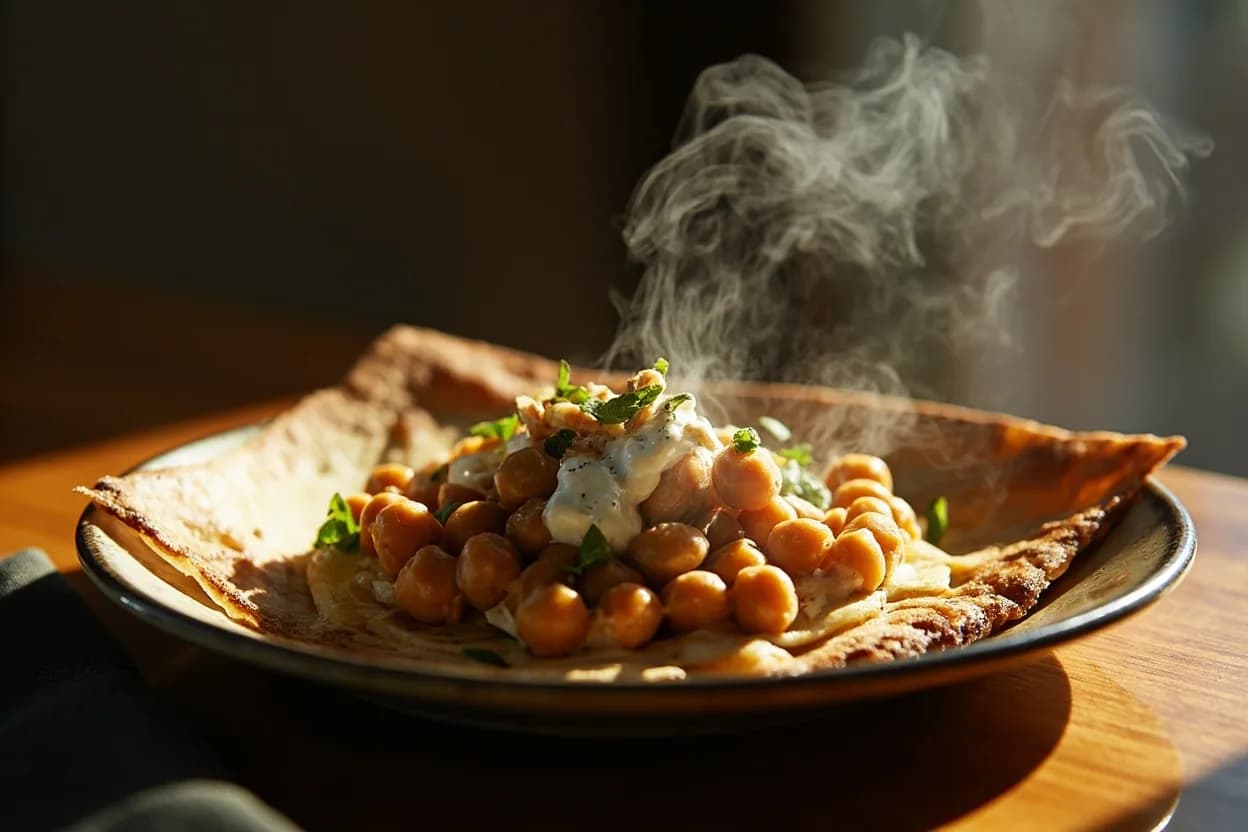
Amman's restaurant culture has absorbed substantial Lebanese mezze influence; hummus, falafel, and fattoush are everyday urban staples.
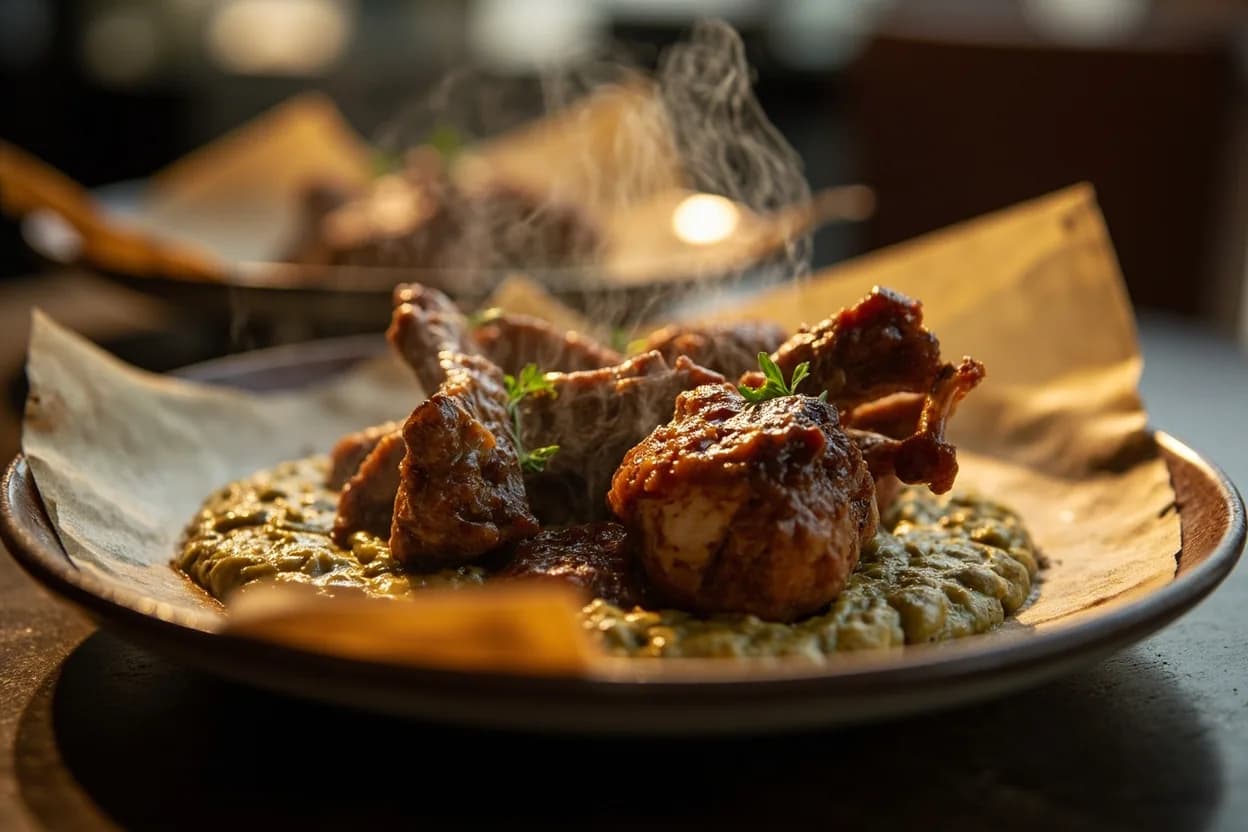
Canonical recipes
The dishes that define Jordanian, documented in the Canon.
References
- 1.The Complete Middle East Cookbook — Tess Mallos (1993)
- 2.A New Book of Middle Eastern Food — Claudia Roden (1985)
- 3.Falastin — Sami Tamimi & Tara Wigley (2020)
- 4.The Palestinian Table — Reem Kassis (2017)
- 5.Feast: Food of the Islamic World — Anissa Helou (2018)
Confidence: high
Notes
Mansaf: eating with your hand
Mansaf protocol is inseparable from its meaning. Eaten standing around a communal platter, guests use the right hand to squeeze rice, lamb, and jameed-soaked bread into a ball and place it directly into the mouth. The host pours hot jameed (the whey, called marag) over the platter repeatedly. To eat well is to honor the host; to leave before the host insists you've had enough is impolite. The meal is a performance of tribal hospitality.
Jameed: Jordan's most distinctive ingredient
Jameed is made by salting and sun-drying fermented goat or sheep milk yogurt until it hardens to a dense, ivory ball. It keeps for months without refrigeration — essential for desert life — and dissolves in hot water into a powerfully tangy, funky, salty broth unlike anything else in Middle Eastern cooking. Jordanian families often source jameed from specific producers in Karak, Salt, or Tafila, where production traditions are closely held.