East Asia
Kaiseki
Also: kaiseki-ryori, chakaiseki, cha-kaiseki
Japan's highest culinary art form — a sequential multi-course meal born of Kyoto tea ceremony culture, in which every dish, vessel, garnish, and pause is calibrated to express the season at the precise moment of its peak.
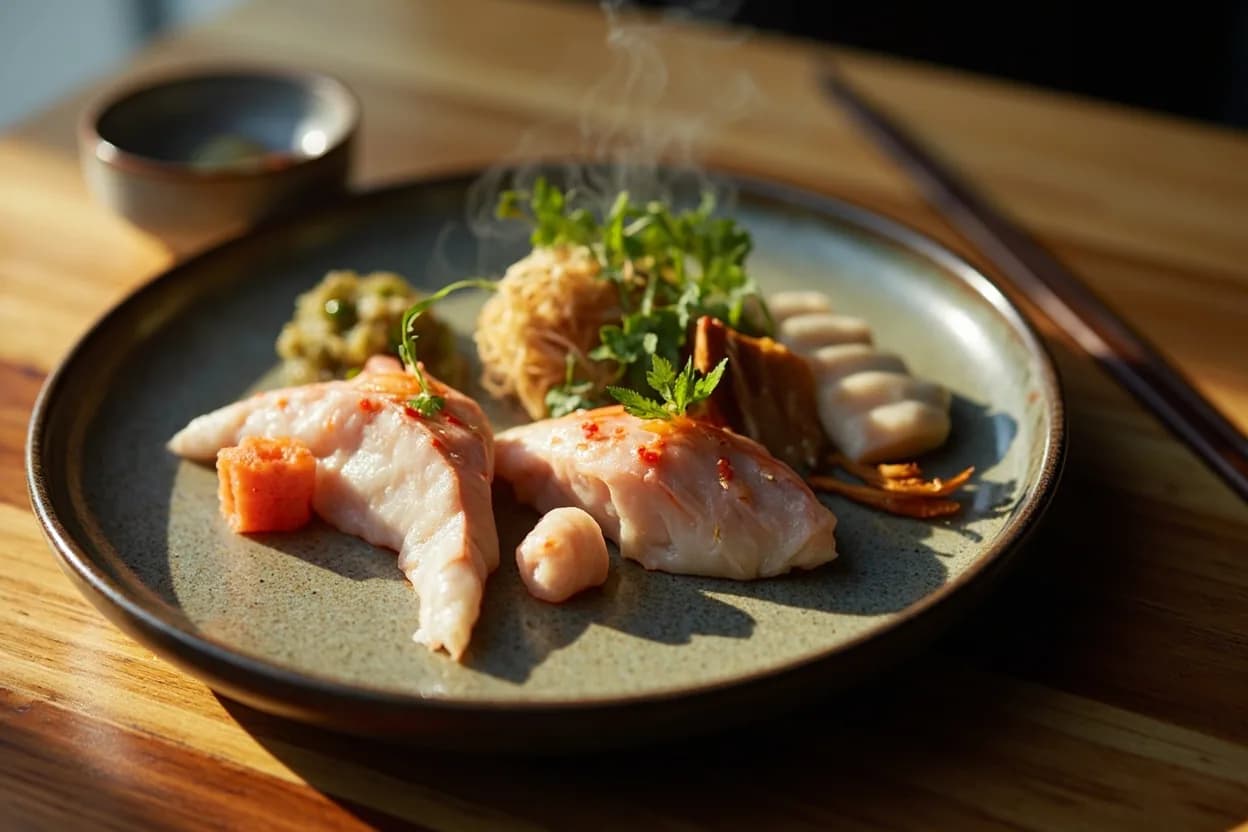
Kaiseki is simultaneously Japan's most codified and most ephemeral cuisine. It evolved from the light meal served before a formal tea ceremony (cha-kaiseki, pioneered by the tea master Sen no Rikyū in the 16th century) into a standalone multi-course high cuisine practiced in dedicated restaurants (ryotei). A kaiseki meal does not simply use seasonal ingredients — it IS the season, rendered in food: the first courses may carry spring mist; the final sweets anticipate the turning of leaves. Course structure is rigidly defined (sakizuke, hassun, mukōzuke, takiawase, yakimono, shokuji, and more), yet each course's content is composed freshly each day. Presentation — the choice of lacquerware, ceramic, or cedar vessel for each dish — is inseparable from the food itself.
The flavour base
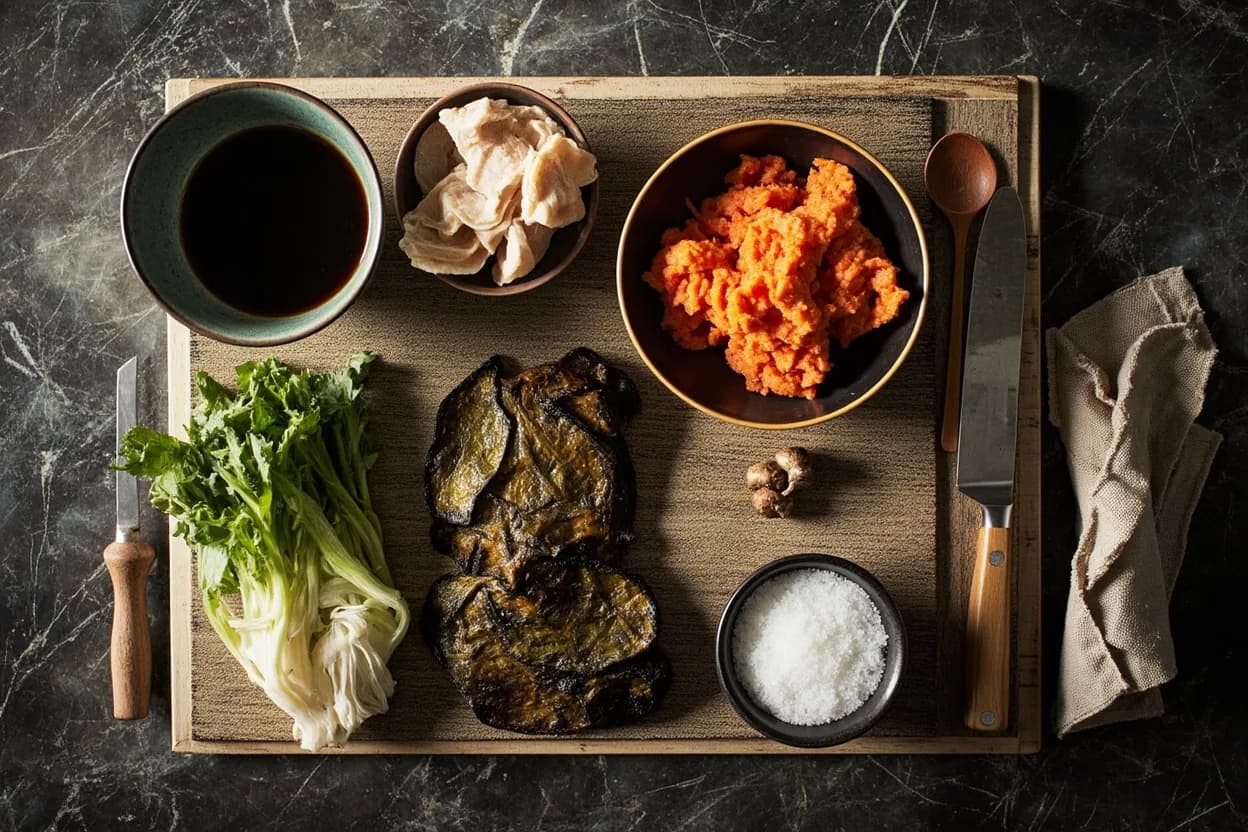
Dashi — kombu and katsuobushi drawn with extreme care, sometimes using specific grades of first-extraction ichiban-dashi — is the invisible foundation of every savory course. Flavor is never built by reduction or fat emulsification; it is coaxed by precision and restraint. Kyoto's distinctive use of light usukuchi soy sauce preserves the natural color of vegetables and stocks.
Pantry staples
Key ingredients
Signature techniques
Signature dishes
Kaiseki on the table

At the table
Classical kaiseki follows a strict sequence: sakizuke (amuse) → hassun (cedar-tray seasonal display) → mukōzuke (sashimi) → takiawase (simmered) → futamono (lidded soup, often the most technically demanding course) → yakimono (grilled) → shiizakana (optional robust dish for drinking) → gohan (rice, pickles, miso soup) → mizugashi (fruit and sweet). Sake, then Japanese whisky or water, accompanies. The pace is slow and deliberate — two to four hours is normal. In ryotei settings, the head chef may appear to present certain courses personally.
History & context
Kaiseki's origins lie in the kaiseki stone — a warmed river stone carried inside the robes of Zen monks to dull hunger pangs during meditation (the characters 懐石 mean 'stone in the breast'). Sen no Rikyū (1522–1591), the tea master who defined the Japanese Way of Tea, formalized cha-kaiseki as the spare, simple meal served before the bitter matcha, built on fresh seasonal ingredients and humble presentation. Over the Edo period (1603–1868) this evolved into a formal multi-course cuisine (now written 会席 — 'meeting place') served in Kyoto's high-end ryotei. The two homophones coexist: cha-kaiseki (懐石) retains the tea-ceremony association; kaiseki-ryori (会席) denotes the restaurant form. Masters such as Yuki Teiichi of Kikunoi and Murata Yoshihiro of Kikunoi (later) and Nakamura Motokichi codified the modern form in postwar Japan. Kyoto remains the undisputed center of kaiseki mastery.
Regional variations
- Kyoto (Kyo-kaiseki)
The canonical form — light dashi, vegetable-centered, kyo-yasai, restrained and philosophical; most closely tied to tea ceremony origins.
- Tokyo (Edo-kaiseki)
Slightly bolder soy and richer dashi; more fish and shellfish from Tokyo Bay tradition; influenced by honzen-ryori banquet conventions.
- Osaka variant
Kaiseki in Osaka tends toward more generous portions and bolder kuidaore (eat-yourself-to-ruin) sensibility; seafood from Osaka Bay is prominent.
Related cuisines
Kaiseki is the formal, artistic apex of washoku — same dashi grammar and ichiju-sansai structural logic, elevated to seasonal theater.
Kyo-ryori is the broader category; kaiseki is its most rarefied expression alongside shojin ryori.
- Shojin Ryori
Buddhist temple cooking shares kaiseki's seasonal reverence and dashi-less vegetable precision; many kaiseki chefs train in both.
Canonical recipes
The dishes that define Kaiseki, documented in the Canon.
References
- 1.Kaiseki: The Exquisite Cuisine of Kyoto's Kikunoi Restaurant — Murata Yoshihiro (Kodansha, 2006)
- 2.The Japanese Kitchen — Hiroko Shimbo
- 3.Japanese Cooking: A Simple Art — Shizuo Tsuji (Kodansha, 1980)
- 4.The Oxford Companion to Food — Alan Davidson (3rd ed.)
Confidence: high
Notes
The Vessel Is Part of the Recipe
In kaiseki, selecting the lacquer bowl, the ceramic plate, or the cedar tray for each course is a compositional act — not decoration. The vessel's age, glaze, and shape are chosen to contrast or harmonize with the food's color, texture, and season. A summer dish served in a cool celadon bowl is a different dish than the same preparation in winter porcelain.
Daily Composition
A kaiseki menu does not repeat. The head chef composes anew each morning based on what arrived at the market that day. A guest who ate kaiseki at the same Kyoto ryotei one week apart would eat entirely different meals. This daily creation within a rigidly codified structure is what makes kaiseki simultaneously the most constrained and most creative of Japan's culinary traditions.