South Asia
Kashmiri (Wazwan)
Also: Wazwan, Kashmiri cuisine, Kashmiri Wazwan
A ceremonial 36-course meat feast from the Kashmir Valley, built on saffron, dried fruits, and centuries of Mughal and Central Asian refinement.
Kashmiri Wazwan is both a cuisine and a cultural institution: a multi-course banquet of predominantly meat dishes prepared exclusively by trained master cooks called wazas, served at weddings and major celebrations in the Kashmir Valley. The feast traditionally comprises 36 dishes — the vast majority lamb — cooked overnight over wood fires in giant copper vessels (degs). The cuisine is defined by whole and ground spices used with restraint, the liberal use of Kashmir's famous saffron and dried fruits (dried plums, lotus seeds, cockscomb flowers), and slow-cooked, tendon-soft textures. Unlike Mughal court cuisine, Wazwan uses little or no tomato and rarely employs the browning of onions as a flavor base; the color and depth come from dried cockscomb flowers (mawal), Kashmiri red chilli (mild, vivid), and long simmering.
The flavour base
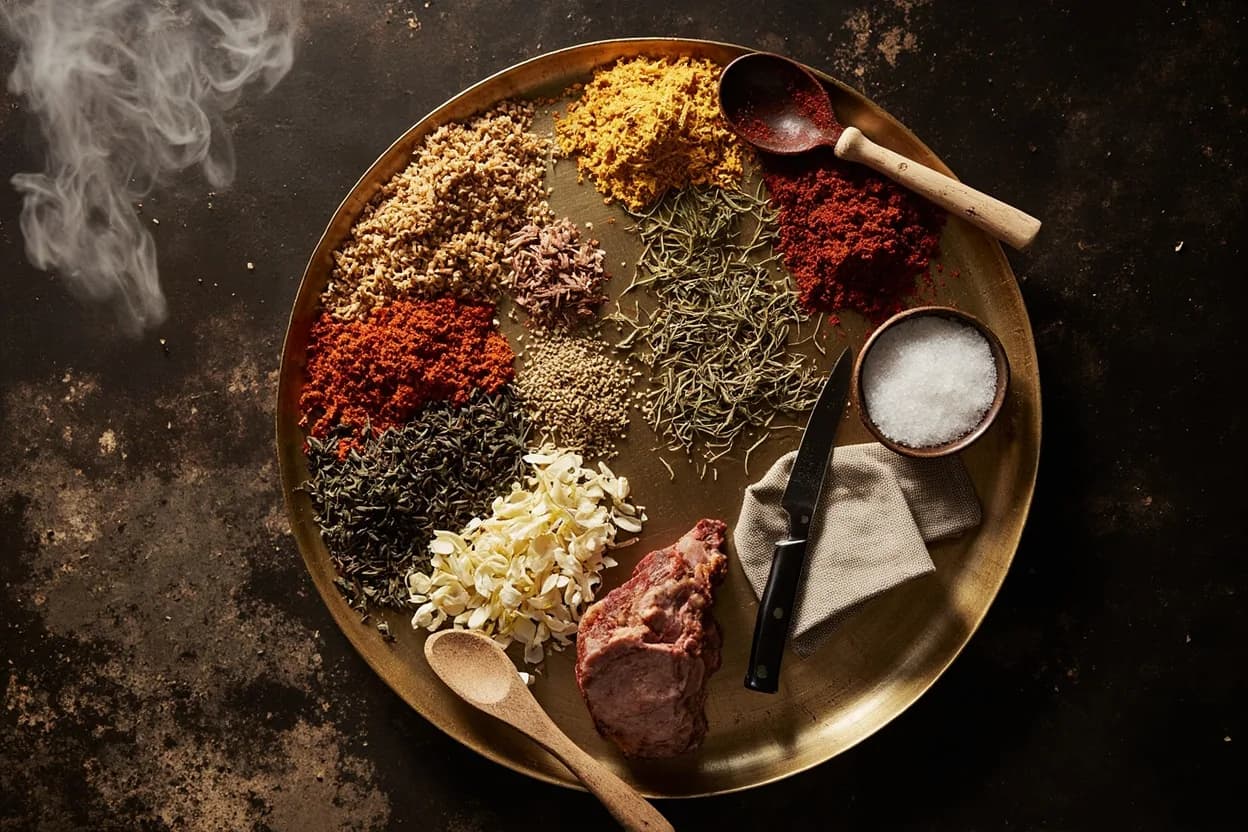
Waza stock (yakhni) — simmered lamb bones with fennel seed, dried ginger (saunth), and cardamom — forms the base of most dishes; saffron and dried cockscomb petals provide color and a faint floral bitterness in place of tomato.
Pantry staples
Key ingredients
Signature techniques
Signature dishes
Kashmiri (Wazwan) on the table


At the table
Wazwan is served communally: guests sit four to a traman (a large copper plate), sharing from a mound of steamed rice ringed by the first courses (rista, rogan josh, tabak maaz, seekh kabab). Subsequent courses are brought in succession; gushtaba, always the last meat dish, signals the feast is nearly over. Kahwa (saffron-cardamom green tea) closes the meal.
History & context
Kashmiri culinary tradition crystallized under the Kashmir Sultanate (14th–16th centuries), when Central Asian migrants — including the first wazas — arrived from Samarkand and Persia, bringing techniques of spiced broth cookery and whole-animal butchery. Mughal Emperor Akbar's annexation of Kashmir (1586) added imperial Persian refinement and saffron cultivation at imperial scale. The Valley's geographic isolation — hemmed by Himalayan passes — concentrated these influences into a distinct tradition. The waza craft guild passed knowledge orally through family lineages; a master waza at a major wedding may cook 500 kg of meat through the night with a team of assistants. Partition (1947) and subsequent conflict have placed this tradition under cultural pressure, though the Wazwan feast retains its central social function in the Valley.
Regional variations
- Hindu Kashmiri Pandit
Pandit Wazwan omits onion and garlic but retains the yakhni base; uses asafoetida (hing) as the aromatic anchor; includes fish from Dal Lake and river trout; rogan josh is tomato-free and milk-lightened.
- Srinagar urban
City restaurants have adapted shorter versions of Wazwan for everyday dining, with a handful of signature dishes rather than the full 36-course structure.
Related cuisines
- Mughal
Shared heritage of dum cooking, aromatic spicing, and courtly banquet culture.
- Persian
Waza ancestors brought Central Asian and Persian broth-based meat cookery to the Valley.
Neighboring tradition that absorbed some Mughal elements but diverged sharply in its tomato-onion masala base.
References
- 1.Colleen Taylor Sen — Feasts and Fasts: A History of Food in India (2015)
- 2.Â. H. Mattoo — The Wazwan: A Cultural Heritage of Kashmir (2001)
- 3.Salma Husain — The Emperor's Table: The Art of Mughal Cuisine (2008)
Confidence: high
Notes
The waza craft
A waza's reputation rests on gushtaba — a dish of pounded-smooth meatballs that must dissolve on the tongue. The meat is beaten against a stone slab (not minced by machine) for up to an hour; fat and connective tissue are worked in cold to achieve the requisite silken texture. A waza who cannot produce perfect gushtaba is not considered a master.
Saffron geography
Kashmiri saffron (Crocus sativus), grown in Pampore on the outskirts of Srinagar, is among the world's most prized: thicker stigmas, higher crocin content, and an intensely honeyed aroma distinct from Spanish or Iranian saffron. Climate shifts and urbanization of the Karewas (plateau fields) have shrunk annual yields significantly since the 1990s.