South America
Peruvian Andean (Sierra)
Also: Cocina Serrana, Cocina Andina, Highland Peruvian Cuisine
The world's highest kitchen — where freeze-dried chuño potatoes, guinea pig roasted on open fire, and pachamanca earth ovens have sustained Andean civilization above 3,000 meters for millennia.
Peruvian Andean or Sierra cuisine is the food tradition of the high plateau and mountain valleys of the Andes, spanning the departments of Cusco, Puno, Ayacucho, Apurímac, Huancavelica, Junín, and Cajamarca at altitudes from 2,500 to 4,500 meters above sea level. It is one of the world's oldest continuously practiced food cultures, shaped by the civilizations that preceded and built the Inca Empire, and defined by ecological constraint: extreme altitude, high UV radiation, dramatic diurnal temperature swings, and thin oxygen that requires adapted techniques of preservation, fermentation, and community-scale cooking. The potato — domesticated in the Andes roughly 8,000 years ago — is its foundational ingredient in extraordinary diversity.
The flavour base
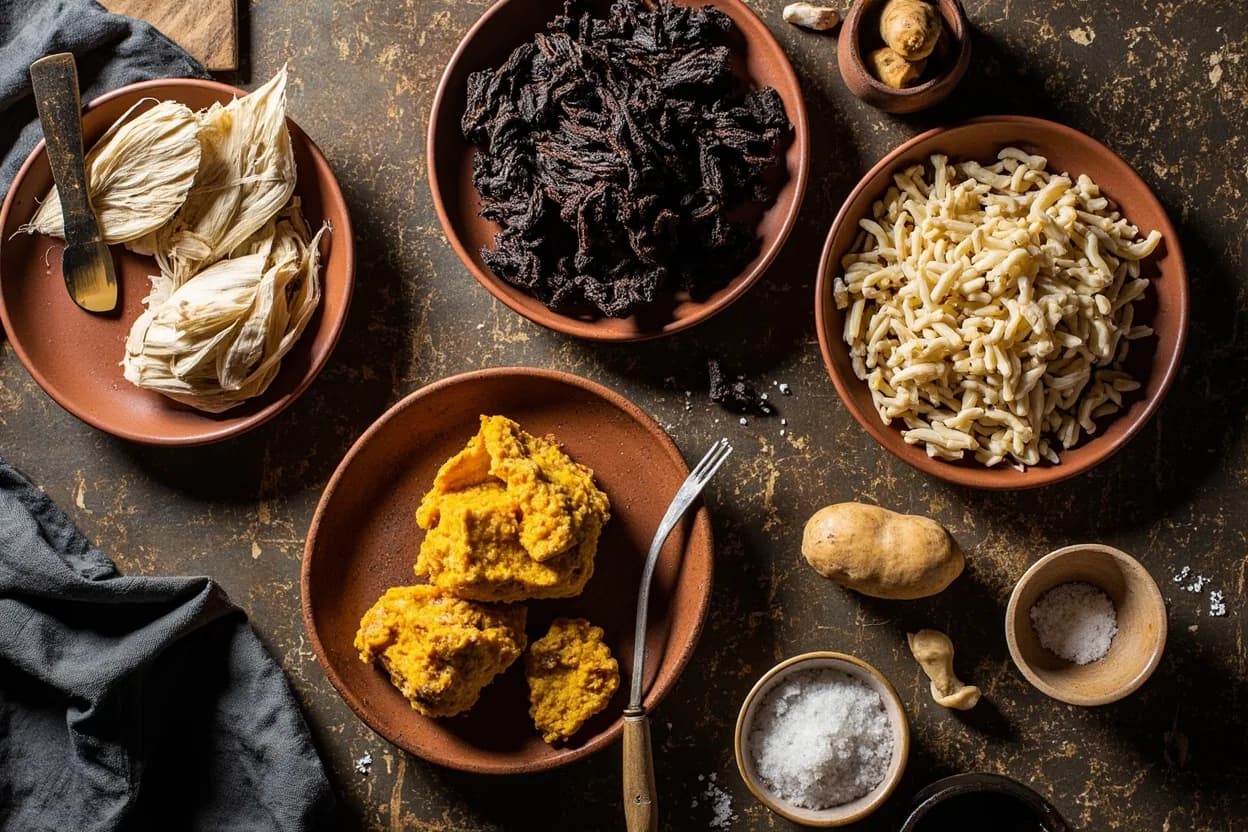
Potato in all preserved and fresh forms as the starchy core; ají amarillo and ají panka as the defining chili aromatics; huacatay (Peruvian black mint, Tagetes minuta) as the signature herb; dried and fresh corn; guinea pig and alpaca as the primary animal proteins; chicha de jora (fermented corn beer) used both as drink and in cooking.
Pantry staples
Key ingredients
Signature techniques
Signature dishes
Peruvian Andean (Sierra) on the table
At the table
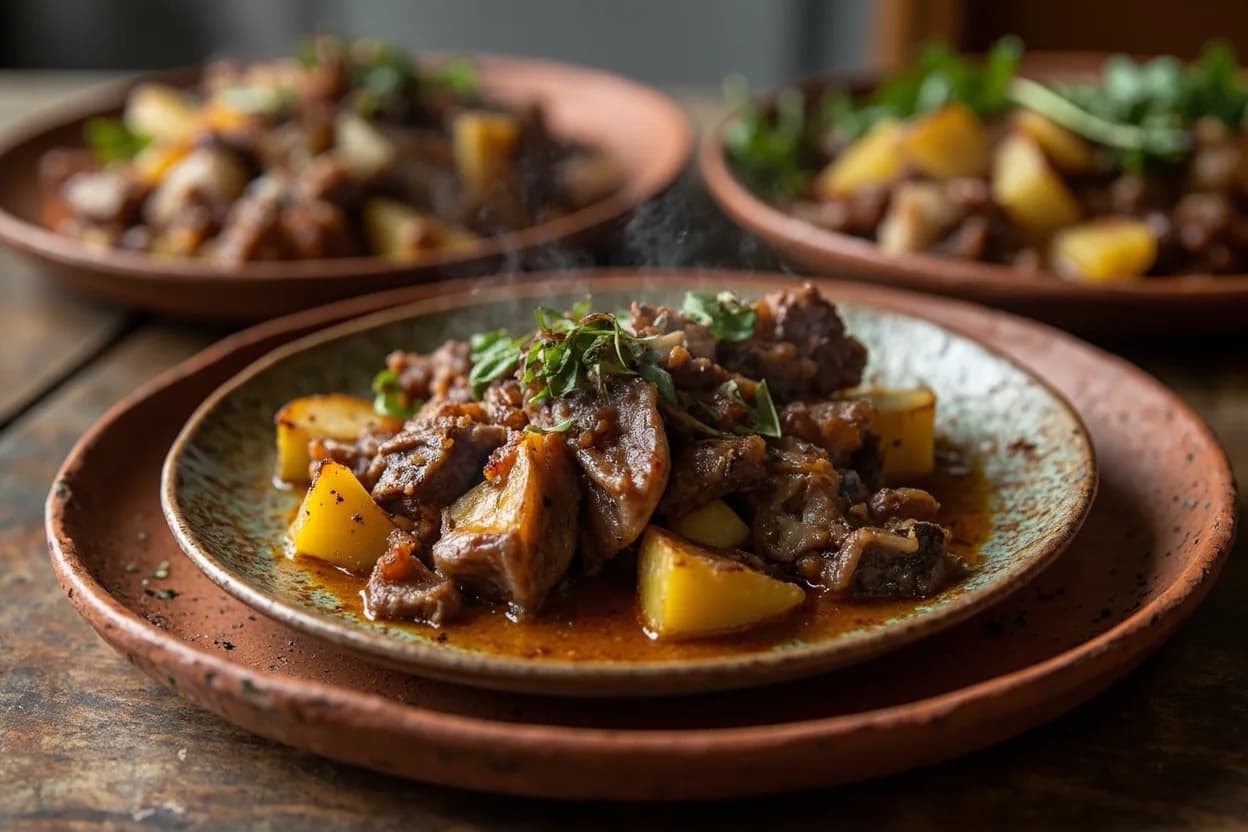
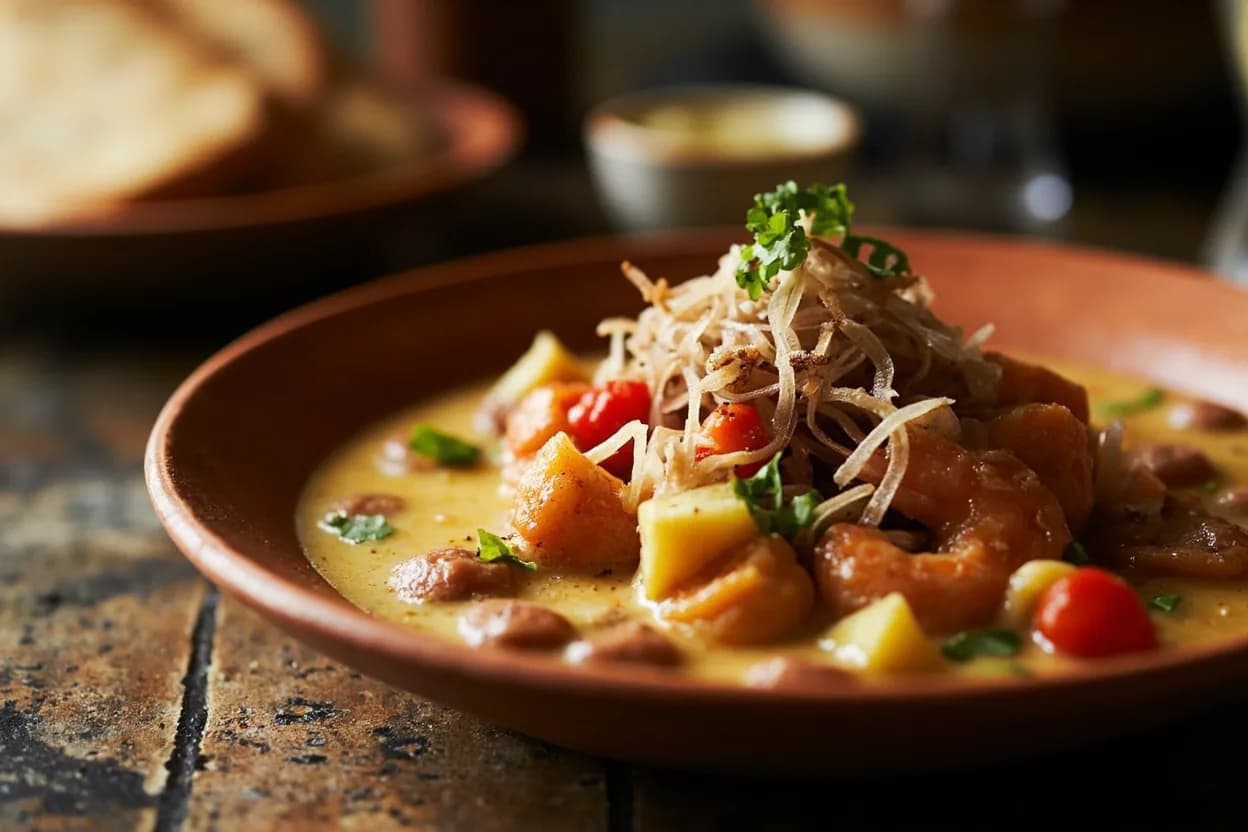
Andean meals are structured by altitude-adapted staples. A typical family meal includes soup (sopa) as a first course — essential at altitude for hydration and warmth — followed by a second of potato, grain, or both with protein. Cuy is reserved for celebrations: baptisms, Carnival, Inti Raymi (the Inca sun festival). Pachamanca is a communal event, not a daily meal — it requires collective labor and is tied to agricultural calendars, especially the harvest (Pacha Mama offerings). Chicha de jora flows through communal work parties (minka) and ritual gatherings.
History & context
The Andean food system is among humanity's most consequential. The Andes is the origin center for the potato (3,000–5,000 varieties still exist in Peru), tomato, quinoa, amaranth, oca, ulluco, and peppers. The Tiwanaku civilization (400–1200 CE) developed chuño freeze-drying as a food security technology that allowed provisioning without refrigeration. The Inca Empire (1438–1533 CE) systematized food storage in qollqas (stone storehouses at high altitude), created the redistribution economy (mit'a labor system) that moved surplus across the empire, and elevated the guinea pig from wild animal to domesticated protein. Spanish colonization introduced cattle, sheep, chickens, wheat, and onions, which were absorbed into the Sierra kitchen without displacing its Andean core. The post-independence 19th century saw increasing marginalization of indigenous food traditions as criollo elites valorized European eating. The Peruvian gastronomic renaissance of the 2000s–2010s, led by Gastón Acurio and researchers like Mariano Valderrama, restored the Andean kitchen to a position of national cultural pride — culminating in Peru winning World's Best Culinary Destination for a decade.
Regional variations
- Cusco (Inca heartland)
Most ceremonially intact tradition; chicha de jora still brewed in chicherías with pre-Inca methods; chiri uchu (dried cuy, dried fish, humita, tostado) is the canonical Corpus Christi dish; rocoto relleno appears from Arequipa influence.
- Puno (Altiplano, Lake Titicaca)
Highest inhabited settlements; trucha (rainbow trout introduced to Lake Titicaca in the 1930s) now treated as native; pejerrey lake fish; greater quinoa diversity than anywhere else on earth; Aymara traditions alongside Quechua.
- Arequipa (Misti volcano)
Distinct regional identity; Arequipeña cuisine is Sierra's most celebrated variant — rocoto relleno (stuffed hot pepper), adobo de chancho (pork in chicha), ceviche de camarones de río; spicier and more complex than northern Sierra.
- Cajamarca (northern sierra)
Dairy culture unique to northern highlands; Cajamarca produces Peru's best fresh cheeses (queso fresco, cuajada); caldo de cabeza (sheep's head soup) and shambar (wheat and bean Monday soup) are regional signatures.
Related cuisines
The selva alta (high jungle) is the transitional zone; chuño and Andean potato move downslope, jungle fruits and coca leaf travel upward; reciprocal trade between communities.
- Bolivian Cuisine
Continuous Andean plateau; chuño, quinoa, and cuy are shared; salteña (baked empanada) is Bolivia's answer to Peruvian humita traditions; Puno and La Paz are essentially one food region.
- Ecuadorian Andean Cuisine
Overlapping ingredients (oca, mashua, quinoa, guinea pig) with regional variants; llapingachos (potato cakes) and seco de pollo (chicken stew with naranjilla juice) are Ecuador's expressions of similar Andean materials.
- Peruvian Criollo (Coastal)
Lima's Criollo cuisine borrowed chuño, potato, ají amarillo, and huacatay from the Sierra; the causa limeña (layered potato dish) is a coastal interpretation of Andean ingredients.
Canonical recipes
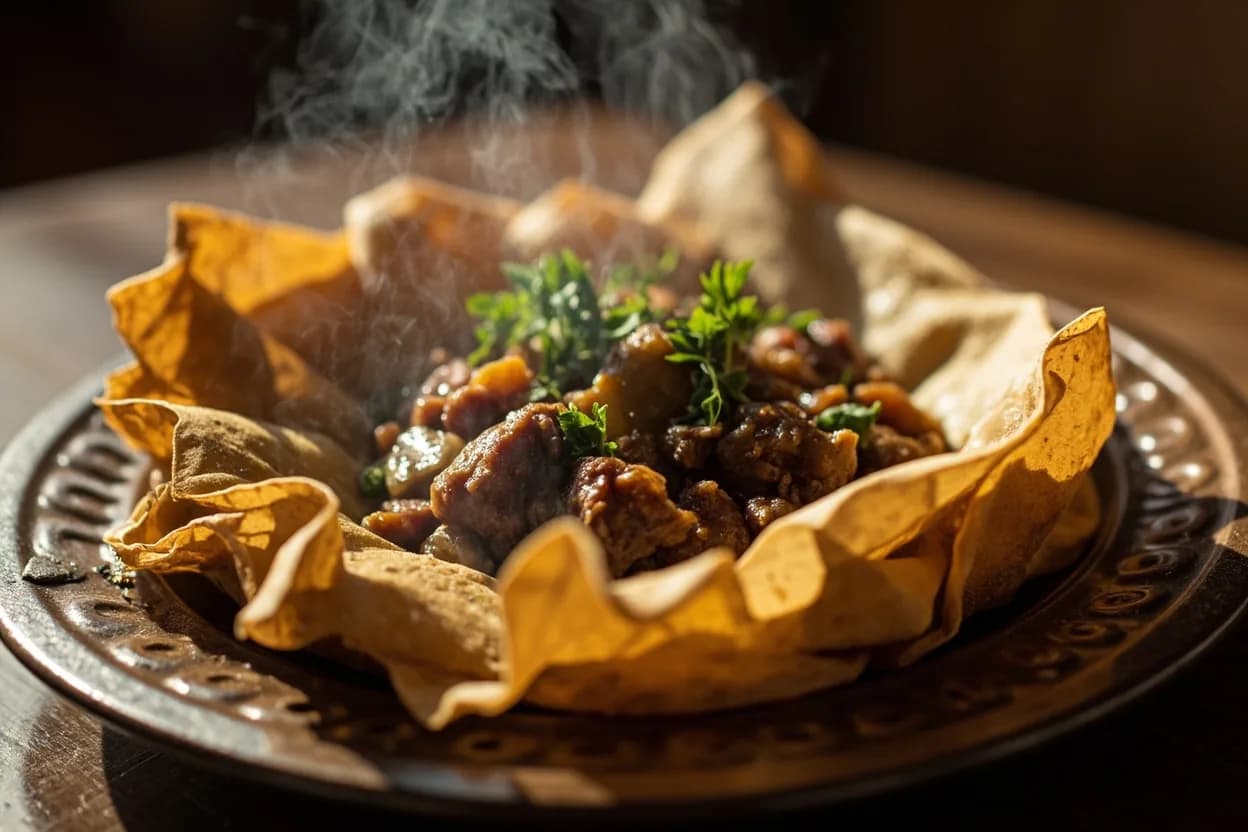
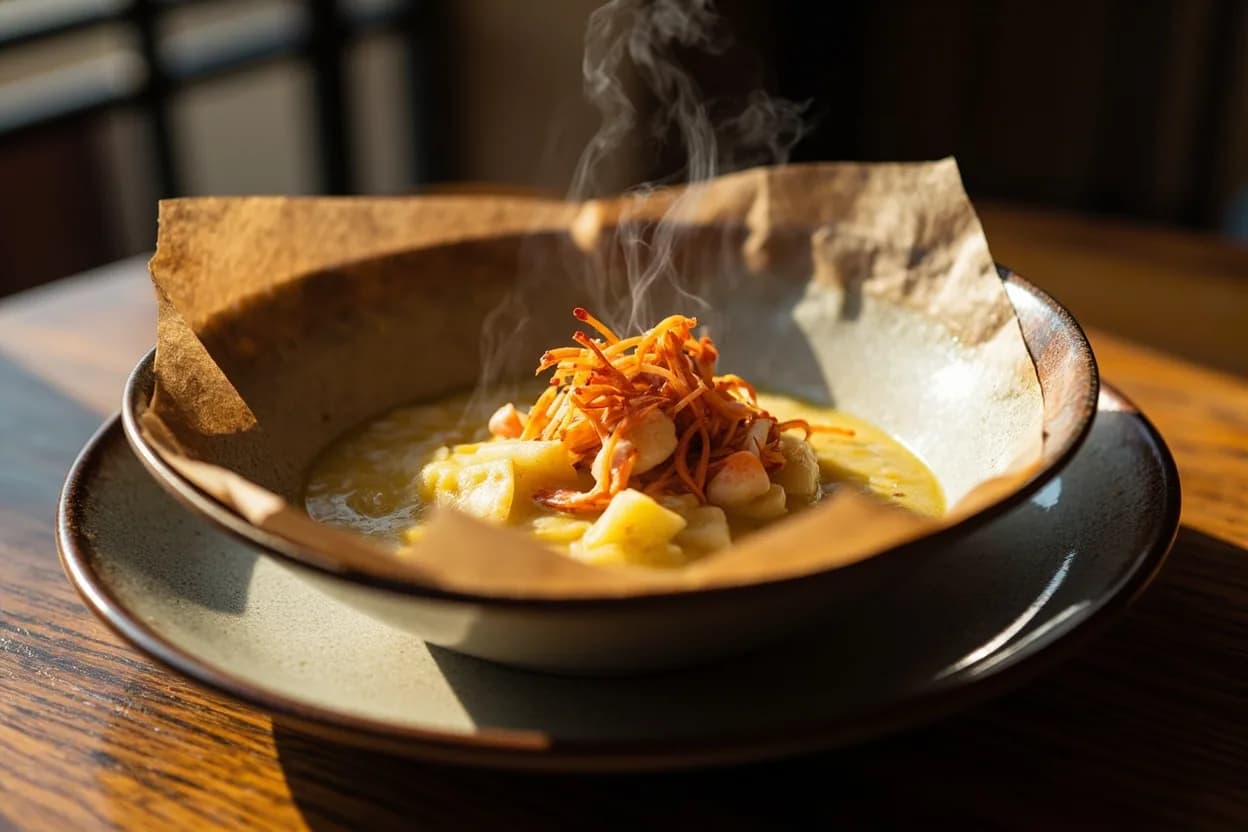
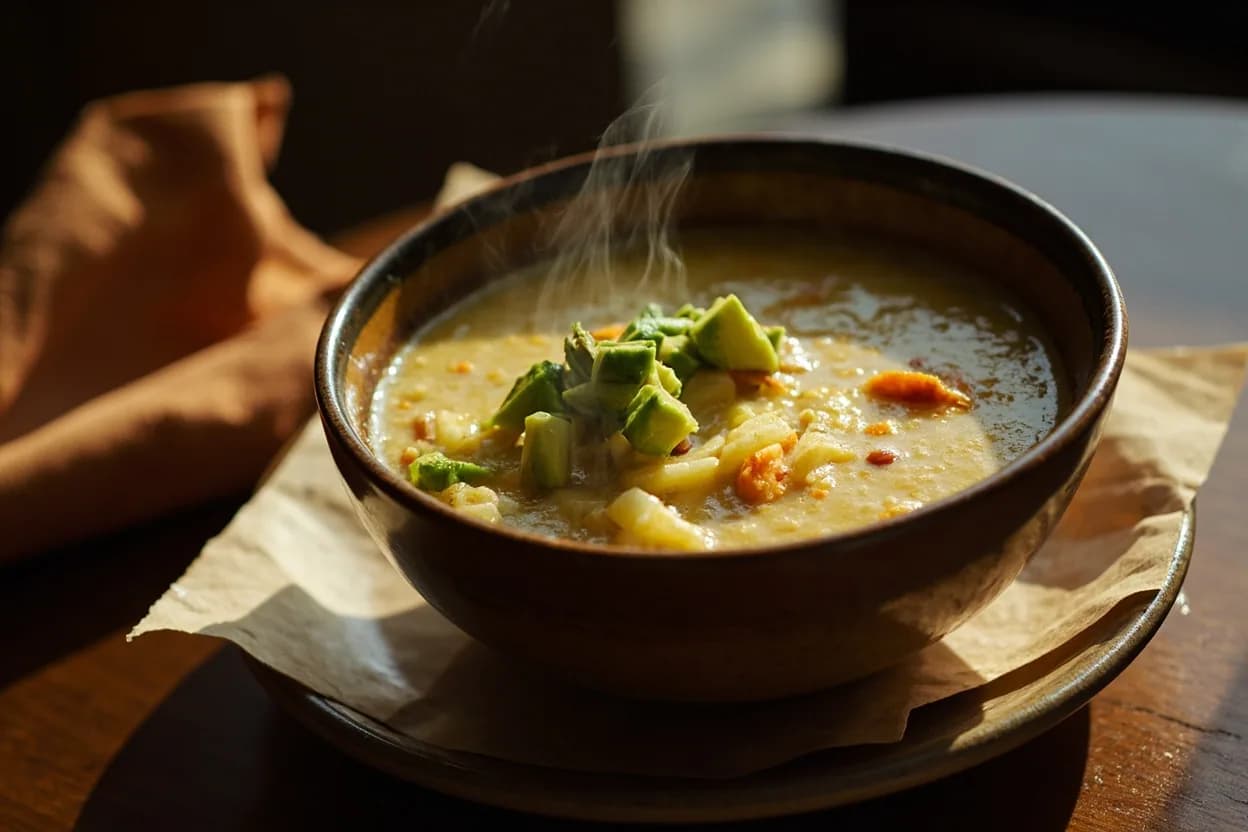
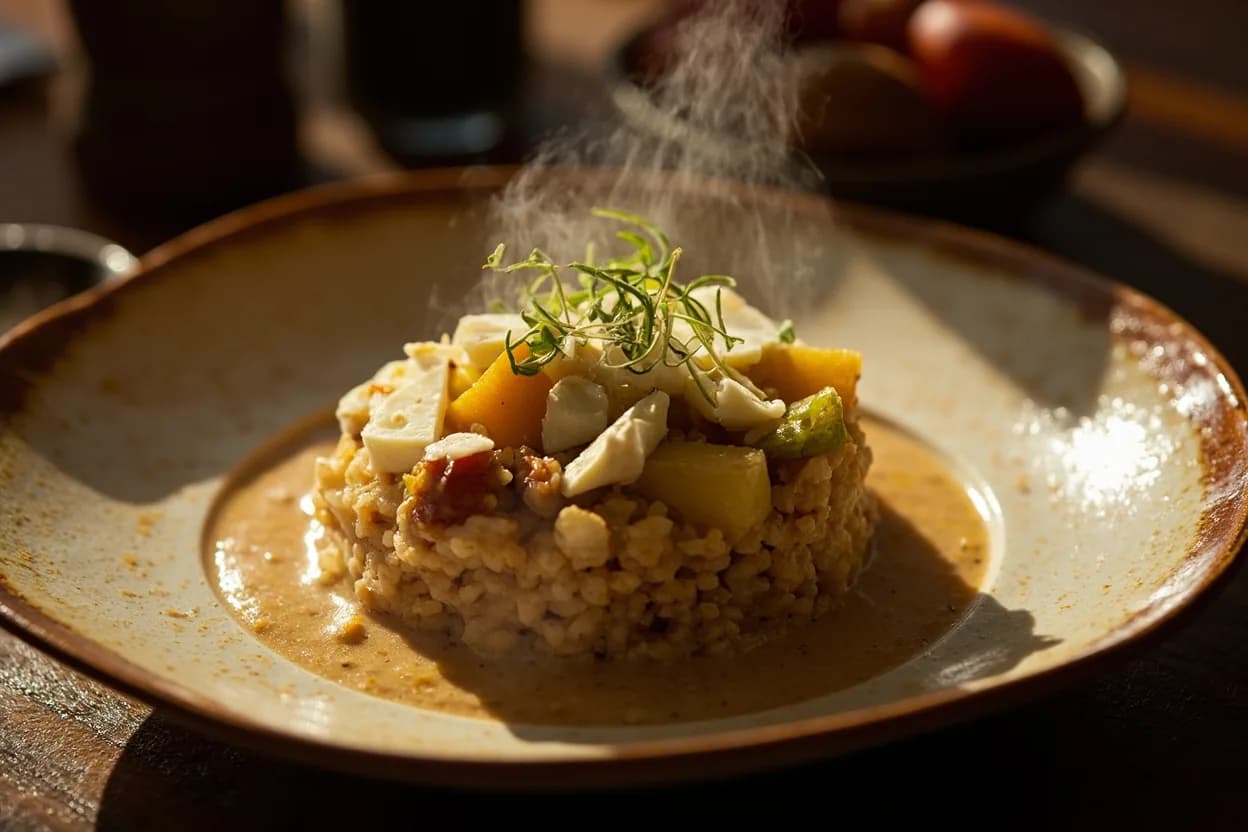
The dishes that define Peruvian Andean (Sierra), documented in the Canon.
References
- 1.Peru: The Cookbook — Gastón Acurio (Phaidon, 2015)
- 2.The Food and Cooking of Peru — Flor Arcaya de Deliot (Anness, 2008)
- 3.Andean Worlds: Indigenous History, Culture, and Consciousness — Paul Gelles (University of New Mexico Press, 2000)
- 4.Potatoes: A Global History — Andrew F. Smith (Reaktion Books, 2011)
- 5.Lost Crops of the Incas — National Research Council (National Academies Press, 1989)
Confidence: high
Notes
Chuño: engineering against famine
Chuño is one of the world's oldest preserved foods, developed in the Puno altiplano where winter temperatures fall below -10°C at night and sun is intense by day. Potatoes are spread overnight to freeze solid, then foot-treaded at sunrise to expel water, re-exposed to sun and frost for several days, and finally sun-dried to a bone-dry state. The result keeps for a decade or more without refrigeration at altitude. The Inca military and road system ran on chuño. There are two varieties: black chuño (freeze-dried without washing) and white moraya (freeze-dried with periodic rinsing, resulting in a lighter color and milder flavor).
Cuy and the politics of prestige protein
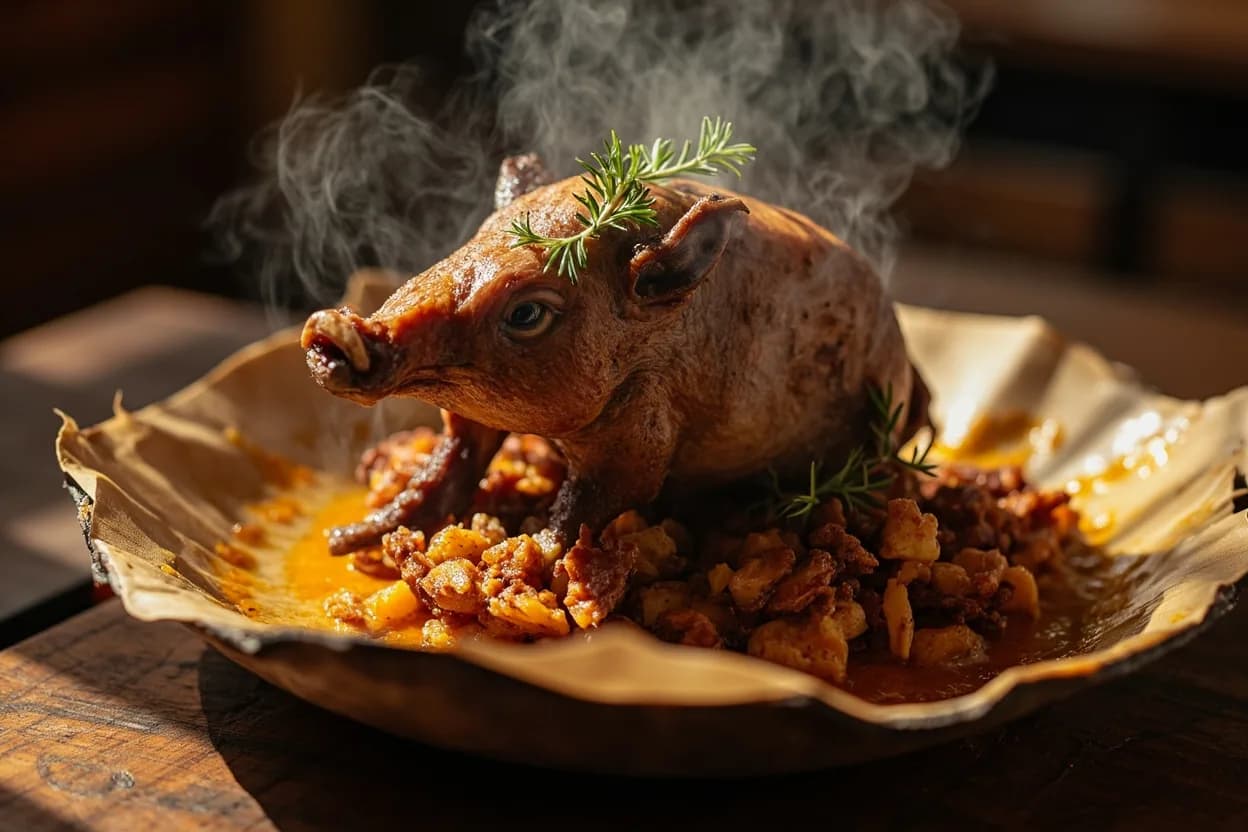
Guinea pig (Cavia porcellus) was domesticated in the Andes 5,000–7,000 years ago and remains the Andean world's most culturally charged protein. Cuy husbandry requires no pasture — guinea pigs live in the kitchen, eating food scraps and grass — making them a uniquely democratic livestock form at altitudes where cattle cannot thrive. For Andean communities, cuy roasted whole represents the highest expression of hospitality and festivity. In Cusco's Cathedral, a famous Last Supper painting (1753, attributed to Marcos Zapata) depicts Christ and the disciples eating cuy.
Cooking at altitude
At 3,500–4,500 meters, water boils at approximately 85–88°C rather than 100°C. This affects every cooking process: beans take twice as long to cook, bread rises differently, deep-frying oil behaves distinctly. Andean cooking techniques evolved around these constraints — pachamanca (underground stone cooking) and watia (earth-clod ovens) circumvent the boiling-point problem by using radiant stone heat rather than boiling water. Altitude cooking is one reason the Andean repertoire skews toward dry-heat and stone-heat methods.