Fats, Pastes & Condiments
Lamb Fat (Rendered)
Also: rendered lamb fat, sheep fat, tail fat, alya, suet (lamb), samin
The rich, grassy cooking fat that gives Levantine rice, flatbreads, and grilled meats their unmistakable depth.
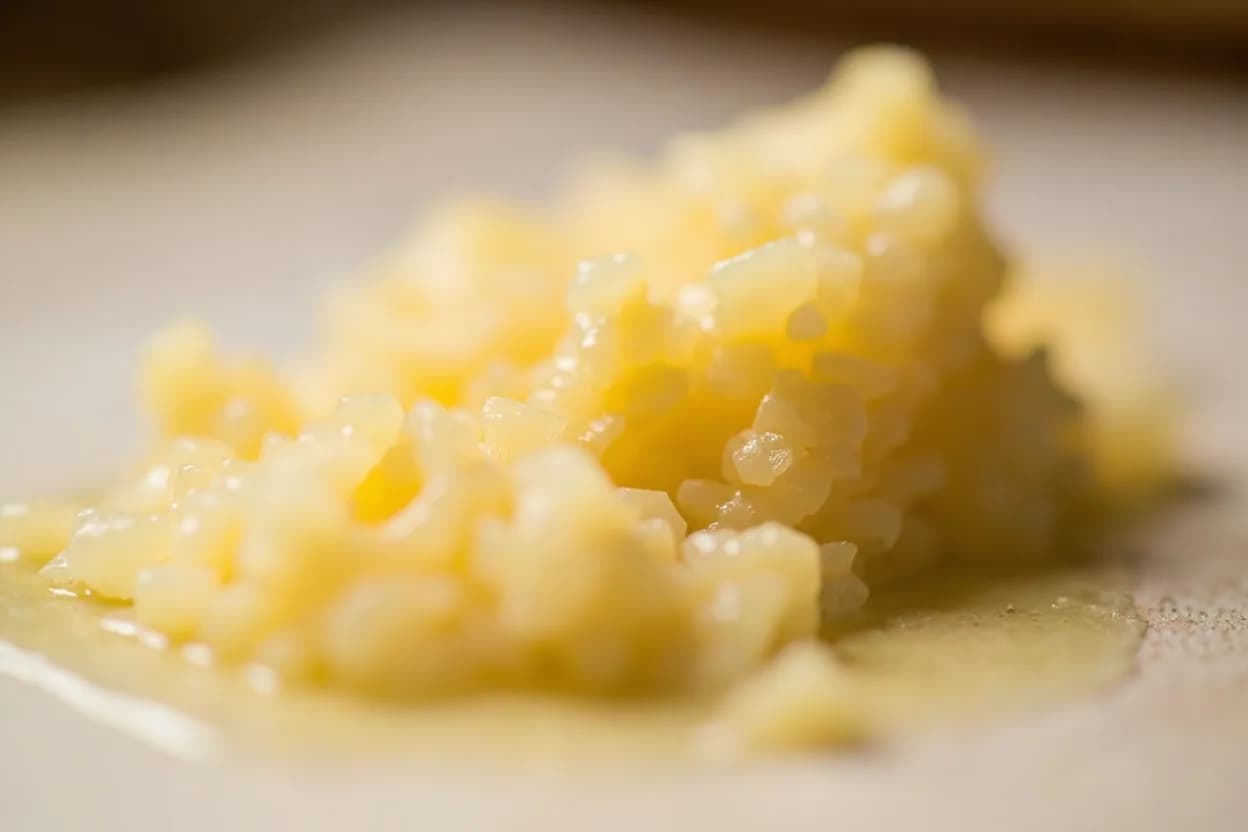
Rendered lamb fat is the purified cooking fat obtained by slowly melting down lamb or mutton fat — most prized from the broad tail of the fat-tailed sheep (Ovis aries) known as alya in Arabic. The rendering process drives off moisture and membrane tissue, leaving a creamy-white or pale yellow fat with a pronounced grassy, gamey richness unlike any other cooking fat. It has a high saturated fat content that makes it solid at room temperature, with a melting point around 40–45°C. Its flavor is distinctly ovine — lanolin-like, slightly funky, deeply savory — and it carries the fat-soluble aromatics of spices and herbs with great efficiency. Used across the Levant, Central Asia, and North Africa as the premier cooking medium for rice, flatbreads, and offal.
In photos
Flavour profile
Classic pairings
- Basmati rice (roz)Levantine / Arabian
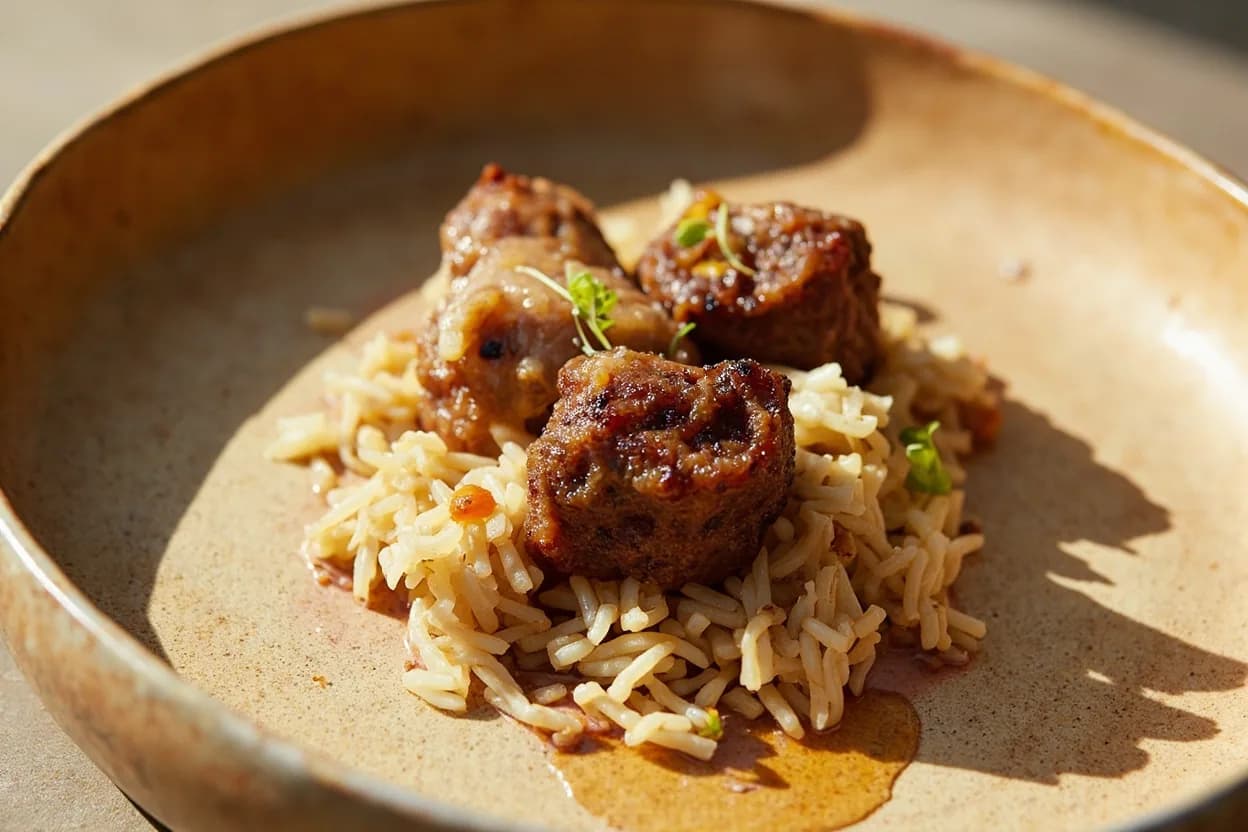
Lamb fat is the traditional cooking medium for Levantine and Gulf rice pilaf — it coats each grain and imparts the grassy, gamey depth that defines mansaf, kabsa, and similar rice dishes.
- Flatbreads (khubz, saj bread)Levantine / Palestinian
Brushing hot flatbreads with rendered lamb fat — sometimes scented with za'atar — is the Levantine equivalent of butter on toast: fatty richness meeting chewy, charred bread.
- Lamb (offal and chops)Levantine / Turkish
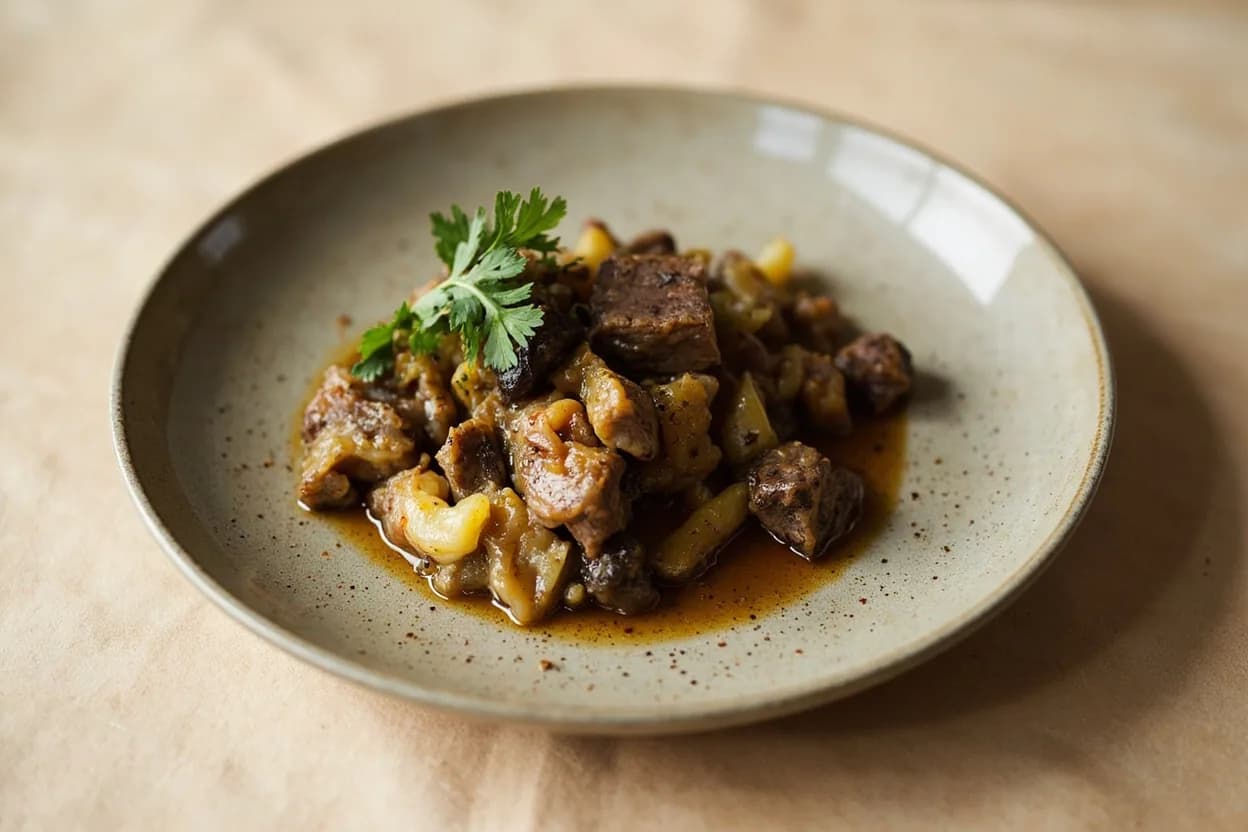
Rendered lamb fat basting grilled lamb offal (heart, kidney, liver) intensifies the gamey character while protecting the lean meat from drying; like-on-like cooking that magnifies the species flavor.
- OnionLevantine
Slowly caramelized in lamb fat, onions absorb the gamey richness and lose their sharpness entirely — the base of countless Levantine rice and stew preparations.
- TurmericGulf / Central Asian
Fat-soluble curcumin dissolves readily in rendered lamb fat, blooming color and anti-inflammatory aromatics into rice and spiced preparations in Gulf and Central Asian cooking.
- Jameed (dried fermented yogurt)Jordanian / Levantine
The defining pairing in mansaf: jameed's sharp, tangy fermented dairy is emulsified with lamb fat into the sauce that drenches the whole dish — fat and acid in textbook balance.
Adventurous pairings
- Black truffle
Lamb fat's earthy, grassy register is a natural partner for truffle's dimethyl sulfide-driven umami — the fat dissolves truffle volatiles and carries them through a dish more effectively than neutral oil.
Tart, concentrated pomegranate acid cuts cleanly through rendered lamb fat's density and gaminess — basting grilled lamb with a lamb-fat-pomegranate glaze creates a sticky, lacquered finish with layered sweet-sour-gamey complexity.
- Dates
The caramel sweetness of Medjool dates counterbalances the grassy funk of lamb fat; Bedouin cooking deploys this pairing in stuffed lamb preparations and festive rice dishes.
- Aged sheep's milk cheese (Pecorino, Manchego)
Both share the same branched-chain fatty acid signature from sheep's milk; layering rendered lamb fat into a sauce finished with aged sheep cheese creates an intensely ovine, savory result.
Tread carefully
- Delicate steamed vegetables (asparagus, peas)avoid
Lamb fat's gamey intensity overwhelms the sweet, grassy lightness of spring vegetables — the fat erases the delicacy that makes these ingredients worth eating.
- Subtle seafood (sole, scallops, lobster)avoid
The distinctive lanolin note of lamb fat clashes fundamentally with sweet, briny shellfish and delicate white fish; the ovine character reads as contamination, not seasoning.
- Light fruit dessertsavoid
Even small residual amounts of lamb fat in sweet applications create a savory-gamey interference that most palates reject as unpleasant — keep it strictly savory.
How to use it
- Render slowly over low heat (150°C / 300°F) without stirring until solids (cracklings) separate and turn golden — strain through muslin for a clear fat
- Use as the first fat into the pan for rice pilafs: fry onion and whole spices in lamb fat before adding rice to bloom aromatics
- Brush freely over resting grilled meats — the fat remelts on contact and bastes the protein with its own species richness
- Whip cooled rendered fat with za'atar and sea salt for a flatbread spread
- Substitute for schmaltz or duck fat in any recipe demanding an assertive animal fat
Appears in
Related flavours
The closest cooking-fat analog — clarified butter occupies the same role in South Asian rice cookery with comparable fat-soluble aromatic properties
Functionally similar high-saturated animal fat used in confiting and sautéing; less gamey, more neutral
Ethiopian spiced clarified butter — another spiced animal fat used as a flavor-carrier base in the same way
References
- 1.Jerusalem — Yotam Ottolenghi & Sami Tamimi
- 2.The Complete Book of Spices — Jill Norman
- 3.Zaitoun: Recipes from the Palestinian Kitchen — Yasmin Khan
- 4.Arabesque — Claudia Roden
Confidence: high
Notes
Fat-tailed sheep and alya
The most prized rendered lamb fat comes from the broad, adipose tail of fat-tailed sheep breeds (Awassi, Karakul, Najdi) bred across the Middle East, Central Asia, and North Africa specifically for this resource. Alya — the raw tail fat — is considered a delicacy in its own right when grilled directly on skewers. The fat from these breeds has a slightly sweeter, more complex flavor than fat rendered from standard European breeds.