Spices
Black Salt (Kala Namak)
Sulfurous, egg-scented Himalayan salt with a pinkish-grey tone; defines chaat masala, raitas, and vegan 'eggy' tofu scrambles and omelets.
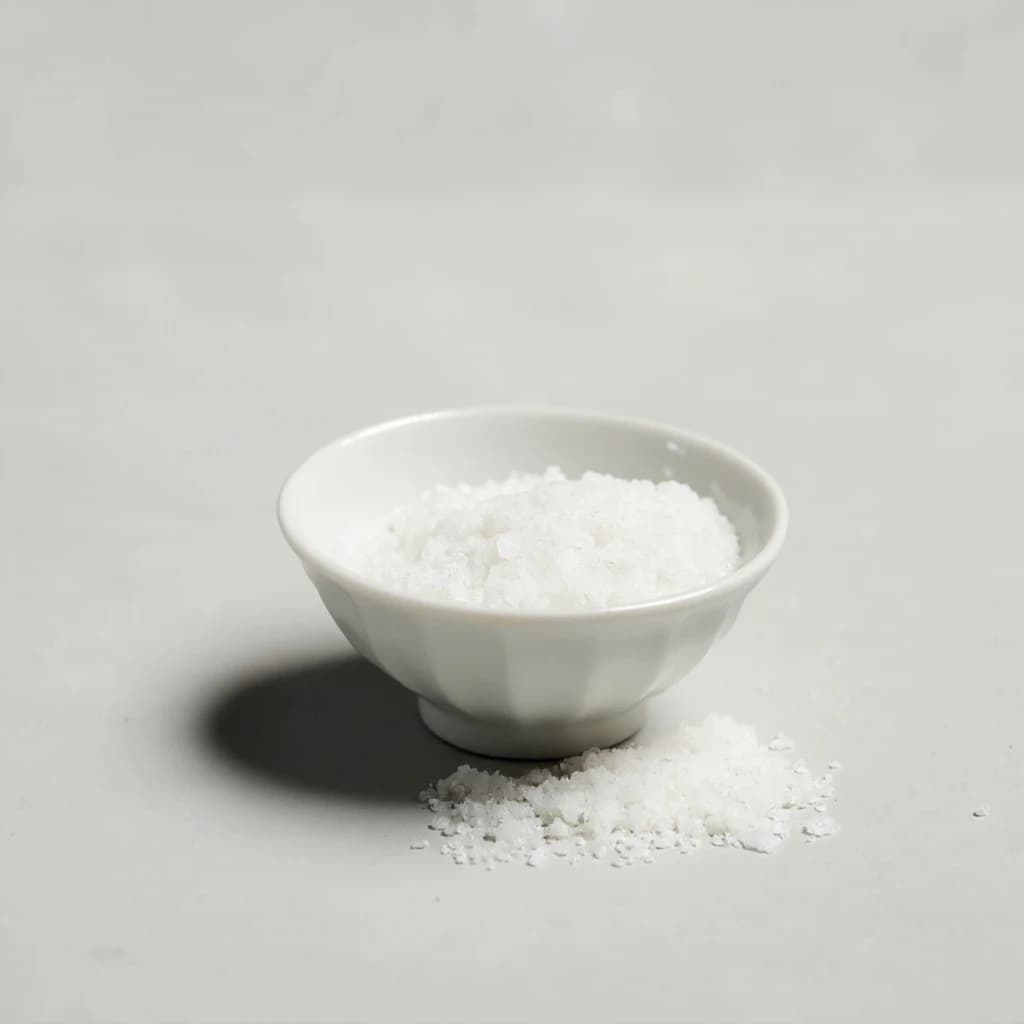
Black salt, almost always called kala namak in the kitchen, is a kiln-fired volcanic salt from the Himalayan salt range of Sindh and Punjab. In its raw form the crystals are dark brown to nearly black; once ground, the powder lightens to a pinkish-grey with a faint violet cast. What makes it unlike any other salt is its smell: a sharp, sulfurous, faintly eggy aroma created during processing, not present in the raw brine. That volatile signature is the entire reason the salt exists in a cook's pantry.
Kala namak is dosed, not sprinkled. A quarter-teaspoon can season a whole raita or a batch of tofu scramble, and the aroma — like that of a soft-boiled egg or a struck match — fades with prolonged heat, so it is almost always added at the end of cooking or used as a finishing salt. In Indian cookery it is the invisible thread tying together chaats, raitas, fruit salads, and spiced drinks. In modern plant-based cooking it has become the single most important flavoring for vegan interpretations of eggs, because the same hydrogen sulfide and sulfate compounds that give a fresh egg its smell are the compounds this salt was engineered to produce.
The salt's potency is also its trap: it is easy to over-season a dish, and once overused the sulfur note reads as medicinal rather than savory. Treat it the way you would treat a strong cheese — a little transforms a dish, a lot overwhelms it.
- Measured in
- g
- Storage
- Pantry
Find it in
Suits
Types & varieties
The authentic Pakistani and northern Indian style: pinkish-grey, intensely sulfurous, and the standard for chaat masala and vegan egg dishes.
Lighter in color and noticeably milder on the nose; useful when you want the salt's savory depth without the full eggy blast.
Sea salt blended with activated charcoal. Black in color only, with no sulfur compounds and no eggy aroma — not a functional substitute.
A flaky, charcoal-grey finishing salt used as a garnish; decorative, not a replacement for the sulfurous character of true kala namak.
The chemistry behind the smell
True kala namak is a product of deliberate kiln chemistry, not a naturally dark salt. The raw brine or rock contains sulfate minerals that, on their own, smell of nothing. Seal that salt in a furnace with charcoal and plant matter — typically haritaki fruit, sometimes other seeds and herbs — and the carbon reduces the sulfates into volatile sulfur compounds: hydrogen sulfide, sodium sulfate, and sodium bisulfite. Those are the same family of compounds responsible for the smell of boiled eggs, cooked onions, and struck matches.
This is why the salt's aroma is a reliable quality test. An authentic batch smells unmistakably eggy and sulfurous the moment the jar is opened. A pale, nearly odorless "black salt" has usually been under-processed, cut with ordinary rock salt, or exposed to moisture that has washed the volatile compounds away.
- Hydrogen sulfide is the dominant aroma compound; it is also highly volatile, which is why heat and time erode the flavor.
- Charcoal is the reducing agent that converts inert sulfates into pungent sulfides.
- Haritaki (Terminalia chebula) contributes additional tannins and a faintly medicinal bitterness that rounds out the salt.
Buying, storing, and freshness
Authenticity matters more with kala namak than with almost any other spice, because the very compounds that make it useful are the ones that fade first. A jar that has sat open in a humid kitchen for a year will look the same but taste of nothing. Buy from suppliers who name the origin (Himalayan, Sindhi, or Indian) and ideally mention the kiln step. The price is usually a fair signal — genuine sanchal is noticeably more expensive than decorative black salts.
Common uses
Tips & pitfalls
- Use sparingly: a small pinch seasons an entire dish, and the sulfur compounds are potent enough to dominate if over-applied.
- Add near the end of cooking or as a finishing salt; prolonged heat volatilizes the sulfur aroma and leaves you with flat, slightly bitter saltiness.
- Toast whole crystals briefly in a dry pan, then grind, for the most intense and complex flavor — pre-ground jars lose their top notes within weeks of opening.
- Store in an airtight container the moment you are done using it; the salt is strongly hygroscopic and will clump and dull quickly in humid kitchens.
- Do not substitute Hawaiian black salt or black sesame salt — they share a color but none of the sulfur compounds that define the ingredient.
- If a jar has lost its pungent smell, it has oxidized or absorbed moisture; replace it rather than increasing the dose, which only makes food taste of plain salt and faint sulfur.
- For vegan tofu scramble, bloom the kala namak in a little warm oil or warm plant milk before adding, so the salt disperses evenly instead of leaving pungent hot spots.
- Pair with acid — lemon, tamarind, amchur — to lift the sulfurous edge; without acidity the salt can read flat or medicinal in fruit and chaat preparations.
Nutrition
Energy
0 kJ · per 100 g
Protein
0g
0% DV
Carbs
0g
0% DV
Fat
0g
0% DV
Fiber
0g
0% DV
Sugars
0g
of which
Sodium
38758mg
1685% DV
Source · USDA FoodData Central · approx. Salt, table
View on FDC →In the shops
Matched grocery products
No matched grocery products for Black Salt (Kala Namak) yet.
Good to know
- Also known as
- Kala namak, sanchal, sulemani namak, bida namak
- Type
- Volcanic rock salt, kiln-fired
- Origin
- Himalayan salt range, primarily Sindh and Punjab (Pakistan) and northern India; also Nepal and Bangladesh
- Color
- Pinkish-grey to violet-grey when ground; whole crystals may look dark brown or black
- Key flavor compounds
- Hydrogen sulfide, sodium sulfate, and sodium bisulfite, developed during sealed-kiln processing
- Processing
- Raw salt is heated in a sealed furnace with charcoal, haritaki (Terminalia chebula), and seeds for 24+ hours, then re-crystallized
- Mineral content
- Trace iron, magnesium, potassium, calcium, and sulfates; marginally lower sodium than table salt by weight
- Storage
- Airtight container, cool dry place; strongly hygroscopic and will clump if exposed to moisture
Substitutes
- Fine sea salt + a pinch of asafoetida (hing) — The closest flavor match for vegan and Indian dishes. The asafoetida supplies the sulfurous, savory 'eggy' note; use a tiny amount, because a little hing goes a long way.
- Smoked salt — Not a flavor match, but adds depth in savory vegan cooking; combine with nutritional yeast when you want an eggy illusion.
- Korean bamboo salt (jukyu) — Roasted inside bamboo, it carries some sulfurous and complex mineral notes and works as a reasonable stand-in in cooked dishes.
- Hard-boiled egg yolk (not vegan) — Provides a similar fatty, sulfurous mouthfeel in non-vegan dishes where you want concentrated eggy savoriness without using whole eggs.
Pairs with
Also called
kala namak · Himalayan black salt · sanchal · bire noon