Spices
Smoked Salt
Sea salt cold-smoked over wood for a savoury, campfire aroma. Adds barbecue depth to vegetables, eggs and meat without a grill; potent, so use less than plain salt and add at the finish.
Smoked salt is a finishing salt — sea salt, and sometimes kosher or rock salt, cured with wood smoke so the crystals themselves carry a campfire aroma. The best versions are cold-smoked at low temperatures, typically below 30°C / 85°F, for hours or even weeks. Cold smoking infuses the salt without cooking it or dulling its flake, which is the point: a great smoked salt should still shatter cleanly between the teeth and deliver both clean salinity and a fleeting, nose-forward smoke note in the same bite.
It earns a permanent place in the pantry because it produces the impression of live-fire cooking without a grill, a smoker, or any ventilation. A pinch on a finished steak, a soft-boiled egg, or a tray of roasted potatoes reads as barbecue even in a small kitchen with no fire in sight. The salt behaves differently from a plain flake, though — the smoke-carrying aromatic compounds are volatile and heat-sensitive, so it must be added at the end of cooking or at the table, and used at roughly half to three-quarters the volume of regular finishing salt, since the smoke registers louder than the saltiness.
Wood species shape the personality as much as the base salt does, which is why a well-stocked pantry keeps more than one jar. Apple, cherry, and alder give a sweet, mellow smoke that flatters eggs, fish, and pale vegetables. Hickory and mesquite are assertive — bacon-like or earthy — and are best kept for red meat, pork, and grilled produce. Oak and beech sit comfortably in the middle. Treating smoked salt as a building block in long cooking is the single most common mistake: simmering, braising, or baking it in early drives off the smoke and leaves behind a slightly off-tasting salt.
- Measured in
- g
- Storage
- Pantry
Find it in
Suits
Types & varieties
Mild, slightly sweet, the most approachable variety; Yakima Applewood is the benchmark and a safe default for cooks new to smoked salt.
Strong, bacon-like, classic American barbecue character. Use sparingly on delicate ingredients.
Balanced, dry, medium intensity; the wood used for Maldon's smoked flake.
Delicate and faintly sweet; the traditional Pacific Northwest pairing for salmon.
Intense, earthy, almost tarry; assertive enough to dominate a dish, so reserve for red meat and grilled vegetables.
Fruity, mellow smoke with a whisper of sweetness; popular on pork and duck.
Nutty, medium smoke; sits between apple and hickory on the intensity scale.
Clean and neutral; common in European smoked salts from Germany and the Netherlands.
Pyramid flakes that hold smoke in their layers and shatter on the bite, releasing aroma — the quality benchmark for finishing.
Denser, coarser crystals with visible smoke specks; favored when a dissolving crunch and a more rugged texture at the finish are wanted.
Choosing a wood
Wood choice is the single biggest variable in smoked salt, more than the base salt or its grind. A simple working rule: lighter fruitwoods (apple, cherry) and alder for pale ingredients — eggs, fish, chicken, white vegetables, dairy, chocolate — and heavier hardwoods (hickory, mesquite, pecan) for red meat, pork, and assertive grilled produce. Oak and beech are versatile middle-ground options that rarely clash with anything. Keep two jars on hand if you cook across both registers: an apple or alder for finishing, and a hickory or mesquite for rubs, compound butter, and red meat.
- Apple, cherry, alder: sweet, mellow, safe defaults for eggs, fish, chicken, vegetables, desserts.
- Hickory, mesquite: bold and bacon-like; reserve for red meat, pork, and grilled vegetables.
- Oak, beech: balanced and neutral; good all-purpose choices when in doubt.
- Pecan: nutty and medium; a bridge between fruitwoods and hardwoods.
Smoked salt vs. liquid smoke
Liquid smoke is condensed smoke in water, most often distilled from hickory. It is convenient in marinades, barbecue sauces, and long-cooked dishes where the smoke needs to ride along with heat, but it carries a slightly chemical edge and no saltiness of its own. Smoked salt is the opposite tool: it is best added at the very end of cooking, contributes both salt and aroma, and gives a cleaner, more nuanced smoke character because the wood variety is preserved. Reach for liquid smoke when you want smoke to penetrate a brine, a braise, or a barbecue sauce; reach for smoked salt when you want smoke to land on top of a finished dish.
- Smoked salt: finishing tool, clean wood variety, contributes salt; add at the end.
- Liquid smoke: cooking tool, usually hickory, no salt; good for brines, sauces, and long cooks.
- A common trap is using smoked salt early in a braise; the smoke fades and the dish ends up oddly salty without any smoke payoff.
A note on kala namak
Kala namak (sometimes labelled 'black salt') is occasionally grouped with smoked salt because of its color and pungent aroma, but it is a different ingredient. It is a mined salt from India and Pakistan that is kiln-fired with charcoal, herbs, and seeds in a sealed vessel, which gives it a sulfurous, hard-boiled-egg character prized in chaats, chutneys, vegan 'egg' dishes, and raitas. It is not wood-smoked and should not be substituted for smoked salt.
Common uses
Tips & pitfalls
- Add at the very end of cooking or at the table — heat and prolonged cooking drive off the volatile smoke aromatics, leaving only salt.
- Use about half to three-quarters the volume you would use of plain finishing salt; the smoke reads louder than the saltiness.
- Pinch and crush the flakes between your fingers before sprinkling to crack the crystals and release more aroma onto the food.
- Pair smoked salt with an acid — lemon juice, vinegar, pickled onions, or tomato — to keep the smoke from tasting flat or ashy on the palate.
- Do not stir smoked salt into a braise, soup, or brine at the start; finish each portion at plating instead so the smoke stays vivid.
- Store the jar away from the stove and from pungent spices like pepper or cumin — flaky smoked salt absorbs ambient odors quickly and loses its character.
- If the only smoked salt available is very coarse or in large flakes, crush it briefly in a mortar for more even distribution over a dish.
- Avoid mesquite or hickory on delicate items like white fish, custards, and light salads — apple, cherry, or alder are safer choices.
Nutrition
Energy
0 kJ · per 100 g
Protein
0g
0% DV
Carbs
0g
0% DV
Fat
0g
0% DV
Fiber
0g
0% DV
Sugars
0g
of which
Sodium
38758mg
1685% DV
Source · USDA FoodData Central · approx. Salt, table
View on FDC →In the shops
Matched grocery products
 €0.75
€0.75Fine Table Salt
Hacendado · 300 g · Mercadona
 €0.40
€0.40Fine Salt
Hacendado · 1 kg · Mercadona
 €0.40
€0.40Fine Sea Salt
BONPREU · kg · Bonpreu
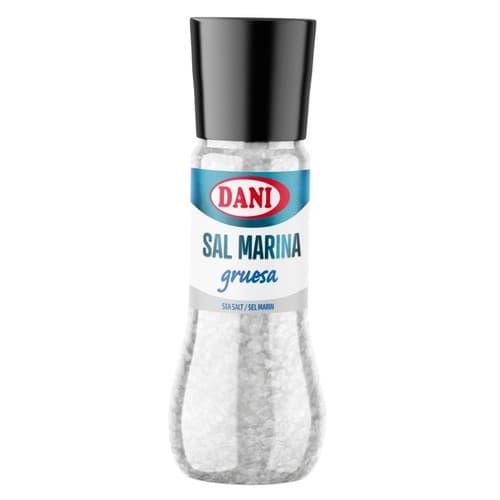 €2.99
€2.99Coarse Sea Salt
DANI · kg · Bonpreu
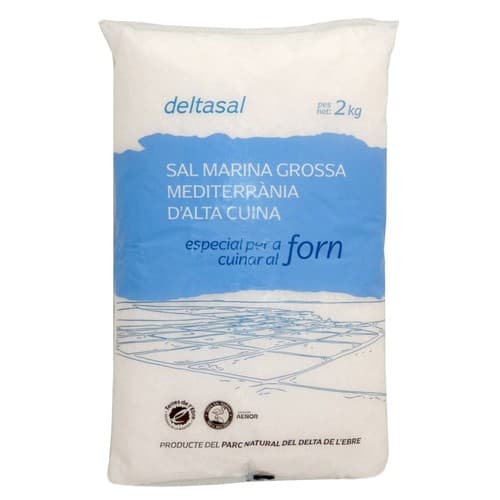 €1.40
€1.40Deltasal Coarse Sea Salt
DELTASAL · kg · Bonpreu
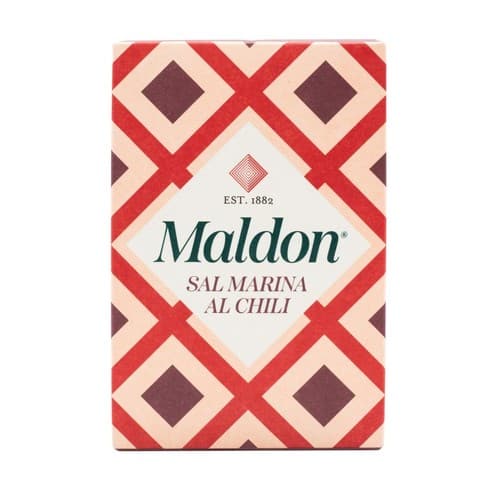 €5.89
€5.89Maldon Chili Sea Salt
MALDON · kg · Bonpreu
Good to know
- What it is
- Sea salt, kosher salt, or rock salt cured with wood smoke, most often by cold-smoking at low temperatures so the smoke coats the crystals without cooking them.
- Smoking methods
- Cold-smoking below 30°C / 85°F is the standard for finishing salts; hot-smoking and liquid-smoke infusion are less common commercial shortcuts.
- Common woods
- Apple (sweet, mild), hickory (bacon-like), oak (balanced), cherry (fruity), alder (delicate), mesquite (intense, earthy), pecan (nutty), beech (clean, neutral).
- Crystal texture
- Usually flaky or coarse finishing crystals, occasionally fine or coarse kosher. Coarser flakes trap pockets of smoke aroma and shatter on the bite.
- Potency vs. plain salt
- Comparable salinity by weight, but the smoke reads louder; use about 50–75% of the volume of a regular finishing salt.
- When to add
- At the end of cooking or at the table — high heat volatilizes the aromatic smoke compounds and mutes the effect.
- Storage
- Indefinite shelf life if kept dry; airtight container away from light, moisture, and strong-smelling spices like pepper or cumin, which the flakes readily absorb.
- Notable producers
- Yakima Applewood (Washington), Maldon (Essex, UK, cold-smoked over oak), Halen Môn (Anglesey, Wales), Jacobsen (Oregon), Salish (Washington), Bitterman & Sons (Wisconsin).
Substitutes
- Flaky sea salt + liquid smoke — Closest one-to-one finishing swap; stir about 1/8 tsp liquid smoke into 1/4 cup Maldon or similar flake and let it dry briefly before using.
- Sea salt + smoked paprika — Good for dry rubs and spice mixes where you also want color and a little warmth; combine 1 part sweet or hot smoked paprika with 4 parts sea salt.
- Maldon flakes + a pinch of chipotle powder — Crushed Maldon tossed with a small amount of chipotle mimics smoke plus gentle heat; useful when no true smoked salt is on hand.
- Kosher salt + ground lapsang souchong tea — A pantry workaround that gives a campfire, peaty note; best in doughs and spice rubs, not as a finishing salt.
- Sel gris + smoked kelp powder (or dulse) — Briny substitute for finishing seafood when a marine-smoke character is acceptable in place of wood smoke.
Pairs with
Also called
hickory salt · smoked sea salt · alderwood salt · applewood salt