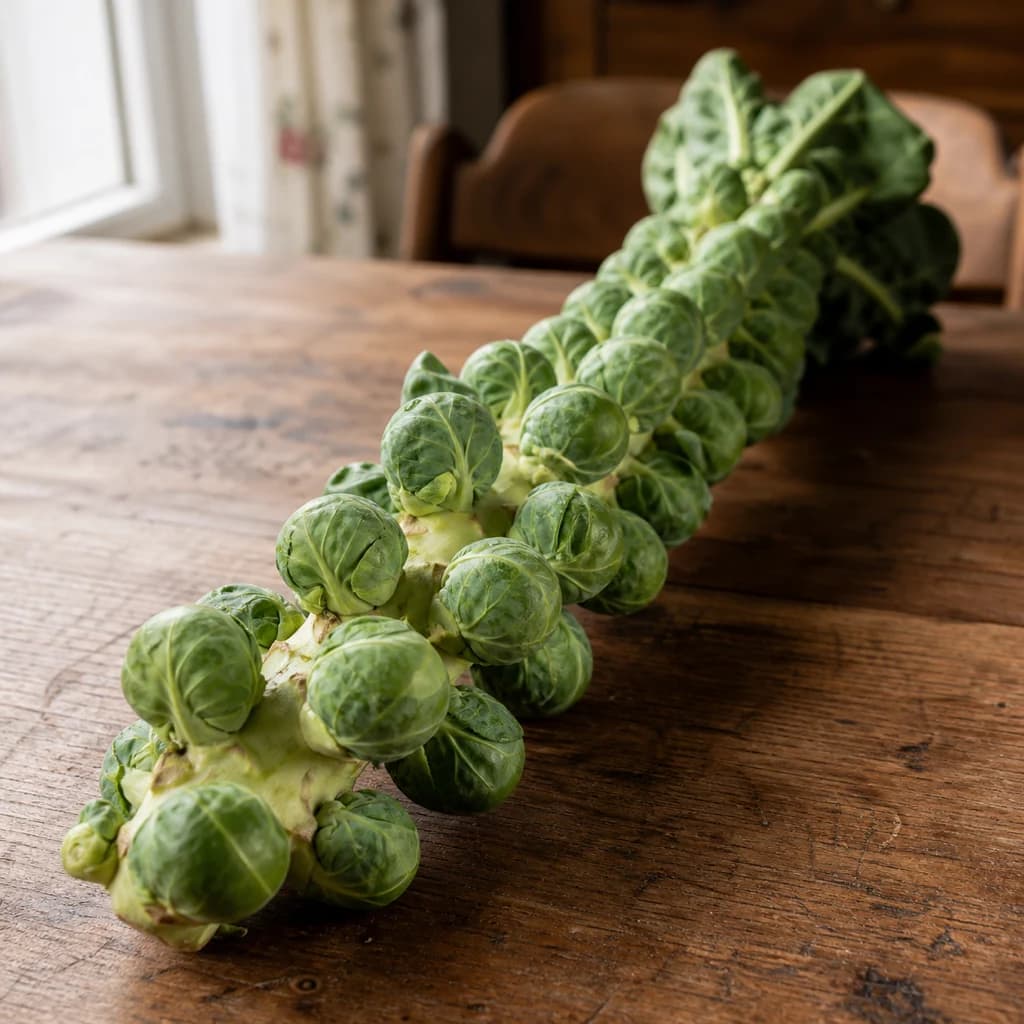
Natural form
Fresh Brussels sprouts still attached to their thick central stalk, showing how they grow.
Teaches the reader the plant's actual growth structure — buds clustered up a woody stalk — which is unmistakable and commonly surprising to shoppers.
Produce
Brussels Sprouts
Small cabbage-like buds roasted, sautéed or shredded for a nutty, faintly bitter side.
Brussels sprouts are small, dense buds that grow along a thick stalk and resemble miniature cabbages. They are roasted until caramelized, pan-seared, or shaved raw into salads, and pair well with bacon, balsamic, and chestnuts. High-heat roasting tames their natural bitterness and brings out a sweet, nutty flavor.
Brussels sprouts are the edible lateral buds of Brassica oleracea, the same species that gave us cabbage, broccoli, kale, and cauliflower. Unlike its relatives, which were bred to form a central head, the Brussels sprout plant was selected over centuries for its axillary buds—small, tight cabbages that grow in the leaf axils along a tall central stem. The vegetable takes its common name from Brussels, Belgium, where it was refined during the 13th to 16th centuries. Each sprout is a miniature version of its wild ancestor, typically 1 to 1½ inches in diameter, with a more complex flavor than simple cabbage: a distinct nuttiness, faint bitterness that fades with caramelization, and natural sweetness when properly cooked. The compound responsible for both the bitterness and the sulfuric smell when overcooked is sinigrin; it breaks down under sustained dry heat, which is why high-temperature methods produce such dramatically different results from boiling or steaming. Brussels sprouts are far more versatile than their mid-century reputation suggested—they hold their shape when roasted until deeply browned, shred into a crunchy raw salad base, braise into silky tenderness, or fry whole for a quick, sweet finish that belies their former bad name.
- Measured in
- g
- Storage
- Fridge
Types & varieties
Hybrid variety, early maturing, dense and flavorful.
Classic commercial variety, 1–1.5 inch sprouts on tall stems.
Large sprouts; excellent for stuffing or heavy roasting.
Red-purple varieties; color fades with cooking but adds visual interest.
High-yielding hybrid with good disease resistance.
Why the Bad Reputation?
Brussels sprouts earned their poor reputation through a combination of overcooking and under-seasoning that dominated mid-century American home cooking. Boiling or steaming until mushy, served without adequate salt or acid, produced sulfurous, olive-drab vegetables that tasted nothing like a properly cooked sprout. The sinigrin compounds that give raw sprouts their bitterness are the same ones that produce an unpleasant smell and gray color when overcooked. Modern high-heat methods—roasting at 425°F or higher, pan-searing in a hot cast-iron skillet, or deep-frying—address both problems simultaneously. The sustained dry heat breaks down the bitter compounds while developing caramelization, and the Maillard reaction produces savory, complex flavors that need little more than salt to shine. The transformation is so complete that many people who claim to dislike Brussels sprouts have simply never had them cooked properly.
Choosing and Storing
Select the smallest, tightest sprouts available; larger specimens have had more time to develop bitterness. The leaves should be firmly packed and bright green without yellowing or wilted edges. Avoid any with holes or damage, which indicates pest intrusion. Store unwashed in a loosely closed plastic bag in the refrigerator's crisper drawer for up to 10 days—moisture accelerates spoilage, so resist the urge to wash until just before cooking. If purchasing on the stalk, keep the stem end in water like a bouquet and refrigerate; the stalk will stay fresh slightly longer than individual sprouts.
- Smaller is better: 1 to 1¼ inch sprouts are sweeter and more tender.
The Stem-End Cut
The dense core of a Brussels sprout cooks more slowly than the leaves, which means the leaves can go from perfectly caramelized to charred while the center remains raw. The fix is simple: trim the very bottom of the stem and cut a shallow X into the cut surface, or slice the sprout in half and then trim any remaining tough core from the flat side. This opens the core to direct heat and ensures even cooking throughout. For shredded raw applications, this step is unnecessary—simply remove any tough outer leaves and run the sprout through a mandoline or slice thinly.
- A ¼-inch shallow X in the stem end equalizes cooking time between core and leaves.
- Halving is the most reliable method for roasting—slice flat-side down on the hot pan.
Common uses
Tips & pitfalls
- Cut a shallow X or slice the stem end of each sprout before cooking—this ensures the core cooks at the same rate as the leaves.
- Never overcrowd the pan or sheet pan; the released moisture steams rather than roasts, resulting in mushy sprouts.
- Roast cut-side down on a hot pan or sheet at 425°F or higher to develop genuine caramelization, not just cooked edges.
- Season generously—Brussels sprouts need salt to balance their natural bitterness.
- Do not overcook; the telltale signs are a strong sulfur smell, olive-drab color, and collapsing texture. They should retain some firmness.
- For shredded raw applications, choose the smallest, tightest sprouts and taste one first—they should be sweet and crunchy, not bitter.
- Frying whole small sprouts in deep fat (tempura style) is a valid method; the high heat neutralizes bitterness quickly.
- The most common failure is underseasoning combined with overcooking, which produces the notoriously off-putting mush that gave sprouts their bad reputation in the mid-20th century.
Nutrition
Energy
180 kJ · per 100 g
Where the calories come from
Protein
3.4g
7% DV
Carbs
9g
3% DV
Fat
0.3g
0% DV
Fiber
3.8g
14% DV
Sugars
2.2g
of which
Sodium
25mg
1% DV
Source · USDA FoodData Central · Brussels sprouts, raw
View on FDC →In the shops
Matched grocery products
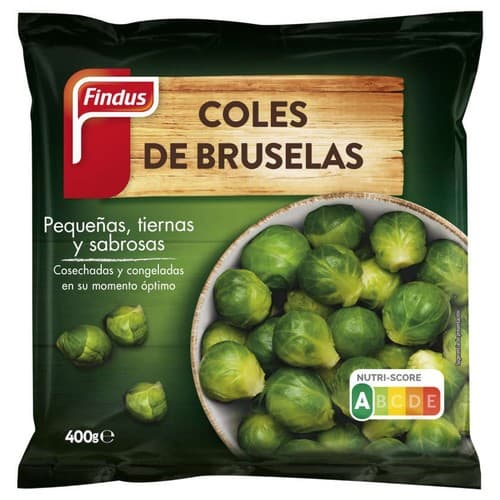 €2.99
€2.99Findus Brussels Sprouts
FINDUS · kg · Bonpreu
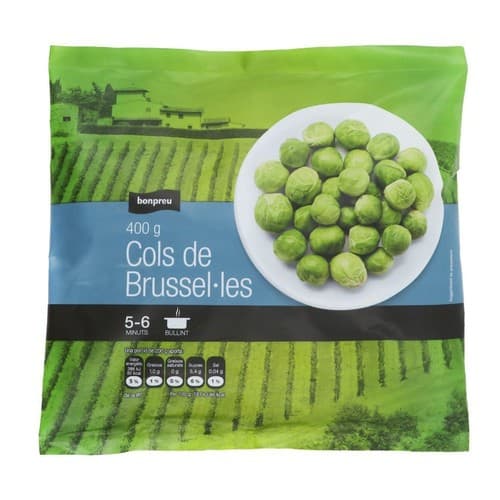 €1.47
€1.47Bonpreu Brussels Sprouts
BONPREU · kg · Bonpreu
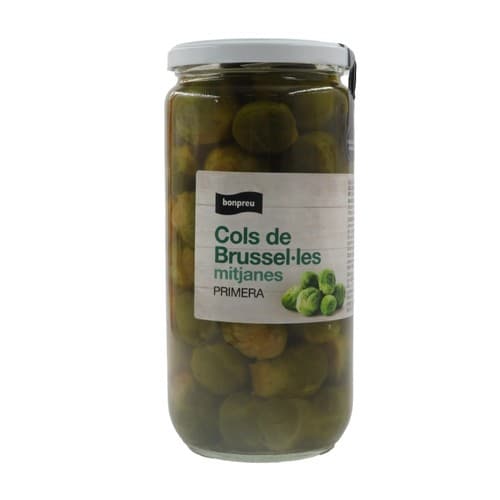 €1.50
€1.50Medium First Quality Brussels Sprouts
BONPREU · kg · Bonpreu
Good to know
- Origin
- Brussels, Belgium; developed in the 13th–16th centuries from heading cabbage.
- Family
- Brassicaceae (cabbage family, same as broccoli, kale, cauliflower).
- Botanical name
- Brassica oleracea var. gemmifera.
- Peak season
- Fall through early spring; light frost sweetens the flavor.
- Typical size
- 1–1.5 inches in diameter; larger sprouts can be bitter.
- Storage
- Refrigerate unwashed in a loosely closed plastic bag for 7–10 days.
- Flavor
- Nutty, faintly bitter, naturally sweet when caramelized.
- Yield
- About 1 pound yields 3–4 cups trimmed, halved, or shredded.
- Cooking time
- Roasting halved sprouts: 20–25 min at 425°F; sautéing: 8–12 min; steaming: 6–8 min.
- Equipment
- Sheet pan (roasting), skillet or cast-iron (sautéing), mandoline or knife (shredding).
Substitutes
- Green cabbage — Simpler and milder; cut into wedges or shred. Lacks the nutty sweetness of caramelized sprouts.
- Kale — Sturdy and bitter; lacinato (dinosaur) kale is closest in savory applications.
- Broccoli florets — Different shape but similar cooking behavior and flavor compatibility.
- Savoy cabbage — More tender than green cabbage; shreds well for a comparable raw application.
Pairs with
Also called
Spruitjes
Related
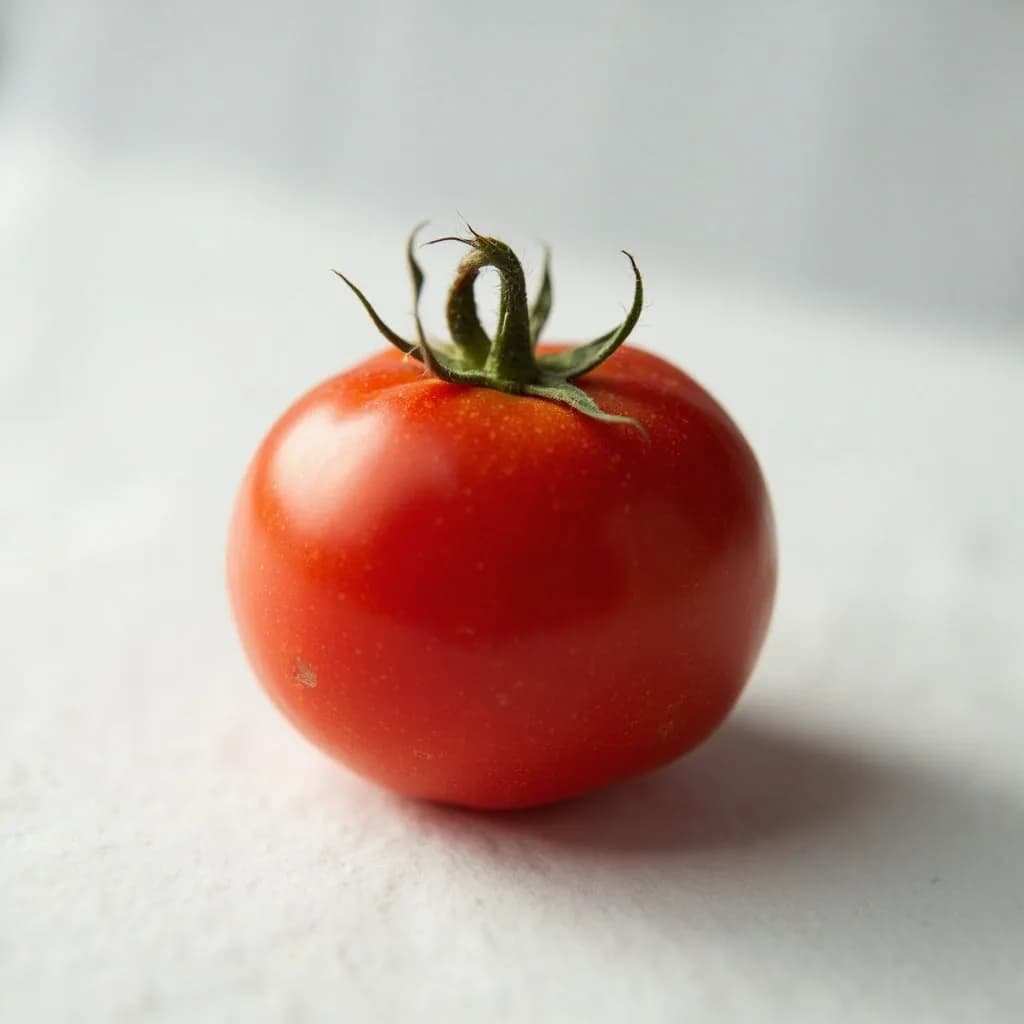
Tomato
Juicy, sun-sweet fruit for sauces, salads, and slow-cooked depth
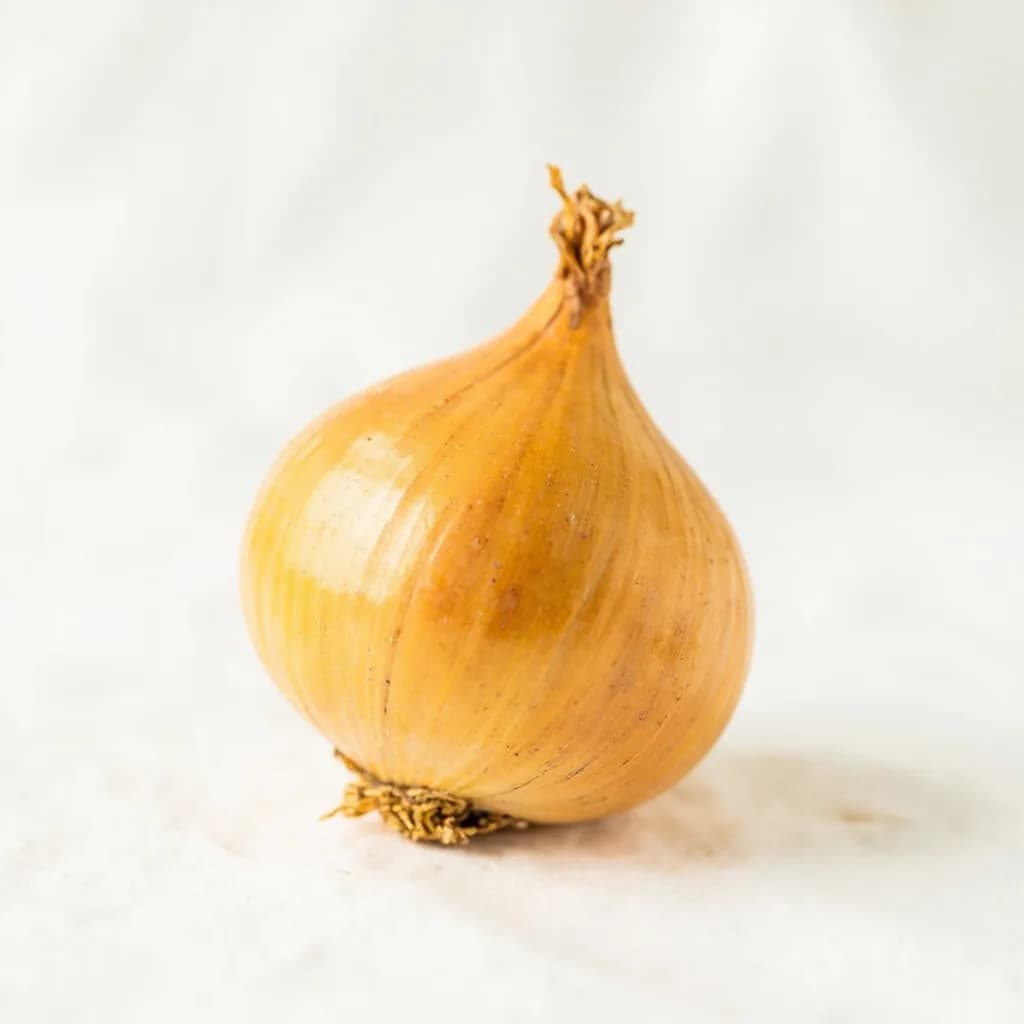
Yellow Onion
The aromatic backbone of soups, sofritos, and braises
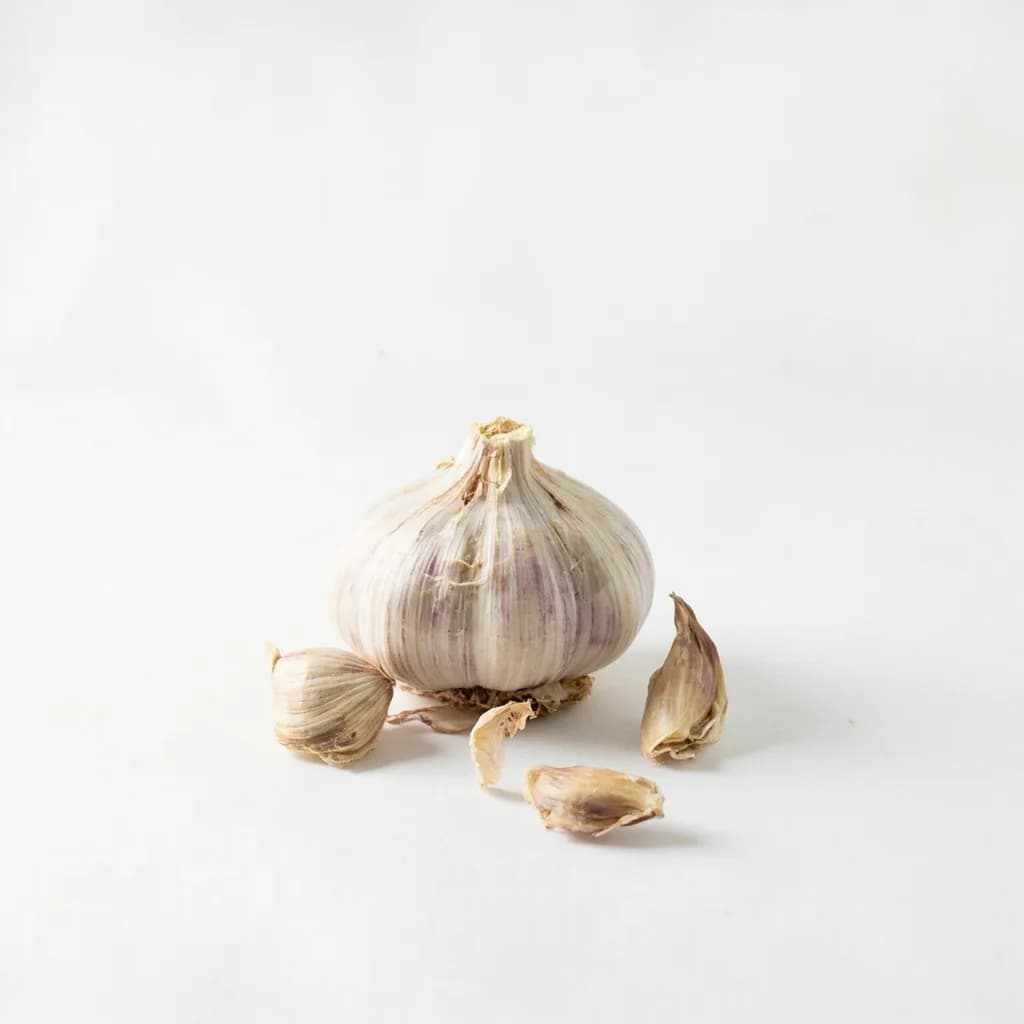
Garlic
Pungent cloves that perfume nearly every savory dish
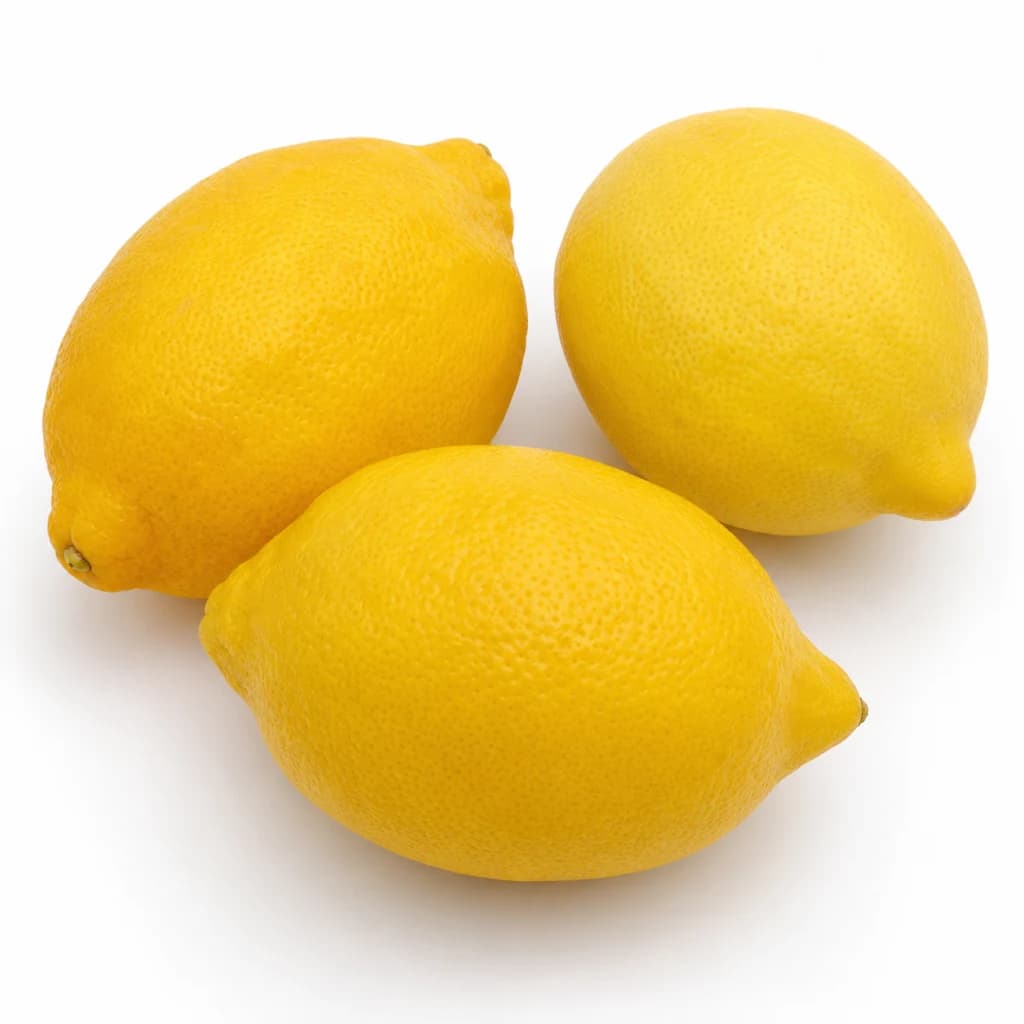
Lemon
Bright, acidic citrus that wakes up almost any dish
Potato
Humble, hearty staple — roast, mash, fry, or boil
Carrot
Sweet, crunchy root — raw, roasted, or the base of a sofrito
Cucumber
Cool, crisp, and watery — for salads, pickles, and tzatziki

Lettuce
Crisp leaves for salads, wraps, and a fresh crunch