
Natural form
A whole savoy cabbage head shows its deeply crinkled, ruffled outer leaves.
Teaches the reader the unmistakable crinkled-leaf form and compact round head that distinguishes savoy from smooth cabbages.
Produce
Savoy Cabbage
Crinkly-leaved cabbage, tender and mild, used in wraps, braises, and soups.
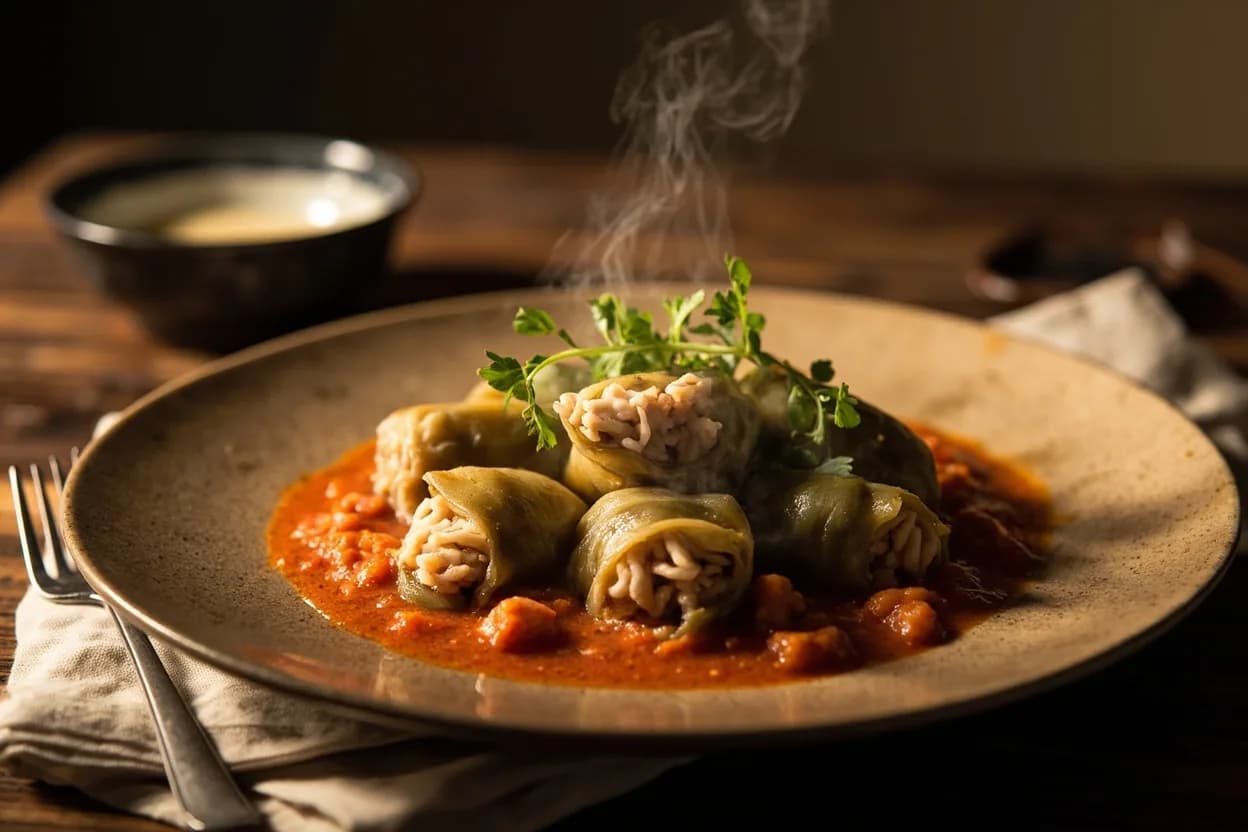
Savoy cabbage has deeply crinkled, ruffled leaves and a milder, more tender character than smooth green cabbage. Its pliable leaves are ideal for stuffed-cabbage rolls, while the head is also shredded into soups, braises, and sautés. It holds its texture well when cooked and is a cold-weather favorite in European kitchens.
Savoy cabbage is distinguished by its deeply crinkled, almost ruffled leaves that form a loosely packed head. Unlike the tight, crisp heads of green or red cabbage, Savoy leaves are thin and tender, with a delicate texture that makes it the preferred cabbage for applications where softness matters. The flavor is the mildest of all common cabbages—slightly sweet with no sulfurous edge—and the interior leaves range from pale yellow to chartreuse while the outer wrapper leaves are darker green.
The tenderness of Savoy cabbage stems from its loose, open head structure. Leaves separate cleanly from the core without tearing, which is why it has been the traditional choice for cabbage rolls, dolmas, and spring roll wrappers for centuries. In French and Italian markets it is called "chou de Milan" or "cavolo di Milano" respectively—a nod to its Mediterranean heritage and its reputation as the "cabbage lettuce" of European cooking. The variety January King, with its purple-tinged leaves, is particularly prized for winter cooking as frost intensifies its natural sweetness.
Savoy cabbage cooks more quickly than green cabbage and turns mushy faster, so timing matters. This characteristic makes it ideal for raw applications where a more delicate bite is desired, and for quick-cooked preparations where the leaves should retain some structural integrity. When braised correctly—with minimal liquid and a tight lid—it steams in its own moisture to achieve a silky, melt-in-your-mouth texture that green cabbage cannot match.
- Measured in
- piece
- Storage
- Fridge
Types & varieties
Winter variety; purple-tinged leaves, exceptionally cold-hardy, sweet flavor
Early-season variety; pale interior, fast-growing, good for spring
French variety; tender leaves, mild flavor, reliable grower
Domed head, dark green wrapper leaves, pale interior
Strong mid-winter variety; crisp texture holds well in storage
Selecting and Storing
Choose compact, heavy heads with glossy, unblemished outer leaves. Smaller, younger heads are more tender throughout. Avoid heads with yellowed or wilted outer leaves, which indicate age and deterioration. Refrigerate unwashed in a loose plastic bag for up to 2–3 weeks.
- Select heavy-for-size heads—the weight indicates dense, moist leaves
- Look for bright, vibrant outer leaves without brown spots or cracks
- Store stem-side up to minimize moisture loss from the core
Preparing Leaves for Rolling
The technique for separating intact leaves for rolling or wrapping differs from simply shredding. Start by cutting the core out at the base of the head—this releases the tension holding the leaves together and prevents tearing. Then peel leaves from the outside inward, starting at the top of the head and working around. For cabbage rolls, select leaves 6–8 inches or larger; smaller inner leaves work better for spring rolls or as a bed for braising.
- Cut the core flush with the base, not at an angle—this gives you cleaner access to the center leaves
- Blanch large leaves for 1–2 minutes if they resist rolling; they become more pliable and less likely to tear
- The thick central rib on larger outer leaves should be removed or thinned when leaves are used as wrappers; leave ribs intact for braising
Common uses
Tips & pitfalls
- Separate leaves by cutting the core out first, then peeling leaves from the head—this gives you the largest intact leaves for rolling
- The thick central rib on larger outer leaves should be removed or thinned when leaves are used as wrappers; leave ribs intact for braising
- Do not overcook; Savoy cabbage turns mushy and loses its characteristic delicate texture faster than green cabbage—cook until just tender, 4–6 minutes for quick-cooked applications
- Smaller, younger heads are more tender throughout; choose compact, heavy heads with glossy, unblemished outer leaves
- For coleslaw, dress immediately before serving—the leaves are more delicate and will wilt faster than green cabbage slaw
- When braising, use a tight-fitting lid and minimal liquid; the leaves steam in their own moisture
- Savoy cabbage is the classic choice for fresh spring rolls because the leaves stay pliable without tearing
Nutrition
Energy
113 kJ · per 100 g
Where the calories come from
Protein
2g
4% DV
Carbs
6.1g
2% DV
Fat
0.1g
0% DV
Fiber
3.1g
11% DV
Sugars
2.3g
of which
Sodium
28mg
1% DV
Source · USDA FoodData Central · Cabbage, savoy, raw
View on FDC →In the shops
Matched grocery products
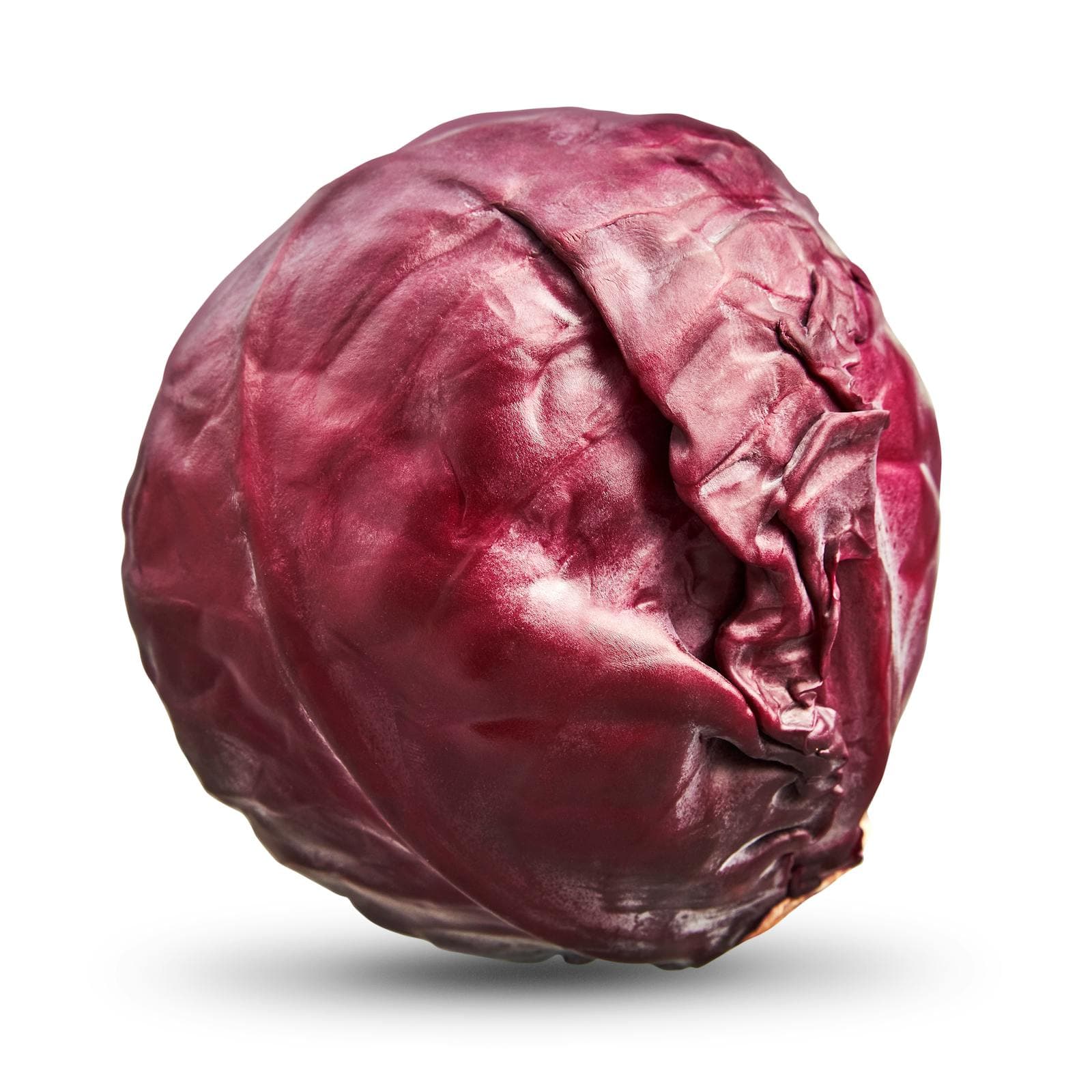 €1.72
€1.72Red Cabbage
860 g · Mercadona
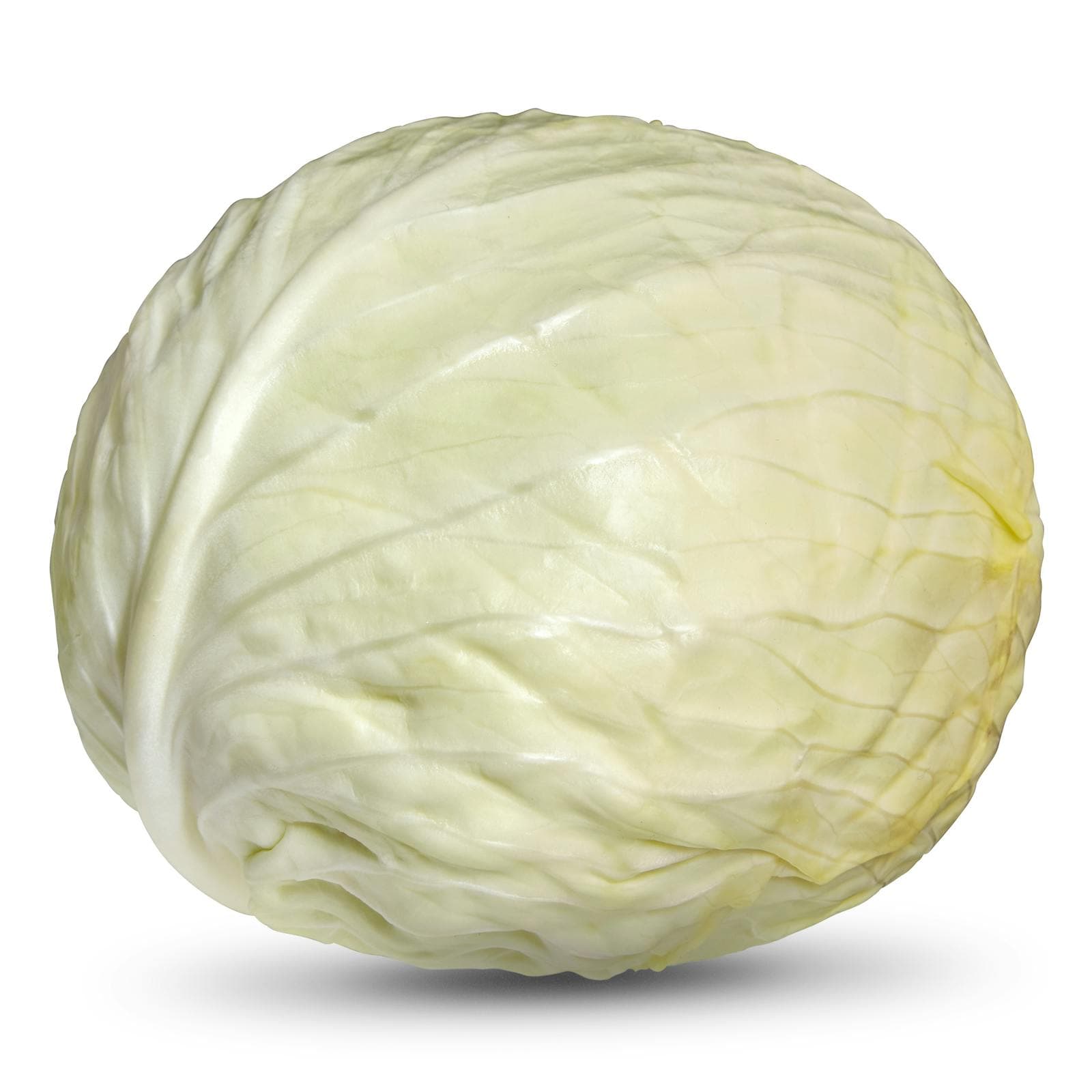 €1.60
€1.60Smooth Cabbage
890 g · Mercadona
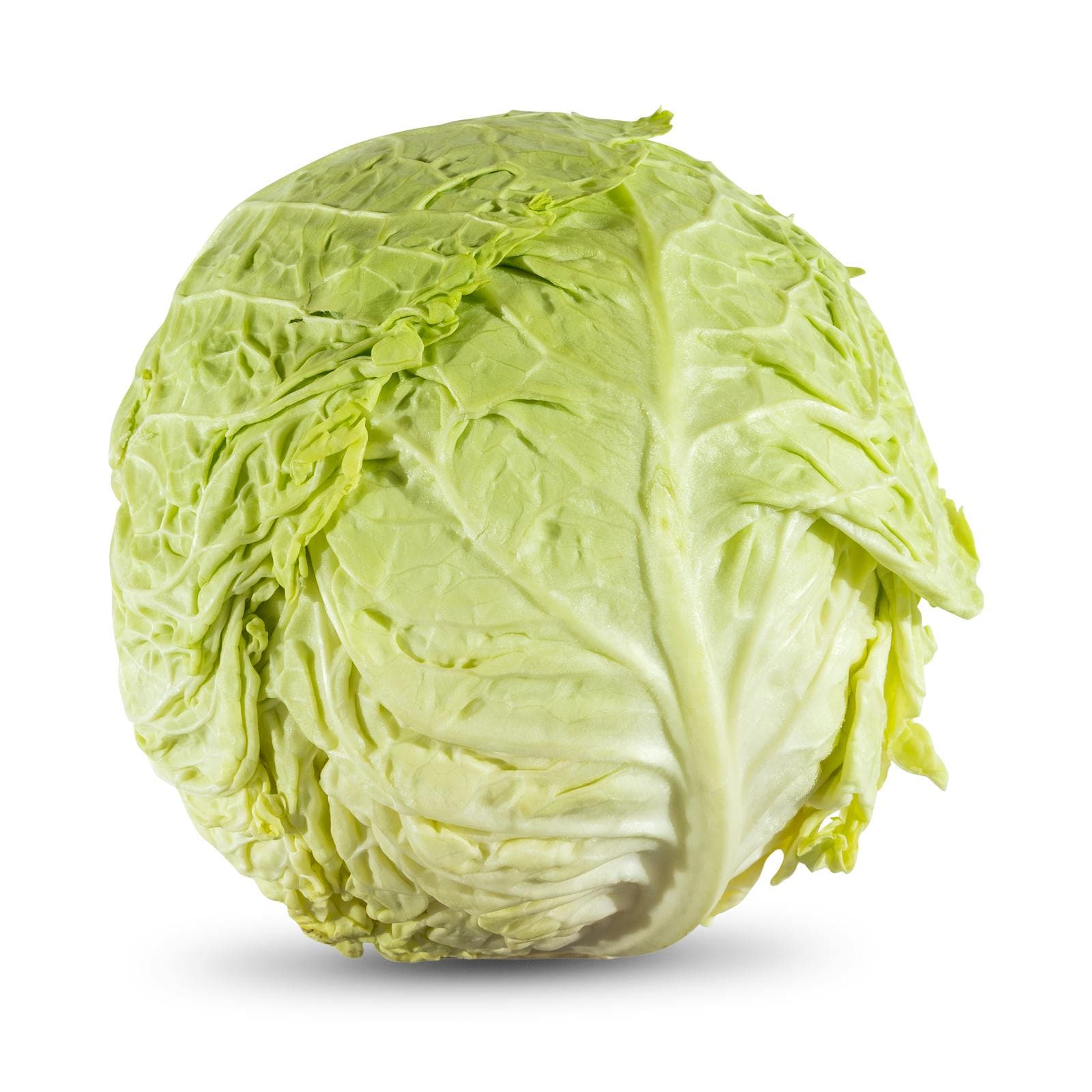 €1.70
€1.70Curly Cabbage
920 g · Mercadona
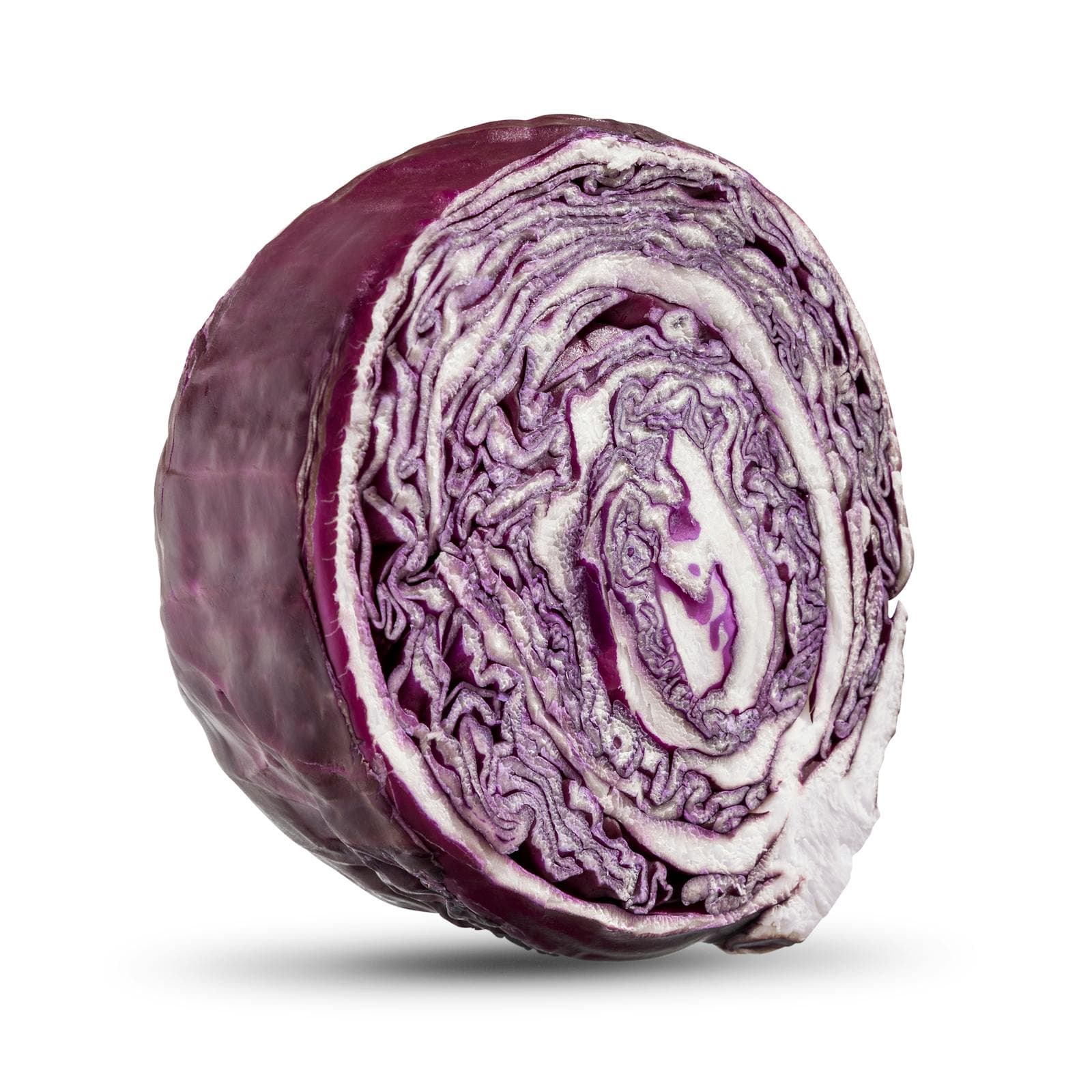 €0.95
€0.95Half Red Cabbage
450 g · Mercadona
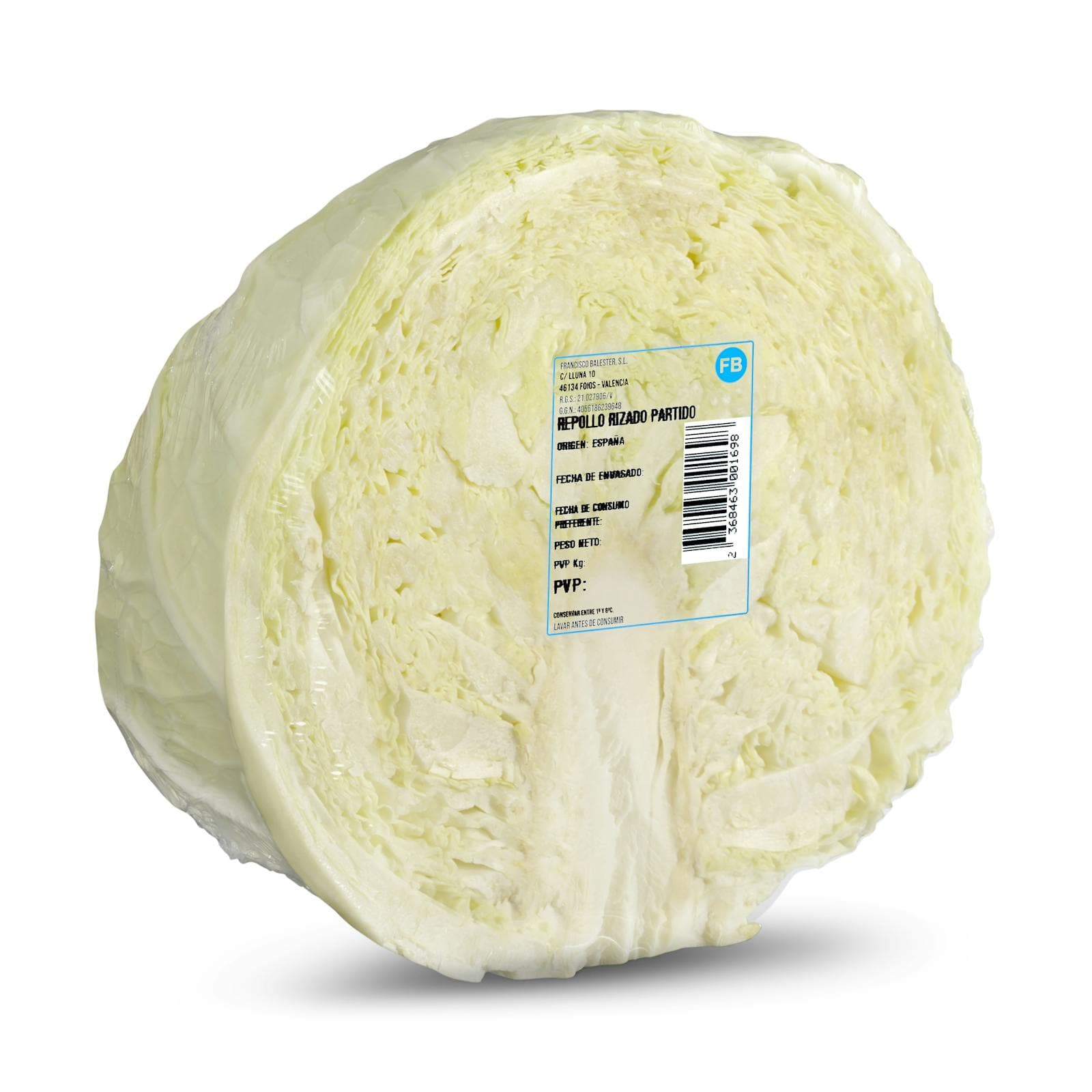 €1.75
€1.75Half Curly Cabbage
796 g · Mercadona
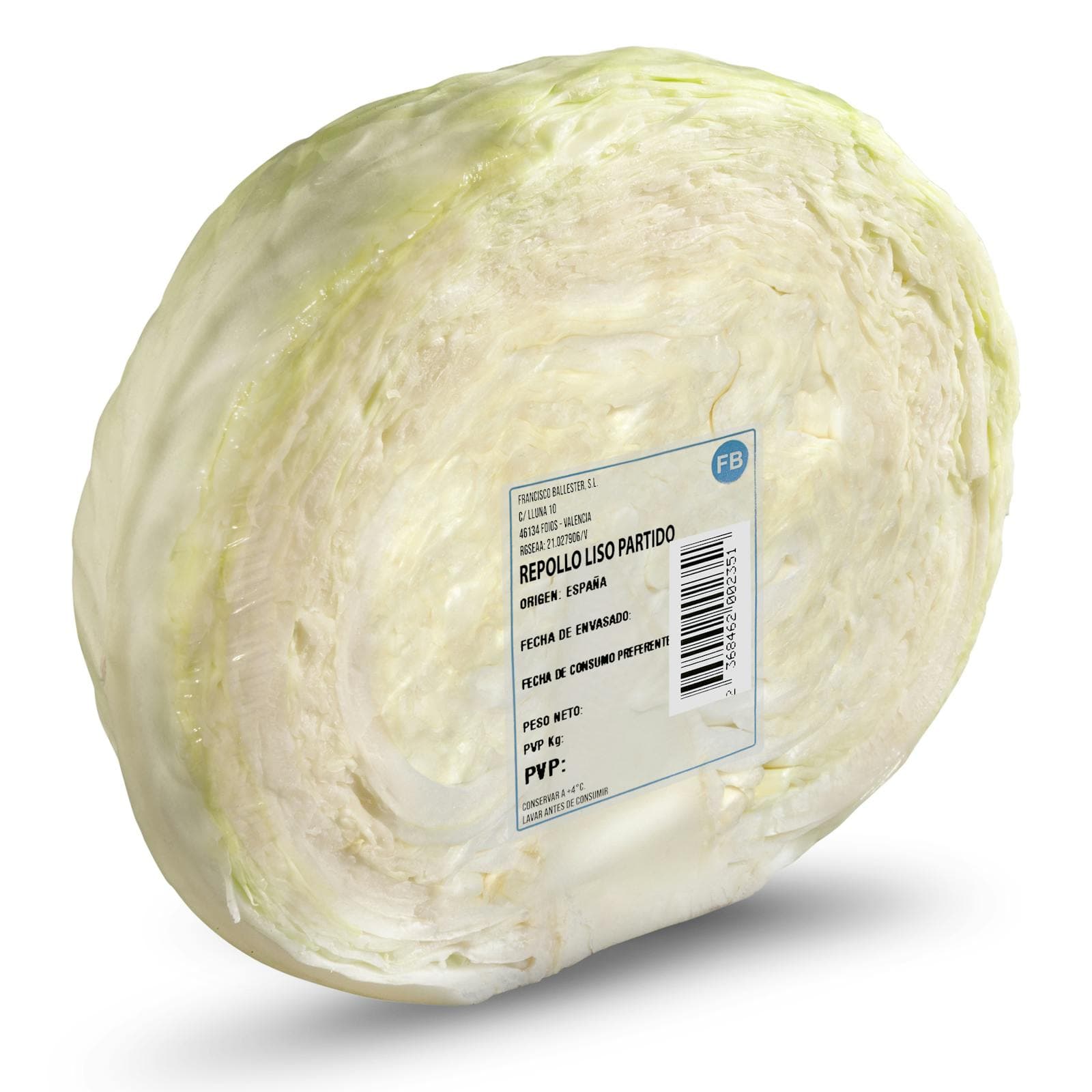 €1.94
€1.94Half Smooth Cabbage
900 g · Mercadona
Good to know
- Botanical name
- Brassica oleracea var. sabauda
- Origin
- Mediterranean region; named for the Savoy region straddling France and Italy
- Peak season
- Late fall through early spring; frost improves sweetness
- Typical head size
- 1–3 lbs; individual leaves 6–10 inches long
- Color
- Outer leaves dark green; interior leaves pale yellow to chartreuse
- Texture
- Loosely packed, thin, crinkled leaves; more tender than green cabbage
- Flavor
- Mild, slightly sweet, no sulfurous bite
- Refrigerator storage
- 2–3 weeks loosely wrapped in plastic
- Yield
- Approximately 50–60% edible after trimming outer leaves and core
- Key nutrients
- Excellent source of vitamins C and K; good source of folate and fiber
Substitutes
- Green cabbage — Sturdier leaves, stronger flavor; acceptable for cooked applications but harder to roll
- Napa cabbage — Similar mildness and tenderness; better for Asian preparations but softer texture when cooked
- Bok choy — Workable in stir-fries and soups; stems are crisper, leaves more delicate
- Kale (lacinato/dinosaur) — Sturdier, longer cooking required; leaves can be deveined and used as wrappers in a pinch
Pairs with
Also called
Col · Curly Cabbage
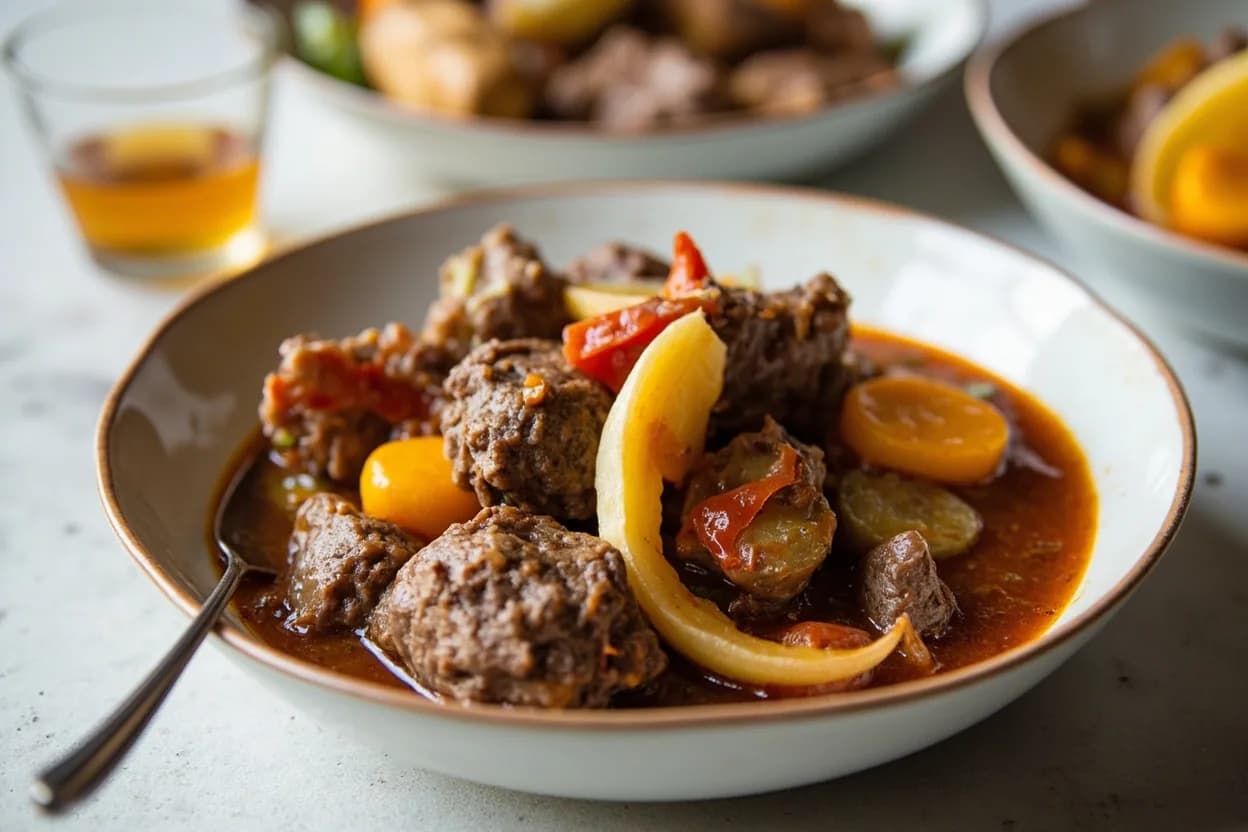
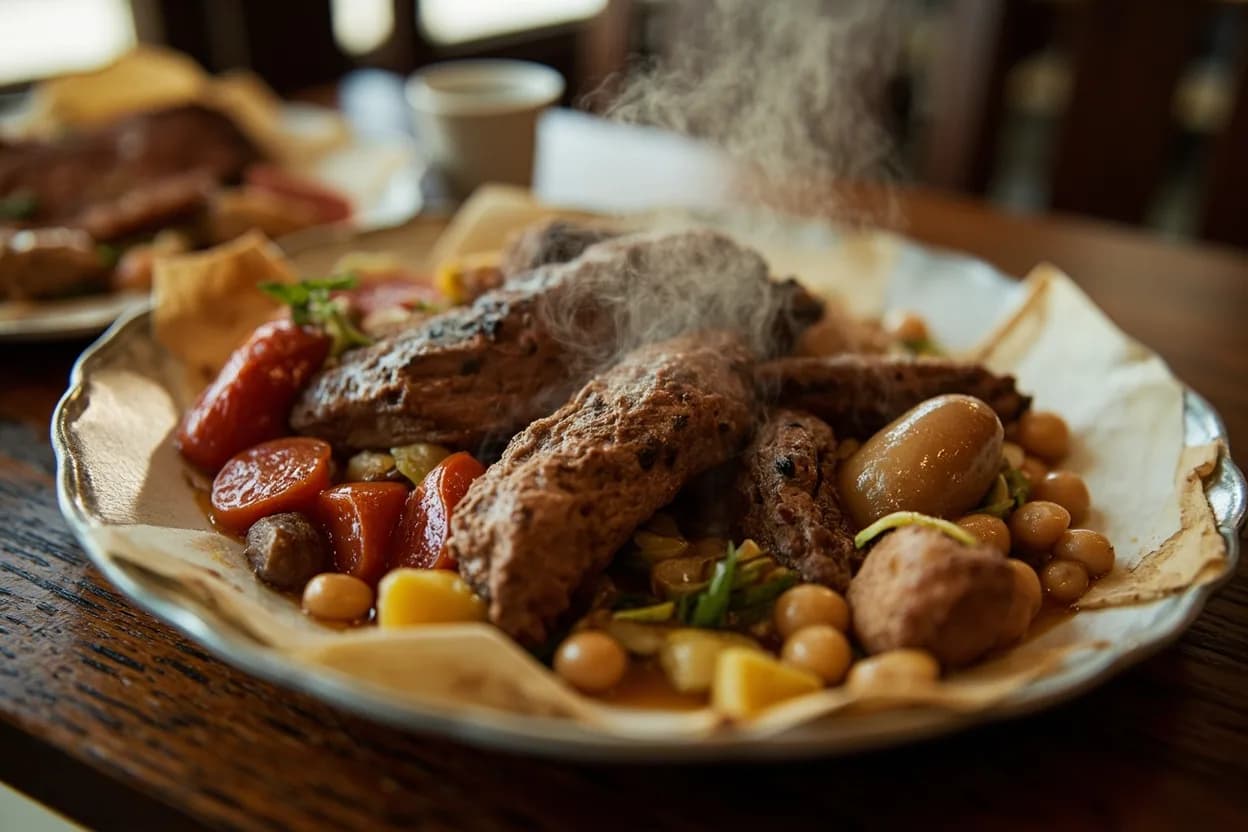
Appears in these dishes
Related
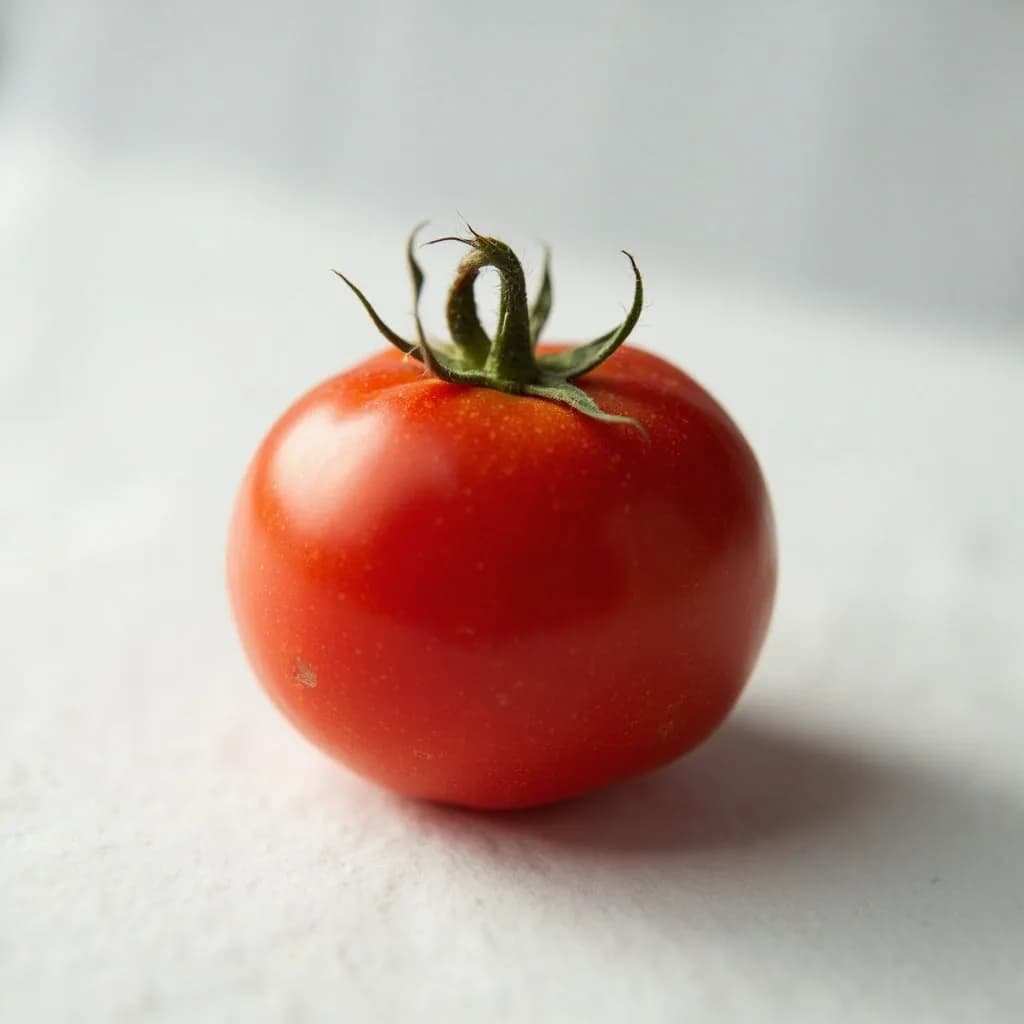
Tomato
Juicy, sun-sweet fruit for sauces, salads, and slow-cooked depth
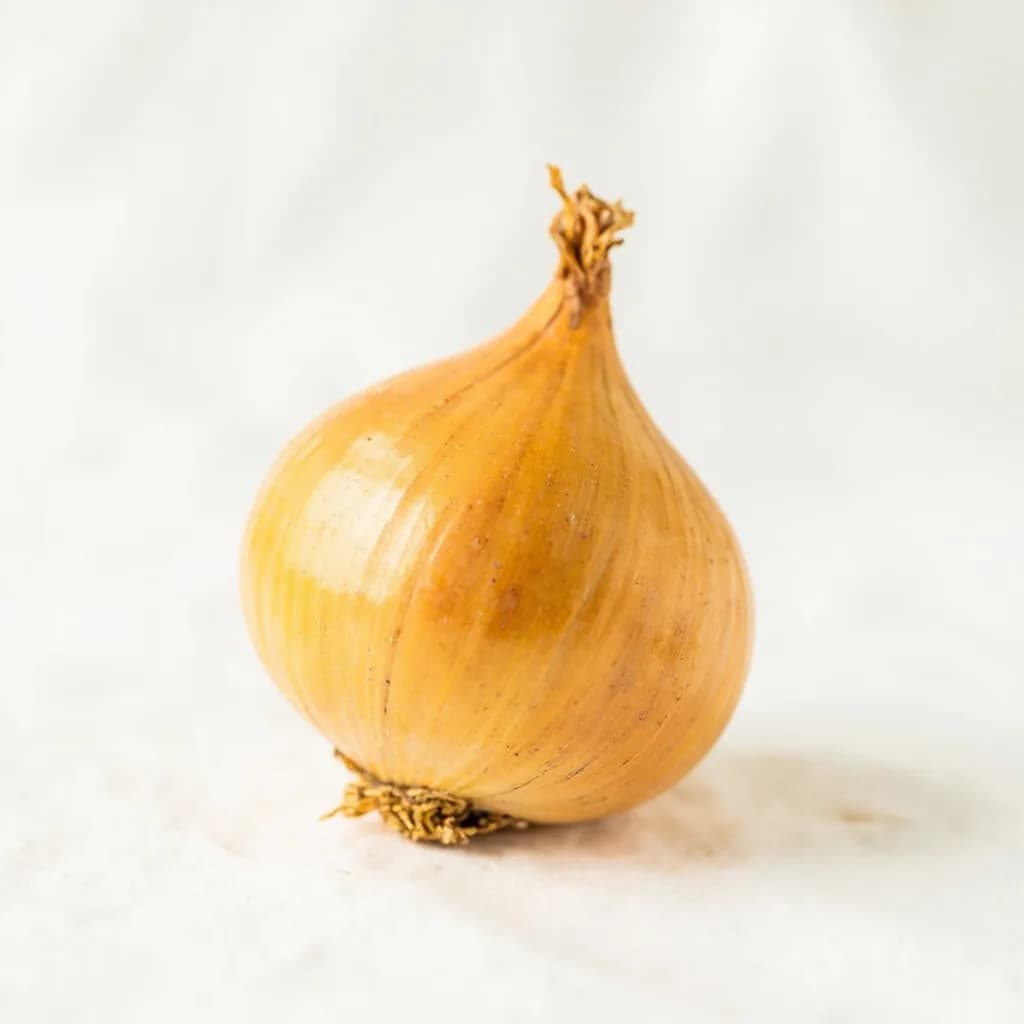
Yellow Onion
The aromatic backbone of soups, sofritos, and braises
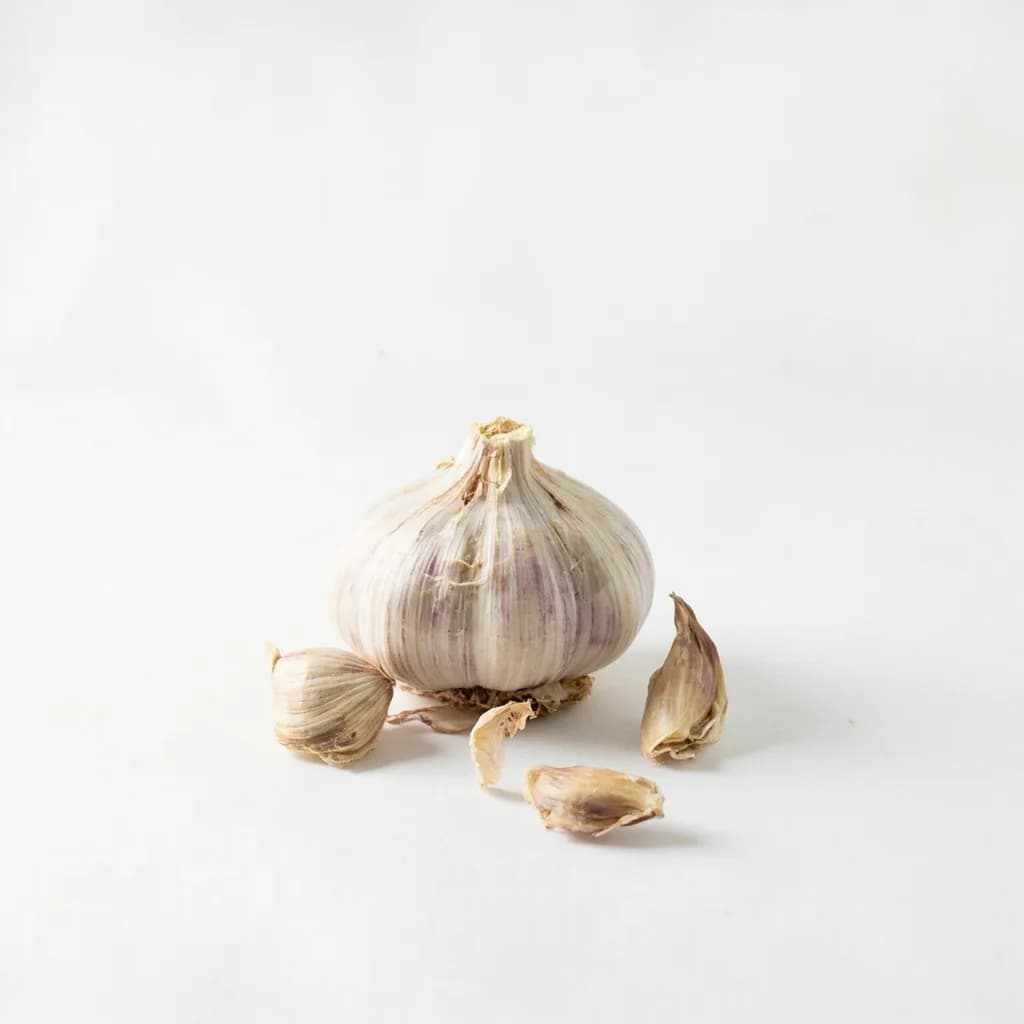
Garlic
Pungent cloves that perfume nearly every savory dish
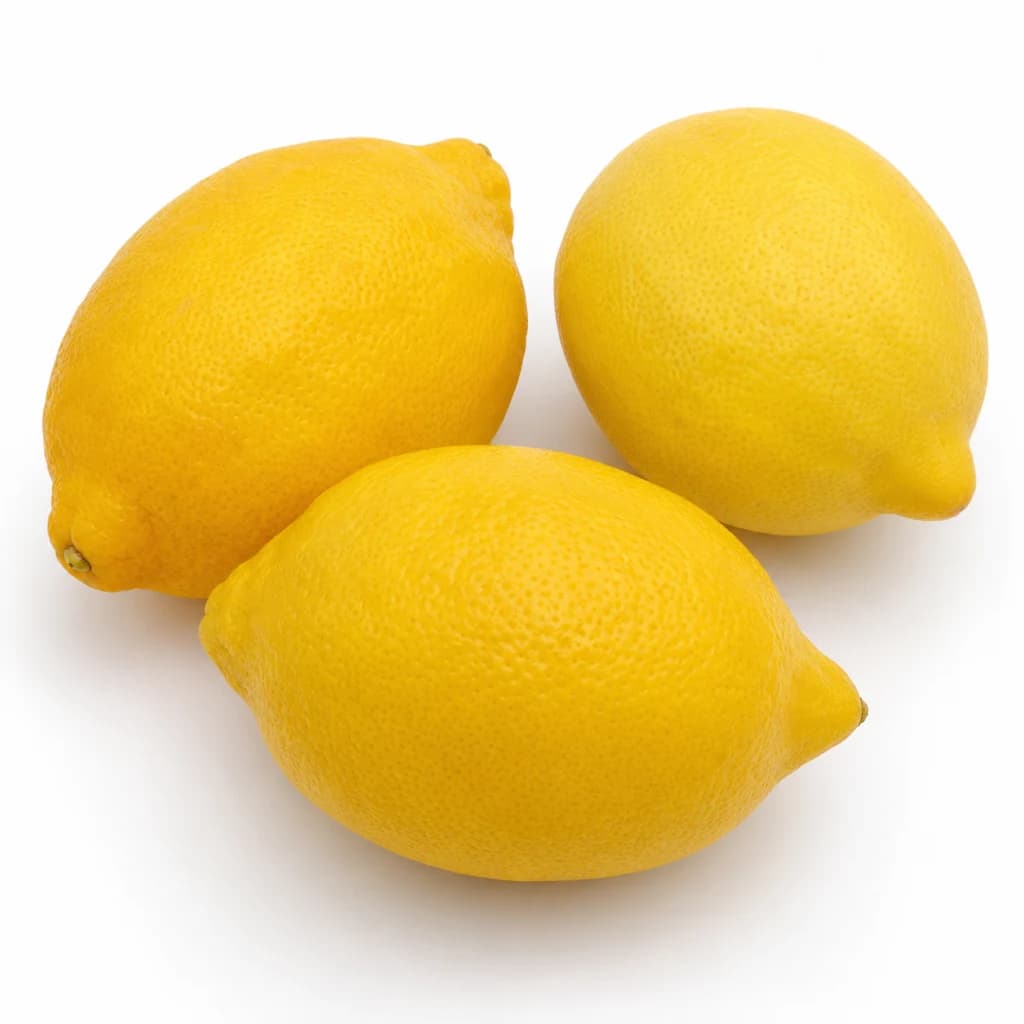
Lemon
Bright, acidic citrus that wakes up almost any dish
Potato
Humble, hearty staple — roast, mash, fry, or boil
Carrot
Sweet, crunchy root — raw, roasted, or the base of a sofrito
Cucumber
Cool, crisp, and watery — for salads, pickles, and tzatziki

Lettuce
Crisp leaves for salads, wraps, and a fresh crunch