Spices
Cassia Cinnamon
Bold, hot-spicy cinnamon (the common supermarket type) with high coumarin; stands up to apple pie, cinnamon rolls, and long-simmered stews and chais.
Cassia cinnamon is the bold, hot-spicy bark sold as "cinnamon" in almost every supermarket outside Sri Lanka. It is the dried inner bark of several Cinnamomum species — principally C. cassia (Chinese cassia), C. burmannii (Indonesian or Korintje cassia), and C. loureiroi (Vietnamese or Saigon cassia) — none of which is the "true" Ceylon cinnamon (Cinnamomum verum) of Sri Lanka. In the kitchen, cassia behaves like the loud, reliable cousin of Ceylon: it stands up to long baking, dissolves into long-simmered stews without disappearing, and delivers an unmistakable sweet-hot punch that survives sugar, dairy, and fat.
The flavor is dominated by cinnamaldehyde, which makes up 75–90% of the volatile oil and produces that immediate warm bite on the tongue. The same species also carry meaningful amounts of coumarin, a naturally occurring compound that gives cassia its slightly tannic, almost medicinal edge — and is the reason a small daily intake of Saigon-grade powder can add up faster than most cooks expect. For everyday baking and savory work, though, cassia is the practical choice: it is cheaper, more pungent, and far more heat-stable than Ceylon, and it is the backbone of five-spice, masala chai, Vietnamese phở, and the cinnamon-sugar jar in your pantry.
In cooking, treat cassia as a structural spice rather than a finishing one. A stick dropped into phở or chai gives up its flavor over hours without turning harsh; ground cassia folded into a batter or rubbed onto meat needs to be bloomed in fat or toasted first, or it tastes dusty. Buy sticks and grind them yourself, store them away from the stove, and reach for the smaller Vietnamese jar when a recipe calls for cinnamon to do real work.
- Measured in
- g
- Storage
- Dark Cool
Find it in
Suits
Types & varieties
The original "cassia." Hard, thick, nearly tubular quills with reddish outer bark often still attached. Milder than Indonesian or Saigon; the backbone of Cantonese five-spice and most commercial Chinese cinnamon.
The U.S. supermarket workhorse (McCormick, Great Value, store brands). Smooth bark with the corky outer layer scraped off, leaving pale, hard, single-curl sticks. Sweeter and less biting than Saigon.
The most intense cassia, with the highest essential-oil and coumarin content. Very dark, thick curls with rough bark intact. Standard in Vietnamese phở and premium baking blends; use about two-thirds as much as standard cassia.
Smaller-scale Indian production from the Western Ghats, similar in profile to Indonesian cassia; rare in U.S. retail.
The coumarin question
Coumarin is a naturally occurring plant compound that gives cassia its slightly bitter, almost vanilla-tinged edge. In high doses over time it is hepatotoxic in susceptible individuals, and the European Food Safety Authority has set a tolerable daily intake of 0.1 mg per kg of body weight (about 6 mg per day for a 60 kg adult). Vietnamese/Saigon cassia is the worry: at 6–7 g/kg, a single 2.5 g teaspoon of Saigon powder contains roughly 15–18 mg of coumarin, which already exceeds that daily limit by two to three times. Indonesian cassia is roughly a third as concentrated, and Chinese cassia is lower still. For a cook who bakes an apple pie a few times a year, this is largely academic. For anyone drinking cinnamon-heavy chai daily, taking cassia capsules, or seasoning with Saigon-grade powder at every meal, switching to Ceylon for the daily dose — and saving the Saigon jar for the occasional dish that needs it — is a sensible move.
Working with whole sticks vs. ground powder
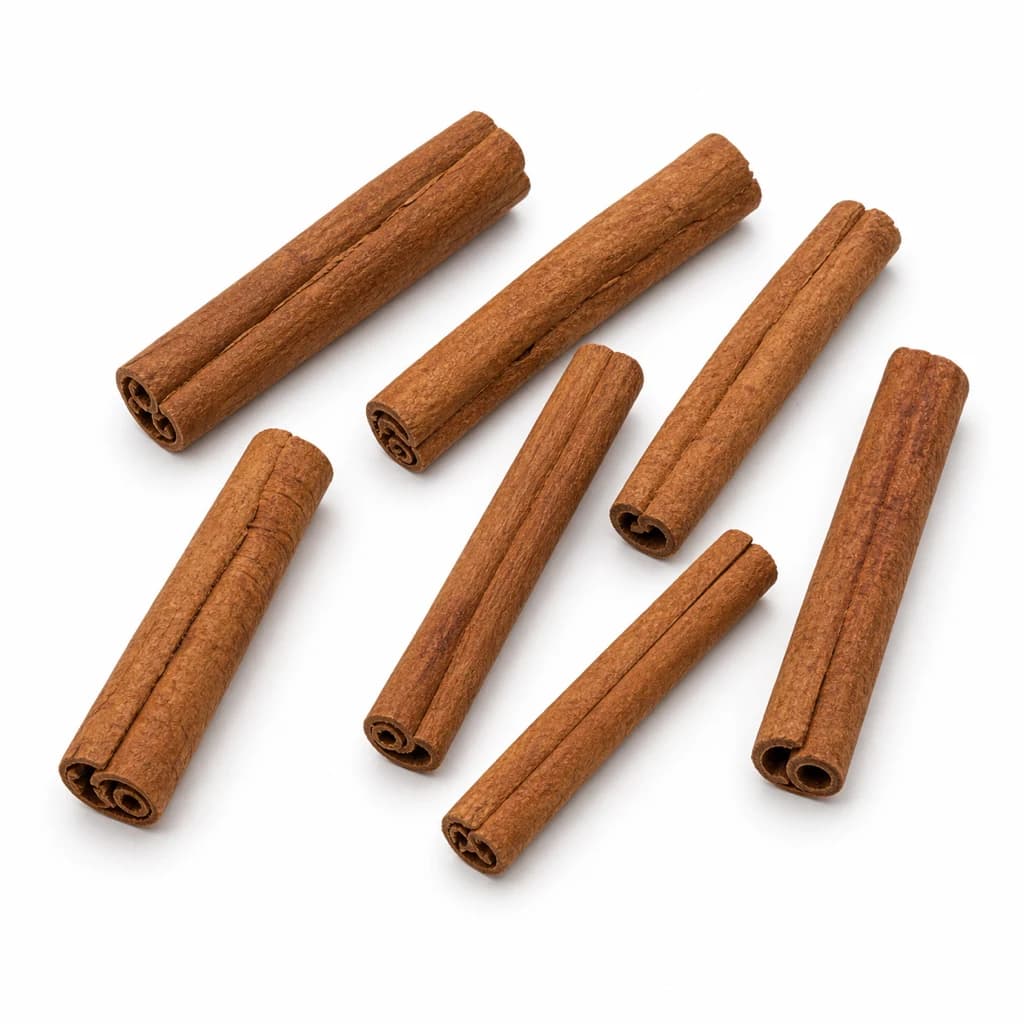
Whole cassia sticks are one thick, woody curl, not the nested, papery quills of Ceylon. They will not snap cleanly in your fingers; score them with a knife or hit them with the back of a heavy pan to break them. Grind on a Microplane (the smallest holes), a dedicated blade grinder, or a mortar; a few seconds of blitzing yields a much more aromatic powder than anything from a jar. If you only need a small amount, snap a 2–3 cm segment, crush it with the flat of a knife, and add it to the pot — no grinder required.
Common uses
Tips & pitfalls
- Buy sticks and grate or crush them yourself on a Microplane just before using — the volatile cinnamaldehyde fades quickly once ground, generally within months even in a sealed jar.
- Toast whole sticks or ground powder in a dry pan over medium heat for 30–60 seconds until fragrant before grinding or blooming; raw cassia in a finished dish tastes dusty and slightly bitter.
- Add cassia early in long-simmered liquids (phở, braises, chai) so the harsh coumarin edge mellows; add it late in quick sauces, custards, and milk-based desserts or it can turn sharp.
- For high-heat baking (apple pie, cinnamon rolls), bloom the ground spice in melted butter or hot neutral oil before folding into the batter — this drives off the raw, floury note and gives a rounder, more "bakery" flavor.
- Store sticks whole in an airtight container away from the stove and sunlight; grind only what you need for the week, because ground cassia loses its top notes within months even in a sealed jar.
- If you bake cinnamon rolls or apple pie weekly, keep two jars: an Indonesian cassia as the everyday workhorse and a small Vietnamese/Saigon for special-occasion intensity — use roughly two-thirds as much Saigon as you would standard cassia.
- Common mistake: assuming all "cinnamon" is interchangeable with Ceylon. They are not — Ceylon is delicate and floral, cassia is bold and hot, and a 1:1 swap of Ceylon for cassia in a heavily spiced dessert will taste noticeably weaker and more perfumed.
- Common mistake: dosing with a heaping teaspoon of Saigon powder daily in tea or supplements. At 6–7 g/kg coumarin, a single 2.5 g teaspoon carries roughly 15–18 mg — already two to three times EFSA's daily limit for an average adult; switch to Ceylon for daily use and reserve Saigon for cooking.
Nutrition
Energy
1891 kJ · per 100 g
Where the calories come from
Protein
4.5g
9% DV
Carbs
48.6g
18% DV
Fat
26.6g
34% DV
Fiber
1.2g
4% DV
Sugars
25.7g
of which
Sodium
305mg
13% DV
Source · USDA FoodData Central · approx. Cinnamon buns, frosted (includes honey buns)
View on FDC →In the shops
Matched grocery products
 €2.05
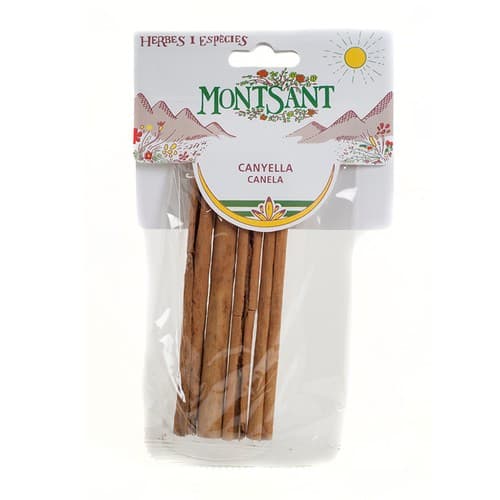
€2.05Montsant Cinnamon
MONTSANT · ud · Bonpreu
 €0.79
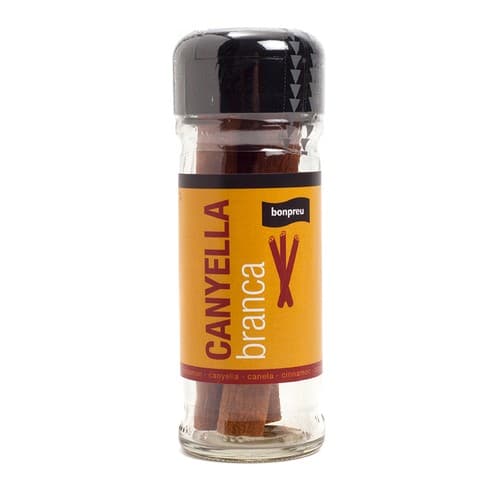
€0.79BONPREU White Cinnamon
BONPREU · kg · Bonpreu
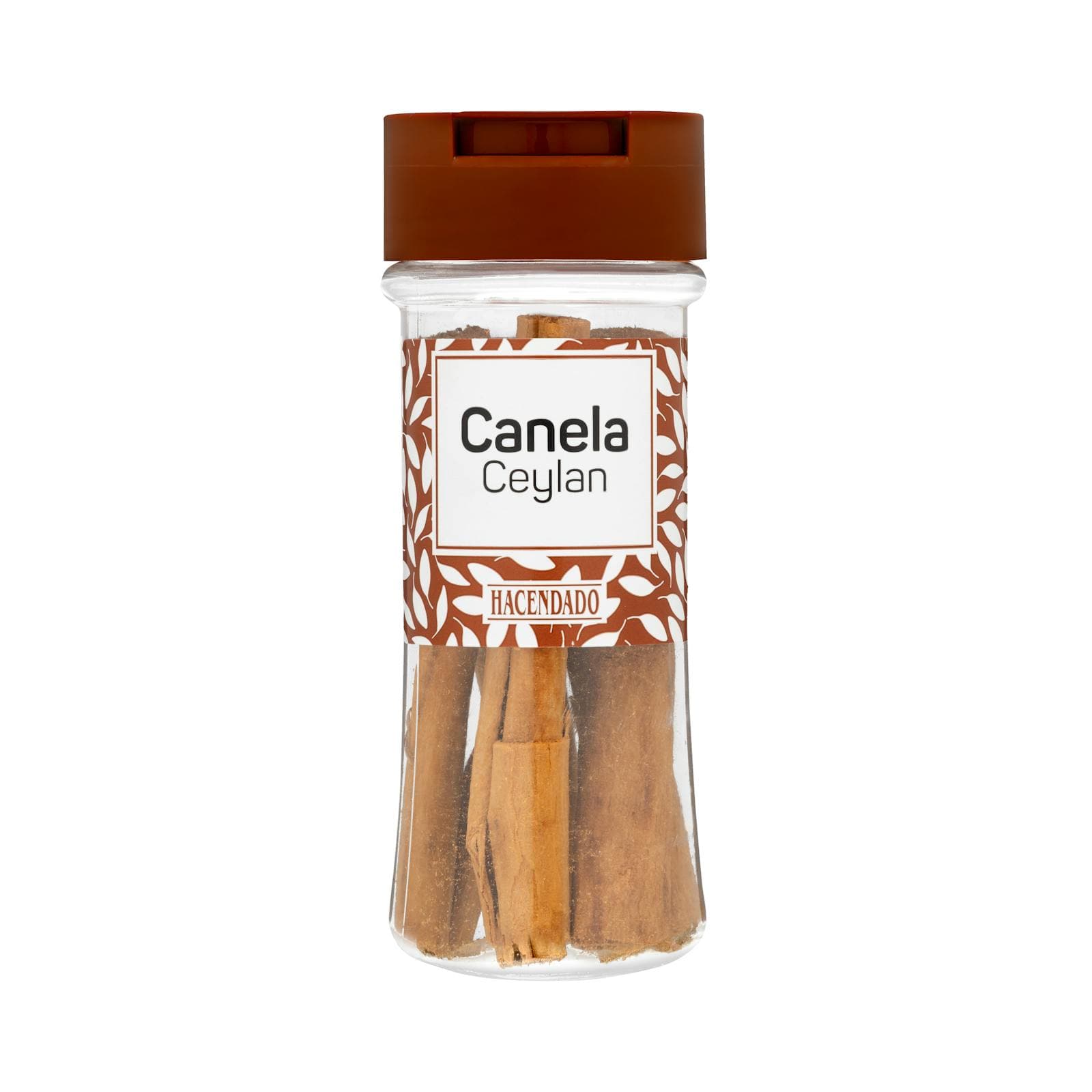 €1.50
€1.50Ceylon Cinnamon Sticks
Hacendado · 0.019 100 g · Mercadona
Good to know
- Botanical source
- Dried inner bark of Cinnamomum cassia, C. burmannii, and C. loureiroi (Lauraceae family).
- Signature compound
- Cinnamaldehyde, making up 75–90% of the volatile oil; the source of the warm, biting flavor.
- Coumarin content
- Chinese cassia ~0.6 g/kg; Indonesian/Korintje ~2 g/kg; Vietnamese/Saigon up to 6–7 g/kg. Ceylon cinnamon is roughly 0.02 g/kg.
- Flavor profile
- Bold, pungent, sweet-hot, with a sharper and more tannic bite than Ceylon; less complex, more direct.
- Appearance
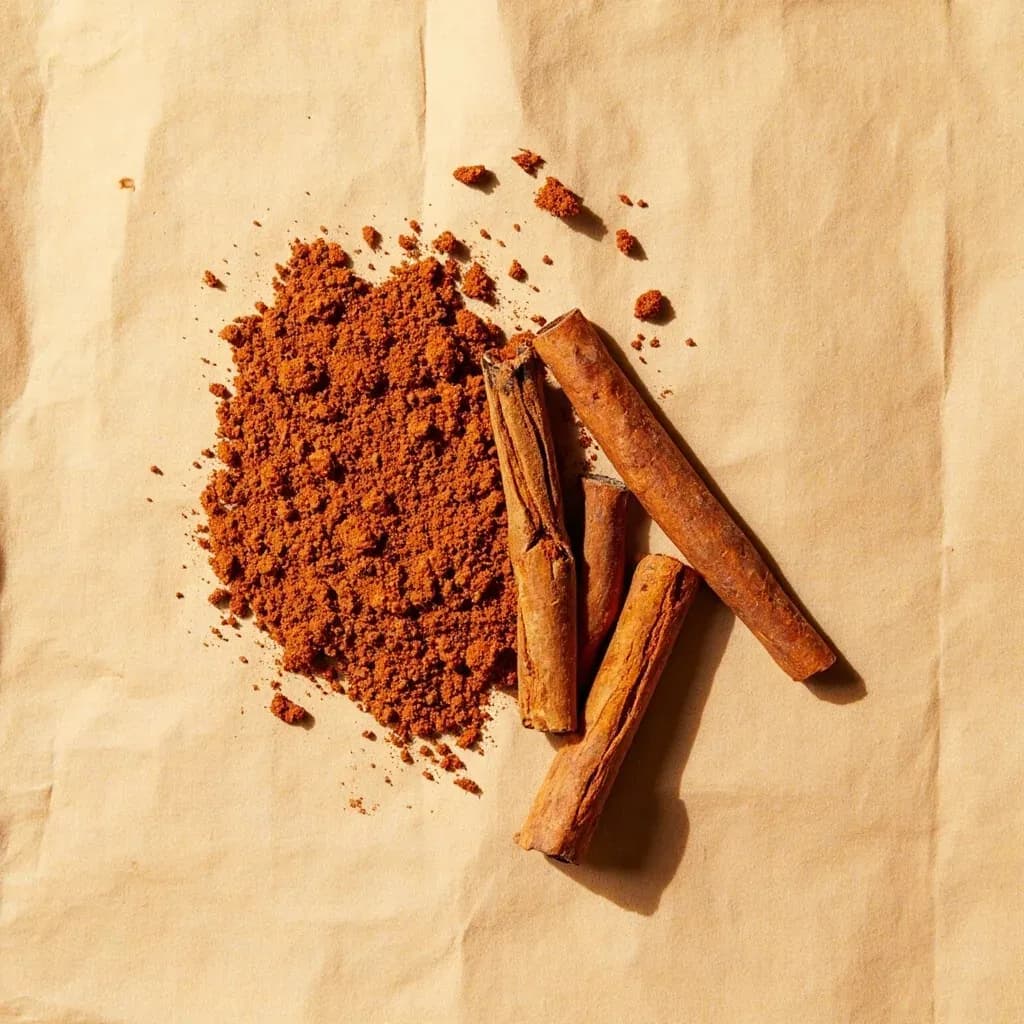
- Sold as a single thick, hard curl per stick (hard to snap rather than crumbling) and as a reddish-tan ground powder.
- Whole vs. ground shelf life
- Whole sticks 3–4 years sealed; ground powder 6–12 months for top aroma.
- EFSA tolerable daily coumarin intake
- 0.1 mg per kg of body weight per day; a single 2.5 g teaspoon of Saigon powder carries roughly 15–18 mg of coumarin.
- True cinnamon contrast
- Cinnamomum verum from Sri Lanka: thin, multi-layered quills, much lower coumarin, more delicate and floral.
Substitutes
- Ceylon cinnamon (Cinnamomum verum) — The closest stand-in by usage; lighter, more delicate, more floral. Swap 1:1 by volume, but expect a noticeably more refined and less aggressive flavor — and a fraction of the coumarin.
- Saigon / Vietnamese cassia — Same family but stronger; use roughly two-thirds as much as standard Indonesian or Chinese cassia.
- Nutmeg + allspice — In baked goods where cinnamon plays a background role, a pinch of nutmeg or ¼ teaspoon allspice per teaspoon of cassia can round out a weaker or older jar.
- Ground cassia buds (dried immature fruit) — Used in Chinese cooking; warm and clove-like, slightly more floral than the bark. Not a clean 1:1 swap but excellent in braises and five-spice blends.
- Chinese five-spice powder — Cassia plus star anise, fennel, Sichuan pepper, and cloves; works in spice rubs and braises, but too complex for something like cinnamon-sugar toast.
Pairs with
Also called
cassia · Chinese cinnamon · Cinnamomum cassia · Saigon cinnamon