Spices
Ceylon Cinnamon (True Cinnamon)
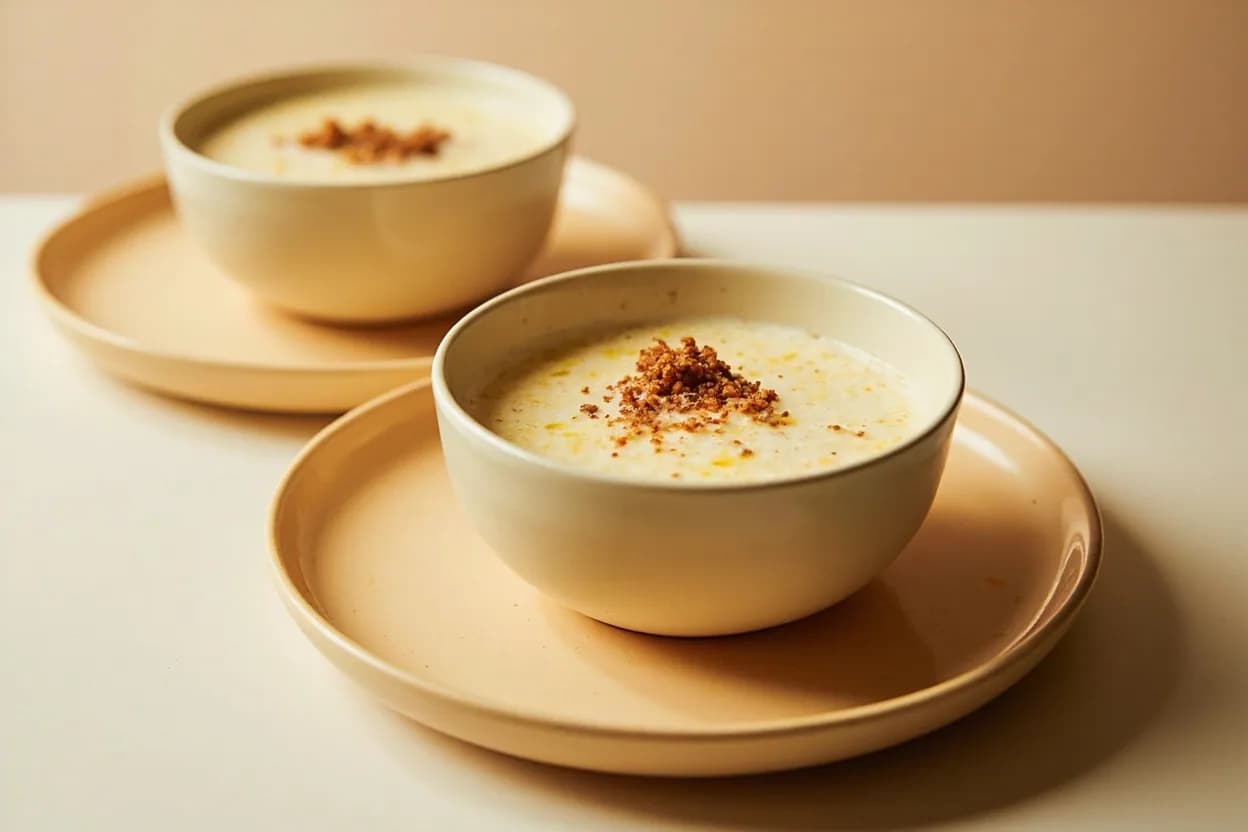
Delicate, sweet-floral 'true' cinnamon with very low coumarin; mild enough to layer into custards, rice pudding, and Mexican mole or hot chocolate.
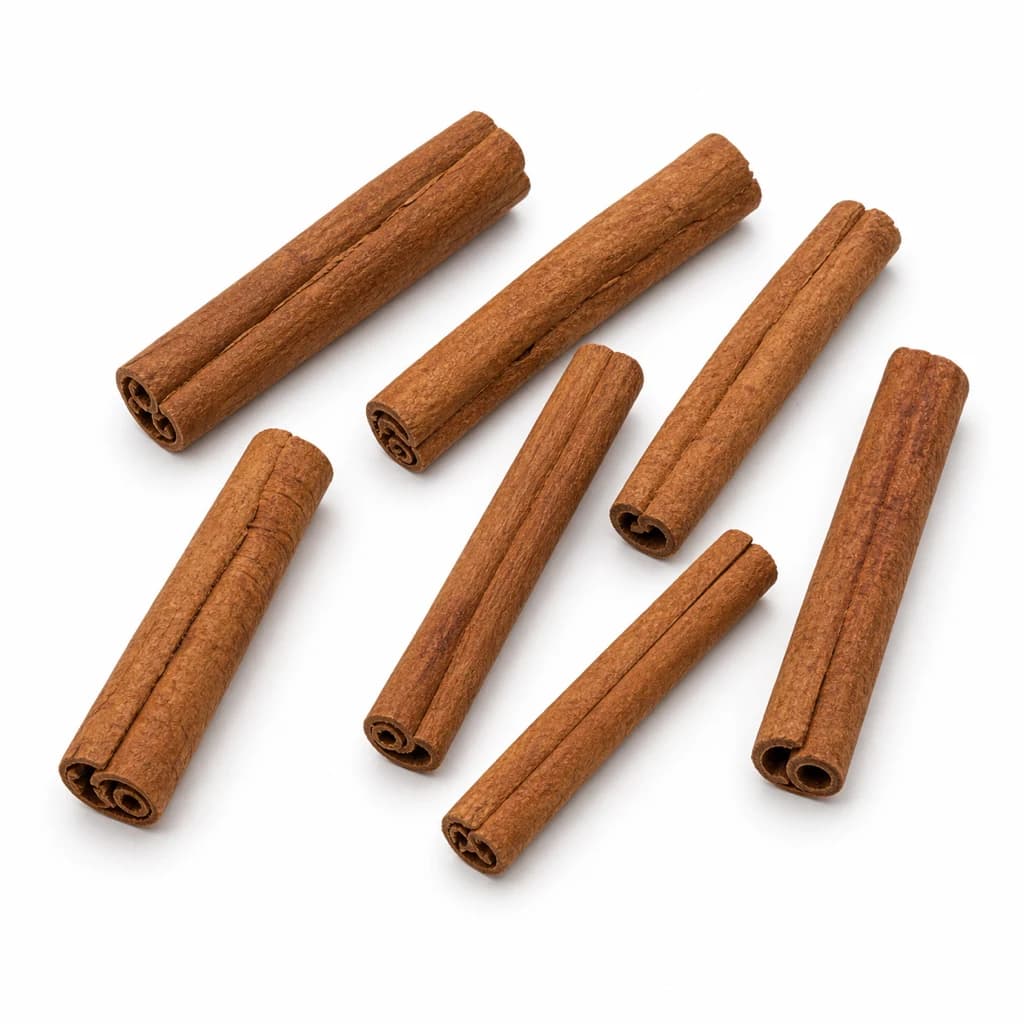
Ceylon cinnamon is the inner bark of Cinnamomum verum, a small evergreen tree native to Sri Lanka and parts of the southern Indian coast. Unlike the dense, single-layered quills of cassia — the spice most North Americans simply call "cinnamon" — true cinnamon is built from many paper-thin layers of bark rolled together as they dry, producing a soft, tan, cigar-like stick that crumbles to the touch and snaps rather than bends. Its flavor is gentler than cassia's: delicate, sweetly floral, and lightly citrusy, with very little of the hot, almost peppery pungency that defines Indonesian, Chinese, or Vietnamese cassias.
That gentler profile, paired with a dramatic difference in coumarin content — Ceylon typically carries well under 0.1 g/kg, while common cassias can run 5 to 50 times higher — is the practical reason cooks learn to tell them apart. In the kitchen, Ceylon behaves more like a finishing aromatic than a background spice: it layers gracefully with vanilla, cardamom, citrus, and chocolate without dominating them, which is why it appears in Sri Lankan curries, Persian rice, Mexican hot chocolate, Dutch speculaas, and Scandinavian baking. Treat it as a spice for building quiet, complex flavor rather than for delivering a single loud cinnamon note.
- Measured in
- g
- Storage
- Dark Cool
Find it in
Suits
Types & varieties
The thinnest, most tightly rolled quill (~6 mm diameter); the top commercial grade, prized for fine baking and confectionery.
Medium-grade quills (about 18–23 mm diameter); the workhorse grade for general cooking and infusions.
Medium-thick quills commonly used in hot drinks, baking, and Mexican-inspired applications; the name is thought to reflect historic export channels rather than current origin.
The thickest grade (around 32 mm and up); coarser and stronger-flavored, used in brewing and rustic cookery where the bark is steeped and removed.
Modern Sri Lankan export categories based on quill diameter, humidor processing, and bark oil content; H1 commands premium pricing.
Broken pieces from quill trimming; economical for stocks, mulling, and infusions where presentation does not matter.
Identifying Ceylon at the Market
Most of what is sold as "cinnamon" in North American supermarkets is in fact cassia — usually Cinnamomum cassia, Cinnamomum burmannii, or Cinnamomum loureiroi — which is botanically related but chemically and culinarily distinct. The two most reliable visual and tactile cues:
- True cinnamon quills feel soft and sandy between the fingers; cassia quills are hard, woody, and hollow.
- True cinnamon quills show multiple thin rolled layers when you look at the cut end; cassia shows a single thick curled bark, like a scroll.
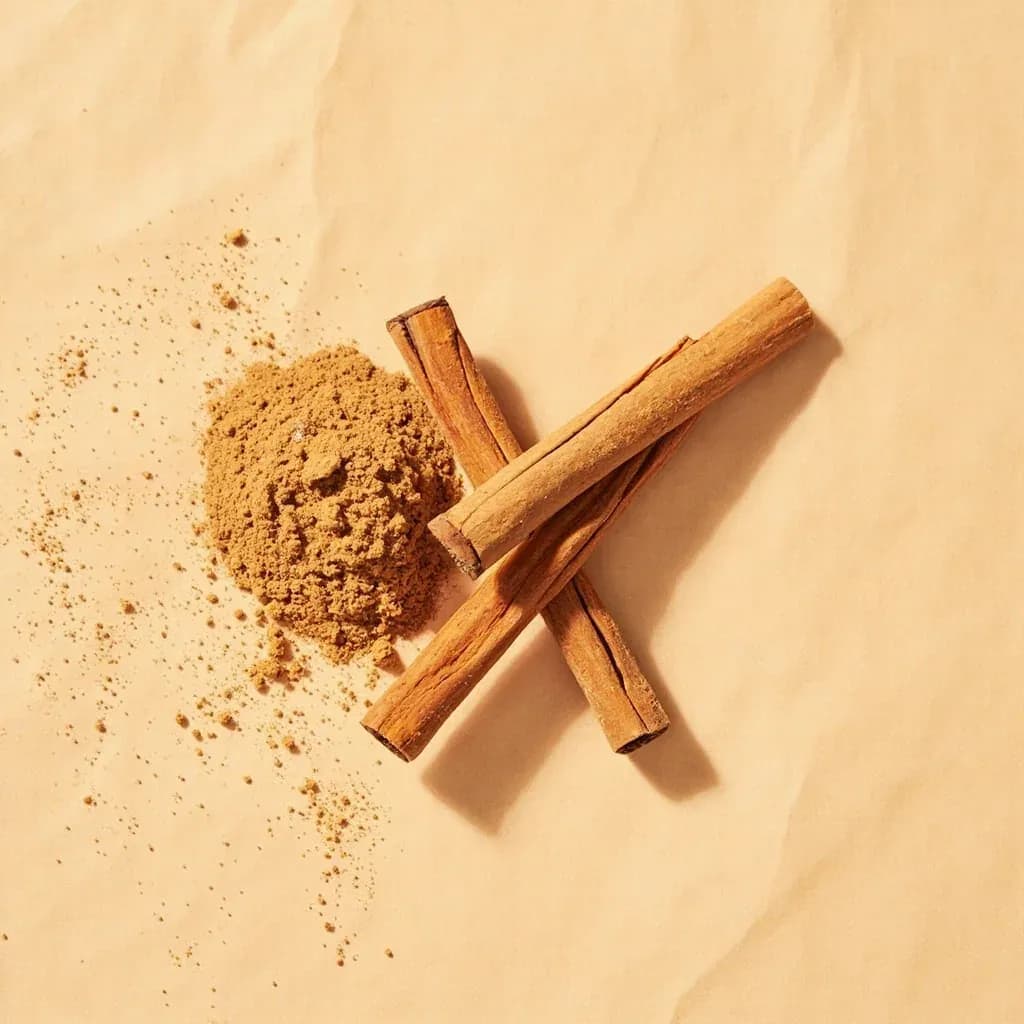
- True cinnamon powder is a paler tan-brown; cassia powder runs darker, more reddish-brown, and more pungent on the nose.
- A cinnamon stick that will not snap and bends instead of breaking is almost certainly cassia.
Ceylon vs. Cassia in the Kitchen
Substituting one for the other is possible, but the two spices behave differently enough that a thoughtful swap matters. Cassia delivers a louder, spicier, more one-dimensional cinnamon hit; Ceylon delivers a softer, more layered, more aromatic experience. Use that knowledge to your advantage:
- In custards, rice pudding, pastry cream, and delicate desserts where you want cinnamon to whisper, reach for Ceylon.
- In spice cakes, gingerbread, and chili-rich dishes where you want cinnamon to shout, cassia is the better tool.
- In drinks taken daily — chai, hot chocolate, coffee, mulled cider — Ceylon's low coumarin makes it the safer routine choice.
- If a recipe simply says "cinnamon" and you are cooking for someone who finds cassia overpowering, swap in Ceylon at roughly the same volume and add a little more if needed.
Common uses
Tips & pitfalls
- Toast whole quills briefly in a dry pan over low heat for 20–30 seconds to bloom the volatile oils before steeping; they should smell intensely sweet, not smoky.
- Buy whole quills and grind in small batches; the powder loses its top floral and citrus notes within months, even stored well.
- For a clear, light-colored infusion in milk, cream, or syrup, use whole quills and strain — ground Ceylon will cloud and darken the liquid quickly.
- Because coumarin is so low, Ceylon is the safer daily choice for anyone drinking cinnamon-heavy drinks or taking cinnamon regularly in capsules.
- Do not double a recipe just because the flavor is mild — Ceylon is meant to be layered, and over-dosing flattens a dish into a one-note sweetness.
- Bloom ground Ceylon in a small amount of warm cream, melted butter, or oil before adding to batters; this distributes it evenly and prevents gray streaks in pale cakes and custards.
Nutrition
Energy
1891 kJ · per 100 g
Where the calories come from
Protein
4.5g
9% DV
Carbs
48.6g
18% DV
Fat
26.6g
34% DV
Fiber
1.2g
4% DV
Sugars
25.7g
of which
Sodium
305mg
13% DV
Source · USDA FoodData Central · approx. Cinnamon buns, frosted (includes honey buns)
View on FDC →In the shops
Matched grocery products
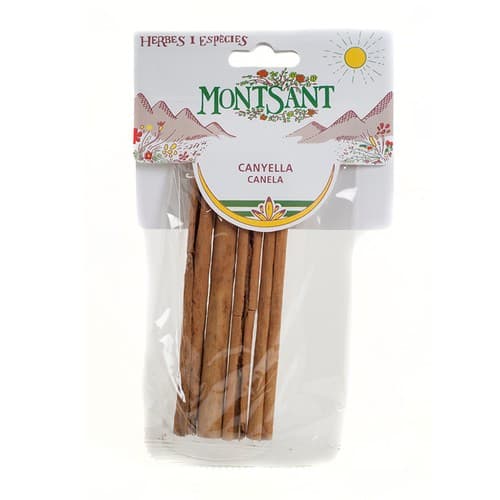 €2.05
€2.05Montsant Cinnamon
MONTSANT · ud · Bonpreu
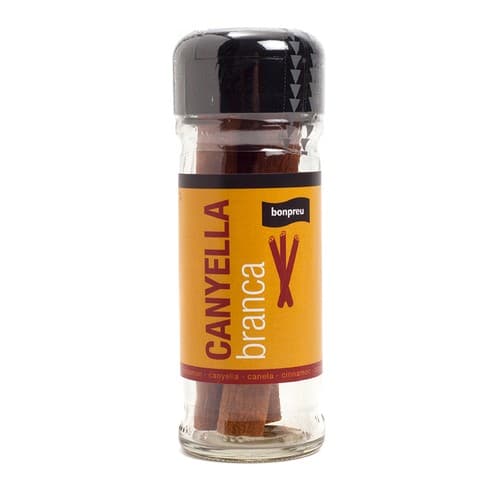 €0.79
€0.79BONPREU White Cinnamon
BONPREU · kg · Bonpreu
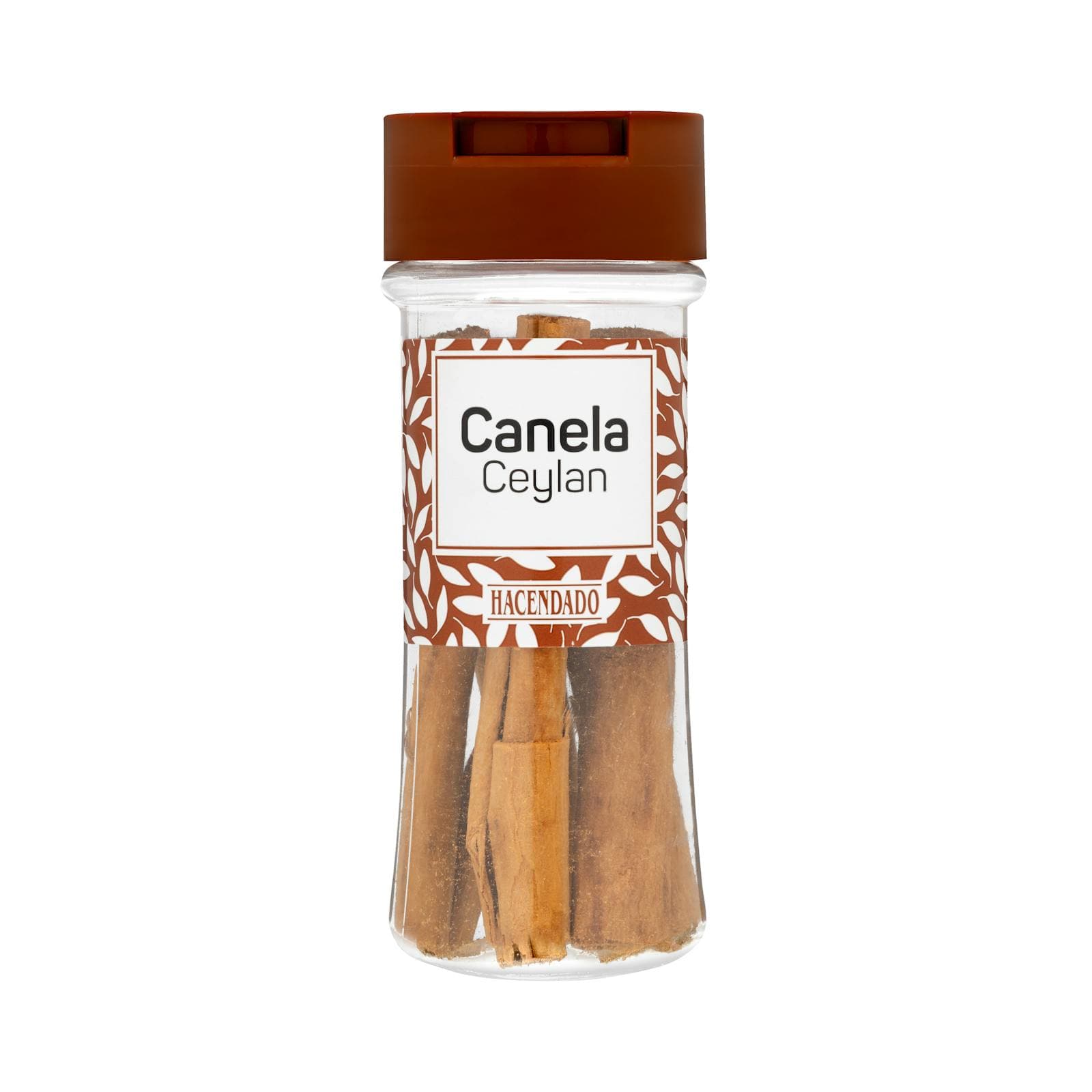 €1.50
€1.50Ceylon Cinnamon Sticks
Hacendado · 0.019 100 g · Mercadona
Good to know
- Botanical name
- Cinnamomum verum (syn. Cinnamomum zeylanicum)
- Plant family
- Lauraceae
- Native to
- Sri Lanka (historically Ceylon), with related populations in southern India and the Seychelles
- Plant part used
- Inner bark of coppiced shoots, peeled in thin layers and curled into compound quills as it dries
- Coumarin content
- Very low (typically well under 0.1 g/kg); cassia-family cinnamons can run 5–50× higher
- Appearance of quill
- Soft, tan, made of many thin concentric layers (often 8–12+) rolled into a tight cigar; crumbles easily between the fingers
- Ground color
- Light to medium tan-brown; noticeably paler than cassia powder
- Grades (quill diameter)
- Alba (thinnest, ~6 mm), Continental, Mexican (M), and Hamburg (thickest)
Substitutes
- Cassia (Chinese or Indonesian) — The most common swap, but it is sharper, spicier, and much higher in coumarin — use roughly 3/4 the amount and expect a heavier, more one-dimensional note.
- Vietnamese cinnamon (Saigon) — The most intense cassia; use sparingly, around 1/2 the amount of Ceylon, and only when you want a loud, spicy cinnamon hit.
- Korintje cassia — Indonesian cassia with a rounder, sweeter edge than Chinese cassia; a workable 1:1 stand-in in baked goods if true cinnamon is unavailable.
- Dried pomegranate or orange peel — In savory Persian and Middle Eastern dishes, a small amount of dried citrus peel can echo Ceylon's floral-bright character in a different register.
- Sweet cardamom alone — Not a true swap, but in a pinch it can fill a similar delicate-spice role in custards and rice dishes for cooks who cannot tolerate cinnamon at all.
Pairs with
Also called
true cinnamon · Cinnamomum verum · canela · Mexican cinnamon