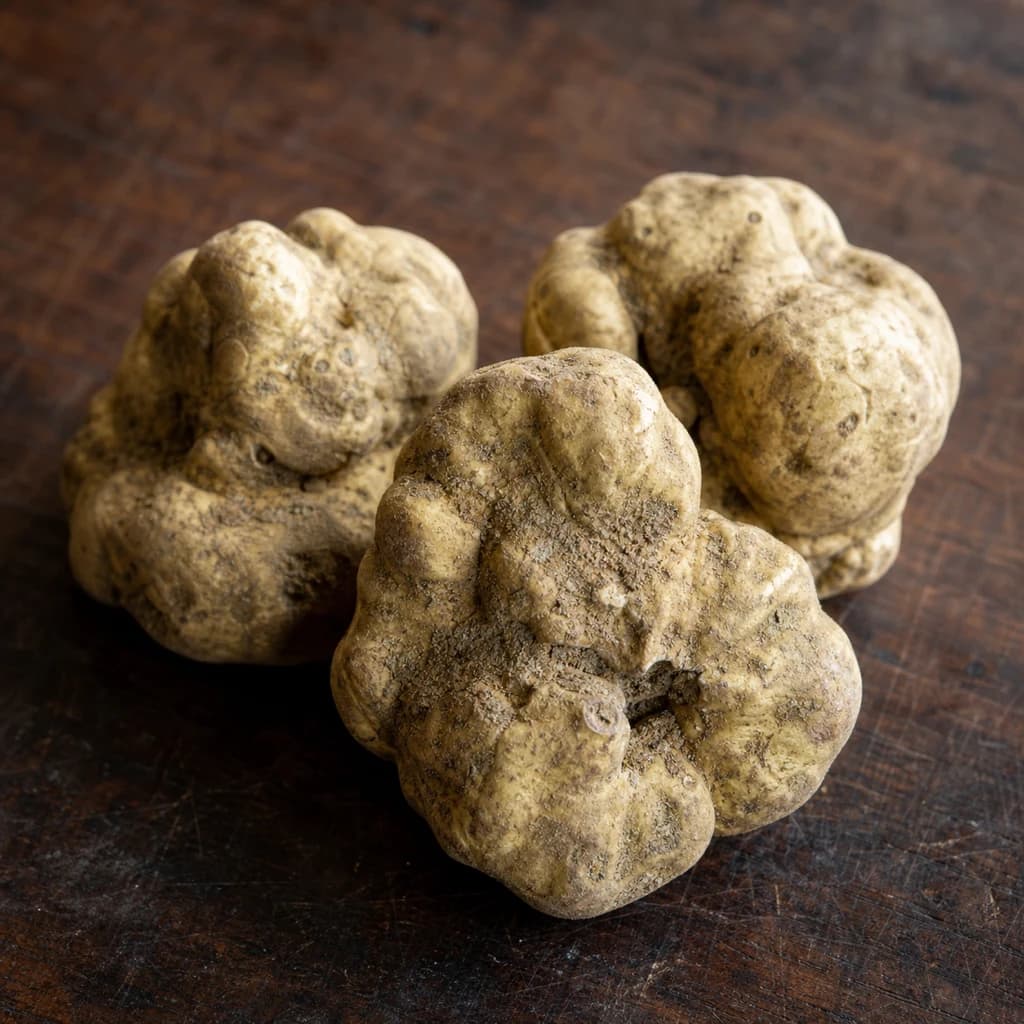
Natural form
Freshly harvested Alba white truffles still bearing traces of Piedmont soil.
Shows the whole fungi in their raw, unprocessed state so readers can recognize the knobbly, ochre exterior and scale.
Produce
White Truffle (Alba)
Rare, intensely aromatic Italian fungus shaved raw over pasta, risotto, and eggs for a luxurious finish.
The white truffle is a rare, knobbly underground fungus from Piedmont in Italy, famed for its powerful garlicky, musky, almost cheesy aroma. It is never cooked but shaved paper-thin at the table over fresh pasta, risotto, fried eggs, and fonduta. The most prized come from Alba, are harvested in autumn with trained dogs, and command among the highest prices of any food.
White truffle (Tuber magnatum Pico) is the most prized edible fungus in the world, native to the Piedmont region of Italy, particularly around Alba, Asti, and the surrounding Langhe and Monferrato districts. Unlike black truffles, white truffle is never cooked—its intense, complex aroma of garlic, earth, musk, honey, and underbrush is released when shaved raw over dishes at the moment of service. The volatile sulfur compounds that define its character are highly temperature-sensitive; even brief cooking destroys them within minutes, which is why it functions exclusively as a finishing garnish. The season runs from late September through January, with peak quality from October through December. Prices typically range from $1,000 to $4,000+ per pound wholesale, making it a luxury ingredient that demands respect and proper technique.
The exterior presents a smooth, creamy-beige to olive-yellow rind, while the interior ranges from white to pale ochre with characteristic white marbling. Sizes vary from walnut to golf-ball; anything exceeding 500g is exceptionally rare. The flesh should yield slightly to gentle pressure—if it feels hard or spongy, quality has degraded. Storage is critical: wrap in paper towels changed daily, or submerge in uncooked rice, which absorbs excess moisture and extends shelf life while perfuming the grain for later use in risotto. Bring to room temperature before serving—cold dramatically suppresses aroma release.
- Measured in
- g
- Storage
- Fridge
Types & varieties
The premier variety; must be from Piedmont to use the Alba designation. Further distinguished by municipality of origin (Alba, Baldissero, Montelupo, etc.), which commands dramatically different prices.
From the Alessandria province; slightly earthier and less refined than Alba. Still excellent quality, often less expensive.
From Tuscany; actually a different species (Tuber macrosutum). Less prized than Piedmont white truffles but still respected.
Not a true substitute. Lacks the characteristic garlic note; has a generic earthy, nutty flavor instead. Often mislabeled or blended with Italian product. Use only if Italian product is unavailable and transparently labeled.
Common uses
Tips & pitfalls
- Serve raw or nearly raw—heat destroys volatile aromatic compounds within minutes; even steaming is considered excessive for white truffle
- Shave paper-thin with a proper truffle slicer, truffle mandoline, or very sharp microplane; thick chunks fail to release aroma adequately
- Pair with fats (butter, egg yolk, cheese) to help volatile aromatic compounds volatilize and reach the palate
- Store in uncooked rice in the refrigerator—the rice absorbs excess moisture, extends shelf life 1–2 weeks, and produces fragrant rice usable in risotto or arancini
- Bring to room temperature before serving; cold truffle releases almost no aroma
- Do not wash—brush gently with a soft brush; any moisture causes rapid deterioration
- If truffles are slightly dried out, a brief soak in warm water or white wine for 10 minutes can partially revive them
- Use a truffle-specific grater or slicer; a standard vegetable peeler produces uneven, too-thick shavings
- Shave directly onto the dish at the table for maximum aroma retention and visual impact
- Never use in long-cooked preparations or soups—the heat drives off all aromatic compounds long before service
Nutrition
Nutrition
No USDA FoodData Central match for White Truffle (Alba) yet. We surface a per-100 g profile once a generic whole-food entry is matched and verified.
In the shops
Matched grocery products
No matched grocery products for White Truffle (Alba) yet.
Good to know
- Scientific name
- Tuber magnatum Pico
- Origin
- Piedmont, Italy (Alba, Asti, and surrounding Langhe and Monferrato districts)
- Season
- Late September through January; peak October through December
- Price range
- $1,000–$4,000+ per pound wholesale; retail can exceed $6,000 per pound
- Typical size
- Walnut to golf-ball sized; rarely exceeds 300–500g
- Appearance
- Smooth, creamy-beige to olive-yellow rind; interior white to pale ochre with white marbling
- Aroma
- Garlic, earth, musk, honey, underbrush—intensely aromatic
- Texture
- Firm but yields slightly to pressure
- Serving temperature
- Room temperature—bring out of refrigeration 15–20 minutes before serving
- Shelf life
- 5–10 days refrigerated when properly stored; degrades rapidly if damp
- Traditional storage
- Wrapped in paper towels changed daily in a sealed refrigerator container, or buried in uncooked rice
- Yield
- 10–20g per portion is sufficient for an ample garnish
Substitutes
- Black Winter Truffle (Tuber melanosporum) — The best substitute; more robust and can be lightly cooked. Lacks the characteristic white truffle garlic note but provides genuine truffle complexity. Use roughly 1.5× the amount called for with white truffle.
- Bianchetto Truffle (Tuber borchii) — Italian white truffle species; less refined than T. magnatum but more affordable. Seasonal overlap with white Alba. Lacks the hallmark garlic note.
- Truffle Butter or Truffle Paste — Useful in sauces and spreads; not a direct substitute for fresh truffle garnish but adds truffle flavor when economics or availability are constraints.
Pairs with
Also called
Alba · Alba Truffle · Tuber Magnatum · Italian White Truffle
Related
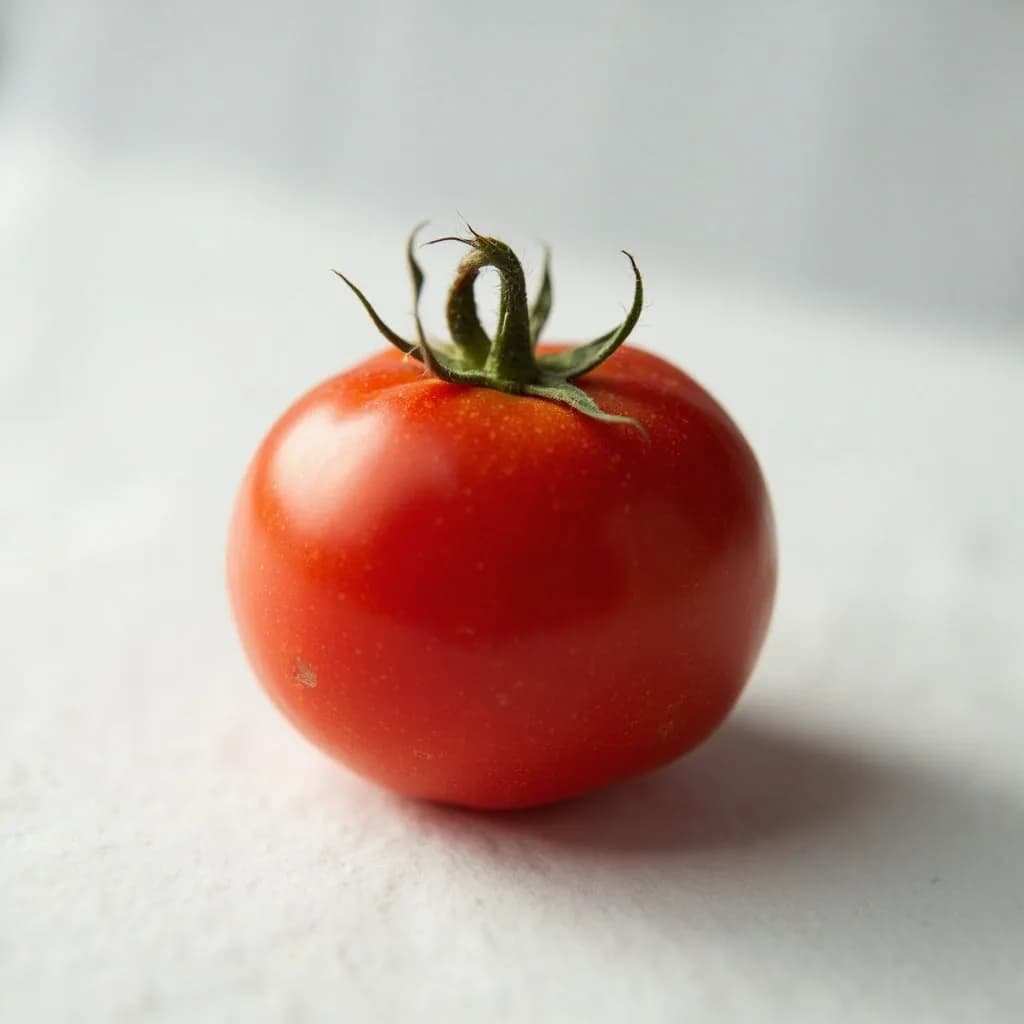
Tomato
Juicy, sun-sweet fruit for sauces, salads, and slow-cooked depth
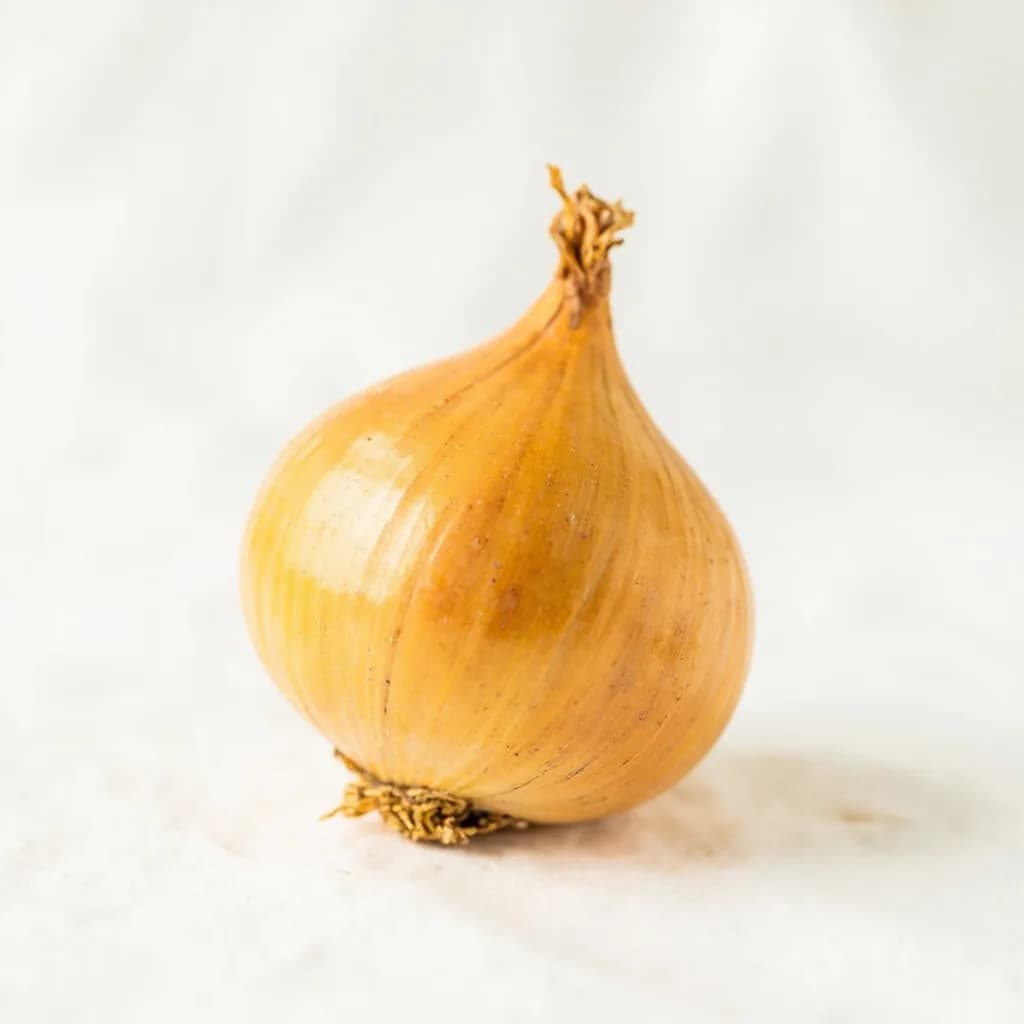
Yellow Onion
The aromatic backbone of soups, sofritos, and braises
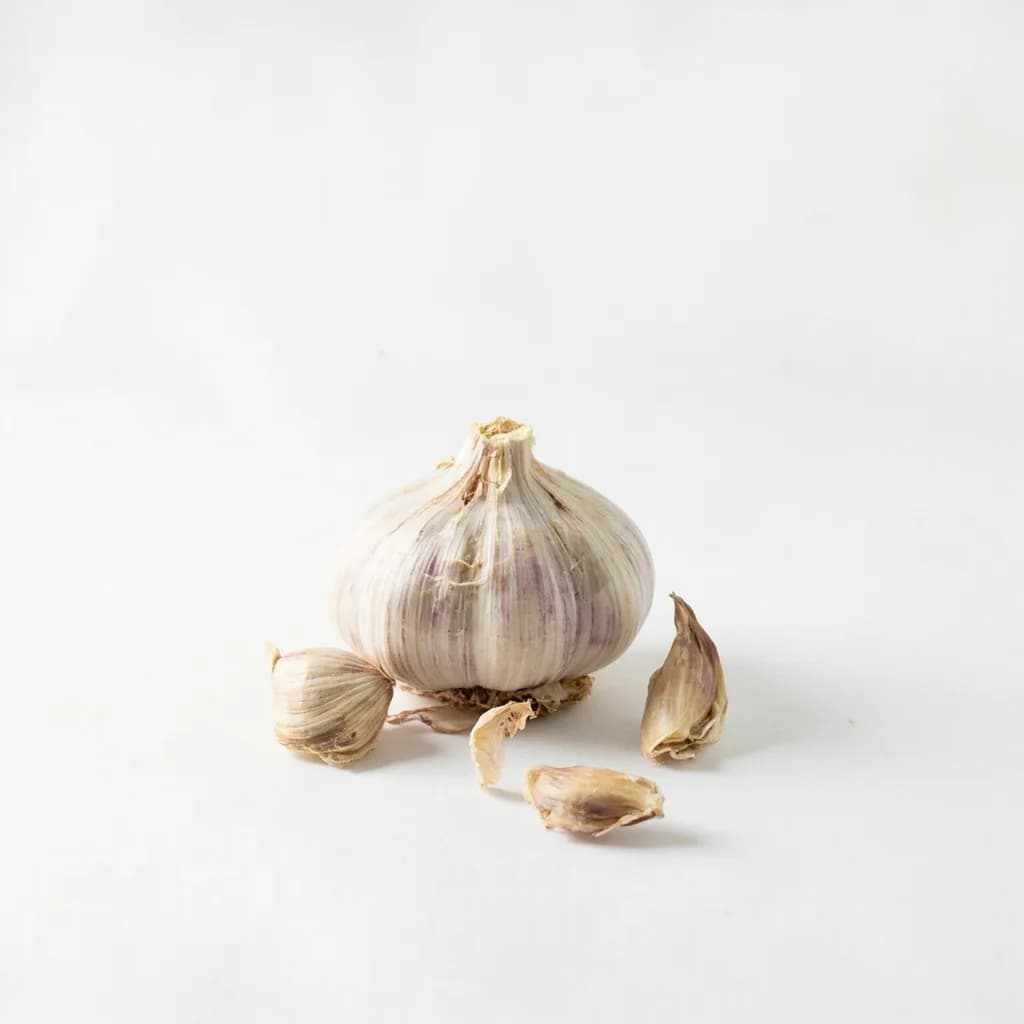
Garlic
Pungent cloves that perfume nearly every savory dish
Lemon
Bright, acidic citrus that wakes up almost any dish
Potato
Humble, hearty staple — roast, mash, fry, or boil
Carrot
Sweet, crunchy root — raw, roasted, or the base of a sofrito
Cucumber
Cool, crisp, and watery — for salads, pickles, and tzatziki

Lettuce
Crisp leaves for salads, wraps, and a fresh crunch