Produce
Coleslaw Mix
Pre-shredded cabbage and carrot blend, dressed for slaw or topping tacos and sandwiches.
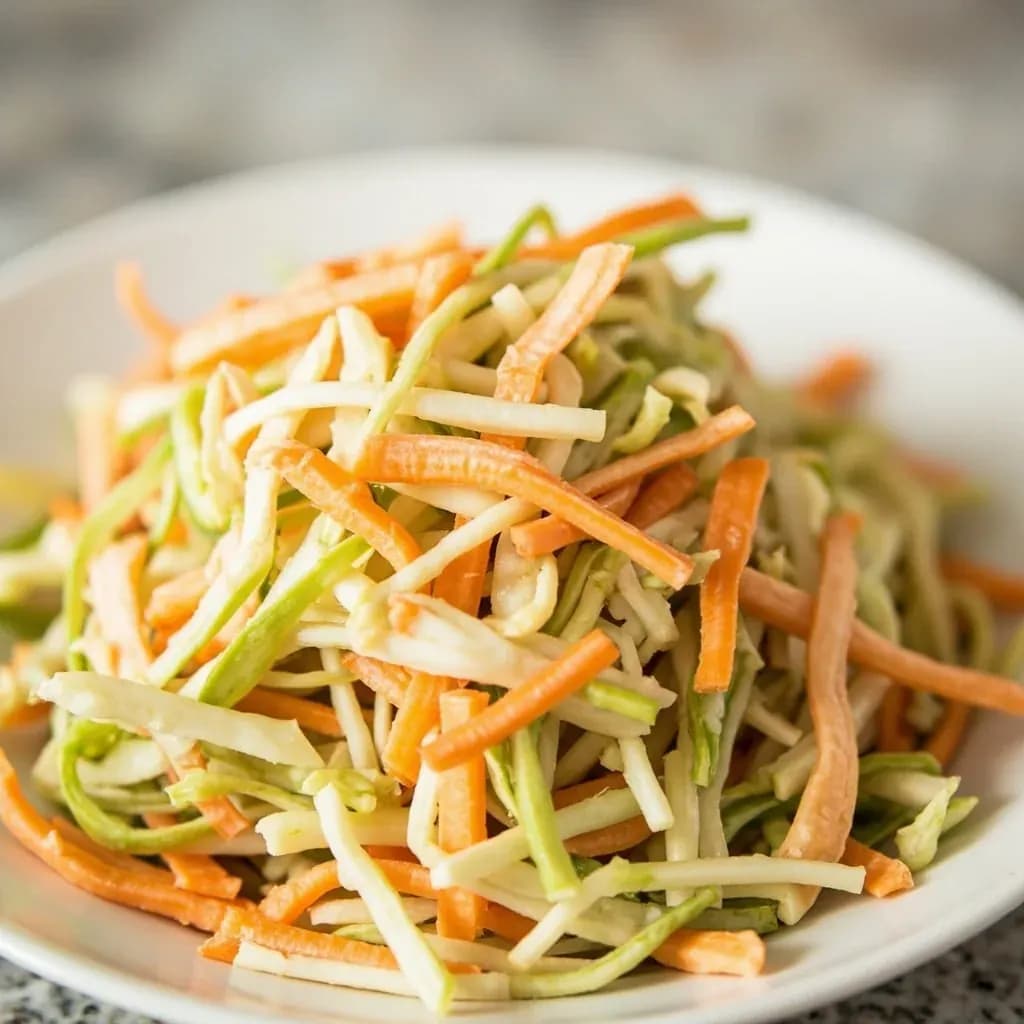
Coleslaw mix is a bagged blend of finely shredded green cabbage, sometimes with red cabbage and carrot, sold ready to dress. It is the convenient base for classic coleslaw and a quick crunchy topping for tacos, pulled-pork sandwiches, and fish dishes. Tossing it with a creamy or vinegar-based dressing shortly before serving keeps it crisp.
Coleslaw mix is pre-shredded cabbage and carrot, sold in sealed bags near refrigerated produce. It emerged as a convenience product during the pre-cut produce boom of the 1990s and 2000s, eliminating the labor of shredding that traditional coleslaw preparation always required. The mix typically combines shredded green cabbage with julienned carrots; some varieties include red cabbage for color contrast or swap in broccoli stems for broccoli slaw. Once shredded, cabbage deteriorates rapidly—cell walls release moisture and the structure softens, which is why professional kitchens almost always shred to order. This is the fundamental trade-off: the mix offers speed and convenience, but it cannot match the snap of freshly shredded cabbage. For the best coleslaw, many chefs recommend buying whole cabbage and shredding it yourself; reserve the pre-shredded mix for applications where convenience outweighs quality, such as quick taco toppings, sandwich additions, or when you need small amounts without committing to a whole head. The mix's high surface area means it absorbs dressing quickly and strongly, for better or worse—use it the day you buy it for optimal results, or within two to three days maximum once opened.
- Measured in
- g
- Storage
- Fridge
Types & varieties
Green cabbage, carrots; neutral base for any dressing style
Adds color contrast and slightly peppery flavor; same uses as classic
Shredded broccoli stems replace cabbage; nuttier, less pungent, holds dressing differently
Napa cabbage, shredded bok choy, edamame, sesame threads; ready for ginger-sesame dressings
Includes corn, black beans, bell pepper; marketed for taco toppings
The Convenience vs. Quality Trade-off
Pre-shredded cabbage begins losing structural integrity the moment it is cut. The cell walls of shredded cabbage are exposed to oxygen and moisture loss, causing the pieces to soften and weep water within days—sometimes hours of opening. A whole head of cabbage, by contrast, stays crisp for two weeks or more in the refrigerator. If you are making a dressed slaw where crunch is paramount, a freshly shredded head of cabbage will outperform any pre-shredded mix. However, the mix excels when you need a small amount quickly or when the cabbage will be used in applications where slight softness is acceptable—taco toppings that get softened by salsa, sandwich layers pressed between bread, or grain bowls tossed with warm grains that lightly wilt the vegetables. The mix also works well in cooked applications like fried rice, where the goal is texture contrast rather than raw crunch.
- Buy whole cabbage for traditional coleslaw and dressed salads where maximum crunch matters
- Reserve pre-shredded mix for tacos, sandwiches, bowls, and any dish where it will be combined with other wet or warm ingredients
- Check the package for wetness before opening—if the bag has pooled liquid, the mix is already aging and will be softer
Common uses
Tips & pitfalls
- Salt the shredded cabbage and let it drain for 20–30 minutes before dressing for a crisper, less watery slaw that holds dressing better
- Add dressing only just before serving; dressed coleslaw softens within an hour and becomes mushy within a few hours
- Press out excess liquid from the bag before opening if the package seems wet—this signals the mix is aging and will be softer
- Toast the dry mix briefly in a hot dry skillet for a roasted, slightly caramelized texture used in grain bowls
- For creamy slaw, squeeze a half-lime over the mix before adding mayo to brighten flavor and slightly pickle the cabbage
- Do not freeze coleslaw mix; freezing ruptures cell walls and produces a mushy, waterlogged result when thawed
- Substitute coleslaw mix for shredded lettuce in tacos and sandwiches for more texture and body, especially in soft-shell tacos
- If the mix smells sulfurous or sour beyond the sell-by date, discard it—the cabbage has begun to rot
Nutrition
Nutrition
No USDA FoodData Central match for Coleslaw Mix yet. We surface a per-100 g profile once a generic whole-food entry is matched and verified.
In the shops
Matched grocery products
No matched grocery products for Coleslaw Mix yet.
Good to know
- Contents
- Shredded green cabbage, often with red cabbage and julienned carrots
- Typical Package Size
- 10–16 oz (283–454 g)
- Storage
- Refrigerate unopened until best-by date; use within 2–3 days of opening
- Shelf Life
- 5–7 days sealed; texture degrades as cabbage dries out
- Texture
- Crunchy when fresh; wilts and softens quickly when dressed or exposed to air
- Flavor Base
- Mild, slightly sweet cabbage with earthy carrot; absorbs dressing strongly
- Yield
- Approximately 4–6 cups shredded vegetables per 10-oz package
- Season
- Available year-round; peak cabbage harvest is fall through early spring
- Common Additives
- Some brands include citric acid or calcium chloride to preserve crispness; check ingredient lists
Substitutes
- Fresh cabbage and carrots, hand-shredded — Use a mandoline or food processor; 1 small head cabbage plus 2 carrots approximates a 14-oz package
- Napa cabbage, shredded — More delicate and milder; excellent for Asian applications, less durable for creamy dressings
- Savoy cabbage, shredded — Tender and ruffled; softer texture than green cabbage but pretty in presentations
- Shaved Brussels sprouts — Nuttier and more assertive; excellent for winter slaws, but requires trimming and halving before shaving
- Pre-shredded broccoli stems — Better structural integrity than cabbage in dressed salads; neutral flavor accepts bold dressings
Pairs with
Also called
Bagged Coleslaw Mix · Slaw Mix · Shredded Cabbage Mix
Related
Tomato
Juicy, sun-sweet fruit for sauces, salads, and slow-cooked depth
Yellow Onion
The aromatic backbone of soups, sofritos, and braises
Garlic
Pungent cloves that perfume nearly every savory dish

Lemon
Bright, acidic citrus that wakes up almost any dish
Potato
Humble, hearty staple — roast, mash, fry, or boil
Carrot
Sweet, crunchy root — raw, roasted, or the base of a sofrito
Cucumber
Cool, crisp, and watery — for salads, pickles, and tzatziki

Lettuce
Crisp leaves for salads, wraps, and a fresh crunch