Grains & Rice
Crystal / Caramel Malt
Stewed-and-kilned brewing malt that adds caramel sweetness, body, and amber color to beer.
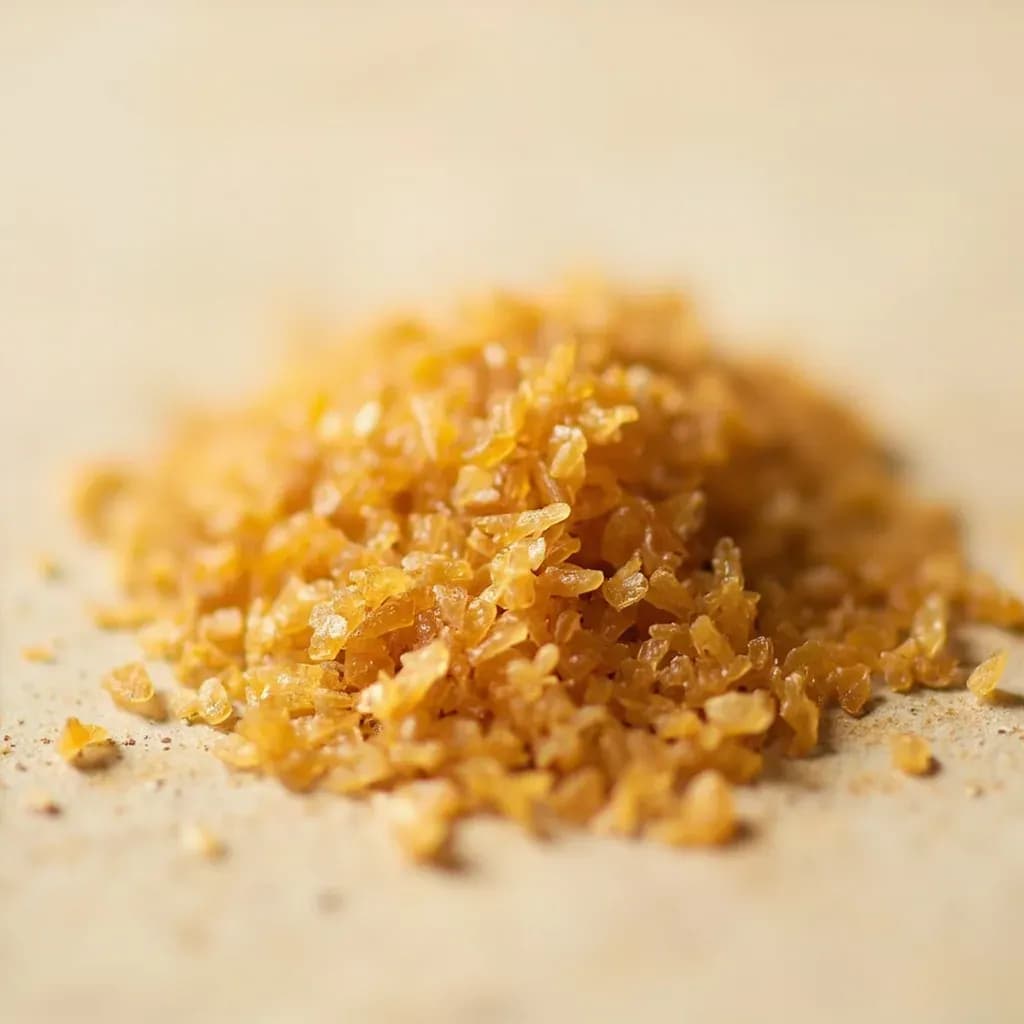
Crystal (caramel) malt is barley malt whose sugars are crystallized through a stewing process before kilning. Used in brewing, it lends beers caramel and toffee sweetness, fuller body, and a copper-to-amber hue. It comes in a range of color intensities measured in Lovibond.
Crystal malt is a kilned brewing grain whose defining characteristic is the stewing step—barley is steeped, allowed to germinate partially, then held at warm temperature (around 150°F/65°C) while its own enzymes convert starches to sugar before the grain is kilned at higher temperatures to caramelize those sugars inside the kernel. This process locks in sweetness, color, and aroma compounds that survive fermentation intact, unlike base malt whose fermentable sugars are consumed by yeast. The result is a grain that adds residual sweetness, body, and amber-to-ruby color without the diastatic power to convert itself, meaning it must always be used alongside base malt in all-grain brewing. Developed in 19th-century Britain as a kilning advancement, crystal malt has become a foundational specialty grain worldwide, from British bitters to Belgian strong ales, valued for its ability to add depth and balance where hops alone cannot.
The Lovibond scale measures the extractable color of crystal malt, and the rating is not linear—a 60°L crystal contributes roughly six times the color per pound compared to a 10°L crystal. This makes precise calculation by weight and Lovibond rating essential for predictable results. The flavor compounds are equally grade-dependent: lighter crystals deliver honey and biscuit sweetness; mid-range grades provide classic caramel and toffee; darker grades contribute prune, dried fruit, and burnt sugar. All crystal malts improve head retention by contributing unfermentable dextrins that give the beer a full, round mouthfeel. In extract brewing, crystal malt is simply steeped in hot water like a tea; in all-grain brewing it can be added directly to the mash or steeped separately and added as a late addition.
Crystal malt stales faster than base malt because its residual moisture and sugar content make it more susceptible to oxidation. Store it cool (below 70°F/21°C), dry, and in an airtight container; expect 6–12 months of peak freshness before color and flavor intensity begin to fade. While almost exclusively a brewing ingredient, ground crystal malt occasionally appears as a flavoring additive in specialty breads or savory gravies for its caramel and toasty depth—a footnote to its primary purpose.
- Measured in
- g
- Storage
- Pantry
Allergens
Types & varieties
Subtle honey and biscuit sweetness; used for pale ales, Kölsch, best bitters; adds minimal color
Classic caramel sweetness; the most versatile grade; standard in many amber and red ales
Rich toffee, dried fruit, prunes; contributes deep amber-to-ruby color; used in porters, stouts, Scottish ales, and Belgian quads
Produced from German barley; typically 15–50°L; cleaner, more biscuit-forward than British crystal malts
Darker Vienna-style crystal, ~30–50°L; adds amber color with toasted bread-crust character
~150°L ultra-dark crystal; intense raisin, burnt sugar, chocolate; used sparingly in dark Belgian and imperial styles
Similar kiln flavor but without caramelization; adds toast and bread-crust character, not sweetness
Why Stewing Matters
The stewing step distinguishes crystal malt from standard kilned malt and is responsible for its unique properties. In regular kilning, grain is dried quickly at high heat, which arrests germination and locks in enzymes. In crystal malt production, the grain is held at warm, humid temperature for an extended period—long enough for natural enzymes to convert starches to fermentable sugars while the grain is still alive. Only after this conversion is the grain dried at higher temperatures, which caramelizes the accumulated sugars inside the husk. The result: sugars that are protected from fermentation by the husk and high molecular weight dextrins that yeast cannot fully consume, giving crystal malt its signature residual sweetness and body contribution. This is why crystal malt sweetness survives into the finished beer rather than being converted to alcohol.
- Stewing temperature (~150°F/65°C) is warm enough for enzyme activity but below gelatinization temperatures that would damage the grain
- The longer the stewing phase, the more complete the starch conversion and the more dextrins formed, leading to sweeter, fuller-bodied beer
- Kilning temperatures for crystal malt (up to 350°F/175°C for darker grades) drive Maillard reactions and caramelization in addition to simple drying
- Kernels should appear glassy and translucent when cut—opaque or mealy centers indicate incomplete caramelization
Using Crystal Malt in Extract Brewing
Extract brewers can fully utilize crystal malt without any mashing equipment. The process is simple but precise attention to temperature matters.
- Crack crystal malt just before use—grain should smell sweet and toasted, not grassy or raw; uncracked kernels extract poorly
- Heat water to 150–170°F (65–77°C); temperatures above 170°F risk extracting harsh tannins from husks
- Steep cracked crystal in the hot water for 20–30 minutes, maintaining temperature, but do not boil
- Remove the grain bag or strain it out before adding liquid or dried malt extract; never boil crystal malt directly with extract
- Strain thoroughly into your brewing vessel, squeezing the grain bag gently to extract color and flavor compounds—do not wring, which extracts astringency
Common uses
Tips & pitfalls
- Crack crystal malt before use; uncracked kernels extract poorly and yield weak color and flavor
- For extract brewers: steep cracked crystal in 150–170°F (65–77°C) water for 20–30 minutes, then remove before adding extract
- Never boil crystal malt; high heat drives off delicate aromatic compounds and can extract harsh tannins from the husks
- Calculate color contribution by weight and Lovibond rating, not by volume—color is not linear with volume at high percentages
- Balance crystal malt sweetness with base malts and hops; crystal-forward recipes can become cloying if yeast cannot fully attenuate
- Store crystal malt separately from base malts—its residual moisture can migrate and cause mold in long-term bulk storage
- Avoid exceeding 20–25% of grist unless you are aiming for very sweet or full-bodied styles; excessive crystal leaves beer syrupy and under-attenuated
- Check freshness before buying: stale crystal malt smells flat and papery, not sweet and toasted; it will contribute dull color and muted flavor
Nutrition
Nutrition
No USDA FoodData Central match for Crystal / Caramel Malt yet. We surface a per-100 g profile once a generic whole-food entry is matched and verified.
In the shops
Matched grocery products
No matched grocery products for Crystal / Caramel Malt yet.
Good to know
- Also called
- Caramel Malt (British term), Kilned Caramel Malt
- Color range
- 10–150°L (Lovibond); light (10–15°L) through ultra-dark (120–150°L)
- Process
- Steeped, partially germinated barley is stewed at ~150°F (65°C) to convert starches to sugar, then kilned at higher heat to caramelize those sugars inside the kernel
- Diastatic power
- Negligible to none in darker grades; requires base malt for starch conversion in all-grain brewing
- Extract yield
- ~75–80% when steeped or mashed; lower than base malts
- Key flavor compounds
- Maltol (caramel), furanones (toffee), pyrazines (nutty); varies by color grade
- Storage
- Cool (below 70°F/21°C), dry, airtight; stales within 6–12 months; loses color and flavor intensity over time
- Typical substitution ratio
- 1:1 by weight for other crystal malts of similar Lovibond rating
Substitutes
- Belgian CaraMunich — Cleaner, less assertive; use 1.1× the amount for similar color contribution
- Vienna Malt — Adds color and toastiness but lacks true caramel sweetness; use 1.5× and add honey or sucrose for sweetness
- Dark Candi Syrup — Liquid adjunct providing caramel and dark fruit notes; use 1.1× by weight; adds fermentables but lacks the grain character and dextrin body of crystal malt
- Turbinado or Demerara sugar — Mimics caramel sweetness but contributes no body or color; use 50–75% of crystal weight
- Molasses or treacle — Provides caramel-like sweetness with more bitterness and sulfury notes; use sparingly (1–3% of grist)
Pairs with
Also called
Caramel Malt · Crystal Barley Malt
Related

White Rice
Fluffy long-grain rice — the neutral base for almost any meal

White Bread
Soft sandwich loaf for toast, sandwiches, and crumbs
Brown Rice
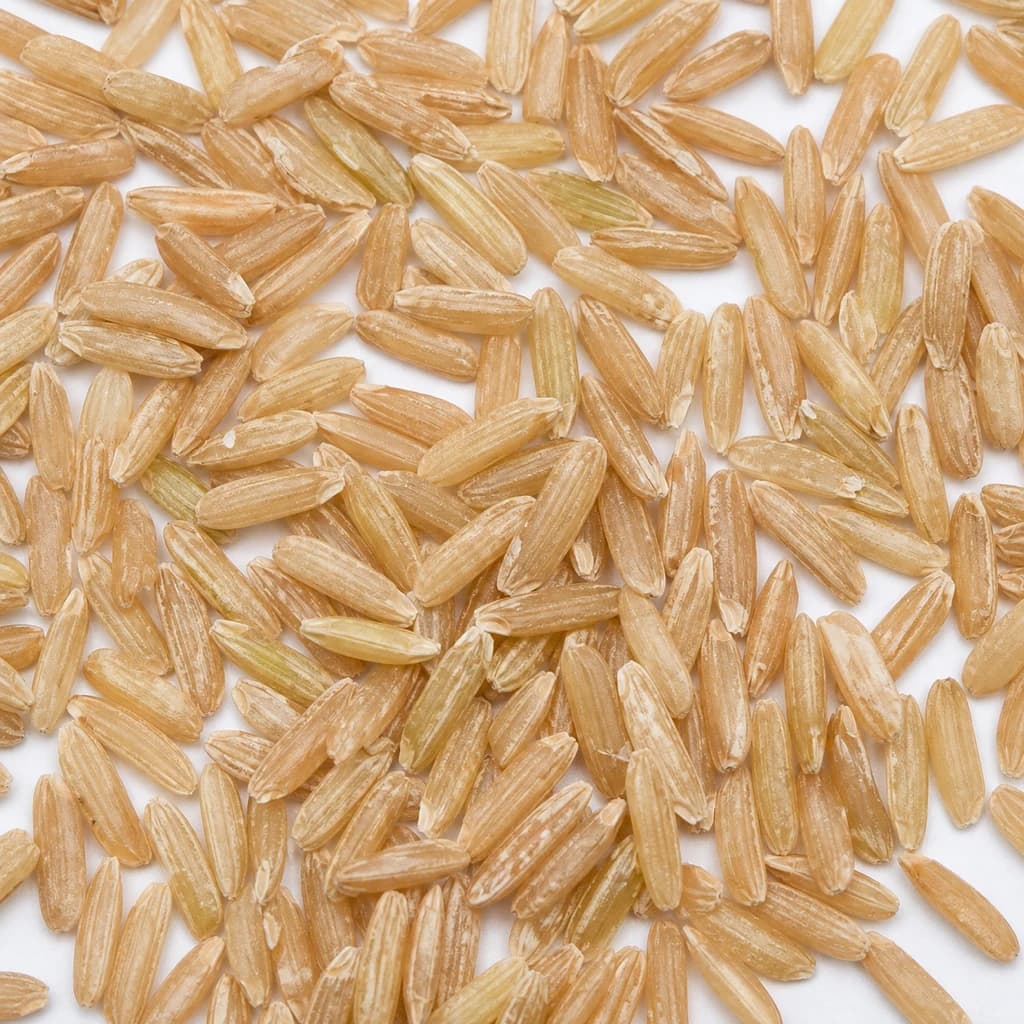
Nutty, whole-grain rice with chew and extra fiber

Basmati Rice
Fragrant, long-grain rice that cooks up light and separate
Jasmine Rice
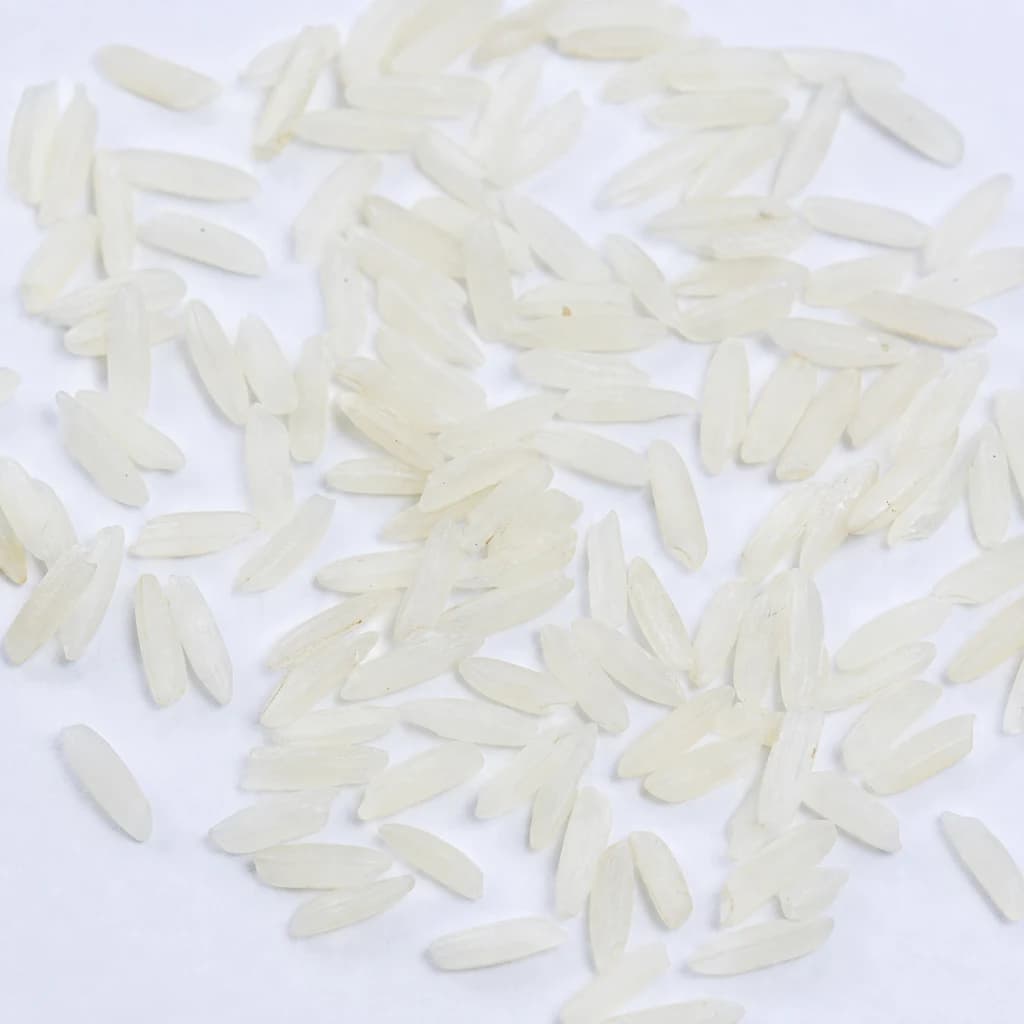
Soft, floral-scented rice that's the pillar of Thai meals
Arborio Rice
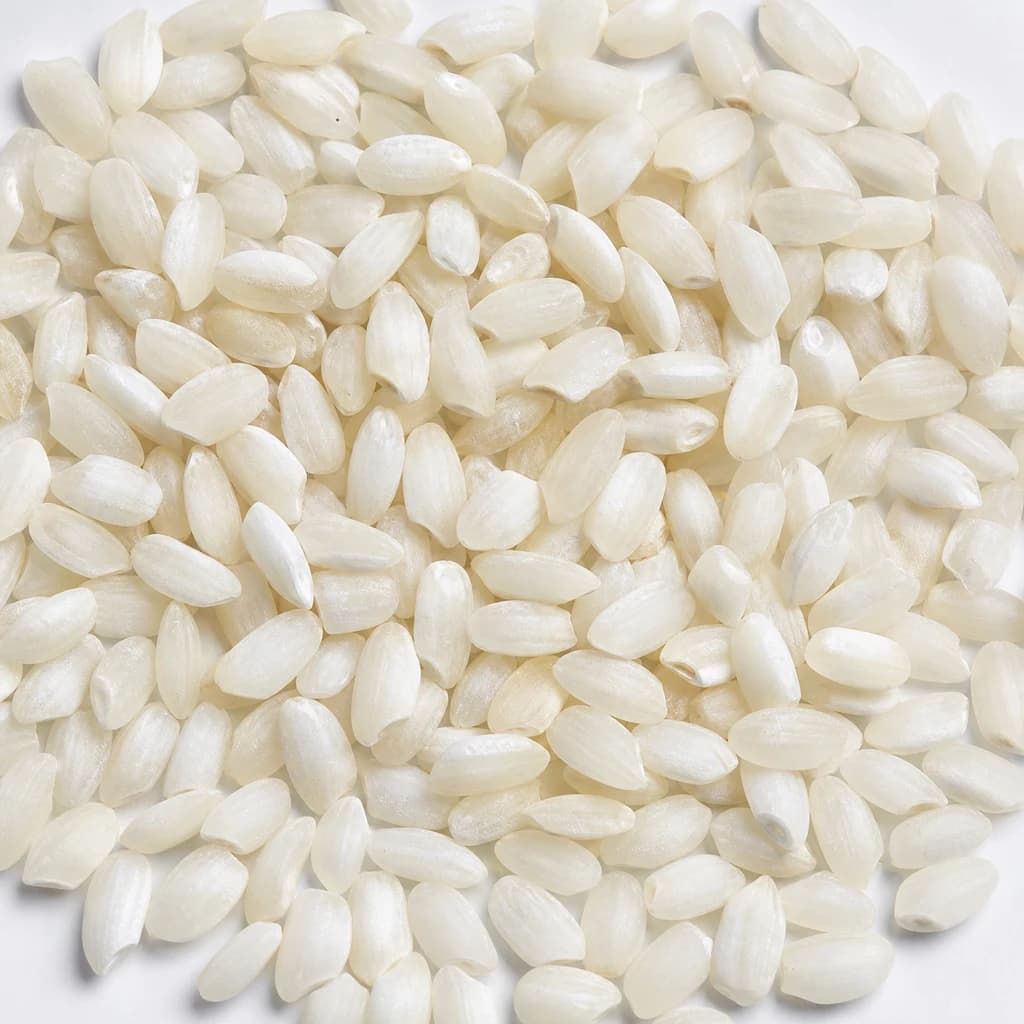
Plump, starchy rice that makes risotto creamy
Fusilli
Spiraled pasta that twirls up sauce and dresses cold salads
Rolled Oats
Hearty flakes for porridge, granola, and chewy cookies