Produce
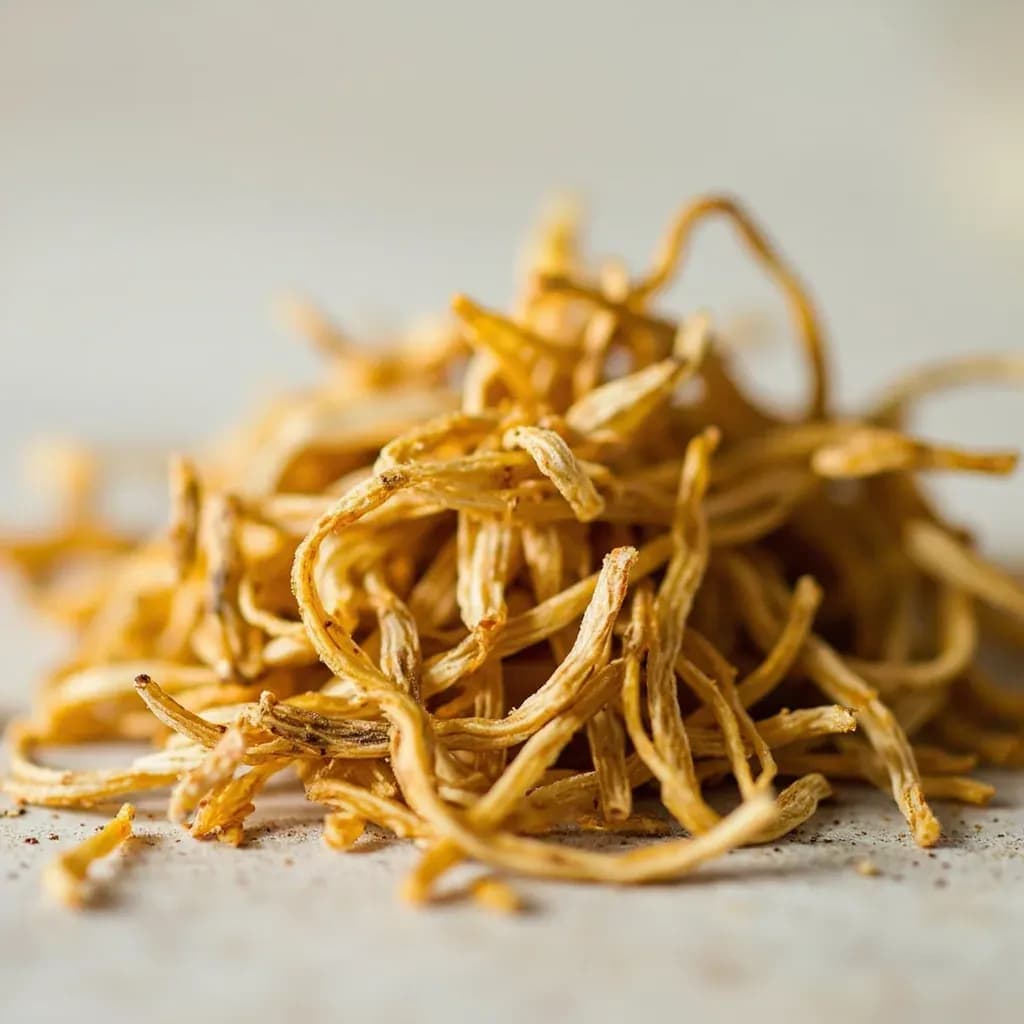
Dandelion Root
Bitter, earthy taproot roasted as a caffeine-free coffee substitute or brewed as tea.
Dandelion root is the thick taproot of the dandelion plant, with an earthy, bitter, slightly nutty flavor. Roasted and ground, it is brewed as a caffeine-free coffee alternative, and it is also used fresh or dried in herbal teas and tonics. The roasting develops deep, chicory-like roasted notes prized for the drink.
Dandelion root is the dried and roasted taproot of the common dandelion (Taraxacum officinale), prized in cooking and herbal traditions for its deep, bittersweet, coffee-like flavor and its complete absence of caffeine. While the entire plant is edible, the root carries the most concentrated flavor and the highest inulin content — a prebiotic fiber that increases as the plant matures, peaking in fall-harvested roots. The bitter principles come from sesquiterpene lactones, the same family of compounds found in chicory and bitter herbs. When roasted, the root undergoes Maillard reactions that caramelize sugars and develop the characteristic dark, earthy, slightly smoky aroma that makes it such an effective coffee substitute. Dandelion root matters to cooks because it bridges the gap between culinary ingredient and functional tonic — it adds bitter depth to liqueurs and amaros, serves as a warming caffeine-free beverage, and offers genuine digestive support in the tradition of bitter foods. Fresh young roots, though less common, behave much like parsnips or carrots when cooked: they are sweet, slightly nutty, and hold their shape well with sautéing or roasting.
- Measured in
- g
- Storage
- Pantry
Types & varieties
The species used in virtually all culinary and herbal applications; root size and bitterness vary with soil, climate, and harvest timing
Specialty varieties bred for larger, more uniform roots; commercial cultivation is established in parts of France and Germany
Choosing and Harvesting Roots
For the best flavor, time your harvest carefully. Roots dug in early spring, before the plant flowers, are tender and mildly bitter. Roots harvested in fall, after the plant has stored energy all season, are larger, sweeter, and have the highest inulin content — ideal for roasting. Look for firm roots with a pale interior when cut; avoid any that are soft, rubbery, or showing dark discoloration at the core. Foraged roots should come only from areas confirmed free of pesticides, herbicides, and vehicle pollution — not from roadsides, lawns treated with chemicals, or agricultural fields.
- Harvest in early spring (pre-flowering) or fall for peak flavor and sweetness
- Select firm, solid roots; reject any that are soft, split, or dark at the center
- Forage only in clean locations — no lawns, roadsides, or agricultural areas
From Root to Cup: Processing Steps
Transforming a raw dandelion root into a serviceable coffee substitute requires four stages: cleaning, drying, roasting, and grinding. Each step affects the final flavor profoundly. Rushing the process — particularly under-drying before roasting — is the most common source of disappointing results.
- Scrub the root thoroughly with a vegetable brush under running water; the small branching side roots are edible and contribute complexity
- Slice roots lengthwise into uniform strips — consistent thickness ensures even drying and roasting
- Dry the sliced roots at low heat (200°F / 95°C) on a baking sheet or in a dehydrator until completely crisp and bone-dry throughout — this step cannot be skipped
- Roast the dried pieces at 350°F (175°C), stirring or flipping once or twice, until they reach a deep brown color and smell richly toasted, 15–25 minutes depending on thickness
- Grind the roasted root in a spice grinder or mortar to a coarse grind suitable for brewing
Common uses
Tips & pitfalls
- Harvest roots in spring before flowering or in fall when energy reserves peak — fall roots are sweeter and higher in inulin
- Source from clean, untreated areas; dandelions bioaccumulate chemicals from soil and are excellent bioremediation plants
- Under-roasting produces weak, grassy, hay-like flavor — the root must reach a genuine medium-brown color
- Over-roasting burns the sugars and creates acrid bitterness without the complex, coffee-like depth you want
- Always dry the roots completely before roasting; any residual moisture causes steaming instead of roasting and ruins the flavor
- Store roasted and ground root in an airtight, opaque container; light and air cause flavor to fade within months
- For tea, use 1–2 teaspoons per 8 ounces of water and steep 10–15 minutes to fully extract the bitter principles
- Fresh young roots are underused: slice thin and sauté in butter with a pinch of salt for a parsnip-like side dish
- Add a small amount of fat (milk, cream, coconut oil) to dandelion coffee to soften harsh bitterness and add mouthfeel
- If the brewed result is too bitter, a teaspoon of honey or maple syrup corrects it — but start with less root, not more water
Nutrition
Energy
456 kJ · per 100 g
Where the calories come from
Protein
4.8g
10% DV
Carbs
23.5g
9% DV
Fat
0.6g
1% DV
Fiber
7.8g
28% DV
Sodium
17mg
1% DV
Source · USDA FoodData Central · approx. Wasabi, root, raw
View on FDC →In the shops
Matched grocery products
No matched grocery products for Dandelion Root yet.
Good to know
- Scientific name
- Taraxacum officinale
- Part used
- Dried, roasted taproot (fresh roots also usable)
- Primary flavor compounds
- Sesquiterpene lactones, inulin, bitter principles
- Caffeine content
- None — fully caffeine-free
- Inulin content
- Highest in fall-harvested roots; acts as prebiotic fiber
- Roast color target
- Deep medium-brown, resembling dark coffee — not black or charred
- Shelf life (dried/roasted)
- 1–2 years in an airtight container away from light
Substitutes
- Chicory root — The closest substitute; shares bitterness, earthiness, and roasted character; commonly blended with dandelion root in commercial coffee alternatives
- Rye grain coffee — Roasted rye delivers a milder, slightly sweeter coffee-like flavor with less bitterness and more nuttiness
- Barley coffee — Nutty and less bitter; has a long tradition in Europe as a caffeine-free coffee substitute
- Carob powder — Caffeine-free with chocolate and caramel notes but lacks bitterness entirely — not a direct flavor match
Pairs with
Also called
Roasted Dandelion Root
Related
Tomato
Juicy, sun-sweet fruit for sauces, salads, and slow-cooked depth
Yellow Onion
The aromatic backbone of soups, sofritos, and braises
Garlic
Pungent cloves that perfume nearly every savory dish
Lemon
Bright, acidic citrus that wakes up almost any dish
Potato
Humble, hearty staple — roast, mash, fry, or boil
Carrot
Sweet, crunchy root — raw, roasted, or the base of a sofrito
Cucumber
Cool, crisp, and watery — for salads, pickles, and tzatziki

Lettuce
Crisp leaves for salads, wraps, and a fresh crunch