Grains & Rice
Dextrin / Carapils Malt
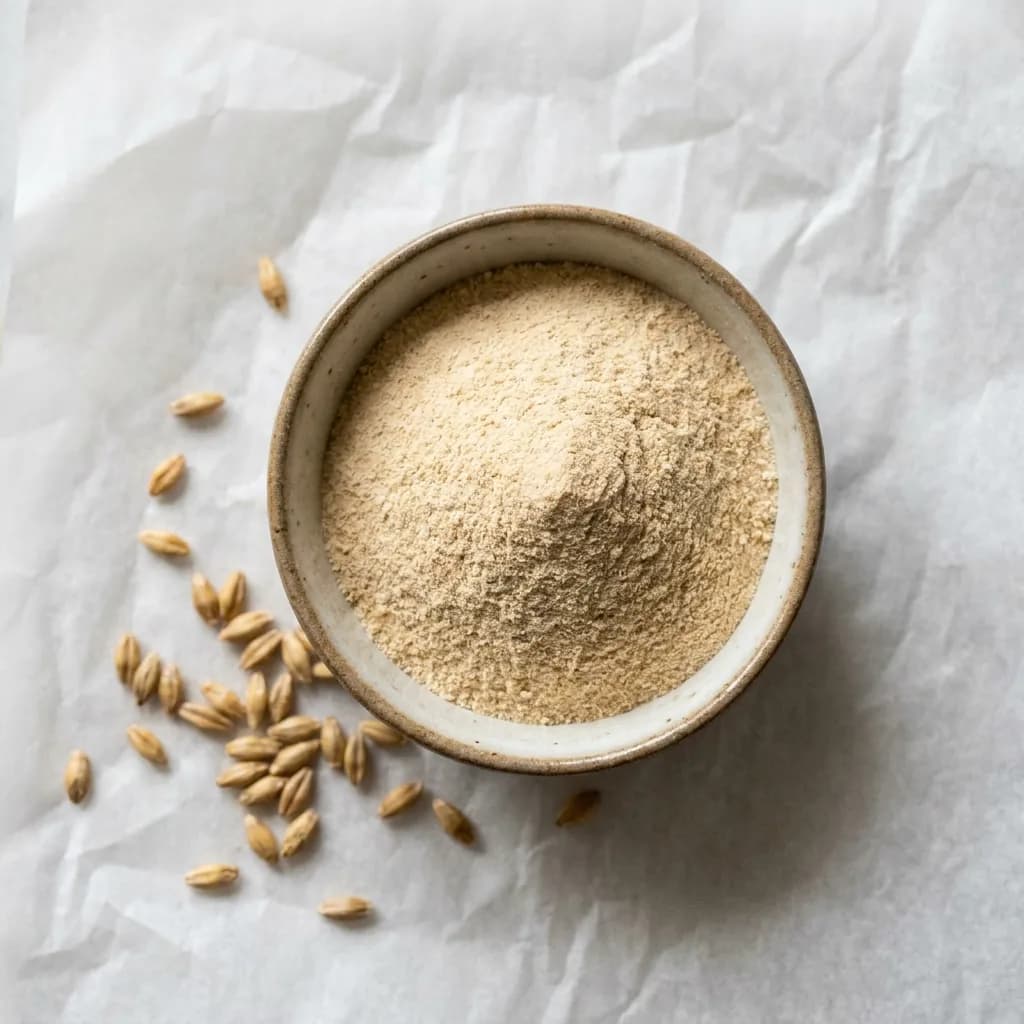
Lightly kilned brewing malt that boosts body, foam, and head retention without adding color.
Dextrin malt, often sold as Carapils, is a very lightly colored barley malt high in unfermentable dextrins. Brewers add a small amount to improve a beer's body, mouthfeel, and foam stability without contributing flavor or color. It is a workhorse adjunct in many recipes.
Dextrin malt, universally known as Carapils in North America, is a lightly kilned specialty malt that has become indispensable in modern brewing precisely because it does so much while remaining nearly invisible. Unlike caramel malts, which are produced through controlled steeping and reheating, dextrin malt is simply dried at low temperatures (65–70 °C / 149–158 °F) in a standard kiln. This gentle kilning preserves long-chain dextrin carbohydrates—large molecules that standard brewer's yeast cannot ferment. When these dextrins survive fermentation, they remain in the finished beer as soluble starch fragments that add body, perceived sweetness, and a creamy mouthfeel without contributing fermentables, color, or alcohol. The result is a malt that can make a thin Pilsner feel substantial or help a session IPA achieve fullness without raising ABV.
Brewers frequently confuse Carapils with CaraMunich or other caramel malts, but these are fundamentally different products: Carapils contributes negligible color (1.5–2.5 °Lovibond) and essentially no flavor compounds, while caramel malts add sweetness, color, and distinct flavor through the Maillard reactions that occur during their special processing. Its other celebrated property—improved foam retention—stems from the same dextrin content, though Carapils works best as part of a holistic approach to head retention that includes proper carbonation technique and complementary ingredients like wheat.
The key to understanding Carapils lies in recognizing it as a precision tool rather than a flavor agent. It amplifies texture and drinkability without asserting itself in the aroma or flavor profile, making it invaluable for brewers who need to shape mouthfeel in hop-forward or fruit-forward styles where any malt character would compete with the main attraction. Its versatility across beer styles—from crisp American lagers to funky Belgian sours—demonstrates why it has earned a permanent place in any well-stocked malt library.
- Measured in
- g
- Storage
- Pantry
Allergens
Types & varieties
Original US brand name; most widely available in North America; standardized product with consistent performance
Very similar to Carapils; slightly higher diastatic power; functionally interchangeable in most recipes
German-produced equivalent; kilned at similarly low temperatures; widely used in European craft and traditional breweries
German specialty malt; comparable dextrin content and identical functionality
Briess liquid malt extract version; convenient for extract brewers; same flavor and mouthfeel contribution, no mashing required
International term used by various maltsters worldwide; functionally identical regardless of brand
Why Dextrins Behave Differently
The defining characteristic of Carapils is the molecular size of its starch-derived compounds. During normal mashing, enzymes break down starches into smaller sugars that yeast can consume and convert to alcohol and CO2. The low-temperature kilning of dextrin malt creates conditions that favor the formation of longer-chain carbohydrates—dextrins—that resist complete enzymatic breakdown. Even with a normal saccharification rest (148–156 °F / 64–69 °C), these chains remain large enough that yeast cannot metabolize them. They survive into the finished beer, where they function as soluble polymers that increase viscosity and body. This is not a flaw in the brewing process; it is the intended outcome that makes dextrin malt valuable.
- Longer dextrin chains = higher viscosity = perceived body without fermentables
- Yeast cannot metabolize dextrins regardless of fermentation vigor
- The effect is cumulative: more Carapils means more residual dextrins, up to the point of cloyingness
Carapils vs. Other Specialty Malts
Brewers often reach for Carapils when they need body enhancement, but confuse it with caramel malts or grain adjuncts that behave quite differently. Crystal and Cara malts (CaraRed, Carahell, CaraMunich) are produced by steeping grain in water, then heating to drive caramelization and Maillard reactions. They add significant color (9–40+ °L depending on variety), distinct caramel or toffee flavors, and some unfermentable sweetness—but they are not neutral. Munich and Vienna malts, while kilned at low temperatures, have higher enzymatic power and contribute noticeable malt character plus amber hues. Carapils is uniquely neutral: it adds body and mouthfeel while leaving color, flavor, and hop character untouched. Understanding this distinction prevents misapplication and ensures you reach for the right tool.
- Crystal malts add color and flavor; Carapils adds neither
- Munich/Vienna add malt character and hue; Carapils stays neutral
- For head retention specifically, consider wheat malt or flaked oats as adjuncts with different trade-offs
Common uses
Tips & pitfalls
- Never exceed 20% of your grist — higher amounts push into diminishing returns and can make the beer feel heavy or cloying rather than full
- Always combine Carapils with a base malt of high diastatic power (2-row or Pilsner) to ensure complete enzymatic coverage for the entire grain bill
- Add Carapils to the mash tun with your base malts — it requires no special handling, infusion steps, or temperature adjustments
- Do not confuse Carapils with CaraMunich, CaraRed, Carahell, or other caramel malts — those add noticeable color and distinct caramel flavor compounds
- If substituting liquid Carapils extract, reduce other late-boil fermentable additions to avoid overshooting your target original gravity
- Store in airtight containers away from heat and light — oxidation and heat cause stale, papery off-flavors that contaminate the finished beer
- For maximum head retention, use Carapils in conjunction with quality late-hopping, wheat additions, or proper carbonation technique rather than relying solely on Carapils
- In hop-forward styles (IPA, Pale Ale), use conservatively — Carapils can mute hop character slightly if used above 10–15% of the grist
- When brewing extract-based beers, steep crushed Carapils at 150–170 °F (65–77 °C) for 20–30 minutes for effective dextrin extraction without harsh tannin release
Nutrition
Nutrition
No USDA FoodData Central match for Dextrin / Carapils Malt yet. We surface a per-100 g profile once a generic whole-food entry is matched and verified.
In the shops
Matched grocery products
No matched grocery products for Dextrin / Carapils Malt yet.
Good to know
- Also known as
- Carapils, Carapils Malt, Carafoam (US); Weyermann Carapils (Europe); Dextrin Malt (generic)
- Origin
- Developed by Briess (US); similar products by Weyermann, Bestmalz (Germany), and Belgian maltsters
- Base grain
- Two-row barley, kilned at low temperatures (65–70 °C / 149–158 °F)
- Color contribution
- 1.5–2.5 °Lovibond — practically invisible in the finished beer
- Diastatic power
- Very low, ~10–20 °Lintner — provides negligible enzymatic activity
- Extract yield
- ~70–75% FGDB (fine grind dry basis)
- Moisture content
- ~5–7%
- Protein content
- ~10–12%
- Key compounds
- Unfermentable dextrins (long-chain carbohydrates); low protein; minimal melanoidins
- Typical usage rate
- 5–20% of total grain bill (1–2 lb per 5-gallon batch is standard)
- Shelf life
- Whole kernels keep 1+ year in cool, dry, airtight storage; milled malt degrades faster
- Available forms
- Whole kernel, crushed/milled, liquid extract (Carapils LME)
- Specialty malt classification
- Light-colored, low-kilned malt — not a caramel or roasted malt
Substitutes
- Flaked wheat or flaked oats — Adds body and head retention but introduces more flavor and may affect clarity; use at similar rates to Carapils
- Crystal/Caramel malt (low Lovibond, 10–15 °L) — Adds sweetness and body but contributes noticeable caramel flavor and amber color (10–20 °L depending on variety); not a true substitute for color-sensitive recipes
- Lactose — Adds unfermentable sweetness and body but contributes distinct dairy sweetness inappropriate for most styles; use sparingly (4–8 oz per 5 gallons)
- Maltodextrin powder — Pure dextrin powder; adds body and mouthfeel without color or flavor; easier to dose precisely; dissolves readily in hot or cold wort
- Wheat malt — Improves head retention and adds body but contributes more flavor and protein than Carapils; works well in combination with base malt
Pairs with
Also called
carapils-malt · Carapils · Dextrine Malt
Related

White Rice
Fluffy long-grain rice — the neutral base for almost any meal

White Bread
Soft sandwich loaf for toast, sandwiches, and crumbs
Brown Rice
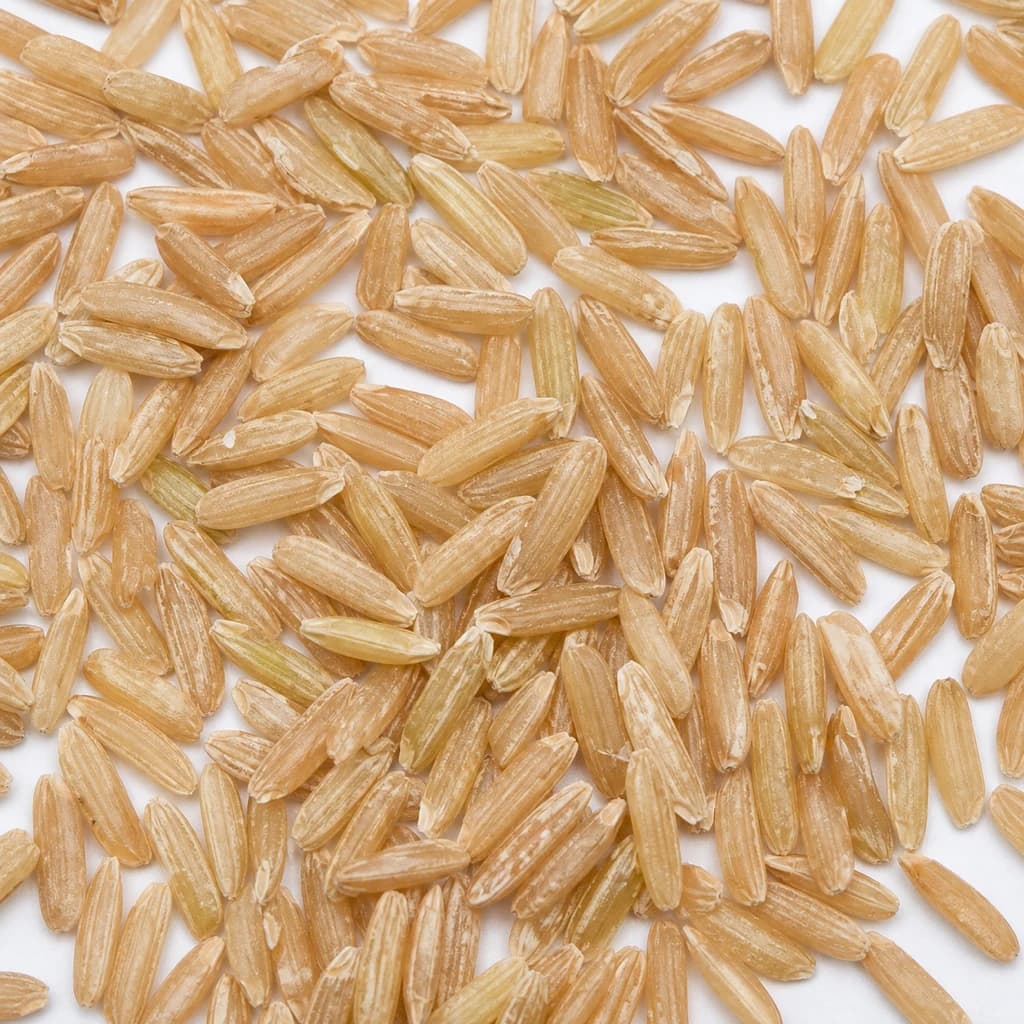
Nutty, whole-grain rice with chew and extra fiber

Basmati Rice
Fragrant, long-grain rice that cooks up light and separate
Jasmine Rice
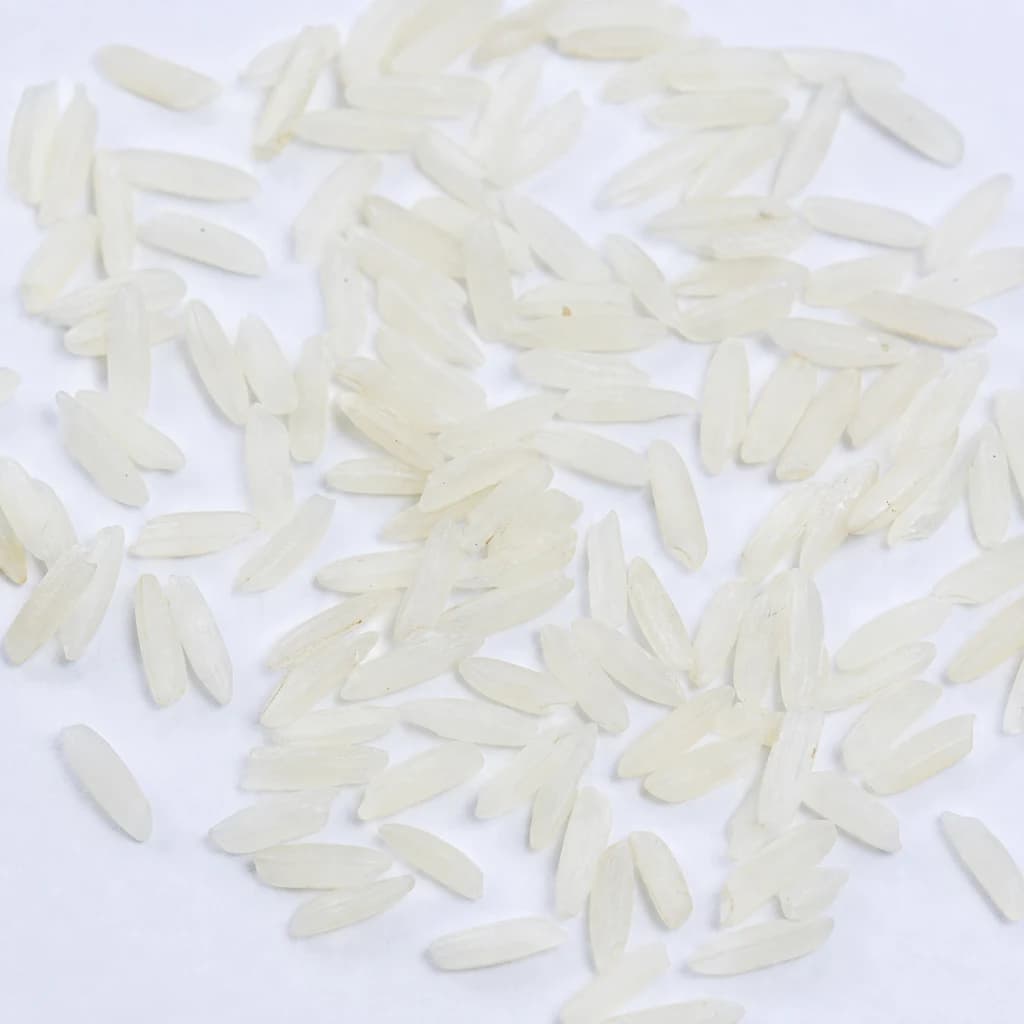
Soft, floral-scented rice that's the pillar of Thai meals
Arborio Rice
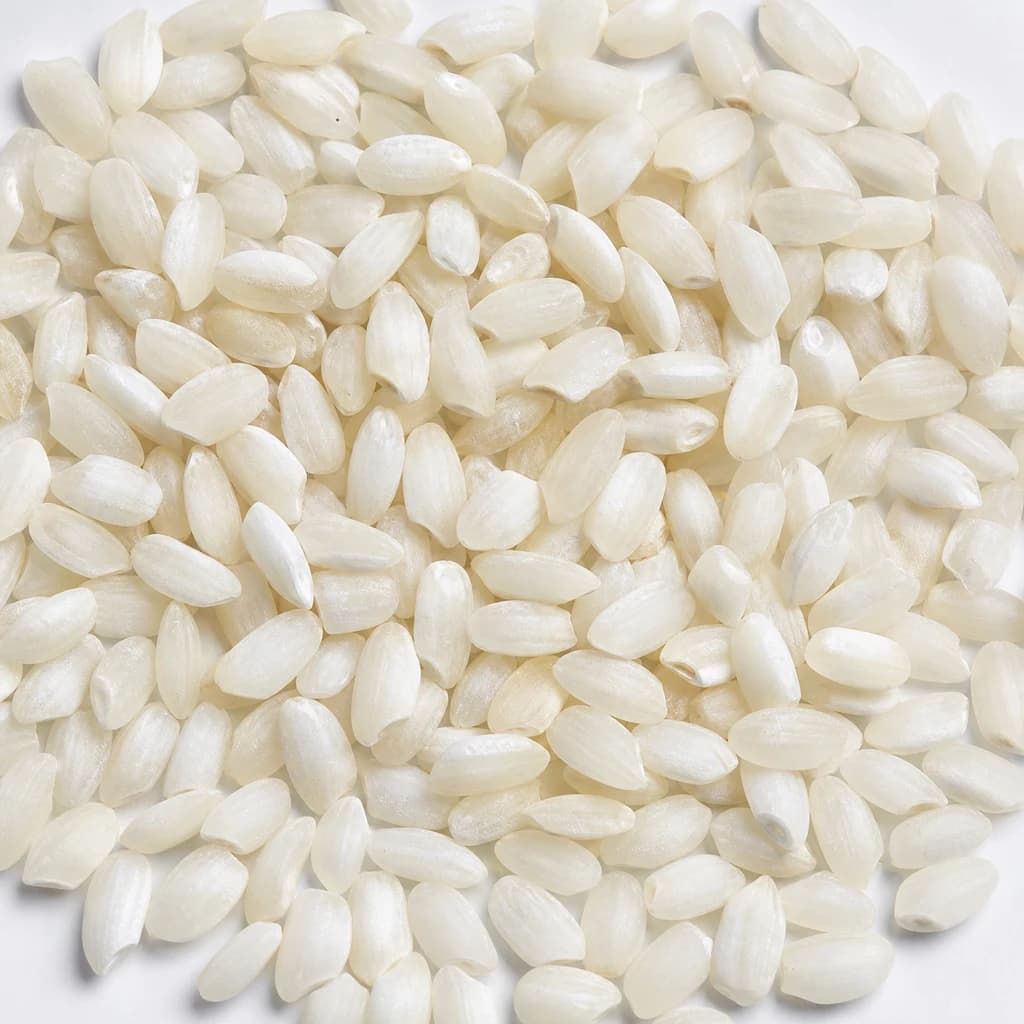
Plump, starchy rice that makes risotto creamy
Fusilli
Spiraled pasta that twirls up sauce and dresses cold salads
Rolled Oats
Hearty flakes for porridge, granola, and chewy cookies