Spices
Fleur de Sel
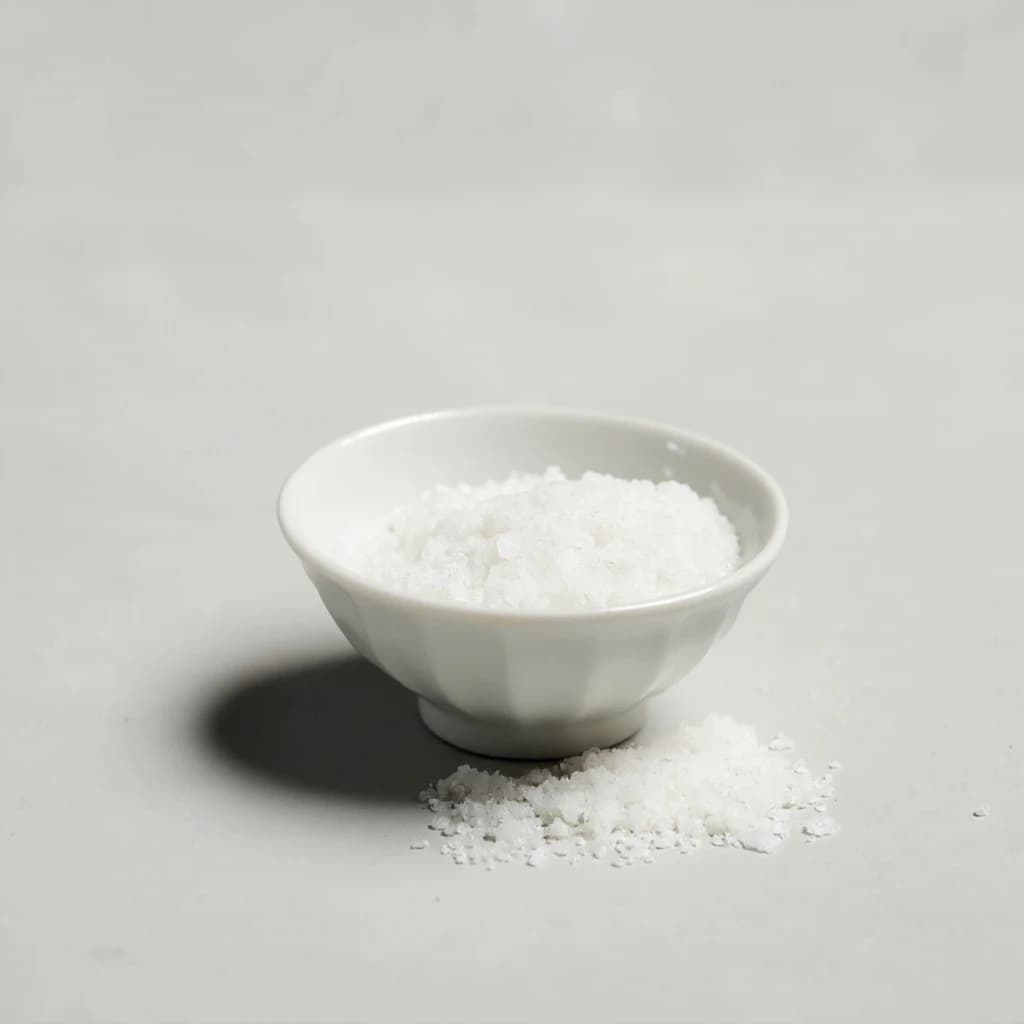
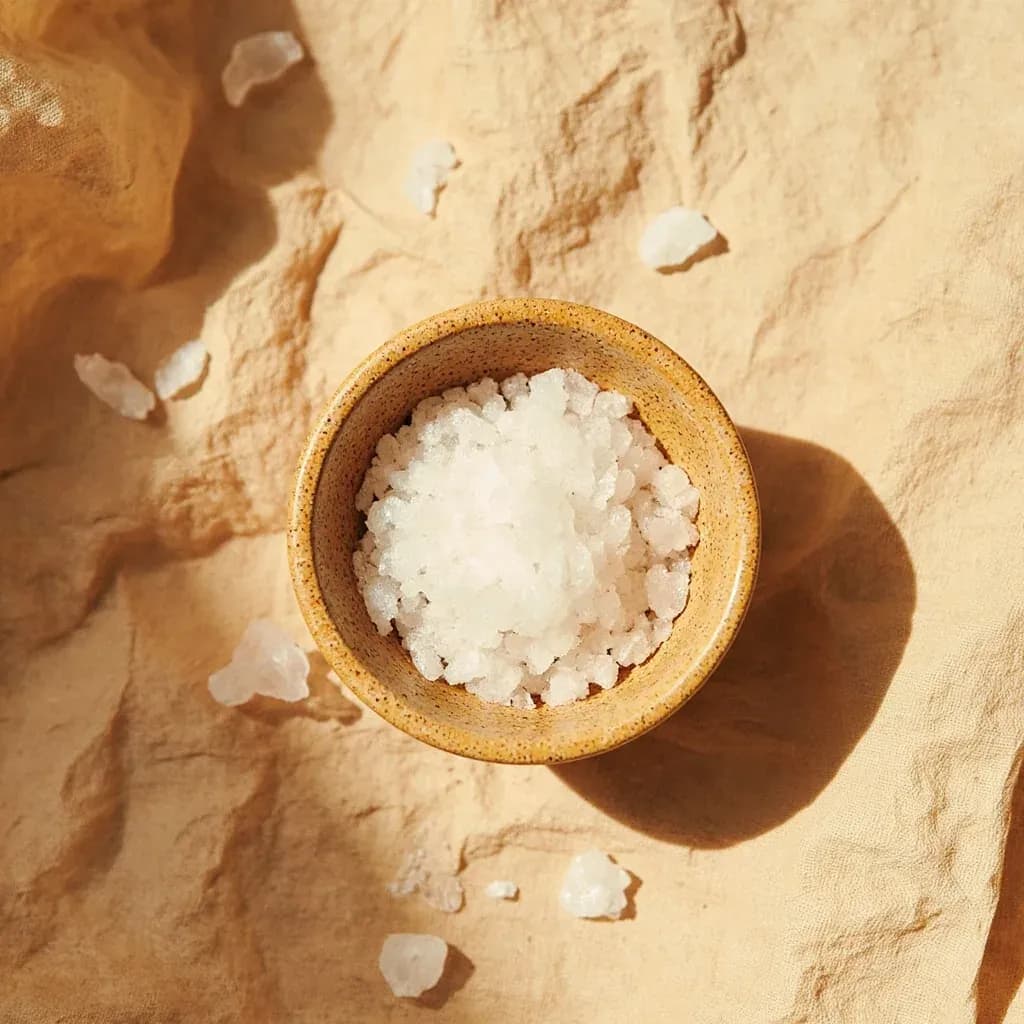
Hand-harvested flaky sea salt with delicate moist crystals. A finishing salt, not for cooking: sprinkle over caramel, chocolate, grilled meat or salad just before serving for crunch and pop.
Fleur de sel is the very top crust that forms on the surface of a shallow, sun-warmed salt-evaporation pond — a delicate, flower-like layer of hollow pyramid crystals that has to be skimmed by hand with a flat wooden blade before it sinks back into the brine. That hand-skimming is not a marketing flourish: any mechanical rake would shatter the brittle crystals into ordinary coarse salt, which is the structural reason the product commands a serious premium over fine sea salt. Because it is never washed, kiln-dried, or refined, it retains roughly 3–5% moisture and the trace minerals of its particular seawater and clay pond — magnesium, calcium, potassium salts — which give it a rounder, slightly sweet brininess rather than the flat, metallic bite of table salt.
In the kitchen, fleur de sel is treated as a condiment, not an ingredient. Its sodium chloride content is actually a touch lower than refined salt (around 93–96% versus 99%+), so it is not "saltier" in chemical terms — what makes it taste more vivid is that the crystals land on the tongue whole, then snap and dissolve in a burst. That crunch is the entire reason to buy it: once you stir it into a sauce, melt it over a steak, or dissolve it in dough, it behaves like any other salt and you have wasted the price. A small tin used only at the final moment will last a home cook for months.
The most important distinction for cooks to internalize is between true fleur de sel and the broader category called "flake salt." Both are finishing salts with crunchy crystals, but true fleur de sel is the surface crust of an outdoor evaporation pond, while flake salts like Maldon are made by boiling brine and drying it in shallow pans. Both work on a chocolate chip cookie or a seared scallop; true fleur de sel carries more mineral complexity, while flake salts are crisper and more purely saline.
- Measured in
- g
- Storage
- Pantry
Find it in
Suits
Types & varieties
The benchmark; AOP-protected, hand-harvested from clay-lined ponds in Brittany, slightly grey crystals with a pronounced mineral character.
From the Rhône delta in southern France; AOC, brighter white crystals, milder and a touch sharper than Guérande.
From the small island off western France; small-scale, traditionally sold in distinctive tins.
From the Ria Formosa (Algarve) and Aveiro salt pans; similar hollow pyramids, often more delicate and a little sweeter.
Sicilian and Sardinian surface salts; lighter and slightly more saline than Guérande, excellent on grilled fish and raw vegetables.
Often sold as "flake salt" rather than fleur de sel; produced by boiling brine in pans and raking crystals into pyramids. Not true fleur de sel, but widely used as finishing salts with similar crunchy texture and a cleaner, more purely saline flavor.
Why hand-harvesting actually matters
The defining trait of fleur de sel is not the pyramid shape — that shape exists because the crystals grow downward from a thin floating crust into hollow inverted pyramids, anchored at the surface. Skim them too roughly, rake them, or use a mechanical harvester, and they collapse into a damp, granular pile of coarse salt that looks and tastes like ordinary sea salt. The traditional tool, a flat wooden blade called a lousse or simoussi in Guérande, slides under the crust and lifts it intact; the harvester then drains it on the edge of the pond before bagging. This is also why fleur de sel is so wet in the jar: it is sold essentially unprocessed, often within days of harvest, with the original pond moisture still locked in. That moisture is what carries the trace minerals and gives the crystals their characteristic "pop."
True fleur de sel versus English-style flake salt
Cooks often reach for Maldon, Halen Môn, or Cornish sea salt when a recipe says "fleur de sel," and the substitution works in most cases — both are finishing salts with crunchy crystals. But they are not the same product, and the difference shows up in the flavor of the brine. Maldon is made by boiling seawater in open pans and then raking the crystals into pyramids as the brine evaporates; it is drier, lighter, and more purely saline, with less of the earthy mineral note that defines Guérande. Use Maldon when you want clean crunch on a buttered baguette or a chocolate bar; reach for true fleur de sel when you want the mineral layer to do work, as on a tomato salad, a steak, or a salted caramel.
Common uses
Tips & pitfalls
- Use it only as a finishing salt — heat, liquid, and time dissolve the crystals and you have paid fleur de sel prices for the flavor of ordinary salt.
- Pinch between clean, dry fingers and crush lightly as you sprinkle so the crystals scatter instead of clumping in one spot; dipping a wet or greasy finger into the jar is the fastest way to ruin a tin.
- Use less than you think: a small pinch of around 1–2 flakes per bite is plenty, because each crystal delivers a concentrated burst of salinity on the tongue.
- Add it at the very last moment — on a steak resting off the heat, on cookies pulled from the oven, on salad just before plating — so the crunch survives to the bite.
- Do not grind it in a mill; the hollow pyramids shatter into powder and you lose the pop. A few coarse pinches is the point.
- Watch for fakes: authentic fleur de sel is sold in small jars or tins at a premium price; cheap "fleur de sel" in kilo plastic bags is almost always fine sea salt with a French label.
- If it clumps after a few months in storage, spread it on a plate and air-dry at room temperature for an hour; do not oven-dry it, which dulls the mineral flavor.
- Pair it with fats, bitterness, and caramelization, where its mineral note has something to contrast against — not with already-very-salty foods, where it muddies rather than lifts.
Nutrition
Energy
0 kJ · per 100 g
Protein
0g
0% DV
Carbs
0g
0% DV
Fat
0g
0% DV
Fiber
0g
0% DV
Sugars
0g
of which
Sodium
38758mg
1685% DV
Source · USDA FoodData Central · approx. Salt, table
View on FDC →In the shops
Matched grocery products
No matched grocery products for Fleur de Sel yet.
Good to know
- Origin
- Most famously Guérande (Brittany, France); also Camargue, Île de Ré, Portugal (Ria Formosa, Aveiro), Spain, and other coastal ponds.
- Harvest season
- Late spring to early autumn (roughly May–September), only on warm, sunny, dry, breezy afternoons; rain destroys the surface crust.
- Yield
- Extremely low — on the order of a few hundred grams per square meter of pond per harvest, which is the structural reason for the price.
- Crystal shape
- Hollow, irregular pyramid or flake crystals that snap audibly on the tongue and dissolve almost instantly after.
- Moisture
- 3–5% retained water; crystals feel slightly damp and cling together in the jar.
- Mineral content
- Roughly 93–96% NaCl versus >99% in table salt; the balance is magnesium, calcium, and potassium salts that round out the flavor.
- Protected status
- Fleur de Sel de Guérande holds French AOC/EU AOP; Camargue fleur de sel holds AOC since the early 2000s.
- Storage
- Sealed container in a dry cupboard; do not refrigerate (condensation clumps the crystals).
Substitutes
- Maldon sea salt — English flake salt with large, crunchy hollow pyramids; the standard everyday substitute as a finishing salt, though slightly less mineral and more purely saline.
- Halen Môn — Welsh flake sea salt from Anglesey; similar crunch, a touch more briny — a clean substitute on chocolate and steak.
- Jacobsen Salt (Oregon) — American hand-harvested sea salt from Netarts Bay; very similar hollow pyramids and mineral profile, the closest true substitute to Guérande.
- Sel gris (grey salt) — From the same Guérande and Camargue ponds, but the layer beneath the fleur de sel crust; coarser, denser, and more mineral — works when texture matters most.
- Cyprus flake salt (Larnaca) — Crunchy flakes with a strong marine note; particularly good on grilled meat and dark chocolate.
- Italian fior di sale (Trapani) — Sicilian surface salt; lighter and saltier than Guérande, an excellent substitute on seafood and salads.
- Korean hand-harvested sea salt (Taean, Shinan) — Modern Korean surface salts with a similar moist flake character and mineral complexity, increasingly found in restaurant kitchens.
- Kosher salt — Not a real substitute for crunch or mineral depth, but acceptable as a finishing flake if nothing else is available — reach for it in an emergency, not a dinner party.
Pairs with
Also called
flower of salt · fleur de sel de guerande · finishing salt · flor de sal