Grains & Rice
Glass Noodle
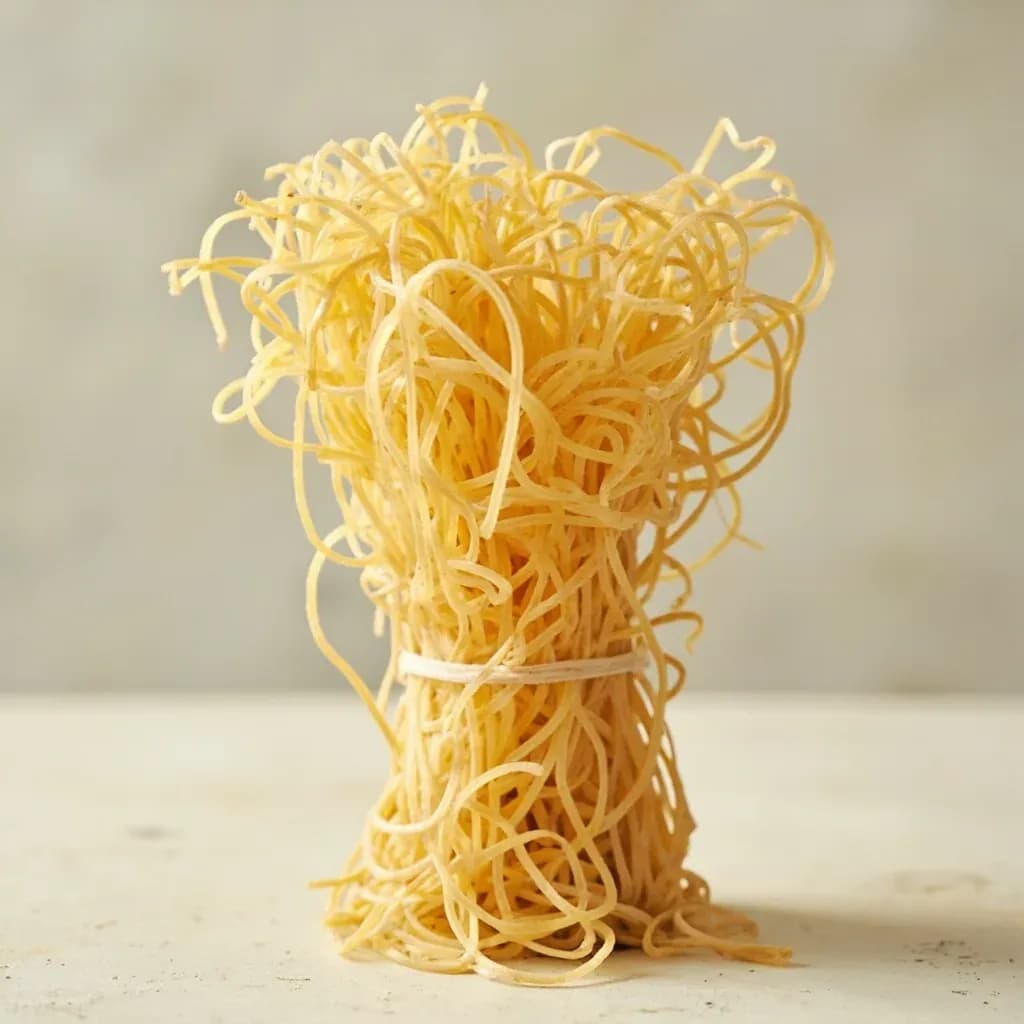
Translucent starch noodles that turn glassy and slippery when cooked.
Glass noodles are made from starch, commonly mung bean or sweet potato, and turn clear and springy after soaking and cooking. Korean sweet-potato dangmyeon stars in japchae, while mung-bean versions feature in Chinese and Southeast Asian salads, soups, and spring rolls. They are naturally gluten-free and absorb sauces readily.
Glass noodles—also called cellophane noodles, bean thread noodles, or in Korean, dangmyeon—are translucent starch noodles made from mung beans, sweet potatoes, or tapioca. Unlike wheat-based noodles, they contain no gluten and have a neutral flavor profile that makes them remarkable absorbers of surrounding sauces and aromatics. In their dried form they appear white, opaque, and brittle; hydrated and briefly cooked, they become glossy, glass-like strands with a slippery, slightly chewy texture that ranges from delicate to substantial depending on the starch source. This combination of visual drama and textural intrigue explains their prominence across East and Southeast Asian cuisines—from Korean japchae to Thai yam wunsen. Their ability to take on bold flavors while remaining light on the palate makes them equally suited to cold salads, stir-fries, soups, and fried preparations.
- Measured in
- g
- Storage
- Pantry
Types & varieties
Most widely available globally; made from Vigna radiata starch; slightly more tender than sweet potato varieties; standard choice for most applications
Made from Ipomoea batatas starch; chewier and more substantial; Korean Agricultural Standards require 60%+ sweet potato starch; the authentic choice for japchae; quality strands have a slight amber tint and firm texture
Mung bean-based; common in Southeast Asian cooking; typically thinner than Korean varieties
Often rice flour added; very fine diameter; standard in Thai glass noodle salads like yam wunsen
Common uses
Tips & pitfalls
- Use warm—not hot—water for soaking; boiling water gels the outer layer before the core hydrates, causing uneven texture and a gummy bite
- Soak until noodles are pliable but still hold some firmness; they finish cooking in the wok or hot liquid
- Do not overcook after soaking—1 to 3 minutes max in a stir-fry or broth, or the noodles will turn mushy and collapse into a gelatinous mass
- Rinse immediately with cold water after cooking to stop the cooking process and prevent clumping
- Toss rinsed noodles with a small amount of sesame oil or neutral oil right away to keep them from sticking together
- Season aggressively—noodles are neutral and need bold flavors; season the sauce, dressing, or cooking liquid generously
- For stir-fries like japchae, cook protein and vegetables first, then add only briefly hydrated noodles directly to the wok and toss quickly over high heat
- For spring rolls, hydrate only to the pliable stage; they finish cooking when the rolls fry and will turn mushy if fully cooked beforehand
- Break dried noodles into desired lengths before soaking by bending the bundle and snapping—do not cut with scissors, which crushes the strands and creates powder
- Store dried noodles in an airtight container in a cool, dry pantry; no refrigeration needed
Nutrition
Energy
1469 kJ · per 100 g
Where the calories come from
Protein
0.2g
0% DV
Carbs
86.1g
31% DV
Fat
0.1g
0% DV
Fiber
0.5g
2% DV
Sugars
0g
of which
Sodium
10mg
0% DV
Source · USDA FoodData Central · approx. Noodles, chinese, cellophane or long rice (mung beans), dehydrated
View on FDC →In the shops
Matched grocery products
No matched grocery products for Glass Noodle yet.
Good to know
- Also called
- Cellophane noodle, bean thread noodle, spring noodle, mung bean noodle, funin, fensi, 水晶粉丝, wun sen, tanghoon
- Primary starches
- Mung bean (most common), sweet potato, tapioca/cassava
- Raw state
- White to off-white, opaque, brittle sticks; 0.5–1.5 mm diameter
- Cooked state
- Translucent, glossy, glass-like appearance; neutral flavor that absorbs seasonings
- Hydration method
- Soak in warm (not hot) water 15–30 minutes until pliable but still firm
- Cooking time (after soak)
- 1–3 minutes maximum; overcooking causes mushiness
- Yield increase
- Doubles to triples in volume when hydrated
- Shelf life (dry)
- 12–24 months in cool, dry, airtight storage
- Gluten-free
- Yes, in all common varieties (mung bean, sweet potato, tapioca)
- Origin
- East and Southeast Asia—China, Korea, Japan, Thailand, Vietnam
Substitutes
- Rice vermicelli (rice stick) — Made from rice flour rather than starch; similar size and neutral flavor but not translucent; softer, less chewy texture; acceptable in most applications but not a textural match
- Shirataki noodles (konjac) — Made from glucomannan; more rubbery and bouncy than glass noodles; strongly flavored on its own; translucent like glass noodles but very different mouthfeel; works in Asian preparations
- Cellulose noodles — Made from plant fiber; similar translucent appearance but different cooking properties; used in some Southeast Asian products; less common
- Thin soba noodles — Buckwheat noodles; not translucent; have a distinct earthy flavor; will not replicate the visual effect but work in cold salads and stir-fries
Pairs with
Also called
Sweet Potato Glass Noodle · Dangmyeon · 당면 · Cellophane Noodle · Mung Bean Noodle
Appears in these dishes
Related

White Rice
Fluffy long-grain rice — the neutral base for almost any meal

White Bread
Soft sandwich loaf for toast, sandwiches, and crumbs
Brown Rice
Nutty, whole-grain rice with chew and extra fiber

Basmati Rice
Fragrant, long-grain rice that cooks up light and separate
Jasmine Rice
Soft, floral-scented rice that's the pillar of Thai meals
Arborio Rice
Plump, starchy rice that makes risotto creamy
Fusilli
Spiraled pasta that twirls up sauce and dresses cold salads
Rolled Oats
Hearty flakes for porridge, granola, and chewy cookies