Spices
Gochugaru (Korean Chile Flake)
Sun-dried Korean chile flake, vivid red with smoky-sweet, fruity medium heat; essential to kimchi, gochujang dishes, tteokbokki, and spicy stews like kimchi-jjigae.
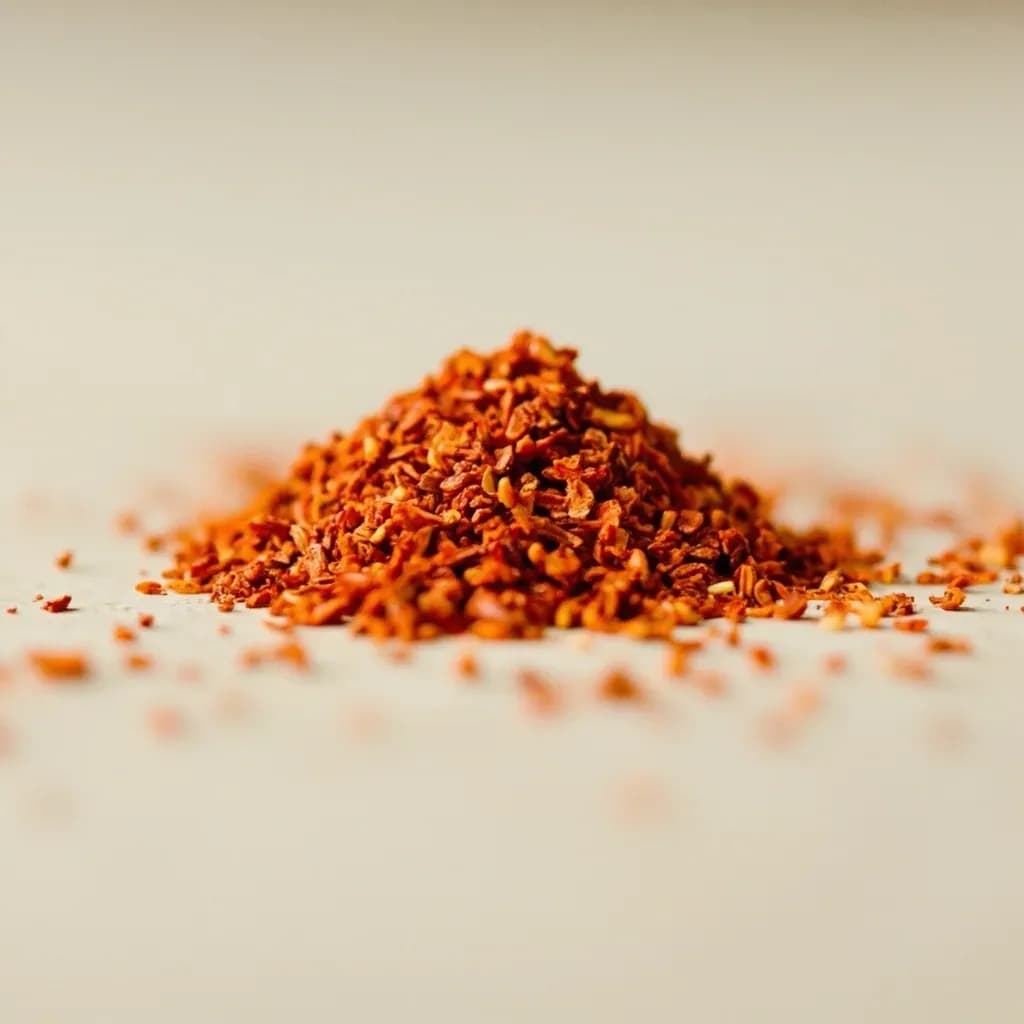
Gochugaru is the single most important seasoning in Korean cooking — vivid crimson chile flakes made by sun-drying Korean landrace peppers, then seeding and roughly grinding them. Its flavor is what makes kimchi taste like kimchi: smoky, faintly sweet, mildly fruity, and earthy, with a slow, rounded warmth rather than the sharp, one-note burn of cayenne or Italian crushed red pepper. Because most of the seeds and placental tissue are removed before grinding, gochugaru delivers color and a generous red hue to broths and sauces without the harsh, throat-catching heat of a more industrial red-pepper flake. In practice it sits at the intersection of seasoning, coloring agent, and preservative in Korean cuisine.
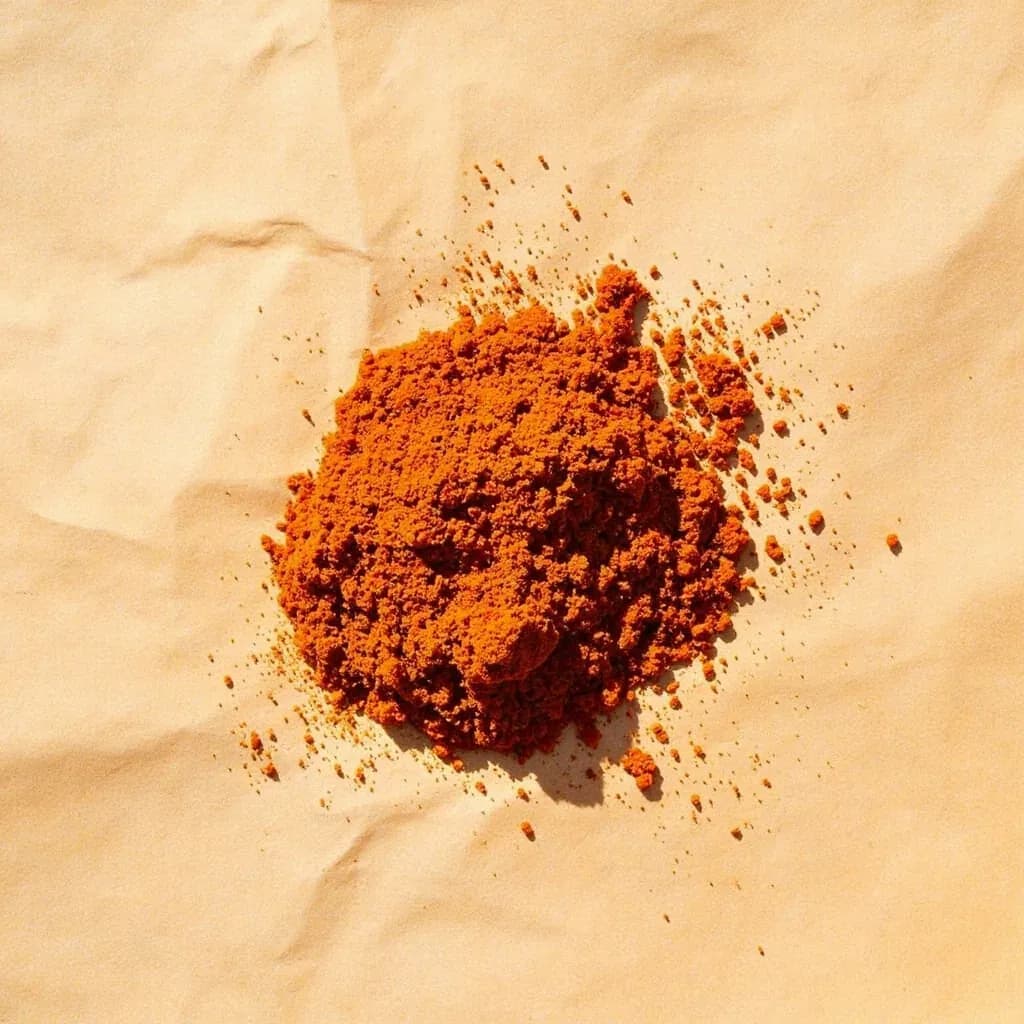
What sets it apart from every other red-pepper flake on the shelf is the combination of grind, color, and aroma. Good gochugaru feels slightly moist and looks like coarse, irregular confetti in a saturated brick-red — never powdery, never orange-brown, never papery. It comes in two functional grinds: coarse flakes that hold their texture in kimchi and stews, and a finer grind that melts into gochujang, tteokbokki sauce, and yangnyeom seasonings. Most home cooks keep a mild grade for everyday use and reach for a hotter, more aromatic version when they want the heat to climb.
Gochugaru behaves very differently from Western chiles. It loses potency fast when exposed to light, heat, and humidity, and a stale bag will give you dull color and a flat, dusty taste with no aroma. The single biggest upgrade a cook can make is to buy a fresh, single-ingredient Korean product from a Korean grocer — the difference between a one-kilogram foil bag that was packed a few weeks ago and a dusty supermarket jar that has been sitting on a warm shelf is enormous. Once home, the bag belongs in the freezer, not the pantry.
- Measured in
- g
- Storage
- Dark Cool
Find it in
Suits
Types & varieties
Larger, visible flakes that hold their texture in kimchi, jjigae, namul, and as a finishing sprinkle on noodles and tteokbokki.
Pulverized finer so it dissolves into pastes and sauces; the standard choice for gochujang, tteokbokki sauce, and yangnyeom seasonings.
Sweeter, less pungent; the everyday workhorse for family kimchi, sundubu-jjigae, and bibimbap sauce.
More seeds and placenta retained, sharper heat, deeper red; used to dial up spice in jjigae, dipping sauces, and jeyuk bokkeum.
Very fine grind used by fish-cake (eomuk) makers so the spice disperses instantly in broth without clumping.
Made specifically from Cheongyang peppers; tends to run hotter and more aromatic than mixed-variety versions.
Choosing Fresh Gochugaru
Color, smell, and grind are the three cues that tell you whether a bag is worth taking home. A fresh Korean bag will look saturated and brick-red, almost glowing under the light, and will smell raisiny, faintly smoky, and a little earthy. If the flakes look orange, dusty, or brown, or the bag smells papery and flat, the chile is past its prime and the flavor will disappoint — no amount of toasting or blooming will rescue it. Buy from a Korean grocer whenever you can: turnover is high, the bags are usually 500 g to 2 kg, and the aroma difference compared to a supermarket jar is striking. Avoid any product labeled as a pre-salted or "seasoned" finishing blend; those are designed to be sprinkled on snacks, and the added salt will throw off the seasoning in kimchi and jjigae.
- Vivid brick-red color is the first sign of freshness; orange-tan or brown means stale.
- Sniff the bag — good gochugaru smells raisiny and faintly smoky; papery or dusty means pass.
- Pre-salted or seasoned blends throw off salt balance; buy pure flakes for cooking.
- Buy the largest bag you can use in a year; the per-gram price drops sharply above 500 g.
Coarse vs Fine: When to Use Which
The grind is not cosmetic — it determines how the chile behaves in a dish. Coarse flakes keep their shape through long ferments and stews, give kimchi its visible red specks, and add textural contrast as a finishing sprinkle on tteokbokki or bibimbap. Fine gochugaru is ground to disappear into pastes, glazes, and dipping sauces, where you want even color and a smooth mouthfeel rather than crunch. The two are not freely interchangeable: a coarse flake in a smooth gochujang-style sauce leaves gritty bits, and a fine grind stirred into kimchi paste loses the visual character that home fermenters usually want. Many Korean kitchens keep both bags on hand and switch by task.
- Use coarse for kimchi, jjigae, namul, and any visible-finish dish.
- Use fine for gochujang, tteokbokki sauce, and yangnyeom dipping sauces.
- Fine dissolves fastest in liquid; coarse needs a brief bloom in oil to release its color.
- If you only want to buy one, fine is more versatile for sauces, but you will miss the texture in kimchi.
Common uses
Tips & pitfalls
- Buy from a Korean grocer if possible — turnover is faster and the color, aroma, and grind are markedly fresher than most supermarket jars.
- Reject any bag whose flakes look orange-tan or dusty brown; they are stale and the flavor will be flat no matter how you cook them.
- Sniff before buying: good gochugaru smells fruity, slightly smoky, and almost raisiny; if it smells papery or dusty, leave it on the shelf.
- Store opened bags in the freezer to lock in color and capsaicin, and keep a small jar on the counter for daily cooking.
- Measure by weight, not by cup — flake size varies wildly between brands and a "tablespoon" can be two very different doses.
- Bloom the flakes in a tablespoon of sesame oil or neutral oil over low heat for 30–60 seconds before adding liquid; this deepens the color and rounds out any raw, papery edge.
- Treat coarse and fine as separate ingredients, not interchangeable: coarse needs a brief bloom in oil to release color, while fine can clump if dropped directly into hot oil.
- Avoid pre-salted or "finishing" gochugaru blends when cooking kimchi or stews; the added salt ruins the seasoning balance.
- Toast a teaspoon in a dry pan over low heat for 10–15 seconds to wake up the aroma before stirring into dipping sauces or finishing oil.
- A pinch added to chocolate, mango, or tomato-based stews works surprisingly well outside Korean cooking — treat it like a smoky-sweet, low-burn chile flake.
Nutrition
Nutrition
No USDA FoodData Central match for Gochugaru (Korean Chile Flake) yet. We surface a per-100 g profile once a generic whole-food entry is matched and verified.
In the shops
Matched grocery products
No matched grocery products for Gochugaru (Korean Chile Flake) yet.
Good to know
- Korean name
- 고추가루 (gochu-garu), literally "chile powder/flour"
- Species
- Capsicum annuum — Korean landrace chiles, often Cheongyang, Kkwari, or other local varieties
- Form
- Coarse to medium flakes, not a fine powder; slightly moist rather than bone-dry
- Color
- Vivid, bright crimson red — dull or brownish flakes signal age or poor quality
- Heat range
- Roughly 1,500–10,000 Scoville Heat Units depending on grade; most mild supermarket grades sit around 2,000–4,000 SHU
- Flavor profile
- Smoky, slightly sweet, faintly fruity and earthy, with slow-building warmth — markedly softer than cayenne or Italian crushed red pepper
- Processing
- Chiles are traditionally sun-dried, then seeded (most of the placenta removed to tame heat) and roughly ground
- Grinds and grades
- Coarse (keun-gochugaru) and fine (goun-gochugaru); further graded by heat as mild (mat) or hot (maewoon)
- Shelf life
- About 6–12 months in a sealed bag in a cool, dark pantry; up to a year or longer in the freezer; color fades and aroma flattens with age
Substitutes
- Gochujang (Korean red pepper paste) — Not a 1:1 swap — it is fermented, salty, and a paste — but it supplies similar color and warmth in braises and stews when flakes are unavailable.
- Aleppo pepper — Closest Western match in texture and gentle, fruity heat; works as a finishing flake, though it lacks gochugaru's smoky depth.
- Smoked Spanish paprika (pimentón) plus a pinch of cayenne — Combines the sweet-smoky profile with enough heat to approximate gochugaru in marinades and stews.
- Italian crushed red pepper flakes — Use only as a last resort; hotter, sharper, and more one-dimensional, so start at roughly half the amount.
- Plain sweet paprika — Delivers the red color and mild sweetness but no heat; add cayenne separately if warmth is needed.
Pairs with
Also called
Korean chili flakes · Korean red pepper powder · gochukaru · kochukaru