Spices
Aleppo Pepper
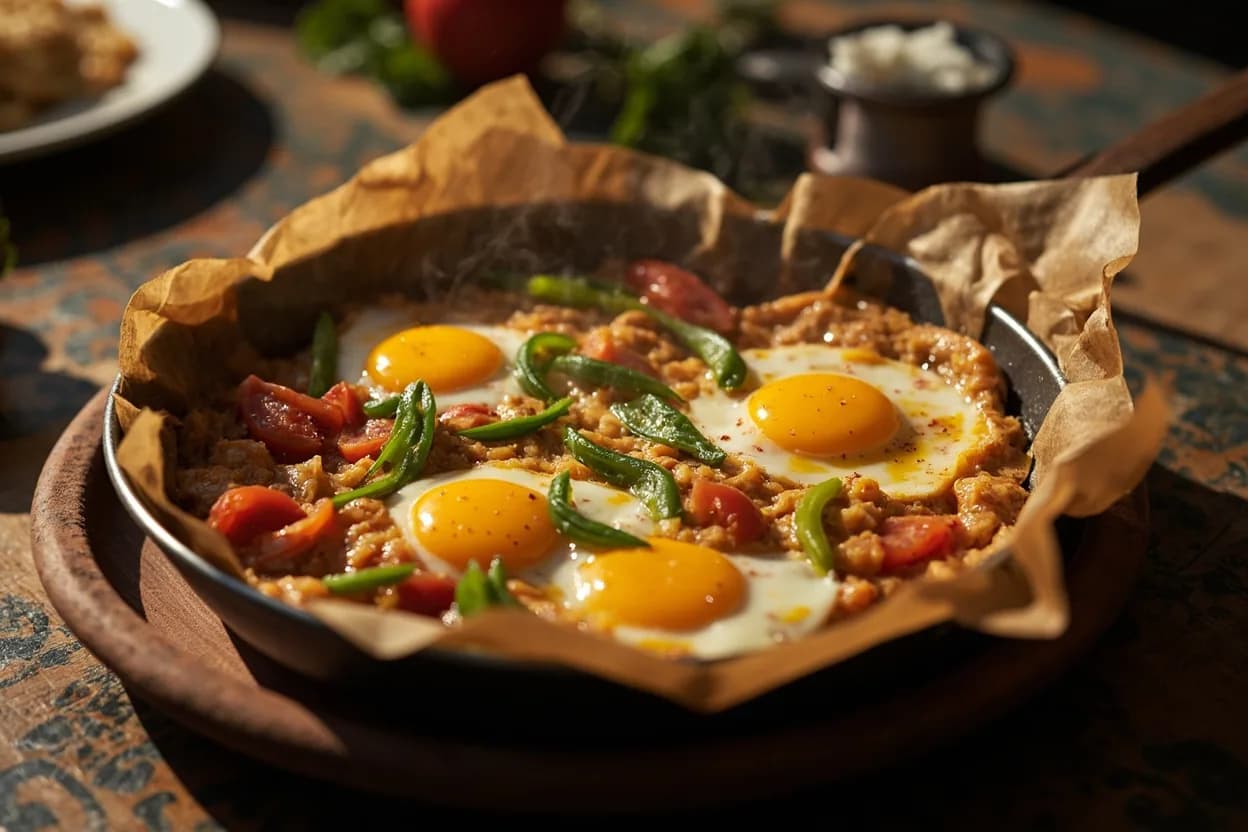
Coarse, oily Syrian/Turkish chile flake with moderate heat and a sun-dried-tomato, fruity tang; finishing dust for hummus, eggs, roasted veg, and kebabs.
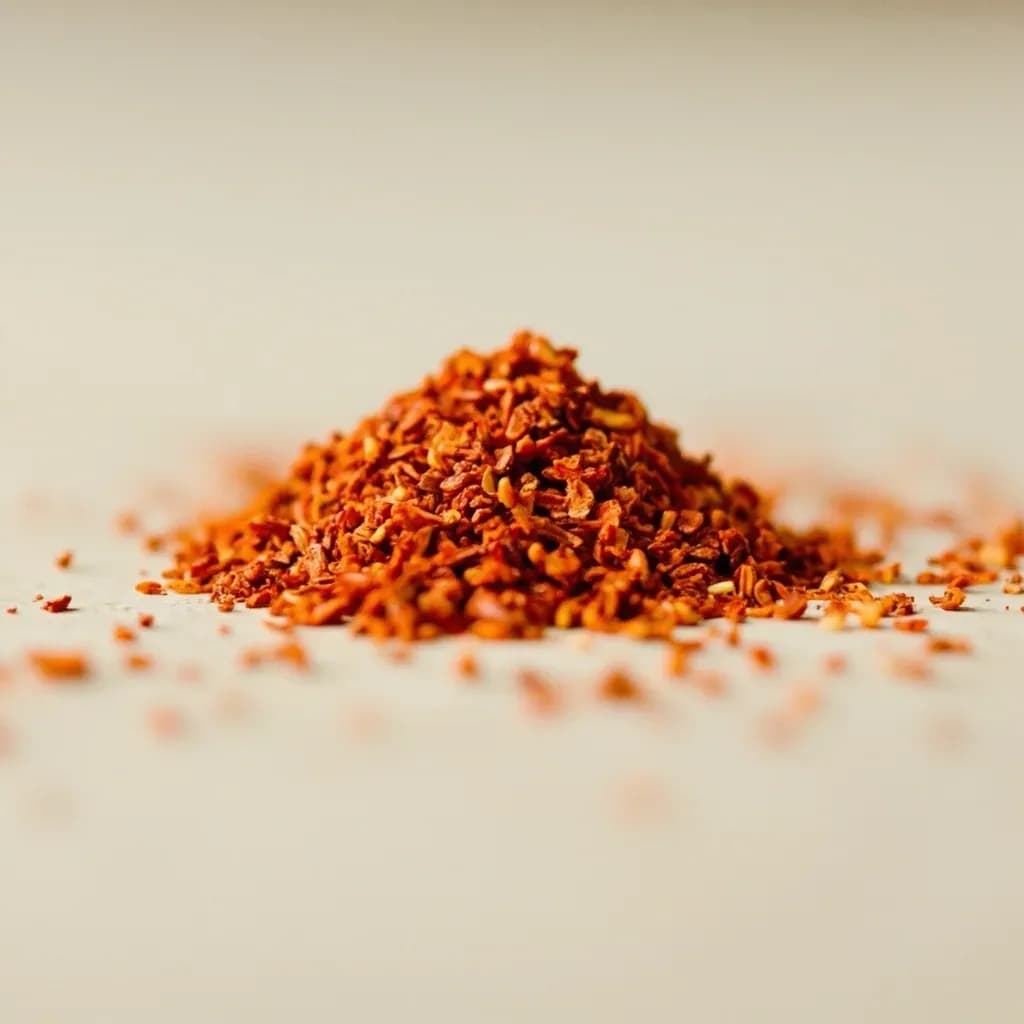
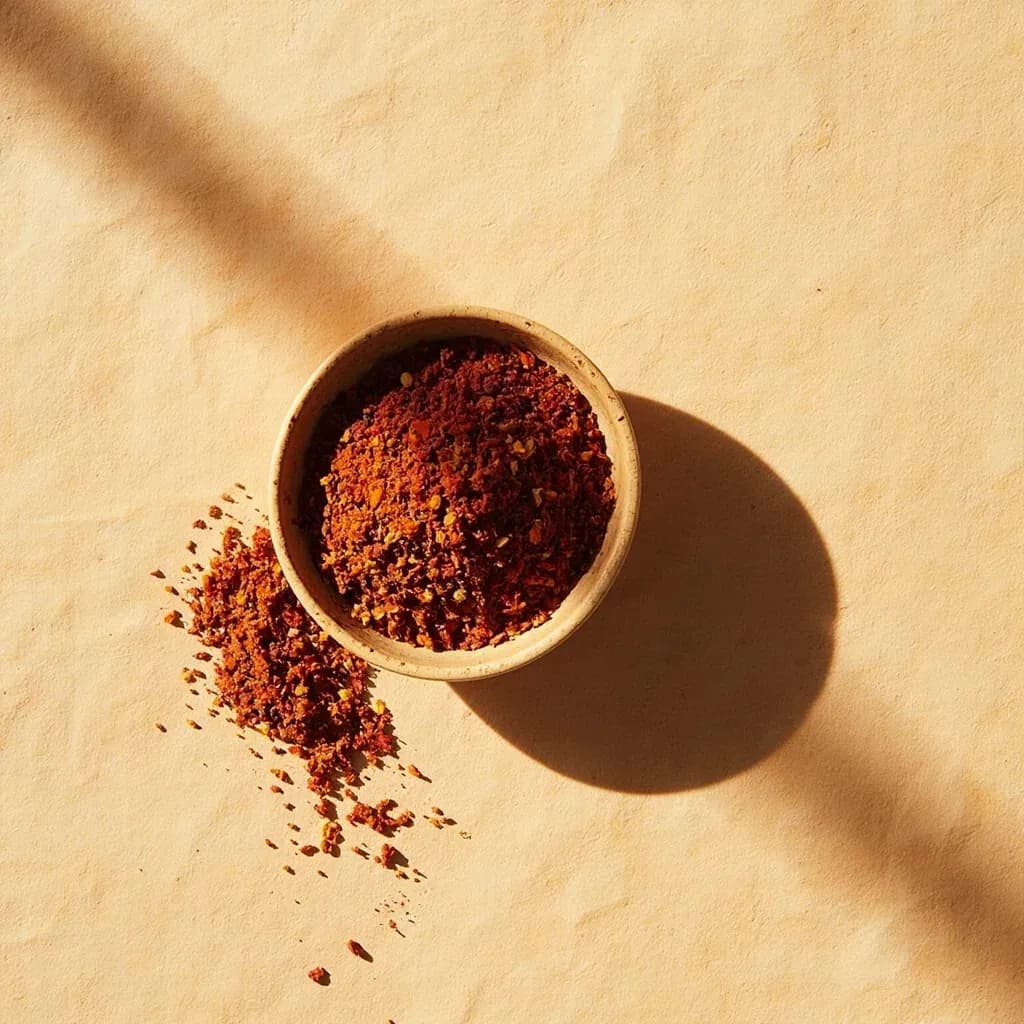
Aleppo pepper is the dried, coarsely ground form of the Halaby landrace of Capsicum annuum — a thin-fleshed, ribbed red pod grown around the city of Aleppo in northern Syria and across southeastern Turkey, where most current production is centered. What distinguishes it from generic crushed red pepper is the combination of three deliberate processing choices: ripe pods are sun-dried (not smoked), pressed with a little salt in stacked piles until the natural oils migrate to the surface, and deseeded before milling. The result is a coarse, slightly oily flake of burgundy red flecked with darker rust and maroon — moderate in heat, but carrying a flavor you can actually taste: sun-dried tomato, raisin, light earth, and a clean, faintly acidic tang. That tang is the point. Aleppo is one of the few dried chiles that reads bright rather than flat, which is why cooks reach for it as a finisher rather than a background seasoning.
It behaves differently from most dried chiles in the pantry. With seeds removed, heat sits roughly 5,000–10,000 Scoville — present, but slow-building and well below cayenne — so you can use it generously without blowing a dish out. The trade-off is fragility: the fruity, oily compounds that give it character fade faster than in seeded flakes, and the natural oil that gives the flake its sheen clumps and stales over months on a warm shelf. Treat it as a finishing spice, stirred in or sprinkled at the end of cooking, or bloomed briefly in warm oil just before serving. The names you'll see on the shelf — pul biber, Urfa biber, Maraş biber — are siblings from the same plant family rather than synonyms; the differences in oiliness, color depth, and sharpness are real and worth knowing.
- Measured in
- g
- Storage
- Dark Cool
Find it in
Suits
Types & varieties
The standard 'spicy' Turkish grade, and the version most often sold outside the Middle East. Bright red, oily, tangy, moderate heat.
Sweet/mild grade — milder pods chosen or more seeds left in; less heat, same fruity tang. Useful when you want the flavor without the burn.
From Şanlıurfa. Same family, slightly darker and more wine-like. Most commercial 'Urfa' is not traditionally smoked; some brands do add a light smoke — worth checking.
From Kahramanmaraş; sun-dried under oil-soaked cloth, so it is distinctly waxier and oilier than Aleppo. Often a touch hotter and more sour, and can carry noticeable salinity — taste before salting the dish.
The original Syrian expression; rarer outside the region, generally lighter, with a more cumin-edged profile.
Pul biber vs. Urfa vs. Maraş: how to tell them apart
These three are sometimes treated as synonyms in the spice aisle, but they are made by different mills in different cities and behave differently in the pan. Knowing which is which matters when a recipe calls for one by name, or when a substitute is suggested.
- Pul biber is the broadest category — coarsely ground, oily, bright red, with a clean tang. It is the default 'Aleppo pepper' in most cookbooks and the safest general-purpose choice.
- Urfa biber is usually darker (more burgundy than rust) and leans toward a deeper, wine-like note. Good with grilled meats and slow-cooked tomato dishes.
- Maraş biber is waxy and oilier, processed by pressing the drying pods under cloth soaked in oil. It often tastes saltier and sharper; taste before adding extra salt to the dish.
- Don't assume 'Urfa = smoked.' The traditional method is sun-drying and pressing, not smoking. A few commercial producers do add a light smoke; if you want a guaranteed traditional profile, check the label or buy from a Middle Eastern grocer.
Finishing vs. cooking
Aleppo's flavor lives in its volatile oils and dried-fruit acids, both of which degrade with long cooking. Most of the time, you want it added at the end — a minute before plating, after plating, or bloomed in warm fat and drizzled on top. Long braises are the exception: a teaspoon stirred in at the very end, off the heat, gives you the character without losing it to the pot.
Common uses
Tips & pitfalls
- Treat it as a finishing spice, not a cooking one. The fruity, sun-dried-tomato character fades with long cooking; stir in at the end or sprinkle after plating.
- Bloom briefly in warm (not smoking) olive oil or butter for 10–15 seconds to open up the aroma; let it cool before spooning over a cold dish like hummus or labneh.
- Buy in small quantities from a source that turns stock over. Deep red with rust tones and a perceptible oil sheen are the freshness cues; dull brown or powdery clumps mean it's past its window.
- Don't substitute one-for-one with generic crushed red pepper — the seeds and membrane make those flakes hotter and grittier, and they lack the fruity, tangy note that defines Aleppo.
- Reduce or skip the salt in a dish when using a pressed, oil-soaked style like Maraş biber, which can carry noticeable salinity on its own.
- Don't force clumped flakes through a sieve. Break them with fingers or the back of a spoon before measuring, otherwise you'll underdose without realizing it.
- Pair it with acid — lemon, sumac, pomegranate molasses — or the pepper's tang reads flat. Acid is what makes it taste like itself.
- Quick pantry sketch when you have nothing else: mostly smoked Spanish paprika for color and body, a small pinch of cayenne for heat, and a drop of tomato paste toasted in oil for the sun-dried-tomato note. Use sparingly; it's a sketch, not a copy.
Nutrition
Energy
121 kJ · per 100 g
Where the calories come from
Protein
0.9g
2% DV
Carbs
6.5g
2% DV
Fat
0.4g
0% DV
Fiber
2.8g
10% DV
Sugars
4.1g
of which
Sodium
3mg
0% DV
Source · USDA FoodData Central · approx. Peppers, jalapeno, raw
View on FDC →In the shops
Matched grocery products
No matched grocery products for Aleppo Pepper yet.
Good to know
- Origin
- Aleppo (Haleb), northern Syria; most current production is in southeastern Turkey, especially Şanlıurfa and Kahramanmaraş.
- Plant
- Capsicum annuum, the 'Halaby' landrace (Halebi/Mırık) — a thin-fleshed, ribbed red pod that ripens to deep red.
- Heat (Scoville)
- Roughly 5,000–10,000 SHU. Seeds are removed during processing, which dials heat back well below cayenne.
- Form
- Coarsely ground, dry-to-slightly-oily flake. Not a powder; not a seed-and-membrane flake like Italian crushed red pepper.
- Color
- Burgundy red with rust and maroon bits from the skin; fades noticeably as the flake ages.
- Flavor in brief
- Sun-dried tomato, raisin, light cumin and earth, with a bright, faintly acidic tang. Low background smoke; no fermented note.
- Processing
- Ripe pods sun-dried, deseeded, stacked and pressed with a little salt to bring out the oil, then coarsely chopped.
- Shelf life
- Best within 6–9 months of milling. Color and fruity notes fade faster than most dried chiles because seeds are removed.
- Storage
- Airtight, cool, dark, away from the stove. Natural oil causes clumping over time — break clumps before measuring.
- Other names
- Halaby pepper, Haleb pepper, pul biber (Turkish), biber pul; sold as acılı (spicy) or acısız (mild).
Substitutes
- Maraş biber — Closest cousin — same species and processing family, slightly waxier and often a touch hotter; substitute 1:1.
- Urfa biber — Very close; use 1:1, expect a slightly deeper, wine-leaning note rather than a bright tang.
- Gochugaru (Korean coarse chile) — Best textural and heat match; flavor runs more vegetal and faintly sweet, so use 1:1 and add a small pinch of sweet paprika or a drop of toasted tomato paste to recover the fruity note.
- Smoked Spanish paprika (pimentón) plus a pinch of cayenne — Use roughly 80% pimentón to 20% cayenne to approximate color, body, and heat. Lacks the tang and oil sheen.
- Sweet/hot paprika blend — Hungarian or Spanish sweet paprika with a small amount of cayenne; a flatter but serviceable finishing dust.
- Crushed red pepper flakes — Last resort only — hotter and seedier, lacking the fruity note; use less and consider a pinch of dried tomato or extra paprika for body.
Pairs with
Also called
Halaby pepper · pul biber · Maras pepper · Syrian pepper