Spices
Urfa Biber
Sun-and-sweat-cured Turkish chile flake, dark purple-black with raisiny, smoky, mildly hot depth. Finish kebabs, eggs, and hummus; coarser and oilier than ordinary flakes.
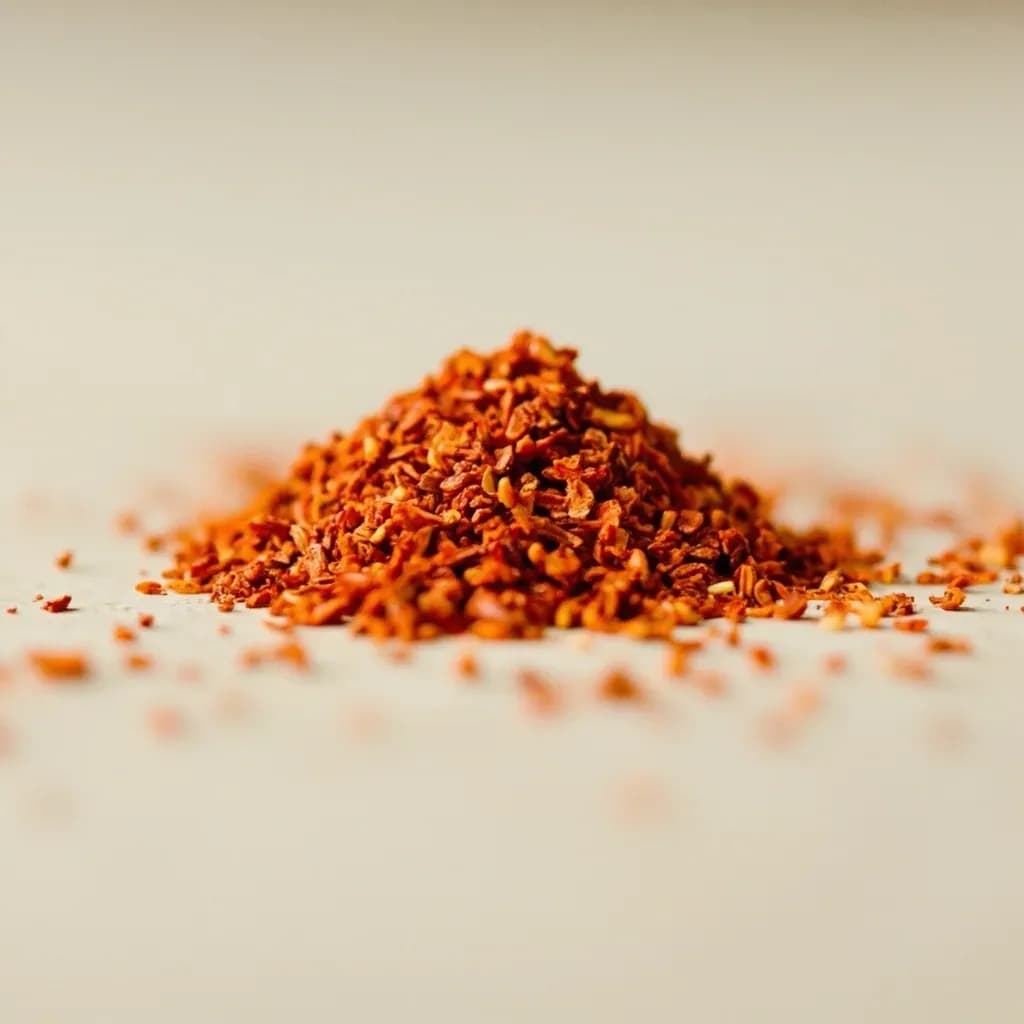
Urfa biber — also called isot — is the signature dried chile of southeastern Turkey, made from a dark-fruited landrace of Capsicum annuum grown around Şanlıurfa. What sets it apart from every other red chile flake in the pantry is not the pepper itself but the curing: harvested peppers are piled under tarps by day so internal moisture and sugars ferment the flesh, then uncovered at night so the surface dries, the cycle repeated for seven to ten days before a final sun-dry. That diurnal sweat-cure darkens the flesh to a purple-black, concentrates sugars into a raisin-and-molasses sweetness, and leaves a faint smoky, almost cocoa-like undertone. The flake that results is coarser and noticeably oilier than ordinary red pepper flakes, with a texture that tends to clump rather than scatter cleanly.
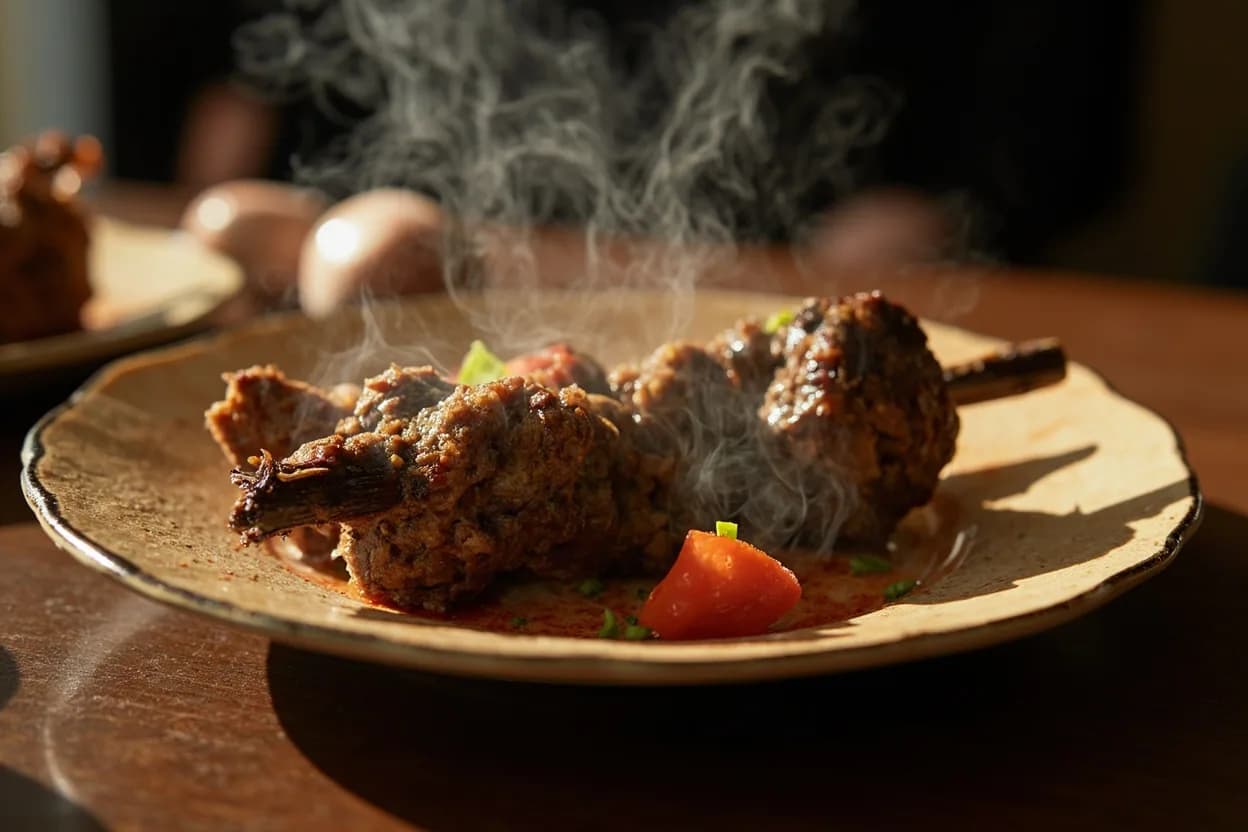
In the kitchen Urfa biber is treated as a finishing spice, the way a cook might handle a fancy smoked salt or a fruity olive oil. Its heat is modest — roughly 3,000 to 5,000 Scoville units, well below cayenne — but the warmth builds and lingers on the tongue while the smoke and sweetness carry the flavor. Add it early in long cooking and the volatile top notes go flat; add it at the end and the flake perfumes the dish without dominating it. That behavior is what makes it a defining sprinkle on Turkish menemen, on yogurt sauced over kebabs, and on a slick of hummus just before the bread goes in.
It is also one of the more versatile dessert-friendly chiles in any larder, because the raisiny, almost cocoa-nutty sweetness flatters dark chocolate, tahini halva, and caramel in ways that brighter, sharper chiles cannot. A small jar travels surprisingly far: a pinch finishes a lentil soup, a teaspoon seasons a butter for grilled bread, and a quarter-teaspoon tucked into brownie batter changes the character of the whole pan. Buy it in small amounts from a source that turns stock quickly, store it away from light and heat, and the color — that telltale purplish-black — is your freshness gauge.
- Measured in
- tsp
- Storage
- Store In An Airtight Container Away From Light & Heat
Find it in
Suits
Types & varieties
The benchmark sweat-cured flake from Şanlıurfa; dark, oily, raisiny, moderate heat.
Pressed or oiled version sold in jars; bolder, glossier, slightly more pungent than the dry flake.
Turkish-market label meaning 'black pepper' in this context; a darker, less-sweated style of local flake — not Piper nigrum.
Close cousin from Kahramanmaraş; similar sweat-cure, slightly brighter and a touch hotter — used interchangeably in most recipes.
Syrian/Turkish borderland style; a bit more acidic and less raisiny than true Urfa.
The sweat-cure, and why no plain red chile flake substitutes for it
Most dried chiles in the world are simply sun-dried or hot-air-dried after harvest. Urfa biber is not. After picking, the peppers are washed, piled thickly under plastic tarps during the day, and spread open under the stars at night. The daytime pile traps the fruit's own moisture, and over a week of this cycle the sugars and pigments ferment, darkening the flesh from deep red to a saturated purple-black and concentrating the natural sugars into something that tastes closer to sun-warmed raisins or molasses than to a fresh pepper. The night-air drying then sets the surface, locking in that transformed flavor.
That process is why the flake feels oily, slightly soft, and clump-prone in the bag. It is also why ordinary crushed red pepper — bright red, bone-dry, and sharply pungent — is never a true stand-in: it has the heat but none of the smoke, sweetness, or that quiet cocoa edge. Understanding the sweat-cure is the single most useful thing to know about this spice, because every other decision in the kitchen — when to add it, what to pair it with, when to substitute — follows from the fact that it is a semi-fermented, sugar-concentrated product rather than a plain dried one.
- Sweat-cure = short fermentation under cover, alternating with night drying.
- Result: darker color, lower moisture, oilier feel, and a raisiny-sweet flavor ordinary drying cannot produce.
- The fermentation step also softens some of the sharper, greener notes that survive in plain sun-dried chiles, contributing to Urfa's rounder profile.
- Color fades faster than flavor — a dull brick-red jar is past its prime even if it still smells faintly smoky.
Heat, flavor, and how to read the flake
Cooks unfamiliar with Urfa often over- or under-use it because they are calibrating against standard red pepper flakes, where bright heat is the headline. Here, heat is the bass note. The opening impression is smoky and almost sweet; the warmth arrives a beat later and sits on the tongue. Because the perception builds, a recipe that tastes balanced in the kitchen may feel hotter at the table — portion with that in mind, and taste as you go rather than measuring by feel alone.
Common uses
Tips & pitfalls
- Add it late — high, prolonged heat dulls the smoky, raisiny top notes; treat it like a finishing spice, not a base seasoning.
- Bloom briefly in warm (not smoking) olive oil or butter off the heat to reawaken the aroma without scorching it.
- Taste before salting — Urfa's savory depth can read as salty and lead to over-seasoning if you salt first.
- Buy in small quantities from a source that turns stock over quickly; faded product looks dull brick-red instead of purplish-black.
- Toast it dry in a skillet for 20–30 seconds for a nuttier, more brittle texture suited to crusts and dukkah-style mixes.
- Do not swap in standard red pepper flakes when a recipe is built around Urfa's character — they are sharper, one-dimensional, and far brighter red.
- Combine with sumac for a brighter, lemony-spicy profile, or with Aleppo pepper for an even fruitier, layered heat.
- Avoid jarred 'pepper paste' versions when a recipe calls for the flake; the moisture changes how the seasoning disperses.
Nutrition
Energy
121 kJ · per 100 g
Where the calories come from
Protein
0.9g
2% DV
Carbs
6.5g
2% DV
Fat
0.4g
0% DV
Fiber
2.8g
10% DV
Sugars
4.1g
of which
Sodium
3mg
0% DV
Source · USDA FoodData Central · approx. Peppers, jalapeno, raw
View on FDC →In the shops
Matched grocery products
No matched grocery products for Urfa Biber yet.
Good to know
- Origin
- Şanlıurfa (Urfa) province, southeastern Turkey
- Pepper species
- Capsicum annuum, local dark-fruited landrace
- Form
- Coarse to semi-coarse flakes, often with seeds; dark purplish-black to brownish-black
- Texture
- Denser, oilier, and slightly clumpy compared to standard red pepper flakes, from residual oils developed during the sweat-cure
- Heat (Scoville)
- Roughly 3,000–5,000 SHU — mild to low-medium, well below cayenne
- Primary flavor notes
- Smoky, earthy, raisin/molasses-like sweetness, faint cocoa/nutty undertone, building warmth
- Processing
- Daytime sweat-curing under cover, night exposure, repeated 7–10 days, then sun-dried
- Storage
- Airtight, away from light and heat; 6–12 months for best color and aroma (color fades faster than flavor)
- Typical yield
- Approximately 4–5 kg fresh peppers to 1 kg dried product
Substitutes
- Aleppo pepper — Closest match — similar mild heat and fruitiness; slightly more acidic and less raisin-sweet than true Urfa.
- Marash pepper (Maraş biberi) — Very close cousin from a nearby region; marginally brighter and a touch hotter; works 1:1 in most uses.
- Gochugaru (Korean coarse chile flake) — Useful for texture and color, but lacks the smoke and sweetness; add a pinch of smoked paprika to compensate.
- Smoked Spanish paprika (pimentón) plus a small pinch of cayenne — Provides the smoky depth; lacks raisiny sweetness, so add a drop of pomegranate molasses if the dish allows.
- Chipotle powder (in a pinch) — Smokier and more one-dimensional; best in chili, beans, or braises where the barbecue note fits.
- Pequin or chiltepin flakes, used sparingly — Much hotter and fruitier; use ¼ to ½ the volume called for and adjust by taste.
Pairs with
Also called
urfa pepper · isot biber · isot pepper · turkish chili flakes