Sauces & Pastes
Tahini
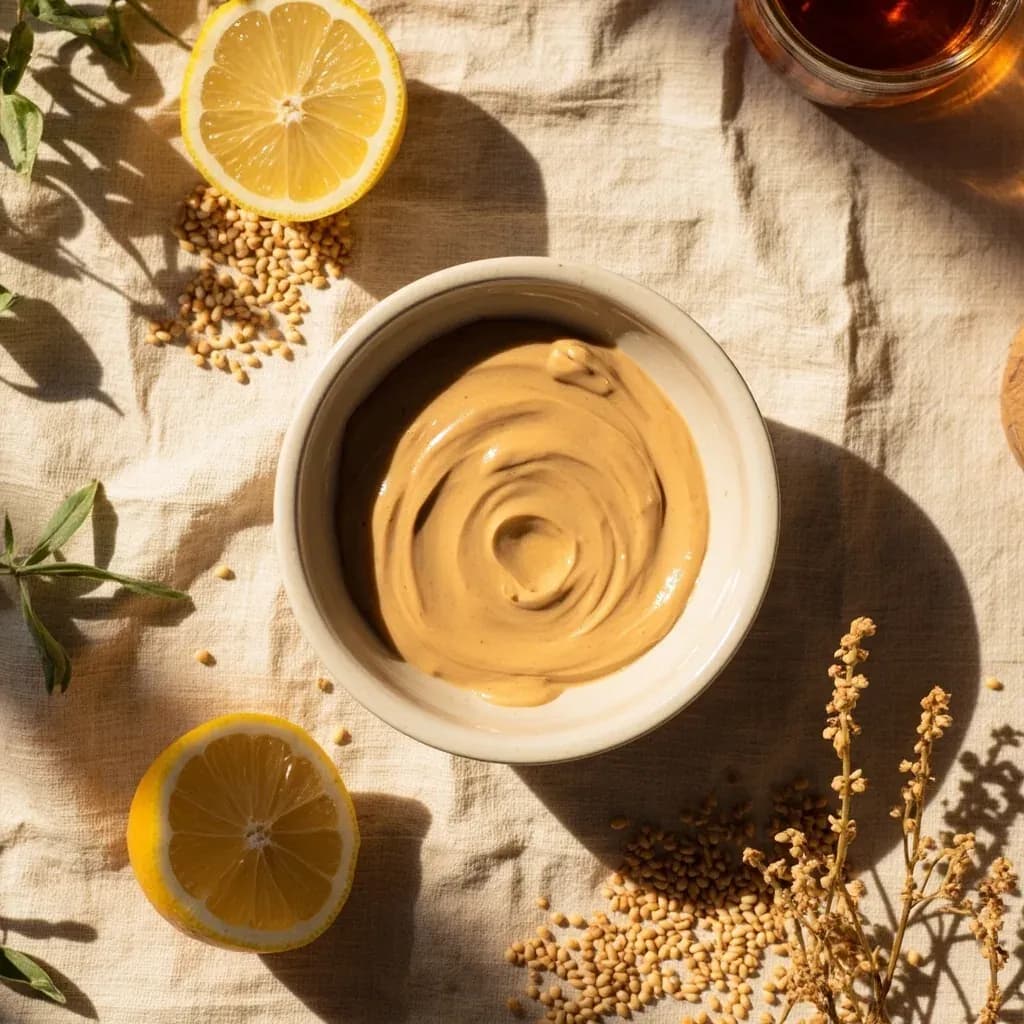
Ground toasted sesame paste, nutty and bitter-edged; the base of hummus and halva that seizes when whisked with a little water before loosening into a silky emulsion.
Tahini is a paste made from sesame seeds that have been toasted, then ground until they release their oils, sometimes with a small addition of neutral or olive oil to stabilize the texture. It is a defining ingredient of Levantine cookery, appearing wherever a cook wants a nutty, faintly bitter, oil-rich binder that holds a sauce together without dairy or eggs, and it travels easily from a chickpea purée to a noodle sauce to a confection. Commercial styles split cleanly into two poles: light tahini, made from hulled white sesame, which is pale, mild, and creamy; and dark tahini, made from unhulled sesame, which is deeper in color, more bitter, and considerably more assertive. Both behave the same in the bowl, but they taste noticeably different — light tahini is the default for hummus and pale sauces, while dark tahini has the backbone to stand up to halva, molasses glazes, and bold spice blends.
The single most useful thing a cook can know about tahini is how it behaves when liquid hits it. Whisked into a sauce, tahini first seizes into a thick, gluey mass that seems to have gone wrong; keep whisking and adding water a tablespoon at a time, and it suddenly relaxes into a glossy, pourable emulsion. This is normal, not a flaw, and it is the reason cold water and patience matter more than a recipe's exact ratio. Acid (lemon juice, vinegar) should be added only after the tahini has already loosened, or the emulsion can refuse to form. Stored well — sealed, refrigerated once open, and used within roughly six months — tahini is forgiving, but it goes rancid quietly, and a paint-like, acrid smell means the jar belongs in the bin.
- Measured in
- g
- Storage
- Pantry
Allergens
Find it in
Suits
Types & varieties
Made from hulled white sesame; pale, smooth, mild, and slightly sweet. The default for hummus and pale sauces in the Levant.
Made from whole, unhulled sesame; deeper color, more bitter, more calcium and fiber. Used in halva and anywhere a stronger sesame note is welcome.
Hulled and very pale, with a pourable, almost cream-like consistency when loosened with water.
Often slightly coarser in grind; frequently used in halva and pastries.
Typically darker and roasted longer; intensely flavored, common in halva and Persian sweets.
Sesame seeds roasted until deep brown then ground; smokier, more bitter, and denser than Middle Eastern tahini. Useful for halva and noodle sauces, but heavy-handed in delicate recipes like classic hummus.
Smooth, often slightly sweetened; frequently used as a sauce base or in dressings.
A coarser grind with visible seed flecks; rustic texture, more assertive flavor.
Light vs. dark — choosing the right jar
For most savory work — hummus, baba ghanoush, tarator, drizzles for roasted vegetables — light, hulled tahini is the right call. Its mild, creamy profile lets garlic, lemon, and the food underneath do the talking. Dark, unhulled tahini has a real presence: earthier, more bitter, with a roasted depth that reads almost coffee-like. It is the right choice for halva, for sauces that need to hold their own against pomegranate molasses or molasses-heavy glazes, and for finishing dishes where you want the sesame to be the headline rather than the supporting cast. They are interchangeable in a pinch, but a 1:1 swap will noticeably darken and sharpen a pale sauce.
- Hummus, baba ghanoush, tarator, dressings: light tahini.
- Halva, molasses glazes, assertive sauces: dark tahini.
- Drizzle on top of a finished dish: either, but dark gives more visual contrast on pale foods.
Taming the seize — making a tahini sauce that pours
Tahini's proteins and oils are dense and reactive. Add liquid and they clench; keep going and they relax. The technique is to lean into that, not fight it.
- Whisk in cold water (or ice water) one tablespoon at a time until the paste loosens into a thick, glossy pour.
- Only then add lemon juice, vinegar, or other acid — adding acid first often causes a permanent split.
- Salt at the end, after the emulsion has formed.
- If a sauce breaks and looks greasy, add a tablespoon of cold water and whisk hard; it usually re-emulsifies.
Storage and freshness
Tahini is more shelf-stable than people think, but more fragile than the label suggests once opened. The oil on top is not a sign of spoilage — it is normal separation, and it should be stirred back in before measuring. What you are guarding against is oxidation: the unsaturated fats in sesame turn rancid slowly, and a stale jar will quietly sabotage a sauce with a bitter, paint-like edge that no amount of lemon can hide.
- Stir the jar thoroughly before measuring; the bottom often turns dense and stiff.
- Refrigerate after opening to slow oxidation; bring back to room temperature and re-stir if it stiffens in the cold.
- Taste straight from the jar before using — acrid or paint-like means discard.
- Buy jars that list only sesame (and perhaps oil) on the label; cheaper brands sometimes add hydrogenated oils or fillers.
Common uses
Tips & pitfalls
- Stir the jar thoroughly before measuring — the oil separates and the bottom turns dense and stiff, so a casual scoop gives you an uneven mix.
- To loosen tahini for a sauce, whisk in cold water a tablespoon at a time; it will seize up first, then suddenly relax into a glossy emulsion. Ice water helps the emulsion stay stable.
- Add lemon juice and salt only after the tahini is already loosened, or it can seize and refuse to emulsify into anything but a stiff lump.
- If a sauce breaks and looks greasy or split, add a tablespoon of cold water and whisk energetically; it usually re-emulsifies in seconds.
- Taste tahini straight from the jar before using — old or poorly stored tahini turns acrid and paint-like, and no amount of seasoning will rescue it.
- Buy jars that list only sesame (and maybe oil) on the label; cheaper brands sometimes add hydrogenated oils, stabilizers, or fillers that change the texture.
- Refrigerate after opening; if the paste stiffens a lot in the cold, bring it to room temperature and stir before using.
- Toasting your own sesame seeds in a dry pan until just golden and fragrant, then grinding with a little neutral oil, gives the deepest, freshest flavor of all — worth the ten minutes.
- Don't substitute generic 'sesame paste' sold for sushi (often diluted, salted, or pre-blended) in a hummus recipe; they are not interchangeable.
- A pinch of ground cumin, sumac, or sweet paprika across the surface of a finished sauce adds aroma and color without altering the base.
Nutrition
Energy
2452 kJ · per 100 g
Where the calories come from
Protein
18.1g
36% DV
Carbs
24.1g
9% DV
Fat
50.9g
65% DV
Fiber
5.5g
20% DV
Sodium
12mg
1% DV
Source · USDA FoodData Central · approx. Seeds, sesame butter, paste
View on FDC →In the shops
Matched grocery products
No matched grocery products for Tahini yet.
Good to know
- Origin
- Levant and the broader Middle East; the word comes from Arabic طحينة (ṭaḥīna), from the verb ṭaḥana, meaning 'to grind.'
- Main ingredient
- Toasted, ground sesame seeds (Sesamum indicum), often blended with a small amount of neutral or olive oil to stabilize the paste.
- Texture
- Thick, oily paste that separates on standing; loosens into a pourable emulsion with water and/or lemon juice.
- Color
- Pale ivory (hulled/light tahini) to deep beige-brown (unhulled/dark tahini).
- Fat profile
- Roughly 50–60% fat by weight, predominantly unsaturated — about 40% polyunsaturated, 40% monounsaturated, 15% saturated.
- Energy
- About 85–95 kcal per tablespoon (≈15 g).
- Shelf life, opened
- Use within roughly 6 months; refrigerate to slow oxidation. Rancid tahini smells paint-like and acrid.
- Allergen note
- Sesame is a major allergen, declared separately in many jurisdictions (e.g., U.S. FASTER Act, with sesame labeling in effect from 2023).
Substitutes
- Sunflower seed butter — Closest 1:1 for texture and mild nuttiness; the go-to for sesame allergies. Slightly less complex in flavor, with a faint green note if not well-toasted.
- Almond butter (raw, unsweetened) — Creamy and mild, but distinctly almond. Works better in sweet applications than in savory sauces.
- Cashew butter — Smooth and slightly sweet; pleasant in sauces but considerably milder than tahini.
- Peanut butter plus toasted sesame oil — About 2 parts peanut butter to 1 part toasted sesame oil; an emergency swap only, with a very different flavor profile.
- Greek yogurt with toasted sesame oil and lemon — Useful when you want a sauce or dressing with tang rather than the paste itself; not a structural substitute.
- Chinese sesame paste (zhīma jiàng) — Closer to dark tahini but smokier and more bitter; works in halva and some sauces, but too heavy for neutral recipes like classic hummus.
Pairs with
Also called
sesame paste · tahina
Appears in these dishes
Related
Soy Sauce
Salty, savory umami base for stir-fries and marinades
Hot Sauce
Tangy, fiery splash for eggs, tacos, and anything dull
Tomato Sauce
Simmered tomato base for pasta, pizza, and braises
Barbecue Sauce
Smoky-sweet sauce for grilling, glazing, and dipping
Pesto
Vibrant basil-and-pine-nut sauce for pasta and beyond

Fish Sauce
Funky, salty essence that brings deep umami to SE Asian dishes
Worcestershire Sauce
Tangy, savory umami splash for marinades, stews, and Caesar

Sriracha
Garlicky chili sauce with sweet heat for drizzling and dipping