Spices
Za'atar
Levantine blend of wild thyme, sumac and toasted sesame, eaten with oil and bread.
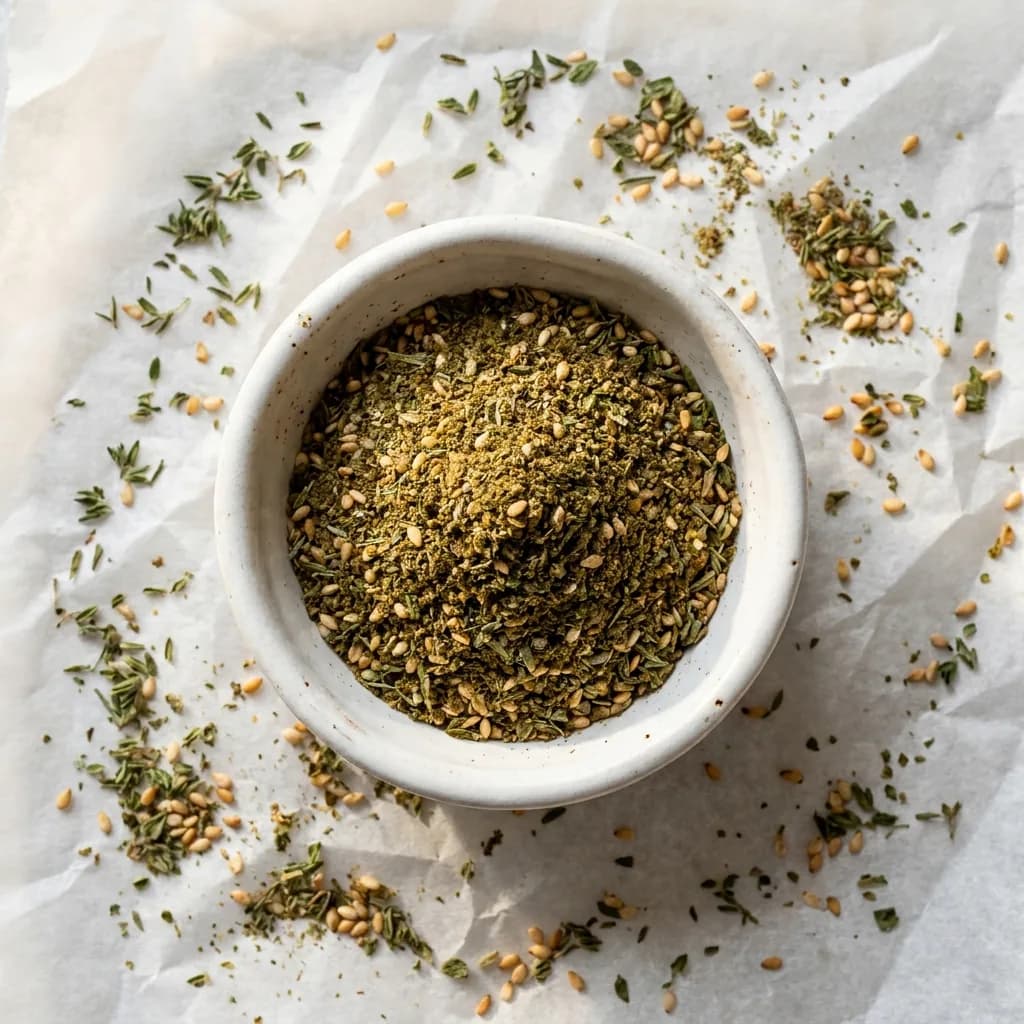
Za'atar is a Levantine spice blend combining dried wild thyme or oregano, tangy sumac, toasted sesame seeds and salt. It is mixed with olive oil and spread on flatbread, sprinkled over labneh, vegetables and grilled meats, or used as an all-purpose seasoning. Recipes vary by region, but the herb-sumac-sesame backbone is constant.
Za'atar is both a wild thyme plant native to the Levant and the aromatic spice blend made from it—a distinction that matters. The blend combines dried wild thyme (Thymbra spicata in Palestine and Jordan, various Thymus or Origanum species elsewhere), ground sumac for its tart, lemony punch, and toasted sesame seeds for richness and texture. Salt binds everything together, while commercial versions may add oregano, marjoram, hyssop, or even roasted wheat flour as fillers.
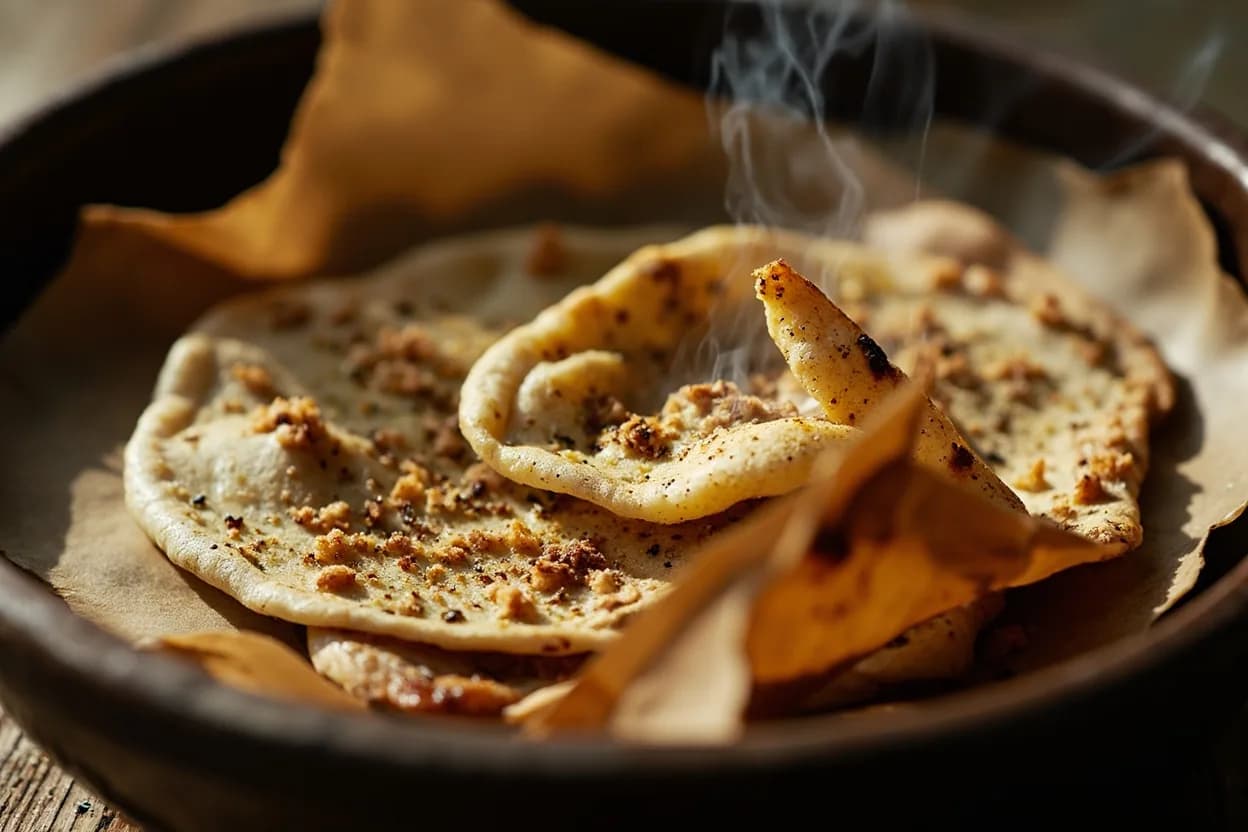
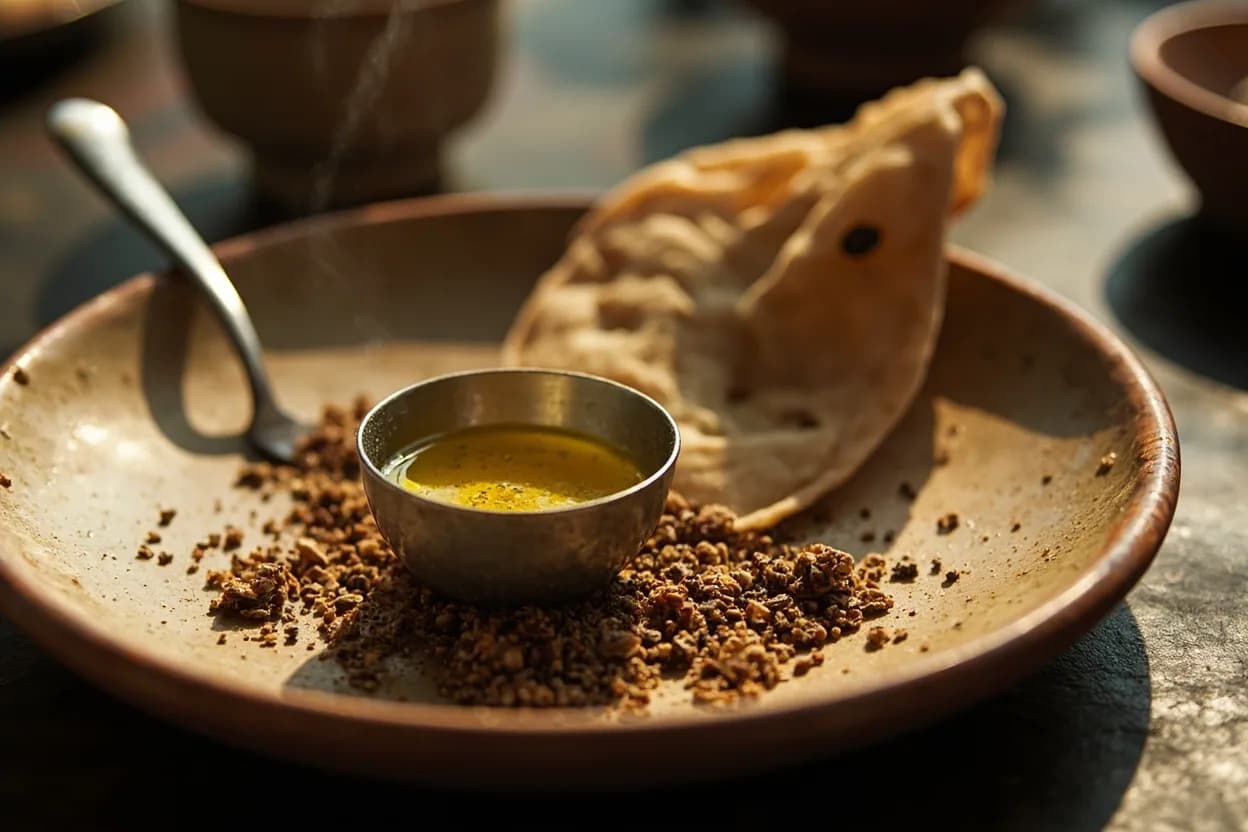
This blend is the backbone of Levantine breakfast and meze culture. The classic preparation—mixing za'atar with good olive oil and sweeping it through warm flatbread—is not incidental but foundational, a ritual that anchors daily meals across Lebanon, Palestine, Israel, Jordan, and Syria. Families and regions guard their ratios jealously; no two household blends taste identical. The wild thyme plant itself is legally protected in Israel, which affects supply and pricing of authentic blends and explains why commercial versions vary so dramatically in quality and character.
In cooking, za'atar behaves as a finishing spice rather than a long-cooking one. Its volatile herbal oils dissipate under sustained heat, so cooks add it at the end of cooking or reserve it for raw applications. The sesame should be toasted until golden and fragrant; raw sesame makes the blend taste flat and one-dimensional. When mixed with oil, za'atar should smell bright and herbal immediately—if the aroma turns dull or the color grays within an hour, the blend is stale or the oil is masking staleness. A fresh, quality za'atar opens the jar with an assertive herbal fragrance that announces itself across the room.
- Measured in
- g
- Storage
- Pantry
Allergens
Types & varieties
Prominent sumac, high sesame ratio, dried thyme; often includes oregano for backbone. Heavier on tang than many other versions.
Comparable to Palestinian; quality varies widely by producer. Traditionally made with wild thyme, but some commercial versions substitute cultivated thyme.
Regional thyme varieties used when available; similar balance to Lebanese and Palestinian blends but with subtle terroir differences.
May use hyssop (ezov) as the thyme component instead of true Thymbra spicata. Some versions contain roasted wheat flour as a binder, which dilutes flavor and changes texture.
Made with fresh-dried thyme, quality sumac, and separately toasted sesame seeds. Consistently superior to most commercial versions in freshness, balance, and fragrance.
The Wild Thyme Question
The za'atar plant (Thymbra spicata) is a distinct species from common garden thyme (Thymus vulgaris), though they share a family resemblance. Palestinians and Jordanians traditionally harvest Thymbra spicata from wild stands on hillsides—hence the plant's protected status in Israel. Other regional traditions use local Thymus or Origanum species, which explains why an authentic za'atar from Gaza tastes different from one made in Damascus. When wild za'atar herb is unavailable, combining common dried thyme with dried oregano approximates the complexity, though it cannot fully replicate the distinctive character of the wild plant. True za'atar herb has a slightly smoky, more medicinal quality that cultivated thyme lacks.
- Thymbra spicata is legally protected in Israel; authentic wild-harvested versions command premium prices
- Regional species variation is the main reason za'atar flavors differ across the Levant
- Thyme-oregano combination is the best substitute when true za'atar herb is unavailable
Sumac: The Non-Negotiable Acid
No za'atar works without good sumac. The dried, ground berries of Rhus coriaria provide the bright, lemony acidity that balances the earthy thyme and nutty sesame. Quality sumac should be deep burgundy-red, not brownish, and should smell lemony when you crush it between your fingers. Inferior sumac tastes flat, dusty, and vaguely bitter—a sign it was ground from old berries or improperly stored. Iranian and Mediterranean sumacs are the standards; avoid pre-ground sumac from sources that don't specialize in spices, as it loses potency quickly after grinding.
- True sumac is bright red with a lemon scent when crushed
- Brownish sumac is stale or low quality; avoid it
- Store whole sumac berries and grind as needed for maximum freshness
Common uses
Tips & pitfalls
- Toast sesame seeds separately in a dry pan over medium-low heat, stirring constantly, until golden and fragrant—about 3–4 minutes. Cool completely before adding to the blend. This step develops the nutty flavor that pre-ground or untoasted seeds lack entirely.
- Use high-quality, freshly ground sumac. Inferior sumac tastes flat and dusty. Rub a pinch between your fingers: it should smell bright and lemony. Dull, brownish sumac indicates old or poorly stored berries.
- Commercial za'atar mixed with oil turns grayish and loses fragrance within an hour. Mix only what you will use immediately, or serve the oil and za'atar separately so people can combine their own portions.
- If using fresh dried thyme rather than the wild za'atar herb, combine it with dried oregano in roughly equal parts to approximate the complexity. Pure cultivated thyme alone lacks the depth of true za'atar.
- The blend should be coarse, not a fine powder. Use a mortar and pestle to roughly crush the herbs; a spice grinder pulverizes them too fine, destroying texture and releasing oils prematurely.
- Adjust salt carefully with commercial blends, which are often aggressively salted. Taste before adding more salt, or use a low-sodium blend as your base.
- Common mistake: assuming all za'atar tastes the same. It varies dramatically by producer, region, and freshness. Buy from specialty spice shops or Middle Eastern groceries where turnover is high, not from bulk bins that sit for months.
- When using za'atar as a finish, add it in the last 30 seconds of cooking or directly to the plated dish. Sustained heat dissipates the volatile herbal oils that make za'atar distinctive.
Nutrition
Nutrition
No USDA FoodData Central match for Za'atar yet. We surface a per-100 g profile once a generic whole-food entry is matched and verified.
In the shops
Matched grocery products
 €0.79
€0.79Whole Cumin
BONPREU · Bonpreu
 €1.95
€1.95Cumin Seeds
Hacendado · 56 g · Mercadona
Good to know
- Origin
- Levant (Lebanon, Palestine, Israel, Jordan, Syria)
- Core Components
- Dried wild thyme, ground sumac, toasted sesame seeds, salt
- Flavor Profile
- Tangy, nutty, herbal, with bright acidity from sumac
- Traditional Use
- Mixed with olive oil and dipped with bread; dry on flatbreads before baking
- Shelf Life
- 6 months to 1 year stored airtight, away from heat and light
- Texture
- Coarse blend—never fine powder; mortar and pestle preserves this better than grinders
- Key Distinction
- Za'atar names both the wild thyme plant and the spice blend made from it
- Freshness Test
- Opens with bright, herbal fragrance; dull or flat aroma indicates stale herbs
Substitutes
- Thyme + Sumac + Sesame Seeds — Combine roughly 2 parts dried thyme, 1 part ground sumac, and 1 part toasted sesame seeds with a pinch of salt. This is the closest approximation and the most reliable fallback.
- Dukkah — An Egyptian nut-and-spice blend with sesame, coriander, and hazelnuts. Similar texture and some flavor overlap, though noticeably nuttier and less tangy from sumac.
- Herby Oregano Blend — Mix dried oregano with a bit of lemon zest, toasted sesame, and salt. Lacks the distinctive tang of sumac but provides herbal character. Add a squeeze of lemon juice when using to approximate the acid.
Pairs with
Also called
zaatar-blend · za-atar · zatar
Appears in these dishes
Related
Salt
The one seasoning that makes everything else taste like itself

Black Pepper
Pungent, woody heat — best cracked fresh over anything savory
Amchur
Dried unripe mango ground to a tart, fruity souring powder
Paprika
Sweet, vivid ground pepper for color and gentle warmth
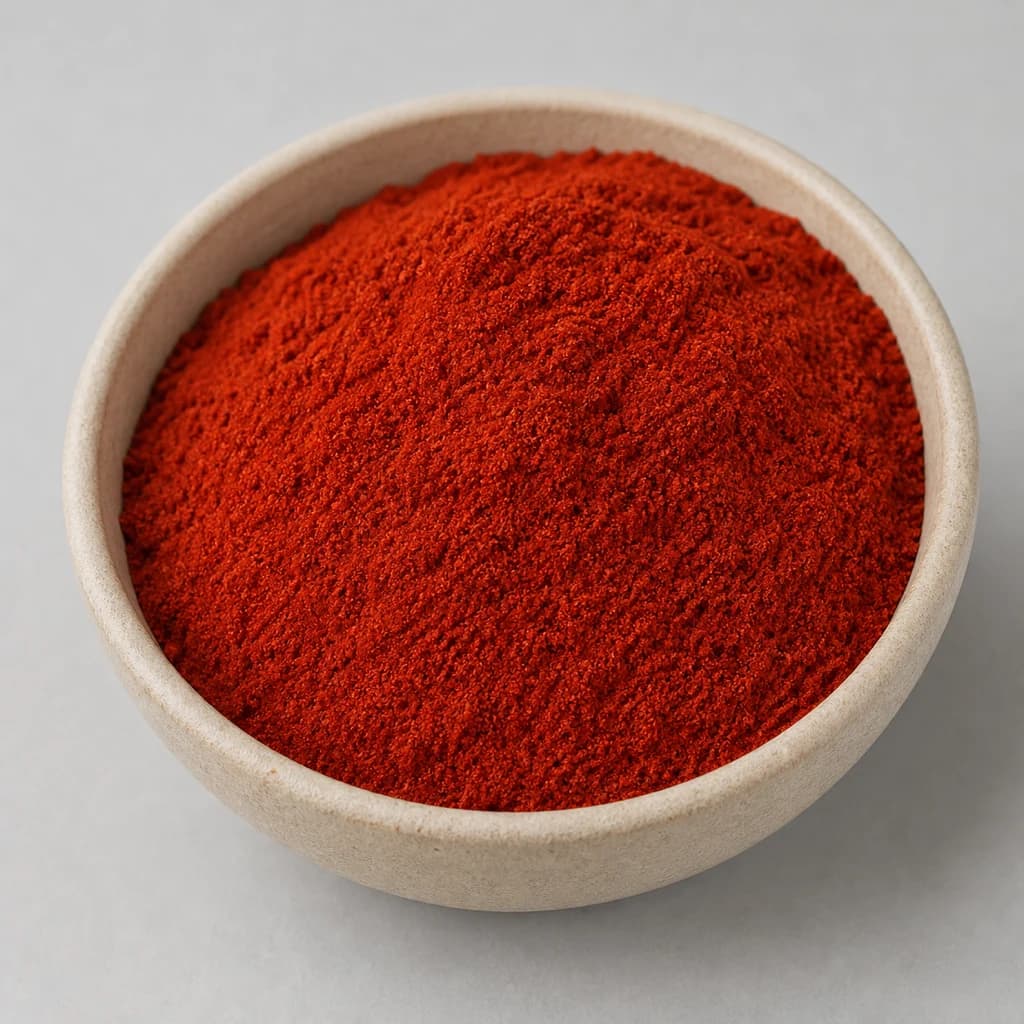
Smoked Paprika
Deep, smoky ground pepper for a campfire warmth
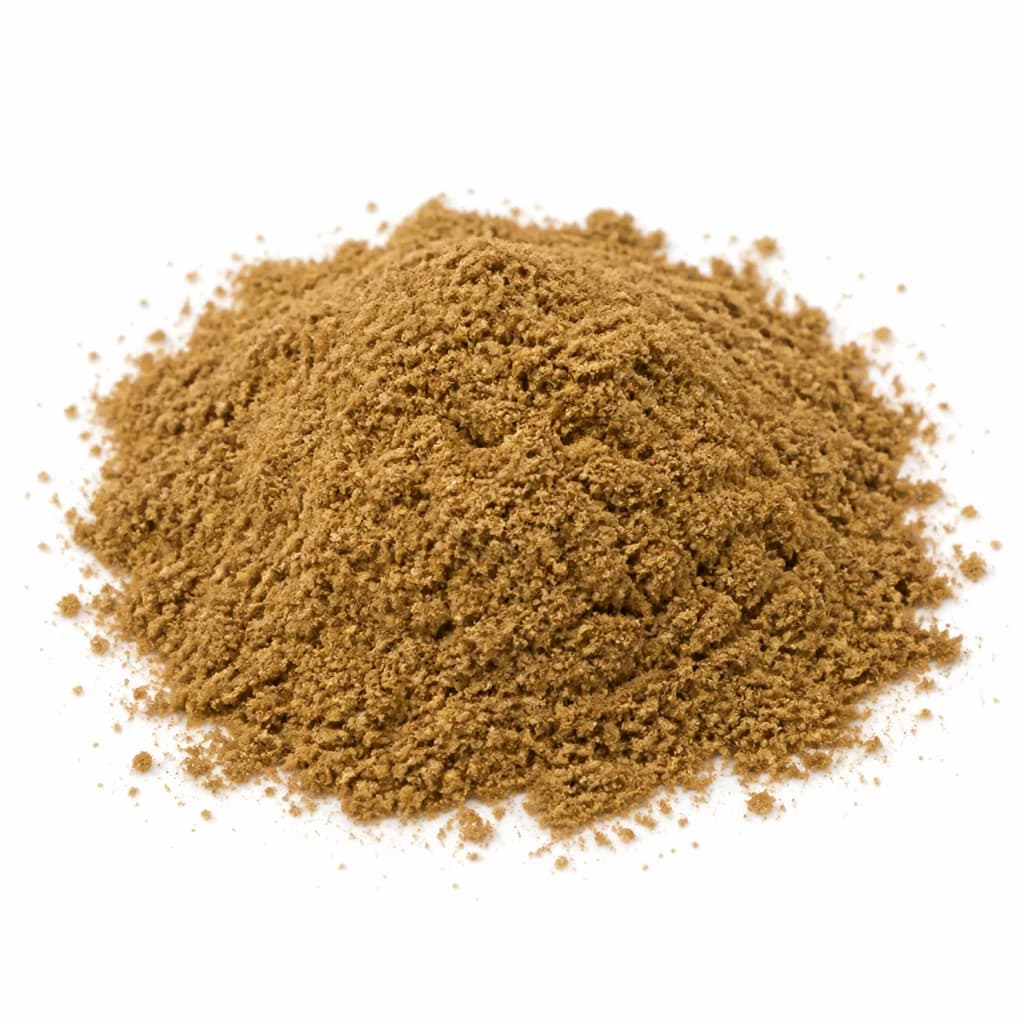
Cumin
Warm, earthy spice central to curries, chili, and tacos
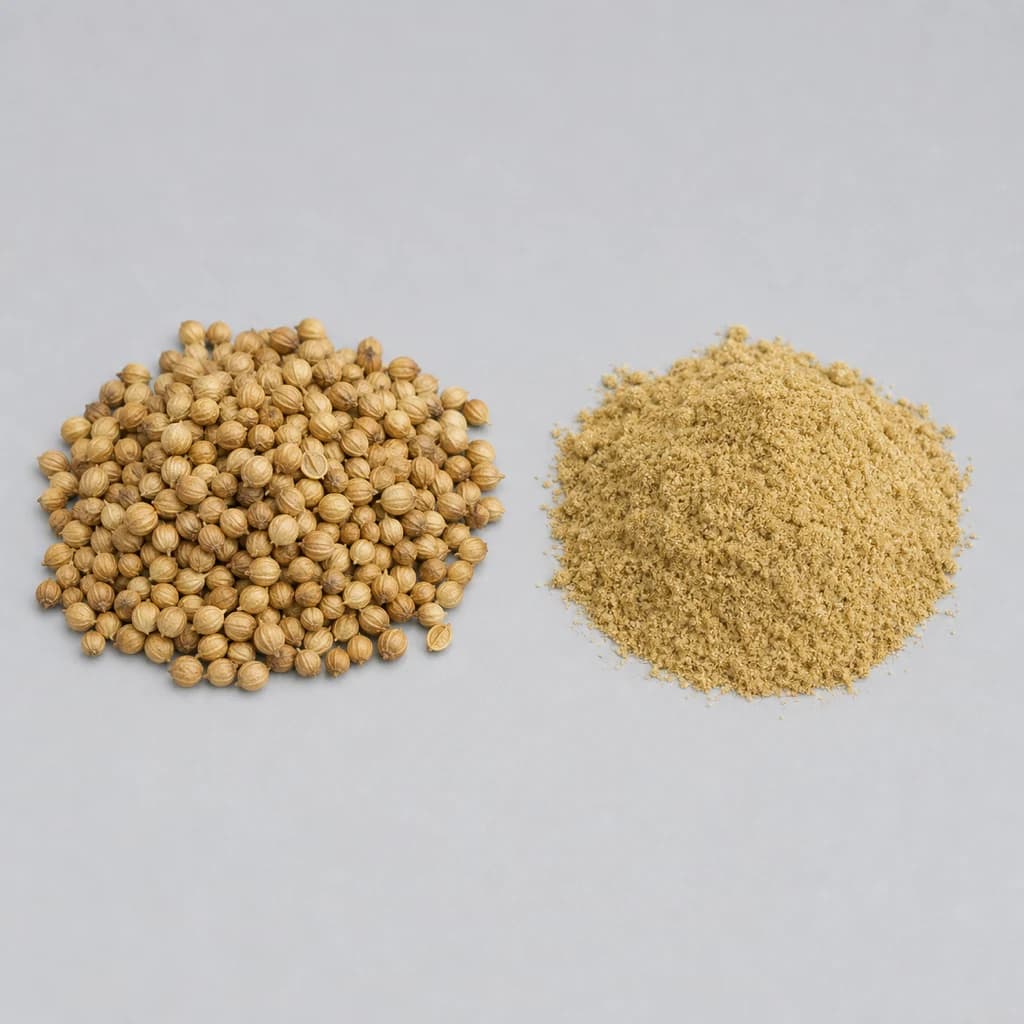
Coriander Seed
Citrusy, warm seed for curries, pickles, and rubs
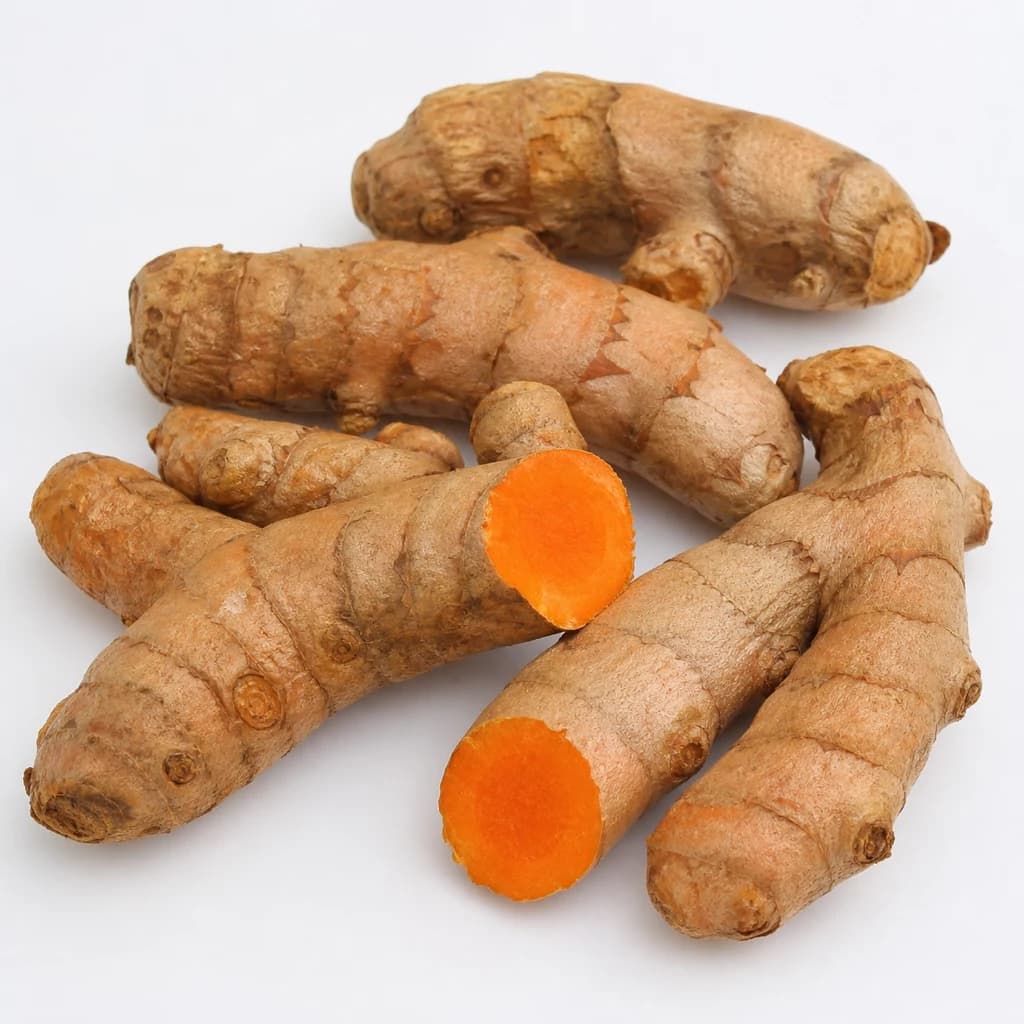
Turmeric
Golden, earthy spice for curries, rice, and color