Spices
Guajillo Chile
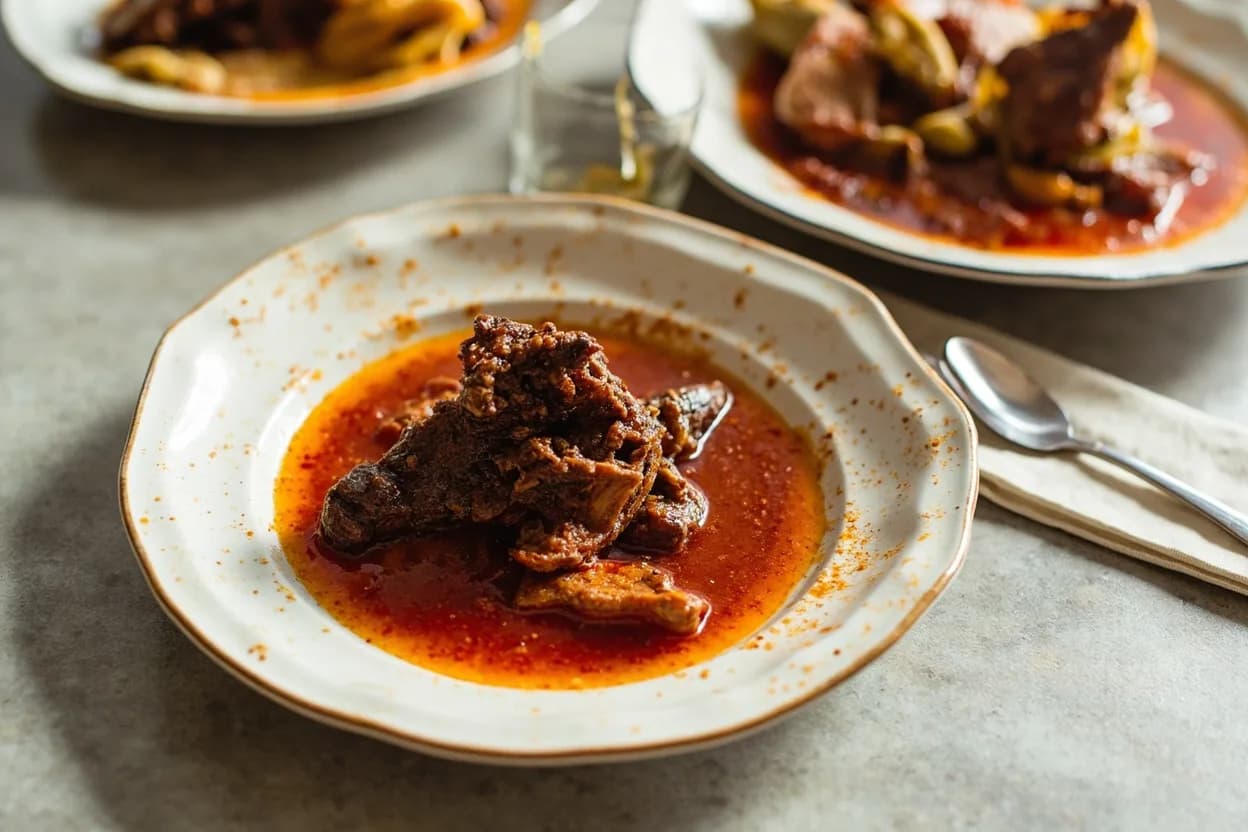
Glossy, leathery chile with bright tangy-berry flavor and gentle-to-medium heat; blended with ancho for the classic red-chile base of birria, salsas, and adobos.
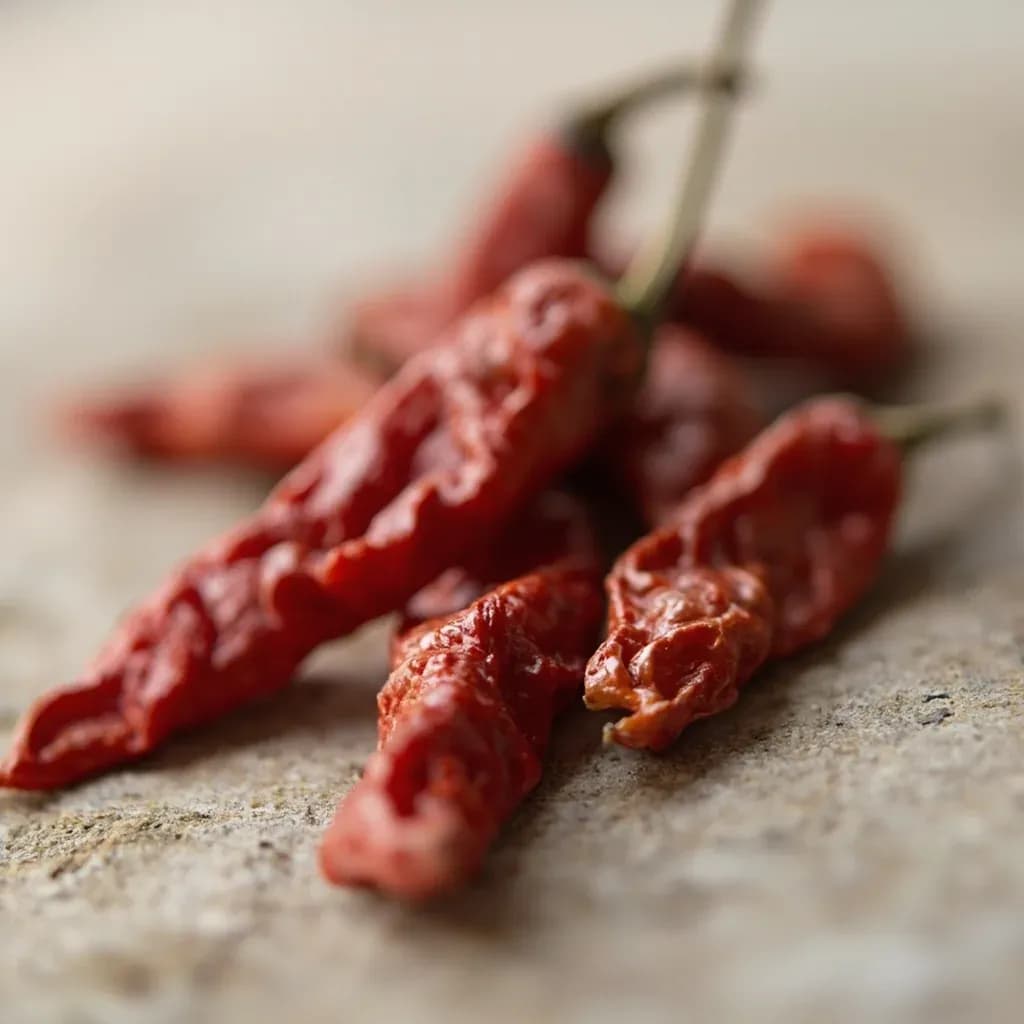
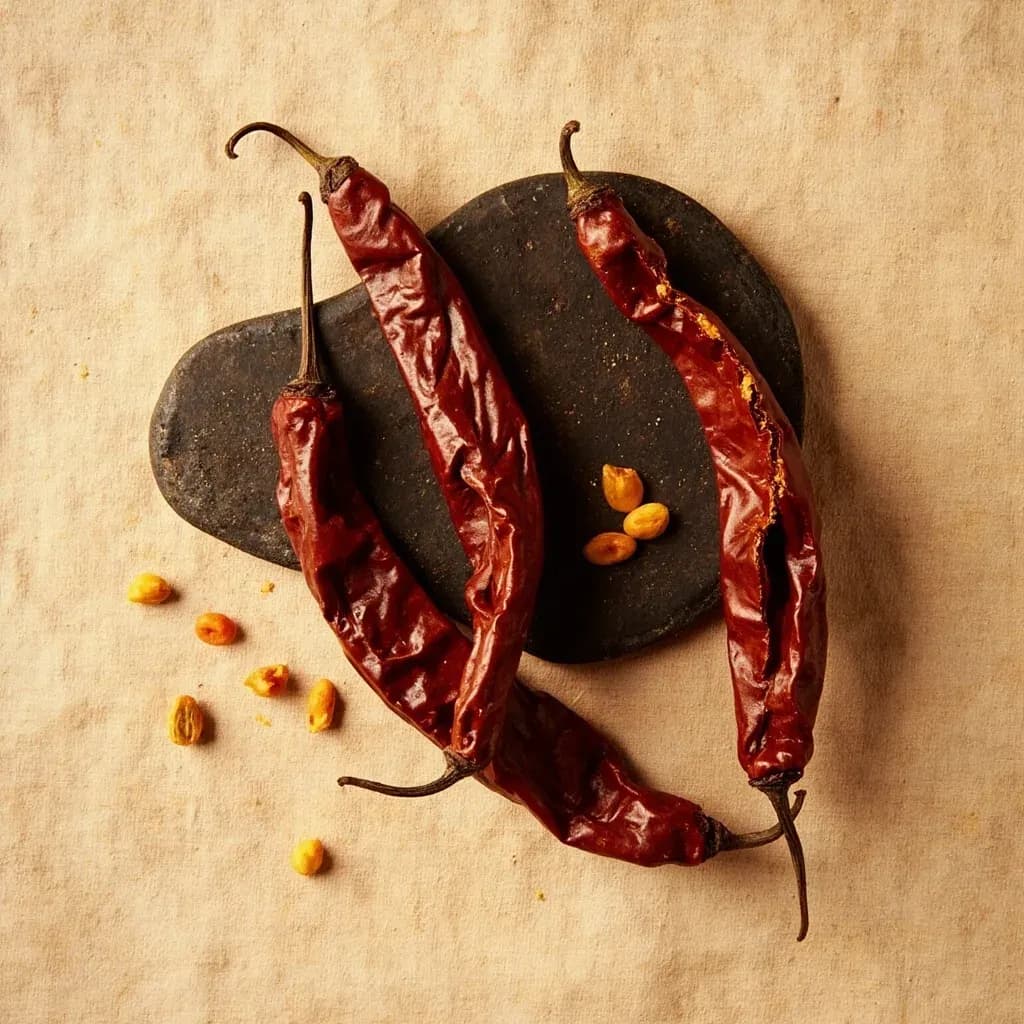
The guajillo is the dried mature pod of a particular strain of Capsicum annuum grown across central and northern Mexico — Zacatecas, San Luis Potosí, Durango, Aguascalientes, Jalisco, and Guanajuato. In its fresh red form it is sold as Mirasol ("looking at the sun"), named for the traditional practice of laying the ripe pods out on the fields to dry. Once dried, the skin deepens to a dark burgundy-red, smooth and glossy, with a leathery pliability that holds up better than most other dried chiles. It is the second most widely used dried chile in Mexican cooking after the ancho, and arguably the one responsible for the bright, tangy backbone of an entire cuisine's red sauces.
Flavor is where guajillo stakes its claim. The heat sits at a gentle 2,500–5,000 SHU — milder than a fresh jalapeño — but it is the taste, not the burn, that defines the chile. Cooks describe it as tangy and berry-like: cranberry, a touch of green tea, pine resin, and a faint green-tomato acidity. Crucially, it is not the raisin-and-tobacco sweetness of an ancho nor the licorice-prune depth of a pasilla; it brings lift and fruit, not weight. That acidity is what lets a guajillo sauce cut through fatty braised meats and stand up to charred aromatics without tasting flat.
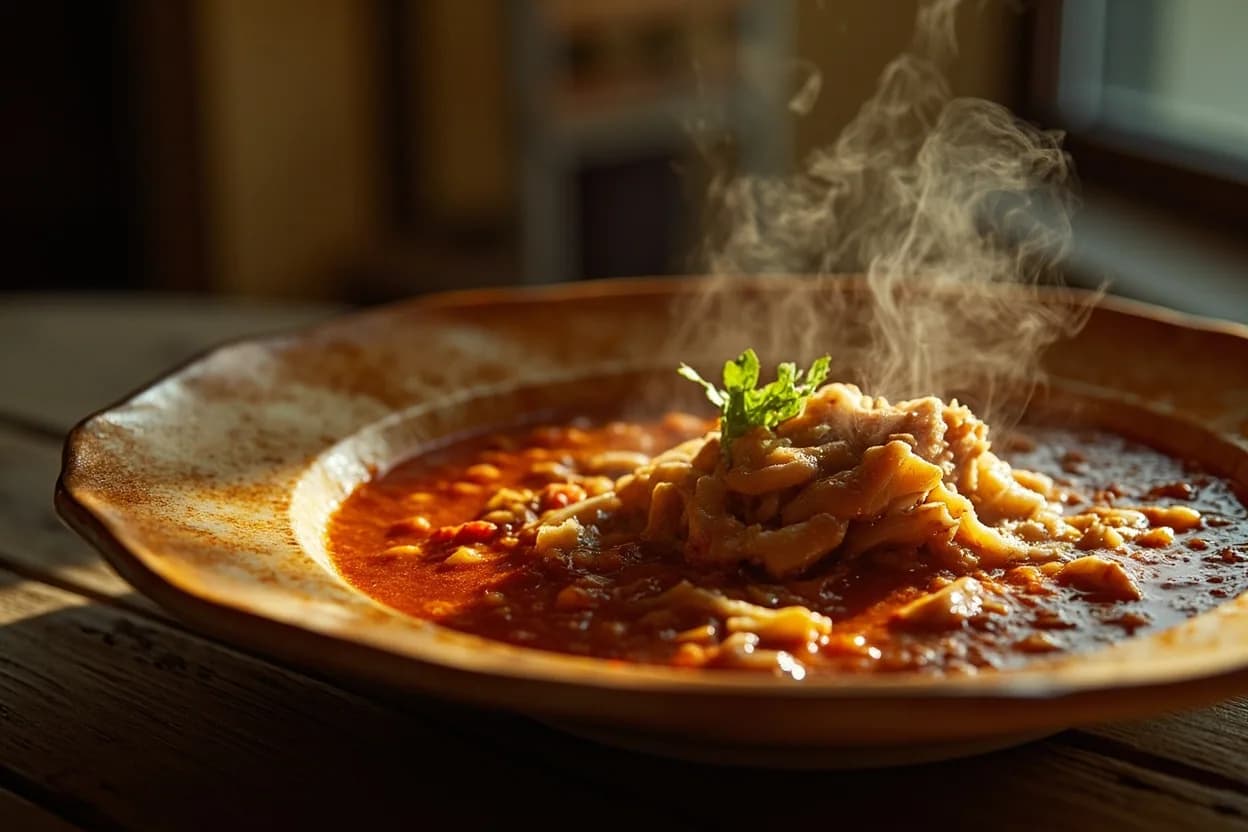
In the kitchen, dried guajillos are leathery and pliant (brittleness is a sign of age, not the normal state), and they require both toasting and rehydration before they yield their flavor. About an ounce of dried pods gives roughly half a cup of soft, slightly fibrous flesh after a 20–30 minute soak, and the soaking water itself carries meaningful flavor — strain it and use it as part of the cooking liquid. Guajillo is most often paired with other chiles; it is the bright half of the canonical ancho-plus-guajillo red-chile base that powers birria, enchilada sauces, adobos, and the table salsa roja that shows up with almost every plate.
- Measured in
- g
- Storage
- Dark Cool
Find it in
Suits
Types & varieties
The common dried Mirasol; deep red, 4–6 in, smooth skin — the form sold in the U.S. as 'guajillo.'
The fresh, ripe red pod before drying — same plant, not a separate cultivar, but sold fresh at Mexican markets.
A longer, slimmer regional variant sometimes called 'cascabel largo' colloquially; same flavor family, slightly thinner flesh and a touch more heat.
Guajillo and Its Cousins: How It Differs
Guajillo, ancho, and pasilla are often shelved together — and frequently confused — but each does a different job in a sauce. Knowing which is which is the difference between a balanced red-chile base and a flat, sweet, or muddy one.
- Ancho (dried poblano): sweet, raisin-and-tobacco depth, mild (1,000–2,000 SHU). Adds body and roundness; pairs with guajillo to build the canonical red-chile base for birria and enchilada sauce.
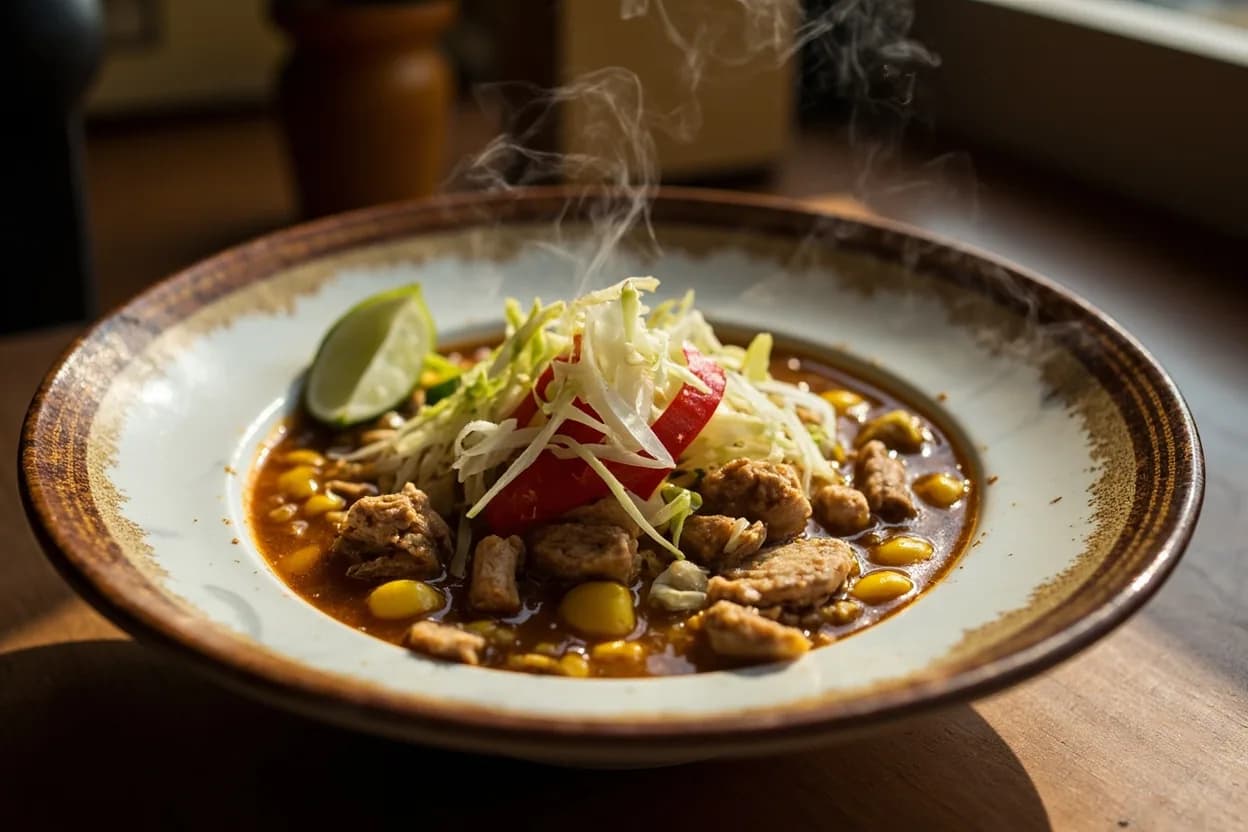
- Pasilla (dried chilaca): long, narrow, almost black; raisin-and-licorice flavor with a lingering bitterness. The trio of ancho + guajillo + pasilla is the mole and red-pozole backbone.
- Cascabel: small, round, with rattling seeds; earthier and nuttier than guajillo, similar heat. Substitutes 1:1 in long-simmered braises, less ideal for bright table salsas.
- Chiles de árbol: thin, hot, clean burn (15,000–30,000 SHU). Adds heat, not flavor body; add a few toasted ones to a guajillo sauce when you want focused burn without changing the character.
Common uses
Tips & pitfalls
- Toast pods in a dry comal or skillet 10–15 seconds per side over medium heat until fragrant and a shade darker — do not blacken them, as guajillo turns bitter very quickly.
- Press each pod flat with a spatula while toasting so the entire skin makes contact with the pan; unevenly toasted chiles produce an uneven sauce.
- Snip off the stem and shake out most of the seeds; for a milder sauce, slit the pod lengthwise and scrape out the ribs and remaining seeds with the back of a knife.
- Rehydrate in just-barely-simmering water (a bare bubble, not a rolling boil) for 20–30 minutes, and weigh the pods under the surface with a small plate so they stay submerged.
- Reserve and strain the soaking liquid — it carries real flavor and should replace part of the water or stock called for in your sauce.
- For a smooth table salsa, blend the rehydrated chiles with the soaking liquid, then push the puree through a fine-mesh strainer to catch the leathery skin.
- After blending, bloom the chile paste in hot lard or neutral oil for 2–3 minutes — this deepens the color, rounds the raw edge, and helps the sauce emulsify.
- Buy in small quantities from a high-turnover source; old guajillo fades to dusty tan and loses almost everything that makes it worth using. If a pod snaps rather than bends, it's past its prime.
Nutrition
Nutrition
No USDA FoodData Central match for Guajillo Chile yet. We surface a per-100 g profile once a generic whole-food entry is matched and verified.
In the shops
Matched grocery products
No matched grocery products for Guajillo Chile yet.
Good to know
- Origin
- Central and northern Mexico — Zacatecas, San Luis Potosí, Durango, Aguascalientes, Jalisco, Guanajuato
- Species
- Capsicum annuum (same species as bell peppers, jalapeños, and most other chiles)
- Fresh form
- Called Mirasol ('looking at the sun') for the traditional sun-drying practice
- Heat
- 2,500–5,000 SHU — milder than a fresh jalapeño, classed as gentle to medium
- Appearance
- Deep burgundy-red to mahogany; smooth, glossy, leathery skin; 10–15 cm (4–6 in) long
- Flavor profile
- Tangy and slightly sweet, with cranberry, green tea, pine, and a faint green-tomato tang — not earthy or raisin-like
- Yield
- About 1 oz (28 g) dried yields roughly ½ cup rehydrated flesh
- Position in Mexican cuisine
- Second most widely used dried chile in Mexico, after the ancho
Substitutes
- New Mexico (dried) — Closest mainstream substitute — similar tangy-sweet profile and comparable heat (often a touch milder); use 1:1, expect slightly less berry tang.
- Cascabel — Same heat range but rounder, more earthy-nutty flavor; works in a 1:1 swap when the dish is braised or simmered, less ideal for bright salsas.
- Ancho + chiles de árbol (blend) — 2 parts ancho + 1 part árbol mimics the body of guajillo with a bit more heat; anchos alone are too sweet and raisin-like to stand in.
- California chile — Mild and lightly sweet, but lacks guajillo's tang and brightness; acceptable in long-simmered stews, weak in fresh salsas.
- Pasilla — Frequently confused with guajillo at market (pasilla is the dried chilaca — darker, longer, raisin-like); not a true substitute, but a classic complement in moles and adobos.
Pairs with
Also called
chile guajillo · guajillo · dried mirasol