Spices
Pasilla Chile
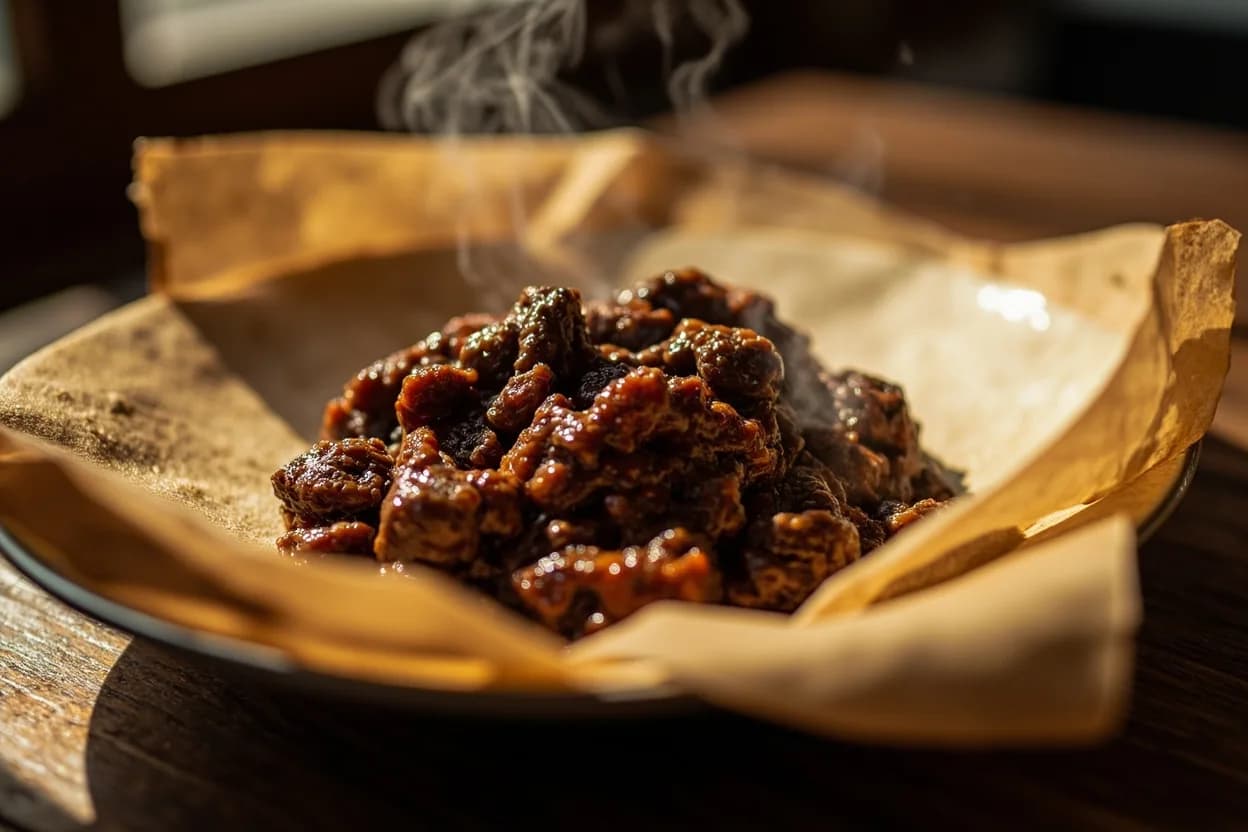
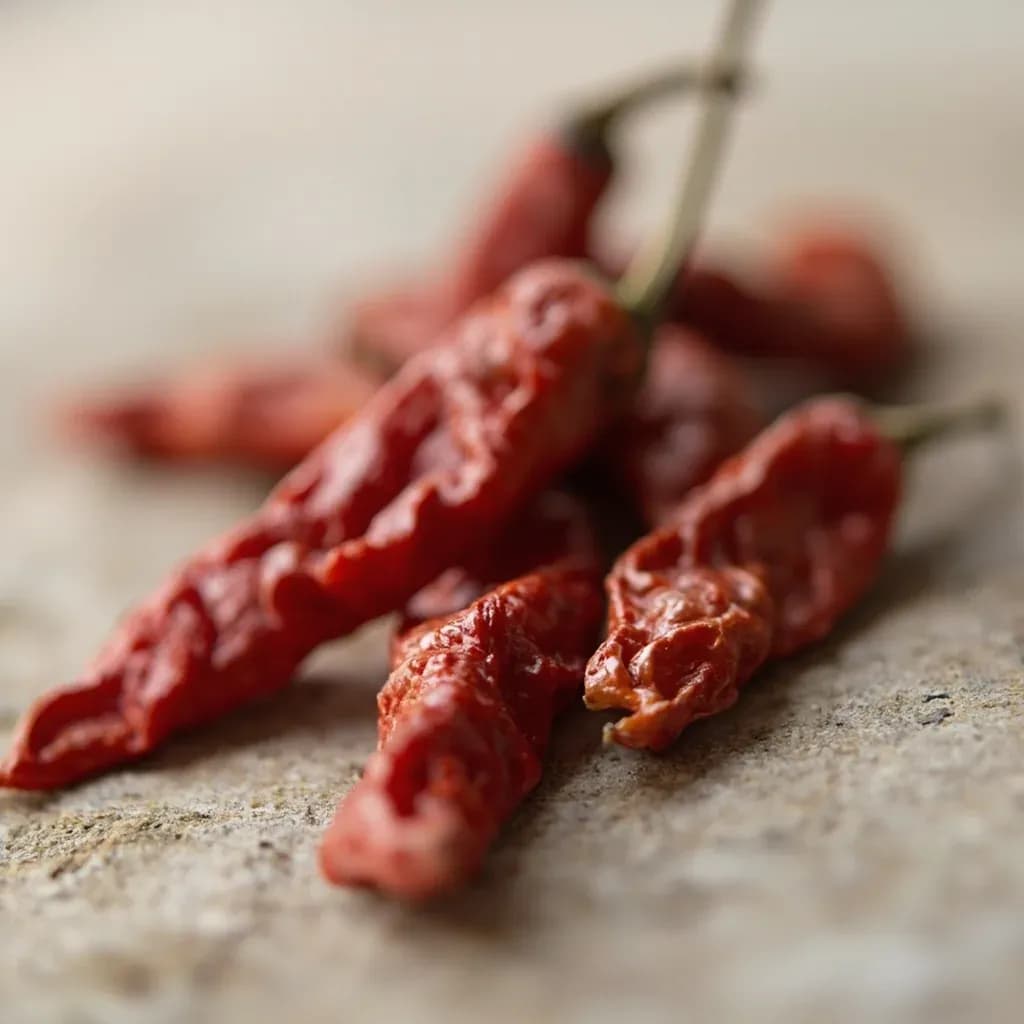
Dried chilaca: dark, raisin-and-cocoa flavor with mild, earthy heat; classic in mole negro, drizzled chile oils, and sauces for seafood and lamb.
Pasilla chile is the dried pod of the chilaca pepper, a long, slender Capsicum annuum cultivated across central Mexico. In the kitchen it is best understood as the fruit-and-earth chile of the Mexican pantry — dark, almost black, and loaded with layered flavor (raisin, prune, cocoa, a faint licorice lift) that more aggressive chiles cannot deliver. At roughly 250 to 2,500 Scoville units it carries heat as a whisper rather than a statement, which is exactly why it anchors sauces meant to cloak, not punch.
What sets pasilla apart from its dried-chile cousins is how it behaves in a pot. Where guajillo brings brightness and ancho brings cherry-sweetness, pasilla brings a savory-fruity depth that holds up to long simmers and to the dark company of chocolate, sesame, and toasted nuts. It is the backbone chile of Oaxacan mole negro, a frequent partner in mole poblano, and the base of countless table salsas negras drizzled over tacos, eggs, grilled fish, and slow-braised lamb.
The single most important thing a cook needs to know about pasilla is that its thin walls scorch in seconds. A blackened pod turns an entire pot acrid and ashy, so it must be toasted lightly — just until pliable and fragrant — and rehydrated in warm, not boiling, liquid. Treat it like a delicate spice and the sauce will taste like dark fruit and warm earth; treat it like a sturdy guajillo and you will spend the evening wondering where the dish went wrong.
- Measured in
- g
- Storage
- Dark Cool
Find it in
Suits
Types & varieties
The most common type; long, dark, raisin-like, mild to medium heat. The default in mole negro and table sauces.
A landrace/selection from the Bajío region (Zacatecas–Aguascalientes); often fleshier and slightly more pungent; widely exported to the U.S.
The fresh green-to-dark pod, used roasted and stuffed; flavor is brighter and less raisin-like.
A different local variety from Oaxaca; smaller, smoky, and significantly hotter; not a true pasilla in the central-Mexican sense.
Identifying a True Pasilla at the Market
Pasilla is the most commonly misidentified dried chile in American markets, and the wrong pod will produce a sauce that is sweeter, flatter, or sharper than the recipe intends. The confusion is mostly with ancho (dried poblano) and occasionally with guajillo, and a single mixed bag can throw off an entire mole. Knowing what to look for — and where to shop — saves a dish before it starts.
- Look for pods that are 6–10 in long, narrow, and noticeably thinner than a finger. Anchos are stubbier, wider, and often heart-shaped at the shoulder.
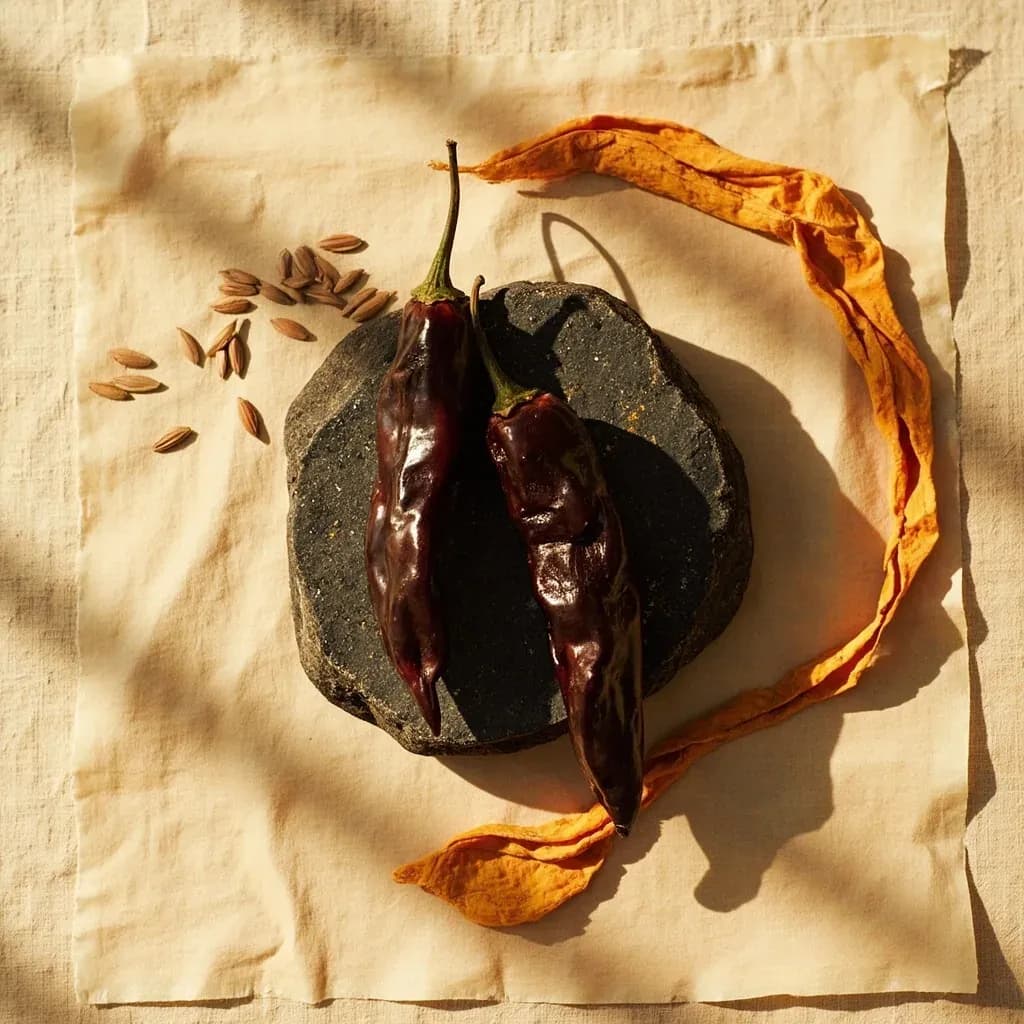
- Color should be very dark brown to near-black with a matte, slightly wrinkled surface. A reddish-brown or brick-colored 'pasilla' is almost always a mislabeled ancho.
- Flexibility matters: a properly dried pasilla should bend before it snaps, like a pliable leather strip. Brittle, crackly pods are over-dried and have lost much of their aromatic oil.
- Buy from a Mexican mercado, a Latin grocery, or a spice house that labels by origin and species. Bulk-bin 'pasilla' at a generic supermarket is the single most likely source of substitution errors.
- If the label says 'ancho pasilla' or 'pasilla-ancho,' it is almost certainly an ancho. The two names do not refer to a hybrid; they refer to two different chiles.
Common uses
Tips & pitfalls
- Toast in a dry skillet over medium heat, pressing flat with a spatula for 10–20 seconds per side. The walls are thin and scorch fast; aim for pliable, fragrant pods, not blackened ones.
- Stem, slit lengthwise, and shake out the seeds before rehydrating — seeds add bitterness and grassy heat that mask the raisin-cocoa notes.
- Rehydrate in hot (not boiling) water for 15–20 minutes, or in warm chicken or vegetable stock for more flavor; reserve the soaking liquid and use it in the sauce, because it carries significant body and color.
- Blend the rehydrated pods with the soaking liquid, then push through a fine-mesh strainer or food mill to remove tough skin fragments; the finished sauce should be glossy, never gritty.
- Balance the natural sweetness with acid (vinegar, lime, or tomatillo) and a pinch of piloncillo or dark brown sugar — the chile's fruit notes need a counterpoint or the sauce flattens out.
- Do not substitute canned chipotle in adobo for pasilla: the smoke overwhelms the earthy, fruity character that defines pasilla-based dishes.
- Store pods whole and grind only what you need; toast the powder briefly in oil to wake the aromatics before adding any liquid.
Nutrition
Nutrition
No USDA FoodData Central match for Pasilla Chile yet. We surface a per-100 g profile once a generic whole-food entry is matched and verified.
In the shops
Matched grocery products
No matched grocery products for Pasilla Chile yet.
Good to know
- Form
- Dried pod; the dried state of the fresh chilaca pepper (Capsicum annuum)
- Also known as
- Chile pasilla, pasilla negro; the fresh form is chilaca. 'Chile negro' is sometimes used as a regional synonym, but in U.S. markets it is often a catch-all for dark dried chiles. 'Ancho pasilla' is a mislabel for true ancho.
- Scoville Heat Units
- Mild: roughly 250–2,500 SHU, occasionally up to ~4,000
- Appearance
- Long, thin, wrinkled pod, 6–10 in (15–25 cm); dark brown to nearly black with a matte surface
- Flavor profile
- Earthy, sweet-savory with raisin, prune, cocoa, and a faint licorice/anise note; deeper and less sharp than most dried chiles
- Origin
- Mexico; widely cultivated in Michoacán, Zacatecas, Aguascalientes, and Guanajuato
- Yield (rehydrated)
- About 1 oz (28 g) dried yields ~3/4 cup (180 ml) rehydrated flesh and ~1/2–2/3 cup purée after blending and straining
- Storage
- Whole pods keep 6–12 months in an airtight container away from light; ground pasilla loses aroma within 2–3 months
- Confusion watch
- Frequently mislabeled as 'ancho' in U.S. markets; true ancho is the dried poblano and is wider, shorter, and redder-brown. The 'pasilla de Oaxaca' is a different, much spicier smoked chile.
Substitutes
- Ancho chile (dried poblano) — Closest stand-in for body and color, but sweeter and less raisiny; use about 75% the weight and add a small splash of pomegranate or prune juice to mimic the fruit notes.
- Mora chile — A small, very dark, sweet dried chile with similar color and fruitiness, generally a touch hotter; a strong option in moles when pasilla is unavailable.
- Guajillo — Not a true substitute — brighter, more tangy, and less sweet — but blended 50/50 with an ancho it can approximate pasilla's depth in a pinch.
- Mole paste (jarred mole negro) — An emergency option when the dish is a quick weeknight sauce rather than a from-scratch mole; thin with stock and brighten with a toasted pasilla if one is available.
Pairs with
Also called
chile pasilla · dried chilaca · pasilla negro · chile negro