Spices
Mulato Chile
Dried ripe poblano, darker and sweeter than ancho with notes of chocolate, licorice, and dried cherry. One of the three chiles in classic mole; rehydrate and blend.
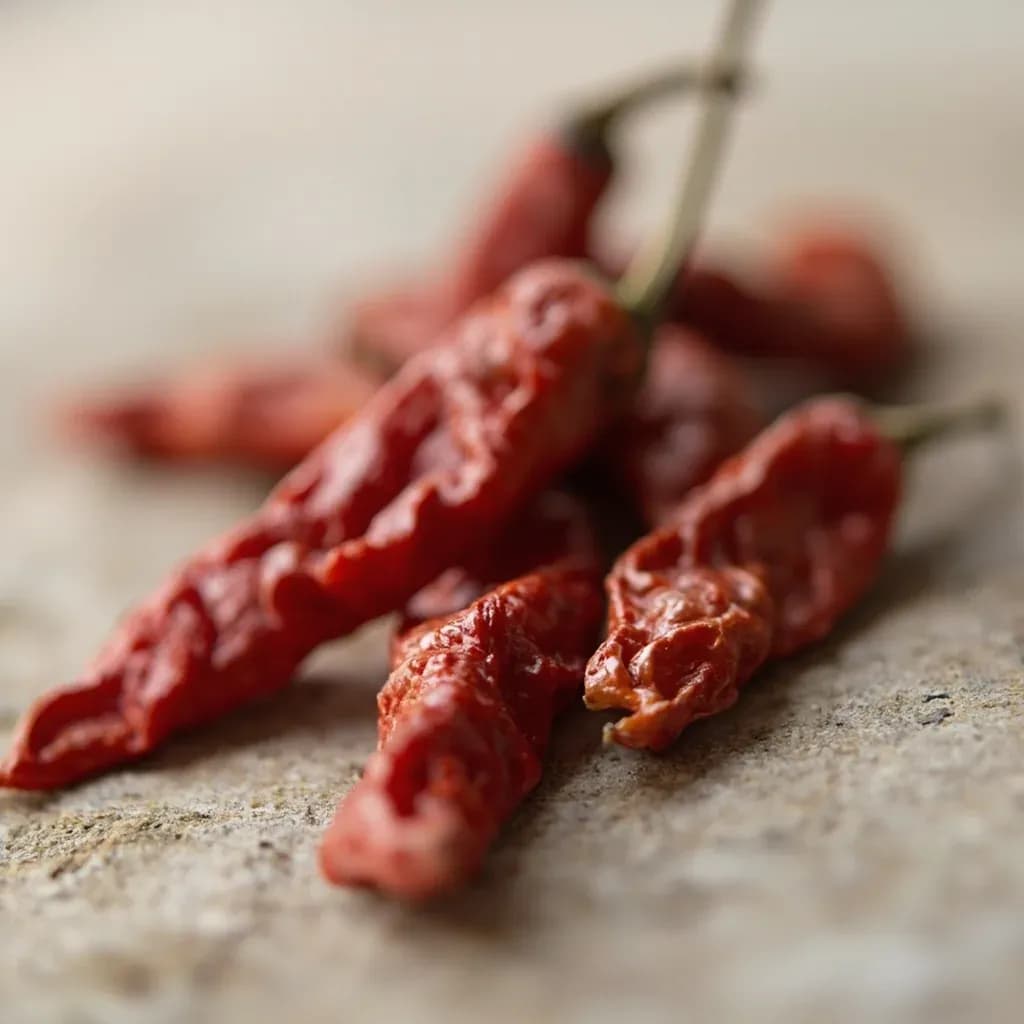
The mulato chile is a poblano pepper that has been left on the plant long past its red-ripe stage until the skin turns a deep mahogany or near-black brown, then dried. That extra week or two of ripening transforms the flesh: sugars concentrate, the aromatic compounds shift, and the pod develops notes that read, once rehydrated, as cocoa, licorice, dried cherry, and tobacco. In the dried-chile aisle it is the dark, leathery, broad-shouldered pod that is sometimes mistaken for a pasilla or, more often, for an ancho. It is neither. The ancho is a red-ripe poblano and runs sweeter and fruitier; the mulato is browner, flatter, thicker-walled, and markedly more savory.
In the kitchen, mulato behaves less like a source of heat than like a seasoning — a way to build a dark, complex base under a sauce without leaning on roasted or charred flavors. It dissolves readily into a blender after a short soak and gives a sauce a glossy, almost velvety body along with a slow-building warmth in the 2,500–3,000 SHU range. It is the backbone of mole poblano and mole negro, where it is combined with ancho and pasilla in roughly equal parts to give the sauce its layered heat, sweetness, and depth. Outside of mole, it is a quiet workhorse: a few rehydrated pods blended with tomatillo, garlic, and cumin will turn a simple braise or pot of beans into something that tastes like it cooked for hours.
The practical matter is identification. Real mulato is dark brown with a faint sheen, broad and flat, with a pliable (not brittle) skin. If the pod is reddish-orange, it is an ancho. If it is long, narrow, and almost black with a raisiny smell, it is a pasilla. Buy from a market with turnover — old mulato loses the very notes that make it worth seeking out, flattening into generic dusty heat.
- Measured in
- piece
- Storage
- Store In An Airtight Container In A Cool, Dark Place
Find it in
Suits
Types & varieties
The same chile in its fresh, fully mahogany-ripened state before drying; sold in markets during late summer in central Mexico
Mulato vs. Ancho: Why the Distinction Matters
These two dried chiles come off the same plant and are routinely swapped, but they do different jobs. An ancho is a poblano picked and dried when it has ripened to red; mulato is the same pepper left another week or two until the skin turns brown before drying. The chemical change is real: as the fruit over-ripens, certain acids and sugars degrade and new aromatic compounds form, which is why mulato tastes of cocoa and tobacco while ancho tastes of raisins and strawberries. Both are mild, both are pliable when fresh, both are about the same size. The reliable cues are color (mulato is brown, ancho is brick red) and smell once you tear the pod open (mulato is darker and earthier). When a mole recipe insists on both, respect it — the blend is the point.
- Color: mulato is dark brown to nearly black; ancho is a deep brick or oxblood red.
- Shape: mulato tends to be flatter and slightly broader; ancho is a touch more tapered.
- Flavor: mulato leans cocoa, licorice, and tobacco; ancho leans red fruit, raisin, and a cleaner sweetness.
- Substitution: a 1:1 swap works in a pinch, but you'll lose the brown-ripe depth — add a small pinch of unsweetened cocoa or toasted sesame to compensate.
Building a Mole-Style Sauce with Mulato
A practical starting ratio for a mole-style sauce that serves six to eight is four mulato pods, three anchos, and two pasillas, all stemmed, seeded, and lightly toasted. Rehydrate them together in hot water just below a simmer for 25 minutes, then blend with sautéed onion, garlic, a small handful of raisins, a few toasted almonds or sesame seeds, a piece of Mexican cinnamon, a pinch of cumin, and a square or two of Mexican chocolate. Fry that paste in lard or oil for 10 minutes before thinning with stock. The mulato's job is the dark, savory floor; the ancho brings fruit; the pasilla brings an herbal, almost tea-like finish.
- Toast each chile 10–20 seconds per side in a dry skillet until fragrant — no longer.
- Soak in water just below a simmer, never a rolling boil, to preserve the fruity top notes.
- Strain and reserve the soaking liquid; it carries significant flavor and color.
- Blend with a small amount of the soaking liquid first, then loosen further with stock or broth.
- Fry the blended paste in fat for 8–10 minutes to deepen the flavor and remove any raw-chile sharpness.
- Finish with a squeeze of lime or a splash of vinegar; mulato's sweetness needs acid to read as complex.
Common uses
Tips & pitfalls
- Toast briefly in a dry skillet — 10 to 20 seconds per side until fragrant — and stop there; past that point the chile turns acrid and bitter.
- Always remove the stem and seeds for smooth sauces; keep a few seeds if you want a gentle bump in heat.
- Rehydrate in water just below a simmer, not a rolling boil, to preserve the fruity-sweet and licorice notes.
- Reserve and strain the soaking liquid and stir it back into the sauce or soup; it carries a surprising amount of color and flavor.
- If a recipe calls for both mulato and ancho, do not substitute one for both; the brown-ripe versus red-ripe distinction is the whole point of using two chiles.
- Buy pliable, glossy pods with no white surface mold; brittle, dusty pods are old and will taste flat and one-dimensional.
- Grind your own from toasted pods — pre-ground powder loses the cherry and licorice top notes within weeks.
- Finish mulato-based sauces with a squeeze of acid (lime, vinegar, or tomatillo); without it, the sweetness can read heavy rather than complex.
Nutrition
Nutrition
No USDA FoodData Central match for Mulato Chile yet. We surface a per-100 g profile once a generic whole-food entry is matched and verified.
In the shops
Matched grocery products
No matched grocery products for Mulato Chile yet.
Good to know
- Origin
- Mexico, especially Puebla and Oaxaca; grown throughout central and southern regions
- Species
- Capsicum annuum (same species as the poblano, bell pepper, and jalapeño)
- Heat (Scoville)
- Approximately 2,500–3,000 SHU — mild, comparable to an ancho
- Color when dried
- Dark brown to nearly black, with a slight sheen and leathery, pliable skin
- Typical size
- 3–5 inches long, 2–3 inches wide; broader and flatter than an ancho
- Flavor profile
- Smoky-sweet with notes of cocoa, licorice, dried cherry, raisin, and tobacco; very little sharp heat
- Role in mole
- One of the three 'holy trinity' chiles in classic mole poblano alongside ancho and pasilla
- Rehydration
- 20–30 minutes in hot, just-below-simmering water; reserve the soaking liquid
- Storage
- Dried pods keep 6–12 months airtight in a cool, dark place; ground powder keeps 2–3 months
Substitutes
- Ancho chile — Closest substitute in heat and body, but redder-ripe origin means it is sweeter and less smoky; use 1:1 and add a small pinch of unsweetened cocoa or toasted sesame to mimic mulato's depth
- Pasilla (negro) — Deeper, more raisiny and herbal; can stand in for mulato in mole but the flavor leans earthier — best blended 50/50 with ancho
- Guajillo — Lighter, more tannic, and brighter red; only a stand-in when mulato is unavailable and you want a redder sauce — add a touch of dark chocolate or toasted cumin to round it out
- Dried New Mexico chile — Much milder and brighter; works in a pinch for non-mole applications, but the chocolate and licorice notes will be absent
- Pasilla de Oaxaca — Smoky and rich; a good substitute when you want mulato's depth and want to add smoke to the dish — skip it if the dish already has smoke from another source
Pairs with
Also called
chile mulato · dried poblano