Natural form
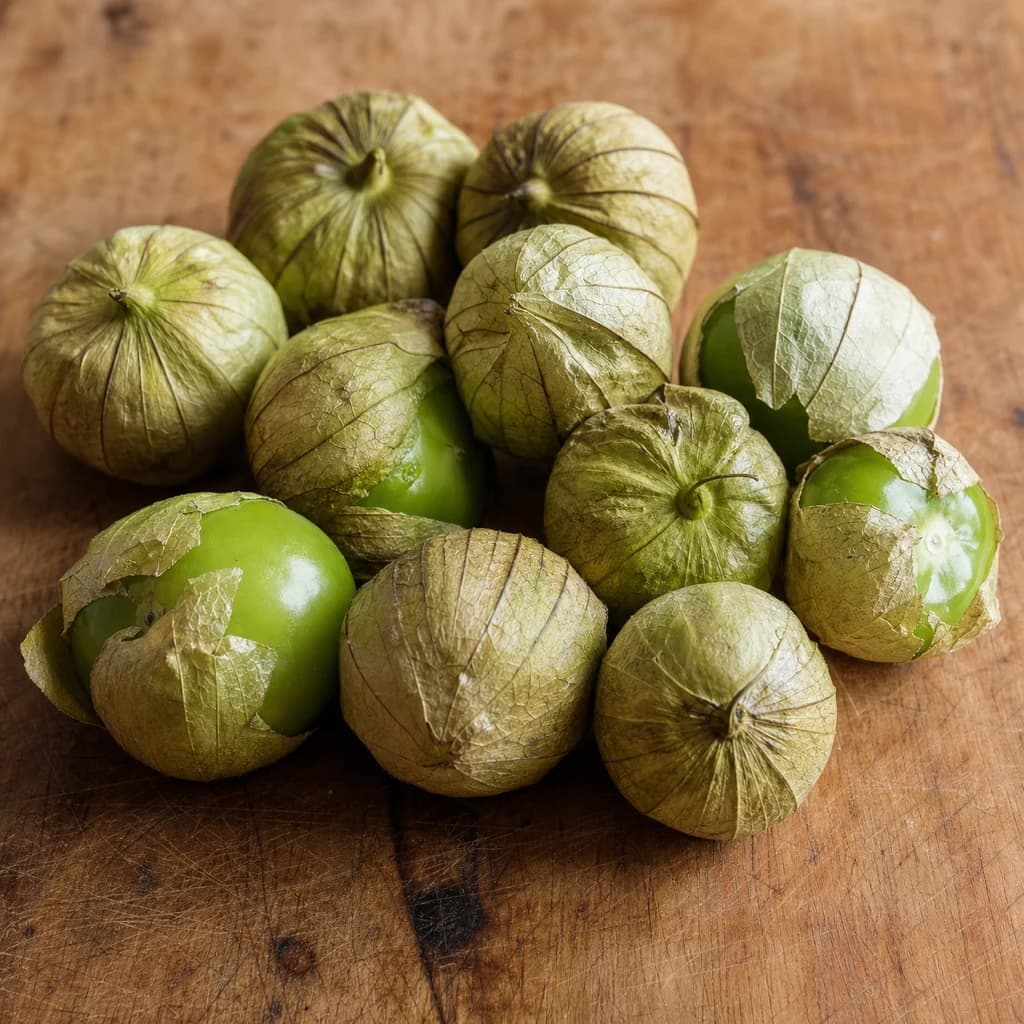
Whole tomatillos with papery husks intact, showing their distinctive lantern-like wrapping.
The husk is the most recognizable feature of a tomatillo and distinguishes it from tomatoes at a glance.
Produce
Tomatillo
Tart green husk-tomato that is the backbone of Mexican salsa verde.
Tomatillos are small green fruits wrapped in a papery husk, with a bright, tart, citrusy flavor distinct from the tomato. They are the foundation of Mexican salsa verde, roasted or boiled then blended with chilies, onion, and cilantro. The sticky residue under the husk is washed off before cooking.
Tomatillo (Physalis philadelphica) is a distinct fruit in the nightshade family, native to Mexico and Central America where it has been cultivated since pre-Columbian times. Despite sharing a common grocery-store nickname "tomate verde" with unripe red tomatoes, the tomatillo is an entirely different species — closer botanically to ground cherries than to true tomatoes. The fruit grows inside a papery, straw-colored husk (the calyx) that acts as a natural wrapper, and beneath this husk lies a sticky, waxy coating that must be rinsed away before cooking. Ripe tomatillos feel firm, range in color from bright green to yellow-green depending on variety, and deliver a bright, tart, citrusy acidity with a subtle fruity undertone. Their high natural acidity (pH 3.5–4.5) gives cooked tomatillo sauces a self-preserving quality — a practical advantage that explains their central role in traditional Mexican cuisine across centuries and climates. The fruit requires no peeling or seeding; roughly three-quarters of its weight is edible after husking.
- Measured in
- g
- Storage
- Fridge
Types & varieties
Most common commercial variety; bright green, firm, and tart
Riper stage; more yellow, sweeter, and softer; often labeled 'tomatillo amarillo'
Intensely purple-hued variety; less common commercially; slightly sweeter than green types
Fresh vs. Cooked: How Tomatillo Behavior Differs
Raw tomatillos contribute a sharp, almost lemony brightness that works in fresh blended salsas, but the flavor can be aggressively tart — especially from underripe fruit. Cooking (roasting, charring, or simmering) mellows the acidity and softens the fruit's firm flesh, allowing its subtle fruity notes to emerge. Roasting under a broiler or directly on a dry comal or griddle until blistered and collapsed concentrates sugars and adds smokiness, which is why this technique dominates professional Mexican kitchens for green sauces. The texture also transforms: raw tomatillos have a snappy, almost crisp quality similar to a firm apple, while cooked tomatillos break down into a jammy, sauce-friendly consistency.
- Raw: maximum tartness and brightness, snappy texture; ideal for uncooked fresh salsas and garnishes
- Roasted or charred: mellowed acidity, smokiness, softer texture; standard for enchilada sauces, moles, and cooked preparations
- Simmered in stews: fruit dissolves into broth, thickening and brightening from within
Common uses
Tips & pitfalls
- Husk completely — expose the stem scar where the fruit attached to the plant and check that it is clean and undamaged before purchasing or cooking.
- Wash the sticky waxy coating under cold running water; a gentle scrub with your fingers or a soft vegetable brush removes it effectively.
- Roasting or charring (under a broiler or directly on a dry comal or griddle) is the most common professional technique — it mellows tartness and adds desirable smokiness to green sauces.
- Do not confuse tomatillos with green tomatoes — they are unrelated species with different texture, flavor, and water content; the substitution only works in cooked dishes.
- For smooth sauces, use a high-powered blender; for textured, rustic results, crush with a molcajete or chop by hand.
- Never salt tomatillos before cooking — salt draws out water, diluting flavor and breaking down texture prematurely; add salt only after cooking.
- For raw fresh preparations, use only fully ripe, sweet-tasting fruit; underripe tomatillos are too sour to eat out of hand.
- Discard any tomatillo with soft, brown, or discolored flesh inside — this indicates the fruit is past its prime.
Nutrition
Energy
134 kJ · per 100 g
Where the calories come from
Protein
1g
2% DV
Carbs
5.8g
2% DV
Fat
1g
1% DV
Fiber
1.9g
7% DV
Sugars
3.9g
of which
Sodium
1mg
0% DV
Source · USDA FoodData Central · Tomatillos, raw
View on FDC →In the shops
Matched grocery products
No matched grocery products for Tomatillo yet.
Good to know
- Scientific Name
- Physalis philadelphica
- Family
- Solanaceae (nightshade)
- Origin
- Mexico and Central America, cultivated since pre-Columbian times
- Peak Season
- Summer (June–September); available year-round from commercial production
- Color When Ripe
- Green to yellow-green depending on variety; should feel firm
- Flavor Profile
- Bright, tart, citrusy acidity with subtle fruity undertone when ripe; aggressively sour when underripe
- Husk Condition
- Papery, dry, tight-fitting; discard any with mold or insect damage
- Preparation
- Husk, rinse sticky coating, then cook raw or roasted; no peeling or seeding required
- Yield
- About 70–80% edible by weight after husking
- Storage
- In husk, refrigerate up to 2–3 weeks; out of husk, use within 1 week
Substitutes
- Green tomatoes — Close acidity match but different texture and slightly more vegetal flavor; acceptable in cooked preparations, not raw sauces.
- Gooseberries — Similar tartness and color when cooked; raw gooseberries are comparable in sourness but softer; good for preserves and cooked sauces.
- Lime juice + green chile — Mimics the acidity and green color of salsa verde but lacks body and vegetal character; use only as a rough flavor substitute.
Pairs with
Also called
Miltomate · Husk Tomato · Tomate Verde
Appears in these dishes
Related

Tomato
Juicy, sun-sweet fruit for sauces, salads, and slow-cooked depth

Yellow Onion
The aromatic backbone of soups, sofritos, and braises

Garlic
Pungent cloves that perfume nearly every savory dish

Lemon
Bright, acidic citrus that wakes up almost any dish

Potato
Humble, hearty staple — roast, mash, fry, or boil

Carrot
Sweet, crunchy root — raw, roasted, or the base of a sofrito

Cucumber
Cool, crisp, and watery — for salads, pickles, and tzatziki

Lettuce
Crisp leaves for salads, wraps, and a fresh crunch