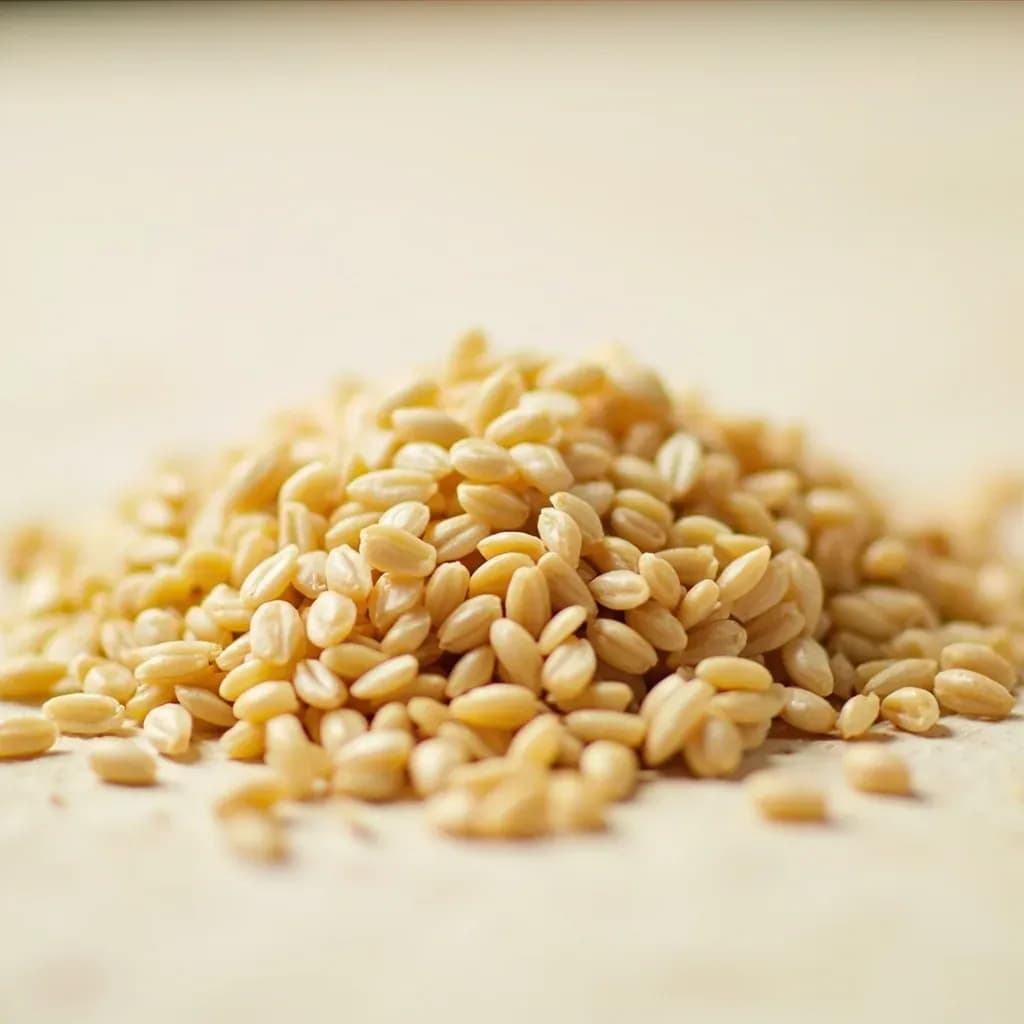
Grains & Rice
Hulled (Pot) Barley
Whole-grain barley with only the inedible outer hull removed, keeping its bran intact. Chewier and more nutritious than pearl barley, needing a longer simmer for soups and grain bowls.
Hulled barley is the most whole form of barley you can buy for the kitchen. Only the tough, inedible outer hull is scoured away; the bran layer, the germ, and the endosperm all stay put, so the grain cooks up with the nutty, faintly grassy flavor and the firm, chewy bite that pearl barley has lost. The trade-off is time: because the bran is intact, water takes longer to penetrate, and you should plan on a 45-to-60-minute simmer unless you soak the grain overnight. Cook it properly and the kernels stay distinct and pleasantly waxy; undercook them and they are tough, overcook them and they slump toward mush.
What makes hulled barley worth the extra patience is the soluble fiber it carries in the bran, a form called β-glucan. That is the same gel-forming fiber credited with lowering cholesterol and giving barley one of the lower glycemic indices of any common grain. The germ also retains its oils, which means the grain tastes more vivid than pearl and stales faster in the pantry, so it rewards being bought in quantities you will use in a season. The grain is, of course, still a true cereal and contains gluten, which rules it out for anyone with celiac disease or a strict gluten-free diet.
- Measured in
- g
- Storage
- Pantry
Allergens
Find it in
Suits
Types & varieties
Hordeum vulgare var. distichon; lower protein, plumper kernel, the form most often sold for food and malting in Europe and North America.
Hordeum vulgare var. hexastichon; higher protein and enzyme activity, historically used in traditional porridges and animal feed.
A genetic type whose hull threshes free on its own, so the grain arrives hulled with no abrasion step; behaves much like ordinary hulled barley in the kitchen.
Lightly pearled — a thin scoured layer of bran removed to speed cooking; sits between true hulled and full pearl barley in both texture and nutrition.
Ancient Scottish six-row landrace; deeply nutty and hardy, sold as a heritage whole-grain barley.
Anthocyanin-rich heritage varieties (notably Tibetan strains); hold their color far better when sold hulled than pearled.
Hulled, Pot, or Pearl? The Naming Trap
American 'hulled barley' and British 'pot barley' are often treated as synonyms, and they are close, but they are not the same thing. American hulled barley is the true whole grain: hull off, bran on, germ on. British pot barley has been lightly pearled, so a small amount of the bran has been buffed away to cut cooking time, putting it halfway between true hulled and pearl. In practice this means British pot cooks in roughly 30 to 40 minutes and turns out a touch softer; American hulled needs the full 45 to 60 and stays chewier. Pearl barley, by contrast, has had most of the bran removed and the germ largely abraded away, so it cooks fastest, feels softest, and gives up much of the fiber and flavor of the whole grain. If you swap hulled into a recipe written for pearl, give it more liquid and more time; if you swap pearl into a recipe written for hulled, reduce both, or the dish will turn to porridge.
Why It Behaves Like That
The chew that sets hulled barley apart is largely a function of its β-glucan, a soluble fiber that lives in the cell walls of the endosperm. When it meets hot water it forms a soft, slippery gel that clings to the outside of each kernel; that is the 'waxy' slip you feel in well-cooked barley and the reason the grain behaves differently from rice in a risotto-style dish, releasing starch slowly rather than all at once. The bran layer is also doing real work: it slows water uptake, which is why hulled takes longer than pearl, and it carries most of the flavor compounds, which is why toasted hulled barley smells faintly of popcorn and roasted nuts. Treat the grain gently — a hard boil, excessive stirring, or too much acid (a heavy squeeze of lemon at the start) will slow the kernels on their way to tender, while a patient simmer in well-salted stock will coax them soft while keeping their shape.
Common uses
Tips & pitfalls
- Soak the grain in cool water overnight, then drain; it cuts simmer time by roughly a third and gives a more even, tender texture.
- Toast the dry grains in a little butter or oil for 2 to 3 minutes before adding liquid; they will smell faintly popcorn-like when they are ready, and the flavor carries into the finished dish.
- Salt the cooking water lightly — undersalted barley tastes flat no matter how long you cook it.
- Keep the simmer gentle rather than at a hard boil; a rolling boil fractures the bran and turns the pot cloudy and starchy.
- For grain salads, cook in generously salted water as if it were pasta, then drain and spread on a sheet pan to cool quickly; this prevents the kernels from sitting in hot starch and going mushy.
- Taste at 35 to 40 minutes: the grain should be tender with a pleasant chew. If the liquid drops below the level of the barley, top up with hot stock, not cold.
- Avoid stirring often; excess agitation releases starch and makes the grains clump.
- Cooked barley freezes well — portion it into bags with a little of the cooking liquid to keep the grains from drying out, then thaw and reheat with a splash of stock.
- Do not swap hulled for pearl barley in a recipe without adjusting time and liquid — hulled needs more of both, otherwise the dish will be crunchy or, if forced, gluey.
Nutrition
Energy
1481 kJ · per 100 g
Where the calories come from
Protein
12.5g
25% DV
Carbs
73.5g
27% DV
Fat
2.3g
3% DV
Fiber
17.3g
62% DV
Sugars
0.8g
of which
Sodium
12mg
1% DV
Source · USDA FoodData Central · Barley, hulled
View on FDC →In the shops
Matched grocery products
No matched grocery products for Hulled (Pot) Barley yet.
Good to know
- Type
- Whole grain; only the inedible outer hull is removed, leaving the bran and germ intact
- Species
- Hordeum vulgare (cultivated barley)
- Also sold as
- Pot barley (UK/Ireland), though that name often means a very lightly pearled version, not identical to U.S. 'hulled'
- Color
- Tan to pale gold; some heirloom varieties are purple or black
- Flavor
- Nutty, mildly sweet, earthy; more pronounced and grassy than pearl barley
- Texture (cooked)
- Chewy, plump, with a slightly fibrous bite and a faint waxy slip from the β-glucan
- Standard ratio
- 1 part barley to 3 parts liquid (water, stock, or a mix)
- Cooking time
- About 45–60 minutes simmered, or 25–35 minutes after an overnight soak
- Yield
- 1 cup (≈200 g) dry yields roughly 3 to 3½ cups cooked
- Nutrition note
- High in soluble fiber (β-glucan), selenium, manganese, and phosphorus; lower glycemic index than pearl barley or white rice
- Gluten status
- Contains gluten — not suitable for celiac or strict gluten-free diets
- Storage
- Airtight container, cool and dark, 6–12 months; refrigerate or freeze beyond a year to protect the germ oils
Substitutes
- Pearl barley — The closest stand-in; cooks in 25 to 40 minutes and turns out softer and less nutritious. Use roughly 2.5 parts liquid to 1 part grain and reduce the cook time.
- Farro (whole emmer) — Similar chewy bite and nutty flavor, comparable cook time, slightly higher protein.
- Spelt berries (whole) — Sweeter and a little lighter; cooks somewhat faster and holds its shape well in salads.
- Wheat berries — Firmer and more wheaty in flavor, excellent chew in soups and grain bowls, but they need closer to an hour of simmering.
- Freekeh — Roasted green wheat with a smoky, grassy note and a very firm chew; benefits from a soak and cooks quickly after.
- Brown rice — The gluten-free option; choose short-grain brown rice for the closest 'stick-to-your-ribs' texture, though the flavor is much milder.
- Steel-cut oats — Work well in savory porridges and pilafs; smaller grain, cooks in about 25 to 30 minutes.
Pairs with
Also called
pot barley · whole barley · dehulled barley