Baking
Instant Yeast
Fine-grained fast-acting yeast that needs no proofing — stir straight into flour. More active than active-dry, so doughs rise faster.
Instant yeast is the most forgiving leavener in a home baker's pantry. The dried Saccharomyces cerevisiae cells are milled finer than active dry and processed so their walls are more porous, which means they absorb water and wake up almost the moment they touch wet dough. You can stir them straight into the flour with the rest of the dry ingredients — no separate blooming in warm water required. That single convenience is why instant yeast has quietly become the default in modern bread recipes and the only yeast sold for bread machines.
The rise-time advantage over active dry is real but modest: doughs typically climb 15 to 25 percent faster, and finished flavor is essentially identical. The underrated benefit is distribution. Fine, uniform granules spread through the flour so no pocket of dough over-ferments while another lags, and you avoid the wet-to-dry chase that bloom-and-pour methods sometimes cause. For anything from a 90-minute dinner roll to an overnight cold-retard loaf, instant yeast is the most predictable choice for the home cook.
Two limits are worth knowing. In very sweet doughs — panettone, babka, sticky brioche, cinnamon rolls with a heavy filling — ordinary instant strains struggle because high sugar concentrations draw water out of yeast cells and slow them to a crawl; switch to an osmotolerant variety such as SAF Gold or Fermipan Sweet. And for multi-day cold ferments, some bakers still prefer active dry or fresh yeast, which hold viability a touch better in the fridge, though the gap is small for anything under about 18 hours.
- Measured in
- g
- Storage
- Refrigerate
Find it in
Suits
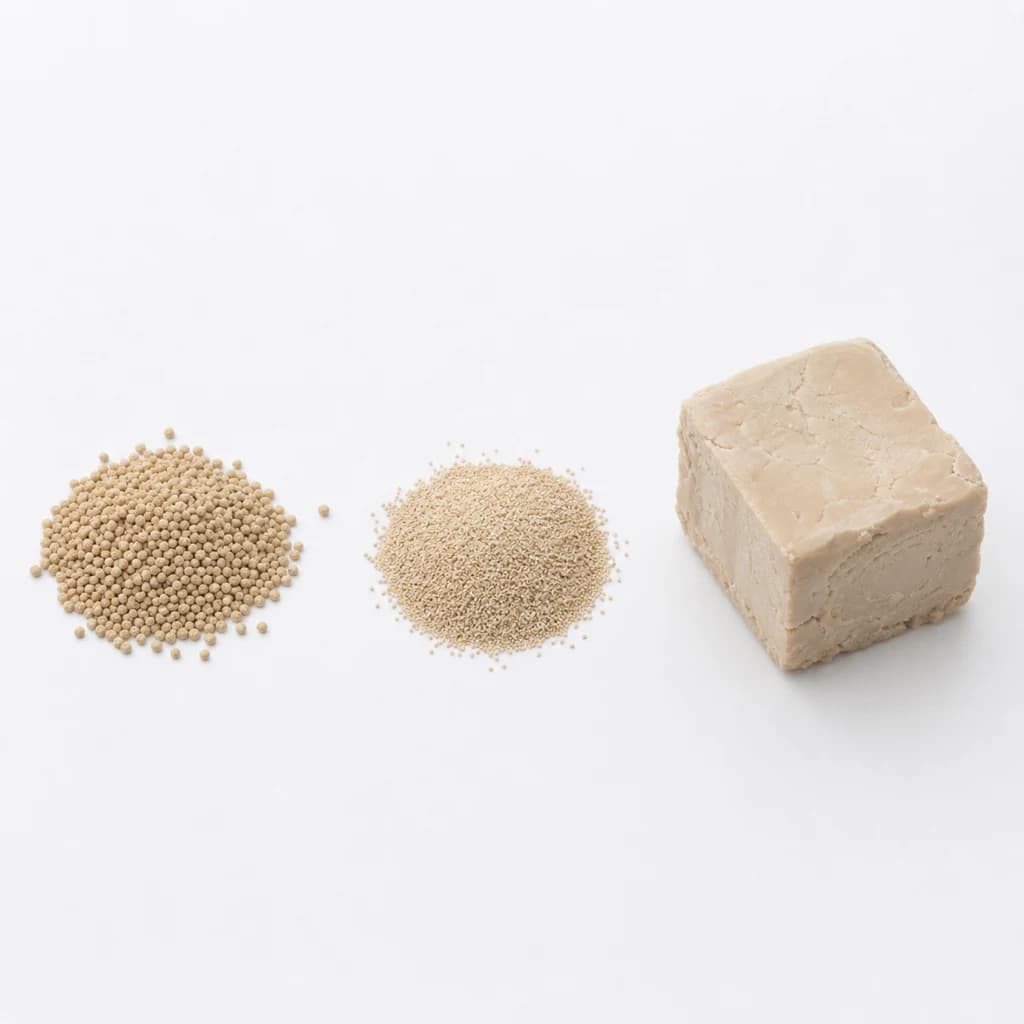
Types & varieties
The default product (SAF Red, Fleischmann's RapidRise, Red Star Quick-Rise, Bob's Red Mill Instant) — works in virtually any bread or enriched dough up to about 5–7% sugar-to-flour.
A specially selected strain that tolerates high sugar levels (SAF Gold, Fermipan Sweet). Use for panettone, babka, rich brioche, and cinnamon rolls with more than ~8% sugar relative to flour weight.
Grown on organic substrates and processed without synthetic emulsifiers; functionally identical to standard instant for most baking.
A retail label (SAF Blue, Fleischmann's Bread Machine) for finely milled instant yeast sold for bread machines; interchangeable with standard instant 1:1.
Why sweet doughs need a different yeast
High sugar concentrations are hostile to ordinary yeast. Sucrose (and to a lesser extent honey and malt) creates osmotic pressure that pulls water out of the yeast cells, slowing or stalling fermentation — a dough that should double in 90 minutes barely puffs at all. The fix is an osmotolerant strain, sometimes sold as sweet-dough yeast, which has been bred to tolerate those conditions.
- Reach for SAF Gold, Fermipan Sweet, or any osmotolerant instant when sugar weighs more than roughly 8% of the flour weight.
- Trigger recipes: panettone, babka, rich brioche, sticky cinnamon rolls, glazed doughnuts, and most enriched holiday breads.
- The swap is 1:1 — same packet, same gram weight, no other change to the recipe.
- If you only have standard instant, you can compensate by giving the dough more time and adding a little more yeast, but the result is rarely as even and the flavor can turn yeasty.
Storage and shelf life
Unopened packets and jars keep for one to two years past the printed date in a cool, dry cupboard — the cells are essentially dormant and waiting. Once opened, moisture and heat are the enemies, and the clock speeds up.
- Decant opened yeast into a jar with a tight lid and refrigerate or freeze it; freezing does not harm viability.
- Bring the closed jar to room temperature for 10–15 minutes before opening so condensation forms on the outside of the jar rather than on the granules inside.
- If you're not sure an opened packet is still good, proof-test it: stir 1 tsp into 1/4 cup warm water (110 °F) with a pinch of sugar. Foam within 5–10 minutes means it's alive; a flat surface means it's time to toss it.
Common uses
Tips & pitfalls
- Stir instant yeast directly into the flour before adding liquid — no warm-water proofing needed, and the dry-dispersion step actually gives a more even rise than bloom-and-pour.
- If you want to confirm old yeast is still alive, bloom a teaspoon in 1/4 cup water at 110 °F with a pinch of sugar; active yeast will foam within 5–10 minutes, and a flat surface means replace it.
- Keep yeast away from direct, undiluted contact with salt or cold fat before liquid is added — salt draws moisture out of the cells and slows them, and chunks of cold butter can shock them.
- Measure by weight (grams) rather than teaspoons for consistency; instant yeast brands vary slightly in granule density, and volume measures can be inconsistent from jar to jar.
- For doughs with more than about 8% sugar (by flour weight), use an osmotolerant variety such as SAF Gold; standard instant will give you a flat, dense loaf and an oddly yeasty flavor.
- For bread-machine 'delay-bake' cycles that run 8+ hours, use about half the yeast the recipe suggests to prevent over-proofing before the bake cycle begins.
- When adapting an older recipe that calls for active dry yeast in a sponge or poolish, use roughly 3/4 the amount of instant — it gets going faster and will over-ferment a long pre-ferment if you don't cut it back.
Nutrition
Energy
1536 kJ · per 100 g
Where the calories come from
Protein
9.4g
19% DV
Carbs
56.4g
21% DV
Fat
11.6g
15% DV
Fiber
2.3g
8% DV
Sugars
12.5g
of which
Sodium
228mg
10% DV
Source · USDA FoodData Central · approx. Bread, pan dulce, sweet yeast bread
View on FDC →In the shops
Matched grocery products
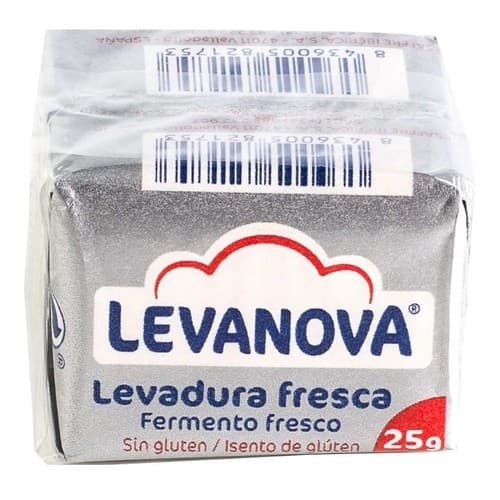 €0.50
€0.50Fresh Yeast
LEVANOVA · kg · Bonpreu
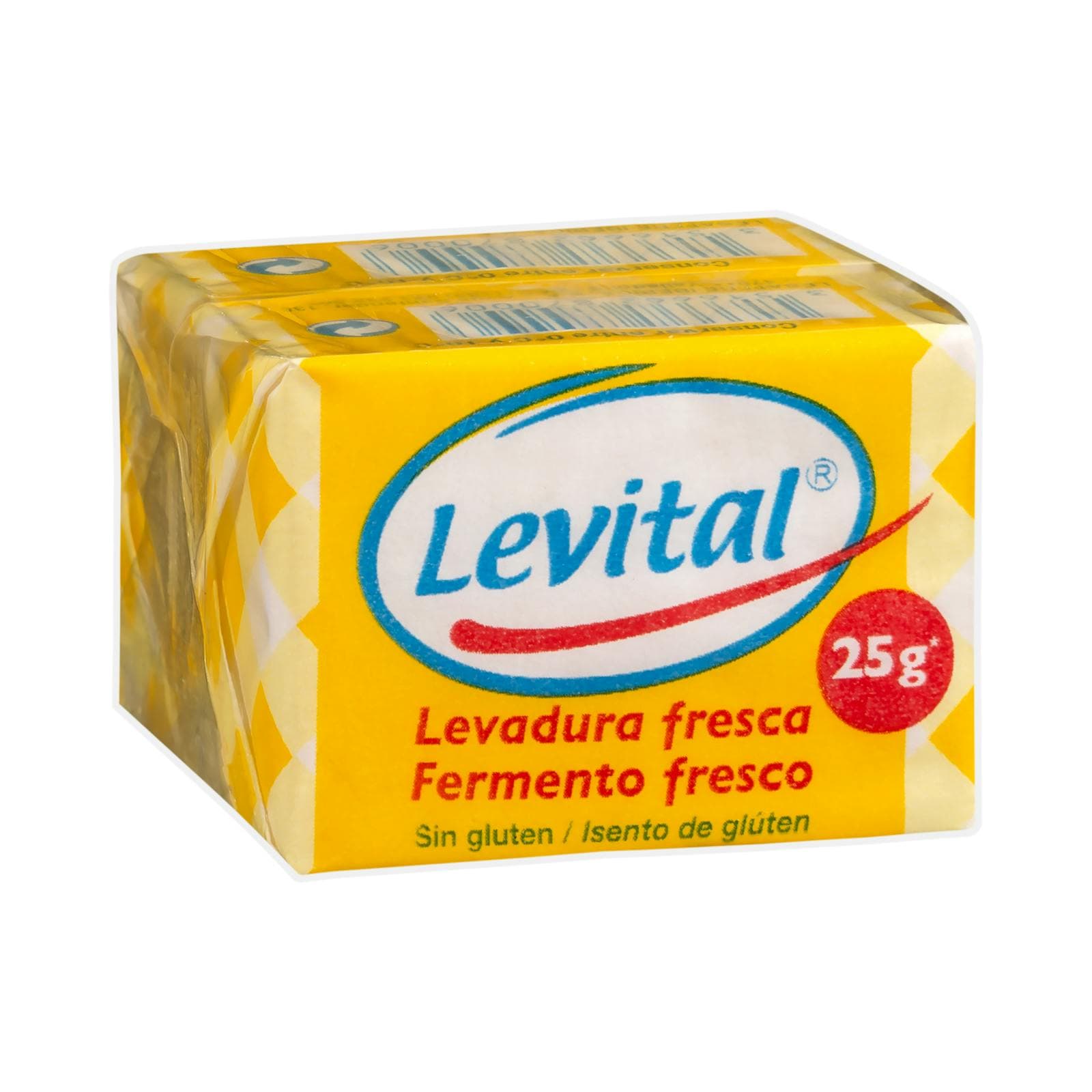 €0.50
€0.50Fresh Yeast
Levital · 50 g · Mercadona
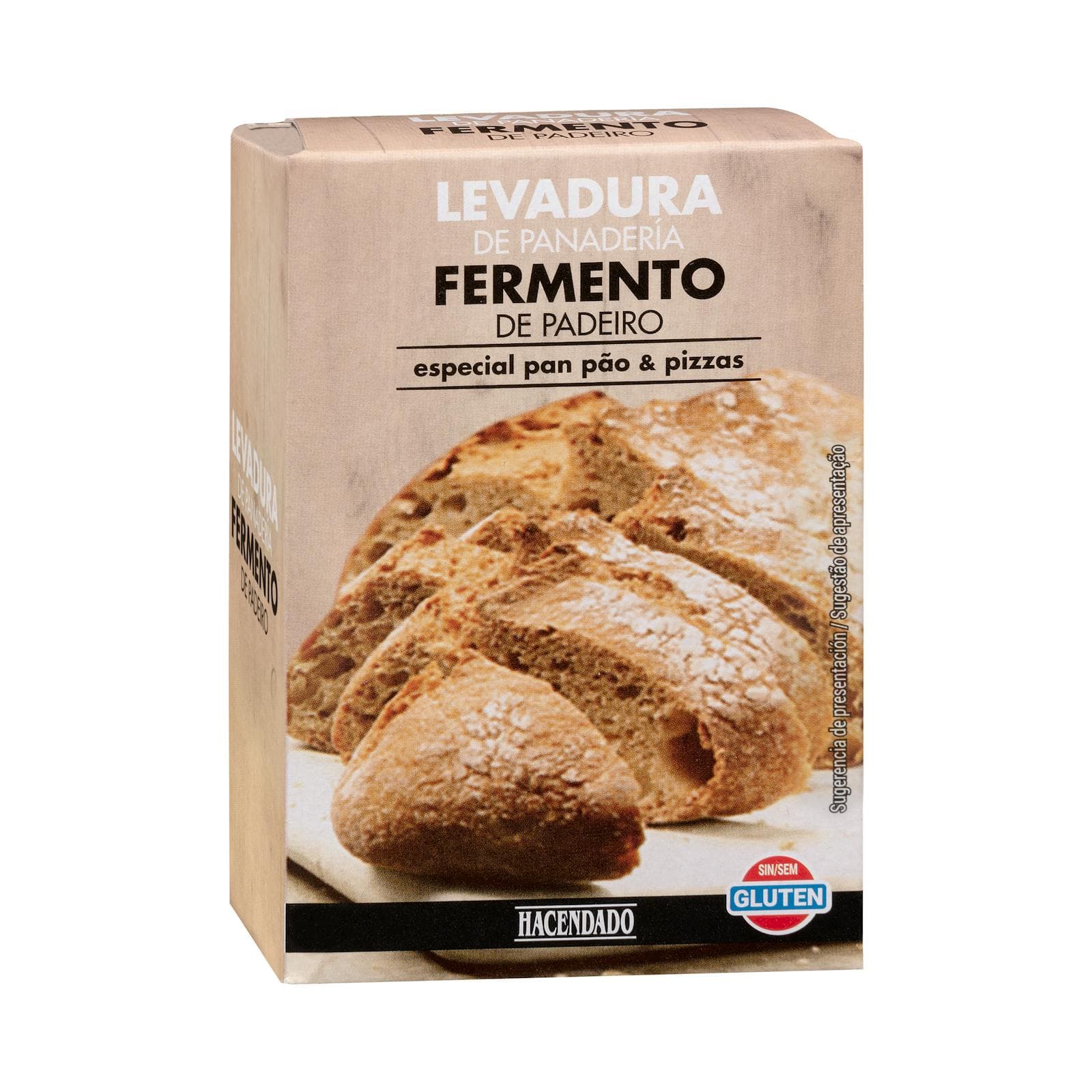 €1.60
€1.60Baker's Yeast
Hacendado · 70 g · Mercadona
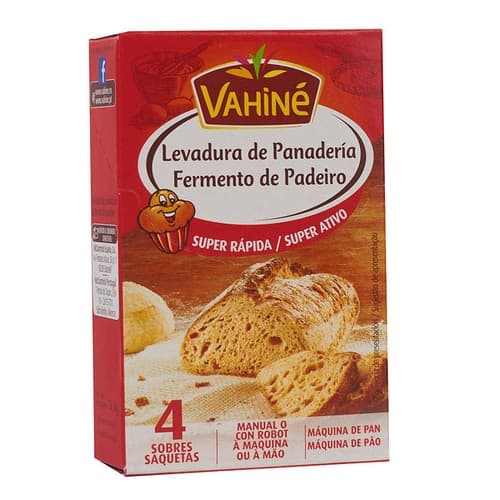 €1.89
€1.89Bread Making Yeast
VAHINE · kg · Bonpreu
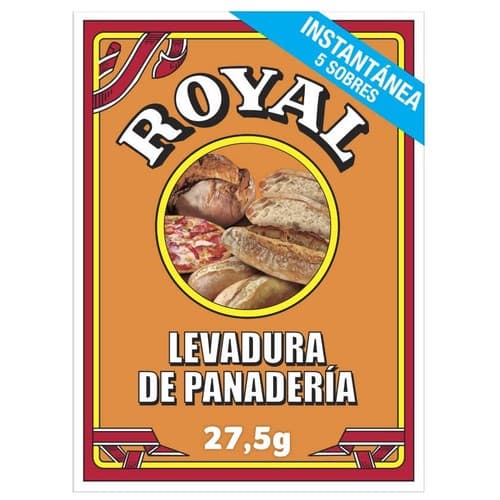 €2.25
€2.25Royal Bread-Making Yeast
ROYAL · kg · Bonpreu
Good to know
- Form
- Free-flowing dry granules, finer and more porous than active dry yeast
- Also called
- Rapid-rise, fast-rising, quick-rise, or bread-machine yeast — all are essentially the same product
- Packet size
- 1 packet = 1/4 oz / 7 g ≈ 2 1/4 tsp
- Proofing required
- No — stir directly into flour; the porous cells rehydrate almost instantly in dough
- Optimal activation temperature
- 100–110 °F (38–43 °C) for the liquid it meets
- Lethal temperature
- Above ~140 °F (60 °C) — don't pour very hot liquids directly onto the yeast
- Conversion vs. active dry
- About 25% more potent by volume; use roughly 3/4 the amount of active dry when substituting
- Conversion vs. fresh/compressed
- Use about 1/3 the weight of fresh yeast
- Shelf life, unopened
- 1–2 years past the printed date, stored cool and dry
Substitutes
- Active Dry Yeast — Use about 1 1/4 times the amount of instant, and proof first in warm water (105–110 °F) with a pinch of sugar for 5–10 minutes until foamy.
- Fresh (Compressed) Yeast — Use roughly 3 times the weight of instant; crumble and dissolve in part of the warm liquid called for.
- Bread-Machine Yeast — Functionally identical to instant yeast; substitute 1:1 with no other changes.
- Sourdough Starter (100% hydration) — Replace yeast with about 20% of the flour weight in active starter, and adjust hydration and salt accordingly; rise times will be much longer and the flavor profile changes.
- Rapid-Rise / Quick-Rise Yeast — These retail names are synonymous with instant yeast; substitute 1:1.
Pairs with
Also called
fast-acting yeast · rapid-rise yeast · bread machine yeast · quick yeast