Baking
Fresh (Cake) Yeast
Moist, crumbly live yeast that creams straight into dough for a fast, lively rise; perishable, so it works in days not months.
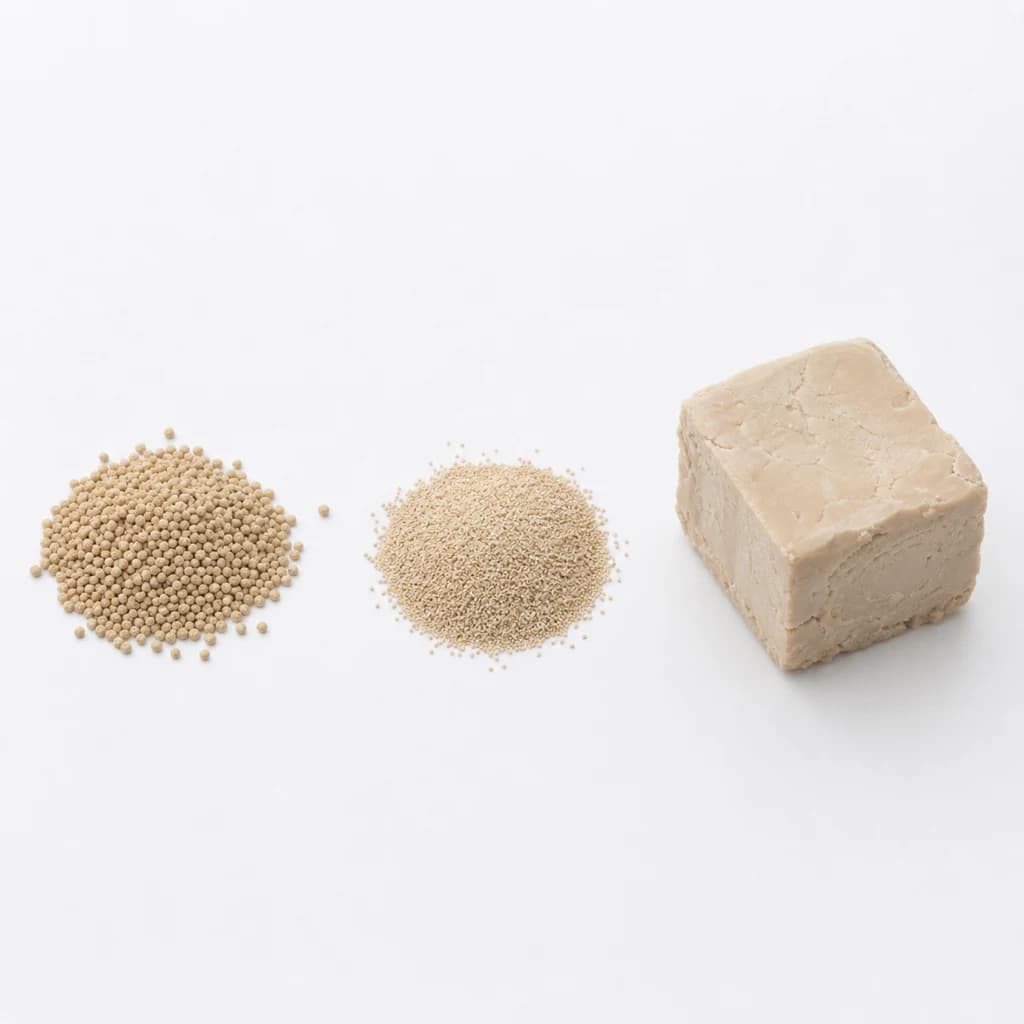
Fresh yeast is the live, pressed form of Saccharomyces cerevisiae — the same single-celled organism sold as dry yeast, but held in a moist, crumbly block that is already active and hydrated. Because the cells are awake and ready to ferment, doughs rise noticeably faster than with dry yeast and often produce a more open, lively crumb, which is why many European bakers, Jewish bakery operations, and pizzaiolos still reach for it as their default leavening.
The trade-off is perishability: wrapped in plastic and refrigerated, a cake is essentially a fresh dairy product that loses potency within a week or two; wrapped again in foil and frozen, it can hold for a couple of months. Finding it is the main hurdle for U.S. home cooks, since most supermarket dairy cases no longer carry it — bakery-supply shops, restaurant suppliers, and online sources are the usual routes.
Flavor-wise, fresh yeast contributes a clean, mildly bready, faintly fermented note that is less assertive than a mature sourdough but more present than what most dry yeasts leave behind. It is the traditional choice in recipes where the baker wants brisk, predictable leavening and a tender open structure, from pain de campagne and panettone to bagels and brioche. The single most useful thing to memorize is the conversion ratio: 1 part fresh yeast equals roughly 0.4 parts active dry or instant yeast by weight, not 1:1.
- Measured in
- g
- Storage
- Refrigerate
Find it in
Suits
Types & varieties
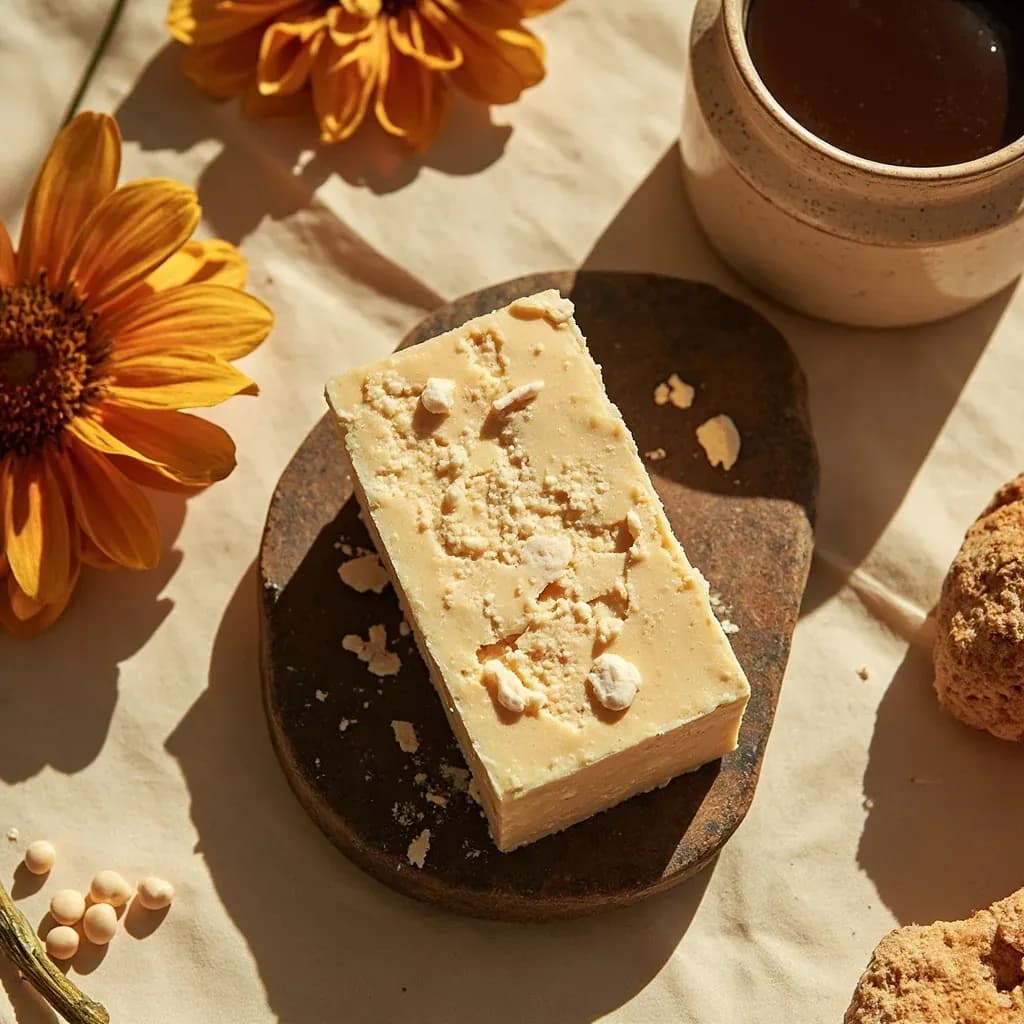
The familiar beige block sold to consumers and bakeries; the default fresh yeast.
Liquid suspension piped directly into commercial dough mixers; never retailed.
Cultured on organically grown grain or molasses substrate; identical handling to standard.
Pre-broken into small pieces and packed in tubs for restaurants, so the block does not dry out between uses.
Conversion math and substitution
The single most common mistake when swapping fresh yeast for dry — or vice versa — is treating them as equal by weight. A 1 oz (28 g) cake of fresh yeast contains roughly the same living cells as about 0.4 oz (11 g) of active dry or instant yeast. Going 1:1 by weight over-yeasts the dough, producing a bloomy, yeasty flavor and a structure that can collapse in the oven. Going by volume is worse, because dry granules are denser than a moist crumb of fresh; always weigh.
- Fresh → active dry: scale fresh weight down to 40–45%; proof in warm water with a pinch of sugar.
Handling and storage
Treat a block of fresh yeast the way you would treat fresh ricotta or butter: keep it cold, keep it wrapped, and use it promptly. A loosely wrapped block dries out at the surface within days, turning brown and crusty at the edges and losing activity even when the interior looks fine. For longer holding, double-wrap in plastic then foil and freeze; thaw overnight in the refrigerator, never at room temperature or in the microwave.
- Freeze in usable portion sizes so you only thaw what you need.
- A pale cream-beige color and a clean, slightly bready smell indicate a fresh cake; yellow, brown, or crusty edges mean it is aging out.
Common uses
Tips & pitfalls
- Check the date and the color: fresh blocks should be pale cream-beige; yellow, brown, or crusty edges mean the cake is aging out.
- Crumble the cake with your fingers against the side of the bowl so it disperses evenly instead of sitting in one wet lump that never fully hydrates.
- Proof in lukewarm liquid (around 105 °F / 40 °C) with a pinch of sugar; water hotter than 115 °F will kill the cells, while cold water slows them to a crawl.
- Dissolve fresh yeast in a little warm water before adding it to cold milk, cold butter, or cold eggs — the chill can shock the cells if added directly.
- Wrap tightly in plastic and then foil before freezing; thaw overnight in the fridge, never in the microwave.
- If the block smells harshly sour, fruity like acetone, or like nail polish remover, discard it — those are signs of autolysis and off-flavors.
- Keep salt away from the yeast until the sponge is active; salt in direct contact with dormant cells slows or stalls the ferment.
- Weigh dry yeast rather than measuring by the spoonful — granules pack down and a 1:1 substitution by volume will over-leaven the dough.
Nutrition
Energy
439 kJ · per 100 g
Where the calories come from
Protein
8.4g
17% DV
Carbs
18.1g
7% DV
Fat
1.9g
2% DV
Fiber
8.1g
29% DV
Sugars
0g
of which
Sodium
30mg
1% DV
Source · USDA FoodData Central · approx. Leavening agents, yeast, baker's, compressed
View on FDC →In the shops
Matched grocery products
 €0.50
€0.50Fresh Yeast
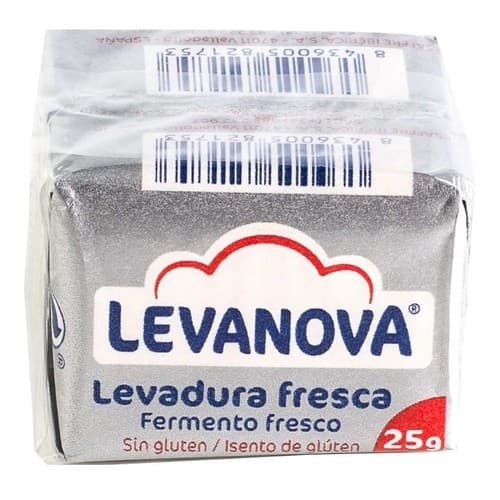
LEVANOVA · kg · Bonpreu
 €0.50
€0.50Fresh Yeast
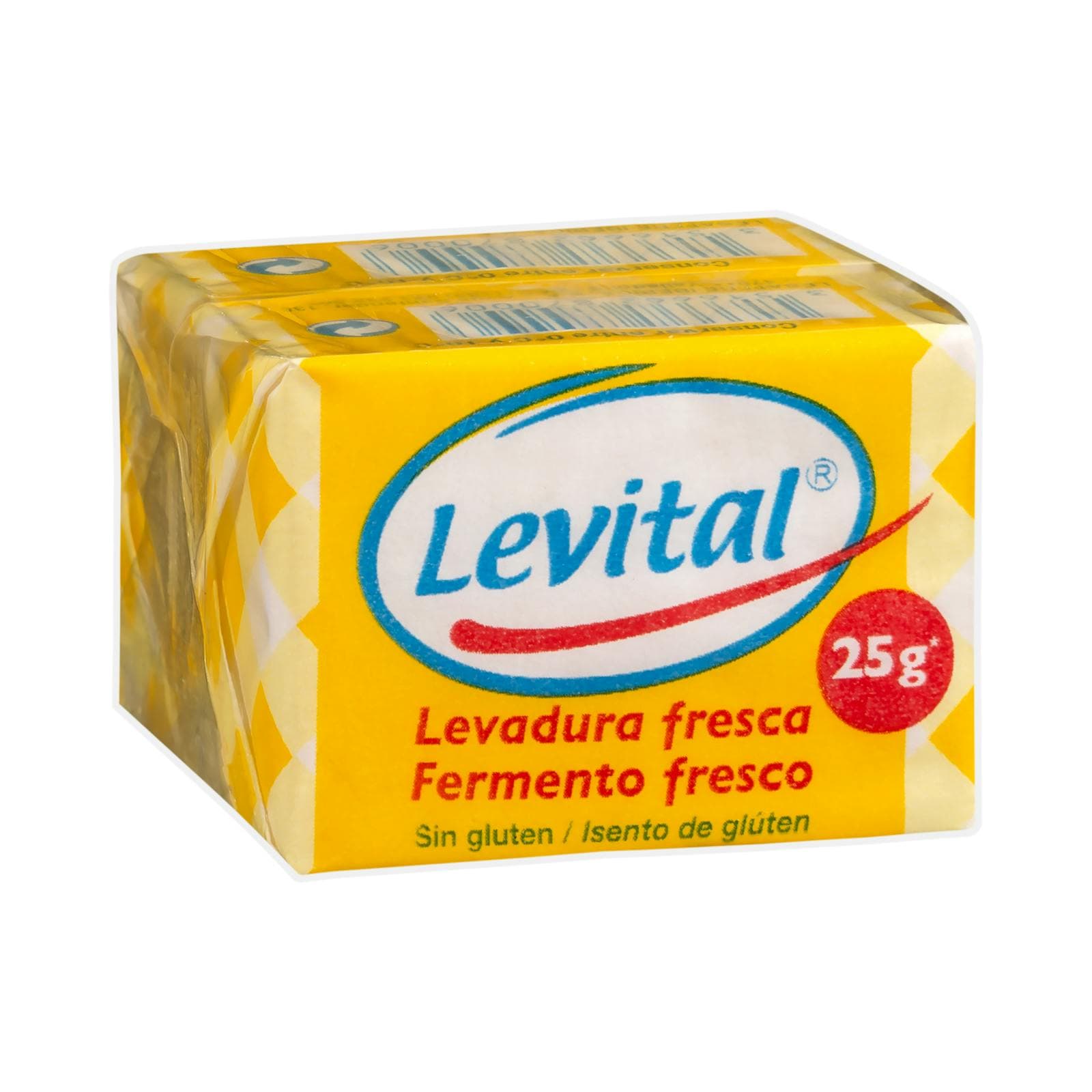
Levital · 50 g · Mercadona
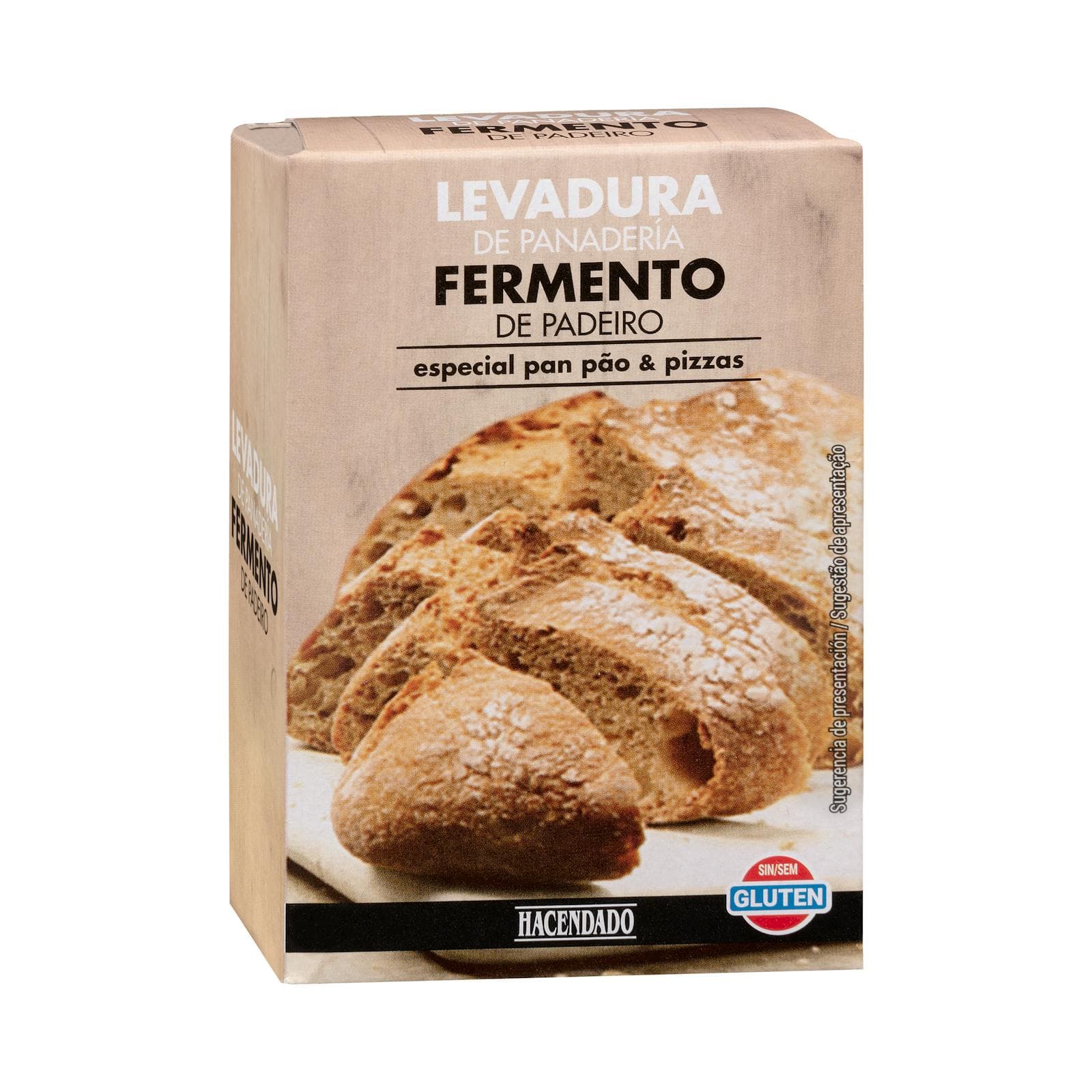 €1.60
€1.60Baker's Yeast
Hacendado · 70 g · Mercadona
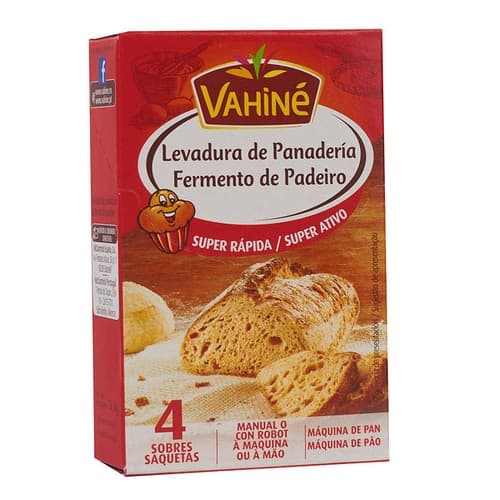 €1.89
€1.89Bread Making Yeast
VAHINE · kg · Bonpreu
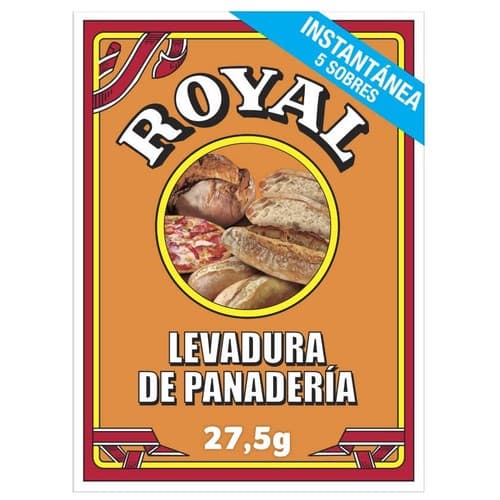 €2.25
€2.25Royal Bread-Making Yeast
ROYAL · kg · Bonpreu
Good to know
- Other names
- Compressed yeast, cake yeast, block yeast, wet yeast
- Organism
- Live culture of Saccharomyces cerevisiae
- Form
- Soft, moist, crumbly beige block, about 70% water
- Standard package sizes
- 0.6 oz (17 g) consumer cakes; 1 lb (454 g) and 2 lb (907 g) blocks for bakeries
- Proofing temperature
- Around 95–110 °F (35–43 °C)
- Lethal temperature
- Cells die above roughly 140 °F (60 °C)
- Refrigerated shelf life
- About 1–2 weeks
- Frozen shelf life
- About 2–3 months, tightly wrapped in plastic then foil
- Conversion to dry yeast
- 1 oz (28 g) fresh ≈ 0.4 oz (11 g) — roughly 40–45% by weight
Substitutes
- Active dry yeast — Use about 40–45% of the fresh weight (e.g., 7 g active dry for 15 g fresh); must be proofed in warm water with a pinch of sugar first.
- Instant/rapid-rise yeast — Same 40–45% ratio by weight as active dry; can be mixed straight into the flour with no separate proofing step.
- Sourdough starter (active, fed) — Use roughly 100% of the fresh weight in active starter; expect a tangier flavor and a slower, cooler ferment.
- Quick-rise or bread-machine yeast — Same conversion as instant yeast; works in a pinch but produces a more one-dimensional flavor profile.
Pairs with
Also called
cake yeast · compressed yeast · baker's compressed yeast · levadura fresca · block yeast