Baking
Active Dry Yeast
Coarser dormant yeast traditionally bloomed in warm liquid before mixing; rises a touch slower than instant, so allow extra proofing time.
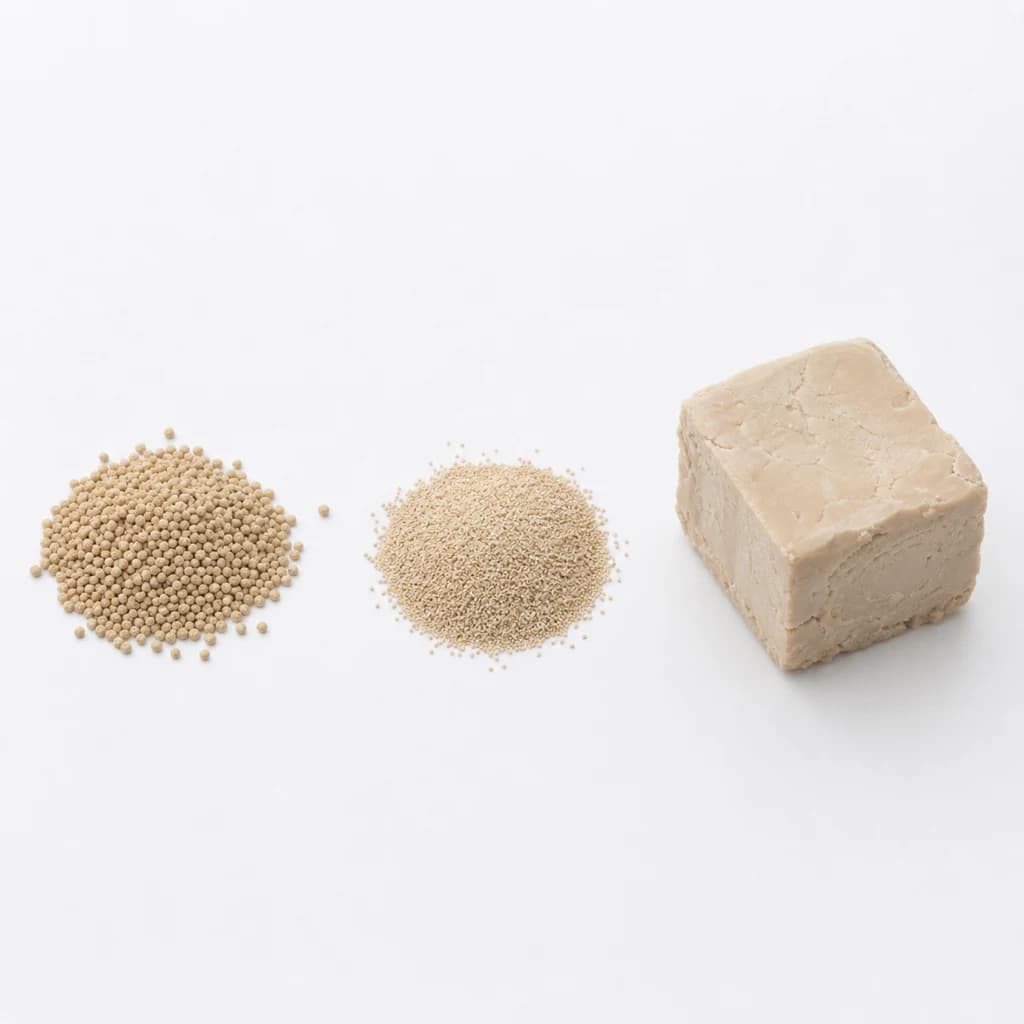
Active dry yeast is granulated, dehydrated *Saccharomyces cerevisiae* sold in dormant form — a workhorse leavening agent that has anchored American home baking since Fleischmann's began packaging it in the 1940s. Each pellet is larger and denser than instant yeast, and is sometimes coated with a thin layer of dead yeast cells left over from the drying process. That outer coating is why active dry yeast is typically rehydrated in warm water before it meets the flour: once soaked, the live cells inside wake up, shed their skin, and begin fermenting the sugars in the dough into carbon dioxide and ethanol. Skip that step and the granules can sit in cold flour, undissolved, struggling to start.
The gas it produces is what lifts a dough, but the byproducts — organic acids, esters, and a trace of alcohol — are what give bread its bready, slightly tangy flavor. Longer, cooler ferments deepen those notes, which is why a slow overnight proof can taste more complex than a quick warm rise. In the kitchen, active dry yeast is forgiving and predictable: bloom it in 105–110°F water with a pinch of sugar, wait for a foamy cap that doubles in volume, then stir it into the mix. That five- to ten-minute check is also the most reliable way to confirm a packet pulled from the back of the pantry is still alive.
It sits in a practical middle ground between fresh cake yeast (fastest-rising and most perishable) and instant yeast (faster-convenient, no proofing required). Most U.S. bread recipes are written with active dry in mind; European formulas increasingly default to instant or fresh. Understanding the difference matters mainly for timing — active dry needs a slightly longer rise — and for emergencies, when an out-of-date packet can be rescued (or ruled out) by a quick bloom.
- Measured in
- g
- Storage
- Refrigerate
Find it in
Suits
Types & varieties
The classic larger-granule form that should be bloomed in warm water before use.
Finer granules (e.g., SAF Instant, Red Star Instant, Fleischmann's RapidRise). Mixed directly into flour with no proofing; rises about 25–50% faster. Substitutes 1:1 by weight.
Moist, crumbly block sold refrigerated. Perishable (2–3 weeks). Use roughly 3× the weight of active dry, or one 0.6 oz / 17 g cake per packet.
Specialty strain (e.g., SAF Gold, AB Mauri O-tentic) designed for very sweet or high-sugar doughs where ordinary yeast would stall.
Cultivated colony of ambient Saccharomyces and Lactobacillus. Slower, more acidic rise that produces tangier, more aromatic bread.
How proofing works
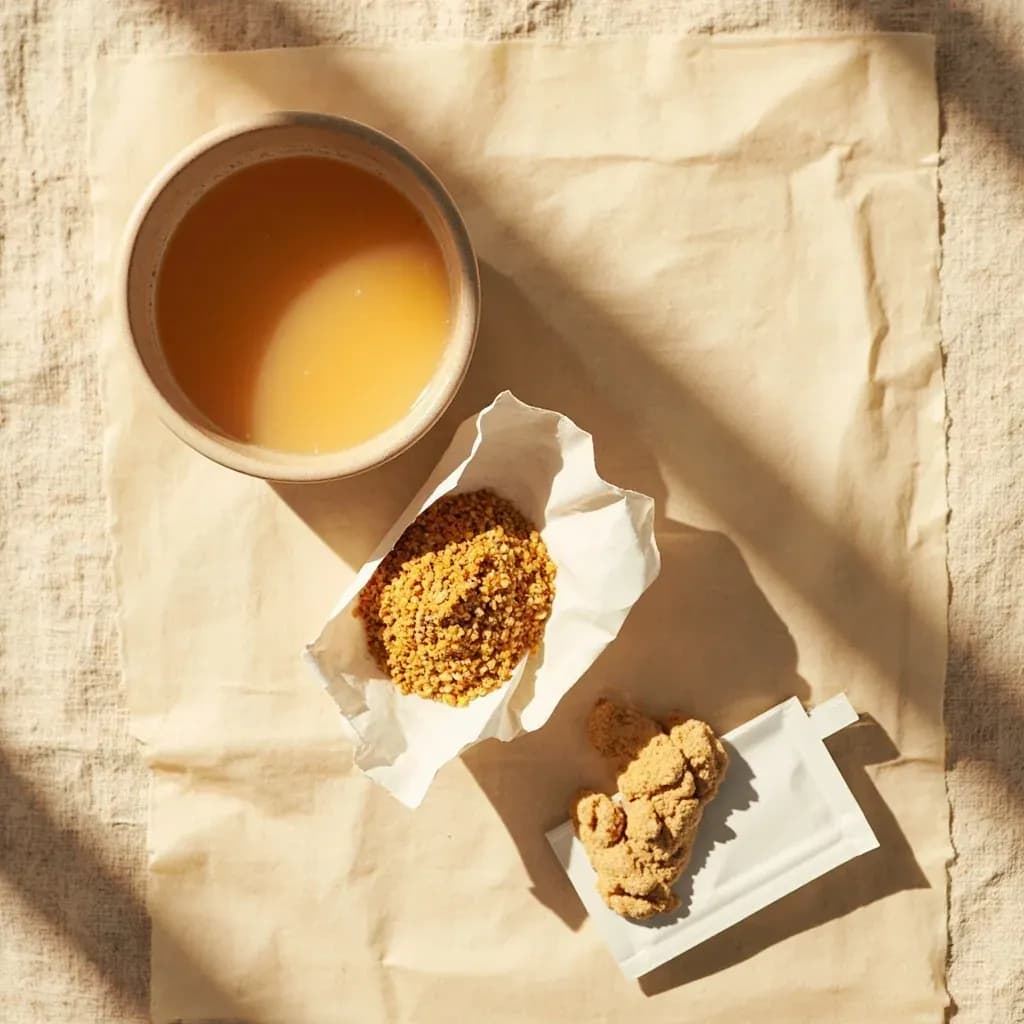
Blooming is more than a viability test — it's a controlled rehydration. The dried pellets are essentially sleeping; submerging them in warm water dissolves the outer coating and rehydrates the cell walls, after which the cells metabolize a little sugar and off-gas carbon dioxide. That gas gets trapped in the watery slurry as bubbles, which is the foam you see on top. If no foam forms after ten minutes, the cells were either dead on arrival, killed by hot water, or so old that their enzymes have degraded. A flat, cloudy slurry is a clear signal to discard and start over rather than build an entire loaf around dead leavening.
- Water temperature is the most common error: too cool and the cells stay sluggish, too hot and they die. Aim for 105–110°F — warm to the inside of your wrist, like a comfortable bath.
- A pinch of sugar (about 1 teaspoon per envelope) gives the yeast an immediately available food source and speeds the foam noticeably.
- If proofing in milk or another enriched liquid, expect a slightly slower, less dramatic foam — warm water gives the clearest signal of viability.
Storage and shelf life
Yeast is a living culture pressed into suspended animation, and its two enemies are heat and moisture, not cold. A sealed, unopened packet keeps for years in a cool, dark pantry — always check the best-by date printed on the envelope, since that's the manufacturer's own viability guarantee. Once opened, oxygen and ambient humidity start to oxidize the cells, and a half-used jar left on the counter will lose activity within weeks. Pressing out the air and refrigerating buys a few months; freezing buys up to a year with very little loss of potency.
- Transfer opened yeast to a jar with a tight lid or a heavy zip-top bag with the air pressed out before refrigerating or freezing.
- Never return yeast to its original paper envelope once the bag is open — paper is porous and lets moisture in.
- Frozen yeast can be measured and used straight from the freezer; the granules are dry enough that they won't clump.
Common uses
Tips & pitfalls
- Proof in water that's warm to the wrist, not hot — anything above ~120°F begins to kill the cells.
- If the mixture doesn't foam, double in volume, and smell yeasty within 10 minutes, discard it and start over with fresh yeast.
- Add salt and fat after proofing, never directly onto the dry granules — both can dehydrate and damage the cells on contact.
- A teaspoon of sugar in the proofing water speeds activation, but more than a tablespoon in the dough can slow the rise.
- For long, cold overnight ferments, dissolve the yeast in a portion of the dough water first so it disperses evenly throughout the mix.
- Store opened packets or bulk jars in the freezer with as much air pressed out as possible — cold preserves yeast, heat and moisture kill it.
- Use one packet as a baseline for about 4 cups of flour, and scale up from there for batch baking.
- In dry climates or at high altitude, lean toward slightly more hydration so the yeast cells stay moist through long rises.
Nutrition
Energy
1360 kJ · per 100 g
Where the calories come from
Protein
40.4g
81% DV
Carbs
41.2g
15% DV
Fat
7.6g
10% DV
Fiber
26.9g
96% DV
Sugars
0g
of which
Sodium
51mg
2% DV
Source · USDA FoodData Central · approx. Leavening agents, yeast, baker's, active dry
View on FDC →In the shops
Matched grocery products
 €0.50
€0.50Fresh Yeast
LEVANOVA · kg · Bonpreu
 €0.50
€0.50Fresh Yeast
Levital · 50 g · Mercadona
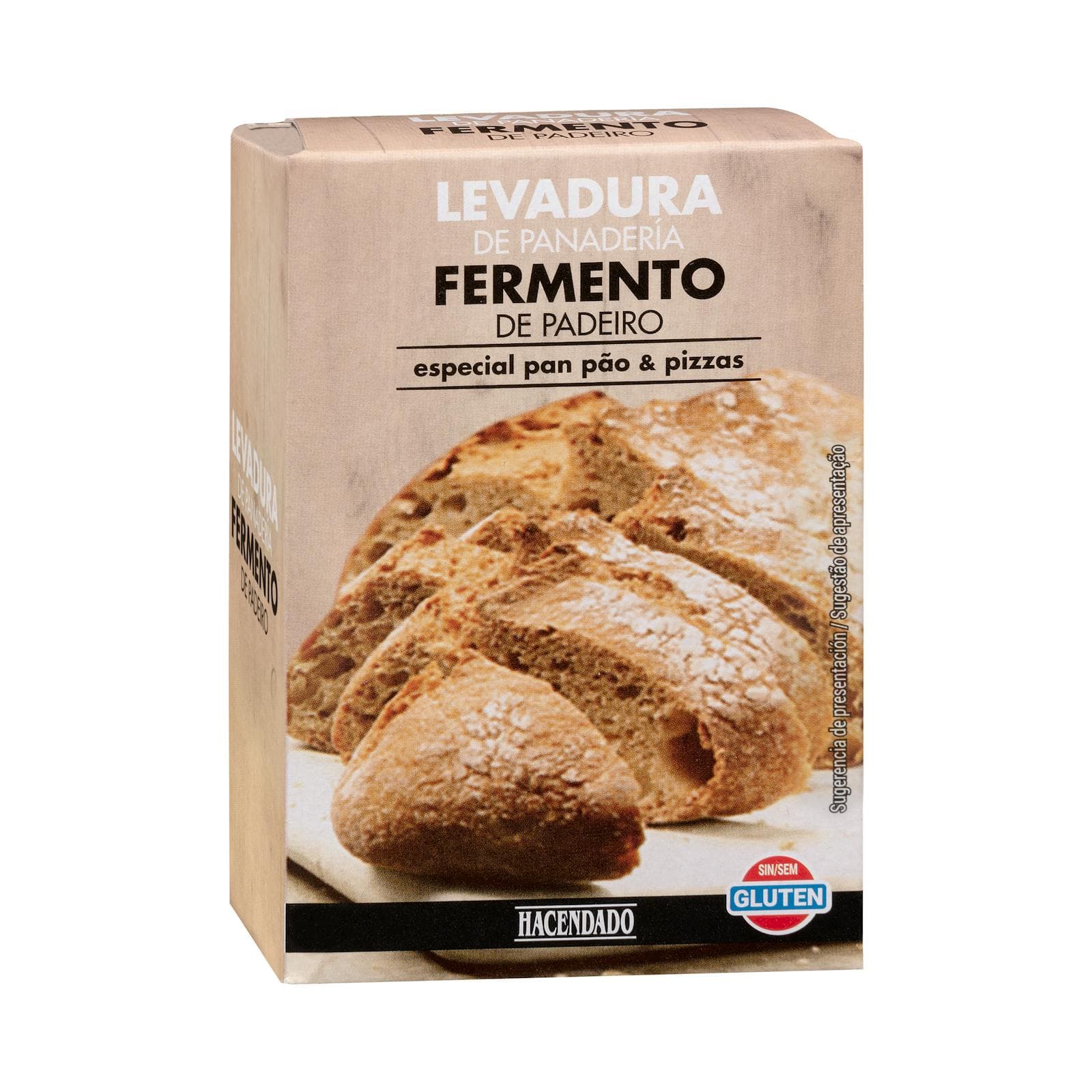 €1.60
€1.60Baker's Yeast
Hacendado · 70 g · Mercadona
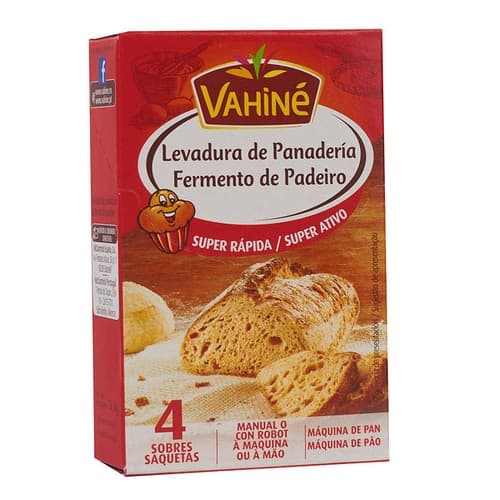 €1.89
€1.89Bread Making Yeast
VAHINE · kg · Bonpreu
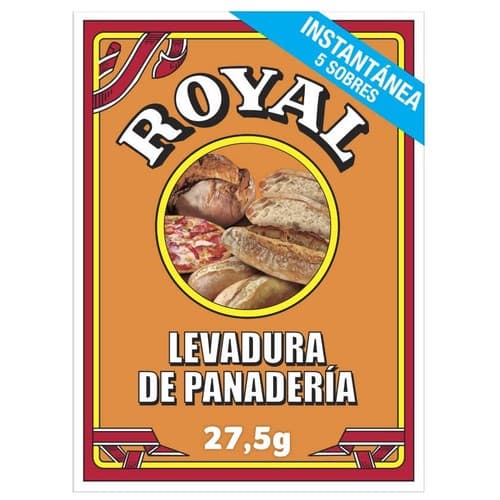 €2.25
€2.25Royal Bread-Making Yeast
ROYAL · kg · Bonpreu
Good to know
- Form
- Granulated, dried Saccharomyces cerevisiae in dormant state
- Granule size
- Larger, rod-shaped pellets, sometimes coated with a thin layer of dead yeast cells
- Standard packet
- 2¼ tsp (7 g / ¼ oz) per envelope
- Leavening power
- One packet leavens about 4 cups (~500 g) of bread flour
- Proofing temperature
- 105–110°F (40–43°C); water above ~120°F (49°C) begins killing the cells
- Proofing time
- 5–10 minutes; should foam and roughly double in volume
- Storage (unopened)
- Cool, dry place; shelf life typically 2–4 years (check best-by date)
- Storage (opened)
- Airtight container in the fridge up to 4 months, or the freezer up to 1 year
- Activity check
- Bloom in warm water with a pinch of sugar; a foamy, beery-smelling cap within 10 minutes confirms viability
Substitutes
- Instant Yeast — Direct 1:1 substitution by weight or volume; skip the proofing step and mix straight into the flour.
- Fresh / Compressed Yeast — Use about 3× the weight — roughly one 0.6 oz / 17 g cake per packet of active dry — and crumble into warm water.
- Sourdough Starter — Use about 1 cup (240 g) of an active, fed starter per packet and reduce the flour and water accordingly; expect a tangier flavor and a longer rise.
- Rapid-Rise / Bread Machine Yeast — Functionally interchangeable with instant; can be mixed in dry and given a shorter rise.
- Baking Powder (emergency, non-yeasted) — Works only in recipes that don't depend on yeast for flavor and chew; produces a cake-like crumb. Use about 1 tsp per cup of flour.
Pairs with
Also called
dry yeast · ADY · traditional dried yeast