Dairy & Eggs
Liquid Whole Egg
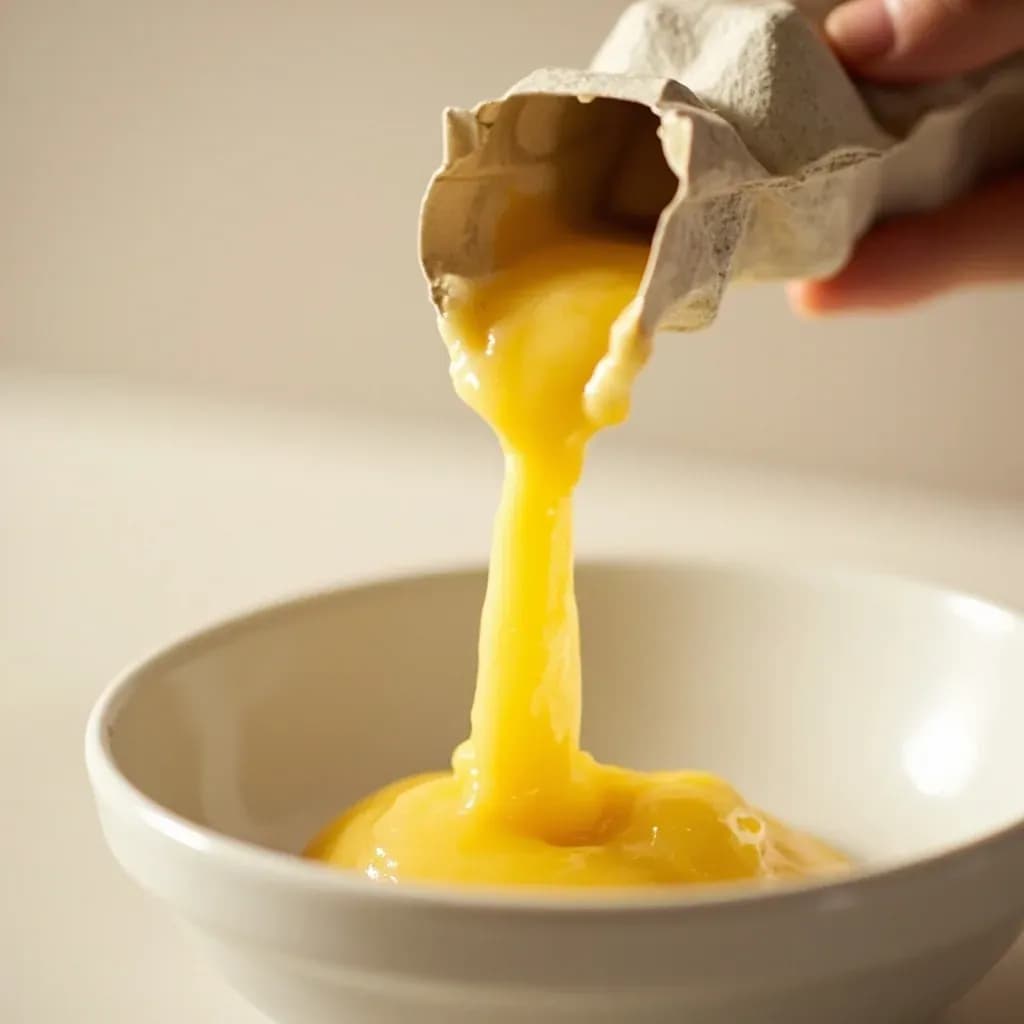
Pasteurized blended whole eggs in a carton for fast baking, scrambles and batters.
Liquid whole egg is pasteurized whole eggs (yolks and whites) homogenized and sold in cartons. It is used in commercial and home baking, scrambled eggs, custards and batters where convenience and consistent measuring matter. Pasteurization makes it safe and shelf-friendly until opened.
Liquid whole egg is pasteurized, de-shelled, and homogenized whole egg sold in cartons. While it originated in foodservice—restaurants, hotels, and institutions favor it for portion consistency and labor savings—it has steadily moved into retail aisles as home cooks discovered its convenience. The critical difference from shell eggs lies in homogenization: the processing breaks down the natural egg structure and emulsifies fat droplets uniformly throughout the liquid. This structural change means liquid whole egg behaves differently in cooking—it produces a slightly more tender crumb in baked goods and sets faster in scrambles because the homogenized fat distributes heat more evenly. The USDA mandates pasteurization at minimum 60°C (140°F) for 3.5 minutes, eliminating Salmonella risk and making liquid egg the safer choice for preparations eaten undercooked or by vulnerable populations. Ultra-pasteurized versions heated to 74°C (165°F) extend shelf life further and are common in foodservice operations with irregular egg usage.
- Measured in
- ml
- Storage
- Fridge
Allergens
Types & varieties
Standard product; minimum pasteurization at 60°C. Most common in foodservice and retail.
Heat-treated at 74°C; extended refrigerated shelf life up to 12 weeks unopened.
From hens not raised in cages; otherwise identical composition and use.
From certified organic, cage-free hens fed organic feed; typically ultra-pasteurized.
Same as liquid but frozen immediately after processing; thaw in refrigerator before use.
Contains 0.5–1% salt as stabilizer; reduces gelling in certain applications.
Contains added yolk for richer texture; used in foodservice for scrambles and batters.
Why Choose Liquid Over Shell Eggs
Liquid whole egg offers three practical advantages: portion consistency (no broken shells, no surprise small or large eggs), labor efficiency (no cracking, no waste from unused yolks or whites), and food safety (pasteurization eliminates Salmonella entirely). The homogenized fat distribution also gives baked goods a marginally more tender texture than recipes calling for beaten fresh eggs. For high-volume cooking, catering, or meal prep, these benefits outweigh any difference from fresh. For recipes where beaten egg whites folded into batter are essential—soufflés, angel food cake—liquid whole egg cannot substitute directly since it lacks the structural air cells; use fresh eggs instead.
- Use liquid egg when recipe calls for whole eggs without specific structural requirements
- Avoid for recipes requiring beaten whites with visible air structure
- Choose for omelets, scrambles, batters, custards, and binding applications
Handling and Storage Safety
Temperature control is the single most critical factor for liquid egg safety. Once opened, bacterial contamination can occur if the product is left at room temperature. Never return unused liquid egg to its original carton—this introduces contamination from utensils or hands. For frozen liquid eggs, thaw overnight in the refrigerator on a plate or tray to catch any condensation. Do not refreeze after thawing; the freeze-thaw cycle degrades protein structure and affects cooking performance.
- Refrigerate immediately after purchase; do not use if carton left at room temperature for more than 2 hours
- Store opened cartons toward the back of the refrigerator where temperature is most consistent
- Pour out what you need, then seal and use within 3 days—never return excess to original container
- Label frozen portions with date and quantity to track shelf life
Common uses
Tips & pitfalls
- Shake or stir well before each use — fat and protein separate during storage and settling.
- Refrigerate immediately after purchase; do not use if carton has been left at room temperature for more than 2 hours.
- Once opened, pour out what you need and use the rest within 3 days — do not return unused portion to the original carton.
- For frozen liquid eggs, thaw overnight in the refrigerator; do not thaw at room temperature. Do not refreeze after thawing.
- If a recipe specifies room temperature eggs for baking (e.g., creaming butter with sugar), warm the measured amount in a water bath — liquid eggs warm faster than shell eggs.
- For scrambled eggs, liquid whole eggs cook slightly faster due to homogenization; reduce heat and watch carefully to avoid overcooking.
- Some brands add color (usually beta-carotene) for yolk color consistency — this does not affect performance.
- In baked goods calling for beaten eggs, liquid whole egg cannot be beaten but performs functionally the same.
Nutrition
Energy
598 kJ · per 100 g
Where the calories come from
Protein
12.6g
25% DV
Carbs
0.7g
0% DV
Fat
9.5g
12% DV
Fiber
0g
0% DV
Sugars
0.4g
of which
Sodium
142mg
6% DV
Source · USDA FoodData Central · Egg, whole, raw, fresh
View on FDC →In the shops
Matched grocery products
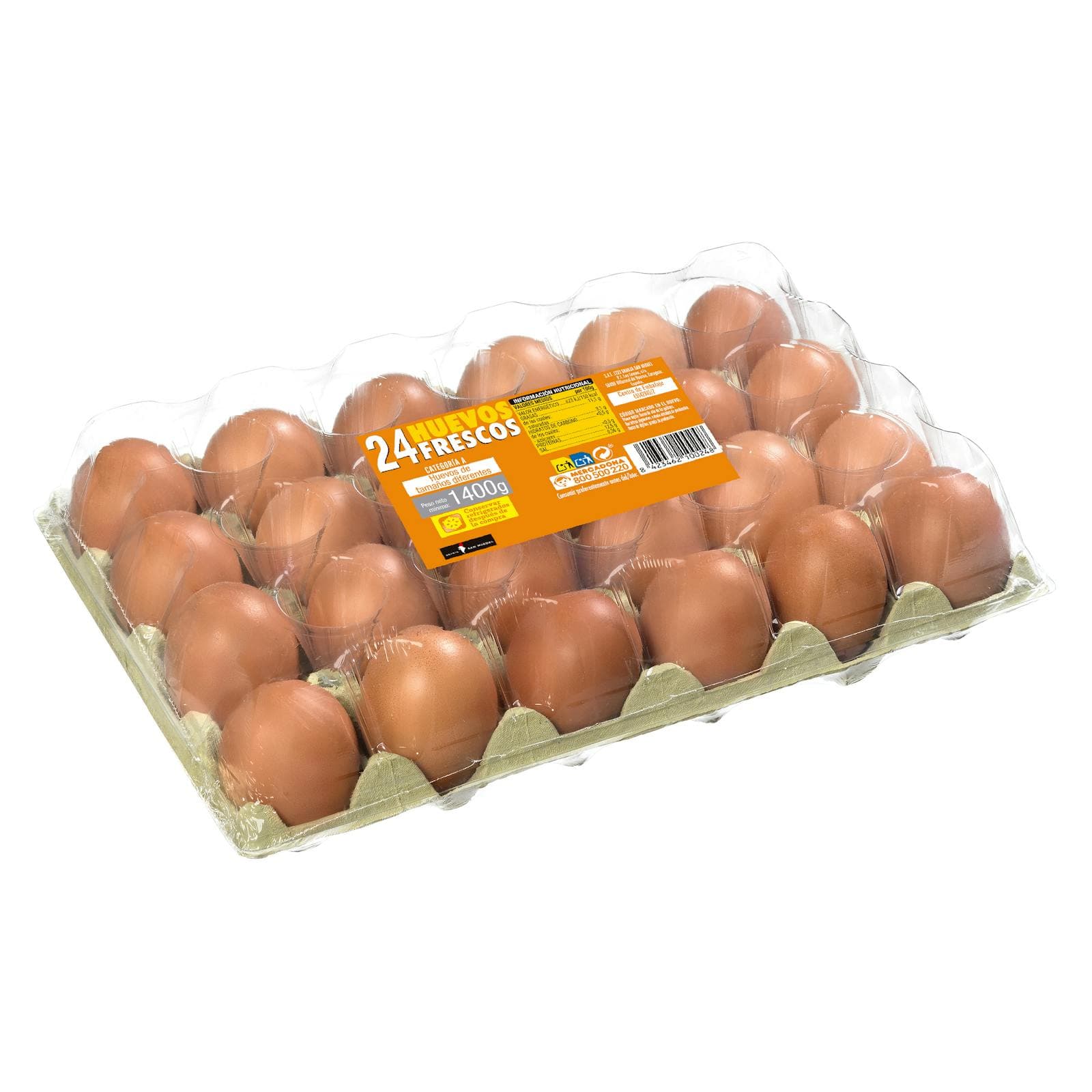 €5.60
€5.60Eggs
24 dz · Mercadona
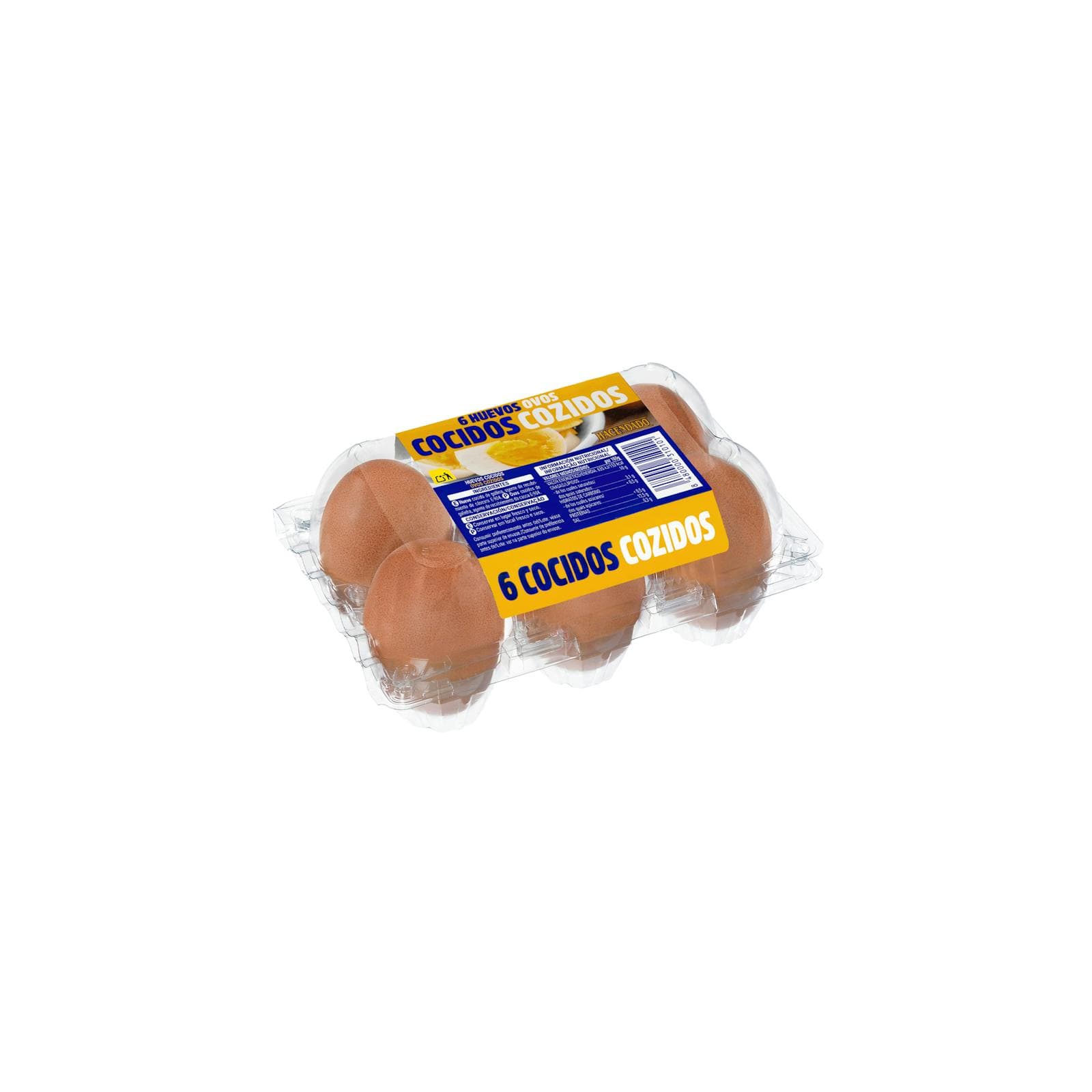 €2.20
€2.20Cooked Eggs
6 dc · Mercadona
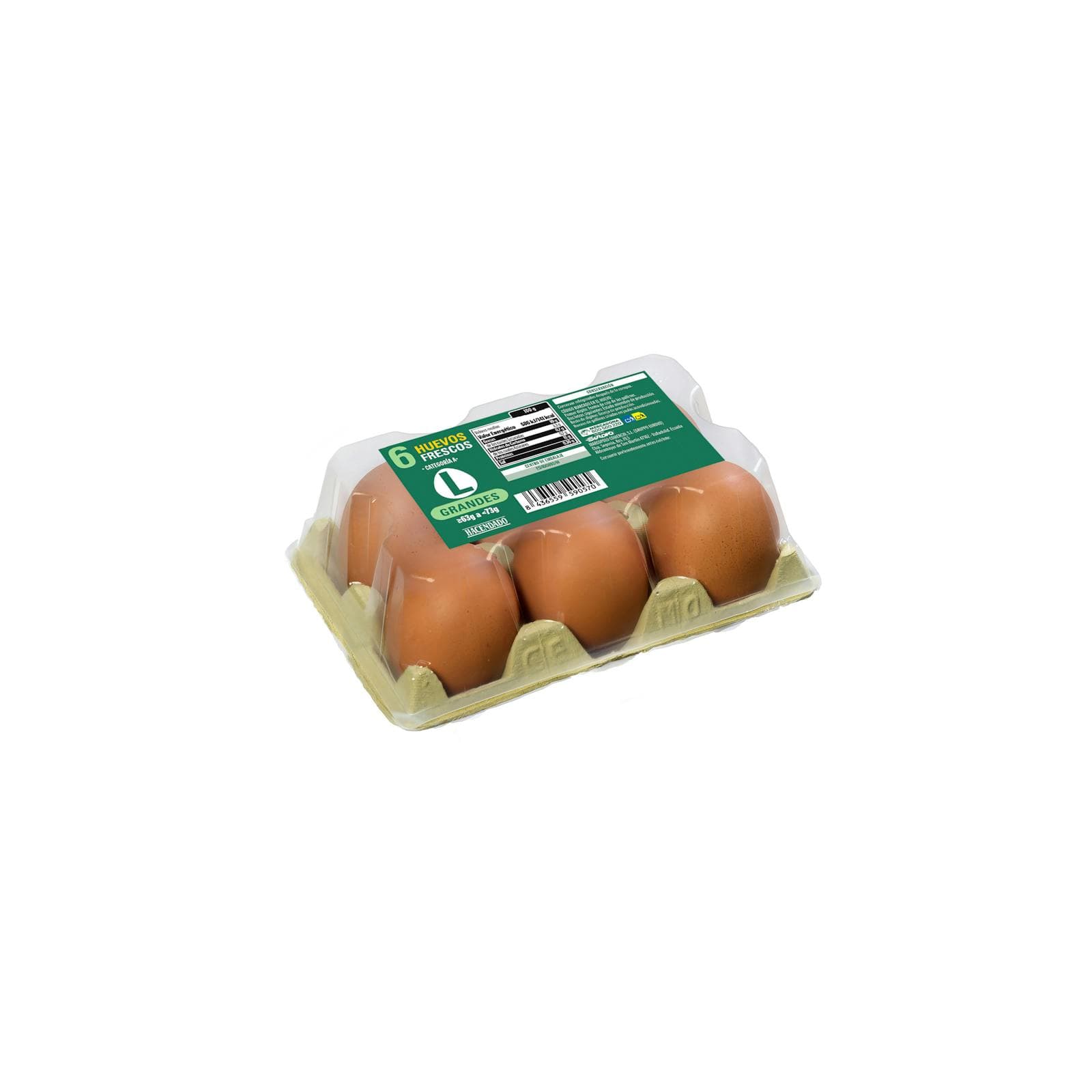 €1.80
€1.80Large Eggs
6 dc · Mercadona
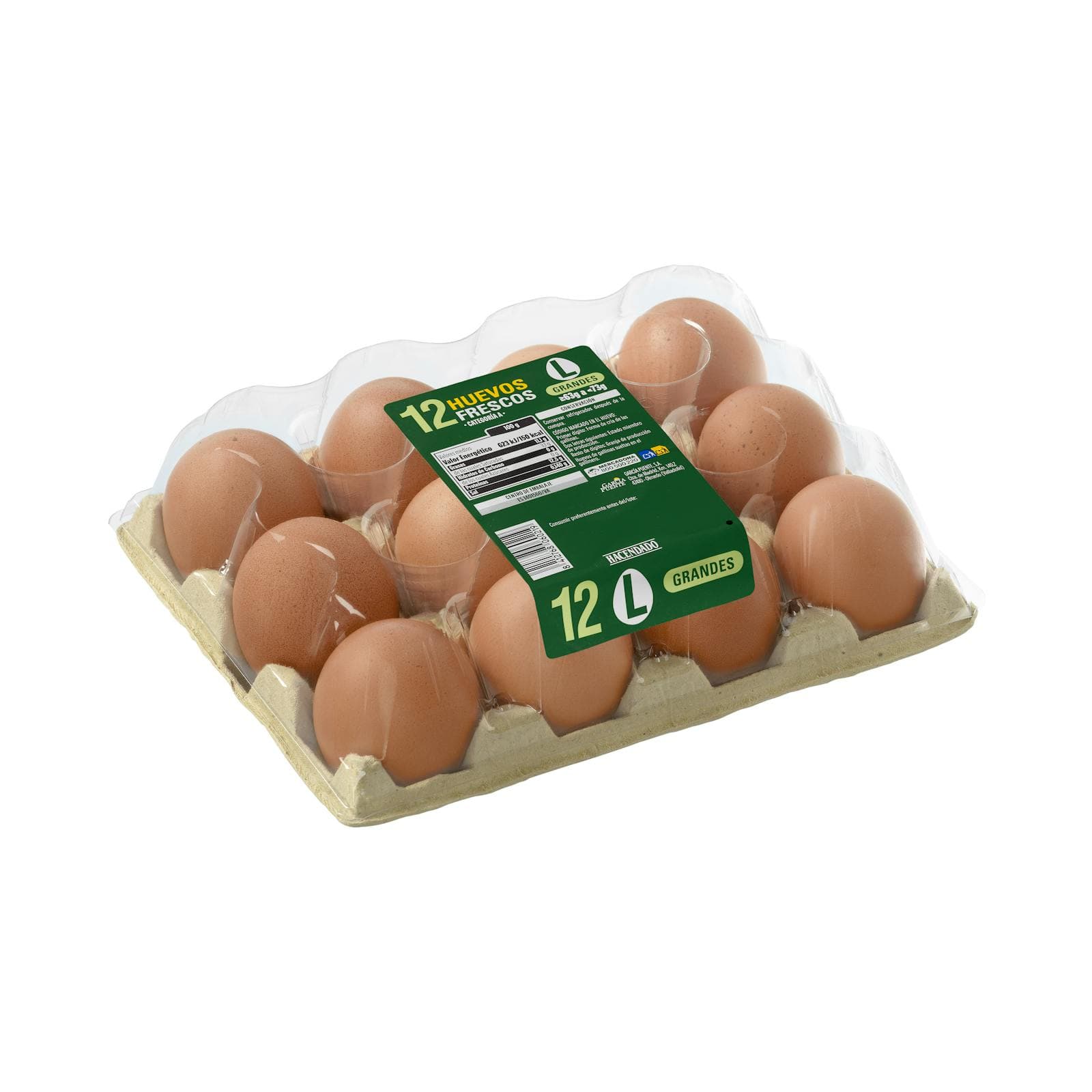 €3.20
€3.20Large Eggs
12 dc · Mercadona
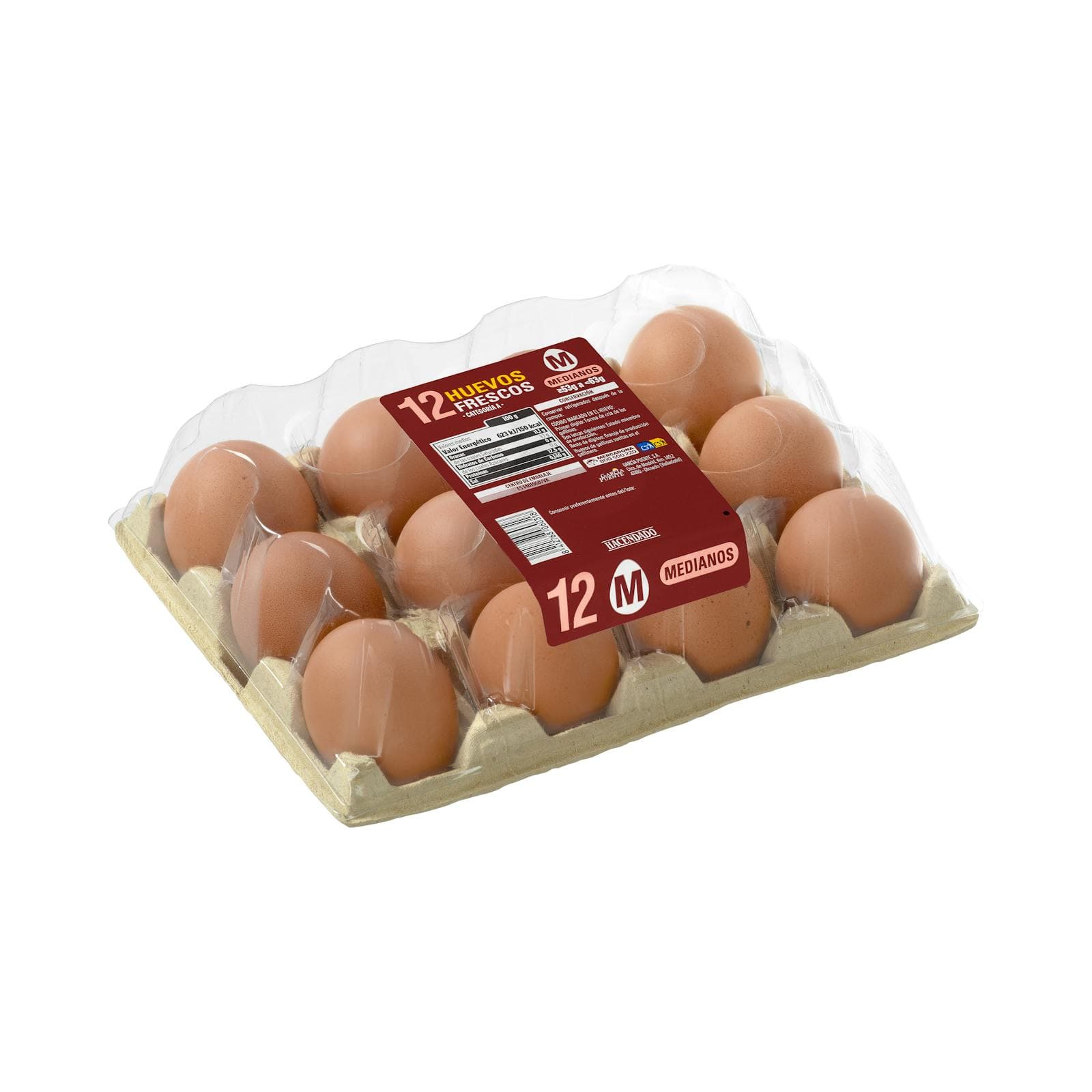 €3.00
€3.00Medium M Eggs
12 dc · Mercadona
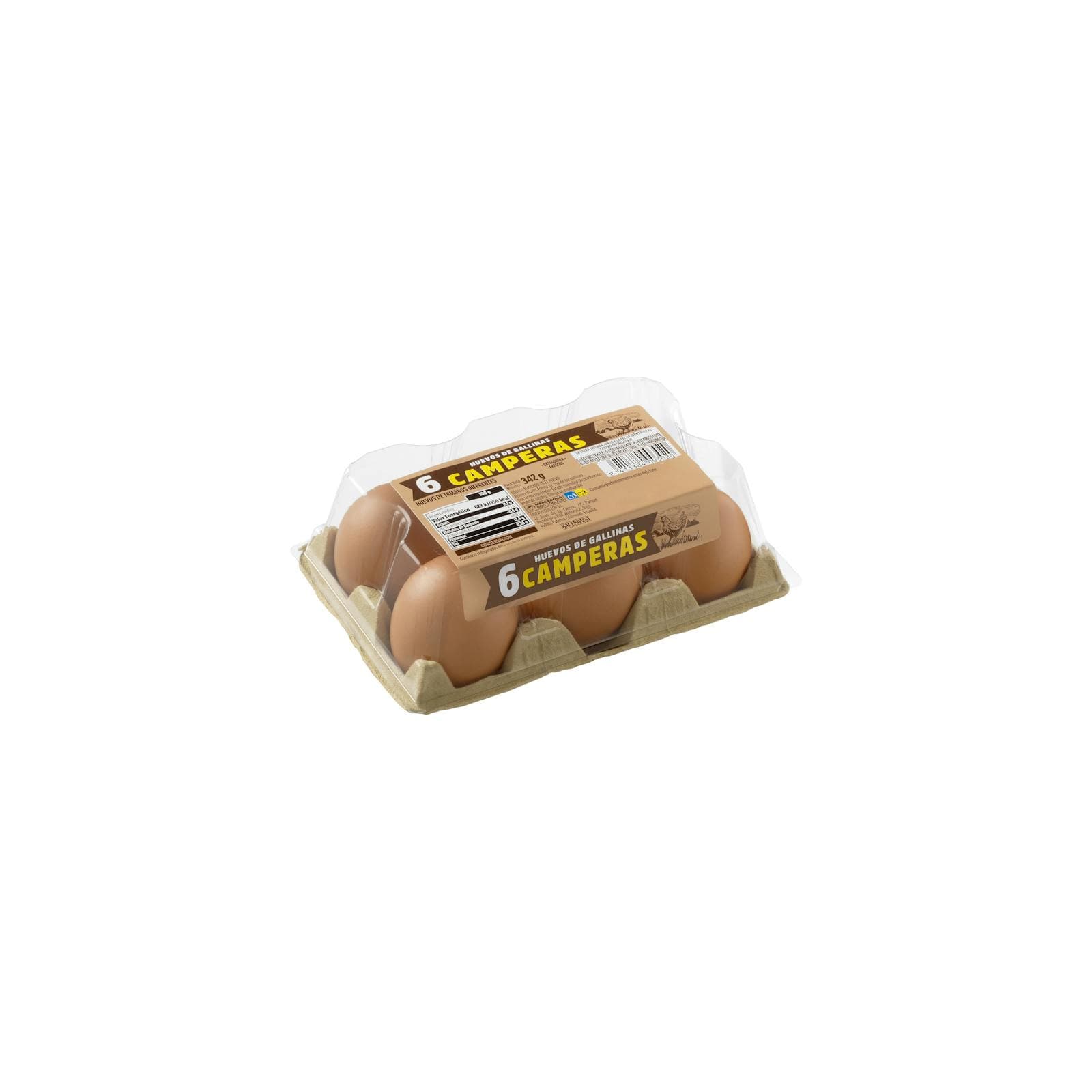 €2.10
€2.10Free-Range Eggs
6 dc · Mercadona
Good to know
- Shelf Life (unopened refrigerated)
- 4–6 weeks from pack date, per USDA guidelines
- Shelf Life (opened)
- 3–4 days refrigerated
- Shelf Life (frozen)
- Up to 1 year at 0°F (-18°C)
- Serving Size
- 2 tablespoons (30g) ≈ 1 large whole egg
- Calories per Serving
- 45–50 kcal
- Protein per Serving
- 3–4g
- Fat per Serving
- 3g
- Pasteurization
- Minimum 60°C (140°F) for 3.5 minutes; ultra-pasteurized at 74°C (165°F)
- Cholesterol
- 140mg per 50g serving (about 70% of a fresh egg)
- Sodium Content
- 40–60mg per serving; salted varieties contain 0.5–1% salt
- Common Package Sizes
- 16 fl oz (≈8 eggs), 32 fl oz (≈16 eggs), 64 fl oz (≈32 eggs)
- USDA Inspection
- All liquid egg products in the US must be USDA-inspected and pasteurized
Substitutes
- Fresh whole eggs — Crack 1 large fresh egg per 2 tablespoons of liquid whole egg. Most direct substitute in all applications.
- Liquid egg whites + yolks — Combine 1 tablespoon liquid egg white with 1 tablespoon liquid egg yolk per 2 tablespoons of liquid whole egg.
- Commercial egg substitute (e.g., Egg Beaters) — Most are primarily egg whites with added color and vitamins. Use 2 tablespoons per substitution but expect slightly different texture and lower fat content.
- Dried whole egg powder — Reconstitute per package directions (typically 1/4 cup powder + 1/2 cup water per 2 eggs). Stores longer but requires planning.
Pairs with
Also called
carton · Carton Eggs · Whole Egg Carton
Related

Whole Milk
Rich, full-fat milk for drinking, coffee, sauces, and baking
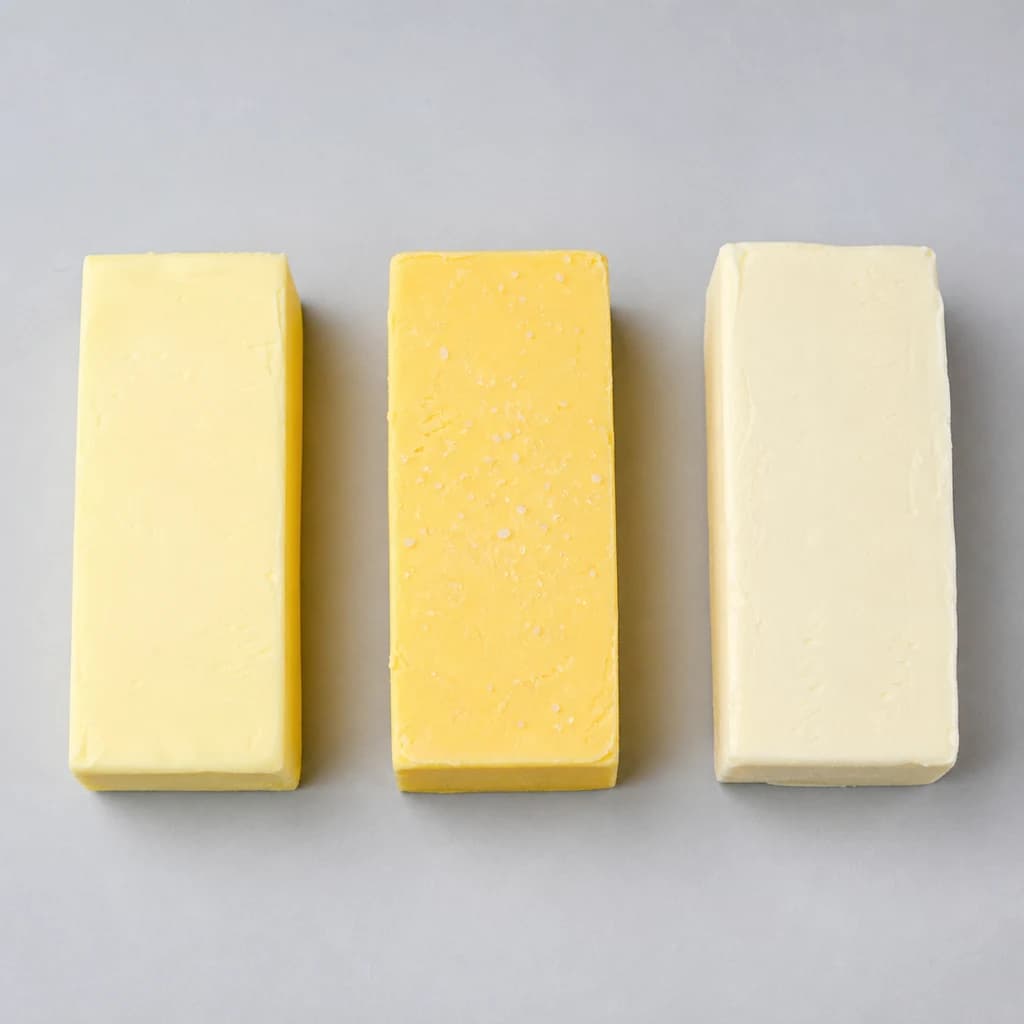
Butter
Golden fat for searing, baking, and finishing a sauce
Yogurt
Tangy, creamy culture for breakfast, sauces, and marinades
Cheddar Cheese
Sharp, melty cheese for sandwiches, gratins, and grating
Skim Milk
Fat-free milk for lighter drinking, coffee, and cooking
Heavy Cream
Rich cream that whips, enriches sauces, and sets ganache

Sour Cream
Tangy, thick cream for dolloping, baking, and dips
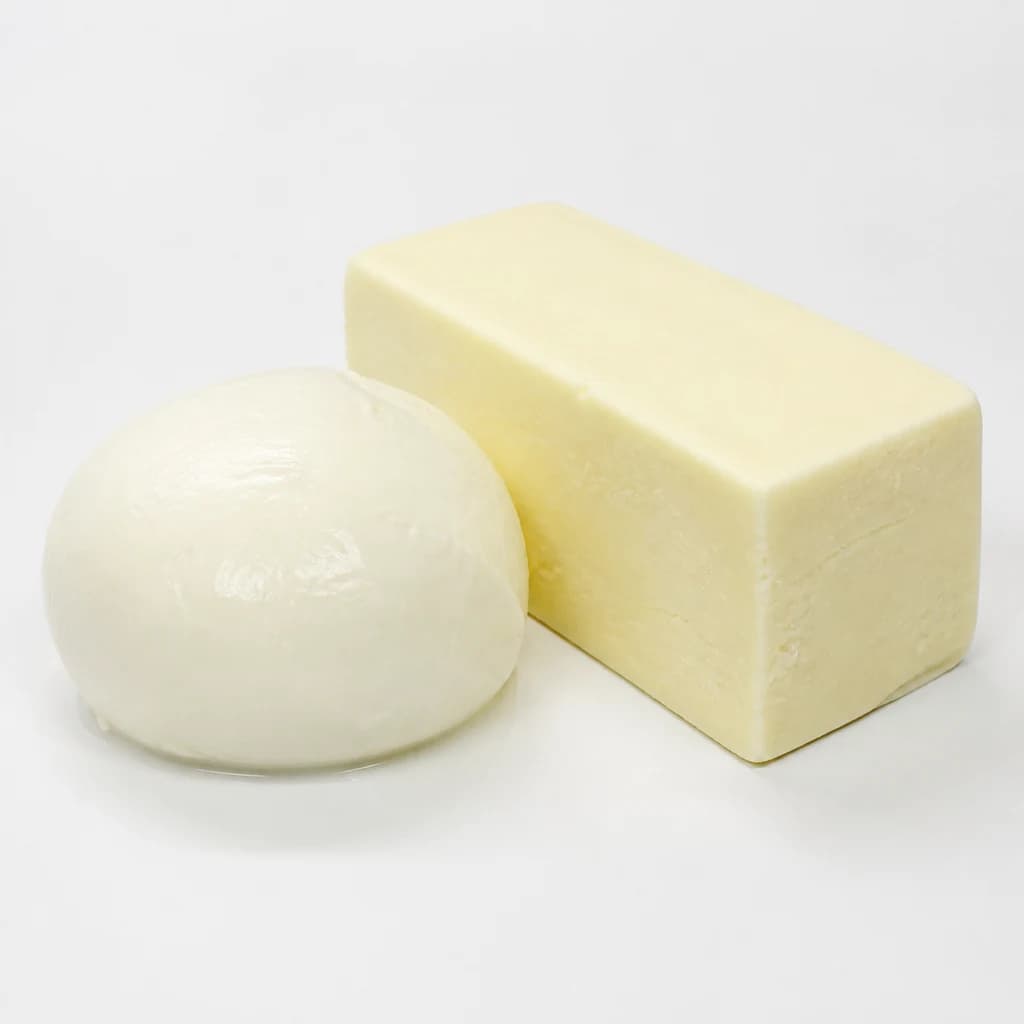
Mozzarella
Soft, milky cheese that melts into stretchy pizza pulls