Proteins
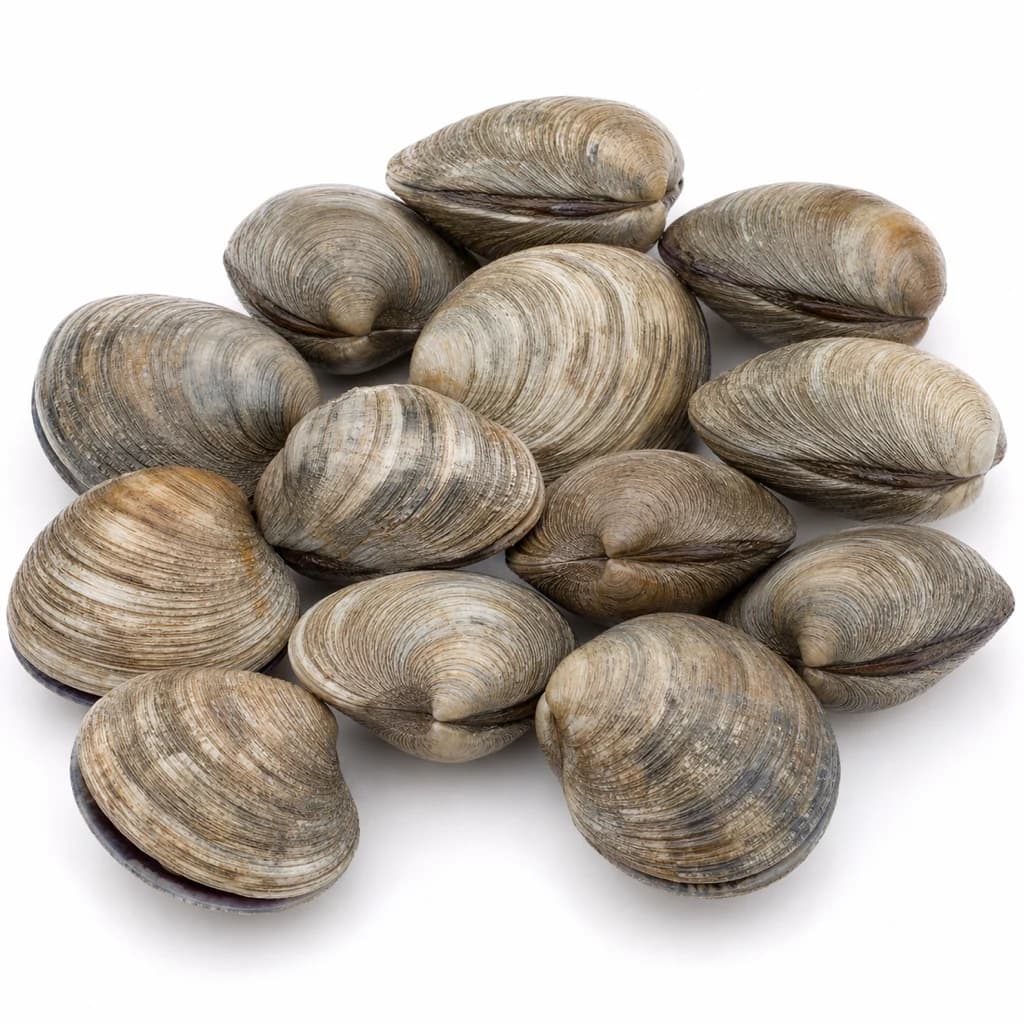
Littleneck Clam
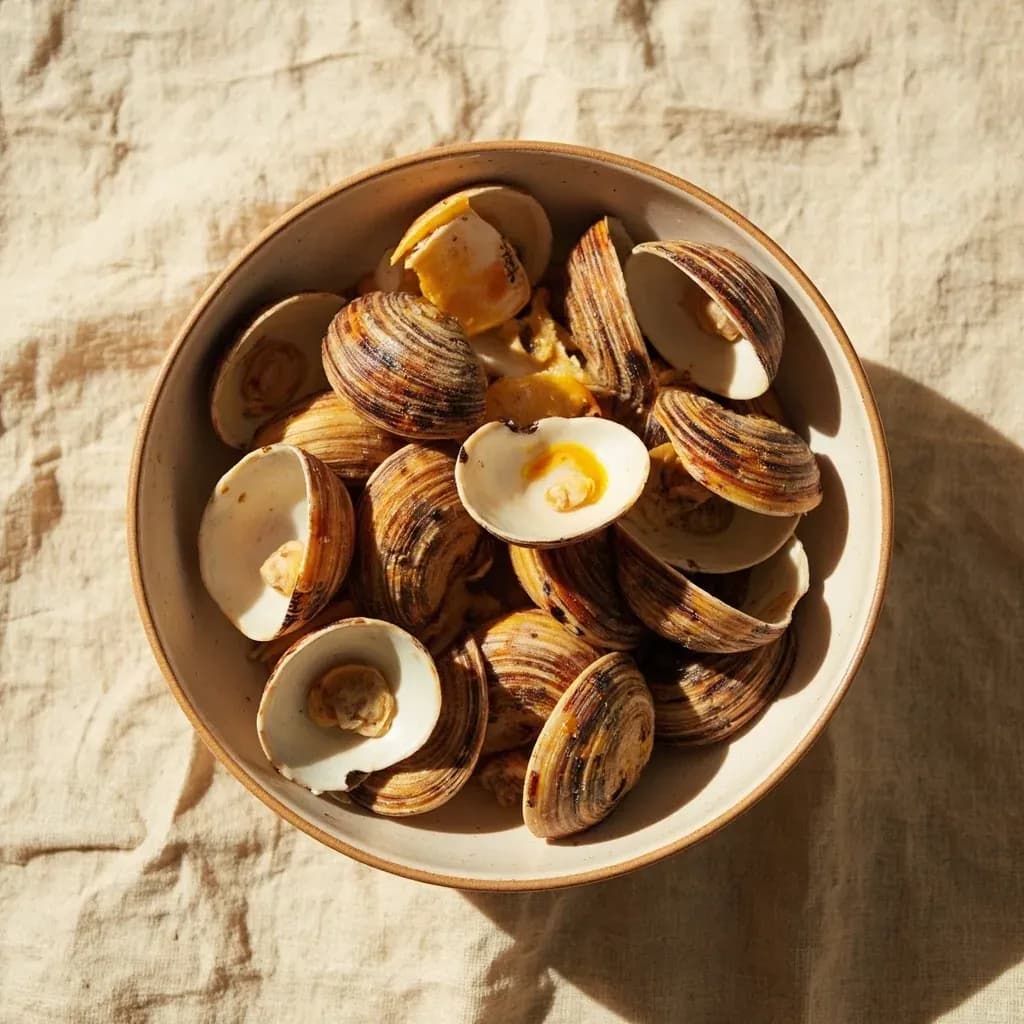
Small, tender hard-shell clam that opens fast. Steam for linguine alle vongole or chowder; the smallest size, so it stays sweet and tender.
Littleneck is not a species but a size grade — the smallest commercially harvested tier of the Atlantic hard clam (Mercenaria mercenaria), the same animal that becomes a topneck, cherrystone, or chowder clam as it grows. The name is said to come from Little Neck Bay on Long Island, and the clam ranges down the eastern seaboard from the Gulf of St. Lawrence to the Gulf of Mexico, burrowing into sandy, muddy, and gravelly bottoms. In the kitchen, the littleneck is the most prized grade for whole-shell cooking: the shells are small and manageable, the meat is sweet and tender, and they pop open in 4 to 7 minutes of steaming — quick enough that the flesh stays tender rather than turning rubbery.
What separates a littleneck from larger grades is texture more than flavor. All hard clams carry the same clean, briny sweetness, but a cherrystone or chowder clam has been filtering longer, building denser, chewier muscle. A littleneck's meat is delicate enough to eat whole on the half shell, draped over pasta, or pooled in a white-wine broth without any chopping or tenderizing. The trade-off is yield: only about a quarter of the clam's weight is edible meat, so roughly a dozen littlenecks per person is a reasonable portion for a main course.
Because they are sold live and live in sediment, littlenecks need to be purged in cold salt water before cooking, and they should be cooked just until the shells gape. Anything beyond that — whether from extra minutes on the heat or from residual carryover cooking — turns the meat leathery. Treat them gently, save the steaming liquid, and a littleneck rewards you with one of the purest expressions of the sea you can put on a plate.
- Measured in
- g
- Storage
- Refrigerate
Allergens
Find it in
Types & varieties
1¼ to 1½ inches; the next size up, slightly firmer meat, still tender enough for steaming and pasta.
1½ to 2 inches; meatier and chewier, the classic size for clam casino and stuffed clams.
Over 2 inches; the toughest, largest grade, chopped or ground for chowders, cioppino, and sauces.
Wild Atlantic hard clams share the market with hatchery-raised stock; both are sold under the same size grades.
The Hard Clam Size Grades
Because littleneck is one of four commercial grades of the same animal, knowing where it sits in the family helps you buy and cook with confidence. The grade refers to shell width across the hinge, not age alone, though older clams tend to be larger.
- Littleneck (1–1¼ in.) — smallest, most tender; steam, eat whole, or serve raw on the half shell.
- Topneck (1¼–1½ in.) — one step up; nearly as tender, slightly meatier, interchangeable in most recipes.
- Cherrystone (1½–2 in.) — chewier meat; ideal for stuffing, casino-style preparations, and chowders where the clam is chopped.
- Chowder clam or quahog (2 in.+) — the largest and toughest; always chopped or ground before cooking.
- Rule of thumb: if the recipe calls for the clam to be eaten whole or barely cooked, use littleneck or topneck; if it is chopped, minced, or simmered long, cherrystone or chowder is the better and more economical choice.
Purging Sand the Right Way
Hard clams live in sediment and arrive with grit in their mantle cavity. A short soak in salt water encourages them to pump it out before cooking.
- Dissolve roughly ⅓ cup of sea salt or non-iodized kosher salt per gallon of cold water; the water should taste like the sea.
- Submerge the clams for 30 minutes up to a few hours; a handful of cornmeal in the water is optional and traditionally thought to encourage purging, though most modern cooks skip it.
- Never use fresh tap water — it can kill the clams and will not draw out sand effectively.
- Lift clams out of the soaking water rather than pouring them off, so grit stays at the bottom of the bowl.
Common uses
Tips & pitfalls
- Never store live clams sealed in plastic or submerged in fresh water; they suffocate. Keep them in a colander or open bowl in the fridge with a damp towel over the top.
- Discard any clam with a cracked shell or one that stays open when tapped — only living, tightly closed (or firmly closing) clams are safe to cook.
- Cook only until the shells pop open, typically 4–7 minutes of steaming; any clam that remains closed after cooking should be thrown out.
- Pull clams from the heat the instant they open and remove the meat from the pot — residual heat will continue to cook the flesh and turn it rubbery.
- Save the steaming liquid. Strained, it is a briny broth that outperforms water or stock in pasta pots, chowders, and seafood risottos.
- For pasta alle vongole, shuck a few raw littlenecks and stir them in off the heat at the end; the warm sauce gently cooks them and yields a silkier texture than fully steamed clams.
- Buy from a busy fishmonger who turns stock quickly, and ask about summer spawning if shopping June through August, when meat can be thin and watery.
- If a recipe only calls for the meat, shuck raw clams over a bowl to capture their liquor, then strain it into the dish — it carries concentrated brine you would otherwise lose.
Nutrition
Nutrition
No USDA FoodData Central match for Littleneck Clam yet. We surface a per-100 g profile once a generic whole-food entry is matched and verified.
In the shops
Matched grocery products
 €10.70
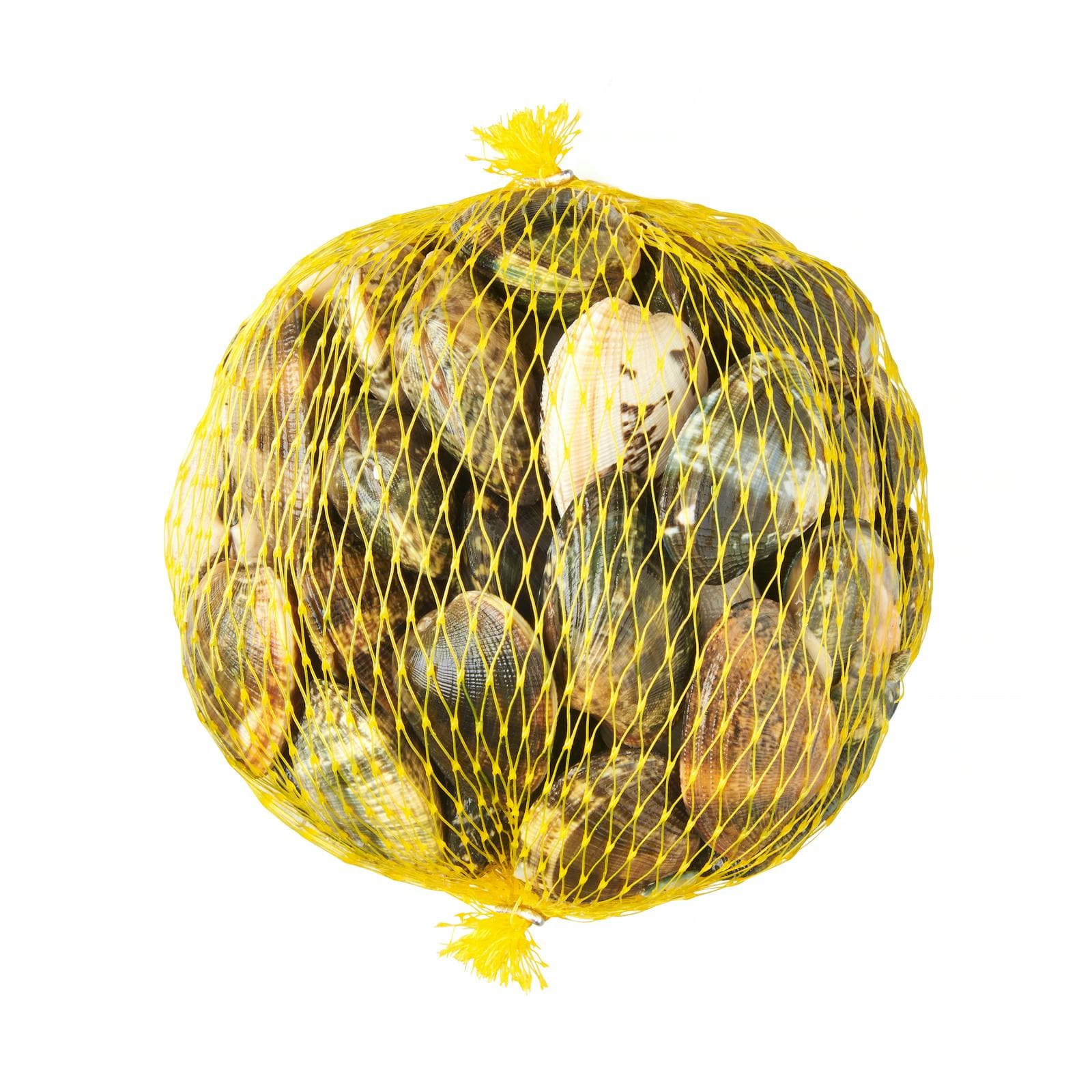
Japanese Clam
500 g · Mercadona
 €4.50
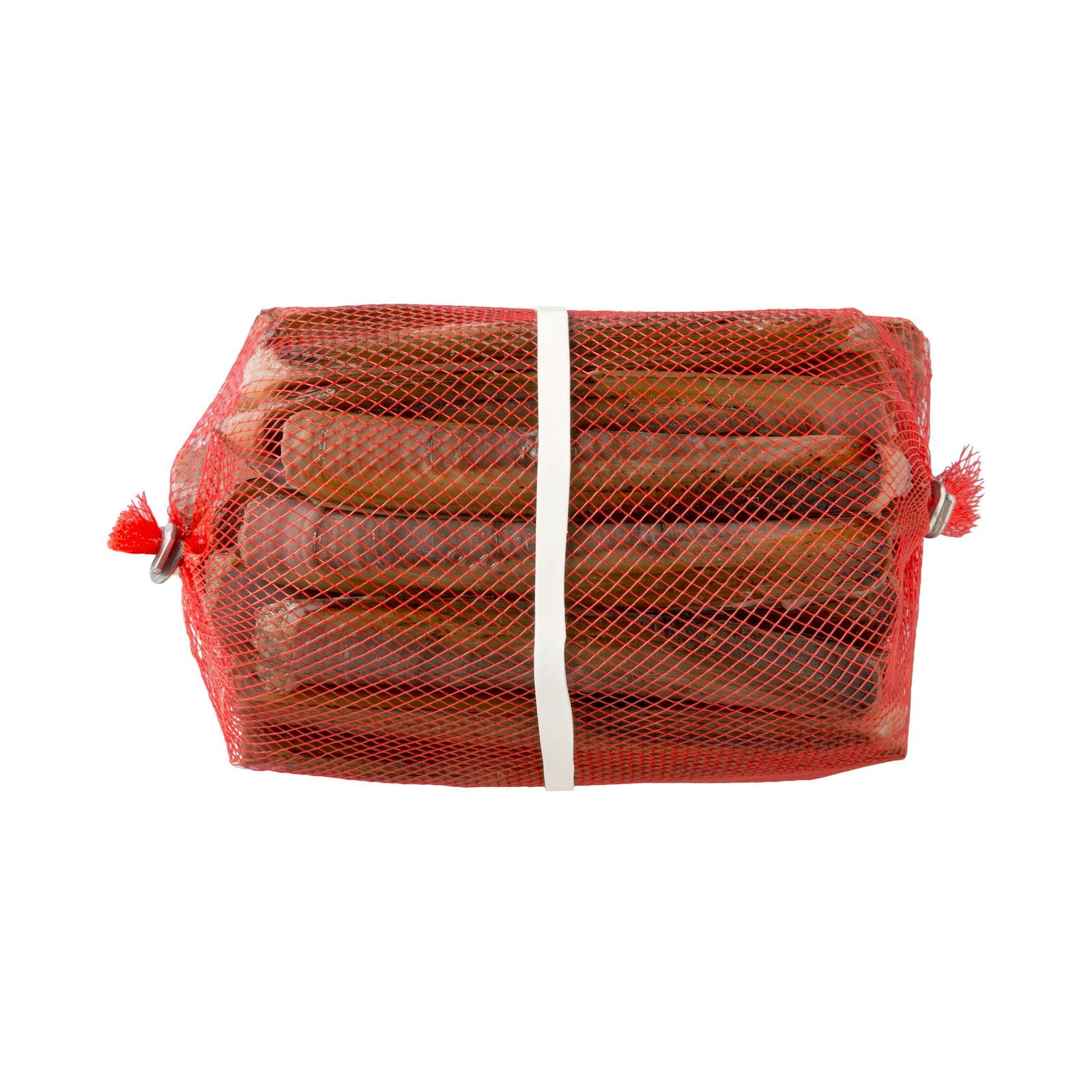
€4.50Razor Clams
500 g · Mercadona
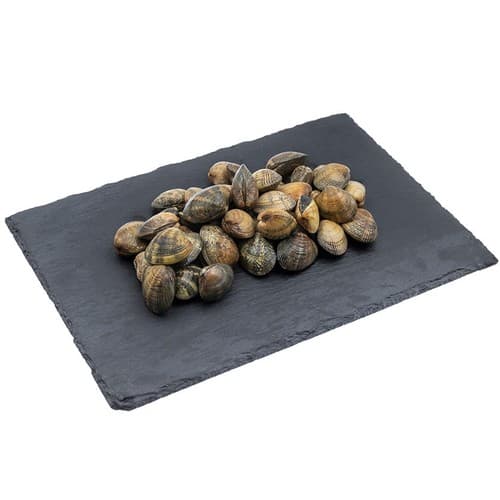 €7.50
€7.50Japanese Clam
ud · Bonpreu
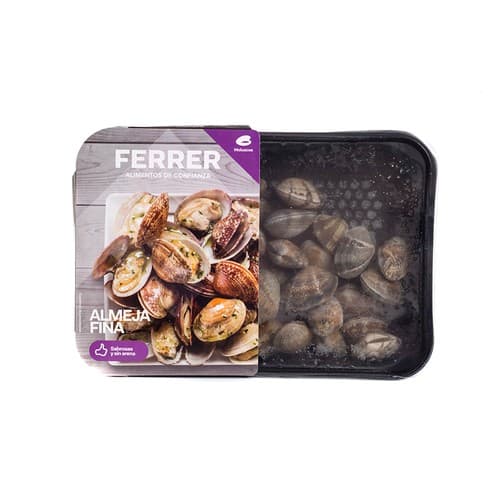 €8.65
€8.65Fine Clams Ferrer
FERRER · kg · Bonpreu
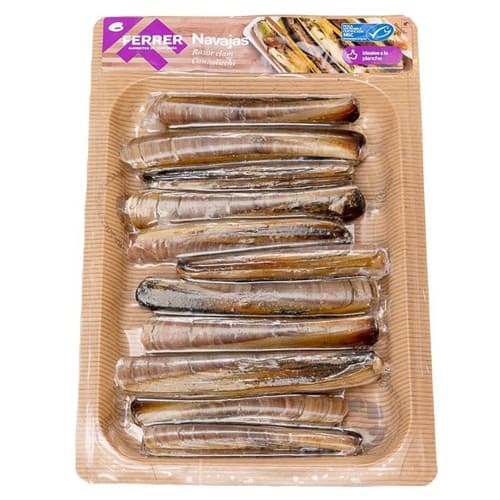 €3.35
€3.35FERRER Razor Clams
FERRER · kg · Bonpreu
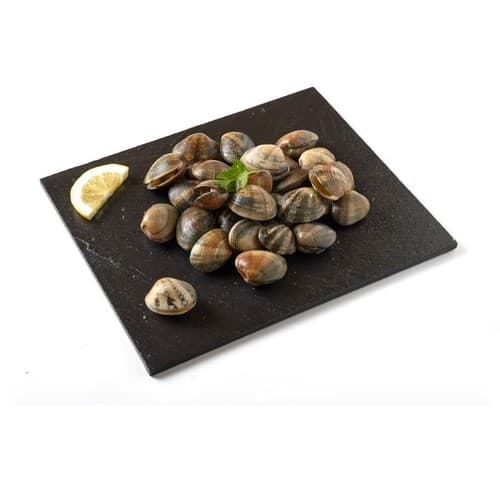 €14.99
Japanese Clam (unit)
Bonpreu
Good to know
- Scientific name
- Mercenaria mercenaria (same species as all hard-clam grades)
- Family
- Veneridae — hard-shell clams, also called quahogs or round clams
- Size classification
- 1 to 1¼ inches (25–32 mm) across the hinge; smallest legal commercial size
- Origin of name
- Reputedly from Little Neck Bay, Long Island, NY
- Range
- Eastern North America, Gulf of St. Lawrence to the Gulf of Mexico
- Season
- Available year-round; best from late fall through early spring, when meat is plump before summer spawning thins it out
- Meat yield
- Roughly 25–30% of total weight once shucked
- Storage (live)
- 33–40°F in a colander or open bowl covered with a damp towel; never sealed in plastic or submerged in fresh water. Use within 1–2 days.
Substitutes
- Manila clam — Smaller, sweeter Asian hard-shell clam; cooks even faster, so shorten steaming time by a minute or two.
- Topneck clam — Same species, one size larger; the closest substitute and a direct swap in nearly any recipe.
- Cherrystone clam — Use when littlenecks are unavailable; meat is chewier, so chop for chowders or cook a touch longer.
- Cockle — Common European bivalve with a similar sweet flavor; cooks in roughly half the time, so watch the pot.
- Atlantic surf clam (small) — An inexpensive option for soups and chowders where a slightly firmer texture is acceptable.
Pairs with
Also called
littleneck · hard clam · quahog (small)