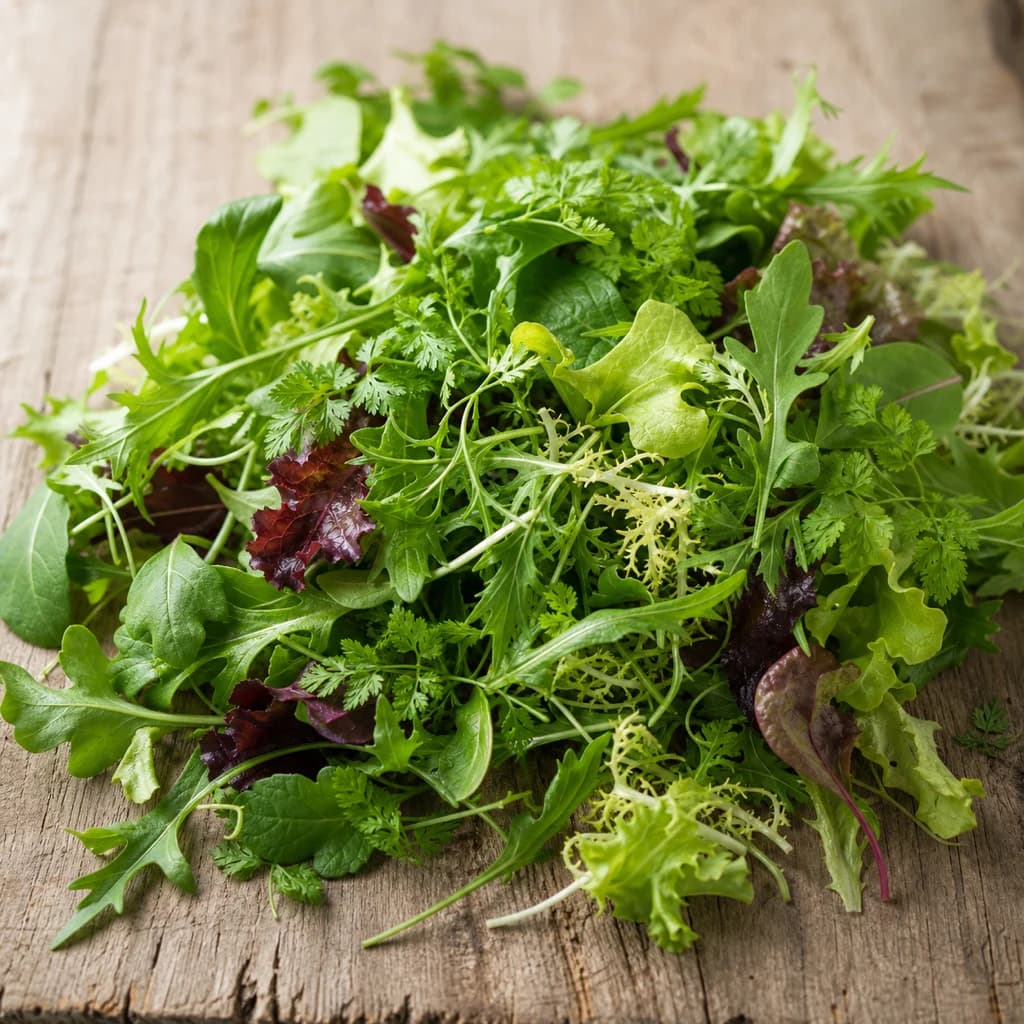
Natural form
A loose mound of mesclun shows the mix of leaf shapes, sizes, and colors typical of the blend.
Displays the defining characteristic of mesclun — its variety of leaf types together — so readers instantly recognize the ingredient.
Produce
Mesclun
Mix of young tender salad greens with varied flavors and textures.
Mesclun is a Provençal-origin blend of young, tender salad leaves such as arugula, baby lettuces, chervil, frisée and mizuna. It is dressed simply with vinaigrette to highlight the mix of peppery, sweet and bitter notes, and is sold pre-washed as mixed baby greens. The blend varies by season and grower.
Mesclun is a curated mix of young, tender salad greens harvested at immature growth stages, typically 2–6 cm in length. The term derives from the Occitan "mescla," meaning to mix, and originated in Provence, France, where the classic formulation balances four distinct flavor elements: sweet (oak leaf lettuce), bitter (endive), peppery (arugula), and herbal (chervil). This intentional contrast creates a complexity no single green can achieve, making mesclun a sophisticated base for everything from simple dressed salads to composed plates with proteins and sauces.
Because the leaves are harvested young, mesclun offers exceptional tenderness and high nutritional density per leaf, but this same youth makes it extraordinarily perishable. Commercial versions vary widely — American "spring mix" may include baby spinach, mizuna, tatsoi, and red oak leaf, while Provençal traditions remain closer to the original chervil-arugula-lettuce-endive quartet. There is no standardized definition, so compositions shift with season, producer, and region. This variability is not a flaw but a feature: the best mesclun is seasonal and locally sourced, reflecting the specific balance of the moment.
Handling mesclun correctly is critical to preserving its delicate character. Moisture is its enemy — it causes rapid wilting and a slimy texture that ruins the salad entirely. The leaves should be washed immediately before serving, dried thoroughly, and dressed only at the table. When used as a bed for hot proteins or sauces, it should be plated just before service to minimize heat exposure. Done right, mesclun provides a living, dynamic backdrop that elevates any dish it accompanies.
- Measured in
- g
- Storage
- Fridge
Types & varieties
Chervil, arugula, lettuce, and endive — the original formulation from Nice and the surrounding region
Broader leaf selection including baby spinach, mizuna, tatsoi, and red oak leaf; popularized in the United States in the 1990s
Emphasizes peppery and pungent varieties such as arugula, mizuna, mustard greens, and watercress
Heavier on radicchio, Belgian endive, and frisée for a more assertive, bitter character
Features dark, sturdy leaves such as lacinato kale (cavolo nero), chard, and spinach at the baby stage
Includes tender fresh herbs such as chervil, parsley, cilantro, or dill alongside the greens
Common uses
Tips & pitfalls
- Wash mesclun immediately before serving, never hours ahead — moisture trapped in the bag causes rapid wilting and slimy texture
- Dry thoroughly using a salad spinner or by layering leaves between clean kitchen towels; residual surface water dilutes dressings and accelerates degradation
- Dress only the amount you intend to serve in one seating; pre-dressing causes the tender leaves to collapse and become waterlogged within minutes
- Add salt to dressings rather than directly to the greens — direct contact with salt draws moisture from the leaves instantly
- Handle leaves gently with tongs or dry hands rather than tossing vigorously; bruising creates dark, mushy edges
- When using mesclun as a bed for a hot protein or sauce, plate it just before service to minimize heat exposure
- Season the salad bowl itself before adding leaves — a pinch of fine salt, a drop of vinegar, or a scrape of cheese on the bowl rim adds distributed seasoning without direct leaf contact
- Always inspect and remove yellowed or slimy leaves before serving; one compromised leaf can cause rapid deterioration of the entire mix
Nutrition
Nutrition
No USDA FoodData Central match for Mesclun yet. We surface a per-100 g profile once a generic whole-food entry is matched and verified.
In the shops
Matched grocery products
No matched grocery products for Mesclun yet.
Good to know
- Origin
- Provence, France; the term derives from the Occitan "mescla" (to mix)
- Original Components
- Chervil, arugula, lettuce, and endive — the classic Provençal quartet
- Peak Season
- Spring through early autumn, though commercially available year-round
- Leaf Size
- Young, immature leaves typically 2–6 cm; harvested before full maturity
- Flavor Profile
- Complex, ranging from peppery (arugula) and bitter (radicchio, endive) to sweet (oak leaf lettuce) and herbal (chervil)
- Texture
- Tender and fragile; perishable
- Yield
- Virtually 100%; negligible trimming or waste if properly cleaned
- Storage
- Refrigerate unwashed in a sealed container lined with a damp paper towel; use within 3–5 days
- Washing
- Wash just before serving; excess moisture accelerates spoilage
Substitutes
- Spring Mix — Essentially the American commercial equivalent; use 1:1 — the terms are used interchangeably in most contexts
- Baby Arugula — Will be less complex in flavor and texture but serves as a neutral base; avoid if a balanced mix is needed for a composed dish
- Baby Spinach — Softer texture and earthier flavor; best used alone or combined with a sharper green like arugula for a DIY mix
- Frisée or Mixed Chicories — More bitter and sturdy; not a direct substitute for the tender character of classic mesclun but workable in rustic preparations
Pairs with
Also called
Mesclun Salad Greens · Mixed Baby Greens
Related
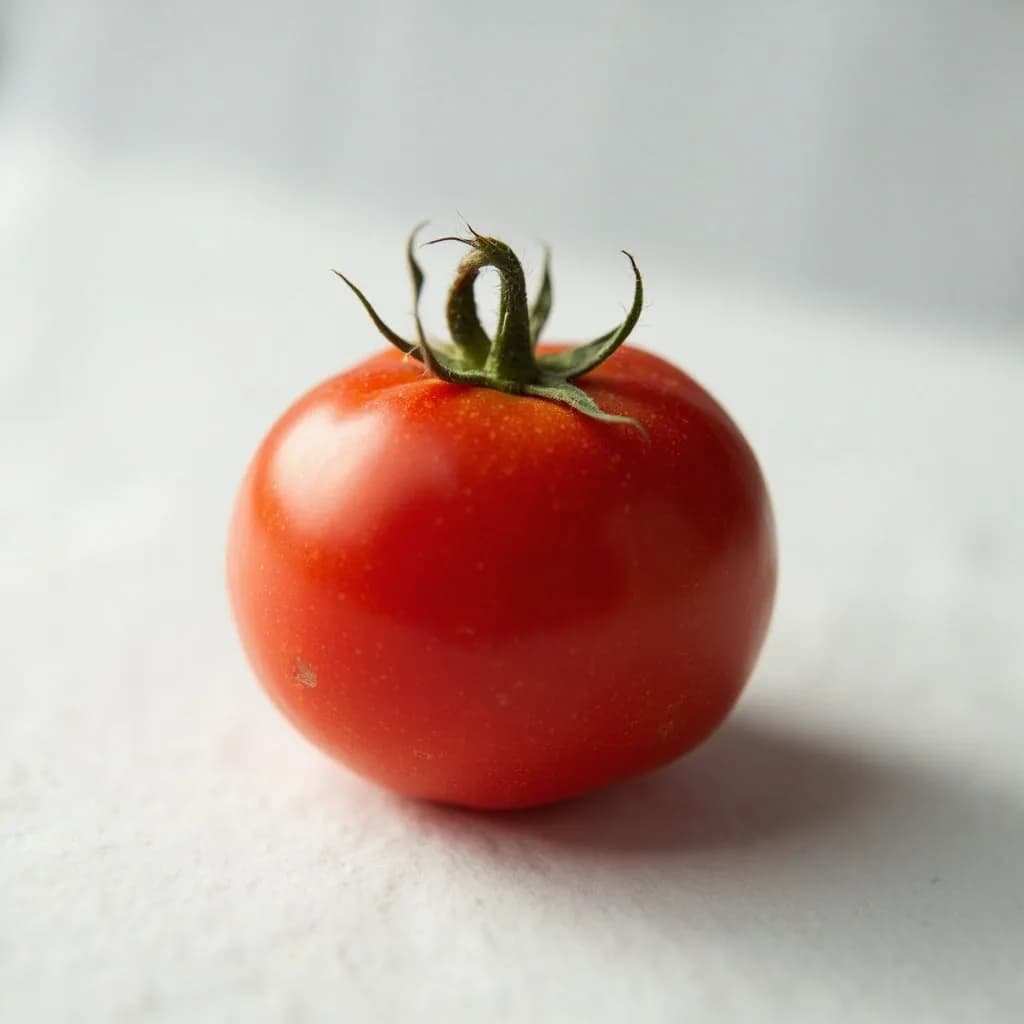
Tomato
Juicy, sun-sweet fruit for sauces, salads, and slow-cooked depth
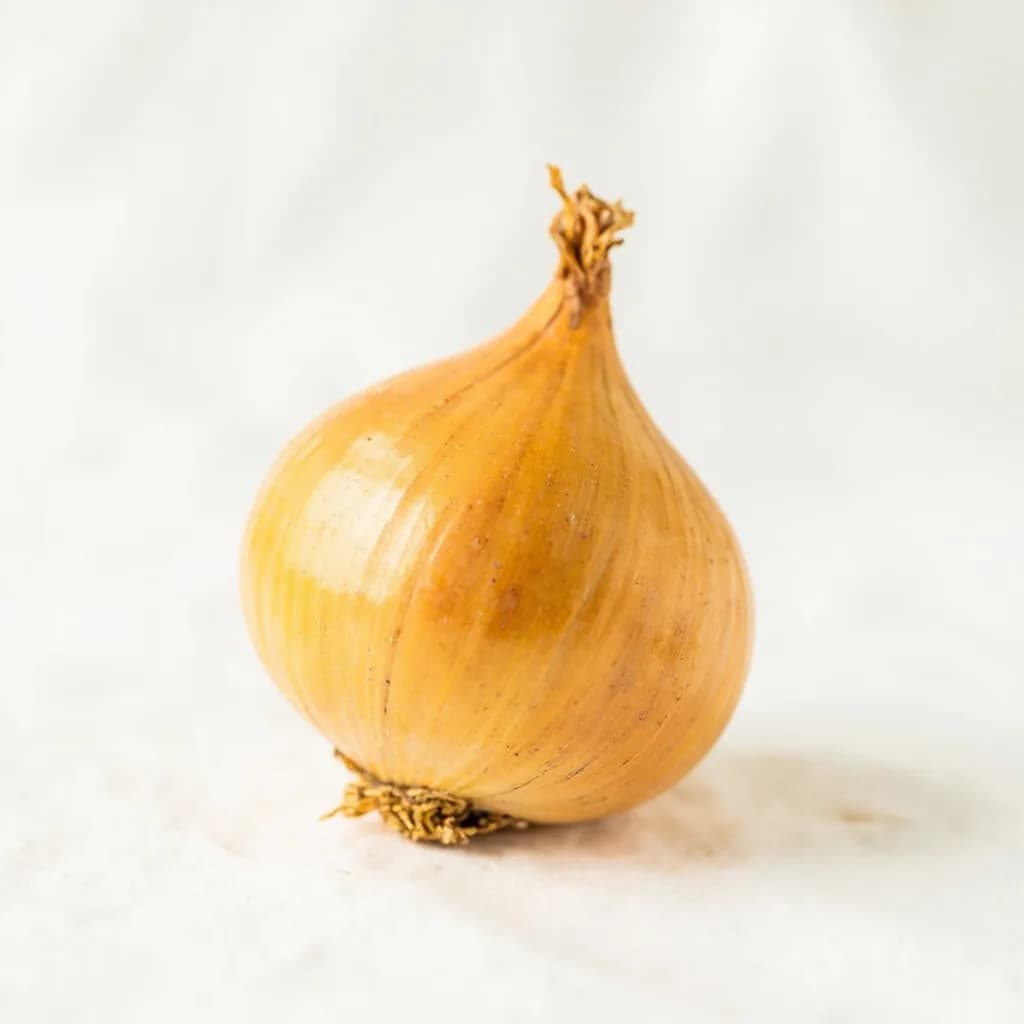
Yellow Onion
The aromatic backbone of soups, sofritos, and braises
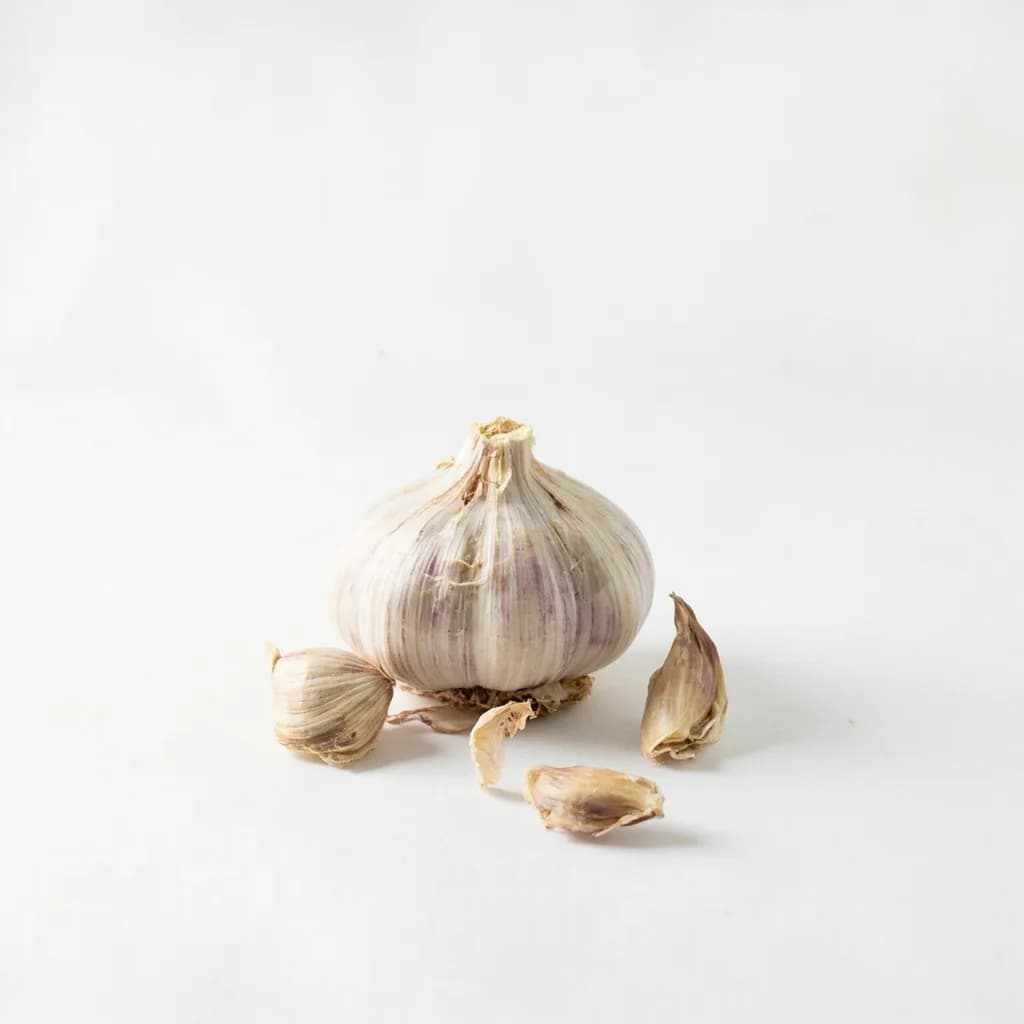
Garlic
Pungent cloves that perfume nearly every savory dish
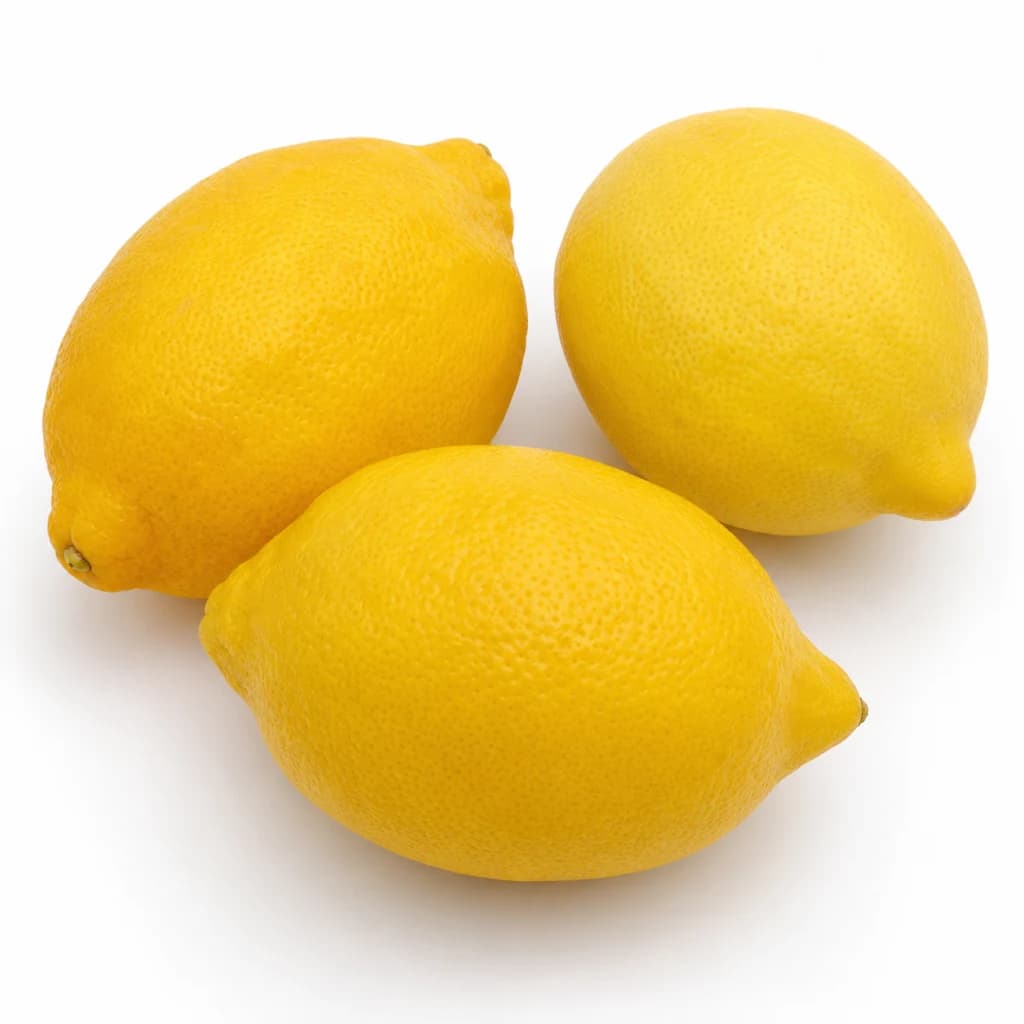
Lemon
Bright, acidic citrus that wakes up almost any dish
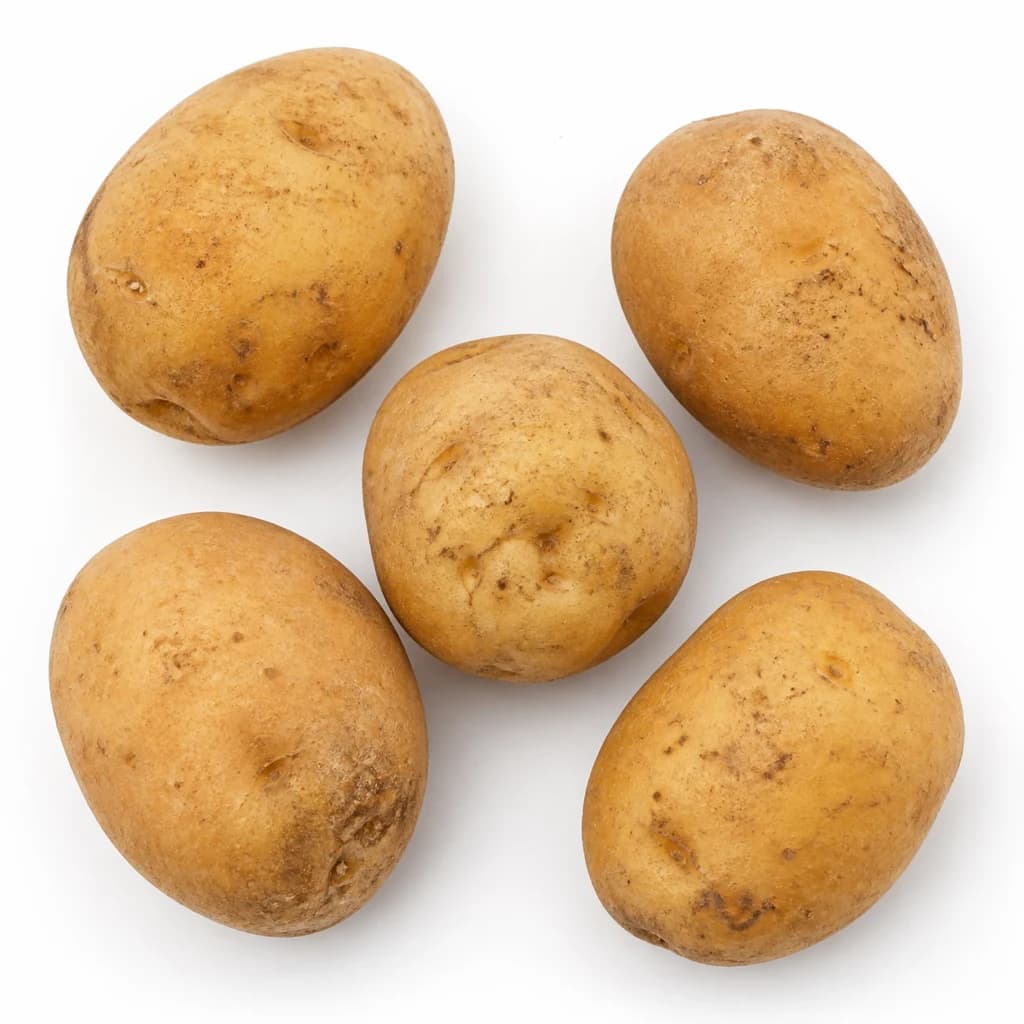
Potato
Humble, hearty staple — roast, mash, fry, or boil
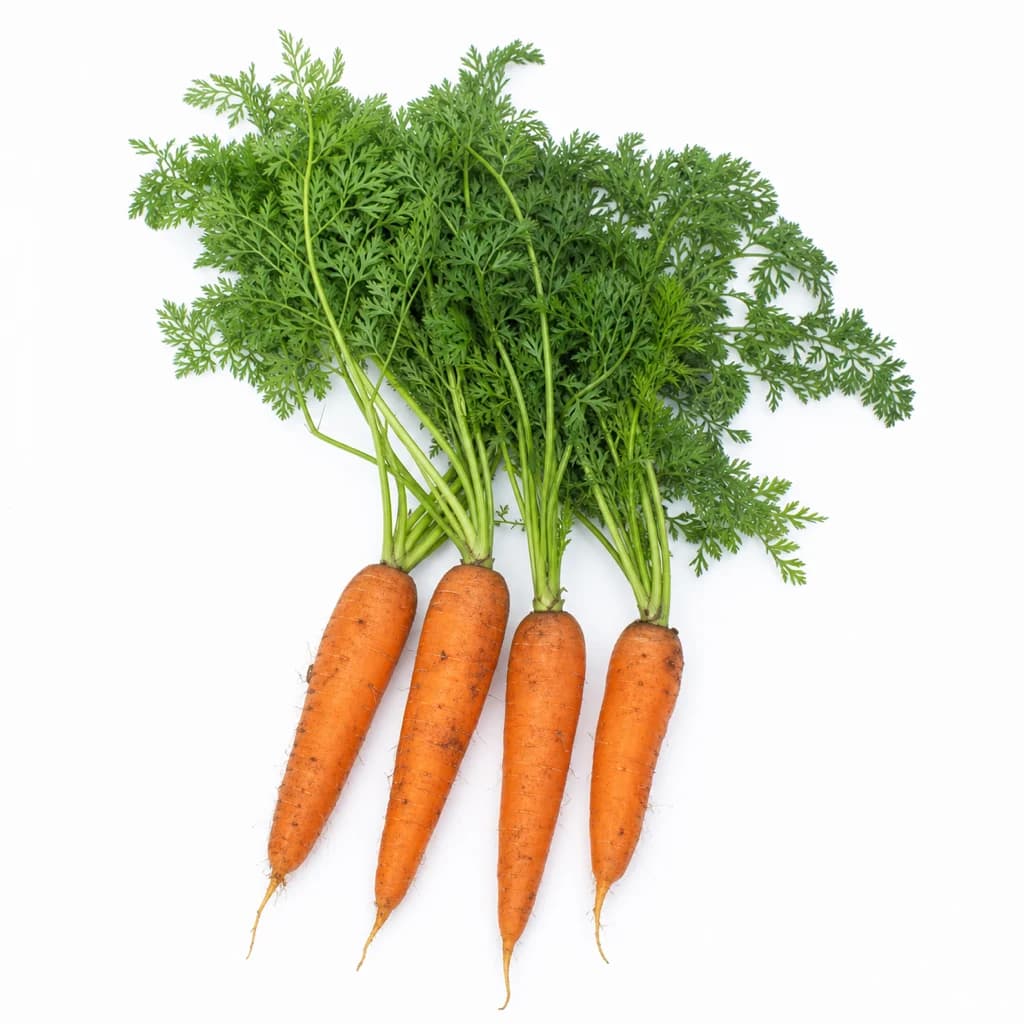
Carrot
Sweet, crunchy root — raw, roasted, or the base of a sofrito
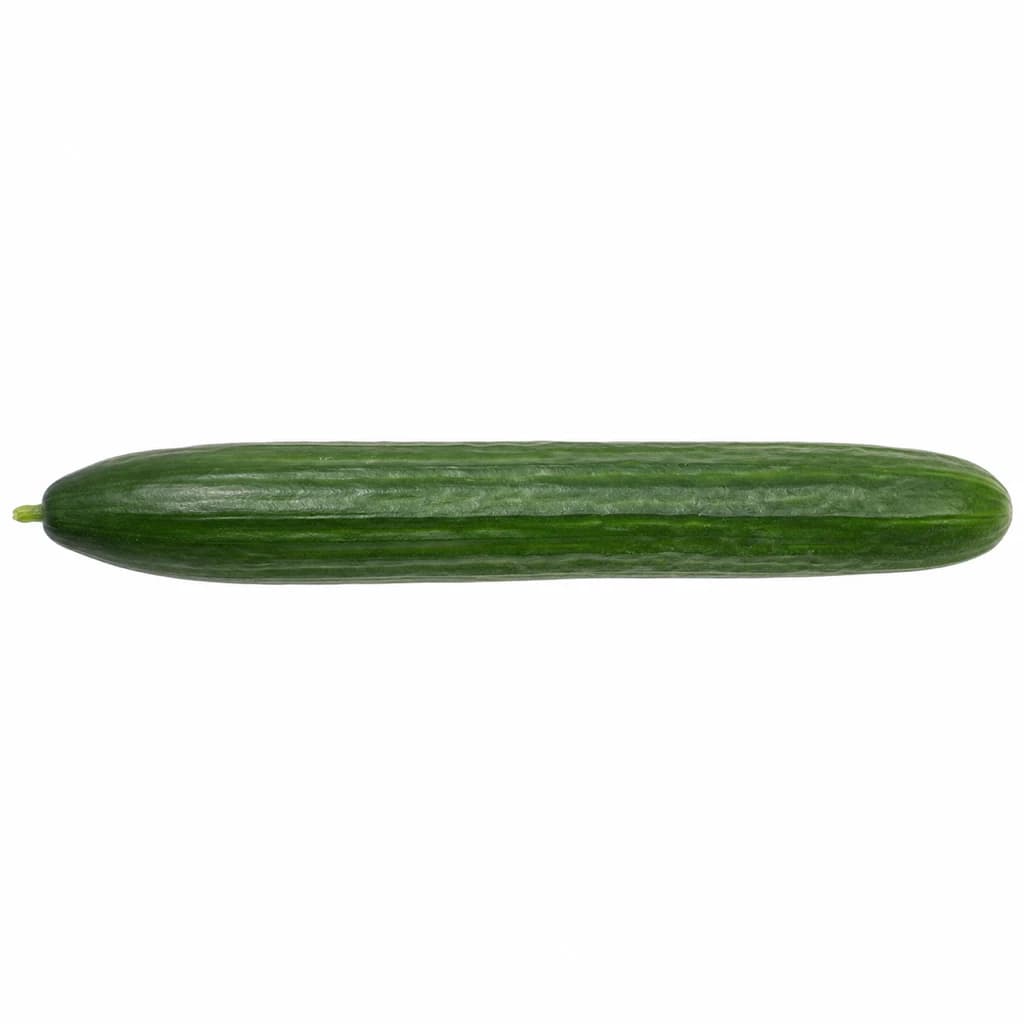
Cucumber
Cool, crisp, and watery — for salads, pickles, and tzatziki

Lettuce
Crisp leaves for salads, wraps, and a fresh crunch