Proteins
Pork Jowl (fresh)
Fatty cut from the pig's cheek, richer than belly. Cure it for guanciale or braise/render fresh for deep porky fat. Renders slow; dice for greens or sofrito.
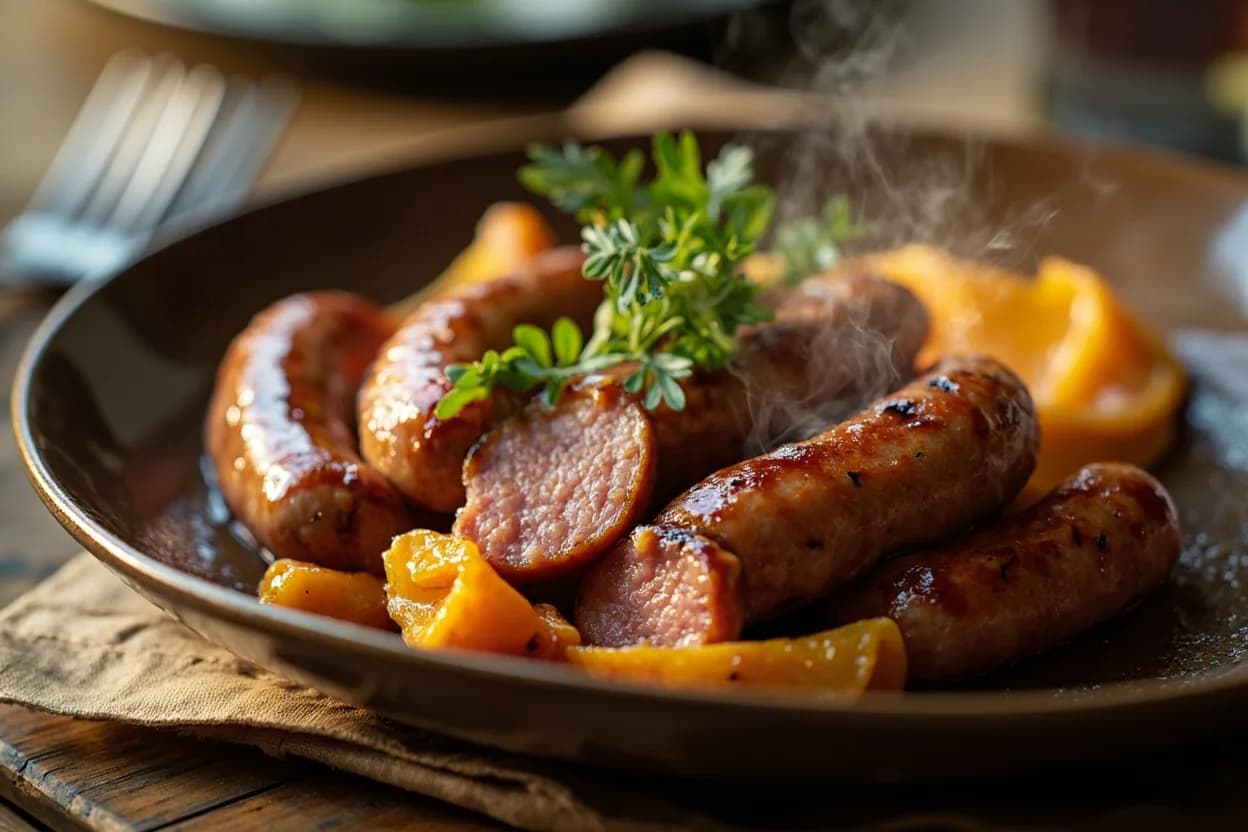
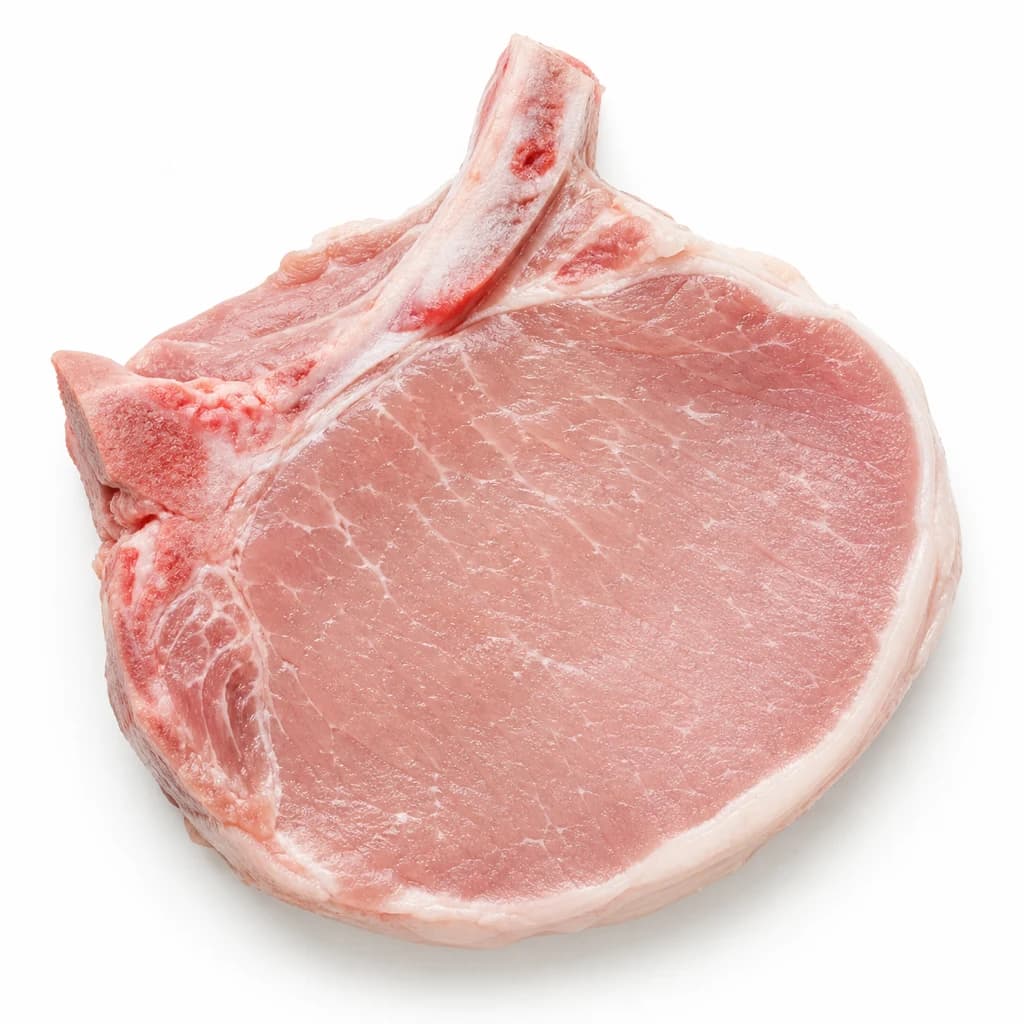
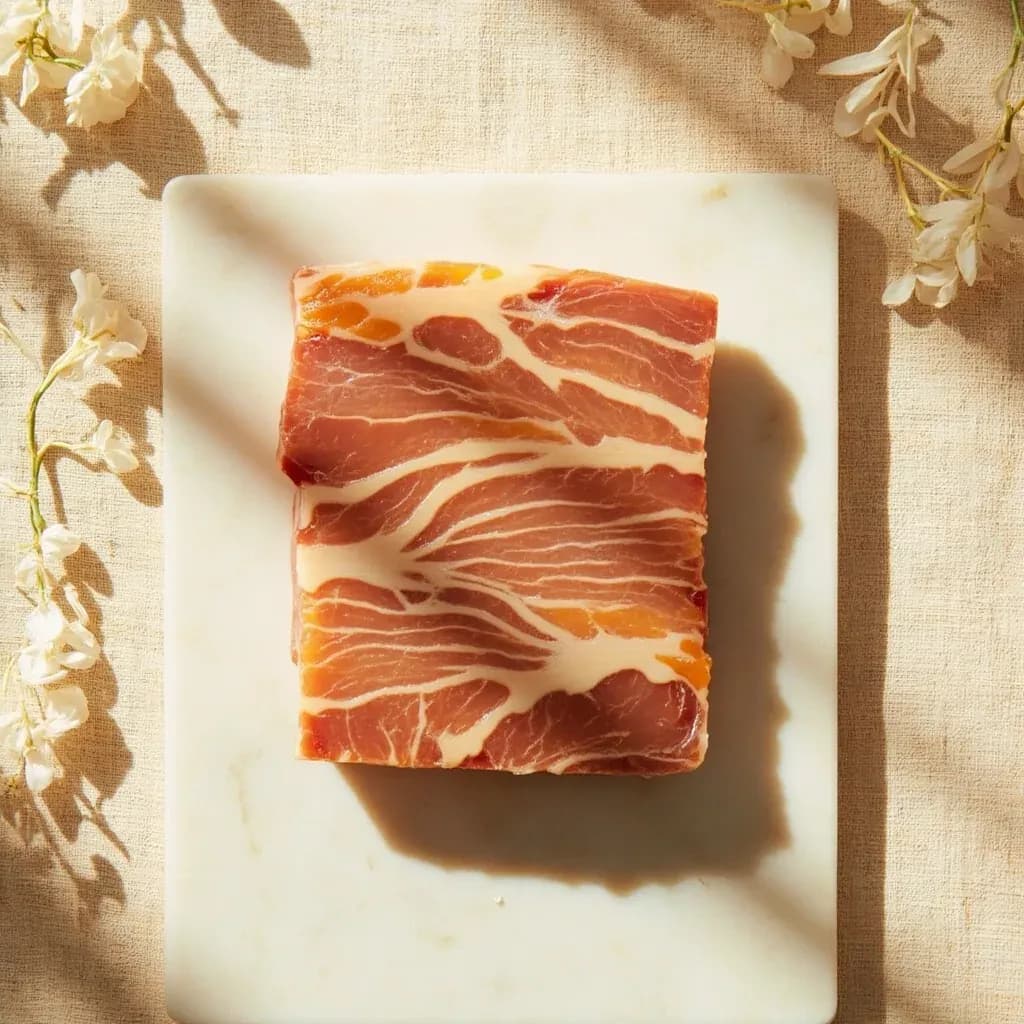
Fresh pork jowl is the cheek of the pig, a thick slab cut from between the jawbone and the eye socket, layered with creamy fat interlaced by lean streaks. It carries roughly 70–80 percent fat — meaningfully richer than belly — and that fat is unusually stable, high in monounsaturated oleic acid, rendering into a clean, almost odorless lard prized for pastry and frying. The flavor is deeply porky with a slight mineral edge that belly never quite reaches, and the meaty bands stay tender under low, slow heat rather than tightening up the way shoulder can. Most cooks meet it one of two ways: cured into guanciale, which transforms it into an entirely different ingredient, or treated as a long-cook star that braises into silk or renders down into seasoning fat for beans and greens.
- Measured in
- g
- Storage
- Refrigerate
Find it in
Types & varieties
Most common butcher offering; the full cheek with rind attached, ideal for curing into guanciale or braising whole.
Rind removed; preferred when rendering lard or dicing for stews and beans.
Italian fresh jowl sold whole or in pieces for slow braising in milk, white wine, or broth.
Mexican name for the jowl; glands typically trimmed, braised in guajillo or tomatillo broth, then crisped on a plancha for tacos.
Spanish term for the inner cheek muscle, leaner than the outer jowl slab; used in Andalusian and Galician stews and sometimes confited in olive oil.
American salt- and sometimes smoke-cured version; chewy and deeply savory, traditional with collards and black-eyed peas.
The same anatomical cut air-cured with salt and pepper; a related ingredient rather than a true substitute for fresh jowl.
Rendering jowl for lard
The fat in the cheek is hard, dense, and unusually clean-tasting once rendered — close in character to leaf lard and well suited to pastry, confit, and high-heat frying. Cut the jowl into 1-inch dice while it is still cold and firm, place it in a heavy pot with a splash of water (about 1/4 cup per pound) to prevent sticking at the start, and bring the pot to a bare shimmer over low heat. Move to a 250–275°F oven or hold on the stovetop at the same temperature, and let the fat weep out for 2 to 3 hours without ever browning the cracklings — clear, neutral flavor depends on staying below 275°F. Strain through cheesecloth into sterilized jars; properly rendered and strained lard keeps 6 months or longer in a cool, dark pantry, and a year or more refrigerated. Save the rendered cracklings and crisp them in a hot dry pan, then scatter them on salads, fold them into biscuits, or stir them into refried beans.
- Cold dice, warm pot — the fat cuts clean before it softens on the knife.
- A splash of water at the start prevents scorching before the fat begins to flow.
- Never let the solids brown during rendering; clear, neutral flavor depends on staying below 275°F.
- Strain while warm through several layers of cheesecloth for a long shelf life.
- Crisp the pale cracklings in a hot dry pan afterward if you want them crunchy.
Braising whole for table service
Braised jowl is the cut's quiet showcase: the connective tissue dissolves into a silky gel, the lean streaks stay tender, and the braising liquid turns into a lip-smacking aspic that you can mount into a sauce or stir into beans. Season the jowl generously, sear it on all sides for color and fond, then smother it in aromatic liquid — milk and white wine (Northern Italian), tomato and guajillo (Mexican), or broth with garlic, bay, and peppercorns. Cover and cook at 180°F (82°C) — never a rolling boil — for 3 to 4 hours, until a paring knife slides in without resistance. Lift the jowl, chill the liquid, skim the fat, and reduce the defatted liquid to a glaze; slice or pull the jowl and nap it with the glaze, or crisp the pieces skin-side down in a dry pan for contrast.
- Sear first for fond; the browning deepens the braise's savoriness.
- Hold the oven at 180–190°F; a hard boil drives off the fat emulsion and toughens the lean.
- Chill the braising liquid to lift the fat cleanly, then reduce the defatted liquid to a glaze.
- Crisp slices skin-side down in a dry pan for a crackling crust against the soft interior.
Common uses
Tips & pitfalls
- Render low and slow at 250–275°F (120–135°C) to coax out clean lard without scorching the meat — rush it and the fat tastes acrid.
- If the skin is on and you want it crisp, score in a tight crosshatch, salt it overnight uncovered in the fridge, then dry-render; the rind will crackle like chicharrón.
- Trim the preauricular salivary glands and any blood-stained tissue before cooking; they carry a bitter, metallic flavor.
- Dice the fat while it's still cold and firm — it cuts cleanly before it warms and smears on the knife.
- Braise at a bare simmer around 180°F (82°C); a hard boil drives off the fat emulsion and toughens the meaty bands.
- Save the braising liquid — it gels into a porky aspic when chilled, perfect for sauces or enriching beans.
- Don't substitute regular bacon and expect the same result: smoked bacon overpowers the delicate, sweet pork-fat flavor that defines jowl.
- When curing for guanciale, salt at 2.5–3% of the weight and rest 2–4 weeks; under-salted jowl spoils, over-salted becomes ham-like.
- If you can only find it frozen, thaw slowly in the fridge for 24–36 hours; fast thawing weeps out fat and leaves the lean dry.
Nutrition
Energy
2741 kJ · per 100 g
Where the calories come from
Protein
6.4g
13% DV
Carbs
0g
0% DV
Fat
69.6g
89% DV
Fiber
0g
0% DV
Sugars
0g
of which
Sodium
25mg
1% DV
Source · USDA FoodData Central · Pork, fresh, variety meats and by-products, jowl, raw
View on FDC →In the shops
Matched grocery products
 €2.20
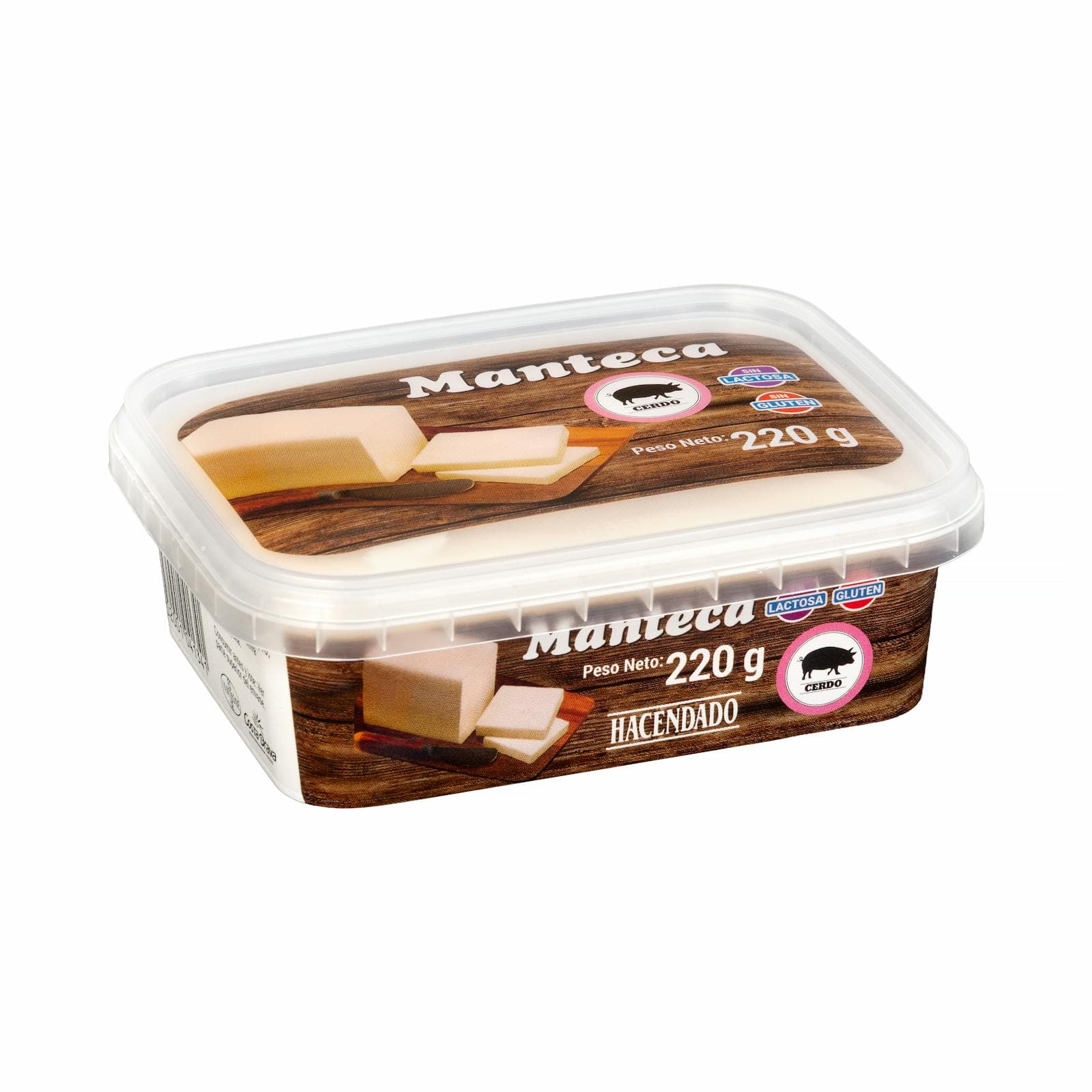
€2.20Pork Lard
Hacendado · 220 g · Mercadona
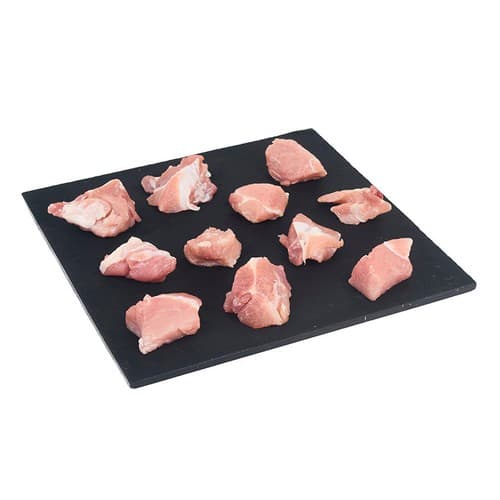 €3.40
€3.40Pork Stew
BONPREU · ud · Bonpreu
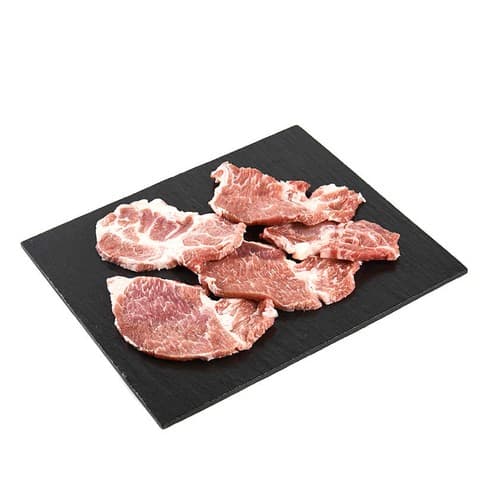 €3.45
€3.45Lean Pork
BONPREU DE L'ERA · ud · Bonpreu
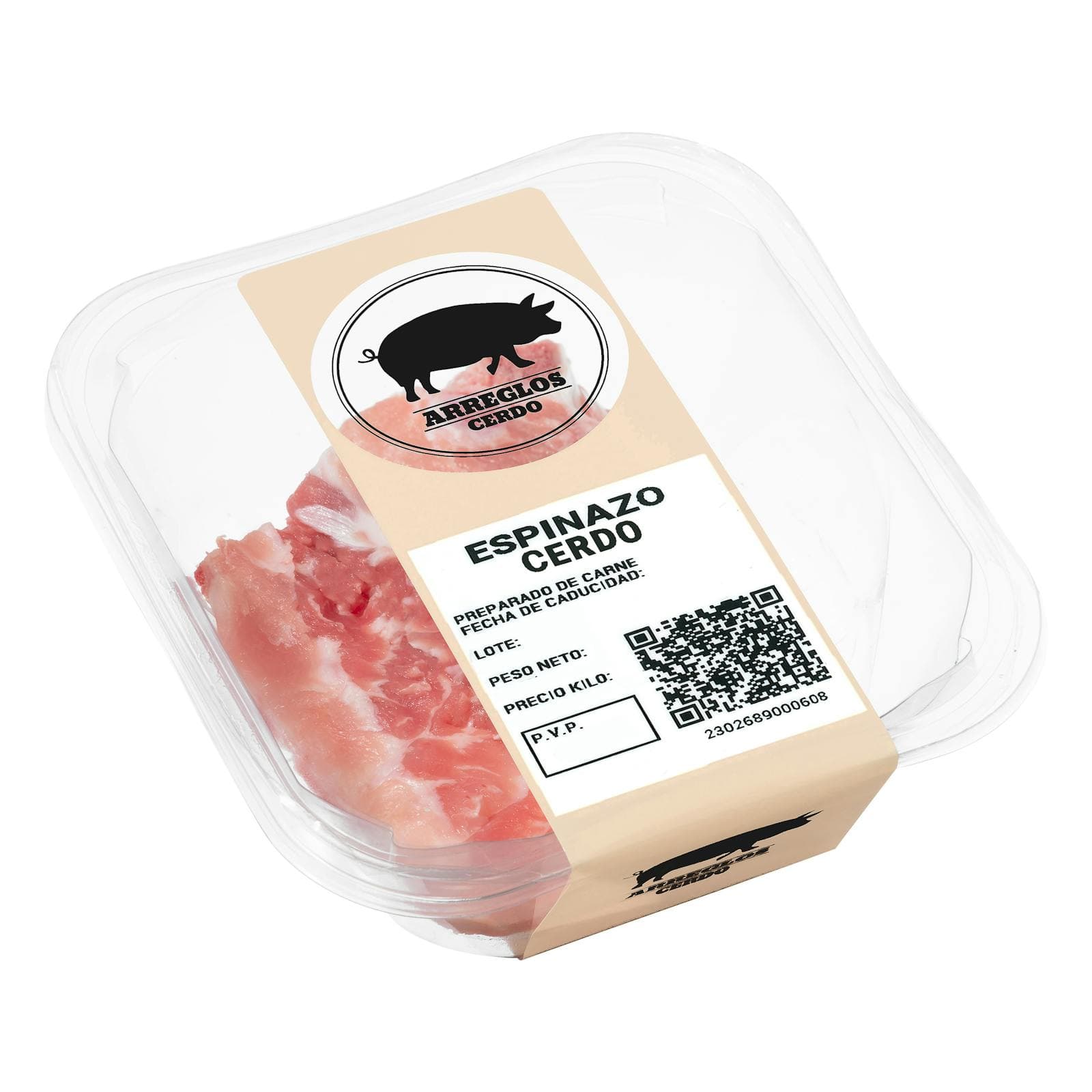 €2.10
€2.10Pork Spine
300 g · Mercadona
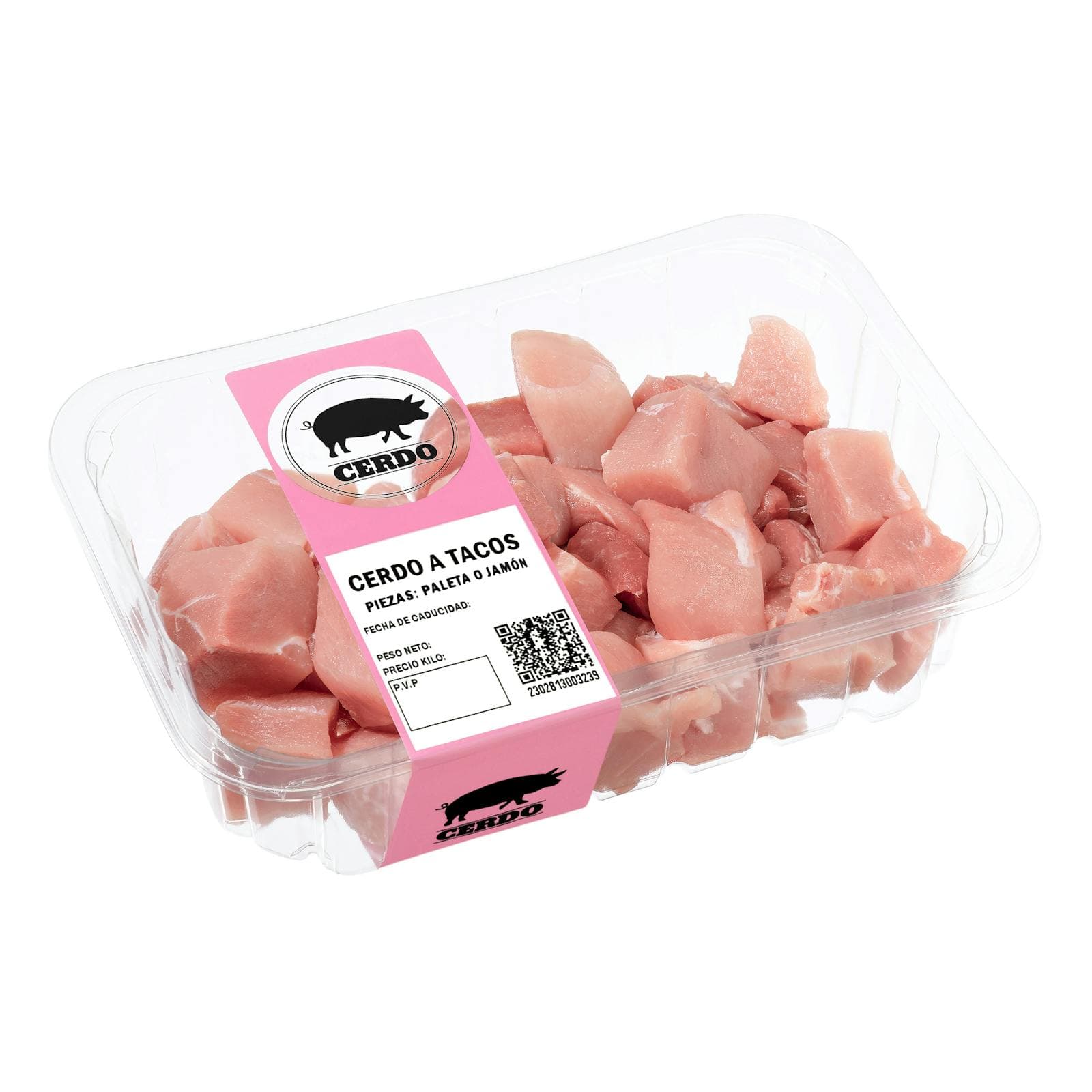 €3.22
€3.22Diced Pork
560 g · Mercadona
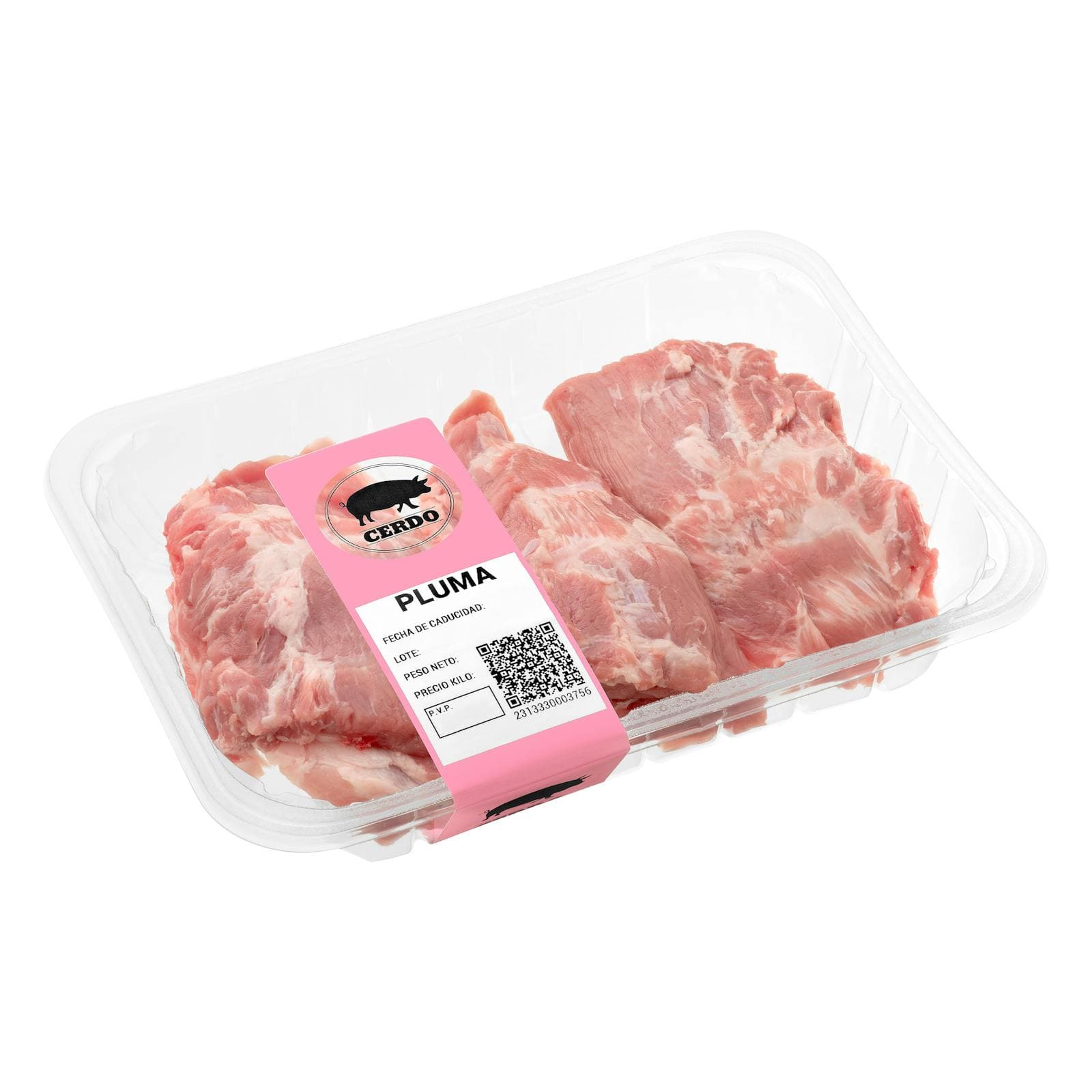 €3.75
€3.75Pork Pluma
300 g · Mercadona
Good to know
- Also known as
- Fresh pork cheek, hog jowl, guancia di maiale (Italian), cachete (Mexican), carrillada (Spanish)
- Primal location
- The cheek of the pig, between the jawbone and eye socket; one jowl per side of the head
- Typical weight
- 1–2 lb (450–900 g) per jowl, skin-on
- Fat content
- Roughly 70–80% fat with interlaced lean — significantly fattier than belly (~50–60%)
- Fat type
- Hard, dense, high in oleic acid; renders into a neutral, high-smoke-point lard
- Flavor profile
- Deeply porky, richer and slightly more mineral than belly; meaty bands stay tender when cooked low and slow
- Storage (fresh)
- Refrigerate 2–3 days at 32–36°F; vacuum-seal and freeze up to 6 months
- Yield when rendered
- Loses ~40–60% of its weight; produces clear, almost odorless lard
Substitutes
- Pork belly — Closest match in fat layering and richness; slightly milder flavor and softer texture, so reduce any added fat in the recipe.
- Cured guanciale — Use only when the recipe already calls for cured pork and you want the same flavor profile in dry form.
- Pancetta (cured, unsmoked belly) — Acceptable in cooked sauces and bean dishes; lacks the gelatinous richness that fresh jowl releases when braised.
- Smoked bacon — A last-resort swap; brings on the smoke, but reduce other smoked ingredients and consider blanching first to tame the salt.
- Fatback with a strip of pork shoulder — When rendering lard, fatback alone works; for braises, combine fatback with shoulder to mimic jowl's meat-to-fat ratio.
- Pork cheek meat (carrillada) — Leaner cousin from the inner cheek; use it when you want more meat and less rendered fat.
Pairs with
Also called
pork cheek · hog jowl · fresh jowl