Proteins
Cured Bacon
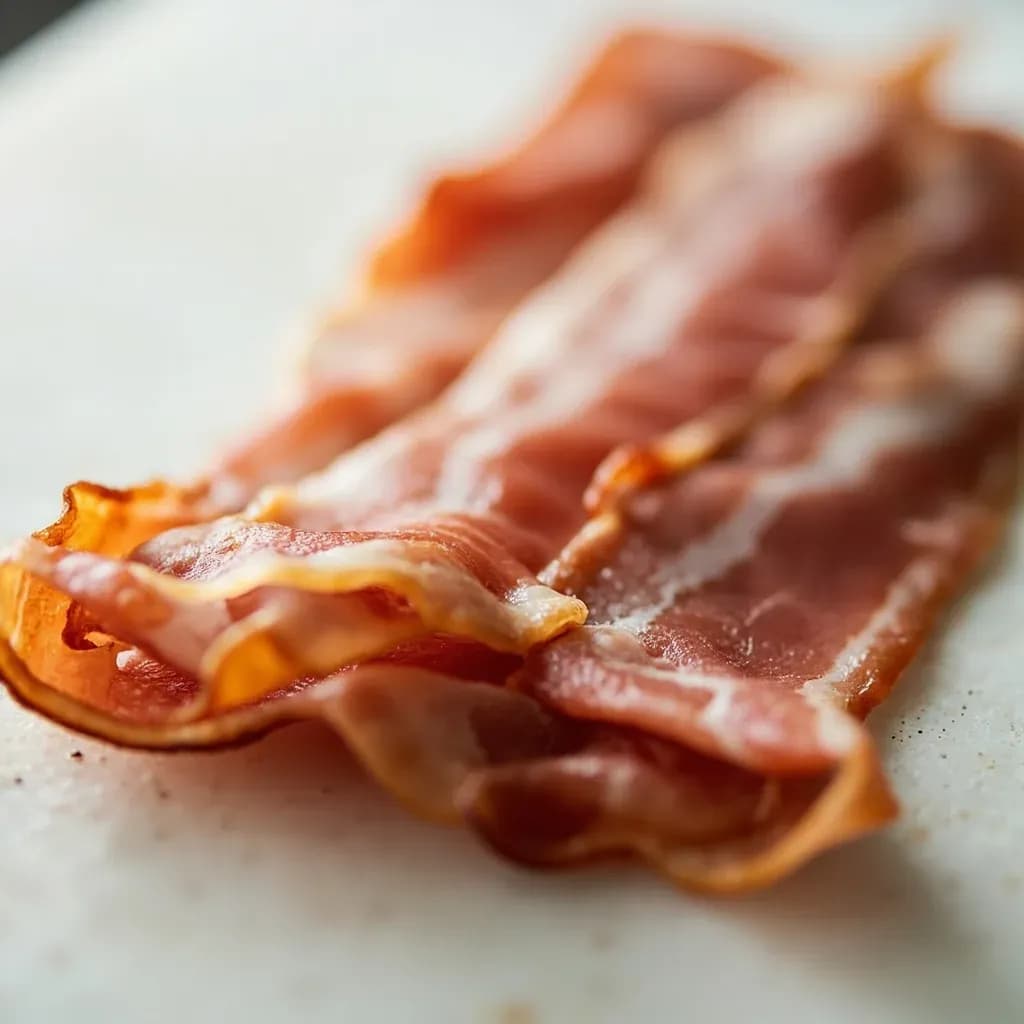
Salt-cured pork belly sliced thin and fried crisp for smoke and fat.
Cured bacon is pork belly preserved with salt and often sugar and nitrites, then frequently smoked. It is fried until crisp for breakfast, crumbled over salads, or rendered to flavor countless dishes. The cure both preserves the meat and concentrates its savory, salty depth.
Cured bacon is salt-cured pork belly, traditionally smoked over hardwoods like hickory or applewood, then sliced thin and fried until crisp. The curing process—using salt, sodium nitrite or nitrate, and often sugar—transforms raw pork belly into the pink, pliable, intensely savory product that has become a cornerstone of American cooking. Nitrites are essential: they inhibit bacterial growth, develop the characteristic pink color, and create the subtle tangy undertone that distinguishes bacon from simple salted pork. The fat content, typically 50–60% by weight, is what makes bacon so valuable in the kitchen—it renders into a flavorful cooking fat that seasons pans and amplifies whatever it touches. Whether sliced thin for breakfast or cut into lardons for garnish, bacon functions as both a finished component (those crispy bits on a salad) and an invisible seasoning agent (the fat you cook your eggs in).
- Measured in
- g
- Storage
- Fridge
Types & varieties
Thin-sliced from pork belly, most common in the US; heavy marbling of fat with meat striations throughout
Slices 1/4 inch or more; less surface area means less crispness and more chewy, meaty texture
Unsliced pork belly sold by the piece; you cut what you need; often applewood or hickory smoked
Coated with cracked black pepper before or after smoking for added spice and texture
Actually from pork loin, not belly; leaner, sold in rounds or ovals; much less fat, different texture entirely
Italian cured pork belly; salt-cured with pepper and herbs, not smoked; used cooked or raw in salads and pasta
Thick dry-cured slab; less processed than American bacon; cut into lardons for cooking
Made from turkey thigh meat; lower fat (30–35%); crumbles differently than pork, crisps more brittle
Uses celery powder or sea salt instead of synthetic nitrates; still technically cured, just labeled differently; no meaningful flavor difference from conventional bacon
Rendering Bacon Fat
The magic of bacon in cooking lies largely in its fat. When heated, the rendered fat melts and separates from the meat, leaving behind crisp tissue. This fat is liquid gold: it carries smoke flavor, salt, and pork essence into whatever you cook in it. Save it in a jar in the refrigerator for up to a month. Use it to fry eggs (the classic), sauté greens, roast potatoes, or season cast iron. The fond left in the pan after rendering—the caramelized meat bits—is equally valuable for deglazing into pan sauces.
- Refrigerate bacon fat in a sealed jar; it solidifies and keeps indefinitely
- Use 1–2 tablespoons per egg for scrambling; enough to coat the pan without swimming
- Add aromatics like shallots or garlic to the fat after bacon is removed for a flavor base
- The fond from bacon is essential for pan sauces—deglaze with wine, stock, or vinegar
Cooking Methods Compared
Pan-frying gives you control and produces rendered fat for subsequent cooking. Start in a cold pan over medium heat for gradual fat rendering and even crispness—this also allows you to collect maximum fat. Oven baking on a wire rack set over a sheet pan at 400°F (204°C) for 15–20 minutes produces the most even results with minimal hands-on time and less splatter. Microwaving works in a pinch but produces rubbery results and doesn't render fat effectively. Whatever method, never crowd the slices—overlapping causes steam, which prevents crisping.
- Cold-start pan method: place bacon in dry pan, turn heat to medium, cook 8–10 minutes per side
- Oven method: arrange on rack over sheet pan, bake 15–20 minutes at 400°F until desired crispness
- Pour off fat during cooking to prevent steaming and ensure proper browning
- Rest on paper towels or a clean rack after cooking to drain excess fat
Common uses
Tips & pitfalls
- Start bacon in a cold pan over medium heat for gradual fat rendering and crispier results with less shrinkage
- Use a wire rack on a baking sheet when oven-cooking: elevates bacon for even heat circulation and renders fat away
- Bake at 400°F (204°C) for 15–20 minutes: hands-off, evenly crisp, minimal splatter
- Save rendered bacon fat in a jar: refrigerate up to 1 month; use for frying eggs, sautéing vegetables, seasoning cast iron
- Add a splash of water to the pan when starting: renders fat while steaming meat slightly for even cooking
- Score the fatty edge of slab bacon before cooking to prevent curling
- Slice partially frozen belly or slab for cleaner, more precise cuts
- Common mistake: Overcrowding the pan causes steaming instead of crisping—always keep slices in a single layer
- Common mistake: Cooking too high too fast burns the exterior while the interior remains chewy and underdone
- Common mistake: Not patting bacon dry after cooking prevents maximum crispness—blot excess fat before serving
- Common mistake: Discarding bacon fat when it's the most versatile cooking fat in your kitchen
Nutrition
Energy
1644 kJ · per 100 g
Where the calories come from
Protein
13.7g
27% DV
Carbs
0g
0% DV
Fat
37.1g
48% DV
Fiber
0g
0% DV
Sugars
0.4g
of which
Sodium
751mg
33% DV
Source · USDA FoodData Central · approx. Pork, cured, bacon, unprepared
View on FDC →In the shops
Matched grocery products
 €1.48
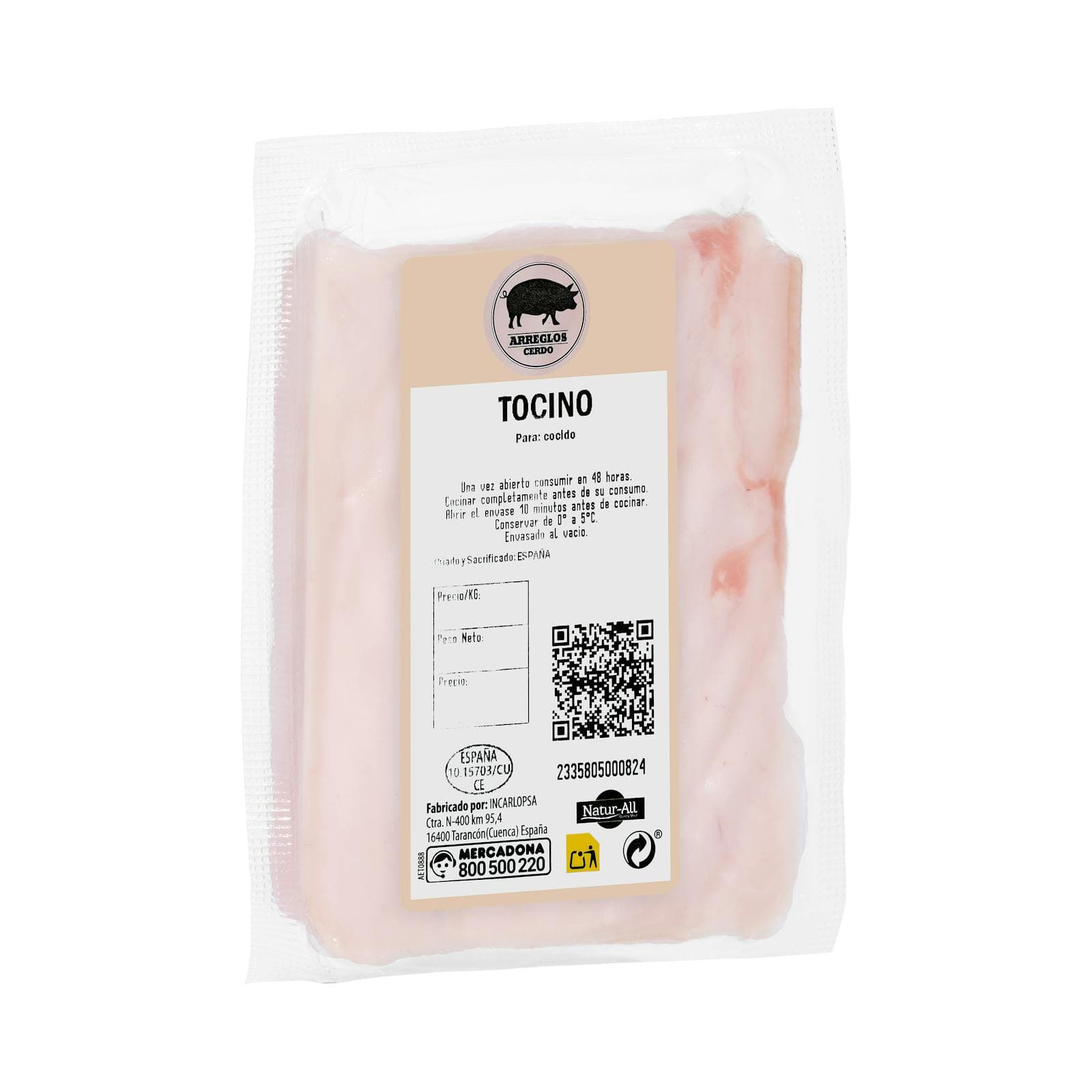
€1.48Pork Fatback
190 g · Mercadona
 €1.99
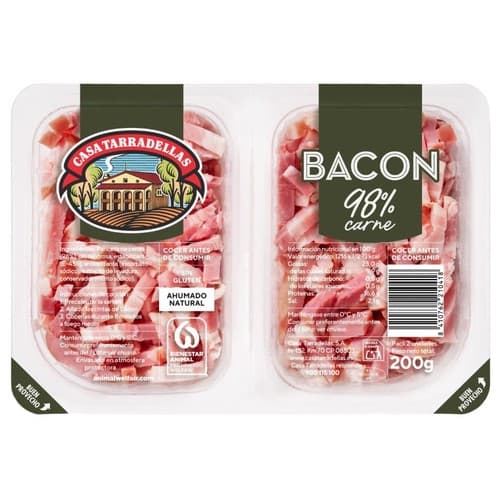
€1.99Pork Bacon Strips
CASA TARRADELLAS · kg · Bonpreu
 €1.85
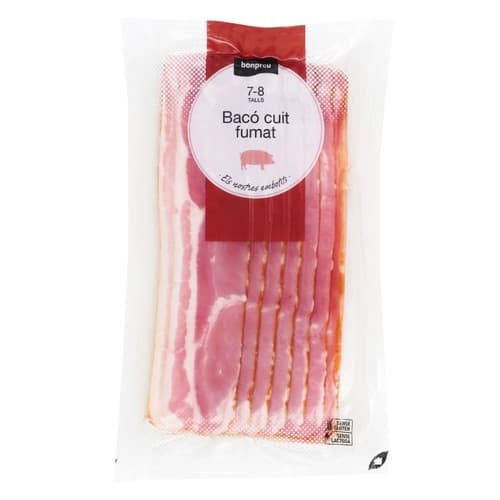
€1.85Smoked Cooked Bacon
BONPREU · kg · Bonpreu
 €2.20
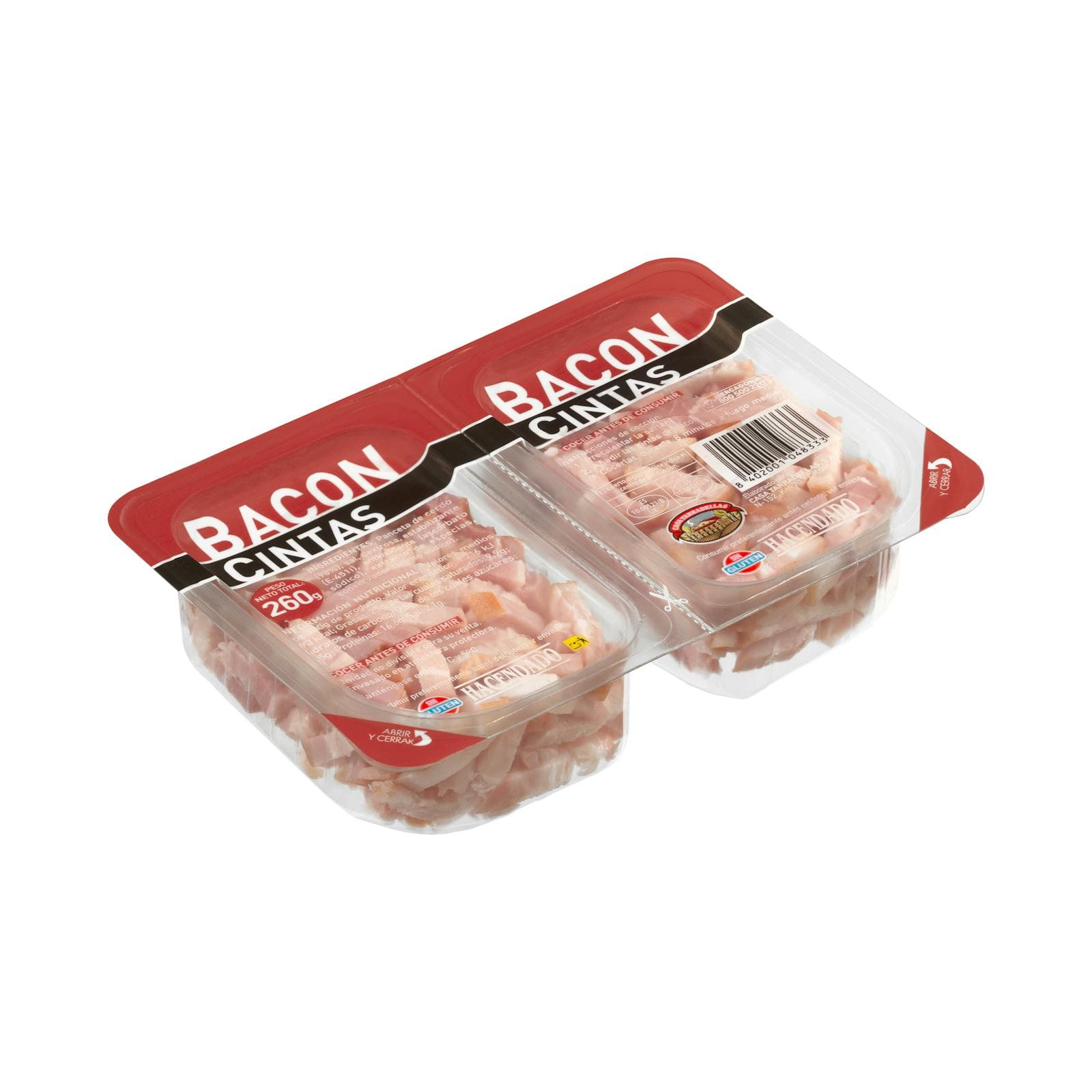
€2.20Bacon Strips
Hacendado · 260 g · Mercadona
 €2.35
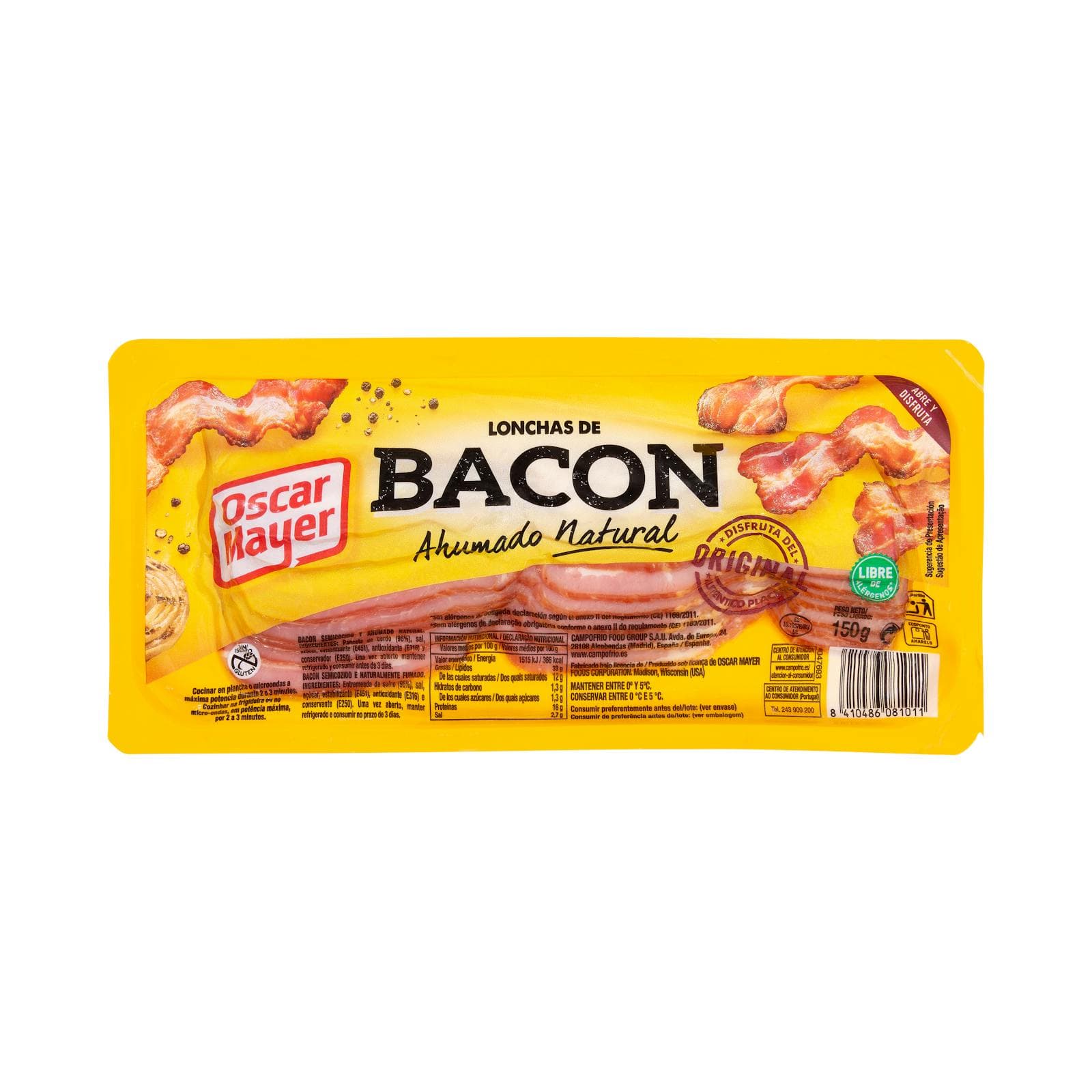
€2.35Oscar Mayer Bacon Slices
Oscar Mayer · 150 g · Mercadona
 €2.89
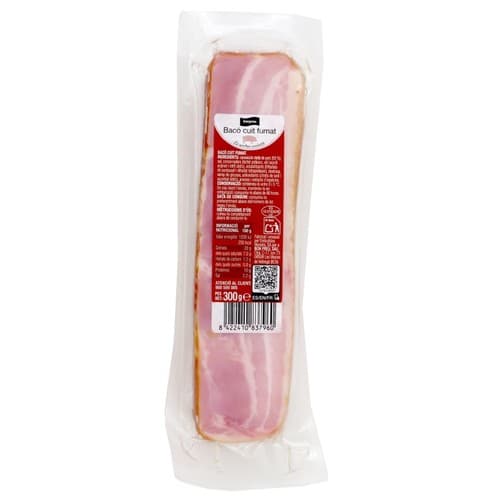
€2.89Smoked Cooked Bacon Bonpreu
BONPREU · kg · Bonpreu
Good to know
- Definition
- Salt-cured pork belly, typically smoked, sliced thin and fried until crisp
- Primary cut
- Fresh pork belly—the fatty underside of the pig with layered fat and meat striations
- Typical thickness
- 1/16 to 1/8 inch for standard sliced; thick-cut is 1/4 inch or more
- Curing agents
- Salt, sodium nitrite/nitrate, and sugar; uncured varieties use celery powder or sea salt as alternatives to synthetic nitrates
- Fat content
- Approximately 50–60% fat by weight for standard sliced bacon
- Sodium
- 400–600mg per slice (2–3 slices typical serving)
- Storage (unopened)
- Refrigerated 2–4 weeks before sell-by date; frozen up to 1 month
- Storage (opened)
- Refrigerated 7–10 days; pat dry and wrap tightly after opening
Substitutes
- Pancetta — Italian cured belly; not smoked, so flavor is cleaner pork with pepper; use raw in salads or cook the same way
- Canadian bacon — Pork loin cut; much leaner and less fatty; better for wrapping than frying; does not render the same fat
- Prosciutto — Dry-cured ham; much thinner and leaner; can crisp in a pan but does not provide rendered fat for cooking
- Turkey bacon — Lower fat alternative; crisps differently (more brittle); acceptable for dietary restrictions but not a true flavor equivalent
- Guanciale — Italian cured pork jowl (cheek); fattier than pancetta; essential for authentic carbonara; can substitute pancetta or bacon
Pairs with
Also called
Streaky Bacon · Smoked Bacon
Appears in these dishes


Related

Egg
The kitchen's everything ingredient — bind, leaven, enrich, or fry
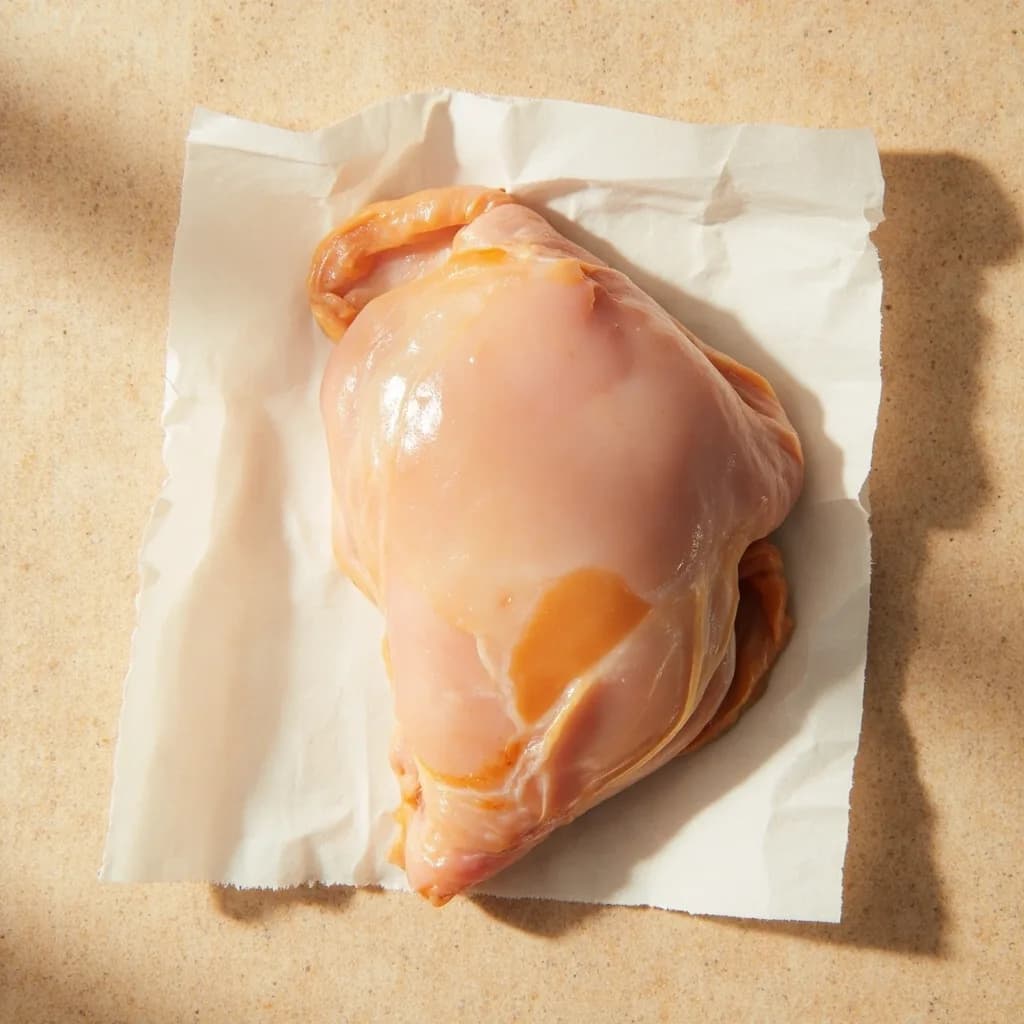
Chicken Breast
Lean, quick-cooking white meat for everyday dinners

Ground Beef
Versatile minced beef for burgers, ragù, tacos, and meatballs
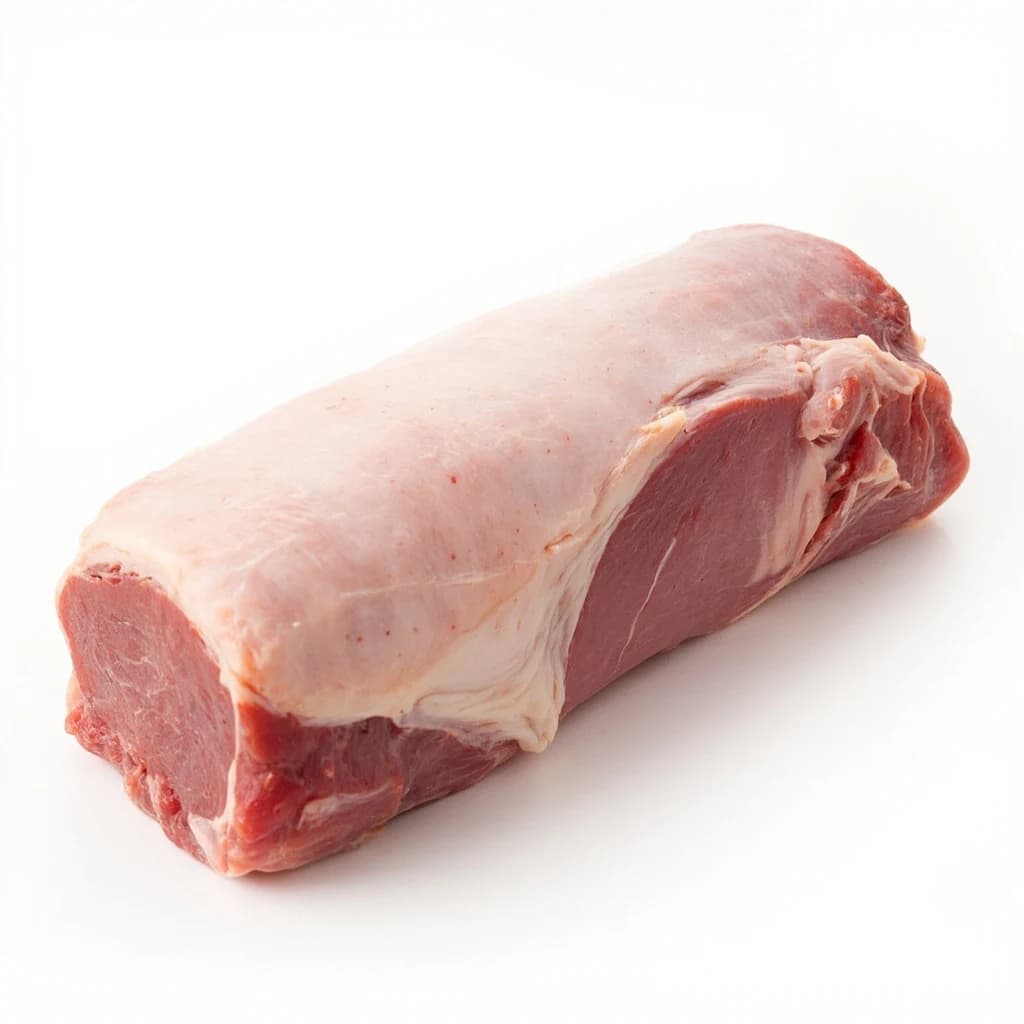
Pork Loin
Lean, tender roasting cut that stays juicy with care
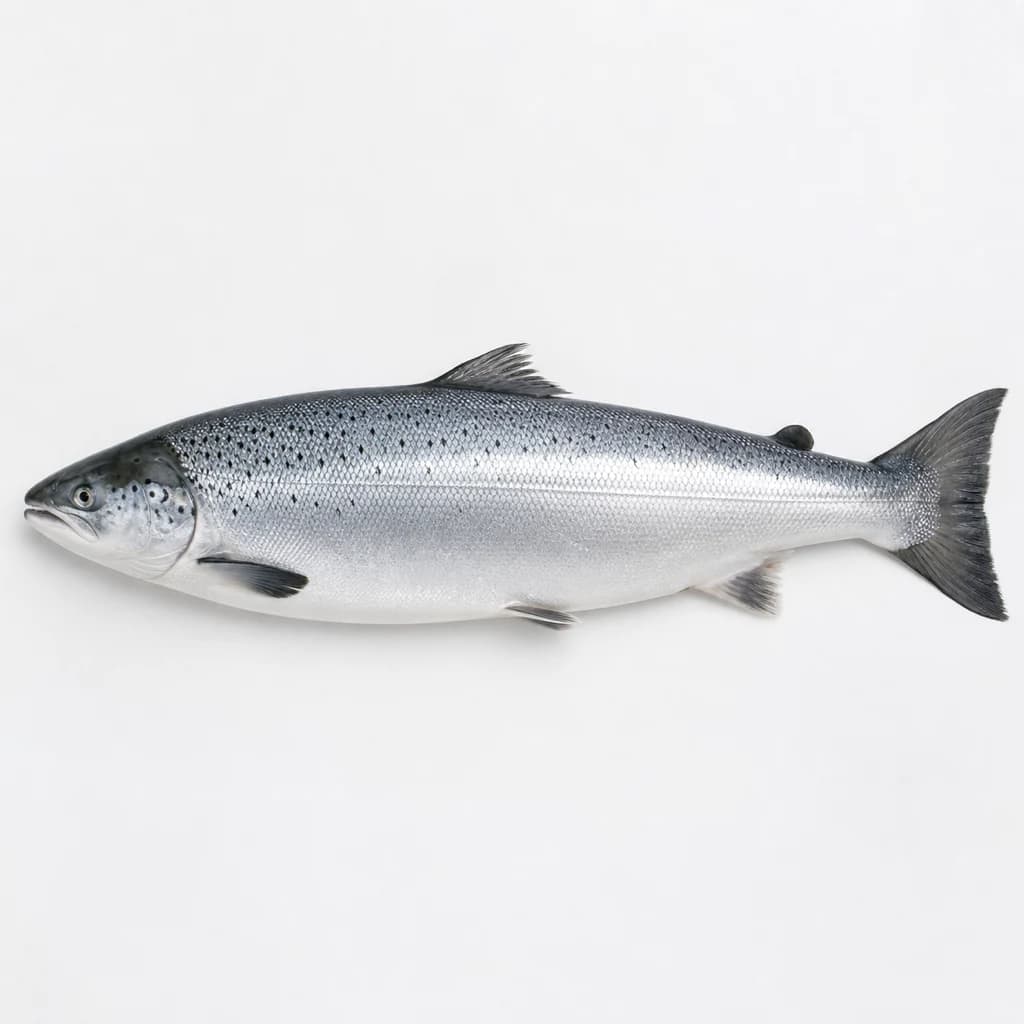
Salmon
Rich, rosy fish that roasts, grills, or cures beautifully

Egg White
Pure protein that whips to airy peaks for meringue and more
Egg Yolk
Rich, golden yolk for custards, mayonnaise, and pasta

Quail Egg
Tiny, speckled eggs for garnishing and elegant bites